
Andrew Sweet's Blog: Reality Gradient, page 7
August 14, 2021
Women of the Reality Gradient
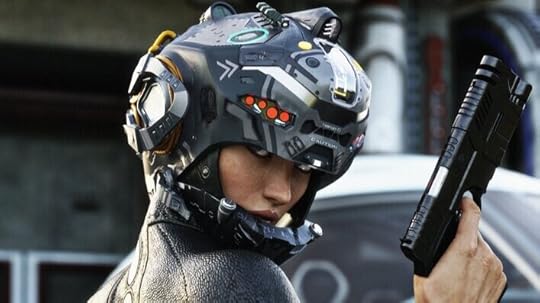
Most of my protagonists are women. It’s an empirical fact, and this wasn’t an accident. I have a daughter who is turning eight, and is getting old enough now to start thinking about her place in the world. And she’s such a prolific reader that she’s already gone through the entire Harry Potter series multiple times, and as I’ve mentioned, we’re working our way through Marissa Meyers’ fantastic Lunar Chronicles. I read her portions of my novels during the process and sometimes she provides excellent feedback. In fact, she named one of the prominent members of the Induna in my upcoming novel (after Libera) that is code named The Southern Highlands Company (there’s a hint at what it’s about in there somewhere). I almost forgot, I got her approval for the title Libera, Goddess of Worlds (still on track for a November release).
Naturally, I try to help her find science fiction novels that she can get into - stuff that features female characters. When I first started publishing, I realized that there really wasn’t a lot of great science fiction featuring women out there. That is, women in science fiction are often cast into secondary roles, supporting characters to be impressed by some man’s accomplishments. Consider the timeless classic Day of the Triffids, for example. The women in that story? Eye candy and basically victims. Not a great role model for my daughter. Even in Harry Potter, which she loves, Hermoine Granger is a powerful, strong woman, but not the center of the story. Instead, a really rather obtuse Harry Potter stumbles through adventure after adventure, dragging her along. (I love the series, but to love something is also to acknowledge its imperfections.)
Here are some of the main characters in my novels, and what their personalities are like:
Harper Rawls from Models and Citizens - My first foray into writing female characters, she’s the prototypical damsel in distress. I’m not proud of that fact, but she at least did get the spotlight, though she splits it with Ordell quite a bit. Her inner strength is her desire to do good (or at least not do evil), but her weakness is that she doesn’t go out looking for good to do. It’s not really her fault. Her father has slowly morphed into an abusive asshole, and she witnessed the entire change, and her mother’s complementary change from strong, independent-minded woman (independent enough to marry Harper’s father in spite of her family’s disapproval) into something of a doormat. All of this plays in her mind, and coupled with anxiety, Harper’s ignorance of things outside of her immediate bubble is a coping mechanism. Fun fact: The original title to Models and Citizens was Harper and the Cloned Man.
Christine Hamilton from Bodhi Rising - Christine (and Bodhi, for that matter) is a child when the novel opens, but even then, we can see her fearless behavior and singular to the point of myopic focus on becoming a “mover and shaker”. Partly because of her family lineage, and partly because of her own deep ambition and joy at being envied, she sticks to a path throughout the novel that slowly accumulates power and influence. She’s methodical, consistent, and practical to a fault. If you haven’t read the novel yet, I recommend reading it through to the end, because these personality quirks she possesses ultimately conflicts with her relationship with Bodhi, to a surprising result. Needless to say, I kept Christine around for Libera as well, though she only has a side-role there.
Aida Lothian from Libera, Goddess of Worlds - Aida has a personality quirk. She could conceivably be on the autism spectrum, but her background as the daughter of a clone, who died when she was a young child, didn’t afford her the opportunity to explore what the disorder is that she lives with, but her mother Amanda has given her rules that guide her through life. Aida can’t read other people’s emotions well, and misinterprets them. Her favorite place is in virtual reality, where the distractions from life are far less imposing and she feels more in control. She has a strong moral compass, based on the rules that her mother gave her and several others that she gave herself. But, her rules about morality are not the normal rules of morality. What she considers moral overlap some of what the rest of us might think moral means, but she has some definite deviations that come into play in a big way in the novel.
Lincoln Montague from Libera, Goddess of Worlds - Lincoln is obsessed with discovering who her mother’s killer is from the beginning of the novel onward. Her story arc is her working through the investigation. Lincoln is my first attempt at bringing in a bisexual main character. She doesn’t realize that she is until an event in the first chapter puts her relationship with her best friend in jeopardy (and that’s all I’ll say about that here). Her emotional journey is part of her story, but doesn’t crowd out the search for justice for her mother. The two arcs often come into conflict, and it doesn’t help that her best friend’s mother is such a bitch.
Delilah Reynolds from The Book of Joel - You won’t find The Book of Joel in any stores yet. It’s coming out next year I think, but I’m taking it the traditional publishing route, so not sure really when. It’s more of a thriller that happens to take place in a science fiction universe. But I have to mention Delilah, because even though the story is about Joel, she’s a strong, dominant girl who has clear direction and makes steps toward that progress. One of my favorite characters by far, Delilah is determined and a force not to be ignored.
April Sallow from The Southern Highlands Company (working title) - April is a Commander who likes to be in control of everything around her. After her devastating relationship with an unreliable ex-boyfriend, she’s given up on relationships (but not necessarily sex). Voluntary seclusion to the Docking Station for the United Africa Southern Highlands Company, a quasi-autonomous organization that handles interstellar trade for Earth, she has opted out of future relationships, instead determined to be independent and in control of her own destiny. As events unfold, though, she figures out that she’s not as in control as she would like to be. April is another of my favorites - in charge and owning it!
What I’ve learned from the experience of writing from the perspective of a different gender is how easy it is to fall into stereotypes and take shortcuts with some of my characters. I love Harper as a character, but I really like who she became in Bodhi Rising much better than the girl who was a little lost and thrust into fighting against slavery in Models and Citizens. I’m proud of these women in my novels. They carry the weight well and hopefully at least are dynamic enough so that my daughter, when she finally get’s old enough to read these, can be proud that the women in my novels aren’t just fluff like they have been in science fiction past.


August 8, 2021
Africa of the Future

Recently, I’ve been working through The Lunar Chronicles by Marissa Meyer (another excellent writer from the Pacific Northwest). My daughter is eight, and share these novels together. We began with Cinder, the story of a cyborg in New Beijing, and follow her as she discovers who she is and attempts to topple an empire and claim her inheritance. It’s a fantastic series, and I recommend it (although, like Harry Potter, the later books get very, very dark - be warned). But this blog post isn’t about a recommendation - that’s a freebie.
This blog post is about Africa.
Specifically, it’s about the taint that has followed Africa even into many novels. Poking around my website, you can probably tell that I’m a bit of an activist. Bear with me while I share a bit about myself and we’ll come back to the title. I’m what’s referred to as ‘mixed’ in society today. My beautiful, kind, urban mother is black, and practical borderline-survivalist father is white. There’s a whole story about how they came together, and maybe I’ll share that sometime, but not just yet. I bring this up to discuss my own quest for belonging, and how science fiction helped me find my way, and something of an injustice I’ve noticed over time.
For years, I lived, as most mixed children do, outside of any real society. Especially in Texas, there was a clear division between the white and black communities culturally as well as geographically. I had a handful of very close friends, and I’ve come to understand later a lot of support on all sides, but it wasn’t clear to me at the time. Jumping from one culture to another in school, in life, and eventually in work, had the net effect of excluding me from engagement in both. As you can see from my photograph, I look vaguely ethnic, but from where specifically is a bit of a mystery if I don’t tell you (although most mixed children can recognize other mixed children pretty easily - it’s a thing). When I had to choose how to represent myself, eventually as life makes us, I opted not to and fell into whatever role others had carved for me. Expecting a Puerto Rican? I’m your guy. See a Haitian? Sure, no problem. Or am I a Mexican? That was a very interesting period in my life.
But eventually, I did claim my heritage - all of my heritage. And I began to do research on my family tree going using Ancestry and other websites like that. I was able to trace my father’s lineage across America back to Rhode Island, across the ocean to Devon England, and all the way back to the Domesday book by William the Conqueror. On my mother’s side, I’ve only been able to trace back to just after the civil war - for obvious reasons. From there, my family history has been completely erased. Through Ancestry’s DNA program, I’m sure that our lineage traces back to the Igbo (modern greater Nigeria), but I don’t have family history or records that can tie us directly to any family there, and I’ve been working at this for a few years now.
My personal history has been completely erased, along with the personal family histories of millions of descendants of slaves today.
So what do we have, we orphaned children, to look back on and understand our stories? Imagination and possibility. But here’s a bit of a problem. Since before the founding of the United States, there’s been an ongoing narrative that diminishes the place of Africa and African descendants in our shared history. This is just a fact. The standard of beauty has been and continues to be anglo-based (lighter skin, hair, eye colors which are rare among African descendants). I see glimmers of change in our magazines and on television now, and I hold out hope that the narrative is shifting. I will say that from observation of personal life experiences, it’ll take a lifetime for the changes to stick.
I look to books for correcting the narrative as well - especially science fiction. In science fiction, literally anything can be imagined. And that’s what brings me back to Marissa Meyer. There are two things in her series so far that have stuck out to me on this topic - one that frustrates me, and one that brings me joy. I’ll start with the latter (and turn away quickly if you don’t want spoilers). Winter, where the main character of the book is a woman of color, she is also the most beautiful woman in all of the Luna (a moon nation). In doing so, she directly challenges the concept of anglican beauty, which is exactly the sort of thing we can do in science fiction without getting into too much trouble for it (now - read up on Star Trek’s first interracial kiss and how that landed like a missile on the American psyche of the day).
But even Marissa Meyers’ Africa is still a forgotten country. In her novels, Africa of the future looks like the imaginary Africa that we see on television infomercials and documentaries. Stories abound of long lost tribes, deserts, and decimated civilizations.
The African narrative needs to be updated. Cities and entire nations thrive in Africa today. In many ways, Africa is rising to become a power player on the world stage. The only news we seem to want from Africa is about the problem areas, but we forget that Africa is freaking huge. Africa is 3 times larger than the United States. Yes, you read correctly. You can fit 3 United States within Africa, and probably still have some room left over. In the Africa of the future that I see (and you will too because I’ve just started a new science fiction series - no name yet), Africa emerges as a global superpower, as the global superpower, united under its own manifest destiny. The Africa I see glows and hosts the worlds largest Armada of space weaponry and controls the world government. You can kind of feel echoes of it in Models and Citizens, as the new series is in the same universe and that was my thinking all along the way.
That’s the Africa I see, not the infomercial poverty-soaked thing that constantly plagues us, and by extension, taints the image of Africans worldwide, adding to and reinforcing the engineered narrative that keeps the continent and people more recently descended from that continent stuck. Those chains won’t hold forever, and Africa will rise.
Countering narratives and pushing human understanding is why I write science fiction, and a United Africa, led by an Induna (think Congress) of over a thousand representatives, is the future I see for Africa. Coming in 2022 to a science fiction series near you!
July 29, 2021
Science Fiction and the Renaissance
The first science fiction novel in history is widely understood to be Mary Shelley’s The Modern Prometheus, otherwise known as simply Frankenstein. I’ve been thinking about this a lot lately, particularly the context in which it was written. The novel was published in 1818, and Benjamin Franklin designed the famous kite experiment in 1752 (I know - before the United States was even a thing). In 1878, Thomas Edison “invented” (again, I know) the light bulb, harnessing the power of electricity to actually do things. In between, there were a lot of strange experiments with electricity, to do things from speak with dead family to seeing the effect on corpses (i.e. making them jump) which predated Mary Shelley’s novel.
Get to the point?
Certainly. Mary Shelley, much like today’s authors, took the state of science in the world around her and swung the “what-if” bat, pushing us into a future that was believable given the knowledge of the day. But note that electricity wasn’t widely known until after the kite experiment except among elite circles. So the question I’ve been pondering is this: what would science fiction have looked like before Mary Shelley?
Anything before the 1700s may not have included electricity at all. It’s worthwhile to consider that the writing form in the manner that we recognize a ‘novel’ today didn’t exist before the Renaissance (at least in Western Civilization). In fact, the printing press, allowing for the rapid reproduction of written texts, wasn’t invented in Western Civilization until 1450. So before then, even if there were stories that were science fiction, would they have survived to be told today? Well… the Bible did, I guess, so others might also have. But let’s consider what such stories may have been about.
Let’s take 1450 as a starting point. Ships were being built that could cross the Atlantic Ocean, opening up the exploration of the rest of the world that Western Europeans had, since after the time of the Vikings, no knowledge of. The Age of Discovery was just getting started. Advances in travel were the scientific technologies of the day. The Caravel, for example, was invented by the Portuguese allowing them a head-start on global navigation, leading to the re-discovery of what would one day become South America.
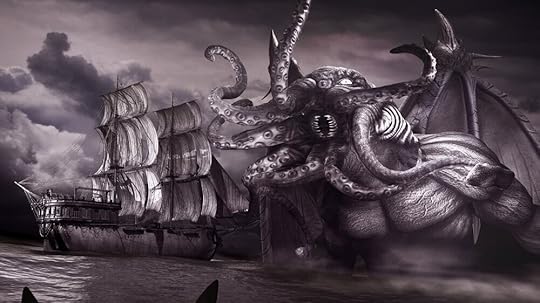
Someone in this time period might have been enthralled with the advances in ship design, and what lies beyond the Oceans. Speculation, the foundation of Science Fiction - the great what-if, likely abounded well in advance of such capabilities in the localities in which such advances were being made. The ocean was the next great frontier, sort of like outer space is for us now. In fact, there was an underlying “scientific” theory circulating at the time that every animal on earth had a counterpart in the ocean. So we see the impact of scientifically informed speculation on the maps of the time, on the drawings of the time, and in stories of the time (case in point, the Sea Monk).
Mary Shelley was a visionary for her time, there is no doubt. The Industrial Revolution was just around the bend and already she was seeing the potential positive (preserve/recreate life) and negative (social implications) of electricity in a way that few around her did. Revolutionary in her storytelling and taking advantage of the novel form, Mary Shelley definitely wrote the first modern scientific novel - absolutely not taking anything away from her.
That said, I wonder if our definition of science fiction might be a little limited by our modern viewpoint. Imagine the Sea Monk as a creature discovered. on Venus, or Mars, or Ceti Alpha 5? Imagine it adapted to what we know of Venus, high atmosphere, and intense temperatures. Now you’re venturing into what we know of as science fiction today. Back then what was other continents are now other planets.
I believe that science fiction story-telling and imagining our collective futures goes much, much farther back in time. It’s easy to look back at the ‘silly’ ideas that existed back in our history (like the Sun revolving around the Earth), but in a hundred years, much of what we know of today will fade away. I can already guess that half of our quantum-computing lore will probably end up in the category of ‘I can’t believe they thought that’.
And, as always, I’m grateful to be part of such a long tradition, and love every moment of creating in this genre.
July 16, 2021
Libera Sneak-Peek

A hundred years is a long time to live.
The more things change, the more they stay the same. Models may technically be free, but the society in which they live - well, they haven’t quite caught on yet. But Ordell’s not sure how much he’s willing to invest in the “real world” anymore…
Chapter 1 (the real chapter 1) The Free City
Saturday, June 19, 2258
Lyra Craevis, Deseret - Mijloc
Ordell Bentley descended wide, thick-carpeted stairs in his modest townhome that marked the center of Lyra Craevis. All of the years of software updates had smoothed the edges of his avatar, blending his angles into smooth arcs. Similarly, years of existence in the virtual prison known as Inferiere had smoothed his personality so much that any connection to what earthlings called the “real world” had long since dwindled to nothing in his heart. All he needed was here anyway, and the smell of virtual bacon sizzling on the level below as he descended the stairs told him that he wasn’t mistaken. His world was complete, though it was hardly a world at all. Pick a direction and walk a few “miles” and the city and surrounding foliage diminished into empty white space, as far as could be seen.
But not here. He rounded the corner at the bottom of the stairs, hands secured in the pockets of his overly-formal robe - about which Monica perpetually teased him. But after a hundred and eighteen years of existence, he felt entitled to a few comforts. Besides, she wouldn’t be chastising him this morning, since she still wore her long sweater from the evening before and so made a better target.
Monica Caldwell tried her best at the ancient art of cooking on a stove, and had it not been for the limitations set in their virtual home, she would have failed miserably. Ordell could tell that the bacon had already been on too long. When that happened, the flavor and texture defaulted to in-world ‘cooked bacon’ flavor, losing all nuance of her involvement in the process. She twisted her head to look as he stepped heavily onto the hardwood.
“You’re up,” she told him, smiling. “Finally.”
“I love sleep,” he commented to her without apology. “If you’d been in …”
“Inferiere for years unable to actually sleep at all, I would love it too. Yeah, they fixed that before you even left. Sit over there.”
She motioned to one of four stools flanking the counter - a counter which hadn’t existed the day before.
“More changes?”
Monica nodded.
“What do you think? The old open dining area was grating on me.”
Ordell nodded and grunted as though he approved, but he’d become used to the old dining area. He made his way across the empty floor to her, and when he was close enough to catch a whiff of her perfume, he picked up his pace and closed quickly, ending the stride with his arms around her lifting her from her place.
She grinned as he did, looking down into his face. They’d almost gotten her right, except they’d missed a mole that should have been on her left ear. Her bright red hair shot up around her head in something that resembled a frizzy halo, and he loved the way it looked on her. She leaned forward to kiss him as he spun her around and then deposited her back where she’d stood.
“In a good mood?”
“Safe. I have you here. What else would I need?”
“You do have me here.” The words might have echoed his joy, but he knew the heaviness they held. Her smile faded first from her lips and then from her eyes as he began to regret having brought attention to the fact that she was here, in Mijloc, instead of out there working with HCC. Her countenance quivered. The way it still got to her after forty years brought a lump to his throat. He’d missed the worst of it, having been securely dead in the real world and a ghost in Inferiere for most of the bloodshed.
“I’m sorry.” It was the same thing every time, and as usual, his apology seemed insufficient compared to what Monica had lost. She swiveled her head from side to side, and the familiar pattern played itself out to the same logical end.
“There’s nothing to be sorry about. You didn’t firebomb HCC headquarters. You didn’t level the Village in New York. You didn’t kill nearly a thousand models.”
“No, I didn’t.”
She tried to lift the pan holding the bacon, but instead pulled it to a different burner, and then put her hands on the counter by the stove with her back to him.
“I didn’t mean to bring up …” He tried to extend the apology. Ordell should have known better after so many attempts at doing the same thing, but since he lacked the strength to stand idle while she suffered before him, he took up his part of the dance with a pinch of self-loathing.
“It’s so frustrating, Ordell.” She turned to him and her eyes had gone gray. “So frustrating. How many years of our lives went to pursuing freedom? We finally get it and nothing changes. Polli still hate us, police still kill us for less than looking at them. Politicians even run on re-instating the Madison Rule. It’s almost like nothing changed at all.”
“Something did,” he assured her. “We have Lyra Craevis.” She seemed to relax then, and he held up his wrist before her. “See? Nothing. And I’m only twice the size of a normal person in here.”
Monica laughed at that comment, as true as it was. To call Ordell smaller didn’t mean much, as a small truck was also smaller. He at least didn’t have to turn to go through doors anymore.
“You’re right,” she said. “And we have Kelleigh.”
He stepped back from her and checked the belt on his robe.
“We do. Still sleeping somewhere, I guess.”
“She learned to love sleeping from you.”
On cue, he heard the drowsy shuffling of the girl who lived with them descending the stairs he’d just departed. He moved to the side to grant access to one of the counter chairs. Rubbing the collected grains from her eyes through a stifling yawn, another woman entered the kitchen and sat at the counter beside him without acknowledging he existed. He smiled at her anyway, and watched her settle into her seat. Only instead of a woman nearing thirty, the upper limit on any avatar in Mijloc, he saw the little girl he’d first met almost fifty years before, tears streaming down her face and motherless except for the woefully unequipped Monica, fighter and revolutionary, community organizer, and victim of model-directed violence that ended with her and several hundred other models dead or dying in the so-called “real world” and ported into Mijloc prematurely.
June 26, 2021
MtA - Karen Eisenbrey
Watch now on my website!
June 2, 2021
Radical Secular Interview!
I just completed an interview with The Radical Secular, folks who are trying to make a difference in this crazy world. If you've read Models and Citizens, then you're aware that it's about more than just clones and evil corporations.
There are some deep similarities between the events and circumstances in the novel and some of what we've seen here in the world today. That's not an accident, and in this interview with Radical Secular, you can read-between-the-lines a bit more and understand the story more deeply. Don't forget to subscribe to The Radical Secular channel!
Click to watch the Models and Citizens Interview on YouTube
May 26, 2021
Bodhi Rising 5.30.2021
May 20, 2021
Science Fiction with a Purpose
That's why I began to write. Models and Citizens, at its core, is about oppression. Most dystopian fiction is in some way, but this book was based on United States history and the big what-if. What if slavery happened in the future? From that, the next natural question was "what would it look like?", followed by "have we really changed so much that we wouldn't allow it?".
So I set out with Harper in tow to see how she, a recent college graduate with no opinion on anything but her own future, would fare in a world where slavery was a fundamental part of life. I was both disappointed and enheartened by her decisions throughout the novel. From her struggle to hold onto her imagined future before Ordell entered and shook things up, to her eventual and unintentional activism.
If you look closely, her decisions are all driven by personal goals, and not by any larger good. Even as she criticizes herself for molding her life to others' whims, she remains at the wheel (in the end, in a very literal way).
There's a reason the novel ends the way that it does. Not trying to give too much away, it's because Harper, like so many of the rest of us, has hit her limit with the stressors that come with social awareness. She progressively comes to realize the amount of work and sacrifice it takes to live in a just society, and makes her decision at the end based on that realization of what is expected of her and what her life has become.
So though the novel is very entertaining, and is on its face about clones, there's a lot happening in the subtext that I wanted to shine a light on in case you missed it.
Happy reading!
May 6, 2021
Fresh from the Editor!
Take a sneak-peak at Bodhi Rising (chapter 1)! Now available on my website, the first chapter of Bodhi Rising opens with Bodhi wandering the hallways of a mansion that is partially submerged under the ground. In Canada.
Fresh from the editor, Bodhi Rising picks up fifteen-years after Models and Citizens. The story answers the questions left open at the end of Models and Citizens (i.e. what happens to Harper), but in a way that I believe is consumable by itself. You don't have to have read Models and Citizens to be able to read Bodhi Rising, but doing so adds context and meaning that you may miss in the interplay between the characters.
Back from the editor, and absolutely on track for 5.30.2021, as promised!
https://www.andrewsweetbooks.com/br-sample-chapter-1
May 4, 2021
Zero-to-One Blog
Introducing the blog Zero-to-One (ZtO, anyone?). This blog will be my notes from the indie-author/self-publishing experience, does, and don'ts along the way. The introduction and first two posts are up here: https://www.andrewsweetbooks.com/zero.... Come on by and let me know what you think!
Reality Gradient

- Andrew Sweet's profile
- 55 followers

