Could not find Kindle Notes & Highlights for that user.
Ronit Plank's Blog, page 12
July 2, 2024
Episode 104 ft. Joseph Lezza
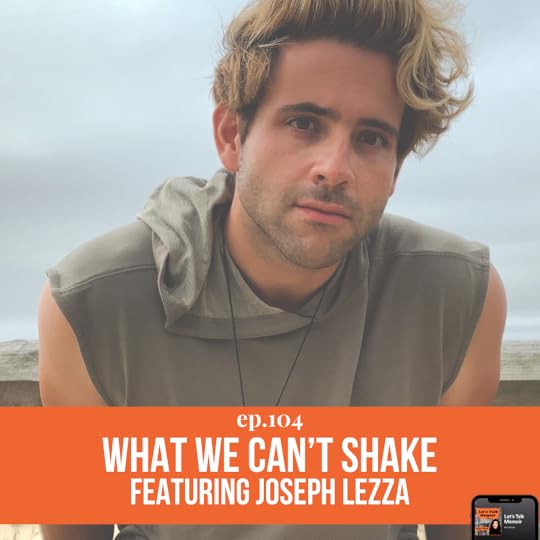
Joseph Lezza joins Let’s Talk Memoir for a conversation about losing loved ones, panic disorder and the stigma around anxiety, anger, shame, and the grieving process, discovering the genre he needed while at an MFA program, lyric essay, how story dictates form, what we can’t shake, and his memoir I’m Never Fine: Scenes and Spasms on Loss.
Listen on iTunes Listen on Spotify YOU MAY ALSO LIKE Episode 104 ft. Joseph Lezza
 Jul 2, 2024
Joseph Lezza joins Let’s Talk Memoir for a conversation about losing loved ones, panic disorder and the stigma around anxiety, anger, shame, and the grieving process, discovering the genre he needed while at an MFA program, lyric essay, how story dictates form, what...
 Episode 103 ft. Deesha Dyer
 Jun 25, 2024
Deesha Dyer joins Let’s Talk Memoir for a conversation about her rise in the Obama White House and how imposter syndrome followed her up the ranks, tone policing and microaggressions, how her identity as a Black woman was weaponized in the workplace, engaging her...
 Episode 102 ft. Melanie Brooks
 Jun 18, 2024
Melanie Brooks joins Let’s Talk Memoir for a conversation about the misinformation and fear around HIV/AIDS in the 1980s, the role of the evangelical church in her family’s history, the emotional toll of keeping secrets, her work in the growing field of narrative...
The post Episode 104 ft. Joseph Lezza appeared first on Ronit Plank.


June 25, 2024
Episode 103 ft. Deesha Dyer
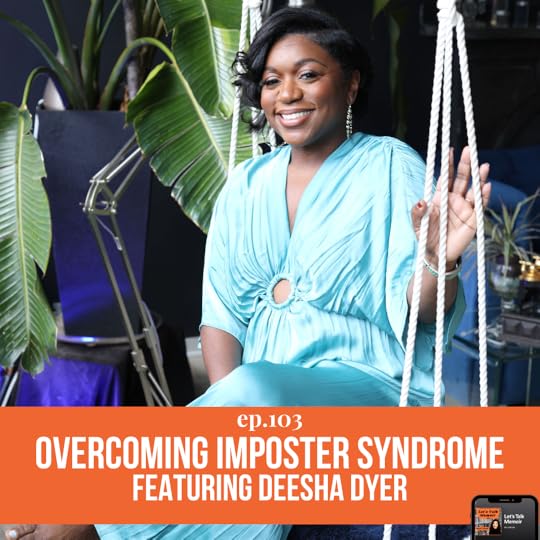
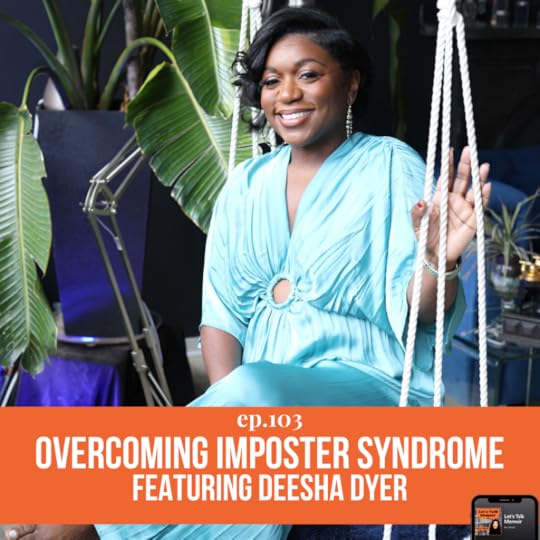
Deesha Dyer joins Let’s Talk Memoir for a conversation about her rise in the Obama White House and how imposter syndrome followed her up the ranks, tone policing and microaggressions, how her identity as a Black woman was weaponized in the workplace, engaging her inner child to heal, finding internal freedom and forgiving ourselves, how being yourself takes a while, self-care when writing, honoring our accomplishments and ourselves, and her memoir Undiplomatic: How My Attitude Created the Best Kind of Trouble.
Listen on iTunes Listen on Spotify YOU MAY ALSO LIKE
Episode 103 ft. Deesha Dyer Jun 25, 2024
Deesha Dyer joins Let’s Talk Memoir for a conversation about her rise in the Obama White House and how imposter syndrome followed her up the ranks, tone policing and microaggressions, how her identity as a Black woman was weaponized in the workplace, engaging her...
Episode 102 ft. Melanie Brooks Jun 18, 2024
Melanie Brooks joins Let’s Talk Memoir for a conversation about the misinformation and fear around HIV/AIDS in the 1980s, the role of the evangelical church in her family’s history, the emotional toll of keeping secrets, her work in the growing field of narrative...
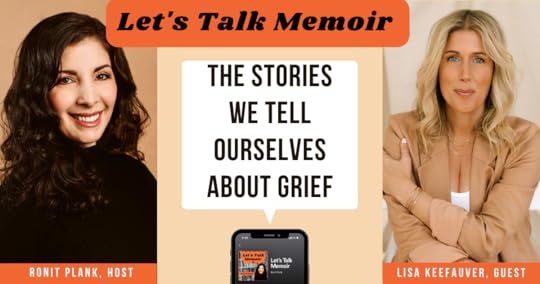 Episode 101 ft. Lisa Keefauver
 Jun 13, 2024
Lisa Keefauver MSW and host of the popular podcast Grief is a Sneaky Bitch joins Let’s Talk Memoir for a conversation about what happens when we revisit our stories to more deeply understand what has happened in our lives, a look at ambiguous loss, the shoulds and...
The post Episode 103 ft. Deesha Dyer appeared first on Ronit Plank.
June 23, 2024
Set Your Pitch Apart: Getting Indie Bookstores to Say Yes to Your Book Event
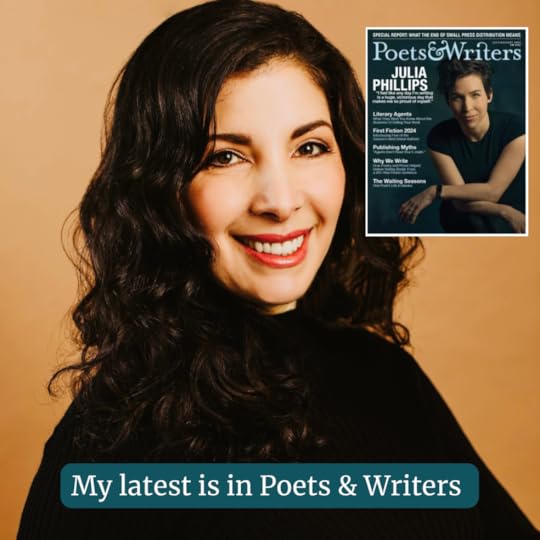
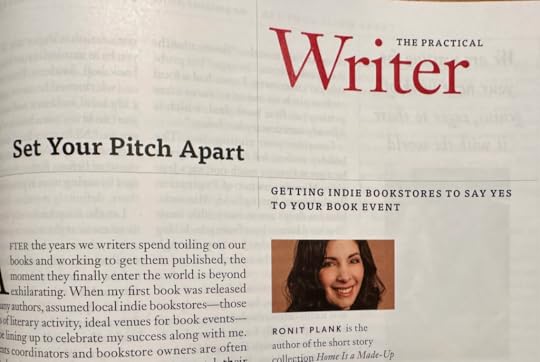
I’m happy to be able to share my latest article out now in the print version of Poets & Writers: Set Your Pitch Apart: Getting Indie Bookstores to Say Yes to Your Book Event. I got to talk with booksellers and event managers at Pagination Bookstore in St. Louis, The Golden Notebook in Woodstock, and Third Place Books in Seattle about their recommendations and preferences for authors hoping to connect with them about book launches.
In this article I share ways to improve your chances of making it through their busy inboxes and that it is really okay to follow up. In fact, writing this article helped me see just how important it is that we advocate for our work and, for good measure, advocate a little more.
Yes to the NudgeI’m writing to you about nudges because I’m a big believer in them though I used to fret about being too nudge-y.
Nudge:
noun 1) – the act of pushing someone or something gently
noun 2) – one who pesters and annoys with persistent complaining (Yiddish, also spelled noodge)
A nudge is that feeling inside that awakens you to what you want, the hunch that you are on the right path, the feeling in your gut that is more powerful than your equivocating, imposter-syndrome brain. There’s also the Yiddish nudge which is a person who can be a little pushy or persistent about their needs. I was once afraid of being a nudge. I was so frozen by a fear of rejection I told myself that if my work was good enough it would speak for itself without any extra legwork on my part. I worried that people, literary magazines, and editors, would see insecurity dripping off me if I emailed again or followed up.
What I’ve learned? When it comes to editors and those you need to get an answer from, you must be a nudge. Event managers, agents, editors, and publishers are so busy and swamped with emails that even if they are intrigued by your project they may not have the bandwidth to get in touch with you as soon as they’d like. So, if a bit of time has passed and you haven’t heard from a contact about your proposal/project/pitch, listen to your inner nudge and follow up. Reaching out once or even twice after your initial pitch does not make you a nudge. It makes you a smart and proactive writer and champion of your hard work.
For more, pick up a copy of the July/August issue of Poets and Writers.
This Tuesday, 6/25 on Let’s Talk Memoir my guest is Deesha Dyer, who worked in the Obama administration and talks about how she grappled with imposter syndrome even as she rose through the ranks, how her identity as a Black woman has been weaponized in the workplace, engaging her inner child to heal, how being yourself takes a while, and her new memoir Undiplomatic: How My Attitude Created the Best Kind of Trouble. Listen to Let’s Talk Memoir on your favorite podcast platform, new episodes drop every Tuesday.
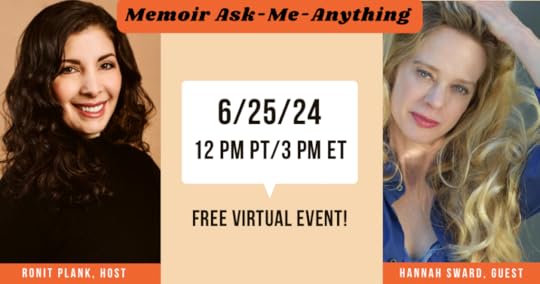
This Tuesday 6/25, you are invited!
Join me and Hannah Sward for a free virtual Memoir Ask-Me-Anything at 12PM PT/3PM ET. We’ll begin the hour discussing writing about addiction and recovery and Hannah’s memoir STRIP, and then answer your memoir writing and publishing questions.
Hannah Sward, daughter of the late poet Robert Sward, is the IAN awarding-winning author of Strip: A Memoir. Strip, Swards first book, has received the attention of authors such as Nobel Prize winner, J.M. Coetzee, Melissa Broder, and NYT Bestselling novelist Caroline Leavitt who called Sward, “One of the most moving and honest memoir writers. So eloquent, so brave.” Sward has appeared on NBC CA Live, C-SPAN BookTV, dozens of podcasts, panels, and in magazines and newspapers such as the LA Times and Recovery Today. Sward lives in Los Angeles where she coaches writers and is working on her next book. To find out more hannahsward.com
To reserve your Ask-Me-Anything spot, register HERE.
The question I’m answering in this post is about publishing and comes from Lora Arbrador whose Substack is Art Blotter Plus:
“I notice that most of your guests on “Let’s Talk Memoir” are traditionally published. Would you recommend that? I seem to be OK getting my own editor, copyeditor, proofreader, indexer and book cover and interior designer. Am I missing out by not going trad? Since I’m not Michelle Obama I’d be looking at small independent publishers (not hybrid) but I’m hesitant to sell the rights to any publisher.”
Thank you for this excellent and important question, Lora.
The answer is complex and truly depends on your goals.
In general, traditional publishing means you get a deal with one of the “big five” publishing houses. You get an advance and you must make up your advance in book sales until you begin to turn a profit with your royalties.
In order to get your book in front of a traditional publishing house you need to secure an agent which requires querying with a query letter and often, with nonfiction titles, a proposal. Once you get an agent (which is in an of itself often a feat), the agent puts your project on submission whereby they query/[pitch publishing houses on your behalf.
In my experience traditional publishing is where the bigger money is, where there is more inherent exposure for an author, and where books can go to auction and sometimes fetch big advances. Indie publishers are often smaller operations and provide on their websites submission information, what they are looking for in new projects, and links for authors to self-submit their manuscripts and proposals. Indie publishers often don’t require agent representation, give you an advance, and they too can get your book in front of an audience.
To my mind, the main differences between traditional and indie, un-agented publishing houses are:
-the advance amount for your book
-that you don’t need to pay out an agent from your proceeds (though agents do also work with indie presses)
-if you don’t yet have an agent, less time from querying to book deal
When I began querying my memoir When She Comes Back I got some requests for fulls (the full manuscript) and waited for a while to hear. By about 6-7 months into the process I realized that if I held out for a traditional press I’d be looking at years. Between securing an agent who believed in my project, that agent finding a home for the book, and then getting into the queue at the press, it could be a while.
I felt my memoir was especially relevant at the time because the guru my mother left our family for was in the news and the subject of a Netflix docuseries, and I knew I had to strike while the iron was hot. Also, I felt I’d been working on and crafting this story for so long, I was really ready to get a deal and release it into the world. So I submitted to indie presses and was thrilled when Motina Books was interested and then published my memoir.
What I have learned and you’ve probably also heard on Let’s Talk Memoir is that no matter who publishes your book, you must hustle to get publicity. Even if you hire a PR firm to help you, you will still want to reach out to bookstores you love, organizations who would appreciate you being a guest speaker, press contacts you might have, and think about writing companion pieces for exposure.
Regarding your being “hesitant to sell the rights to any publisher”, self-publishing might make the most sense to you. There are lots of companies that can help you get your manuscript edited and formatted and even print it for you through their channels. You would pay an upfront fee to secure their services, and the rights would belong to you, and so would the proceeds. You can also self-publish completely on your own without the help of a company like this. This is a good option if you want to keep your investment low, enjoy the legwork of getting your book ready for print, and are comfortable navigating publishing programs.
Now, back to how I began this section: the choice you make depends on your goals.
If you have lots of time and patience and a dream of scoring a big deal, go traditional. Especially if you’ve wanted to get an agent and experience publishing the old-fashioned way.
If you feel antsy to see your book in the world and are open to presses of different sizes and a more bespoke experience, indie might be the way to go.
Just as our books are uniquely ours, so is our path to publishing. There is no one size fits all and it’s important that you listen to your inner nudge and follow your intuition. I hope this has been helpful.
Until next time, take good care of your creative heart.
xo,

The post Set Your Pitch Apart: Getting Indie Bookstores to Say Yes to Your Book Event appeared first on Ronit Plank.
June 18, 2024
Episode 102 ft. Melanie Brooks
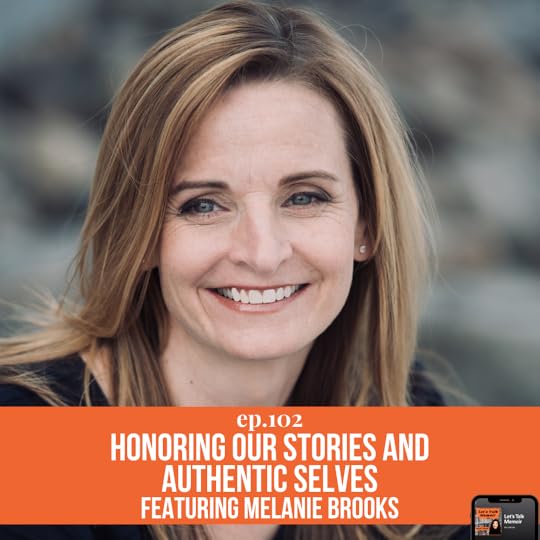
Melanie Brooks joins Let’s Talk Memoir for a conversation about the misinformation and fear around HIV/AIDS in the 1980s, the role of the evangelical church in her family’s history, the emotional toll of keeping secrets, her work in the growing field of narrative medicine, radical listening, revisiting our heritage and beliefs, leaning into courage, vulnerability and risk, and her memoir A Hard Silence.
Listen on iTunes Listen on Spotify YOU MAY ALSO LIKE
Episode 102 ft. Melanie Brooks Jun 18, 2024
Melanie Brooks joins Let’s Talk Memoir for a conversation about the misinformation and fear around HIV/AIDS in the 1980s, the role of the evangelical church in her family’s history, the emotional toll of keeping secrets, her work in the growing field of narrative...
Episode 101 ft. Lisa Keefauver Jun 13, 2024
Lisa Keefauver MSW and host of the popular podcast Grief is a Sneaky Bitch joins Let’s Talk Memoir for a conversation about what happens when we revisit our stories to more deeply understand what has happened in our lives, a look at ambiguous loss, the shoulds and...
 Episode 100 ft. Linda Joy Myers
 Jun 11, 2024
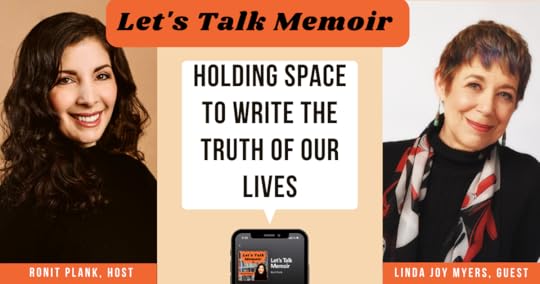
Linda Joy Myers, founder of the National Association of Memoir Writers and memoir coach joins Let’s Talk Memoir for a conversation about helping memoirists become their own good editors, keeping both the vertical and linear in mind when writing our stories, the...
The post Episode 102 ft. Melanie Brooks appeared first on Ronit Plank.
June 13, 2024
Episode 101 ft. Lisa Keefauver
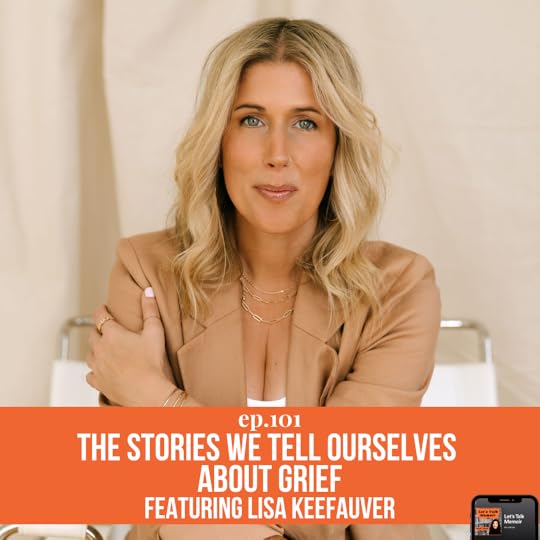
Lisa Keefauver MSW and host of the popular podcast Grief is a Sneaky Bitch joins Let’s Talk Memoir for a conversation about what happens when we revisit our stories to more deeply understand what has happened in our lives, a look at ambiguous loss, the shoulds and shouldn’ts about grief we tell ourselves that can cause us unnecessary suffering, grief brain, memoir writing for insight and self-compassion, earning reader trust, deep mindfulness, pausing even when we have deadlines, and exercises to calm our nervous system from her new book Grief is a Sneaky Bitch.
Listen on iTunes Listen on Spotify YOU MAY ALSO LIKE
Episode 101 ft. Lisa Keefauver Jun 13, 2024
Lisa Keefauver MSW and host of the popular podcast Grief is a Sneaky Bitch joins Let’s Talk Memoir for a conversation about what happens when we revisit our stories to more deeply understand what has happened in our lives, a look at ambiguous loss, the shoulds and...
Episode 100 ft. Linda Joy Myers Jun 11, 2024
Linda Joy Myers, founder of the National Association of Memoir Writers and memoir coach joins Let’s Talk Memoir for a conversation about helping memoirists become their own good editors, keeping both the vertical and linear in mind when writing our stories, the...
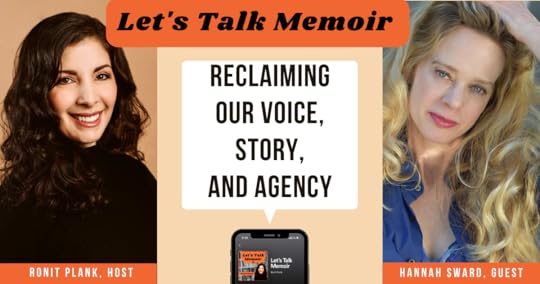 Episode 99 ft. Hannah Sward
 Jun 4, 2024
Hannah Sward joins Let’s Talk Memoir for a conversation about how she never wanted to be a writer let alone write a memoir, attachment theory and being abandoned by her mother, creating boundaries with loved ones, compassion for the children we were, her experience...
The post Episode 101 ft. Lisa Keefauver appeared first on Ronit Plank.
June 11, 2024
Episode 100 ft. Linda Joy Myers
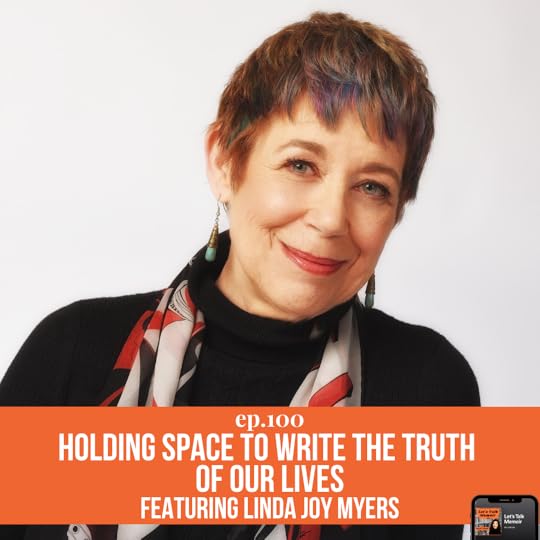
Linda Joy Myers, founder of the National Association of Memoir Writers and memoir coach joins Let’s Talk Memoir for a conversation about helping memoirists become their own good editors, keeping both the vertical and linear in mind when writing our stories, the importance of breaks when working on traumatic material, how writing puts our experience in perspective, finding a writing cohort, leaving bad writing groups, what we remember vs. what really happened, why truth is complicated, and the evolution of memoir.
Listen on iTunes Listen on Spotify YOU MAY ALSO LIKE
Episode 100 ft. Linda Joy Myers Jun 11, 2024
Linda Joy Myers, founder of the National Association of Memoir Writers and memoir coach joins Let’s Talk Memoir for a conversation about helping memoirists become their own good editors, keeping both the vertical and linear in mind when writing our stories, the...
Episode 99 ft. Hannah Sward Jun 4, 2024
Hannah Sward joins Let’s Talk Memoir for a conversation about how she never wanted to be a writer let alone write a memoir, attachment theory and being abandoned by her mother, creating boundaries with loved ones, compassion for the children we were, her experience...
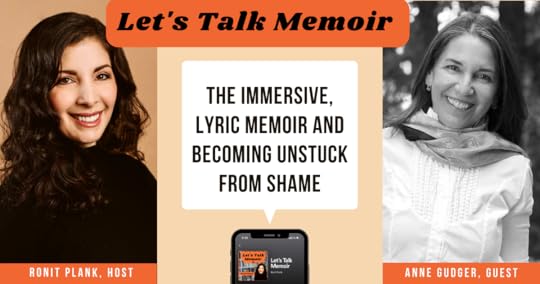 Episode 98 ft. Anne Gudger
 May 28, 2024
Anne Gudger joins Let’s Talk memoir for a conversation about loss and choosing love every day, giving grief a microphone, voice-driven writing and breaking structure rules, essays for platform-building, holding both the raw experience and the long view, the legacy of...
The post Episode 100 ft. Linda Joy Myers appeared first on Ronit Plank.
June 4, 2024
Episode 99 ft. Hannah Sward
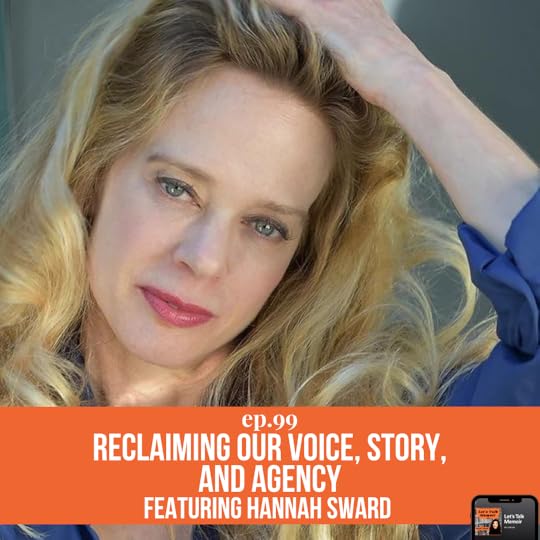 Hannah Sward joins Let’s Talk Memoir for a conversation about how she never wanted to be a writer let alone write a memoir, attachment theory and being abandoned by her mother, creating boundaries with loved ones, compassion for the children we were, her experience writing about working in the sex trade and being addicted to crystal meth, when acceptance is a form of forgiveness, feeling overwhelmed by feedback, how structure can be confounding, reclaiming our voice, story, and agency, creating a stark narrative, and her memoir Strip. Listen on iTunes Listen on Spotify YOU MAY ALSO LIKE
Episode 99 ft. Hannah Sward
Hannah Sward joins Let’s Talk Memoir for a conversation about how she never wanted to be a writer let alone write a memoir, attachment theory and being abandoned by her mother, creating boundaries with loved ones, compassion for the children we were, her experience writing about working in the sex trade and being addicted to crystal meth, when acceptance is a form of forgiveness, feeling overwhelmed by feedback, how structure can be confounding, reclaiming our voice, story, and agency, creating a stark narrative, and her memoir Strip. Listen on iTunes Listen on Spotify YOU MAY ALSO LIKE
Episode 99 ft. Hannah Sward Jun 4, 2024
Hannah Sward joins Let’s Talk Memoir for a conversation about how she never wanted to be a writer let alone write a memoir, attachment theory and being abandoned by her mother, creating boundaries with loved ones, compassion for the children we were, her experience...
Episode 98 ft. Anne Gudger May 28, 2024
Anne Gudger joins Let’s Talk memoir for a conversation about loss and choosing love every day, giving grief a microphone, voice-driven writing and breaking structure rules, essays for platform-building, holding both the raw experience and the long view, the legacy of...
 Episode 97 ft. Sara Weiss
 May 21, 2024
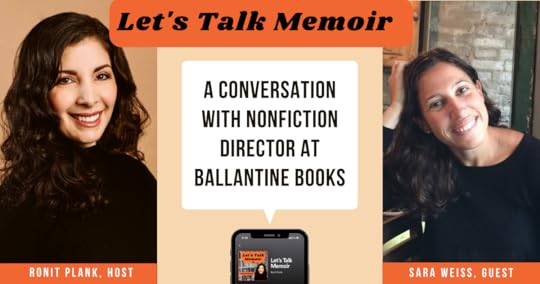
Sarah Weiss joins Let’s Talk Memoir for a conversation about the path to her career in publishing and her role as Nonfiction Director and Ballantine, what memoir writers always need to ask themselves, her interest in memoir with purpose, the blockbuster model and the...
The post Episode 99 ft. Hannah Sward appeared first on Ronit Plank.
May 28, 2024
Episode 98 ft. Anne Gudger
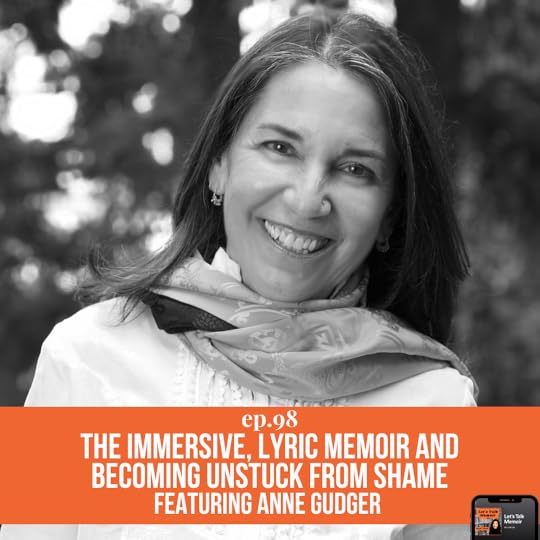
Anne Gudger joins Let’s Talk memoir for a conversation about loss and choosing love every day, giving grief a microphone, voice-driven writing and breaking structure rules, essays for platform-building, holding both the raw experience and the long view, the legacy of shame and becoming unstuck, shifting energy in our bodies, and the metaphysical and spiritual components of her memoir The Fifth Chamber.
Listen on iTunes Listen on Spotify YOU MAY ALSO LIKE
Episode 98 ft. Anne Gudger May 28, 2024
Anne Gudger joins Let’s Talk memoir for a conversation about loss and choosing love every day, giving grief a microphone, voice-driven writing and breaking structure rules, essays for platform-building, holding both the raw experience and the long view, the legacy of...
Episode 97 ft. Sara Weiss May 21, 2024
Sarah Weiss joins Let’s Talk Memoir for a conversation about the path to her career in publishing and her role as Nonfiction Director and Ballantine, what memoir writers always need to ask themselves, her interest in memoir with purpose, the blockbuster model and the...
 Episode 96 ft. Maureen Murdock
 May 14, 2024
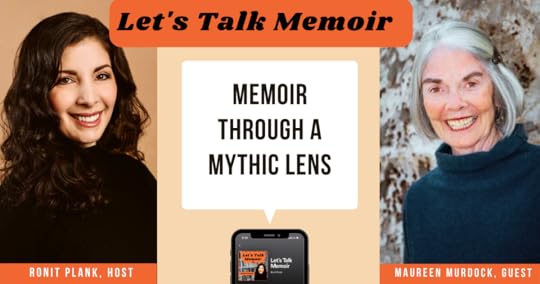
Maureen Murdock joins Let’s Talk Memoir for a conversation about how myths help excavate our stories, memoir as a way to reclaim the past, invisible primary patterns in the psyche, letting ourselves meander and reflect, using process journals to excavate fears about...
The post Episode 98 ft. Anne Gudger appeared first on Ronit Plank.
May 21, 2024
Episode 97 ft. Sara Weiss
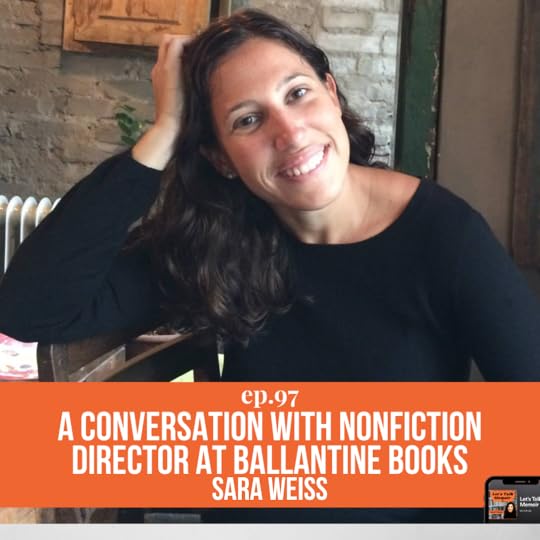
Sarah Weiss joins Let’s Talk Memoir for a conversation about the path to her career in publishing and her role as Nonfiction Director and Ballantine, what memoir writers always need to ask themselves, her interest in memoir with purpose, the blockbuster model and the editorial decision making process, building a writing community, how many books we can realistically sell, making our work ready, and the pace of publishing these days.
Listen on iTunes Listen on Spotify YOU MAY ALSO LIKE
Episode 97 ft. Sara Weiss May 21, 2024
Sarah Weiss joins Let’s Talk Memoir for a conversation about the path to her career in publishing and her role as Nonfiction Director and Ballantine, what memoir writers always need to ask themselves, her interest in memoir with purpose, the blockbuster model and the...
Episode 96 ft. Maureen Murdock May 14, 2024
Maureen Murdock joins Let’s Talk Memoir for a conversation about how myths help excavate our stories, memoir as a way to reclaim the past, invisible primary patterns in the psyche, letting ourselves meander and reflect, using process journals to excavate fears about...
 Episode 95 ft. Vickie Rubin
 May 9, 2024
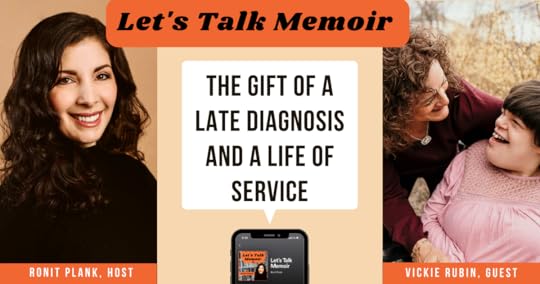
Vickie Rubin joins Let’s Talk Memoir for a conversation about raising a child with medical complexities and intellectual disabilities, submicroscopic chromosomal deletions, incorporating clippings, news articles, and photographs in memoir, when you feel something is...
The post Episode 97 ft. Sara Weiss appeared first on Ronit Plank.
May 20, 2024
But First, Community: The Generosity Feedback Loop
I don’t like to think about the pandemic days very much; they were harrowing and left an indelible mark on most of us. But one of the only good things from that time for me was how I learned to reach out for connection in ways I hadn’t before, meet other writers, and slowly build a community that ultimately spanned timezones, writing genres, and life stages. Four years later and I’ve maintained lots of these friendships, been able to visit some of these virtual friends in real life, created panels with them at writing conferences, appeared at book events together, and had them as guests on my podcasts.
And as if that wasn’t gift enough, many of these friends shared my memoir When She Comes Back (Motina Books, 2021) and my short story collection Home is a Made-Up Place (Motina Books 2023) on social media, wrote reviews, had me at their book clubs, and invited me to be a guest on their podcasts. It’s been a generosity feedback loop that has taught me a lot about giving back, supporting my peers, and remembering that we need each other in this writing life.
Listing all of the opportunities I’ve had because of the kind support of my peers would fill pages and pages and would be nearly impossible to accurately trace since each new connection led to so many more. I am grateful to them all and a special thank you to Allison K. Williams and Ashleigh Renard who kicked off this new understanding of how lifting up other writers is the best way to also feel lifted. I know that had it not been for what I learned from Allison and Ashleigh and the online groups they fostered, I surely wouldn’t have become this productive or fulfilled in my writing life.
The memoir question I’m addressing this week is all about community and creative growth. Read on for more.
A Memoir Question AnsweredOn May 7th I hosted a Memoir-Ask-Me-Anything with Lisa Keefauver MSW which was a highlight of the month for me. Lisa, the host of the podcast Grief is a Sneaky Bitch and author of a new book by the same name is generous and insightful and I always learn something new when I’m in conversation with her. We were able to answer a bunch of questions but at the end of the hour we still hadn’t gotten to a few so I’d like to address this one now.
Question: “How do I find a writing group that I can trust, is at a similar level as I am and is willing to workshop with me? Or do most emerging writers hire editors just to get feedback?”
Writing groups can be integral to our growth as writers and can help us hone our editing skills. If you are interested in a group there are different ways to approach finding one. I appreciate that you are also asking about groups you can trust; that is so important. You should always follow your instincts and if you don’t feel comfortable or that the advice you are getting is good, don’t feel obligated to stay. You will benefit from a group of writers who are committed to growing, are respectful, and know how to share feedback in constructive ways. Sometimes it takes a while to find your people, but they are out there.
Editors are also a good option for improving your work but require a financial commitment. If you are far along in your project you may be ready for a professional eye on your work. If you are earlier in the process, a class or writing group is more economical and reading other writers’ work will also help you sharpen your skills.
One of the best ways to find a group is to take classes that go for 6 weeks or so which can give you time to become friendly with classmates who are also looking for a writing cohort. I can recommend several places/teachers who do these online and if you enjoy your time with your classmates and feel they are astute readers, then you can begin meeting after the class ends.
Of course, classes cost money and are a commitment, but if you know you’ll be investing in one anyway and you gel with your classmates, you can suggest that when class is over, those who are interested continue meeting. As a group you can set parameters for frequency and format. Groups that form from classes can be great places to hone your craft because they are free, you are familiar with one another, you are most likely at similar writing stages, and you have already established ground rules for workshopping writing.
Here are some venues for online classes:
Memoir Courses with Brooke Warner and Linda Joy Myers Brooke Warner of She Writes Press who was a guest on Let’s Talk Memoir and Linda Joy Myers, founder of the National Association of Memoir Writers offer a variety of memoir classes and coaching.
Craft Talks Allison K. Williams and Sharla Yates curate these virtual sessions and bring talented teachers to their cross-genre roster. Their offerings are exciting and once you sign up for information you’ll get updates for upcoming workshops as they release them.
Hugo House This is the memoir class page for Hugo House and you’ll see some are 6 sessions, some 1. I really am a fan of the classes here and have taken fiction and nonfiction courses over the years. I’ve most recently been focusing on poetry and my last class has decided to begin a poetry workshop group and we are going to begin meeting once a month virtually. Hugo House releases new course catalogs each season so if you’ve missed the start of a class, check back.
Resilient Writers I teach virtually for Rhonda, the founder of Resilient Writers who is in Canada and she has a writing accountability group and community for a pretty moderate cost monthly where you can also find people to connect with.
Your questions: If you have questions about memoir writing or publishing you’d like me to address you can send me a message here or find my on socials.
Season 4 of Let’s Talk Memoir is fast becoming one of my favorite seasons thanks to my incredible guests. Recent episodes cover the nature of mercy with ourselves and those we write about, how we can harness mythological archetypes to deepen our narratives, and a conversation about the memoir publishing landscape with the nonfiction director at Ballantine Books. Read on for more about these episodes.
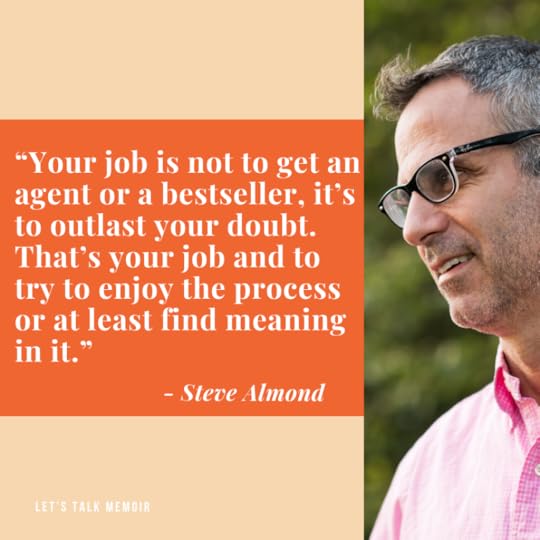
Truth is the Arrow, Mercy is the Bow featuring Steve AlmondSteve Almond joined Let’s Talk Memoir for a conversation about the ambivalence memoirists often experience when writing about others, the story underneath the story we are telling, disrupting the negative feedback loop of writer’s block, dialing the ego down, questions of inner life, his contribution to Dear Sugars podcast, generosity and mercy in our work, performing versus storytelling, how our failures are actually are teachers, and his new book on writing, Truth Is the Arrow, Mercy Is the Bow.
Memoir Through a Mythic Lens featuring Maureen MurdockMaureen Murdock joined Let’s Talk Memoir for a conversation about how myths help excavate our stories, memoir as a way to reclaim the past, invisible primary patterns in the psyche, letting ourselves meander and reflect, using process journals to excavate fears about being vulnerable, allowing structure to emerge, a favorite prompt of hers, and her latest book Mythmaking: Self-Discovery and the Timeless Art of Memoir.
Coming up 5/21: A Conversation with Nonfiction Director at Ballantine Books Sara Weiss
Be sure to listen this Tuesday for my conversation with Sara Weiss, Director of Nonfiction at Ballantine Books who acquires memoir. In this conversation we talk about what memoir writers always need to ask themselves, her interest in memoir with purpose, the editorial decision-making process, building a writing community, how many books we can realistically sell, making our work ready, and the pace of publishing these days. I was so happy to be able to have this time with Sara and you can find our conversation first thing Tuesday morning, 5/21 on your favorite podcast platform.
Mark your calendar, my next Memoir Ask-Me-Anything is June 25 at noon with Hannah Sward, whose memoir is Strip. We’ll be talking about approaching addiction and recovery in memoir and take your memoir writing questions. Registration opens soon.
If you enjoyed reading this newsletter and found it helpful, you can share it with a memoir writer you care about. 🧡
Until next time,
XO
Ronit
The post But First, Community: The Generosity Feedback Loop appeared first on Ronit Plank.