
Marilyn Hailbronner's Blog, page 2
August 7, 2021
August Monthly Post: Fare in a medieval manor
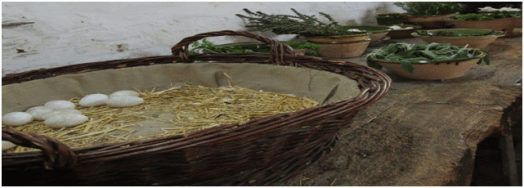
Imagination and historical facts is the recipe for a Time travel novel. I normally do extensive research on both the relevant historical period and site locations before I start writing a storyline, but for book two in the series, “The Shadow of Black Mountain,” I have done spot research to clarify things while writing.
In book two, Rhain and Mairwen are no longer on the run and they find themselves back at Llawgwalch and the Pennaeth’s manor.
“Rhain lifted the heavy iron latch and pushed open the door just wide enough to allow them to walk in. The warmth that hit Mairwen’s face was as thick as a wool blanket. It smelled chokingly of wood smoke, tallow candles, food and sweat. The hall was packed with people gathered for the evening meal. Long trestle tables, were situated down both sides, the full length of the hall. People sat crowded along benches and stools eating from shared trenchers. Their talk filling the hall with the loud drone of conversation punctuated with bursts of laughter or raised jocular voices. Serving women bustled busily amongst the trestles bringing more food and deftly scooping up stacks of empty platters.”
As the words of the story are softly clicking out under my fingers, part of my focus is on the computer screen, the other is lost in the sights and sounds of a medieval hall. Like a slow running movie reel, that I can start and stop at any time as I move my characters through scenes. What does a great hall look like? How is it lite, do the candles and fire give off a certain smell? Does the smoke in the air catch in their throats or make their eyes water? Rhain grew up living in this manor hall but for Mairwen, as a twentieth century women, the experience must have been overwhelming with so much to take in.
Medieval meals were eaten as a community in a large hall. The high table would have been on a dais, a raised platform at the head of the hall, facing Mairwen as she stepped inside. Here Rhain’s family and other high-ranking men of the community like the Reeve, who supervised all the work on the Pennaeth’s property, would have sat. Medieval society was highly stratified, nobility, clergy and commoner’s. The Nobles dined on, fresh game seasoned with exotic spices and displayed refined table manners; rough laborers could make do with coarse barley bread, salt pork and beans and were not expected to display etiquette.

The commoner’s that crowded the hall’s trestle tables would have been household servants, and those that worked at the manor. People shared, two to a trencher of food, and drinking cups. Stew pots would very likely have contained a pottage, which was a stew made of vegetables, meat and garden herbs. The pottage would be ladled onto a trencher, made from a thick slice of stale bread slightly hollowed out. The juices would soften the bread making it more palatable; this would have been eaten with a spoon, but many other foods were eaten with fingers, making mealtime a messy business. People were expected to provide their own meat daggers or knives which were carried by men and women alike, attached to their belts for use at table.
At the high table shallow basins of water were provided between courses and each diner would have a linen cloth provided to clean their fingers, before they attempted to pick up their wine goblet. Thicker and more delicious pottages were served to those at the high table, these were called mortrews and if the pottage was made with a cereal it was called frumenty. Made by boiling wheat in a meat broth or milk and typically served with venison.
Either part of a larger meal, or as a snack, sops were commonly served. These were pieces of bread which were used to soak up wine, soup, broth or sauces. Pies were also common, filled with meat, vegetables or fruit. The pastry however was not made to eat. Huff paste made from suet, flour and water, was intended more as a cooking vessel. Other foods included Eggs, dairy, like cheese and milk, fruit and nuts. Beer or ale was drunk and wine for those rich enough to afford it.
In the middle ages the diet was grain based, supplemented with limited seasonally grown vegetables like peas, cabbage, fava beans, onions, leeks, carrots and garlic. Potatoes were not known in England until they was introduced in 1536. Wheat bread finely milled was reserved for nobility while dark course bread made from barley or rye fed the commoner. Meat was either farmed or hunted, while fish and eels were available from the rivers. Meat and fish not eaten immediately would have to be preserved so it would not spoil, by either salting, smoking or pickling, and stored for leaner times.
Llawgwalch manor would have raised sheep, pigs, geese and chickens. The land would have produced barley, rye or oats. Villains were tenants, who worked their leased land in exchange for service to the Pennaeth. As agricultural laborers they would be expected to work three days of the week on the lord’s land, the remaining days on their plot and in times of conflict, were expected to serve carrying arms.
Game was hunted and sometimes unlawfully poached. Venison, boar, swans, cranes were food for the nobility only. Birds were hunted by hawking, with a falcon or hawk.
Typically, only two meals a day were eaten, dinner and a light supper. Breakfast or to break ones fast was not always eaten. The church preached against gluttony and other weaknesses of the flesh, so members of the church and cultivated gentry avoided it. Men tended to be ashamed of the weak practicality of breakfast. For practical reasons breakfast was still eaten by working men, young children, women, the elderly and sick.
The research is fairly limited to what life was like in Britain in 1080, the Norman’s, after the conquest, brought many different French customs and cuisines to Britain, slowly the Anglo-Saxon way of life began to change. Wales kept to their own customs far longer than other parts of Britain that were more heavily influence by the Norman Barons who were given confiscated land, for their service to the conquering King William.
In writing about a time so far in the past, I hope I don’t stray too far from the facts. If you would like to read more, below are some references.
Scully, Terence “The Art of Cookery in the Middle Ages.”
Adamson, “Food in Medieval Times.”
Henisch, Bridget Ann “Fast and Feast in Medieval Society.”
Next month I will be writing about Vikings and the fictional character of Bjarke Strongarm in Twilight Sojourn, chapter four.
If you would like to receive future monthly posts, updates and giveaways, pleased leave me an email marilyn@storyteller.space or visit my website for more about writing and the history behind the scenes. HTTP://STORYTELLER.SPACE
Marilyn
The post August Monthly Post: Fare in a medieval manor first appeared on Storyteller.


June 22, 2021
June Blog: A Welsh journey
I have had lots of questions about why I chose Wales as the setting for my novel, instead of the Scottish Highlands, which feature in many time travel novels. So here is the answer.
I knew I wanted to write, time-slip historical romances. Twilight Sojourn started life as a short story, actually chapter nine, Enchanted Place, though it has gone through many renditions since I first wrote it.
I already had the rough outline for my story, though as yet it was mostly written on sticky notes. Mairwen and Rhain needed an authentic medieval event in history to become part of.
From the very beginning things seemed to fall into place. Here were the key elements I needed. A battle or conflict, Vikings, A genuine motte and bailey castle on the Welsh/English border, Marcher Lords, and Norman soldiers. Quite a tall order.
One of the first historical event I happened to stumbled upon was a perfect match. A piece of Welsh history that had two larger than life heroes. Gruffudd and Rhys. Although Gruffudd ap Cynan plays only a minor role in the story, his Viking ancestry added an extra flare, who wouldn’t want an ancestor by the name of Sigtrygg Silkbeard.
Gruffudd, determined to fight for his rightful place as the king of Gwynedd (a principality in north Wales) sails with an army of Danes from Ireland. A Viking army of some 600 strong arrive in Porth Clais in a fleet of longships to join forces with Rhys ap Tewdwr the king of Deheubarth who has been driven from his castle at Dinefwr, by three princes of rival principalities, one of whom holds Gwynedd’s throne. Rhys has been forced to take sanctuary at St David’s Cathedral. The two form an allegiance and strike out to do battle the very same day, with the army massing just north of St David’s. The battle of Mynydd Carn: “Gruffudd the foremost warrior advanced like a hero” “scattering his opponents with his gleaming sword.”
So, in this historical extract, I had the battle I needed and the Viking army. The more I read, I was amazed to discover that the Marcher Lords had made a deal with the three rival princes to bolster their ranks with Norman soldiers. This gave me all the key players and the locations.
My husband and I booked a flight to Ireland from the US. I wanted to visit the places that would feature in the story. We flew from Cork across the Irish sea, looking out the window during the one-hour flight to Bristol, I thought about the fleet of Viking ships sailing from Waterford, my own hero Rhain ap Cunadda sailing with Bjarke Strongarm. We flew over the coast of Wales and I eagerly looked for the bay the longships would have sailed into.
We rented a car in Bristol and drove into what used to be Deheubarth but is now Carmarthenshire. We had booked ourselves into a lovely old manor B&B, where we planned to stay for a week, not far from Dinefwr castle. From here we could explore the surrounding area and make day trips to places further afield. I had done my research before leaving home for possible locations to feature in the novel.
The first place was a special find, I remembered reading a wonderful children’s story called “The Gauntlet” by Ronald Welch, about a boy who slipped through time and ended up on a castle high on a crag. It was the castle I had come to find.
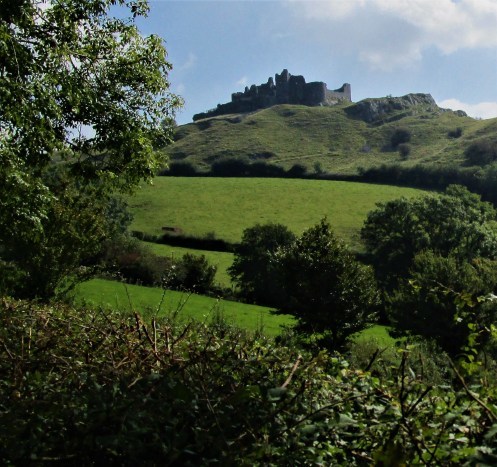
Not more than five miles from our B&B, in a beautiful rural setting was the most romantic castle ruin you could wish to find. Carreg Cennen Castle. We could see the castle, perched on top of a Limestone crag, its battered grey walls, imposing against the blue sky from some distance away. As we drove closer, I just knew that this was the perfect setting for the beginning of the story. The castle is built literally on the edge of the crag, the south curtain wall, drops 300 feet to the valley floor. Not only was there a public footpath that dropped down through the woods into the valley, but the highest point of the crag, beyond the castle walls cried out to be the rocky circle through which Mairwen slips through time.
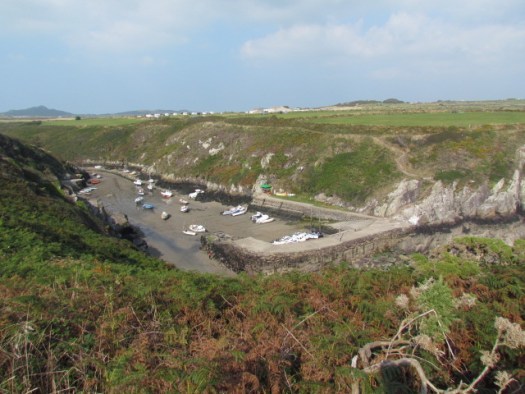
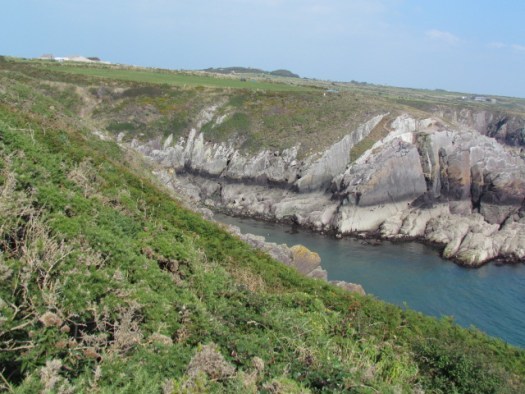
Another day we drove to the coast, planning to visit Porth Clais, where the Viking longships dropped anchor, bearing Gruffudd to within half a mile of St David’s cathedral. The inlet was long and narrow with high headlands at the entrance. I tried to imagine the inlet packed with longships, over 900 years ago. Many times, over the previous centuries, Viking ships had slipped into bays and coastal villages raiding Wales, for slaves to sell in the Irish markets. This time Gruffudd headed an army that would sweep north to reclaim his throne.
We picnicked on the headland overlooking St Brides bay, before going to look at St David’s cathedral where Rhain went to meet with Rhys, the day of the battle.
The last trip we took was north to find the site of the eleventh century motte and bailey castle near the border town of Montgomery. We tried for a while to find the site of the old Norman castle, Hen Domen but gave up and went into the lovely market town of Montgomery for a pub lunch. Everything was falling in to place, if we could just find the old site. Walking around the center of town we discovered a small museum.
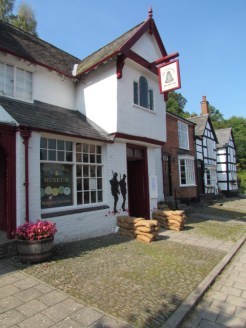
Another surprise, there was a whole room devoted to the excavation of Hen Domen done in the 1960’s, with a lovely scale model of what the motte and bailey castle would have looked like. Leaving there armed with directions we went back to searching the roads. Nothing. We finally stopped and ask at a farm. “Oh, it’s just over there in the field.” Dodging cow pats we trooped across the field, forced our way through some brambles, to find ourselves in the old moat. What a thrill to walk all around this ancient site, we stood on the hill where the keep would have been, and thanks to the scaled model in the museum we could picture the lay out of the building.
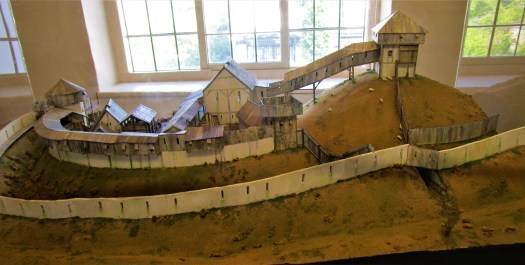
It had been a magical week, and left me with a feeling that Rhain and Mairwen’s story wanted to be told. Why Wales, because it is a truly a beautiful part of the British Isles with an amazing history.
Other books set in Wales: Elizabeth Kingston’s series “The Welsh Blades.”
Book one. “The King’s Man”
Book two “Fair, Bright, and Terrible.”
Book three “Desire Lines”
I would love to hear from you, readers and writers alike. Be assured I will always answer. Thank you for joining me.
If you would like to receive future blogs, updates and giveaways, pleased leave me an email marilyn@storyteller.space or visit my website for more about writing and the history behind the scenes. HTTP://STORYTELLER.SPACE
Marilyn
The post June Blog: A Welsh journey first appeared on Storyteller.
May 25, 2021
An Author’s Journey, Singapore 1965
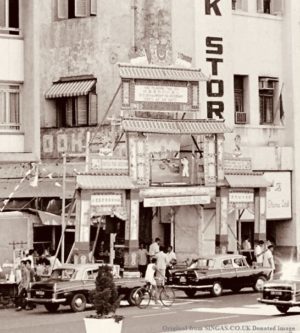
We had only been in Singapore for three weeks. The England we had left on a snowy December day seemed a world away as we tried to acclimate to the tropical heat. It was almost Christmas, but all our belongings were on a ship somewhere enroute to Singapore, which was to be our home for the next two and a half years. Mum was looking for decorations to put on a tree that didn’t remotely look like a Christmas tree, so the three of us set off in a pick-up taxi from Bukit Timah to the famous Change Alley that all visitors to the “Lion City” visit have to experience.
Change Alley was literally just that, an alley, originally a pedestrian thoroughfare from Collyer Quay, incongruously wedged between buildings, leading to the very prestigious Raffles Place, the chic and the shabby. A tourist trap where you could buy just about anything, including Christmas tree decorations, of which I still have three or four of the fragile balls.
Narrow and dimly lit, the open shophouses spilled merchandise out onto the walkway, overhead dangled clothes, conical hats, materials, toys, oil-paper umbrellas, and awnings, which basically closed in the overhead gap. You only caught a glimpse of sky now and then between the tall buildings sandwiched in between Change Alley. The humidity was soaring, the heat rising like a wave of tropical miasma, laced with the aromas of food, spice and joss sticks.
There was barely room to walk and look, the alley was so crowded with every nationality Europeans, Malays, Australians, Chinese, and Indians, all calling out, buying, bartering, selling, a myriad of voices. Encouraged to “come, come, look, something beautiful just for you” all along this 100-meter alley.
Halfway along I saw it, the perfect Christmas present, stacked in between bone china tea sets and carved camphor wood chests a beautiful portable typewriter in a cream-colored case. I wanted it badly. Christmas day I got my wish and started typing my first story.
It was the beginning, of wanting to be a writer, it was where the first seeds were sown. I wrote lots of short stories on that typewriter and one full-length novel, but I got discouraged by two rejection slips from big publishing houses. I doubted myself and my ability to be a writer, so I put the typewriter away. I can hear you saying I should have stuck with it, and you’re right. The drive to become a published author lay dormant for many years. Perhaps life in those intervening years taught me about people and personalities, of emotions both happy and sad, experiences that have given me a rich resource to become a better writer.
My book “Twilight Sojourn” was born one winter afternoon, sitting in front of a blazing fire, wondering over a cup of coffee where life would lead me next. Full circle, I picked up a pen and note pad and started writing what just started out as a short story. Over a period of time, it turned into the novel I had always dreamed about writing. My book is available on Amazon, both e-book and paperback. (Click Here)
Sadly, I no longer have my portable typewriter and my parents have passed away, which is why I dedicated my first novel to my mum and dad, who bought me that first typewriter, and set me on the long and winding road to becoming an author.
I spent over two years in Singapore, so I find books about the Far East fascinating. Here are a few books I would recommend.
“Tanamera” by Noel Barber in paperback only
“The Amulet” by Ann Bennett e-book and paperback
“Singapore Sapphire” by A.M. Stuart e-book, audible and paperback
“Fortune Cookie” by Bryce Courtney e-book, audible and paperback
Next month’s blog: Why I chose Wales as the setting for my novel. If you would like to receive future blogs, with updates on the sequel to “Twilight Sojourn” the history behind the novel, being a traveler, and giveaways, please join me. Just complete the mailing list form below. If you would like to chat or drop me a line, you can contact me via email at. marilyn@storyteller.space
Be assured I will always answer. Thank you for joining me.
Marilyn
The post An Author’s Journey, Singapore 1965 first appeared on Storyteller.
An Author’s journey, Singapore 1965
We had only been in Singapore for a three weeks, the England we had left on a snowy December day seemed a world away, as we tried to acclimate to the tropical heat. It was almost Christmas, but all our belongings were on a ship somewhere enroute to Singapore, which was to be our home for the next two and a half years. Mum looking for decorations, to put on a tree that didn’t remotely look like a Christmas tree, the three of us set off in a pick-up taxi from Bukit Timah to the famous Change Alley, that all visitors to the “Lion City” visit.
Change Alley was literally just that an alley, originally a pedestrian thoroughfare from Collyer Quay incongruously wedge between buildings leading to the very prestigious Raffles Place, the chic and the shabby. A tourist trap where you could buy just about anything, including Christmas tree decorations, of which I still have three or four of the fragile balls.
Narrow and dimly lit the open shophouses spilled merchandise out on to the walk way, overhead dangled clothes, conical hats, material, toys, oil-paper umbrellas, and awnings, which basically closed in the overhead gap. You only caught a glimpse of sky now and then between the tall buildings that Change alley was sandwiched between. The humidity soared, the heat rose like a wave of tropical miasma, laced with the aromas of food, spice and joss sticks.
There was barely room to walk and look, the alley was so crowded with every nationality, Europeans, Malay’s, Australians, Chinese, and Indians, all calling out, buying, bartering, selling, a myriad of voices. Encouraged to “Come, come, look, something beautiful just for you.” all along this 100-meter alley.
Halfway down the alley I saw it, the perfect Christmas present, stacked in between bone china tea sets and carved camphor wood chests, a beautiful portable typewriter in a cream-colored case. I wanted it badly. Christmas day I got my wish and started typing my first story.
It was the beginning, of wanting to be a writer, it was where the first seeds were sown. I wrote lots of short stories on that typewriter and one full-length novel, but I got discouraged by two rejection slips from big publishing houses. I doubted myself and my ability to be a writer, so I put the typewriter away. I can hear you saying I should have stuck with it, and your right. The drive to become a published author lay dormant for many years. Perhaps life in those intervening years taught me about people and personalities, of emotions both happy and sad that has given me a rich resource to become a better writer.
My book Twilight Sojourn was born one winter afternoon sitting in front of a blazing fire, wondering over a cup of coffee where life would lead me next. Full circle, I picked up a pen and note pad and started writing what just started out as a short story, and over a period of time turned into the novel I had always dreamed about writing. My book is available on Amazon, both e-book and paperback. (Click Here)
Sadly, I no longer have my portable typewriter and my parents have passed away, which is why I dedicated my first novel to my mum and dad who bought me that first typewriter, and set me on the long and winding road to becoming an author.
I spent over two years in Singapore, so I find books about the Far East fascinating. Here are a few books I would recommend.
“Tanamera” by Noel Barber in paperback only
“The Amulet” by Ann Bennett e-book and paperback
“Singapore Sapphire” by A.M. Stuart e-book, audible and paperback
“Fortune Cookie” by Bryce Courtney e-book, audible and paperback
Next month’s blog: Why I chose Wales as the setting for my novel. If you would like to receive future blogs, with updates on the Sequel to Twilight Sojourn, the history behind the novel, being a traveler, and giveaways, please join me, just complete the mailing list form below. If you would like to chat or drop me a line you can contact me via email. marilyn@storyteller.space
Be assured I will always answer. Thank you for joining me.
Marilyn
The post An Author’s journey, Singapore 1965 first appeared on Storyteller.
September 17, 2020
Writer's Block
As for the lack of creativity, just accept there will be days like that. If I feel I have to push past that. I re-read some previous chapter, pick a section and rework it adding descriptive details, immersing myself in one particular page. What can I add to the story or section I have already completed? Such as a dimly lit medieval hall in Celtic Britain? What does it feel like, smell like, what can I see and hear? This process immerses me back into the flow of the story and usually the creativity returns and the writer’s block takes its place once again in the background.


