Melissa Perri Smith's Blog, page 5
May 29, 2022
Melissa Perri Smith: The next great…spy novelist?
Smith…Melissa Perri Smith.
Photo by @davidtyemnyak from Unsplash.
It’s the oldest question of all, George. Who can spy on the spies?— John le Carré, Tinker, Tailor, Soldier, Spy
I know what you’re thinking. “What???”
Yeah, I didn’t see this coming either. If you’ve read any of my writing, you know I tend to err on the side of excess poetics and lyricism, to the point where it’s annoying. My genre usually, without fail, is speculative fiction. So why am I bringing up spy novels?
Well, it’s a rather lame story. Basically, I’ve had a bad case of the lack of inspiration blues. Every short story I write is coming out the same. It’s actually a little annoying, since submitting to a lot of journals was on my list of to-dos for the year, but, you know, without a short story to submit, I’m a bit fucked.
So, I decided to take a miniature break from the angsty seriousness of my short stories and write something fun. You guessed it: a romance novel!
“What?”
Yeah, I know, not a spy novel. But, when I was brainstorming, I thought how fun it would be to make the two love interests spies from different nations whose missions conflict with each other. As a romance novel, I imagined it wouldn’t get into the nitty gritty of the implications of international affairs and how the other’s actions may impact the world order, etc. I just wanted to focus on the lovey dovey gross stuff and have fun with it.
But as I continue to plot the novel, it’s quickly turning into…the opposite of that. Did you forget I studied international relations in college? I do sometimes lol.
So! Here’s what I’ve learned so far in plotting my next romance/first spy novel. It’s nothing too deep, for the record. Because, despite it all, I’m still trying to have fun with something relatively mindless and give myself a chance to flex my writing muscles and eventually come up with an idea more in my wheelhouse. But who knows? Maybe this is the genre I should be writing. ;)

Photo by @stillnes_in_motion from Unsplash.
Fight Scenes
Okay, so I recently watched My Name on Netflix. It’s a Korean drama following a young woman avenging her father’s death. After watching, it made me realize I want to do four things:
Join a drug ring.
Learn MMA.
Kick the shit out of any man who so much as breathes in my direction.
Write a fight scene.
Lol, obviously mostly jokes. But writing a fight scene is not. Lucky for me a blog post from one of my favorite writers popped in my inbox at just the right time. Tl;dr the post: It gives 21 tips for writing a fight scene. And boy, was I wrong in assuming I knew how to do it.
My first false assumption was that writing fight scenes would be just like how they appear in TV and films. Well, writing that would not only be boring, but confusing. They punch each other. They punch each other. One wins. Etc.
There needs to be dialogue. There needs to be a switching from offense to defense. The reader should never know who is going to win. Weapons should be based on the environment the two characters are in. Surprises! Blood! Heavy breathing, breaks, stumbling, errors. The fight scene should have the readers on the edges of their seats.
I have a lot to learn when it comes to that, and I’m excited to write, edit, rewrite, and come up with a perfectly imperfect fight scene.
Spy Stuff (International Affairs)
So what does a spy actually do in the field? Well, “spy” is kind of a misnomer. A lot of work in the field is gathering intelligence, reporting back to headquarters, and being patient. It’s not all kicking ass, taking names, and killing “bad guys.” I read this fun article on what a clandestine services operation officer may go through in a typical day. And it’s not as glamorous as you may think. Still cool. But certainly not the stuff we see in James Bond and the like.
I mean, of course, it wouldn’t be. That would make for a pretty boring movie. But when it comes to a spy novel, I think it would make for an interesting examination of international affairs. How do foreign operatives interact in the field? How might an insider threat jeopardize a foreign-owned corporation? Add intrigue, a fight scene or two, and two characters falling desperately in love? I think you’ve got a pretty good novel on your hands.
Enemies to Lovers
For those of you familiar with romance tropes, you know there are several. Friends to lovers, enemies to lovers, secret billionaires, etc. I’ve only ever written the friends to lovers trope, but with this one, I decided the enemies to lovers trope would work for me best.
“All is fair in love and war.” It was in a way, I guessed. What I had trouble making sense of was, how did that apply when love was fake, and adversaries were left no choice but to join forces?”— Elena Armas, The Spanish Love Deception
It’s been a ride. How do you make two spies with conflicting interests and a burning desire to eliminate the other fall in love? Well, what I’ve learned is that love and hate can still result in one thing — lust. Oh yeah. Good, old-fashioned desire. What happens when you want the other so much it hurts? Hate and love, though opposite emotions, can burn pretty close to each other and the wicks might just intertwine.
I’m not trying to do anything stereotypical here. I feel like a lot of the romance novels I read rush the falling in love bit. Actually, I was shocked in my plotting when I realized there was no sexual desire between the two characters until about 14 chapters in. That’s not usually why folks read romance novels — they want that instant love, the undeniable desire for the other instantly, even if they resent it. These spies are professionals. They wouldn’t dare.
Love Triangles
I played with the idea of a love triangle for a minute there. I wanted my main female character to have to choose between the safe option and the dangerous one. But, in my research, I learned there are several elements required in a love triangle that I simply don’t have.
Photo by @cdd20 from Unsplash.
In a lot of modern, self-published romances, the perspective switches between the two main love interests. I decided to go with this layout because I wanted the reader to gain insight into the covert actions being undertaken. But, that makes it pretty obvious that the two main characters will end up together. That negates one of the most important aspects of a love triangle — the reader not knowing who the characters will end up with.
Think of the debate between Team Jacob and Team Edward in Twilight for example. Gosh, how that dominated my middle school days. But, before the series was nearing completion, readers genuinely didn’t know who Bella was going to end up with.
So, if I really wanted a love triangle, I could have gone with only one perspective, but I felt we would lose out on valuable information. I could have switched to third-person omniscient so we could see all thoughts of the characters, even the third in the triangle, but I wanted to try and write a more conventional romance that tends to stay in the first person.
Overall, I think I’ll ditch the love triangle idea. But that doesn’t mean unrequited love won’t exist ;)
So, as you can see, I have a lot of work (and a lot of fun!) ahead of me. This is especially refreshing as I’ve recently been accepted into an MFA in Creative Writing program, so I’ll be pretty busy starting fall. This will give me a good opportunity to delve into the less serious before being swamped for the next two years.
Thanks for tuning in after over a month of radio silence! I’ll try and be more regular, but you know how I am. No promises lol.
The usual plugs — my Patreon and my book! My book will be going to print soon, so be sure to grab a copy. Message me if you’d like a signed copy, and we can work out payment. Chat soon :)


April 10, 2022
Why does everybody hate their jobs?
Why do I keep writing about things I don’t have the answer to?

✨Propaganda. ✨
Photo by @brookecagle from Unsplash.
At some point, most of us reach a place where we’re afraid to fail, where we instinctively avoid failure and stick only to what is placed in front of us or only what we’re already good at. This confines us and stifles us. We can be truly successful only at something we’re willing to fail at. If we’re unwilling to fail, then we’re unwilling to succeed.— Mark Manson, The Subtle Art of Not Giving a F*ck
Maybe I’m being a little biased here and basing my argument on a very small sample size (read: my close friends), but I’m not completely convinced by some of the articles I’m reading about how it’s a lie propagated by the far-left liberals in the U.S. that folks hate their jobs or don’t want to work in general.
I’m looking at you, random opinion article from The Atlantic (sorry for the paywall, folks).

I’m the one on the right..
Photo by @helloimnik from Unsplash.
Maybe I’m just turned off by the general condescending tone in this article or by the privileged viewpoint that since people are employed, they clearly don’t want to quit their jobs. But I do think the argument offers some interesting points. Mostly that recent surveys say that most Americans are, in fact, satisfied with their work. Despite my grumbles of discontent, even I would say that I’m somewhat satisfied with my job, or at least my rate of pay and the amount of work I receive.
Something I want to point out in this article by Mr. Derek Thompson is this quote he offers: “The Great Resignation isn’t really about quitting jobs; it’s about switching jobs."
Well, shit. Doesn’t he know something everyone else clearly doesn’t?
(She said, sarcastically)
Pardon me for being so annoyed.
I wonder if this author drank too much of the Kim Kardashian juice (Kardashian, the woman born into a family of millionaires: “Get your fucking ass up and work. It seems like nobody wants to work these days.”).
What the whole world wants is a good job, and we are failing to deliver it — particularly to millennials. This means human development is failing, too. Most millennials are coming to work with great enthusiasm, but the old management practices — forms, gaps and annual reviews — grinds the life out of them.— Jim Clifton, Gallup
This narrative is simply false. There are clear indicators that people want to work.
Some of the evidence for this arises from the pandemic, and, as it’s become colloquially known as, “The Great Resignation.”
In a survey conducted by Indeed in late 2021, 92% of respondents indicated that “the pandemic made them feel life is too short to stay in a job they weren't passionate about."
That’s 👏 what 👏 I 👏 said.
Or what I say super regularly because, despite the pay rates at my current job and the relatively simple and oftentimes laid back nature of my work, I find myself very dissatisfied. Even if I’m grateful to receive a paycheck higher than the national average (though certainly not enough to buy a house in one of the most expensive cities in the United States or start a family, as many boomers went to work for in the first place), I find myself increasingly realizing that the career path I’m going down is definitely not the one I thought it would be when I was in college (but that’s a different matter entirely, isn’t it?).
What’s more, so many jobs don’t offer basic benefits that so many other countries do — I’m looking at you, sick leave and maternity/paternity benefits. For example, I recently spent about a week in the hospital, and though my company was understanding (the bare minimum, I suppose), I still had to use a good chunk of my vacation time (of which I get 14 days annually) because sick leave is not included in my contract. It also sucked because, you know, my health insurance company decided they wouldn’t cover it, despite the hospital petitioning on my behalf that it was a necessary treatment.
Rant aside, it’s almost nice to know I’m not alone in these struggles. Even if switching to a full-time career in writing won’t be the easiest thing, I’ll defer to this quote (and perhaps resign to the fact that, should I abandon my cushy gig, I’ll probably suffer for a few years):
To be a successful fiction writer you have to write well, write a lot … and let ‘em know you’ve written it! Then rinse and repeat— Gerard de Marigny, The Watchman of Ephraim
Now that we’ve reached the end, it’s time for me to include my usual annoying demands for you to preorder my book or sign up for my Patreon. Do as you will. Just know I’m watching.
April 3, 2022
Is it television? Or something else?
tbh, idk.

Photo by @possessedphotography from Unsplash.
...if you’re just starting out as a writer, you could do worse than strip your television’s electric plug-wire, wrap a spike around it, and then stick it back into the wall. See what blows, and how far. Just an idea.— Stephen King
Am I pretentious fuck? Maybe.
But isn’t Stephen King as well? Also potentially maybe, but also maybe he has good reason to be.
The point of this post, though? Is what Stephen King, Groucho Marx, and other countless writers say true? Is television the worst thing you can do for your writing?
I wanna say yes. But I also wanna say no.
My boyfriend says we currently live in the golden age of television. What, with all the competing streaming services, there’s no shortage of shows. While a lot of shows are not ✨quality✨, there are plenty of enthralling ones — dare I say, works of art. So why would this inhibit our writing? Is it simply because of the time you must dedicate to watching? Is there not enough time to read, write, and watch television? I’d wager that’s incorrect. I certainly do all those things. But something else I do that may be inhibiting my writing?
Well, you guessed it. My phone.
Ah yes, there’s always something, isn’t there? TV, video games, social media. We’ll always be distracted by something that prevents us from working on our craft or that, as King would assert, damages it.
If we’re going to make an argument about it, as it seems we must, I would say that television isn’t damaging. If anything, since we’ve moved past the mindless sitcom and reality shows (which may not even be that detrimental - don’t we all need a break, after all?), a lot of television shows these days provide compelling storylines, evolved characters, and excellent dialogue that can provoke an emotional response from the viewer. All of these things are applicable to writing, and, at least for me, motivate me to write better stories. In this way, King’s assertion may be outdated, or worse, narrowminded.
But what about social media and the increasing addiction to technology and our cell phones. Even now, I’m writing to you from the safe confines of my living room, into an endless void of blog posts that will likely never be read or only skimmed briefly. But something else I’m doing? Taking a break every few minutes to grab my phone and open a distracting app that provides no utility to this post except to maybe prove my point.
Photo by @neonbrand from Unsplash.
Simply, our phones and social media — not so great for our writing. Definitely, some people read off their phones and I would argue that a lot of the webcomics people consume from various apps are actually really great for writing. But social media? TikTok, Instagram, Facebook for us older folks. Nope. Nope nope nope.
Instagram has increasingly dissuaded me from writing, actually. With the plethora of content, often not so great, it can be discouraging. How are you ever going to get tens of thousands of followers if you don’t write, you know, Rupi Kaur-flavored poetry? And why does it matter at all if you do (unless you’re trying to be a published author — but that’s a different story entirely.)?
All I’m saying is the best thing you can do for your writing is not turning off the television. Rather, it may be powering down your phone. Or even deleting those apps that distract you or setting a time limit of your usage on them. We shouldn’t completely cut out the things that give us mindless pleasure. But we surely, as artists, can’t dedicate hours to them every day.
Trust me, I’m still trying to perfect this balance. So if you’re still struggling with this, you’re not alone. And I’m grateful to have a buddy along for the ride.
Wanna read something to improve your writing? Consider preordering my book, Just Us, or signing up for my Patreon, where you’ll receive a monthly short story or serial piece, a letter, and a sneak peek at my WIP.
March 13, 2022
The art of war (read: the short story)
Novels, short stories, novellas, flash fiction — they’re all the same, right? Wrong.

Photo by @sunnystate from Unsplash.
A short story is a love affair, a novel is a marriage. A short story is a photograph; a novel is a film.— Lorrie Moore
Hey, my friends, it’s been a while since we last spoke. I’ve been thinking about you, thinking about this blog, and just generally, thinking. There’s a lot of thinking to be done in silence, after all.
Part of my thinking revolved around short stories and my aim as an author of them. If you’ve read any of my short stories, which is an added benefit of subscribing to my blog or checking out my Patreon, then you know they’re pretty different from my poems and from my full-length fiction. I don’t want to say that short stories are where I practice different styles and forms for my novels. But they are a place where I get to express and experiment with different ideas in short form.
So what makes short stories different from a novel? Is it simply the length? The maximum length of a short story is typically 10,000 words, 1/5 of the minimum length of 50,000 words for a novel. So it’s not simply cramming an idea for a full-length book into a shorter format. Don’t get me wrong — short stories can definitely spur novels. But the novel format is usually far different, with broader themes and more characters and side-plots. In its scope, short stories are far more singular.
I don’t want to claim expertise in the art of short stories, but I would like to share some things I’ve learned while writing them. I’m currently working on a new one which I’ll be sharing on my Patreon this month, tentatively titled “Dolbear’s Law.” Here are some things I’ve learned while planning it and writing it:
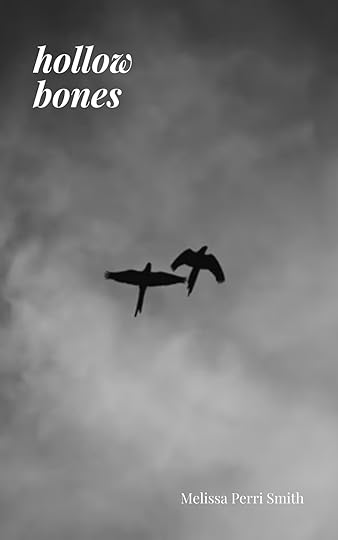
My homemade cover for “Hollow Bones” which you can read on my Patreon.
Focus on a singular theme. Novels may have a main theme, but they usually have far more, which they can explore in further detail than a short story is able.
Start as close to the end as possible. I’m struggling in “Dolbear’s Law” because I’m including a lot of exposition in order to explain the main character’s struggle. I may reformat that later, but for now, I’m going to write it as I’ve planned it and make the edits later.
Experiment. I mentioned this earlier, but short stories really do give you more opportunities to experiment with structure, especially since you have to include backstory and exposition in as little as a few sentences. In one of my newer short stories, “Hollow Bones,” I do this to the extreme. To the point where some people didn’t get it at all, haha, which while not the goal, is at least a learning tool for me. Which leads me to my next point.
Edit the shit out of it. This is absolutely necessary. We may think that short stories require less editing than a novel simply because of their length, but that is not true. While the short stories I share on my Patreon are unedited first drafts, that’s because of the quick turnaround time I have on them. I still edit my short stories and am beginning the process of submitting them to journals, since an edited version usually differs pretty greatly from the first draft. Don’t be afraid to tear a short story apart as you would a novel.
Have fun. I think we forget that writing, first and foremost, is for ourselves. I wrote so many stories when I was a kid that I had no intention of publishing ever, but just because I wanted to. I don’t know where that changed in adulthood, but I’m starting to open up to the fact that not everything I have to write has to be for building my portfolio or submitting to journals. Sometimes I just want to write something for me. Something I want to say or an idea I want to mess with. “Dolbear’s Law” may end up just being that, something I’ll share with a few people, but ultimately will be for me. A fun experiment that will never see the light of day.
I’ve been thinking of offering short story prompts and some short stories I’ve enjoyed reading, which I’ll share with my subscribers on my blog. If you do end up writing a short story based on that prompt, I’d love for you to send it to me, or if you ask nicely, even a basic line edit or general suggestions for the piece as a whole. If you don’t want to share it, I hope you write it anyway. Just for fun.
Don’t forget to preorder my debut novella, Just Us! Or mark it as to-read on your Goodreads account. Reviews and publicity are so important for indie publishers, so I’d appreciate any shares you can give it :)
Sending love to you all, and happy writing.
February 20, 2022
Writing versus daydreaming: The necessity of flawed characters
I mean, we can’t all be tall, thin models with a golden moral compass, yeah?

Photo by @annapostovaya from Unsplash.
We live in a society and a culture and an economic model that tries to make everything look right. Look at computers. Why are they all putty-colored or off-fucking-white? You make something off-white or beige because you are afraid to use any other color – because you don’t want to offend anybody. But by definition, when you make something no one hates, no one loves it. So I am interested in imperfections, quirkiness, insanity, unpredictability. That’s what we really pay attention to anyway. We don’t talk about planes flying; we talk about them crashing.— Tibor Kalman
“What do you think it means that I have very vivid dreams? Sandy says it’s a sign of my active imagination. I feel like it reveals a very active subconscious on my part, which really only differs from my imagination by showcasing my anxieties next to it. In my daydreams, my parents don’t make constant appearances. I’m not sad or depressed. I’m someone else entirely. Maybe that’s why I find it so difficult to love the person I am.”
I wrote that in my daily journal the other day, and as soon as I jotted down that last sentence, I felt something shift in me.
It’s an interesting concept, yeah? I build up this idea of who I want to be in my head, this perfect, brave, beautiful person, and then when I realize who I actually am, I’m disappointed. Maybe no one else sees it that way or even cares, but I have to live with myself for the rest of my life. But is it possible that I don’t love the person I am because of this conflated sense of what people should be instead of who they are?

Photo by @sixteenmilesout from Unsplash.
Let’s apply this to writing. What’s your favorite book? Or, what’s the last book you read? Right now, I’m reading Never Let Me Go by Kazuo Ishiguro. The novel is narrated by a woman reflecting on her years at a British boarding school (to say the least), but what strikes me about this novel is the passivity of the narrator. That, and the flaws inherent in her as a teenager. Her friendships with characters who were less than desirable, or who were at least other flawed teenagers making worse decisions than her.
Is this book appealing? And why? Do we read it for the story? Or do we read it for the characters? For the characters who make mistakes and remind us of ourselves? Escapist literature exists, don’t get me wrong. But to me, a book like this is more appealing simply because of the complexity of the characters.
I learned this lesson when I was young. For most of my childhood and adolescent years, I was working on the same concept in different forms of novels, but it was essentially a science fiction story about a race of people from a different world where, notably, everything was perfect.
Listen, I was eight when I came up with this concept. And originally, it was a game my friends and I would play during recess. But over the years as I wrote this book, I found it more and more difficult to write characters that were supposed to be flawless.
The world isn’t split into good people and Death Eaters. We’ve all got both light and dark inside us. What matters is the part we choose to act on. That’s who we really are.— J.K. Rowling
How many ways can you describe a race of perfect people? Without going all Stephanie Meyer and Twilight on it, of course. And, even worse, it’s just impossible to create a cast of characters that have no moral flaws either. What I simply came to learn is that it isn’t feasible, nor is it desirable, to have perfect characters.
I don’t know, maybe this is obvious for the rest of you. But, personally, I think it’s worth talking over at length, not only because it’s what makes a story worth reading, but also because it’s incredibly difficult to do. I’m not saying your readers need to like your characters. Hell, they can hate them if they want. What’s imperative is that, while reading, they feel connected to them in some sense. They need to feel the same draw you felt while writing the story. They need to feel something.
Maybe your protagonist is fighting for this person they believe they love, but it’s not until the end that they realize, they don’t really love that person, but that they’re dealing with an issue of loss of control and a paralyzing fear of loneliness. Maybe, throughout the course of this story, they’re also insufferable, manipulative, and narcissistic. But maybe, you as the author, also play this trick on the reader. You manipulate the reader, as the narrator.
Or, if we want to talk about complex antagonists (at least when they’re people), I think the video game series, The Last of Us, has some of the most complex, relatable antagonists I’ve ever seen. It’s not like a Lord Voldemort scenario or evil abstract corporations. The protagonists and antagonists vary depending on the storyline, exacerbated by a dystopian society where their lives are threatened daily. In short, the characters are just people. As human as they can get.
I also wonder how this concept of imperfection can help us as people off the page and screen. Is what I wrote in my journal even possible? Can I somehow separate myself from this daydreamed imagining of who I could be, if I lost weight or read more or was kinder or nicer or better in general? What kind of steps will I have to take to replace this daydream with the notion that imperfection is in fact better?
I’d love to hear your thoughts below! What are some of the best examples of imperfect characters you’ve seen in media?
Don’t forget to preorder my book, Just Us, or sign up on my Patreon at the $7/month tier or higher to get a free, signed copy mailed to you upon its release!
February 13, 2022
Bipolar Two and writing: An unofficial diagnosis
I am, in fact, not number one.

Photo by @anthonytran from Unsplash.
Which of my feelings are real? Which of the me’s is me? The wild, impulsive, chaotic, energetic, and crazy one? Or the shy, withdrawn, desperate, suicidal, doomed, and tired one? Probably a bit of both, hopefully much that is neither.— Kay Redfield Jamison
General trigger warning for this entire blog post. There are mentions of suicide and self-harm.
Let me be real here; I’ve not been officially diagnosed with bipolar two, a form of bipolar disorder characterized by longer depressive episodes and short hypomanic episodes. I’m also not a medical expert, so please take this with a grain of salt.
But, bipolar two is something I’ve talked about at length with my psychiatrist and is something we’re exploring in terms of an official diagnosis, as well as medication.
But, after a week-long depressive episode, followed by last night (last night being Saturday) and this morning/afternoon characterized by a hypomanic mood (including the inability to sleep and the constant urge to do, do, do), I’m just a teensy bit irked.
Not with the teetering diagnosis. Not with my psychiatrist or the experiments with dosages or the constant up-and-downs.
Just with me. With my brain. With my body and my bones, with the ash-coated days that swim in solitude, and as dramatic as I may sound now, it doesn’t even come close to how I was feeling the past week.

Photo by @matthewhenry from Unsplash.
Then, suddenly, last night, I had the urge to bake. And I did. I made bread and cookies, and then I cleaned the kitchen and the living room and read a book. This morning, I made a traditional Japanese breakfast, moved my desk into the living room (long story), and went on a walk in the snow. I got myself coffee, which I neglected to drink all of last week. And, in doing all this, I felt like my depressive episode, as long and intense as it was, was all a sham. I still feel that way. I feel like I faked it. Or worse, that it hadn’t happened at all, and I was using my laziness as an impetus to lie in bed and watch my J-dramas.
Yes, of course, I could go on and on about the psychology behind all of this, and how it’s a long-standing trauma response developed in my childhood, blah blah blah. But what I really want to talk about is how this affects my writing.
As you can probably imagine, I didn’t do much of that this week. That’s okay; I probably needed a break. I’ve been setting impossible deadlines, writing two books in different genres, and trying (rather unsuccessfully) to freelance. Not to mention setting aside two hours to read per day, learning Japanese, and cooking dinner every night.
It’s a lot, right? So no wonder I burned out, collapsed, went on a spiral, etc. But I noticed something interesting a few days into the episode.
I still tried to write.
Maybe that’s to be expected. But I wrote every day in my journal, albeit very depressing and possibly alarming entries. I even tried to work on my next romance novel, but the words came out stunted. I grew frustrated. It got to the point where I (trigger warning) considered hurting myself, hitting myself, finding some outlet for this emotional pain I was going through.
In short, manic depression is a bitch. And, when I was discussing this with my therapist, we talked about how, even though writing for me is a fun, creative outlet, it still might be taking up too much of my time. Do you know that Stephen King quote, where he’s like, if you’re not writing, you should be reading? Well, that’s bullshit.
Sometimes, people need to turn off their brains. While I want to be exceedingly productive and churn out all the ideas I have in my head, I know that’s not feasible, especially given my proclivity for depressive episodes. As for the manic ones, I’m still not sure how to handle those. When I’m not moving or working when those happen, I’m overcome with terrifying anxiety (if I find out the secret, I’ll let you know).
Phew. And this, oddly enough, is my first attempt at real writing since the depressive episode ended last night. I’m not even sure if it’s coherent. Perhaps it’s better that it isn’t easily understandable or riddled with typos, and in that way shows how depression or manic depression or mental illness, in general, can really impact our creative outlets, our work lives, or our personal lives.
Do you have any thoughts on this? There’s no need to share since I know it’s a personal subject and that I spout way too much on the internet, for everyone to see. But I’m curious to hear about your coping mechanisms and the ways in which you forgive yourself.
Also, if you’re ever feeling down or depressed, feel free to send me a message! I’m happy to chat. If it’s serious, I urge you to call the national suicide prevention hotline at 800-273-8255, call 911, or go to the emergency room.
Want to read more from me? Check out the links below:
Preorder Just Us from The Main Street Rag
Send me a message or a DM on Instagram if you want to read my latest romance novel :)
February 6, 2022
Book reviews: The good, the bad, and the ugly
We all knew this day would come.

Photo by @towfiqu999999 from Unsplash.
Beware of the man who denounces woman writers; his penis is tiny and he cannot spell.— Erica Jong
Late in 2021, I had the goal of publishing a romance novel every two months in the coming year. I knew it would take a lot of writing to gain traction as a romance writer, and, coupled with the fact that Just Us is coming out later this year, I also knew that meant I would likely get several reviews — good, bad, and worse than bad. Absolutely, soul-crushingly awful.
After all, I just finished Sequoia Nagamatsu’s debut fiction novel How High We Go in the Dark, and while I thought it was a wonderful exploration in science fiction (albeit, with a few parts I thought unnecessary or didn’t fully understand), when I went on Goodreads to enter my review, I saw some startling harsh ones.
One review in particular stuck out to me, calling it repetitve drivel undeserving of all the critical acclaim it was receiving. And, reading this review made me feel shame for enjoying the book. Watching the replies populate thanking the reviewer for marking a book off their to-be-read list instilled a fear in me I didn’t realize I had.
I knew the potential for bad reviews existed. I knew it would likely have a negative impact on my mental health. And then, it occurred to me that a bad review on an indie book could be the death blow that sends it into the oblivion of the internet, never to be seen again.
Lucky for Nagamatsu, How High We Go in the Dark is doing really well. Props to him. Love his work, and despite that review, it’s more than worth reading.
Photo by @mitchel3uo from Unsplash.
But let’s dig into what reviews can do for us as authors — both mentally and in terms of sales. Recently, I published my first romance novel (under a pen name) on Amazon. Since it’s my first, and I’m just starting to get my pen name out there, I’m not expecting it to sell well. That doesn’t mean I’m not doing my best to promote it. I’m putting a fair amount of time (and money) into it, but still, there’s not a lot of traction with sales just yet.
That’s okay. The more I publish and the more I publicize, I anticipate readership to go up. But — I did pay for it to go on Reedsy Discovery. Authors or publishers can pay a fee for their book to go up on the site, and for it to be delivered to reviewers and then recommended for readers. My book was reviewed, and I received for the first time in my life, a two-star review.
The reviewer said a lot of things that, in retrospect, were helpful and that will aid in the quality of my future romance writing endeavors. They also said I was a good writer (but confusingly that the book wasn’t written well lol).
When I read it though, I thought I was gonna throw up. It made me question whether or not I should even continue writing. That’s foolish, yeah? Of course it is. I know a lot of that is my inability to handle serious criticism. I’ve been like that from a young age, and we could delve into the psychology of that, but I’d really rather not.
What was worrying to me about that is I went into this year knowing I would get negative reviews on my romance novels (and probably Just Us) as well. But it was just startling to me how quickly that review came. And when you only have two reviews on a book (luckily I also got a five-star review posted on Amazon), and one of them is bad, it’s a death call for that book. No one wants to waste their money on a book they probably won’t like, myself included.
So you can see how, on a new author especially, that can be demotivating. I read that review and considered giving up on the idea altogether of being an author. My WIP is a hot mess, and apparently I’m not a good romance writer hah.
But after sitting with it for a few days, I made the decision to keep writing. Why? Because people are reading my book. I can see when you buy it off Amazon, peeps. I can see how many pages you read if you get it off Kindle Unlimited. And, yeah, people are reading it. And knowing that I’m connecting with people, even one person, makes it more than worth it.
The lesson in all this? Keep writing. Fuck the haters. They’re probably small-dicked men anyway.
Want to read my romance novel? You can either subscribe to my Patreon or shoot me a message on my contact page. I’m happy to share the link with you. :)
Don’t forget to preorder your copy of Just Us! And remember to leave a good review once you finish ;)
January 30, 2022
Why I’ll never be a successful writer - but why that’s okay
This isn’t a self-degrading post, I promise.

Respectfully, no. Photo by @whitfieldjordan from Unsplash.
If at first you don’t succeed, try, try again. Then quit. No use being a damn fool about it.— W.C. Fields
Okay, hear me out.
First, I’m not quitting writing hah. I love writing, and it’s something I want to do for the rest of my life.
Second, I might never find success doing it. And that’s alright.
What is success anyway? I was reading a post from one of my favorite bloggers, and it was about a man who wrote a book, got it published, and found no commercial success with it. In fact, he only had one review on the book, and it was posted after he died. If I remember correctly, it was a review from his daughter, who went on to say that her father was the best writer she knew.
Is that success? A single review from a family member? To die in anonymity? I don’t know. But I’ve been doing a lot of thinking, especially after my book, Just Us, was picked up by a small, indie press. At first, I was overjoyed. I couldn’t believe that someone had seen the value in my book and decided to go forward with publishing it.
I’m still thrilled with that. But, I’m also coming to the realization that Just Us will likely only be read by a handful of people. As I said, it’s a small, indie press that doesn’t do a whole lot of advertising, and doesn’t even stock it with commercial retailers (no Barnes & Noble, and I’ll have to put it up on Amazon myself).
A handful of people isn’t the millions I once hoped for. But that crowd is still important. They’re the readers who will pick up my books time and time again, even if they’re my friends. Those people are the most important to me anyway.
But what about commercial success, I wonder. Will I ever be able to make my living as a full-time author? Not many people do. And I feel like I’ll have to sacrifice a lot of my artistic integrity if I do (sell-out, if you will).
So, is working for commercial success even worth it? I once had an editor tell me they liked my work and felt that it was moving and worth reading. But they weren’t sure if it would have the marketability to make it successful. And what’s more important to me? I’m sure I could learn to do both — make something both heart-wrenching and digestible by the general public — but, to me, that feels like I’m no longer being genuine.
I felt the same way after finishing my first romance novel under a pen name. I felt it was good writing, with a strong plot and relatable characters, but I was also acutely aware that it doesn’t fit into the typical genre of romance writing. I knew it would alienate readers and not be the success (commercially) I went into it hoping it would be. Why? Because, in a lot of ways, I despise the tropes associated with romance. I hate the slut-shaming, the necessity of virginity associated with women, the idea of imperfect characters — and especially imperfect characters that carry over into the end. I hate it. And I wasn’t willing to compromise my own values for something that could potentially be successful. (Lol, want to read it, though? Shoot me a message, and I’ll send you the link. It’s spicy).
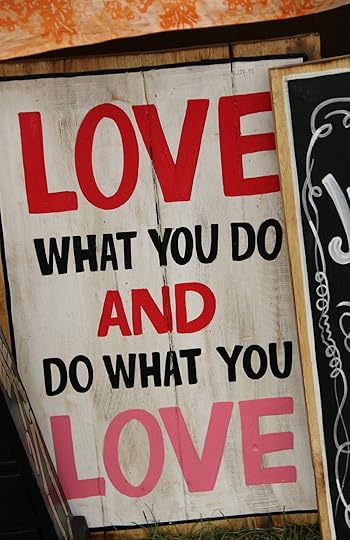
Nothing like a good old cliche to round things out. Photo by @jannerboy62 from Unsplash.
This thought has been wearing on me lately, especially because of my growing unhappiness in my current field. At first, I found my work satisfying, but now, as I delve deeper into my creative pursuits, I’m finding it almost unbearable. So do I hang onto a job and a career path that gives me no joy (but guarantees some sense of stability), or go into doing what I love, even if I find myself in a vulnerable position without hopes of commercial success?
Probably the latter honestly. But that’s also why it’s okay if I’m never a renowned author. Because, at least at the end of it all, I will be happy doing what I love.
Want to make sure I at least have something to eat in these creative pursuits lol? Check out my Patreon or consider pre-ordering Just Us. Thanks as always for reading, and be sure to leave a comment below with your thoughts. I love hearing from you all :)
January 24, 2022
The terror of daily journals - and why it’s good for your writing
Are you like me and every few months you try and start writing a daily journal, and you get this surge of motivation, and write for a week straight and then one day you don’t and then you never do again? Yeah? Well, keep reading.
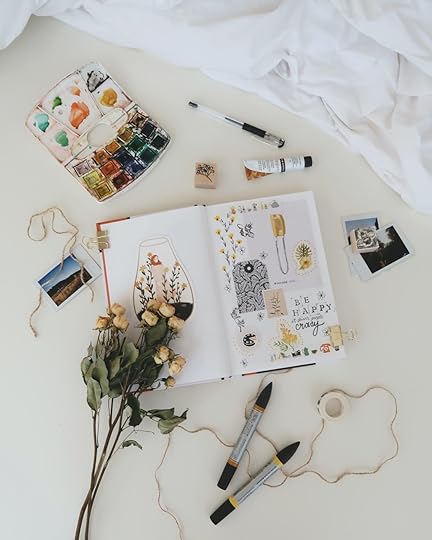
Ungh, why does the aesthetic have to be so *chef’s kiss* though? Photo by @esteejanssens from Unsplash.
Some may say [journal keeping] is a great deal of trouble. But we should not call anything trouble which brings to pass good. I consider that portion of my life which has been spent in keeping journals and writing history to have been very profitably spent. If there was no other motive in view [except] to have the privilege of reading over our journals and for our children to read, it would pay for the time spent in writing it.— Wilford Woodruff
I had an interesting conversation with a friend the other week that went something like this:
Me: I really want to get back into daily gratitude journaling! I feel like it’s a good thing for me, but I can never stick to it.
Friend: If you can’t stick to it, why do you keep trying to do it?
Me: Well…
Friend: There’s nothing wrong with dropping something if it’s not working for you! Find what works for you and stick with it.
And, yeah, that really resonated with me. Why do I keep trying to write gratitude journals if it does nothing for me? For the past few years, I’ve vacillated between bullet journals, gratitude journals, morning pages, and feeling like shit for not doing any of them.
I hoard journals. For what? I don’t know. Sometimes I use them to plot books. Sometimes I use them to mark down goals or write notes for work. Other times, I just like how they look. I like the potential they hold.
But recently I read A Tale for the Time Being by Ruth Ozeki, and while I have mixed feelings about the book itself, part of it was written from the perspective of a teenage girl in Japan, writing in her journal.
The way this character wrote was reminiscent of the way I kept my diary throughout middle school and high school. And since those were particularly dark times for me, it helped me to write to a future someone. Someone who may understand the situation I was going through better than I could. Someone who would find my journal and sympathize. Who could explain why I had to feel the way I did, and how they, this future anonymous thing, could be my only confidant.
So, recently, I started journaling like this again. I set a timer for 10 minutes and write to this future someone, and the words come out. I spill memories onto the page that I haven’t thought about in years. A teacher’s classroom from high school and how it felt to sit there. A memory of someone else’s remembering. And I look forward to it. Even if I do it at different times every day, it’s always a joy to open my notebook and write my 10-minute stream of consciousness letter to this faraway person who may never exist, but who may.
It differs slightly from morning pages in that there isn’t a three-page minimum. And I don’t write it with the intention that it’s only for me. Not that I write it to read it to anyone. Just that, there’s potential that someone besides me may read it one day.
And, in a lot of ways, this has been very useful for my writing. It helps me think of interesting ideas. It helps me parse out the ever-flowing thoughts in my brain that wouldn’t make it to paper otherwise. And it forces me to think of all the things in my life I want to share.
This weekly blog is a journal as well, and it’s also a journal that is screamed into the void of existence. Why write a journal for the world when you could write one equally as private in a notebook on a sheet of paper stained with slick ink?
Anyway — I’m curious about the journaling methods that have worked for you? Do you prefer the method of the first pretty picture (which is way too artsy for me and too much effort IMO). Or do you prefer gratitude journaling? Prompted journals? Or does something else stimulate your creative muscles? Lemme know in the comments!
As always, be sure to head over to the Main Street Rag’s website to preorder my book Just Us. If you want a free, signed copy of Just Us, head over to my Patreon and subscribe at $7/month tier or higher, where you’ll receive a ton of cool content from yours truly.
Be sure to subscribe to this blog as well! I recently updated the free e-book you’ll receive to a short story. If you already subscribe, fret not, you’ll receive a copy in your email soon. :)
January 16, 2022
The grueling editing process - and why it’s necessary
So you finished your first draft — what now?

Photo by @dariuszsankowski from Unsplash.
Making love to me is amazing. Wait, I meant: making love, to me, is amazing. The absence of two little commas nearly transformed me into a sex god.— Dark Jar Tin Zoo
I feel like I write about editing more than I write about the actual process of writing. Maybe that’s because, to me, writing is the easier thing. Writing is just pouring words onto a page and praying that they come out in a semi-decent, partially legible state. Editing — that’s the real demon.
But why, you may ask, am I writing about editing today? Isn’t my new book coming out in a few months’ time? Shouldn’t you preorder a copy?
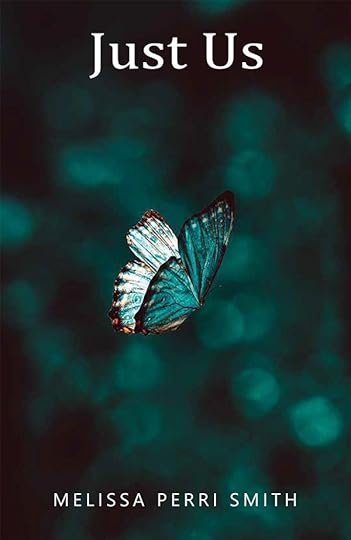
Yes and yes. But, in case you missed it, I wrote about that last week! And while I want to brag about my new book all the time, I can only do it so much before it gets, you know, old. But feel free to subscribe to my mailing list if you want to hear me gush all the time about Just Us.
What were we talking about? Ah yes, editing. And why it’s so important. And why we’re talking about it in the first place.
Well, simply, I finished my first draft of my latest WIP, TGOFT, last week. It was a grueling process to write it, harder than I initially thought it would be, but, in actuality, it took me approximately three weeks to write the 70,000 words it ended up being.
So, yeah, I wrote the first draft. What’s next?
I’m going to do what every good writer does and not look at it for two weeks to a month. I’m gonna let it stew. I’m gonna let that manuscript wait in terror over what I’m going to do it. Ah yes, I can taste its fear from here.
But I do this because I need to get my brain away from it. I’ve been staring at that manuscript for weeks, and I need to avoid looking at it for a bit. That’s the best way for me to edit it from an impartial place. Or as impartial as I can be.
My editing process is one that requires a lot of patience. I don’t know how you all edit, but I go through about four rounds of initial edits, and depending on what I’m editing, I go through four more. Here’s what the rounds look like:
Grammar/Typos
Sentence Flow/Paragraph Blocks
Dialogue/Characterization
Revisions
For each round, I reread the book and look for those specific items. It really streamlines the editing process and helps me not to get lost in the process, or madly drunk trying to reconcile all the missing pieces and plot holes. But I digress.
It can also be a particularly grueling process. I read the WIP a ridiculous amount of times, to the point where it gets hard to believe that I wrote it in the first place. I recently speed-wrote a romance novel for a side-project, and when I read it over again, I was shocked that it had come out of me, for a lot of good reasons and a few bad ones heh (Want to hear more about that? Head on over to my Patreon).
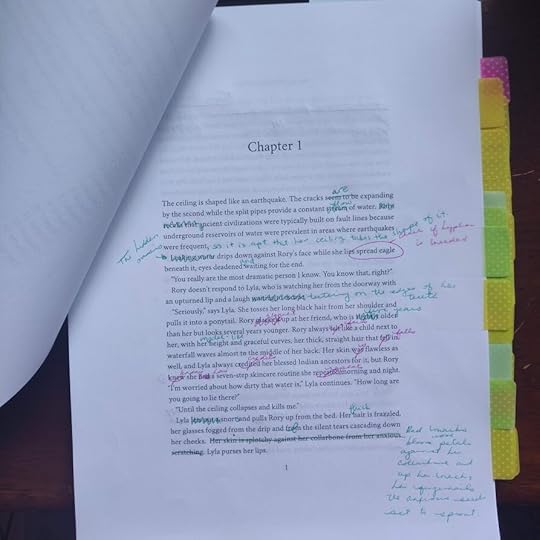
The editing process for my romance novel. Yuck.
But it still required a lot of edits. And, in my several rereadings, frustrated rounds, and occasional beers, I discovered a missing side-plot that adds a lot more urgency, color, and depth to the story. While I’m not planning on giving it another four rounds of edits (since the revisions were minimal and, to be honest, it’s not super important to me at the moment), this process, which is still relatively new to me, worked out exactly as it was supposed to.
So I’m curious — for you writers or other creatives out there — what does your editing and revision process look like? I wanna know, so give me a shout in the comments!
Thanks as always for reading! Even though I’ve been working on this blog thing for a few years, I’m still figuring out the ins-and-outs obviously. But I super appreciate the loyal following of readers I’ve built on here so far — you all are the best.