Nina Shapiro's Blog
June 18, 2019
Got Milk? Debunking myths about milk…
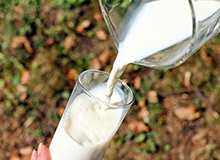
In honor of June being National Dairy Month, I’ve partnered with the California Milk Processors Board and “got milk?” to help dispel some of the health myths about milk, and to explain some of its significant health benefits.. The first nutrition a mammal of any kind receives is milk from the mother. This perfect food contains critical nutrients, including vitamins, proteins, fats, immunoglobulins (true ‘immune boosters’), and hydration.
After the first birthday, humans traditionally transition to cow’s milk, which offers similar beneficial nutrients such as vitamins, minerals, proteins, fats, as well as hydration and calories. However, over the past few years, milk has been getting a bad rap– with claims that it causes everything from colds and ear infections to allergies, obesity, and even diabetes.
Below are a few milk myths we can bust:
1.”Drinking milk can lead to more respiratory infections, including coughs and ear infections.” False! There is no evidence that this is the case. The only specific time that this may occur is if a child is taking a bottle or sippy cup of milk with him in the bed or crib, and drinking milk throughout the night while lying flat. But this practice is not good for their teeth, gums, or digestion either. Ideally, no beverage should be taken to bed. If the child absolutely needs to drink throughout the night, water is the only healthy choice. But regular (upright) drinking of milk on a regular basis during waking hours has no direct link to ear infections, coughs, or colds.
2. “Consuming milk or other dairy products slows the healing of a sore throat or the healing after tonsillectomy.” This is absolutely not true. One of the fun side-benefits of kids getting their tonsils out is that they get to eat lots of ice cream. Yes, this may lead to a bit more thickened saliva, but it most definitely doesn’t slow the healing. In fact, the more a child eats and drinks anything soft, the more quickly he or she will recover.
3. “Dairy, especially full-fat milk, is bad for your heart.” Wrong again. Actually, the complete opposite is true. The PURE (Prospective Urban Rural Epidemiology) study, recently published in The Lancet, looked at close to 150,000 adults from 21 countries and 5 continents with respect to dairy intake and heart disease over a nine-year period. They found that subjects who consumed greater than two servings per day of dairy products versus those who consumed no dairy products had lower risk of heart-related disease, as well as a lower risk of death overall. In particular, milk, of all dairy products resulted in the lowest risks in this study. Interestingly, subjects who consumed whole-fat milk were the healthiest.
4. “I have lactose intolerance, so it must be a milk allergy” Not so. Lactase is an enzyme that helps break down one of the naturally occurring sugars in milk (lactose) during digestion. Some people have lower amounts of this, but it’s often not an ‘all or none’ situation. And there are easy ways around this— as it’s usually ‘dose-dependent,’ drinking a little less may be a simple answer. There are also lactose-free milk products, or tablets to ingest which contain lactase, making milk digestion easier. But this is NOT an allergy. True milk allergies, with vomiting, rashes, and even anaphylaxis, affect less than one percent of the adult population.
5. “Milk makes me gain weight, and I hear it causes diabetes.” No again. In the 1970’s, when the concerns about fat content in foods as a source of obesity was recognized, fat content in milk and dairy products was cut in half (“low-fat”), then cut in half again (“skim”), and finally removed altogether (non-fat). To keep the taste, sugars were added. We now know that so much of the rise of obesity is partly due to increased processed foods/fast foods/fried foods/convenience foods, and decreased exercise and activity, even beginning in childhood. Drinking milk is filling, and has no direct correlation with weight gain. A recent large meta-analysis study, looking at up to 500,000 adults ranging from ages 20 to 88 years, found that higher amounts of dairy consumption correlated to lower incidence of type 2 diabetes.This was most notable for total dairy product consumption, low-fat dairy consumption, and yogurt. Overall, the higher amount of dairy product consumed correlated to lower and lower risks of type 2 diabetes.
So many myths about milk and dairy products continue to be spread, but the facts are that milk has more health benefits than most of us know.
https://www.ncbi.nlm.nih.gov/pubmed/27882862
https://www.ncbi.nlm.nih.gov/pubmed/31089742
https://www.ncbi.nlm.nih.gov/pubmed/31089734
https://www.ncbi.nlm.nih.gov/pubmed/30217460


December 12, 2017
We’re On Fire

I unpacked my suitcase today. But here’s the thing: I didn’t go anywhere, and never have I been more relieved to have stayed put. This year, as many in the past, has been fraught with its share of natural disasters — hurricanes in the east and south, earthquakes, volcanoes, and fires.
Fires have hit California hard this year — in Sonoma, and now in and around Los Angeles and San Diego. Fire season is nothing new in these parts — usually seen in the Fall and sometimes in the Spring, with unseasonable hot winds and dry air, fires are a known risk we as Californians take. And when we mean fire, we’re not talking about a kitchen fire, a fireworks fire, or even a chimney fire. These are decimation fires. Nothing is salvageable if a California wildfire hits your home. Nothing.
So when the several cell phones in our home buzzed a horrible shriek the other night in synchrony, we knew that a fire was close. Too close for comfort. The phone alert put us on “evacuation ready,” in that it was high likelihood that the winds would pick up that night, and we’d have moments to get out the door and get to safety. My husband and I told each of our two kids to pack a carry-on suitcase with two days worth of clothes. But then came the questions: “What about my karate certificates and my new “gi?” “I don’t want my school project to burn!” “And my stuffed animals!” My husband and I wandered around our house filled with too many books to count, photographs, paintings, and memories. We each silently packed what we could — he handed me our wedding album, a baby photo of each child (taken before the days when all was digital), and I scrambled to find a piece of jewelry from my mother, my grandmother, and my great-grandmother. I put on a nice watch, and we had dinner. More questions continued from our kids — mainly about where we would go, and what could they do to prevent our house from burning. And more questions about whether or not they could fit just one more book, photo, or trinket. “Everything we need is sitting at this dinner table,” we reminded our kids. Indeed.
While we adults listened to the wind gusts all night, picturing a flaming ash flying on to our roof, we had our small lot of belongings at the front door at the ready. We knew we couldn’t pack up a house. So we didn’t even try.
The night passed and we dodged a bullet. This time. We left our bags packed for four more days, and it’s funny what I found when I unpacked my small suitcase– too many pairs of running clothes, a few small boxes of sentimental memorabilia, including my daughter’s lock of hair from her first haircut. And contact lenses. That’s about it.
In the recent days, I’ve gotten myself quite an education on not only evacuation techniques (READY, SET, GO), but also what to do about all of the nasty smoke-filled air we’ve been breathing. Our local TV station asked me to come on set to talk about air quality, so I did a mini crash course in staying safe:
1. When our phenomenal first responders send an alert or order, do what they say.
2. The air quality is usually worse than it looks — www.airnow.gov gives us guidelines about air quality and safety based on zip code.
3. The only masks which really filter out particulate matter from smoke are the N95 and P100 masks. Surgical masks, wet bandanas, or dust masks don’t help.
4. Air conditioning is fine, but re-circulated air is better.
5. Staying inside is always better than being outside, unless it’s too hot in the house. Then neither is good.
We consider ourselves incredibly lucky. Many were not lucky in these ravaging fires– homes were destroyed, families were displaced indefinitely. Firefighters, police forces, emergency medical rescuers, and hospital emergency staff are never given enough credit for the heroic acts they do. As for us, we’re keeping our carry-ons and each other nearby, and I have extra sets of contact lenses.
For more information, go to:
November 6, 2017
To The Future Harvey Weinsteins of the World

The other day, my teen daughter earned her second degree black belt. She’s been going to her dojo for ten years now, so we’ve certainly gotten a sense of the school’s goals and philosophies in training even the youngest of martial artists. What I love about the dojo is its emphasis on respect for oneself and others, kindness, self-control, discipline, and hard work. One of the first lessons the kids learn is that fighting is a last resort. Try working things out in dialogue, walking away, or contacting an adult.
But if all else fails, fight. And fight hard.
Her three-hour belt test included demonstration of advanced techniques, katas (a sequence of moves), and each student’s verbal reflection of their own karate experience as it relates to their world. It’s amazing to see kids who began at the school as wobbly toddlers, now young adults, perform with poise, razor focus, and precision.
Okay, enough of the fluff.
They donned their gear– head gear, mouth guards, gloves, shin guards, and foot pads. Let the sparring begin. As this was her test for her second degree, she had a few additional skills to demonstrate, beyond the sparring needed to earn a first degree black. A technique called “the gauntlet,” where she had to spar one competitor at a time, each for a minute, in rapid sequence for a total of five matches, without a break. She nailed it. The next match was two-, followed by three-, followed by four-on-one. She held her own on that one, too.
Later that afternoon, a visiting sensei remarked on how calm I seemed when she sparred. After all, she was the only girl on the mat. I was nonplussed, however. She’d been the only girl at her level for awhile. In her dojo, about 2% of students who begin karate get to a black belt level. Of that 2%, only 2% are girls. The number of girls who go on to second degree black is close to infinitesimal.
No, the sparring didn’t get to me. But the grappling did.
Oh, the grappling. Grappling is a technique closer to wrestling — being pinned in a vulnerable position while the competitor is on top of you, and your trying to get out. She was paired with a lovely boy– twice her size. Seeing him on top of her got to me. Not this boy– he is a preteen, a young gentlemen, and I know him to be careful. He wouldn’t hurt her. But someone else– a “real” person– would. As I watched her trying with all her might, all her moves, techniques, and skills to extricate herself from his pinning her down, for the first time, the reality of her future vulnerability, even from the “nice guys” set in. Her hair tousled under her head gear, her belt loosened by the struggle, and her face a nice shade of red, she wriggled her way out. She did it. She broke free. But could she do this in the “real” world? In high school or college, when that “nice guy” becomes not so nice? If her future boss asks to meet her in his hotel room, offers her the world, if only she’d join him in his hot tub? The images of Harvey Weinstein with these young, vulnerable, desirable women disgusts me. But sadly, he’s just the beast who’s currently hitting the headlines, followed just weeks later by Kevin Spacey. No surprise to most of us, there are many Harveys and Kevins out there, and there will be more. They are in Hollywood, in college dorms, in board rooms, and operating rooms.
We teach our kids how to behave with others, how to respect themselves, and how speak up when something doesn’t seem right. But we also need to teach them what it feels like to be vulnerable, and, more importantly, how powerful they can feel when they break free.
May 8, 2017
The Case for Distraction

It is rare that I walk into a patient room in my office when not one or more people are on some sort of device. This includes parents, grandparents, siblings, and patients as young as 18 months. Some put down their screens as soon as I walk in. Most do not. When I’m examining a patient who becomes fussy, a parent will often fumble for a phone, search to find a pleasant video, and expect this to somehow soothe an already writhing child as I try to look in their ear or check their throat. This never works. Never. They are already upset, unable to be soothed by “Frozen,” “Peppa Pig,” or “Minecraft.” Put the phone down and let’s get this over with, shall we?
Despite recent American Academy of Pediatrics guidelines that there should be no screen time at all for toddlers, the vast majority now have regular exposure. This, in part, is due to parental use, sibling use, and the semblance that some learning is going on from ABC’s flashed on a screen. A recent study, however, demonstrated that handheld screen time can be associated with expressive language delays in children. The authors discuss that this was not a hard and fast rule, but that increased amount of daily screen time correlated with slower language progression. As more forms of screens become available, there are more ways to assess their benefits, and, more often, risks. Despite continued negative findings, dating back to evidence that “Baby Einstein” videos did not produce Baby Einsteins, access and use only continues to rise.
I’ll be the first to be down on too much screen time for young kids. Our at-home restrictions have led our kids to declare us to be some of the most evil parents on the planet, but so be it. There is, however, a screen time nirvana which is often overlooked: the preoperative unit. Surgery in children is never something one would desire. It is every parent’s worst fear, and every child’s worst nightmare. Pediatric specialists have spent entire careers trying to mitigate the anxiety and stress that goes along with a child about to undergo surgery. Pre-medicating children with a sedative similar to valium has been a mainstay. However, it is a strong medication that carries risks of over-sedation, nausea, and slowed wake-ups after surgery. Parental presence, meaning a parent comes into the operating room until the child is asleep. has more recently become the mainstay, as most children fear separation more than anything. But with it comes parental tears, and even the occasional fainting in front of the child. Often the operative team ends up soothing the parent more than we or the parent soothe the child. This helps nobody.
And then there are the screens. I’ll never forget the first week the iPad came out. A child had it in the preoperative area, calmly pushing his finger across the screen to bake fake cookies. He was calm. So was his mom. And as the handheld device technology progressed, so did interest in how this may impact children during some of the most stressful situations on the family– coming for surgery. The studies that followed were fascinating. Not only did children have less anxiety going in to surgery, they had less postoperative anxiety as well. In fact, using a handheld device actively (playing a game or creating something) is more effective than passively watching, as it gives a child a sense of control over a given event. This sense of control, combined with the distraction of the non-medically related task of playing a game on a screen is a major source of anxiety relief. And here’s the kicker: such a task is better than valium in reducing anxiety. That’s right, what so many of us dread is actually true, but this time it’s a good thing: your kid’s iPad is better than a drug. And to kick it more: it’s better at reducing anxiety than presence of a parent. Something dreaded when casually mentioning that your kid’s iPad is the new babysitter– in some situations, it’s better than a parent. And who said humans are being replaced?
April 25, 2017
The Kiss of Cancer
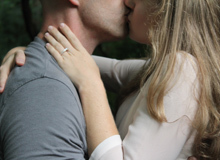
In honor of Head and Neck Cancer Awareness Month, my colleague made an informative, yet very entertaining public service announcement video.
Take a look!
One of the highlights of the message is that several types of cancer, including cancers of the mouth, throat, and sinuses, can be caused by a virus known as human papillomavirus, or HPV. This virus is widespread in the population, with nearly 80 million people in this country alone being infected. Over 14 million teens get infected each year. As with the better known herpes virus, HPV is transmitted by sexual contact or kissing.
In my practice, where I treat young children, I see how the HPV infection can be transmitted from mother to baby prior to birth, leading to papillomas, or warts, filling a child’s airway. These kids, often as young as 6 months old, develop chronic hoarseness from the warts filling their vocal cords, and, if left untreated, develop respiratory distress. Some can die if the disorder is missed. This becomes a lifelong disease for these children, where they need frequent surgeries and medical treatments to keep the disease at bay. In many, the disease will subside in teen years, but some go on to have it through adulthood. There are many treatments, but no cure.
Many head and neck cancers originate from HPV. Patients with these cancers are usually younger than traditionally seen cancer patients. They are usually non-smokers, and rarely drink alcohol. As HPV is so prevalent in the adult population, we are all at risk for these types of cancers.
Now here’s the good news for the future of both kids with HPV-related airway blockage and for head and neck cancer patients: There is a vaccine to prevent HPV infection. It’s trade name is Gardasil(R) and it is recommended in all kids, starting as young as age 9 years. Initially, it was recommended for girls alone, as HPV is also associated with cervical cancers. https://www.cdc.gov/hpv/parents/vaccine.html But with increased awareness of the importance of HPV prevention, it is now recommended for both boys and girls. As with any vaccine, there are risks with this one, including injection site reactions, fevers, and other exceedingly rare serious reactions. But the benefits outweigh the risks by far. Widespread use of the vaccine can prevent up to 30,000 cancers per year in both men and women. It can also prevent up to 3,000 newly diagnosed children each year from developing life-threatening airway obstruction and a childhood filled with frequent trips to the operating room for throat surgery. While the anti-vaxx community has focused on bashing vaccines for babies, they are also up in arms with the HPV vaccine. It doesn’t cause autism, and it doesn’t have mercury. It’s just an anti-viral vaccine, so give us a break on this one. Do us a favor and put the airway surgeons and cancer surgeons out of business in treating HPV-related disease. We and our patients will thank you for it.
March 14, 2017
Who doesn’t love blueberries?
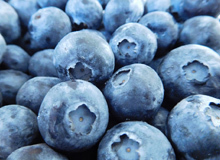
Who doesn’t love blueberries? They are, for the most part, sweet, they go with just about everything, and, for us lucky Californians, they are almost always in season. They contain long-worded substances such as antioxidants, anthocyanidins, and flavonoids, making them rank with such superfoods as acai berries and kale. So when a study demonstrating that blueberries improve memory is published in an academic journal, we have yet another reason to partake in the blue fruity fest.
The headline, “Blueberry Concentrate Improves Brain Function in Older People” does sound enticing. But let’s dig a little deeper into the study itself, before we invest in blueberry pie stocks. First of all, blueberries are, indeed, good for you. They have some vitamins, a little bit of fiber, and the purported antioxidant called a flavonoid. The specific flavonoid in blueberries is anthocyanidin. It remains to be determined whether or not flavonoids, a known plant pigment, are absorbed enough in the human body to have any antioxidant effect at all, but let’s just say that they do. And regardless of the mechanism of action, the study showed that blueberries improved memory.
Let’s dig a little deeper still. There were 26 subjects in the study, 12 of whom were given daily concentrated blueberry extract for 12 weeks; 14 of whom received placebo. After the 12-week period, the blueberry juicers showed more blood flow to their brain on MRI scans, and improvement in some aspects of working memory. All good!
Now let’s keep digging. This was a small study. Unless the group without blueberry juice had demonstrated complete absence of any cognitive function compared to the juicers, there is no way any significance could be reached. Good study, but a small one. Too small for any strong statistically significant data.
And the final dig: The study was sponsored by a company called CherryActive, Ltd., which kindly provided the blueberry extract to the participants. We commend the authors for disclosing this conflict, yet we as readers need to come up from the heavenly blueberry patch of brain activity and memory, and remember to take the whole thing with a large grain of blueberry extract.
January 12, 2017
I’m Nuts Over Nutella
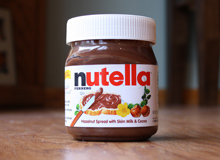
It’s hazelnuts. It’s European. It’s stylish, which makes it seem a bit healthy. Why, it can be likened to fancy peanut butter. Who here has not dipped a teaspoon– wait– tablespoon into that voluptuous tub of CANCER-RIDDEN goodness? Nutella, the treat of childhood, best eaten plain, but also divine on bread, pancakes, or crepes, is now the new cancer causer.
Headline: “Nutella Can Cause Cancer.”
Result: Nutella is banned. Pulled from the shelves. Nutella’s revenue plummets.
Outcome: Guilt and panic set in. “I think I’ve had too much Nutella.” “I think my kid has had too much Nutella. In fact, she had some today. And yesterday.”
Stop the madness! The study that is raising such hazelnut hoopla looked at mice who were injected with cancer cells. They were given cancer. The ones who were fed an extremely high fat diet, filled with, yes, palm oil, a key ingredient in nutella and so many other scrumptious products, developed a more aggressive form of the cancer than their svelte tumor-ridden counterparts. A specific protein on cancer cells, called CD36, grows by absorbing fatty acids, leading to tumor cell growth. Nutella itself was not given to the plumped up mice, but fat was.
Sure, let’s revisit the concept of high fat diets, and let’s evaluate any potential short- or long-term harms of ingredients such as palm oil. But headlines are not always accurate, to say the least. Solid, science-based studies, as this one was, should lead to more investigation. Not panic or loss of a good treat.
October 15, 2015
Plastic Bracelets for a Healthy Soul
Over the past few years, the vaccine controversy has continued to simmer. First it was Hollywood , and now it’s in Washington. Many of us in medicine chuckled at the press that starlets were getting from the potential damages that vaccines can do. Although crowds listened to their stories, there was always the caveat of ‘well, they do rely on Dr. Google, so we’ll take it with a grain of salt’. But when potential presidents, no less potential presidents who are physicians, voiced their vaccine vacillations, ears perked up. We as physicians had to step up even more, and we could no longer blame it on ignorance or entitlement.
What feels like a universe away from Hollywood and Washington are places like rural Peru. Are they voicing vaccine vacillation? I think not. Families are walking miles to get their babies vaccinated. They want their progeny to survive the first year of life, and hopefully make it past age five. I came across a project called Alma Sana (meaning ‘healthy soul’ in Spanish). www.almasanaproject.org/about. Maybe because it was a Cornell (my alma mater) student that peaked my interest. Maybe because it was a young woman with a world vision that struck me. Maybe it was because the method of vaccine recording was so simple, brilliant, and usable that struck me. Or maybe because there was no controversy involved. It was solely the interest of the health and survival of a growing population.
I can get a pdf of my kids’ immunization records at the touch of a button. Do I remember the schedule of my 8-year-old’s 30 immunizations he’s already had? Of course not. I bring him in for check-ups, and he gets his shots on schedule. But what if i didn’t know when to bring my kids in? Especially in the first year of life, when immunizations are given at 2, 4, 6, 9, and 12 months? Let’s say that i brought them to a different facility each time, or that a given facility had no record of which vaccines they’ve already received, and which they need at that visit? Let’s say I was handed a slip of paper at each visit, listing what they received, but between my thirty-mile journey and my rural mountain life, I misplaced the paper? www.almasanaproject.org/the-problem/
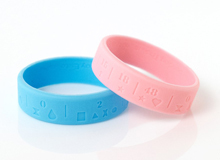
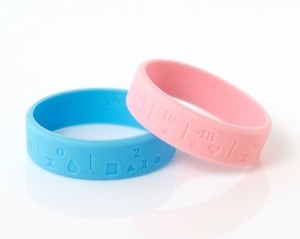 Here’s the beauty of Alma Sana’s project. You know those plastic bracelets? The ones that were first yellow ‘Livestrong’, but have now come to represent any and every cause, catchy phrase, or even sports team? Now babies in rural Peru received baby-sized plastic bracelets (well, actually anklets), with markings designating each vaccine,and at what age they need to be received. www.almasanaproject.org/our-approach/ When a baby receives a shot, a small hole punch is made at that particular vaccine symbol, so the next health care provider knows that that one has been given. Parents can also see when their child needs be brought in to receive their next round of shots.
In a short time, this population has already seen remarkable increase in vaccine administration, simply because families now have a usable method of knowing when to be seen. In time, this method will extend to other countries needing methods other than google, pdf’s, pretty faces, and potential presidents telling us when and why to protect our children.
Read more on almasanaproject.org »
December 3, 2014
When Patients Lie

The other day, the mother of a nine-week-old baby girl called my office in a panic. Her daughter was having terrible breathing trouble, with coughing and wheezing. She asked to been seen that day, and of course I said yes. I asked mom how the baby had been doing overall, and she said that she’d had some noisy breathing as a newborn, but all was well until the past few nights, when her breathing became labored, noisy, and she just didn’t seem ‘right’. On first examining the baby, she seemed well-nourished and was sleeping comfortably. There was no wheeze, noise, or cough. However, while i looked with a small flexible telescope at her voice box, she began to have a horrible-sounding cough.
As an airway surgeon, my ears have been finely tuned to the sounds of stridor– croup, laryngitis, tracheal (windpipe) abnormalities, vocal cord problems, muscle weakness, cartilage immaturity etc. Most of us who’ve been in practice awhile can distinguish a croup kid from a tracheitis kid from across the street. But this sounded different. Not something I hear every day or even every year. The child seemed to be in agony from the cough, but there was no structural problem. Her exam was normal. I mentioned possible etiologies of the cough to her mom, including several viruses and bacteria. I asked her if her five older children (ages 18 months and up) had had their immunizations, and she assured me that they had. I suggested she go see her pediatrician, who would be able to check for certain viruses or a lung problem, and told mom I’d call her pediatrician to let her know that mom and baby were on their way.
“She lied to you,” her pediatrician said. “Nobody in that family has received one vaccine.” She lied. Lied? This baby could have had pertussis, better known as whooping cough. My waiting room is filled with patients with weakened immune systems, other newborns too young to be immunized, and elderly cancer patients. If one ever wondered how epidemics start, we had just seen our cute little bundle of typhoid Mary, just west of tinseltown. We are currently living through a whooping cough epidemic, and babies are dying unnecessarily in front of our eyes. And this mom needed to lie about her child’s immune status? Parts of Los Angeles have immunization rates lower than those of South Sudan, so one would think that this mom would feel utterly comfortable, and perhaps even proud, that her children were not tainted with Big Pharma-driven, toxin-laden vaccines.
Thankfully it turned out not to be pertussis, but a treatable, short-lived viral illness. I will see the baby again, should she need my care. I will not hold the lying against her mom. Patients lie to their doctors all the time- about smoking, alcohol, diet, lifestyle, you name it. We don’t want those who care for us to be angry at us, and we want to show them that we’re trying–that we’re all on the same team. But the vaccine debate has polarized the parenting community.
In a recent piece in The Hollywood Reporter (Gary Baum), the writer was unable to find ONE family to speak on the record about not immunizing their children. Not because they don’t stand by their choice, but because they didn’t want any backlash from those on the ‘other side’. Vaccine choice has become one of the few health issues that has forced families to fudge their answers, or worse, hide behind them.
February 28, 2014
The FDA Should Chew On This…..
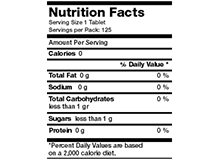
FDA Nutrition Facts Label: Proposed Changes Aim to Better Inform Food Choices »
In the current climate of the obesity epidemic, the FDA has changed the nutritional labels we’ve become all-too-familiar with. The emphasis will now be on calorie count and appropriate serving size. So much for my pretending that the pint of ice cream i just downed had 350 calories. What? That was per serving? Don’t tell me that I was supposed to share it with three other people! From now on, we’ll be able to enjoy our 350 fat-filled calories in the micro portion it was meant to be.
I understand the importance of the health of our nation, but I fear that they are missing a big boat. Childhood aspiration (or choking) on food is a major public health issue. Anywhere from 10,000-20,000 kids visit emergency rooms each year in the US alone, after having suffered a food-choking accident. Hundreds die each year, either in the hospital or before they make it in the door. Most of these kids are under the age of 5, and most of their parents will have had no idea that their child had choked on a high-risk food.
In stark contrast to the well established legislation that all toys and games intended for young children must have safety labeling, similar legislation for food products does not exist. The “Food Choking Prevention Act” was introduced and reintroduced multiple times to Congress. The 2002 rendition directed the FDA to establish an Office of Choking Hazard Evaluation, in efforts to oversee identification and labeling of potentially hazardous food products. This act was ultimately dismissed by Congress in 2002, 2003, and again in 2005. The most recent attempt was devised with a focus on promoting public education about prevention of food object aspiration. Unfortunately, the introduction of this bill was also dismissed by Congress.
Until we have support by our legislators, we will continue to do our best as pediatric physicians to educate the public about high-risk foods for young children. The American Academy of Pediatrics recommends that the following foods not be given to children under 5 years old:
Hard Candies or Gum
Raw Vegetables in chunks
Nuts and Seeds
Whole grapes
Hot Dogs
Chunks of Meat or Cheese
Popcorn
Sticky candy
Chunks of peanut butter
None of these foods have safety labels, but we’ll keep on working until they do.