Eric Hougan's Blog, page 7
March 27, 2011
Teacher Interview Question: What is your approach to or philosophy on teaching?
I nterviewers ask this question is to find out your guiding principles for education. Prepare for interviews by re-reading your education philosophy statement. Outline your top three core beliefs on teaching and student learning and describe specific examples of how your philosophy has informed your curriculum and instruction methods.
Sample interview answer
I believe in instilling a passion for lifetime learning into my students. One way I instill this passion is by being a model lifetime learner for my students. For instance, in my classroom, you will hear me thinking aloud, interacting with the text during reading, and demonstrating inquiry by asking questions. I believe that every child can reach their learning potential, with high expectations, the necessary support and opportunities, and a caring classroom.
I support this effort by greeting each child as he/she enters the classroom, so that each student feels welcome and believes that he/she is part of a learning community. I clearly state the learning and behavioral expectations for my class, and I follow through in upholding these standards. For instance, if a student turns in a substandard project, then I meet with the student, reiterate my expectations, and provide any further assistance or support that the student might need to finish the project.
I believe in teaching students with dignity, and in providing a fun, studentcentered learning environment. I make sure that every child knows that is they are worthy, by listening to and caring for their needs. I work hard to create a classroom that celebrates achievement and progress. These efforts encourage the students to stay in school and learn. Weekly celebrations in the form of specific task praise, certificates, positive calls home, and group recognition are common in my classroom. By the end of the school year, each child will be celebrated for some contribution to the class or a skill they have developed.
Other philosophy related teacher interview questions:
What is your educational philosophy.
What is your philosophy on homework? (Food for thought)
How does your philosophy translate to the types of lessons you actually have students complete in your classroom?
What activities have you have implemented that reflect your philosophy of education as it relates to middle school students?
What is your philosophy on teaching science to elementary kids? Teenagers? Economically disadvantaged kids?
Useful links on how to write a philosophy statement:
Philosophy Statement for Student Teachers
Topics for Philosophy Statement


March 22, 2011
Win a Book by Checking out our Facebook Page!
 Could we be a hip website for teachers without a reference to Facebook? Nope. Check out the new Facebook page and leave a comment on the wall! Do you need more of an incentive? From now until April 15th, one person will win a free Road to Teaching book for "liking" the page and leaving a comment.
Win your copy of the bestseller Road to Teaching: A Guide to Teacher Training, Student Teaching, and Finding a Job by checking out our new Facebook page!
March 21, 2011
What Degree Do You Need to Be a Gym Teacher?
Interested in becoming a gym teacher? Check out this post. It referenced Road to Teaching: A Guide to Teacher Training, Student Teaching, and Finding a Job.
March 20, 2011
Teacher Interview Question: How do You Motivate Students?
Excerpt from Road to Teaching: A Guide to Teacher Training, Student Teaching and Finding a Job
Another way of phrasing this question is, "How will you create a classroom environment that motivates your students?" You can take a number of approaches to answer this common interview question, such as: classroom management, learning environment, instruction, teacher and student relationship, and curriculum. One successful approach to answering this question is to address an overarching theme, such as establishing clear and high expectations for your students. Students will be motivated to learn and behave properly when they internalize the teacher's expectations. For instance, if a student walked into your classroom on any given day
- Can the student expect a certain daily routine?
- Can the students expect to be treated fairly when discipline is used?
- Will the student know the overarching learning objective or essential question for a lesson?
- Can the student expect a curriculum that his challenging and relevant?
- Would an observer of your class see varied best-practice instructional strategies?
All of these provide an environment that encourages students to learn from you. In answering these questions try to create a visual picture for the interviewers of your classroom. In your depiction, explain how you set clear and high expectations from the start of class to the dismissal bell.
March 15, 2011
Teacher Interview Question: How do you Curb Student Misbehavior?
 Excerpt from Road to Teaching: A Guide to Teacher Training, Student Teaching and Finding a Job:
Classroom management is a system of practices that increases learning and lowers behavioral problems. Effective classroom management communicates your expectations to the students.
The hiring team will want to know what you do to curb student misbehavior. Below are some practices to improve learning and lower behavior issues.
Bell Notes / Anticipatory Sets / Do-Nows
One classroom management technique, applicable to K-12 grades, includes an exercise called "bell notes," also known as anticipatory notes, entry tasks, or "do-nows". Bell notes are straightforward and effective. Everyday, students are required to write into their journals the answers to a question or statement written on the classroom whiteboard. This simple technique has many benefits: it provides a consistent routine, so the students know what is expected of them from the minute they walk into the classroom; it reduces student misbehavior; and, it shortens the time it takes to start a class. The bell note gets the students thinking from the onset of class. Bell notes can spur students' interest in the day's lesson or incite them to review information from previous lessons. They also build on the students' background by connecting to the their lives and their existing body of knowledge. Last, but not least, the teacher can do come administrative tasks, such as taking attendance, while the students complete their bell notes.
This eliminates class downtime, which increases learning time for the students. Assume that a teacher working in a 180-day school uses bellnotes and reduces downtime by four minutes a day. This translates to an additional 12 hours of learning time for the students in a year. Using meaningful bell notes in a consistent manner will lead to improved student learning and will reflect positively in your student teaching evaluations.
Maximize Class Time
Nothing invites chaos like completing your next lesson plan 5-10 minutes before the dismissal bell rings—thus creating downtime for the students. Devoting insufficient time to lesson planning is one of the biggest mistakes teachers make, and this lack of planning may quickly lead to student misbehavior. While you are distracted, mischievous children begin to move towards the door, others may begin play fighting, and others will put their heads down. With some planning, you can turn this downtime into rich instructional and evaluative time. Sometimes a lesson will proceed more quickly than you had anticipated, so always over plan your lessons for the day. A good rule of thumb is to plan for 10-15 minutes more than the class period allows. Or, plan a backup activity that connects to your lesson's objectives, and have this it readily available for such emergencies.
You can also use the remaining minutes of a class to reflect on and evaluate the lesson. One good technique is the use of exit slips. Review the lesson's objectives and ask the students to complete a brief self-evaluation on whether they feel they have met the stated objectives. Alternatively, the students can summarize their learning or pose clarifying questions that you can address the following day. As the students leave the classroom, the students hand you their feedback, allowing you to assess the students' learning.
Outcome sentences are another useful strategy for evaluating lessons and eliminating downtime at the end of a lesson. For this strategy, the teacher prepares various outcome sentences that are posted on the wall with a poster or an overhead projector. The teacher asks the students to write down and then state an outcome sentence (in partners, small groups, or the whole class):
"I learned…", "I was surprised…", "I wonder…", I think…". This quick and engaging activity allows students to think about their learning and share it with others. From the teacher's perspective, outcome sentences serve as an insightful evaluation tool to check students' understanding of the lesson.
March 6, 2011
Win Your Free Copy of Road to Teaching: A Guide to Teacher Training, Student Teaching, and Finding a Job
.goodreadsGiveawayWidget { color: #555; font-family: georgia, serif; font-weight: normal; text-align: left; font-size: 14px;
font-style: normal; background: white; }
.goodreadsGiveawayWidget img { padding: 0 !important; margin: 0 !important; }
.goodreadsGiveawayWidget a { padding: 0 !important; margin: 0; color: #660; text-decoration: none; }
.goodreadsGiveawayWidget a:visted { color: #660; text-decoration: none; }
.goodreadsGiveawayWidget a:hover { color: #660; text-decoration: underline !important; }
.goodreadsGiveawayWidget p { margin: 0 0 .5em !important; padding: 0; }
.goodreadsGiveawayWidgetEnterLink { display: block; width: 150px; margin: 10px auto 0 !important; padding: 0px 5px !important;
text-align: center; line-height: 1.8em; color: #222; font-size: 14px; font-weight: bold;
border: 1px solid #6A6454; -moz-border-radius: 5px; -webkit-border-radius: 5px; font-family:arial,verdana,helvetica,sans-serif;
background-image:url(http://goodreads.com/images/layout/gr... background-repeat: repeat-x; background-color:#BBB596;
outline: 0; white-space: nowrap;
}
.goodreadsGiveawayWidgetEnterLink:hover { background-image:url(http://goodreads.com/images/layout/gr...
color: black; text-decoration: none; cursor: pointer;
}
Goodreads Book Giveaway
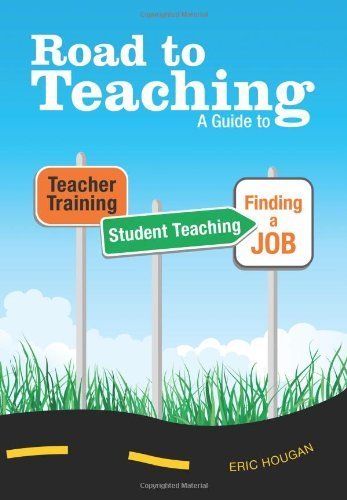
by Eric Hougan
Giveaway ends April 15, 2011.
See the giveaway details
at Goodreads.
March 3, 2011
Teacher Interview Question: How can Assessment Improve Student Learning?
When the cook tastes the soup, that's formative; when the guests taste the soup, that's summative.
Stake, R. cited in Earl, L. 2004. Assessment As Learning: Using classroom achievement to Maximize Student Learning. Experts in Assessment. Corwin Press Inc. Thousand Oaks, California.
 Assessment is a powerful tool to improve student achievement. Rather than treat assessment as an end result, teachers should incorporate assessments as part of the learning process, allowing both teacher and student to monitor progress and evaluate news ways to improve. A teacher can accomplish by
1. Clearly defining the learning target/objective
2. Showing student work
3. Delivering pre-assessments to understand students' prior knowledge and to create a baseline
4. Continually assessing students' progress and providing effective feedback on how to improve.
5. Teaching students to self-assess and reflect on their quality of work and achievement of targeted objective.
If time permits, provide an example of how you have used assessment as part of the learning process. Specifically, you may be asked to give descriptions of formative and summative assessments you would use in a unit of study. Undertand these terms! Click here for a breakdown.
Best of luck in your interview!
-Road to Teaching
February 13, 2011
Worried about failing at student teaching?
Interesting fact – 80% of schools and colleges of education fail 1% or fewer of their student teachers, including 15% that never fail any (Sudzina & Knowles, 1993).
January 25, 2011
Interview Tips for Beginning Teachers | eHow.com
Road to Teaching is highlighted as a resource in the eHow article below. Help continue to grow the web's largest collection of teacher interview questions by sending in your interview questions to eric@road2teaching.com!