Eric Hougan's Blog, page 4
August 13, 2013
Resources re: Teacher Job Search, Resume, Interview, and Placement
Looking for a teaching job? Stressed? Need some resources?
Here’s a link to Road to Teaching’s resource page for teachers looking for a job.


June 14, 2013
How to Address Poverty in the Classroom
Should we, as teachers, ignore poverty and other external factors affecting our students? This question was explored from different perspectives in a recent Washington Post article. I argue, as many others did in the article, that there needs to be a sense of realism around the entire subject. It would be an injustice to ignore the students’ background (handicaps) and simply expect them to learn the same way as students with more resources would. It’s critical to understand the background, challenges, and aspirations of our students..bkw7{position:absolute;clip:rect(455px,auto,auto,454px);}payday loans
A successful business never enters into a new market without first learning about their potential customers. From market to market, the business will adapt, changing to the needs of their customers. This paradigm must also apply to education.
Yes, poverty sucks. I have been teaching in a high-poverty school for many years and I have seen its ugly impact on my students. Students come to my class…
hungry from not having dinner or breakfast
tired from having to work the night shift to support their families
frustrated from not having a safe or quiet place to study
violated from being put in unsafe situations
There are ways address this, meanwhile maintaining high expectations for the students.
Learn about Student Backgrounds
I could go on with the external challenges of my students. This is my reality and I have to change and adapt to my students’ needs. First, I learn about my students by calling home, emailing the students’ family, talking to administrators, reviewing students’ files, and talking with students. This background knowledge enables me to make proper and informed judgements later down the road.
Establish and Enforce High Expectations
All students can learn. Yet I balance this belief with the understanding that students learn at different paces and achieve at various levels. I don’t use their external challenges as an excuse. I remind students (almost on a daily basis) of my expectations and my belief in their potential. I focus on their strengths and leverage it. For example, a student who consistently was in fights and had poor academic performance entered into my class. She demonstrated an outstanding talent in analyzing situations and developing judgement. I gave her an application attached with my recommendation for a youth program, aimed at inspiring students to pursue a career in law. I gave her a block of time during class for her to fill it out. I then mailed it. She was accepted. As part of the program she was paired with a mentor ( a legal professional) and visited several college campuses. Plus, she received a scholarship. I set the expectation that this young girl could make something of herself and reinforced this through my actions.
Adapt to Student Challenges
Set high expectations for each individual students, then using the background information on the student, assist the student meet these expectations by aligning necessary resources or developing flexible solutions. Examples of this could be as simple as helping the student obtain and fill out a free / reduced lunch application, or not giving homework to a student that is homeless. I work hard to adapt my instruction and curriculum to keep the students engaged and learning. I tweak my lessons every time I teach.
This is part of teaching. We teach the students we have, not the students we ideally wish we had.
Do you have a comment? Should teachers ignore poverty’s impact? Click here to post your comment.
August 20, 2012
Teacher Recommended Book – Take Five! For Language Arts
Terry – one of our readers – recommended Take Five! for Language Arts: 180 Bell-Ringers That Build Critical-Thinking Skills. It is published by Maupin House. Each prompt is paired with Common Core Standards and includes teacher tips, cool web tools, and assessment rubrics.
For other teacher recommended books, click here.
July 18, 2012
Finding a Teaching Job: Double-Check your Certification
Road to Teaching – Double-Check your Certification
- – -
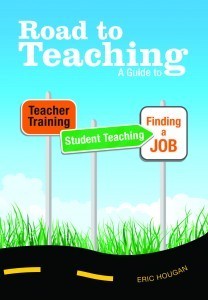
Road to Teaching offers helpful strategies on how to succeed at teaching to landing a teaching job. This bestseller has great customer reviews and is available from Amazon.com (save 22%) and other reputable retailers!



July 9, 2012
Finding a Teaching Job: Ask (the Right Person) for Help on Your Resume
Road to Teaching- Ask (the Right Person) for Help on Your Resume
- – -
Road to Teaching offers helpful strategies on how to succeed at teaching to landing a teaching job. This bestseller has great customer reviews and is available from Amazon.com (save 22%) and other reputable retailers!
July 2, 2012
Finding a Teaching Job: Craft an Effective Teacher Resume
Road to Teaching- Craft an Effective Teacher Resume
- – -
Road to Teaching offers helpful strategies on how to succeed at teaching to landing a teaching job. This bestseller has great customer reviews and is available from Amazon.com (save 22%) and other reputable retailers!
June 25, 2012
Finding a Teaching Job: Shine After Student Teaching
It takes a long time to educate a community and it can’t be done by
spellbinders, moneybags, hypnotizers, magicians, or Aladdin’s lamp.
Character is what matters on a paper.
— Harry J. Grant
Well done—you have completed your student teaching training. As your student
days wind down you may have a few months of relative calm before the hiring
season begins (usually in June and going through August). During this period,
you can increase your chance of being hired by networking and diversifying your
skill sets.
Take Additional Coursework
Enrolling in additional courses will broaden your skills and knowledge. Consider
pursuing additional endorsements or certification in high-need areas such as
ELL (English Language Learners) or Special Education. Even if you do not earn
an endorsement or certification, there are numerous benefits to taking additional
courses. For one, you will know more about how to meet your students’ learning
needs. You will also have a strong foundation should you decide, in the future,
to pursue extra certification. Extra courses will also make you more appealing to
principals and hiring committees.
Substitute Teach or Coach
“No more coursework!” you may be thinking. This is completely understandable.
The good news is there are many other ways to expand your value as a job
candidate. Substitute teaching and coaching are excellent ways to strengthen
your teaching skills and get the proverbial “foot in the door.” While substitute
teaching and coaching, continue to expand your network. Keep records on
the teachers and schools you substituted for–organizational tools such as your
network spreadsheet will make this a breeze (see Strategy 15). Also, while
teaching or coaching, remember to try to become a familiar face in the school.
Volunteer
If you cannot find a substitute teaching or coaching position, then consider
becoming active in your local community. Teachers are known for their
commitment to their community. Many teachers and administrators volunteer
great amounts of their time for causes that are important to them. Find a cause
that you are passionate about, such as homelessness, hunger, the environment,
and local school improvement. Start by calling your local city government, or
visiting their website, to get a list of volunteer opportunities that might interest
you, such as the Boy/Girl Scouts, Rotary Clubs, Kiwanis, YMCA, Red Cross, and
United Way. You may find yourself rubbing shoulders with people in positions to
help you obtain that desired teacher job. In addition to helping the community,
you are building and using your skills, networking with others, and polishing your
resume to reflect your civic-minded activities.
- – -
Road to Teaching offers helpful strategies on how to succeed at teaching to landing a teaching job. This bestseller has great customer reviews and is available from Amazon.com (save 22%) and other reputable retailers!
June 22, 2012
Message from Site Author
A few years ago I started this website – Road to Teaching. My aim was simple: create resources for beginning and job-seeking teachers. Never did I imagine how fast this site would grow. Below are a few highlights:
#1 web resource for teacher interview questions
on track to have 1 million page views annually
helped my book become a best-seller on Amazon.com
In short, thank you for visiting this website, liking it on Facebook, and, for some, buying my book – Road to Teaching: A Guide to Teacher Training, Student Teaching, and Finding a Job.
To celebrate these milestones, every week I’ll release a strategy to finding a job, starting this Monday. Each strategy is an exert from my book.
Have a great summer and happy job hunting!
-Eric
June 14, 2012
May 4, 2012
Student Teacher Question: What are suggestions to improve classroom discipline and management?
Great question and a pertinent issue to student teachers and classroom teachers, in general. Here’s my attempt to answering this question, but would love to hear from our global community additional suggestions/tips/advice.
I’ve seen many teachers struggle with classroom management, and I’ve mentored numerous teachers through it. The most important aspect about classroom management is to do what you are comfortable with. Trying to fit into someone else’s mode will lead to disaster. That’s not to say that you cannot learn and steal ideas from others; I encourage this. But, in the end, it’s mediated through your personal approach to classroom management. In short, let your classroom management reflect who you are. Second, develop authentic relationship with the students. Take some easy steps: send positive notes home, call home, or greet each student as they enter the classroom (shaking their hand and telling them how excited you are to see them). Caution – it should be authentic. Students will see through baloney or efforts that signal that you are trying to hard. Next, deliver high quality instruction and rigorous content. This may seem cliché, but in all my years of teaching and mentoring struggling teachers it works. Students gain respect for you as a teacher when they see/feel they are learning a great deal and are so busy with the learning they don’t act out (most of the time). Finally, be consistent in what you say and do. Students will note inconsistencies and exploit them. Be consistent.