Simon Rose's Blog, page 61
October 5, 2018
Great review of Flashback in Opal Magazine
Check out this great review of Flashback in the October 2018 issue of Opal Magazine.
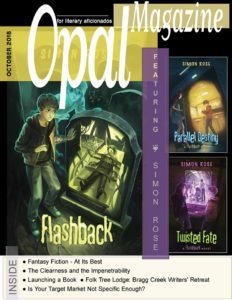 Flashback is a fascinating Young Adult book that pushes the boundaries of imagination: the Grail for every science fiction and fantasy reader. Shortly after its publication, Simon Rose’s Flashback was nominated for the 2016 Alberta Publishers’ Award in Young Adult. This book intertwines cold case and active murder case mysteries, high-level governmental military cover-ups, some supernatural or paranormal intervention, with some time travel. Flashback is progressive writing. It ignites a reader’s imagination to think “outside the box” for the creation of a better society: exploring the concept of teamwork, in building better futures together, that could not have been done singularly — the reality of winning teams today, business or personal.
The book starts off with a series of contact attempts by a teenage deceased named, David, who wanted some closure to his “cold case”, through teenage Max. When Max was able to finally accept the paranormal contact as real and not as a psychiatric episode, Max soon was able to teleport into David’s “world”, where Max’s sleuthing adventure begins. Eventually, Max’s mental abilities expanded to the point that he was able to assume the identity of David in David’s time period. The readers see how Max affects the futures of others, as well as his own timeline, with his time travel. At the same time, the readers see some of the “the Butterfly Effect” phenomena in action. That is, one small action at a critical point in time, that can alter the future in a big way.
The book explores the power of the mind to affect the fractals of a community from one self to other individuals, whereby changing societal outcomes. With such abilities, Rose reminds readers of the responsibilities and considerations that go with having such life-altering talents. This book is one of the few fictional works that can work at different dimensions of thinking, at the same time to successfully converge them to the central theme of humans helping humans because it is the right thing to do – past or present. Simon Rose masterfully takes his readers on a thrilling ride, with the innovative adventures presented, that is quite enjoyably memorable. Flashback is book one of the series.
The post Great review of Flashback in Opal Magazine appeared first on Simon Rose.


October 1, 2018
Interview in Opal Magazine
Check out the great interview in the October issue of Opal Magazine.
In the interview I talk about the Flashback trilogy, including Flashback, Twisted Fate and Parallel Destiny, upcoming projects, the writing process and more.
Opal Magazine published by Opal Publishing. Opal is a monthly digital magazine published 12 times a year. The magazine features local authors, interviews, fiction, poetry and prose.
You can read the interview and also the great review of Flashback here.
The post Interview in Opal Magazine appeared first on Simon Rose.
September 25, 2018
What’s it all about? An excerpt from The Social Media Writer’s Guide
“The internet can be a powerful promotional tool and, following Simon’s suggestions and guidelines, a professional copywriter can certainly improve his/her skills. A good resource.”
Chapter One: People don’t read web copy
These days, any organization that wants to either do business, or stay in business, has to have an online presence. A website is crucial if a company’s going to connect with both existing and potential customers and they need to make sure that their web pages tell their clients everything they need to know about the company’s products and services. However, des pite that, the company can’t include too much information, especially on the home page, the place where people will first encounter them.
Readers of web copy typically scan the page very quickly, rather than actually reading every single word. Consequently, it’s vital that a company has the right words, and enough of them, to grab and hold the visitor’s attention. Although it’s important to include as much information about the company as possible in order to entice the reader, the copy also has to be easy to read. Killer headlines and text broken up into manageable chunks will make web pages easy on the eye. There are no hard and fast rules, but as a guideline, headings should be eight words or less, sentences up to a maximum of twenty words, paragraphs no more than seventy words, with a total page count of around two hundred and fifty words. In the online world less is nearly always more.
Hiring a professional copywriter to compose content for a website involves not merely displaying the company’s brochure online but creating an online brochure. At first glance this might appear to be the same process but there are fundamental differences. Many organizations make the mistake of simply putting their brochure online when they have a website created. After all, they already have all the information aimed at potential customers in printed form, so why not put it all online? The details are already in existence and have worked perfectly well so far, so why not just use the same text on the website? Surely it’s the same thing, isn’t it? The truth is, a company can’t simply put its brochures online, because writing for the internet is very different to writing for traditional printed materials, whether they’re brochures, catalogues or even direct mail pieces. Any organization only has seconds to grab and hold someone’s attention on the web, since people typically scan text very quickly.
Website pages have to be created with the impatient reader in mind. The writing of website copy is a specialized area, since the pages must provide all the relevant information, yet not get bogged down with too many details. Well-written, yet concise, text can also help improve a company’s ranking with search engines, which could make all the difference between success and failure. Featuring all the details from official brochures on the newly created web pages may simply encourage people to dismiss the company and its products in a matter of seconds, especially if the home page appears to be overloaded with text. Potential clients will always appreciate being able to locate what they’re looking for quickly and easily. They’ll be able to do this if a company’s pages are well written and organized properly, and that translates into good customer service.
This is where the experienced copywriter comes in. Hiring a professional to compose the content is one of the most important decisions an organization can make when planning or improving its website.
The Social Media Writer’s Guide is available as an ebook and as a paperback on Amazon, Kobo, Barnes and Noble, iBooks, Smashwords and many other locations.
The post What’s it all about? An excerpt from The Social Media Writer’s Guide appeared first on Simon Rose.
September 19, 2018
What’s it all about? Sources of inspiration for Future Imperfect
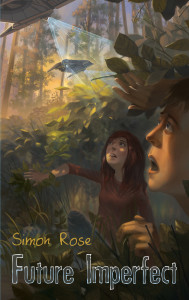 Future Imperfect is an exciting adventure featuring technology, teenage geniuses, corporate espionage, and mysterious messages. Most kids these days are very familiar with laptops, tablets, and video games, and don’t go anywhere without their cell phones, so the technology and gadgets that feature in the story make the novel very appealing for young readers. It’s also a very compelling adventure story, with lots of cliffhangers, twists, and turns.
In the novel we’re introduced to Andrew Mitchell, who was one of the leading experts in highly advanced technology in Silicon Valley, until he vanished following a car accident, which also injured his son, Alex. When a mysterious app later appears on Alex’s phone, he and his friend Stephanie embark on a terrifying journey involving secret technology, corporate espionage, kidnapping, and murder in a desperate bid to save the future from the sinister Veronica Castlewood.
The two main young characters had to have a technical background in order to be able to engage in the activities portrayed in the novel. It was also important to have them live in a part of the world where there are technology companies in abundance, hence the Silicon Valley setting. Not only that, it was crucial for them to be connected to the hi-tech world through Alex’s father’s job at Castlewood Dynamics.
Most young readers are able to relate to Alex and Stephanie as characters. They may both be technological geniuses to some extent, but they’re also ordinary kids that find themselves in extraordinary and even dangerous situations. This is very important in stories for young adults, as is the need for the young characters to solve problems themselves. Adults certainly appear in the story but Alex and Stephanie are the ones that make the most vital contributions to the story. This all helps the reader to identify with the characters and hopefully thoroughly enjoy the novel.
The story will appeal to all young readers for whom technology plays such a large role in their lives, whether it’s cell phones, laptops, tablets, gaming, or the online world, but it’s also a very compelling adventure story, with lots of cliffhangers, twists, and turns.
Future Imperfect was perhaps written a little more quickly than some of the other books but some novels are like that. I created an outline and once I was happy with that I began writing the story. Future Imperfect was very enjoyable to write and I don’t think I was ever stuck for ideas or encountered any major stumbling blocks. As you’d expect there were a few things to sort out in the plot along the way but these issues were resolved during revisions and in the editing process.
Future Imperfect is available in bookstores, online at Amazon Canada, Amazon USA, Indigo/Chapters, Barnes and Noble, Amazon UK, and other locations, and autographed copies can also be purchased directly from me via my website.
The post What’s it all about? Sources of inspiration for Future Imperfect appeared first on Simon Rose.
September 14, 2018
What’s it all about? An excerpt from The Working Writer’s Guide
Introduction
Misconceptions are common regarding published authors. People think either that all authors earn millions or that it’s impossible to make a living as a writer. While some writers are financially successful with their e-books, success stories are rare, at least for now, and only a handful of authors make serious money from e-books.
Misconceptions also abound regarding authors who write for children. Books for younger readers are often mistakenly considered to be simple to write and easy to make money from. Some people look at the phenomenal success of the Harry Potter series and wonder how hard it can really be. After all, anyone can write a book, can’t they?
This book examines the working life of those who have chosen to pursue writing as a career and have no other source of income. In reality, most full-time children’s writers have multiple sources of income. Authors do earn money from royalties from their book sales, but in most cases this isn’t enough to live on. It’s certainly possible to make a living based on you r writing, but a number of different revenue streams are required. Some of these may be more important than others at one time or another, depending on a variety of factors.
Working as an instructor at universities and colleges may only be possible for those writers living in large cities and towns. Working for magazines or nonfiction publishers may also be easier if you’re in an urban area, although with the right connections this may not be an obstacle. If you write for websites or social media outlets, or create brochures and similar material for local companies, opportunities will be more plentiful in a larger market. School visits too are obviously easier to secure for writers located in parts of the country with large populations and more schools. However, more competition will also exist with other authors that are contacting those schools trying to book visits, readings, and workshops. Some children’s authors and illustrators will get the majority of their income from school visits, others from advances and royalties from book sales, but everyone’s situation is different. The pattern of a writer’s earnings will also vary from year to year, with one or another source of income being larger or smaller each time.
I was aware at the outset that it might be difficult to make a living from royalties alone. I therefore knew I’d need to explore other ways to earn an income. I need to be engaged in a variety of different projects in order to make a living, but fortunately, most of these are related to writing for children. In addition to my novels for middle-grade readers, I’ve written many non-fiction books and magazine articles, and I also create content for the corporate market and for social media. I conduct workshops and residencies at schools, visit summer camps, teach classes for adults at local colleges and universities, and offer coaching, tutoring, and editing services. None of these projects would be possible if I hadn’t written and published books in the first place. Admittedly, this may appear to be a diverse portfolio and one that doesn’t allow me to focus exclusively on creating works of fiction. Yet until that elusive movie deal arrives or international bestseller status kicks in, this is the reality for many children’s authors. If someone is fully committed to making a career as a full-time, professional children’s writer, he or she has to widen their horizons.
The Working Writer’s Guide is available as an ebook and as a paperback on Amazon, Kobo, Barnes and Noble, iBooks, Smashwords and many other locations.
The post What’s it all about? An excerpt from The Working Writer’s Guide appeared first on Simon Rose.
September 10, 2018
What’s it all about? An excerpt from The Time Traveller’s Guide
Chapter One: What is time travel?
Time travel is defined as taking place when there is movement between specific points in time. This is achieved in the same way that objects and living things move through space. In fiction, this kind of travel is made possible by the use of a time machine, device, or method. While nothing is carved in stone, I tend to think that time travel involving machinery or some kind of technology should be defined as science fiction while time travel that makes use of magic or similar methods is probably best classified as fantasy. However, these genres frequently overlap, particularly with time travel stories.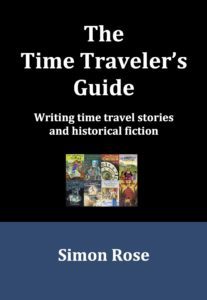
Over the years, novels, movies, and TV shows featuring time travel have included methods involving highly sophisticated machinery, scientific laboratories, various items of jewelry, wearable technology, vehicles, ancient artifacts, books, portals and doorways, dreaming, food and drink, and so many more. Time travel stories have featured journeys to the past, the futur
e, and to alternative timelines created when previous events were changed so that they occurred differently, thus affecting what happened next in various different ways. Time travel has long been a theme in books, short stories, TV shows, and movies and shows no signs of declining in popularity anytime soon, although of course only time will tell.
A common theme in time travel tales involves someone being sent into the past by accident. When they arrive at an earlier point in history, the device or machine is somehow broken, fails to operate properly, runs out of power, is misplaced, or is stolen by the story’s villain. The reader is thus left in suspense, wondering if the heroes will be able to return safely to their own time. Of course, the reader most likely believes that the heroes will eventually escape from danger. However, the plot still has to imply that the lead characters might be marooned in the past permanently or that their lives are in jeopardy. In my time travel novels, the main characters always face serious challenges from the moment that they appear to be trapped in a dangerous historical era.
Some time travel stories simply feature an adventure in a different period in order for the characters to experience what life was like. Perhaps the character discovers an old piece of jewelry that sends them back in time when they wear it or adjust it some way. The characters then witness historical events or meet famous people. Many time travel stories concern the consequences of travelling either backward or forward through time. The idea of changing the past, either intentionally or by accident, is a common theme in science fiction and fantasy. When events that have already taken place are altered in some way, what the time traveler knew as the present day has changed when they return home. This might lead to a further adventure to restore things to what’s perceived as normal, depending on the nature of the alterations to the timeline. As you’re probably thinking already, time travel can sometimes be very complicated but the creators of these kinds of stories are aware of the potential issues at the outset and work hard to make their story entertaining, plausible, and realistic. Some stories in the genre concentrate on the paradoxes involved in time travel, such as the well-known grandfather paradox. This is when the time traveler is responsible for the death of his or her own grandfather, meaning that the traveler was never born. If this is the case then how could they have gone back in time to cause their grandfather’s death in the first place? Time travel has lots of issues like this, some of which I examine in Chapter Nine.
Time travel stories involving journeys into the past overlap with the genre of historical fiction. This kind of fiction involves stories that are set in the past. There are no firm rules, but the setting is usually at least fifty years earlier than when the story is written. The setting is a particular period in history and often includes real historical personalities. The story’s main characters are usually fictional, although the social and other conditions of the time are presented accurately. Historical fiction stories usually take place during a significant period in history. In some stories the characters are part of the events taking place but in others the events merely serve as the background to the story. In The Sorcerer’s Letterbox, the story takes place in 1483 and features the aftermath of the Wars of the Roses and the mystery of Edward V and Richard, Duke of York, known as the Princes in the Tower. The princes appear in the story, as does their uncle, King Richard III, along with some other historical characters. In The Heretic’s Tomb, the story takes place during the period of the Black Death in England in the mid fourteenth century. The novel features imaginary characters but also refers to the effects of the Black Death on society, medieval medicine, and living conditions, and to some of the personalities and events of the era. In The Alchemist’s Portrait, Matthew’s time travel adventures take him to Amsterdam in 1666, the French Revolution in 1792, the American Civil War in 1865, and the Russian Revolution in 1917, all of which needed to be portrayed accurately. The Doomsday Mask has scenes that take place in Berlin in May 1945 and the characters needed to fit into that world. In Flashback, Max finds himself in the mid 1990s, not too long ago perhaps, but he still needed to inhabit an environment that’s correctly portrayed. Next, we’ll look at some of the many time travel stories that have appeared in printed form and on screen over the years.
The Time Traveller’s Guide is available as an ebook and as a paperback on Amazon, Kobo, Barnes and Noble, iBooks, Smashwords and many other locations.
The post What’s it all about? An excerpt from The Time Traveller’s Guide appeared first on Simon Rose.
September 5, 2018
What’s it all about? An excerpt from Where Do Ideas Come From?
“The idea of creating a learning guide for young people’s books is truly inspired.”
Introduction
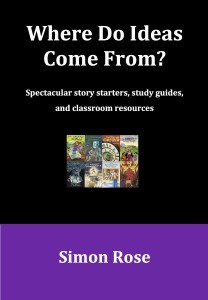 Many of my novels can be used as the basis for workshops and projects in the classroom. The Alchemist’s Portrait, The Sorcerer’s Letterbox, and The Heretic’s Tomb are all time travel stories and can be used as the basis for workshops in which students create time machines and stories set in a different era. All three novels are also ideal for studying the different historical periods depicted in the stories.
The Alchemist’s Portrait can be the starting point for workshops using pictures for inspiration, creating stories based on artifacts found in museums, or for creating unique characters. The Sorcerer’s Letterbox might inspire children to learn more about the Tower of London or other medieval castles, as well as study the mystery of the Princes in the Tower, the Wars of the Roses, and medieval life.
The Heretic’s Tomb can be used to learn about the Black Death, medieval society, the beginnings of healthcare, or the role of the medieval church. There are also strong female characters in the story and this can lead to students learning more about the very important women that lived in the Middle Ages. Teachers can use The Clone Conspiracy as a starting point for projects about the development of technology or what students might except to see in the world of the future. The Emerald Curse is an excellent novel for projects in which the students create their own superheroes and comic books.
The Doomsday Mask can be used to study ancient civilizations, ruined cities, and the extinctions of animals that took place at the end of the Ice Age. The Time Camera lends itself to wonderful projects related to the history of photography, writing speculative stories about alternate history, and finding inspiration from old photographs. The Sphere of Septimus has a wealth of potential for projects in which students create their own fantasy kingdoms, along with the people and animals that inhabit their imaginary world.
Where Do Ideas Come From? provides suggestions and recommendations for teachers developing classroom projects based on all the novels but might also serve as inspiration for aspiring writers of all ages.
Where Do Ideas Come From? is available as an ebook and as a paperback on Amazon, Kobo, Barnes and Noble, iBooks, Smashwords and many other locations.
The post What’s it all about? An excerpt from Where Do Ideas Come From? appeared first on Simon Rose.
August 30, 2018
The Importance of Professional Editing
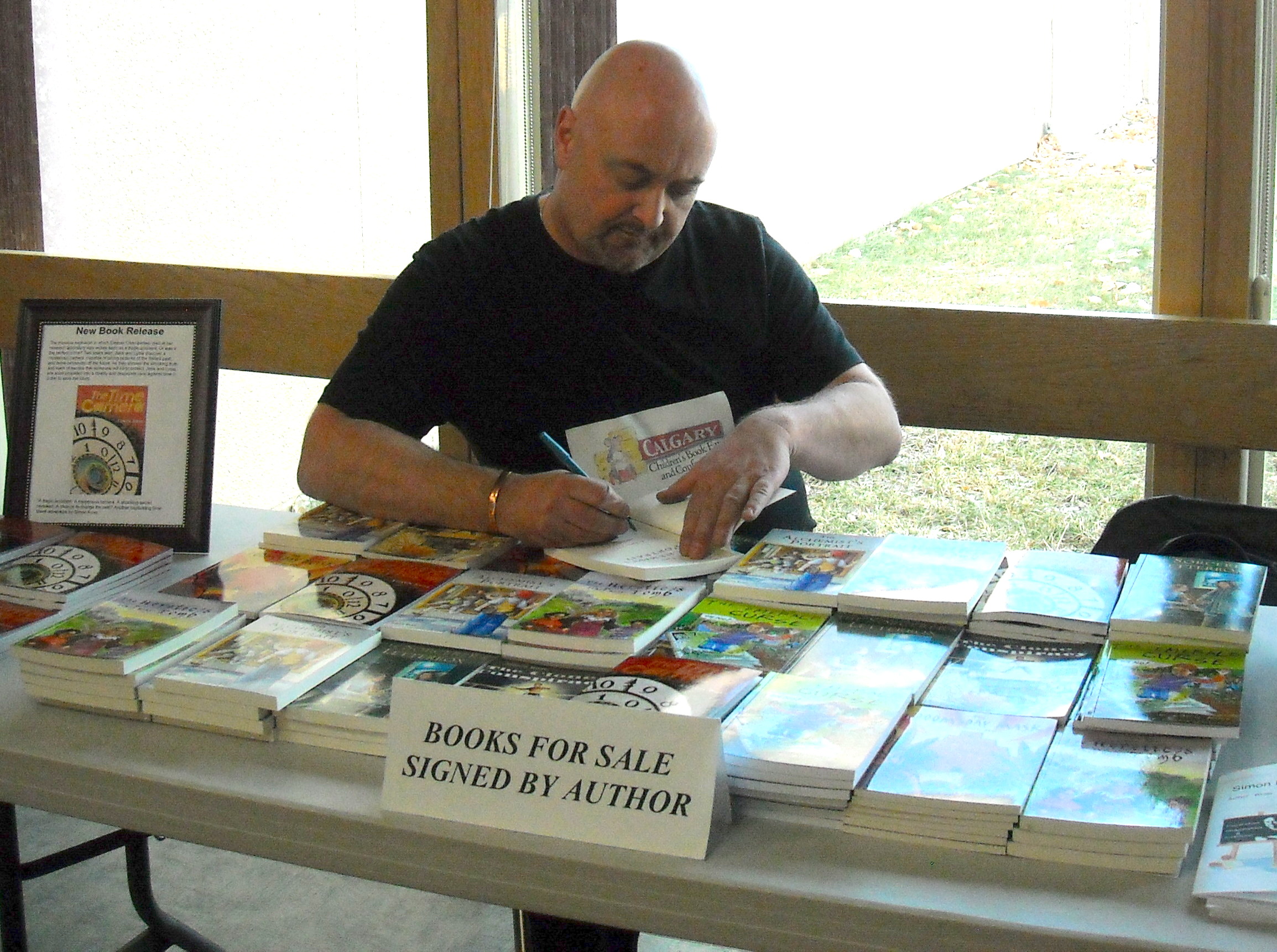 You’ve finished your first novel after years of painstaking work. You’re sure it could be a best seller and everyone you know is very enthusiastic. Yet your manuscript is returned by publishers, with a form letter providing no clues as to why they didn’t like it. Having your work independently evaluated gives you an unbiased opinion, helping you to tighten your manuscript and fix problems you may have overlooked.
I’ve provided substantive and copy editing services for many other writers over the years. This has been for novels, short stories, fiction, nonfiction, biographies, inspirational books and many other genres. You can view details of some of the projects that I’ve worked on here.
A professional substantive edit involves a comprehensive content assessment. This may include comments and suggestions regarding characterization, setting, dialogue, believability, structure, plot, language, research and references. It also includes a summary of the strengths and weaknesses (if any) of your writing, along with comments on writing technique, format, technical ability and market potential.
The written report on your manuscript features advice on how to develop your manuscript further. I will also answer any specific questions regarding what publishers may or may not like in the story. The time required for a substantive edit will vary depending on the length of your manuscript and the amount of work required.
A substantive edit is different to copy editing. This type of editing covers grammar, spelling, punctuation and many other details that writers are sometimes unaware of but publishers care deeply about. Substantive editing also differs from proof reading, which checks the final details before a book or article is printed or published. Following an in-depth substantive edit, both copy editing and proof reading are still needed before publication.
I conduct substantive edits for manuscripts in most genres of fiction and non-fiction, adult and children’s literature, including science fiction, fantasy, speculative fiction, time travel, historical fiction, paranormal, supernatural, suspense, adventure, action, mainstream novels, mysteries, thrillers, romance novels, picture books and more.
As a final note, it’s important to remember that that a substantive edit of a manuscript and the resulting changes or suggestions, even if acted on by the author, will not necessarily guarantee publication. While the feedback may improve your manuscript, doors will not automatically open. You’ll also still need to thoroughly research the marketplace to ensure that you’re submitting your work to an appropriate publishing house.
Visit my website to learn more about my services for editing, coaching and consulting, and ghostwriting.
The post The Importance of Professional Editing appeared first on Simon Rose.
August 27, 2018
What’s it all about? An excerpt from The Children’s Writer’s Guide
“This is by far the best book I have picked up to help me kick start my writing!”
Chapter Four: Where Do Ideas Come From
One of the most common questions asked of authors, whether from children during school visits or in interviews, is “Where do you get your ideas?” In so many ways, ideas are all around us – in newspapers, magazines, pictures, photographs, other books whether fiction or non-fiction, television, movies, even video games. History can be a constant source of inspiration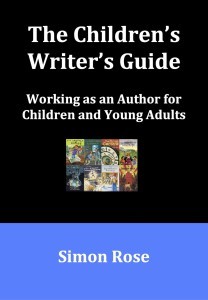 for writers, but so are personal experiences, family vacations, family, friends, or pets. Many writers have had ideas come to them in dreams – often not the entire novel, but at least a significant enough piece of the puzzle to set them on their way to crafting the actual story. My own ideas come from anywhere and everywhere: when out walking the dog, in the car, something in a conversa
tion, a newspaper story, a billboard, an item on the evening news, TV, movies, books of all kinds, song lyrics, historical events, ancient mysteries, long-lost civilizations, the supernatural, ghost stories, the paranormal or something completely out of the blue. Sometimes the challenge is to stop having ideas. I’ve been known to get ten ideas at once, which amazes my school audiences, but I also have to point out that I can go for six months with no ideas at all. Some of the concepts may never be used or may be only part of a story or a title. The ideas could even feature a character or a piece of dialogue and you aren’t sure where they come from. However, I do try to record as many ideas as I can, since I never know when they might fit in with a story I’m writing. Even ideas that don’t seem to work right away may prove useful one day.
As a writer, I often find myself wondering “what if?” This can in itself lead to many story ideas, some of which may end up being more developed than others. What if you received a letter informing you of your acceptance into a school for wizards? Or discovered a door into another universe at the back of your bedroom closet? Or a flying boy dressed all in green appeared at your bedroom window, inviting you to take a journey to a magical land? Perhaps you followed a rabbit down a hole and ended up in a bizarre underground universe. What if you met someone who’d been imprisoned inside a painting for over three hundred years? If you could travel back in time, where would you go? What would you do if you had a clone for the day? Whether this is how Harry Potter, The Chronicles of Narnia, Peter Pan, Alice in Wonderland, The Alchemist’s Portrait, or The Clone Conspiracy first came about isn’t the point. It’s more about how this type of thinking sets the thought process in motion.
You might even want to conduct your own personal “what if” exercises with a few story starter ideas. For example, what kind of a story might you able to conjure up from some of these random sentences? “He turned the corner and couldn’t believe it when he saw …” “I went to collect the mail and saw a letter from …” “Behind the bookcase was a small mysterious door …” “In the attic was an old dusty box …” “I found an old-fashioned ring in the cupboard and when I tried it on …” Even if you have an idea for a story, sometimes it’s still tough to know where to start, and although these sentences might not lead you to create a classic of children’s literature, they can help with your inspiration.
The Children’s Writer’s Guide is available as an ebook and as a paperback on Amazon, Kobo, Barnes and Noble, iBooks, Smashwords and many other locations.
The post What’s it all about? An excerpt from The Children’s Writer’s Guide appeared first on Simon Rose.
August 21, 2018
What’s it all about? Sources of inspiration for the Shadowzone series
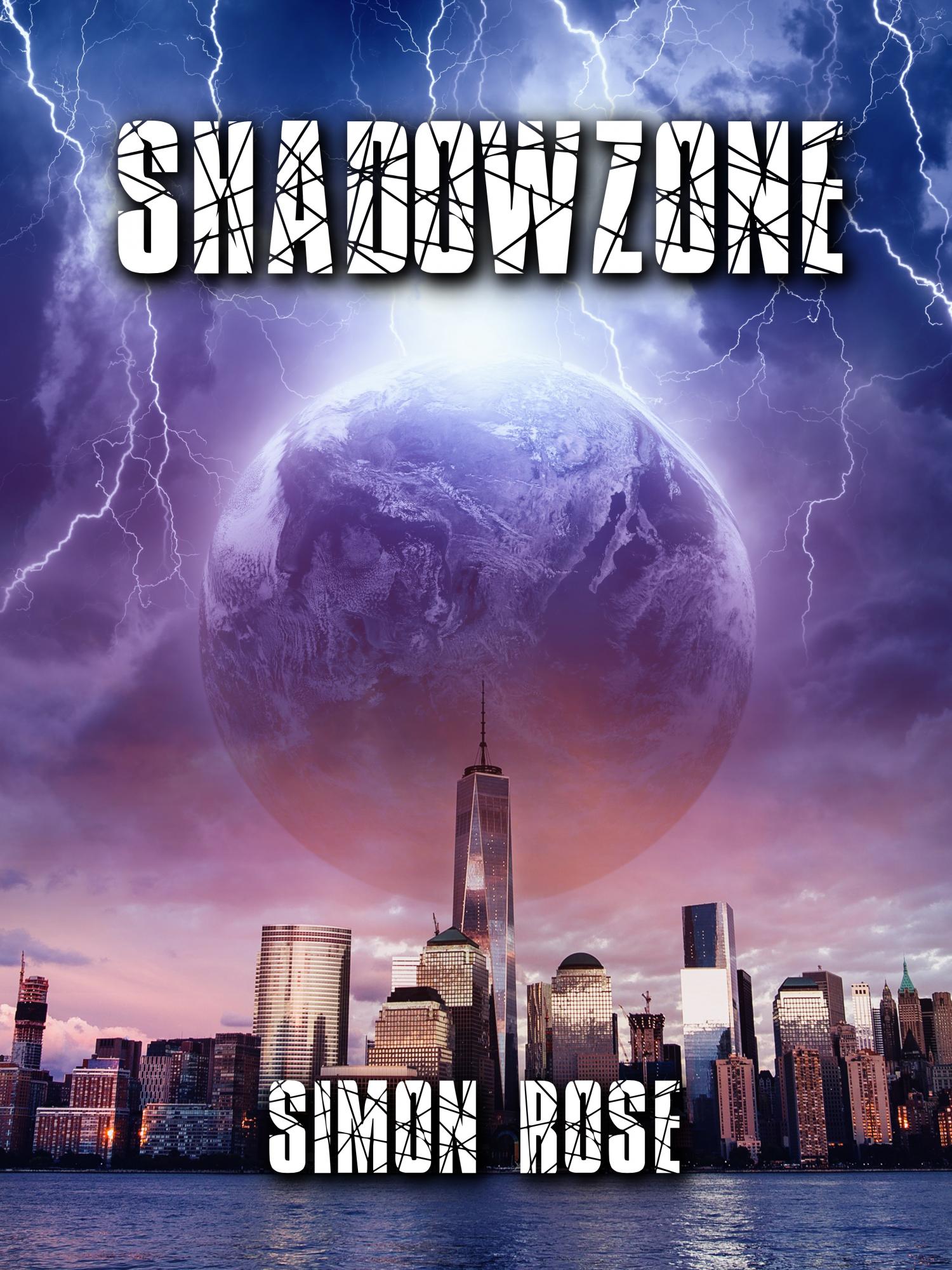 The Shadowzone series involves the discovery of a grim dystopian version of Earth that’s ruled by a totalitarian dictatorship called the Ministry, the threat of a deadly virus, and a race against time to save the lives of millions. Here’s a synopsis for each of the novels.
While watching intense flashes of lightning during a violent storm, Ben experiences mysterious and disturbing visions of another world, one very different from his own. In the chain of events that follow, Ben encounters Charlie, a girl from a dark version of Earth, a planet doomed by the effects of environmental catastrophe, where the leaders will stop at nothing to complete their deadly mission.
On a doomed version of Earth, the sinister schemes of the Ministry are moving ever closer to completion, with dire consequences for the inhabitants of two worlds. For Ben and Charlie, an unlikely alliance, unexpected reunions, and the mysterious prophecy of the Chosen One offer a glimmer of hope, with the ever-present prospect of betrayal, as they embark on an unpredictable journey into the unknown.
In a dark parallel world, following attacks by its most determined opponents, the Ministry has been forced to change its plans. Yet the ruthless Director-General is prepared to sacrifice anyone to achieve an entirely new beginning, no matter what the cost. In a deadly race against time, as events spiral out of control, Ben and Charlie must risk their lives in a desperate attempt to save two worlds from destruction.
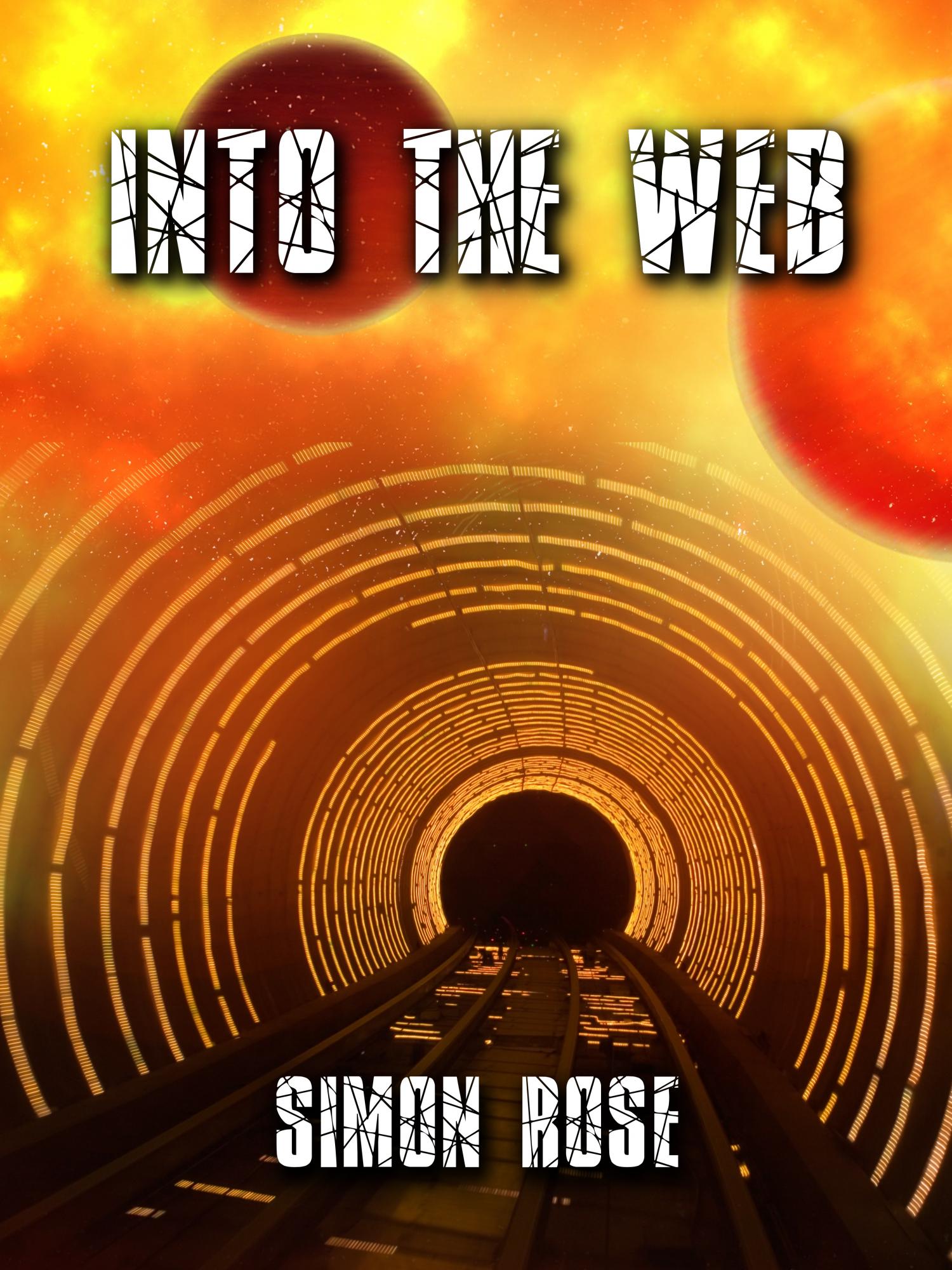 Sources of Inspiration
The original idea was about someone capturing mysterious images on a video camera of a person that no one else could see. It was around the time that a local hospital was about to be demolished. I imagined that my character was filming the event and captured the image of the person stepping seemingly unharmed from the rubble as the building came down. The idea of capturing unexplained images on film was something that I’ve continued working on and it also inspired me to write The Time Camera, which was published in 2011.
For a while, that’s all I had and it was one of those ideas that I was never sure would come to anything. It was early in my writing career and I put it aside and worked on other stories, but I’d periodically add another element to the story about the camera and the mysterious individual. At one point, I decided that the person that the boy caught on film wasn’t a ghost but from another dimension or perhaps a parallel universe and they were attempting to contact him for some reason. I then began to add details of this other Earth and the reasons for the connection to our world, and it went from there. An initial concept involving kidnappings from hospitals didn’t quite work, so instead I developed the idea of a deadly virus, which was a good fit with the type of government running the other Earth. Once that was all in place, I was able to get to work.
Shadowzone was originally only one novel, but once I’d finished it I immediately realized that the story wasn’t over and that I need to write more. The final  installment was written very quickly and in the process I knew that I needed to expand the earlier sections too, so in the end I had a trilogy.
You could certainly just read Shadowzone, but there’s a cliffhanger ending and hopefully most people will feel utterly compelled to be read on and learn what happens next. Into The Web and Black Dawn also don’t make sense if you haven’t read the first book in the series. Taken together, it’s an exciting, fast paced adventure that I hope everyone will really enjoy.
The books can be purchased as follows:
Shadowzone
Ebook: Amazon / Kobo / Barnes & Noble / iBooks / Smashwords
Paperback: Amazon / Createspace
Into The Web
Ebook: Amazon / Kobo / Barnes & Noble / iBooks / Smashwords
Paperback: Amazon / Createspace
Black Dawn
Ebook: Amazon / Kobo / Barnes & Noble / iBooks / Smashwords
Paperback: Amazon / Createspace
The post What’s it all about? Sources of inspiration for the Shadowzone series appeared first on Simon Rose.