Simon Rose's Blog, page 59
February 16, 2019
“The Emerald Curse is a very well written and appealing adventure book. Highly recommended.”
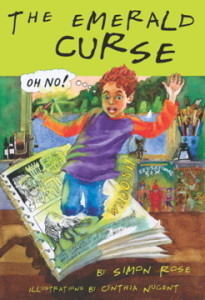 The Emerald Curse
Charles Kelly was the world’s greatest comic book artist, until he disappeared without a trace. Two years later, his grandson Sam discovers a mysterious pen in Kelly’s attic studio. Sam is soon propelled into a bizarre dimension, where super villains are all powerful and disturbingly real, and finds himself in a deadly confrontation with an evil entity, imprisoned inside a mystical gemstone since the dawn of time.
The Emerald Curse received great reviews when it was first published and remains a favourite with young readers today.
“Fast-paced and well-plotted, elementary students are sure to love it.”
“Page turning tension with a resourceful and intrepid hero … and sure to please any child who likes fantasy, science fiction and comics.”
“The Emerald Curse is a very well written and appealing adventure book. Highly recommended.”
“I was immediately hooked into the story and was held captive by the characters, plot, and wonderful energy felt throughout the book.”
“This book is a great way to introduce a child to the genre of fantasy.”
“I highly recommend this book and am sure that whoever reads it will want to read the other books written by this author.”
Read more reviews of The Emerald Curse here on my website.
The post “The Emerald Curse is a very well written and appealing adventure book. Highly recommended.” appeared first on Simon Rose.


Book Signing at Indigo Signal Hill, February 16
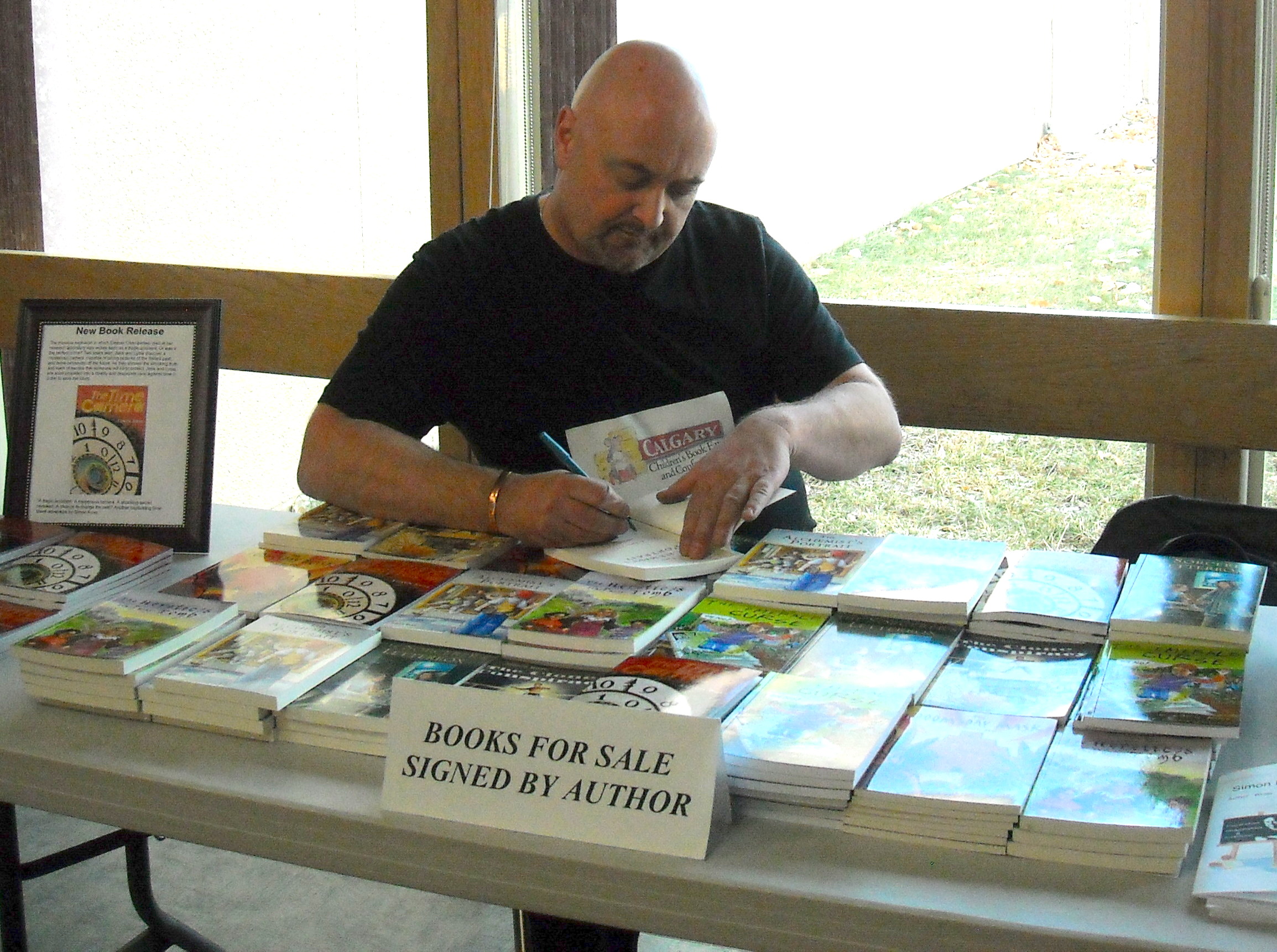 This Saturday, I’ll be at Indigo at Signal Hill in Calgary from noon to 5 pm.
I’ll be signing copies of The Alchemist’s Portrait, The Sorcerer’s Letterbox, The Clone Conspiracy, The Emerald Curse, The Heretic’s Tomb, The Doomsday Mask, The Time Camera, The Sphere of Septimus, Flashback, Twisted Fate, Parallel Destiny, and Future Imperfect.
Indigo is located at 5570 Signal Hill Centre SW in Calgary. Hope to see you there.
The post Book Signing at Indigo Signal Hill, February 16 appeared first on Simon Rose.
February 10, 2019
What’s it all about? An excerpt from The Time Traveller’s Guide
Chapter One: What is time travel?
Time travel is defined as taking place when there is movement between specific points in time. This is achieved in the same way that objects and living things move through space. In fiction, this kind of travel is made possible by the use of a time machine, device, or method. While nothing is carved in stone, I tend to think that time travel involving machinery or some kind of technology should be defined as science fiction while time travel that makes use of magic or similar methods is probably best classified as fantasy. However, these genres frequently overlap, particularly with time travel stories.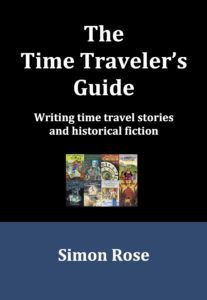
Over the years, novels, movies, and TV shows featuring time travel have included methods involving highly sophisticated machinery, scientific laboratories, various items of jewelry, wearable technology, vehicles, ancient artifacts, books, portals and doorways, dreaming, food and drink, and so many more. Time travel stories have featured journeys to the past, the futur
e, and to alternative timelines created when previous events were changed so that they occurred differently, thus affecting what happened next in various different ways. Time travel has long been a theme in books, short stories, TV shows, and movies and shows no signs of declining in popularity anytime soon, although of course only time will tell.
A common theme in time travel tales involves someone being sent into the past by accident. When they arrive at an earlier point in history, the device or machine is somehow broken, fails to operate properly, runs out of power, is misplaced, or is stolen by the story’s villain. The reader is thus left in suspense, wondering if the heroes will be able to return safely to their own time. Of course, the reader most likely believes that the heroes will eventually escape from danger. However, the plot still has to imply that the lead characters might be marooned in the past permanently or that their lives are in jeopardy. In my time travel novels, the main characters always face serious challenges from the moment that they appear to be trapped in a dangerous historical era.
Some time travel stories simply feature an adventure in a different period in order for the characters to experience what life was like. Perhaps the character discovers an old piece of jewelry that sends them back in time when they wear it or adjust it some way. The characters then witness historical events or meet famous people. Many time travel stories concern the consequences of travelling either backward or forward through time. The idea of changing the past, either intentionally or by accident, is a common theme in science fiction and fantasy. When events that have already taken place are altered in some way, what the time traveler knew as the present day has changed when they return home. This might lead to a further adventure to restore things to what’s perceived as normal, depending on the nature of the alterations to the timeline. As you’re probably thinking already, time travel can sometimes be very complicated but the creators of these kinds of stories are aware of the potential issues at the outset and work hard to make their story entertaining, plausible, and realistic. Some stories in the genre concentrate on the paradoxes involved in time travel, such as the well-known grandfather paradox. This is when the time traveler is responsible for the death of his or her own grandfather, meaning that the traveler was never born. If this is the case then how could they have gone back in time to cause their grandfather’s death in the first place? Time travel has lots of issues like this, some of which I examine in Chapter Nine.
Time travel stories involving journeys into the past overlap with the genre of historical fiction. This kind of fiction involves stories that are set in the past. There are no firm rules, but the setting is usually at least fifty years earlier than when the story is written. The setting is a particular period in history and often includes real historical personalities. The story’s main characters are usually fictional, although the social and other conditions of the time are presented accurately. Historical fiction stories usually take place during a significant period in history. In some stories the characters are part of the events taking place but in others the events merely serve as the background to the story. In The Sorcerer’s Letterbox, the story takes place in 1483 and features the aftermath of the Wars of the Roses and the mystery of Edward V and Richard, Duke of York, known as the Princes in the Tower. The princes appear in the story, as does their uncle, King Richard III, along with some other historical characters. In The Heretic’s Tomb, the story takes place during the period of the Black Death in England in the mid fourteenth century. The novel features imaginary characters but also refers to the effects of the Black Death on society, medieval medicine, and living conditions, and to some of the personalities and events of the era. In The Alchemist’s Portrait, Matthew’s time travel adventures take him to Amsterdam in 1666, the French Revolution in 1792, the American Civil War in 1865, and the Russian Revolution in 1917, all of which needed to be portrayed accurately. The Doomsday Mask has scenes that take place in Berlin in May 1945 and the characters needed to fit into that world. In Flashback, Max finds himself in the mid 1990s, not too long ago perhaps, but he still needed to inhabit an environment that’s correctly portrayed. Next, we’ll look at some of the many time travel stories that have appeared in printed form and on screen over the years.
The Time Traveller’s Guide is available as an ebook and as a paperback on Amazon, Kobo, Barnes and Noble, iBooks, Smashwords and many other locations.
The post What’s it all about? An excerpt from The Time Traveller’s Guide appeared first on Simon Rose.
February 4, 2019
“The Heretic’s Tomb is a fast-paced tale of intrigue, sorcery and adventure, set in a fascinating period of history.”
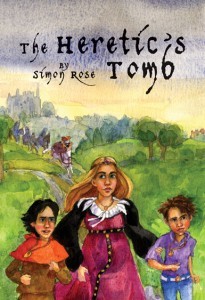 The Heretic’s Tomb
While exploring a medieval archaeological site containing the ruins of an ancient English abbey, Annie discovers the long-forgotten tomb of Lady Isabella Devereaux, who had been condemned to death as a heretic in 1349. When Annie curiously examines a mysterious amulet she finds in the tomb, she is suddenly sent hurtling back to the Middle Ages, encountering sorcery, treachery, treason and the ghastly horrors of the Black Death.
The Heretic’s Tomb received great reviews when it was first published and remains a favourite with young readers today.
“The Heretic’s Tomb is a fast-paced tale of intrigue, sorcery and adventure, set in a fascinating period of history.”
“A well-written combo of science fiction/fantasy with the historical novel.”
“Simon Rose method of combining two different worlds is seamless. Rose keeps the focus narrow so the story line flows smoothly.”
“Rose’s ability to take the reader back in time is flawless and the story is filled with suspense that keeps the reader engaged and wanting more.”
“He does an exceptional job of wrapping historical facts with fantasy, leaving the reader with a clear picture of some of the hardships of the time.”
“Strong character development allows the reader to step into the character’s shoes and experience the story first hand. Overall, it was a fun read that I would highly recommend.”
Read more reviews of The Heretic’s Tomb here on my website.
The post “The Heretic’s Tomb is a fast-paced tale of intrigue, sorcery and adventure, set in a fascinating period of history.” appeared first on Simon Rose.
January 30, 2019
People plotting: Creating unique characters – Part three
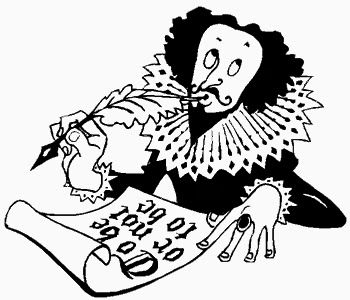 A good exercise is to invent two characters based on pictures. Creating a facial description is relatively simple, although you also need to determine if the people are tall or short, their body type, approximate age, and so on.
You then need to add as much information as possible about each person – personality, mannerisms, jobs, career path, friends and family, likes and dislikes, hopes and dreams, hobbies, pets, favourite foods and drinks, what part of the world they live in, the type of house they have or the car they drive, even where they went on holiday last year – in short, anything that makes them come to life. The characters in your stories will also need names, which usually conjure up certain images for the reader. This topic is covered in detail in the first installment of The Children’s Writer’s Guide.
You might then imagine a situation in which the two people you have invented might meet. They could be stuck in an elevator for ten minutes and have to strike up a conversation or have a minor car accident on a deserted road, then have to exchange information. It could be anything, entirely based on whatever you think the characters might be like, from the impression you received from the photographs. Then to make it particularly interesting, at the end, have the two people discover that they have an unexpected connection. They learn that they are long lost siblings, have the same type of dog, are both looking for the same treasure or whatever idea you come up with.
The post People plotting: Creating unique characters – Part three appeared first on Simon Rose.
January 24, 2019
“The Doomsday Mask is a thrilling page-gripper of a mystery.”
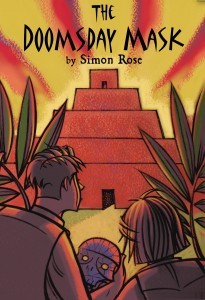 The Doomsday Mask
The legendary crystal ceremonial mask of Kulkaan, high priest of Atlantis, was believed to have been endowed with incredible powers. In the ancient civilization’s destruction, the mask was thought to have been shattered and irretrievably lost, eventually being forgotten. Long considered to be a mere myth, the mask’s crystal fragments have now been found and the mask of Kulkaan reassembled, with deadly consequences for all mankind. In a desperate race against time, Josh and Erica must prevent the mask from falling intact into the hands of the shadowy Crystalline Order to save the world from catastrophe.
The Doomsday Mask received great reviews when it was first published and remains a favourite with young readers today.
“Rose takes the reader on a fast-paced adventure through time and legend.”
“The Doomsday Mask is a thrilling page-gripper of a mystery.”
“Danger lurks everywhere as does the course of history and even prehistory.”
“Juvenile readers from 10-14 will be spellbound by The Doomsday Mask, and they will learn a bit of interesting world history and paleontology along the way.”
“Although The Doomsday Mask may be considered to be science fiction fantasy/adventure, it is solidly grounded in facts of known prehistorical events and speculates from these logically.”
Read more reviews of The Doomsday Mask here on my website.
The post “The Doomsday Mask is a thrilling page-gripper of a mystery.” appeared first on Simon Rose.
January 21, 2019
People plotting: Creating unique characters – Part two
The best writers create characters that you instantly feel that you’d recognize on the street if they came to life. So what kinds of things make us different? Everyone doesn’t like the same food and some are allergic to certain things. People are sometimes described as dog people or cat people but some might be neither or be allergic to dogs, cats, or both, affecting their choice of pets. We all have different likes and dislikes, or specific hopes and fears, things that help to determine our personality.
People’s voices are often distinctive, stereotypical male villains might stroke a beard thoughtfully, some people hug when they meet, others shy away from such close personal contact, some people have firm handshakes and some very weak. These things, and countless others, make up our personalities, differentiate us from others, and make us who we are.
However don’t be tempted to make a character too different. Assuming that you’re not creating a wacky cartoon character, don’t invent someone with bright orange spiky hair, an eye patch, two facial scars in unusual shapes, a hooked hand, a wooden leg, and an unintelligible dialect, since this will not only seem ridiculous to the reader but also risk detracting from the telling of the story.
Any yet you also can’t go too far in the opposite direction and make people too perfect, no matter how tempting that may be. After all, now many of us know any perfect people? Characters need problems, flaws, phobias, whether it’s about spiders, heights, crowds, closed spaces, or indeed anything that makes them more believable.
The post People plotting: Creating unique characters – Part two appeared first on Simon Rose.
January 17, 2019
“I think this might be my favourite book ever!”
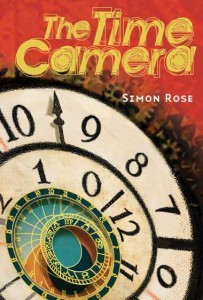 The Time Camera
The massive explosion in which Eleanor Chamberlain died at her research laboratory was widely seen as a tragic accident. Or was it the perfect crime?
Two years later, Jake and Lydia discover a mysterious camera, capable of taking pictures of the distant past and more ominously, of the future. As they uncover the shocking truth and learn of secrets that someone will kill to protect, Jake and Lydia are soon propelled into a deadly struggle to save the future.
The Time Camera received great reviews when it was first published and remains a favourite with young readers today.
“It was really cool when they went forwards and backwards in time.”
“Without being overly technical, the book succeeds in making the concept of time travel feasible. The action is fast paced.”
“With a turn of a camera knob, author Simon Rose takes readers back to the past and into the future.”
“This story will have children thinking about the good, and bad things, that could happen in a world where time travel is possible.”
“I just finished your book The Time Camera! I think this might be my favourite book ever!”
Read more reviews of The Time Camera here on my website.
The post “I think this might be my favourite book ever!” appeared first on Simon Rose.
January 16, 2019
People plotting: Creating unique characters – Part one
Let’s imagine that you’ve thought of a great premise for a story and even crafted a general plot. You then need to develop some characters to inhabit the world you’re intending to create. So where do ideas for characters come from? How do successful authors invent people for their stories, those imaginary men, women, children, and even animals that are a perfect fit for the story?
Let’s be honest, ideas for characters can come from just about anywhere – on the train, street, plane, TV, movies, pictures and photographs, historical figures, or they can even be a composite of different people such as friends, family, neighbours, or work colleagues.
However, if you’ve described a person in terms of their height, weight, general body type, hair and eye colour, age and clothing, this isn’t really creating a character. All you have are the mere basics without any real meaning. This might as well be a life-size cardboard cutout rather than a character that appears to be a real person. Characters have to come alive so that the reader will identify with them.
It also helps if the character is grounded in reality and has friends and family, pets, homework, annoying siblings, parents and grandparents, likes and dislikes, and so on. The people in the story might embark on extraordinary adventures but if they have an ordinary life it makes them more plausible to the reader. Harry Potter’s school at Hogwarts may not be like the kind of educational institution that most kids attend but the author made Harry a less than perfect student that struggles in certain classes. Most children don’t attend boarding schools where they only go home in the winter or summer holidays and they certainly don’t aren’t educated in the ways of magic. Yet Harry’s struggles make him more authentic as a character.
The post People plotting: Creating unique characters – Part one appeared first on Simon Rose.
January 10, 2019
“The Sphere of Septimus is an exciting story of fantasy and adventure.”
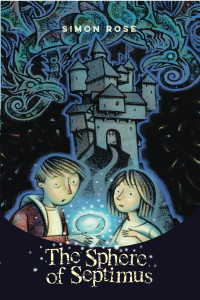 The Sphere of Septimus
Eric isn’t too happy when he has to spend the summer with his eccentric father, Septimus Trinket, in the backwater village of Middle Wogglehole, deep in the heart of rural Derbyshire.
In the isolated village, however, things are not quite what they seem. Eric meets Jessica, who tells him of the legends and mysterious stories that have surrounded Middle Wogglehole for centuries. When they discover Septimus’ shocking secret, Eric and Jessica are soon fighting for their lives against the forces of evil, in a world very different to their own.
The Sphere of Septimus received great reviews when it was first published and remains a favourite with young readers today.
“Simon Rose’s latest novel, The Sphere of Septimus grabs the reader’s attention from the start.”
“Fast paced with vivid descriptions, creative creatures and a suspense filled plot, it’s impossible to put this book down.”
“It is a great read for children who enjoy fantasy and science fiction books.”
“I highly recommend it for both boys and girls. It’s a must read!”
“Simon Rose captures imagination and brings characters to life in this adventure tale. Both boys and girls will enjoy the story. It is worth a read!”
“A great book for children who enjoy to read both fantasy and science fiction books.”
“The Sphere of Septimus is an exciting story of fantasy and adventure.”
“E for Excellent!
Read more reviews of The Sphere of Septimus here on my website.
The post “The Sphere of Septimus is an exciting story of fantasy and adventure.” appeared first on Simon Rose.