Simon Rose's Blog, page 58
March 17, 2019
Perils of Poor Editing: Part Three
 As a writer, you can never undertake too many checks before your work is finally released to the public. Cut out a few steps of the revision process and you could very well live to regret it.
Here are some more newspaper headlines that should have been corrected prior to publication.
Panda Mating Fails; Veterinarian Takes Over
Let’s hope this isn’t in full view of the zoo’s visitors.
Juvenile Court to Try Shooting Defendant
This seems to be a rather drastic course of action.
War Dims Hope for Peace
Now who would have suspected that?
If Strike Isn’t Settled Quickly, It May Last Awhile
I think this might be called stating the obvious?
Red Tape Holds Up New Bridges
Let’s hope they’re using pretty strong tape.
Man Struck By Lightning: Faces Battery Charge
This editing mistake could perhaps be described as shocking.
Astronaut Takes Blame for Gas in Spacecraft
It must be something to do with their space diet.
Local High School Dropouts Cut in Half
So that’s how they’re keeping the numbers down.
Hospitals are Sued by 7 Foot Doctors
Now there’s a court case I’d like to see.
Typhoon Rips Through Cemetery; Hundreds Dead
Now who would have expected such a thing in that kind of location?
So the next time you’re tempted to cut corners with the editing process, think again. Unless of course you have a burning desire for your work to be the subject of an online article about the perils of poor editing.
The post Perils of Poor Editing: Part Three appeared first on Simon Rose.


March 16, 2019
What’s it all about? An excerpt from The Working Writer’s Guide
Introduction
Misconceptions are common regarding published authors. People think either that all authors earn millions or that it’s impossible to make a living as a writer. While some writers are financially successful with their e-books, success stories are rare, at least for now, and only a handful of authors make serious money from e-books.
Misconceptions also abound regarding authors who write for children. Books for younger readers are often mistakenly considered to be simple to write and easy to make money from. Some people look at the phenomenal success of the Harry Potter series and wonder how hard it can really be. After all, anyone can write a book, can’t they?
This book examines the working life of those who have chosen to pursue writing as a career and have no other source of income. In reality, most full-time children’s writers have multiple sources of income. Authors do earn money from royalties from their book sales, but in most cases this isn’t enough to live on. It’s certainly possible to make a living based on you r writing, but a number of different revenue streams are required. Some of these may be more important than others at one time or another, depending on a variety of factors.
Working as an instructor at universities and colleges may only be possible for those writers living in large cities and towns. Working for magazines or nonfiction publishers may also be easier if you’re in an urban area, although with the right connections this may not be an obstacle. If you write for websites or social media outlets, or create brochures and similar material for local companies, opportunities will be more plentiful in a larger market. School visits too are obviously easier to secure for writers located in parts of the country with large populations and more schools. However, more competition will also exist with other authors that are contacting those schools trying to book visits, readings, and workshops. Some children’s authors and illustrators will get the majority of their income from school visits, others from advances and royalties from book sales, but everyone’s situation is different. The pattern of a writer’s earnings will also vary from year to year, with one or another source of income being larger or smaller each time.
I was aware at the outset that it might be difficult to make a living from royalties alone. I therefore knew I’d need to explore other ways to earn an income. I need to be engaged in a variety of different projects in order to make a living, but fortunately, most of these are related to writing for children. In addition to my novels for middle-grade readers, I’ve written many non-fiction books and magazine articles, and I also create content for the corporate market and for social media. I conduct workshops and residencies at schools, visit summer camps, teach classes for adults at local colleges and universities, and offer coaching, tutoring, and editing services. None of these projects would be possible if I hadn’t written and published books in the first place. Admittedly, this may appear to be a diverse portfolio and one that doesn’t allow me to focus exclusively on creating works of fiction. Yet until that elusive movie deal arrives or international bestseller status kicks in, this is the reality for many children’s authors. If someone is fully committed to making a career as a full-time, professional children’s writer, he or she has to widen their horizons.
The Working Writer’s Guide is available as an ebook and as a paperback on Amazon, Kobo, Barnes and Noble, iBooks, Smashwords and many other locations.
The post What’s it all about? An excerpt from The Working Writer’s Guide appeared first on Simon Rose.
Book Signing at Indigo Signal Hill, March 16
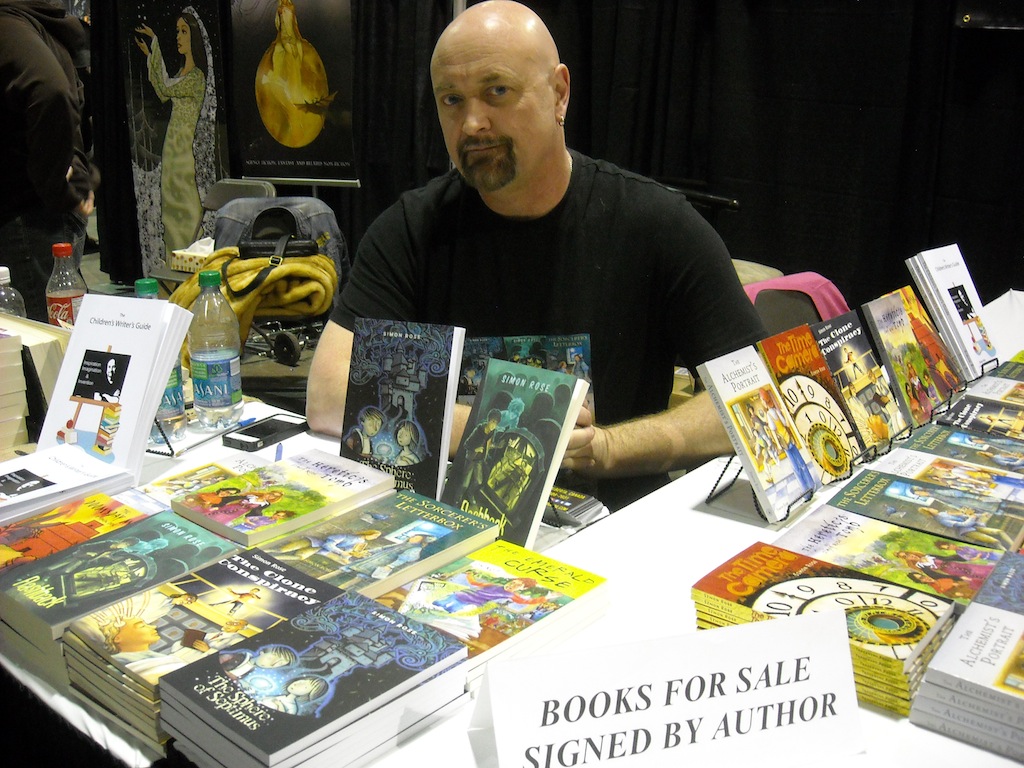 This Saturday, I’ll be at Indigo at Signal Hill in Calgary from noon to 5 pm.
I’ll be signing copies of The Alchemist’s Portrait, The Sorcerer’s Letterbox, The Clone Conspiracy, The Emerald Curse, The Heretic’s Tomb, The Doomsday Mask, The Time Camera, The Sphere of Septimus, Flashback, Twisted Fate, Parallel Destiny, and Future Imperfect.
Indigo is located at 5570 Signal Hill Centre SW in Calgary. Hope to see you there.
The post Book Signing at Indigo Signal Hill, March 16 appeared first on Simon Rose.
March 13, 2019
What’s it all about? An excerpt from The Children’s Writer’s Guide
“This is by far the best book I have picked up to help me kick start my writing!”
Chapter Four: Where Do Ideas Come From
One of the most common questions asked of authors, whether from children during school visits or in interviews, is “Where do you get your ideas?” In so many ways, ideas are all around us – in newspapers, magazines, pictures, photographs, other books whether fiction or non-fiction, television, movies, even video games. History can be a constant source of inspiration for writers, but so are personal experiences, family vacations, family, friends, or pets. Many writers have had ideas come to them in dreams – often not the entire novel, but at least a significant enough piece of the puzzle to set them on their way to crafting the actual story. My own ideas come from anywhere and everywhere: when out walking the dog, in the car, something in a conversa
tion, a newspaper story, a billboard, an item on the evening news, TV, movies, books of all kinds, song lyrics, historical events, ancient mysteries, long-lost civilizations, the supernatural, ghost stories, the paranormal or something completely out of the blue. Sometimes the challenge is to stop having ideas. I’ve been known to get ten ideas at once, which amazes my school audiences, but I also have to point out that I can go for six months with no ideas at all. Some of the concepts may never be used or may be only part of a story or a title. The ideas could even feature a character or a piece of dialogue and you aren’t sure where they come from. However, I do try to record as many ideas as I can, since I never know when they might fit in with a story I’m writing. Even ideas that don’t seem to work right away may prove useful one day.
As a writer, I often find myself wondering “what if?” This can in itself lead to many story ideas, some of which may end up being more developed than others. What if you received a letter informing you of your acceptance into a school for wizards? Or discovered a door into another universe at the back of your bedroom closet? Or a flying boy dressed all in green appeared at your bedroom window, inviting you to take a journey to a magical land? Perhaps you followed a rabbit down a hole and ended up in a bizarre underground universe. What if you met someone who’d been imprisoned inside a painting for over three hundred years? If you could travel back in time, where would you go? What would you do if you had a clone for the day? Whether this is how Harry Potter, The Chronicles of Narnia, Peter Pan, Alice in Wonderland, The Alchemist’s Portrait, or The Clone Conspiracy first came about isn’t the point. It’s more about how this type of thinking sets the thought process in motion.
You might even want to conduct your own personal “what if” exercises with a few story starter ideas. For example, what kind of a story might you able to conjure up from some of these random sentences? “He turned the corner and couldn’t believe it when he saw …” “I went to collect the mail and saw a letter from …” “Behind the bookcase was a small mysterious door …” “In the attic was an old dusty box …” “I found an old-fashioned ring in the cupboard and when I tried it on …” Even if you have an idea for a story, sometimes it’s still tough to know where to start, and although these sentences might not lead you to create a classic of children’s literature, they can help with your inspiration.
The Children’s Writer’s Guide is available as an ebook and as a paperback on Amazon, Kobo, Barnes and Noble, iBooks, Smashwords and many other locations.
The post What’s it all about? An excerpt from The Children’s Writer’s Guide appeared first on Simon Rose.
March 7, 2019
Playwriting Camp in Calgary in July
 PlayWriting Camp will take place once again with Cassa Musical Arts this July.
The 2019 PlayWriting camp runs from July 15 to 19 at St. Vladimir’s Cultural Centre, 404 Meredith Road NE (Near Memorial Drive and Edmonton Trail), Calgary, Alberta.
In a dramatic and fun-filled week of half day camps, children will learn how to write, rehearse and perform their own unique play in just five days. Children will create the plot, craft the script, write dialogue and hone their acting skills for their very own dramatic production, which will then be performed at the end of the week. Half days are from 9:00 am – 12:00 noon daily.
Details of fees and registration forms are available on the CASSA website.
The post Playwriting Camp in Calgary in July appeared first on Simon Rose.
March 4, 2019
“This is a great book for kids who like both fantasy and history.”
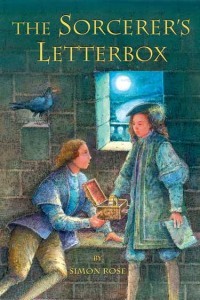
The Sorcerer’s Letterbox
In a hidden drawer in the base of an old wooden box, Jack discovers a letter from a boy calling himself Edward. Penning a reply, Jack is astonished to be corresponding through time with the boy king Edward V, one of the famous Princes in the Tower, murdered by King Richard III. Travelling back in time, Jack attempts to rescue Edward V and his brother from their fate, but is soon fighting for his life in the terrifying London of 1483.
The Sorcerer’s Letterbox received great reviews when it was first published and remains a favourite with young readers today.
“This is a great book for kids who like both fantasy and history.”
“An entertaining read, with a great feel-good twist at the end.”
“A delightful book, and one that has a rightful place in every library in the country.”
“Simon Rose has managed to deliver another satisfying read with The Sorcerer’s Letterbox.”
“A well-written, suspenseful time travel story sure to keep readers engaged till its very clever ending.”
“The Sorcerer’s Letterbox convinces readers they’ve actually lived and breathed in a historical time and place.”
Read more reviews of The Sorcerer’s Letterbox here on my website.
The post “This is a great book for kids who like both fantasy and history.” appeared first on Simon Rose.
March 3, 2019
Perils of Poor Editing: Part Two
 Writers should always check their work before publishing their novel, short story or article. This is equally important for journalists, especially those composing the attention-grabbing headlines for news stories.
Here’s a collection of newspaper headlines that could certainly have used a little more attention to detail prior to publication.
Cannabis Smuggling by Troops. Investigation by Joint Chiefs
These people would seem to be an ideal choice to handle the case.
Strip Club Shock – Magistrates May Act on Indecent Shows
This might certainly be a shock for the audience.
More Women Needed for Random Sampling
This initially appears to make sense, until you read it again.
Police Found Safe Under Blanket
Presumably the officers were working on a very dangerous case?
Monty Flies Back to Front
A report about a general returning to the front line in World War II takes on a whole new meaning here.
8th Army Push Bottles Up Germans
Another World War II headline. This sounds painful, to say the least.
Crack Found on Governor’s Daughter
I think we can safely assume that no one at all checked this one before publication.
Something Went Wrong in Jet Crash, Expert Says
I wonder what he or she is an expert in?
Police Begin Campaign to Run Down Jaywalkers
This seems rather extreme to become official policy.
Cold Wave Linked to Low Temperatures
Maybe this headline was composed by the same expert who commented on the jet crash?
So if you’re desperate to get your masterpiece finished and have your potential best-selling novel in the public eye, don’t forget the editing.
The post Perils of Poor Editing: Part Two appeared first on Simon Rose.
March 2, 2019
The Many Benefits of a Writing Coach
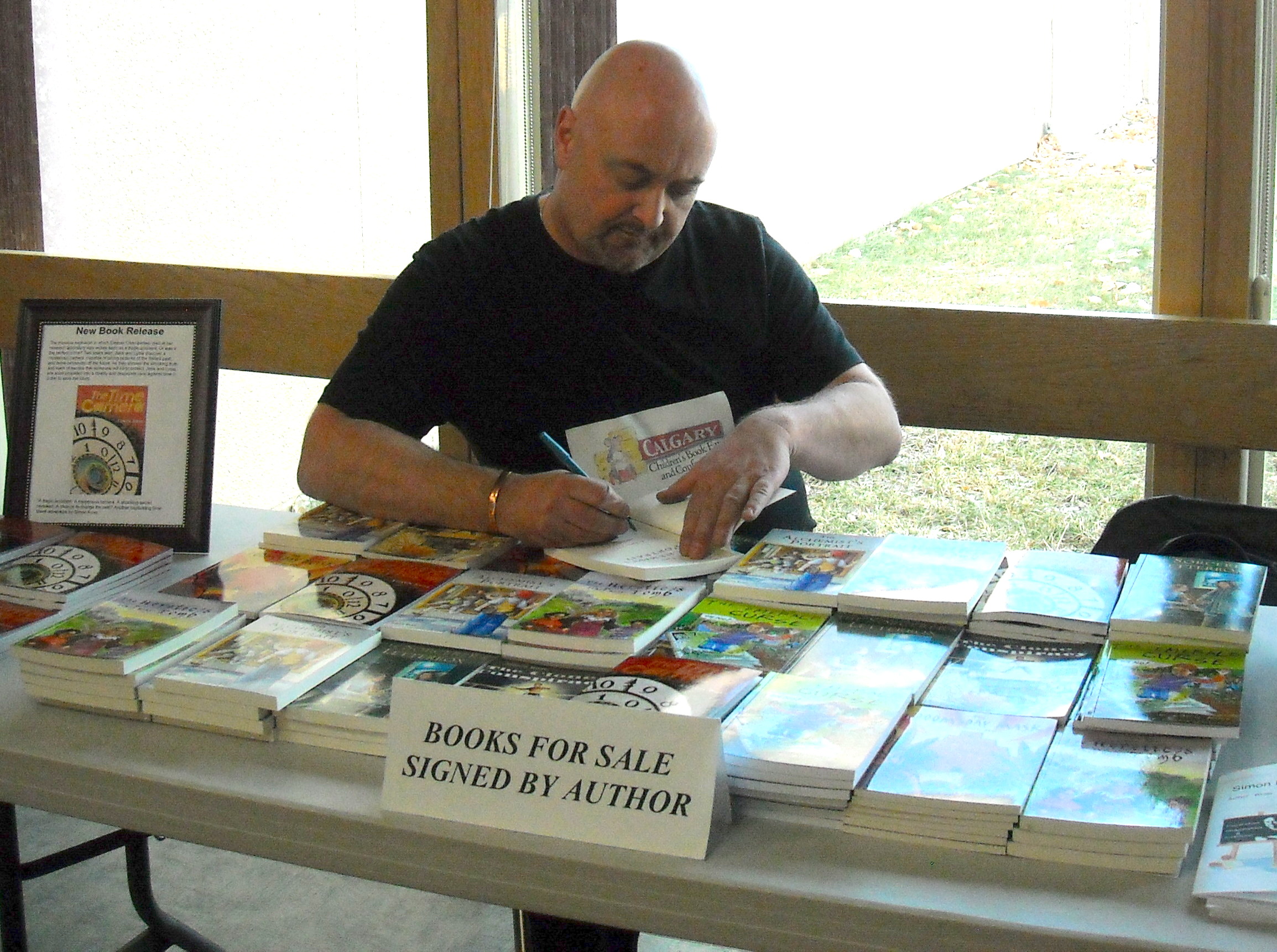 A professional writing coach is someone with whom you can consult, ask questions and receive constructive feedback. They act as a guide as you build your career as a professional writer. A coach can help you conquer a stumbling block, regain momentum or make a start on a new project.
My program helps you progress as a writer. You decide what you want to work on during a personalized, one on one relationship. I can be your coach for just one month or we can establish a month-to-month arrangement, depending on your schedule and expectations.
I’m very flexible regarding your own unique requirements in areas where you feel that you need the most help, but examples of topics that can be covered include character development, dialogue and format, editing and revision, story structure and plot, pacing your story, realistic settings, dramatic beginnings, and cliffhanger endings. We can also examine submitting work, the publishing world, and marketing and promotion.
You can also learn more about the writing and publishing process, including where ideas come from and how writers turn them into stories, choosing names for characters, the importance of historical research if your novel is set in a different era, the role of editing and revision, marketing and promotion, and more, in The Children’s Writer’s Guide, The Working Writer’s Guide, The Children’s Writer’s Guide 2, and School & Library Visits for Authors & Illustrators.
The writing of time travel stories and historical fiction is covered in The Time Traveler’s Guide, and fantasy and magic in Exploring the Fantasy Realm. The study guides for my novels are featured in Where do Ideas Come From?
The post The Many Benefits of a Writing Coach appeared first on Simon Rose.
February 26, 2019
“Rose has done a magnificent job with this fast paced medical science mystery.”
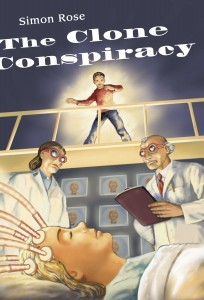 The Clone Conspiracy
At the dawn of the twenty-first century, nervous governments around the world reacted quickly to pass legislation banning human cloning. Panicked as technology rapidly advanced, they didn’t realize that the genetic genie had already escaped from the bottle.
When Luke’s best friend Patrick vanishes and the police quickly close the case, Luke is determined to uncover the truth. Tantalizing clues lead Luke and Patrick’s sister Emma to LennoxGen, where they stumble across a shocking international conspiracy with catastrophic consequences for the future of mankind.
The Clone Conspiracy received great reviews when it was first published and remains a favourite with young readers today.
“This is the first book that I read by Simon Rose, and I couldn’t wait to read more!”
“The Clone Conspiracy definitely finds its mark … Rose has done a magnificent job with this fast paced medical science mystery.”
“This 88 page novel will appeal to boys who like a good mystery – with a twist!”
“A must-read dedicated to unravelling the mystery surrounding human cloning, brain transplants and clandestine laboratories.”
“The action is fast paced and scary enough to keep readers hanging on to every word.”
Read more reviews of The Clone Conspiracy here on my website.
The post “Rose has done a magnificent job with this fast paced medical science mystery.” appeared first on Simon Rose.
February 21, 2019
Perils of Poor Editing: Part One
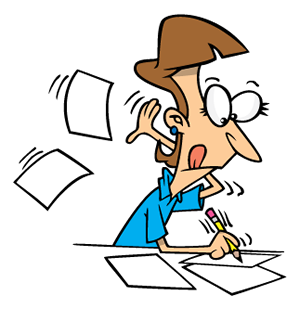 For writers, it’s vital to examine your work in detail many times before you submit your work to publishers or upload the text of your ebook to an online bookstore. Even if you’ve checked the text a hundred times, you might still find errors that need to be addressed.
Good editing and revision is very important and yet many new writers often overlook these crucial steps in the creative writing process. However, even the most experienced writers and journalists can still make embarrassing mistakes.
Here are just a few classic examples that slipped through the net.
He crossed one leg over the other and planted both feet firmly on the ground.
This could be an interesting maneuver to witness.
He put his hands on his knees and held his head in despair.
This person appears to have two pairs of arms.
She ran down the beach and cast her eyes out to sea.
Did the girl gaze out toward the horizon or throw her own eyes into the water?
We will not stand idly by and be murdered in our beds.
I’m not sure how many people could actually sleep standing up in bed in order to be murdered, but I guess it could be possible.
Last night’s result isn’t as good as it sounds on paper.
A reporter’s take on an unexpected outcome to a sporting event seems somewhat confusing.
There’s a huge question mark hanging over him after the last game.
A below par performance by a player prompted this remark.
It shows what a hot seat that number six shirt has been.
We know what this means, but it certainly sounds very odd.
If Beethoven were alive today, he’d be turning in his grave.
This headline appeared above an article about a rather substandard orchestral performance.
New Hospital in the Pipeline.
Here’s another newspaper headline, referring this time either to a very large pipeline or a very small hospital.
The soldiers were close enough to see their enemies eating their lunch through binoculars.
Initially this one seems to be okay, but is actually complete nonsense.
And finally, a classic ad from a local newspaper.
German Shepherd. Eats anything, fond of children.
So the next time you feel tempted to skip that final examination of your work, beware. It never hurts to do that one extra check.
The post Perils of Poor Editing: Part One appeared first on Simon Rose.