Simon Rose's Blog, page 55
October 2, 2019
An interview with Judith Starkston
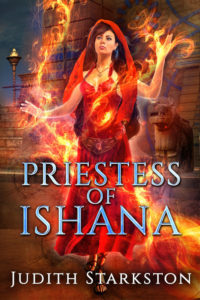
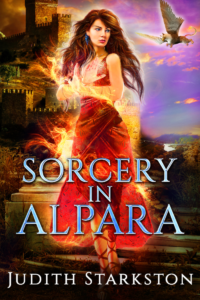 Please join me in welcoming Judith Starkston. In advance of the launch of her second book in her award-winning historical fantasy Tesha series, the first book, Priestess of Ishana, is available for FREE Oct 2-6 on Amazon. This seemed like the perfect time to ask her about her intriguing Tesha series. The second book, Sorcery in Alpara, will launch on Oct 14 (available on preorder).
You based your fictional main character Tesha on a real Hittite woman, Queen Puduhepa. She is not exactly a household name. How did that source of inspiration come about?
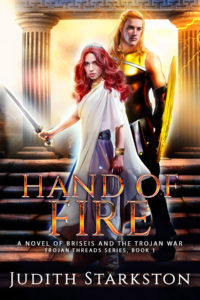
Puduhepa had the misfortune to rule a kingdom that got literally buried and forgotten amidst the upheavals at the end of the Bronze Age (c. 1200 BCE). Hence, even though she ruled for decades over the most powerful empire of the world at the time, she’s barely made it into the history books and only very recently. I discovered Puduhepa originally when researching my first novel set in the Trojan War (Hand of Fire). The culture of Troy was largely that of the Hittites. Fortunately, recent archaeology and the decipherment and translation of many thousands of clay tablets have filled in parts of the lost history. As I researched, I came across the letters, rites and judicial decrees of a highly influential queen who ruled for decades. While doing research, it is enthralling to hear a historical voice coming from across the centuries. Counter to my expectation based on the surrounding kingdoms of the time like Egypt or Babylonia, Hittite queens had full political power by law and custom and remained rulers even when their husbands died. A powerful queen in the extremely patriarchal ancient Near East? I was hooked. Puduhepa caught my imagination with her combination of pragmatic leadership and mystical religious beliefs. I chose her name in my fiction, Tesha, after the Hittite word for ‘dream’ because Puduhepa was famous for visionary dreams sent by her goddess. The other thing she was known for in her lifetime was an astonishingly happy marriage and the equal partnership she maintained with her husband. That also was not the norm in her world.
Given this historical focus, why did you choose to write in the fantasy genre?
For two reasons—one having to do with full disclosure to the reader and the other having to do with Hittite beliefs and their potential for engaging storytelling.
While knowledge about the Hittites has expanded greatly in the last thirty or so years, there still remain giant gaps in historians’ understanding of this intriguing ancient world power. To be honest about my imaginative filling of those gaps, I’m up front that my storytelling combines fantasy and history. For instance, I give my historical figures fictional names, though often only minimally different from their real names.
The other reason I turned to fantasy arose from the prevalence of magic and the supernatural within Hittite religious rites. In essence, I allow those rites to do what the Hittites believed could happen. My main character started her career as a priestess, and her closeness to her goddess was profoundly important to her. Giving her magical beliefs free room also made for much better storytelling. I do extend the fantasy beyond the historical framework when it makes sense for the story, but I start the fantastical elements within Hittite practices, such their extensive use of analogic magic and their obsession with demonic curses. I take the foundational “rules” for my fantasy from Hittite rites themselves, but I find letting my plots go into the fantastical entirely liberating and my readers love it.
My “quarter turn to the fantastic,” to borrow Guy Gavriel Kay’s phrase, allows me to honor what we actually know while also owning up to my inventive extensions.
 Talk about this happy marriage and partnership Puduhepa had. How did that come about?
The goddess of love and war, Ishtar, took full credit for this union. (She’s called Ishana in my novels.) A match literally made in heaven, so to speak. Both Puduhepa and Hattusili, her eventual husband, said Ishtar, via dreams, commanded them to marry. They appear to me from the record to be entirely sincere in this understanding. Hattusili was the younger brother of what the Hittites called the “Great King,” the ruler of the Hittite Empire. Hattusili vowed before leading his brother’s troops into battle against Egypt that he would give all his spoils of war to Ishtar if she gave him victory. He viewed Ishtar as his personal patron goddess. He attributed to her his survival of a childhood illness and the rescue from a couple career-ending situations. When he arrived at the finest temple in the realm to make good on his vow, loaded with Pharaoh’s golden treasures, who was there but Priestess Puduhepa, young, very beautiful and incredibly smart? That’s how they met. We have this story from a document Hattusili composed that’s often called his “autobiography” although it isn’t anything like a modern autobiography. In it he also says, “the goddess gave us the love of husband and wife . . . and our household thrived.” We also have Puduhepa’s incredibly poignant prayers on behalf of her husband when he was struck down by ill health. Their equality as partners shows up repeatedly over many years, most visibly in Puduhepa’s independent seal on key treaties and letters where she grants lands to vassal kings and other powerful acts. She shows no signs of needing her husband to “co-sign.” I portray from the inside their early meeting and falling in love, but intriguingly, Hattusili also mentions he was accused of sorcery at this time, an accusation that carried the penalty of death in a legal system that otherwise opted for exile. Interesting that! So I took this divinely inspired love story and combined it with some Bronze Age political intrigue, international scheming, magic and a murder mystery.
Describe one of the strangest details about the Hittites you found from your research.
The Hittites were obsessed with curses of all sorts—what we might call dark magic. They believed sorcerers could sicken and kill their enemies, for example. We find this expressed in places as diverse as court cases and public prayers. One extended rite describes a precise method of removing such a curse. Not all of the text survives in a readable way but my favorite part (which I used in Priestess) describes touching the cursed person with a loaf of specially made bread to absorb the curse’s pollution. The bread is stuffed with chickpea paste (hummus, in essence) as the absorbing substance. Once the bread touches all the prescribed places on the victim’s body, the priestess is commanded to burn it and thus send it back to the demons of the Underworld whence curses were thought to come. I hope I haven’t ruined hummus for any of those reading this interview. It’s one of my favorite foods. I actually wrote a cookbook of Bronze Age foods that people receive (after a short story) when they sign up for my author newsletter, and I have recipes for three different styles of hummus in it, so I’m pretty dedicated to good chickpea paste!
 What’s an aspect of the historical evidence about Puduhepa’s life that you hope readers will absorb from your portrayal of Tesha?
Puduhepa provides a worthy model for leadership—particularly the value of female leaders, which we’ve been thinking about lately, so this seems timely. She certainly wasn’t perfect, and some of her actions are hotly debated among historians as possibly self-serving or politically motivated rather than ethically driven. She gave me nuanced material to work into my hero’s character. But, despite that human complexity, or perhaps because of it, she had brilliant skills as queen in many areas: diplomatic, judicial, religious and familial. Most famously, she corralled Pharaoh Ramses II of Egypt into a lasting peace treaty. The surviving letters to Ramses reveal a subtle diplomat with a tough but gracious core that made her able to stand up to the arrogant Pharaoh without giving offense. She also took judicial positions that went against her own citizens when the truth wasn’t on their side. Fair justice wasn’t something she was willing to toss overboard when it was politically inconvenient. Her equal partnership with her husband was a much-admired model even in the patriarchal world of the ancient Near East.
You’ve traveled extensively for research purposes. Can you share some highlights of those travels?
When planning which archaeological sites to visit on my second trip to Turkey, I bemoaned to the Turkish archaeologist who guides and translates for me that the site of Puduhepa’s hometown, Lawazantiya, had never been identified. We know the name, its general location, and that it had seven springs from numerous documents found in the court library excavated from the empire’s capital city, but I thought we lacked even a tentative site location. But my archaeologist friend was more up to date than I was.
A new archaeological excavation, with preliminary results published only locally in Turkish, had made a strong case for being Lawazantiya. Sure enough, there are seven springs in the area around this dig and also extensive Bronze Age ruins on the mound, including parts that could correspond to the famous temple of Ishtar we know existed there (where Puduhepa was priestess).
We arranged to go to the site so that I could study the physical setting and ruins. That would have been splendid all on its own, but, even better, the director of the dig spent the entire day with me, explaining and examining the excavation. We also visited each of the seven springs—locations that I found very useful later as I l drafted Priestess of Ishana. Accompanied by the rest of the dig’s excavators, we had a delightful lunch of freshly caught fish at a restaurant beside the largest of the springs. It was easy to imagine my Tesha and Hattu sitting in the shade of the willows in that lovely spot, although I confess when that spring appears in my novel, it’s all conflict and trouble, not quiet picnicking!
What’s your next project?
I’ve now written the first two books in this series based on Puduhepa’s life, Priestess of Ishana and Sorcery in Alpara. I’m laying out and drafting the third book—no title yet. If readers are interested in my book news, special offers, and the history and archaeology of this ancient civilization (and the cookbook I described), they can sign up for the author newsletter on my website.
Buy link Priestess of Ishana: https://amzn.to/2DXpdXt
Buy link Sorcery in Alpara: https://amzn.to/319vuIj
Buy link Hand of Fire: https://amzn.to/2KOb6a0
Judith’s website: https://www.judithstarkston.com
Sign up for her newsletter: https://www.judithstarkston.com/sign-up-for-my-author-newsletter-for-books-news-special-offers-and-freebies/
Facebook: https://www.facebook.com/judy.starkston
Twitter: https://twitter.com/JudithStarkston
The post An interview with Judith Starkston appeared first on Simon Rose.


September 24, 2019
Author Visits Part Three – Author in Residence
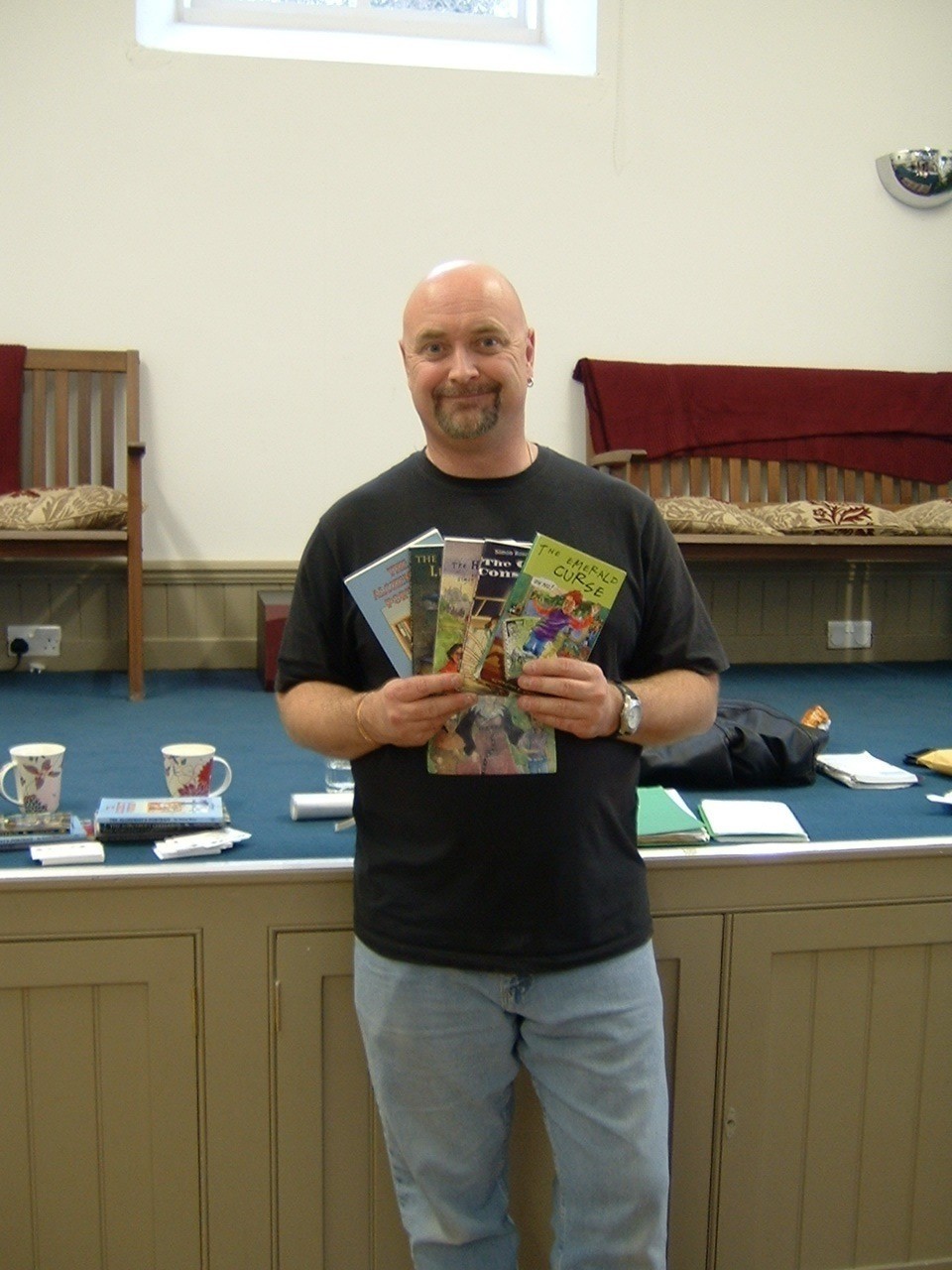
An Author in Residence program involves an author working at a school for a week or longer. This allows the students to cover certain topics in much more depth than would be possible during a regular author visit. The author can also work with the students on a specific project.
A week in residence can be designed however you’d like, to best meet the needs of the students. You can see what such a week could look like here on my website. However, this is just an example, and I’m always happy to discuss a residency with the school to determine how the time can be most effectively organized.
I offer a variety of presentations and you can see these here. However, certain sessions remain popular, such as those relating to the superhero genre, the subject matter of The Emerald Curse, or sessions about time travel, since three of my novels feature this theme.
I also offer a variety of workshops on writing topics such as character development and dialogue, creating stories for younger students in K to 2, and on popular subjects such as the fantasy realm and science fiction, but am very flexible and always happy to discuss matters with the teachers to ensure a good fit with the students. I have also worked on dramatic productions and playwriting sessions with children, both in schools and summer camps, and conduct programs very similar to a residency in my work with community associations.
I offer presentations, readings, author in residence programs and conduct workshops for children at schools and libraries. Please contact me directly for details of fees and availability.
The post Author Visits Part Three – Author in Residence appeared first on Simon Rose.
September 21, 2019
Author Visits Part Two – Types of Presentations
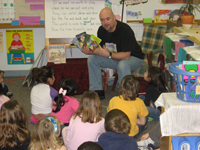 Many authors who conduct school visits on a long-term basis have a well organized set of presentations, workshops and other material. These might be related to their own books, but also to topics such as editing and revision, for example. Authors might talk about where they get their inspiration, character development or just how a book comes together, and whenever possible they leave time for questions from the students.
In addition to the subject matter of my own books, I cover such topics as where ideas come from, story structure, editing and revision, character development, time travel stories, the superhero genre, history and research and more. I’ll present to up to a hundred students at a time, although the smaller the audience the more participation from children, as a rule. I also conduct workshops with smaller groups or individual classes. A list of some of the presentations I offer can be found here, but I’m always happy to discuss matters with teachers to design sessions to best serve the needs of their students.
An important thing to consider when deciding to host an author visit is what type of presentation you’re looking for. There are usually numerous types to choose from and all authors are different in this regard. Are you looking for an author who’ll just read to the children or only be there to answer questions from the students, either about their book or about writing in general? Perhaps there’s an aspect of the school curriculum that you’d like to emphasize and the author’s books are related to that in some way? Is there a project the students have been involved in to which the author can contribute, either by assisting them in getting started or in bringing it to a satisfactory conclusion?
Are you looking for workshops, in which the students do some writing or would you only prefer that they listen to a presentation? Are there particular general topics on writing, rather than those related to the subject matter of the books, that you’d like the author to focus on? Will the author to work with small groups in classrooms or in the library or with a hundred or more students in the school gym? How long would you want the sessions to be, to fit in with the regular schedule of the school day? Would you like the author to actually teach the students something or simply be a special guest that inspires them?
These are all important things to consider when planning an author visit and ensuring that it all goes smoothly.
I offer presentations, readings, author in residence programs and conduct workshops for children at schools and libraries. Please contact me directly for details of fees and availability.
The post Author Visits Part Two – Types of Presentations appeared first on Simon Rose.
September 15, 2019
Author Visits Part One – The Benefits of an Author Visit
Many teachers and librarians like to host artists in a variety of disciplines at their schools each year. They know that an author visit can be inspirational, boosting student creativity and encouraging children with their own writing. And for the author, meeting their readers can be one of the most enjoyable elements of a school visit.
Younger students especially are almost always thrilled to meet a published author, especially if they have read and enjoyed their books. Examples of comments from students, teachers and librarians about my own school visits over the years can be found here. School and library visits offer an invaluable opportunity for authors to connect with their readers on a personal level and in some cases they can make a real difference in children’s lives, stimulating their imagination or simply getting them more interested in books and reading.
Visiting your school allows an author to talk about their own work, their inspiration, any current or future projects, answer questions, sell some autographed copies of books, and even present themselves to an entirely new audience or geographic area. An author visit can also be very beneficial to the school, inspiring the students and may also encourage some of them to explore their own artistic creativity, whether this involves writing, illustration, painting, poetry, sculpture, photography, film or another discipline altogether.
There’s no question that an author visit is usually one of the main highlights of the school year, for both the staff and the students.
I offer presentations, readings, author in residence programs and conduct workshops for children at schools and libraries. Please contact me directly for details of fees and availability.
The post Author Visits Part One – The Benefits of an Author Visit appeared first on Simon Rose.
September 12, 2019
“The Sphere of Septimus is an exciting story of fantasy and adventure.”
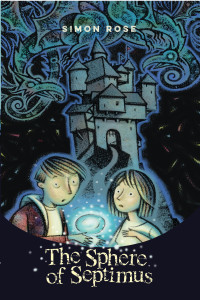 The Sphere of Septimus
Eric isn’t too happy when he has to spend the summer with his eccentric father, Septimus Trinket, in the backwater village of Middle Wogglehole, deep in the heart of rural Derbyshire.
In the isolated village, however, things are not quite what they seem. Eric meets Jessica, who tells him of the legends and mysterious stories that have surrounded Middle Wogglehole for centuries. When they discover Septimus’ shocking secret, Eric and Jessica are soon fighting for their lives against the forces of evil, in a world very different to their own.
The Sphere of Septimus received great reviews when it was first published and remains a favourite with young readers today.
“Simon Rose’s latest novel, The Sphere of Septimus grabs the reader’s attention from the start.”
“Fast paced with vivid descriptions, creative creatures and a suspense filled plot, it’s impossible to put this book down.”
“It is a great read for children who enjoy fantasy and science fiction books.”
“I highly recommend it for both boys and girls. It’s a must read!”
“Simon Rose captures imagination and brings characters to life in this adventure tale. Both boys and girls will enjoy the story. It is worth a read!”
“A great book for children who enjoy to read both fantasy and science fiction books.”
“The Sphere of Septimus is an exciting story of fantasy and adventure.”
“E for Excellent!
Read more reviews of The Sphere of Septimus here on my website.
The post “The Sphere of Septimus is an exciting story of fantasy and adventure.” appeared first on Simon Rose.
August 11, 2019
When Words Collide Blue Pencil Cafe
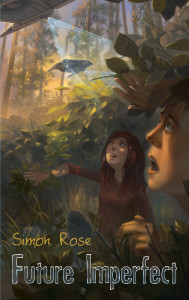 Today, I’ll be appearing at the When Words Collide in Calgary literary festival at the Delta South Hotel in Calgary.
When Words Collide brings together the literary community, both readers and writers, for a sharing of information, for learning, and to build a sense of community.
Blue Pencil Cafe Children’s and Middle Grade – August 11 at 3 pm
In this session aspiring writers are invited to bring me the first page or two of their children’s book or young adult manuscript for 1-on-1 feedback. Manuscripts should be a maximum of 1000 words, typed, and double-spaced.
Blue Pencil Cafe Adults – August 11 at 4 pm
In this session aspiring writers are invited to bring me the first page or two of their adult manuscript for 1-on-1 feedback. Manuscripts should be a maximum of 1000 words, typed, and double-spaced.
The post When Words Collide Blue Pencil Cafe appeared first on Simon Rose.
August 10, 2019
Time Travel: Not Just a Thing of The Past at When Words Collide
 Today, I’ll be appearing at the When Words Collide in Calgary literary festival at the Delta South Hotel in Calgary.
Historical Fiction for Middle Grade and Youth – August 10 at noon
This panel explores how to educate and entertain through historical fiction for youth
Time Travel: Not Just a Thing of the Past – August 10 at 3 pm
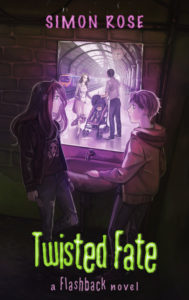
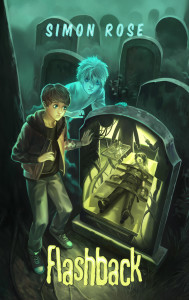
My young adult novels The Alchemist’s Portrait, The Sorcerer’s Letterbox, The Heretic’s Tomb, Flashback, Twisted Fate, and Parallel Destiny all feature time travel, a genre that continues to be very popular with both authors and readers, as well as with filmmakers.
In this session I’ll be sharing tips and tricks to weave time travel elements into the plot for any age group. Learn how to plan and realize your novel with an alternate reality element that takes the reader on a logical journey, in an illogical world.
Autograph Session – August 12 from 7 pm to 9 pm
I’ll be appearing with all the authors and festival guests at the When Words Collide autograph session.
The post Time Travel: Not Just a Thing of The Past at When Words Collide appeared first on Simon Rose.
August 9, 2019
Writing for Children and Young Adults and Writing Historical Fiction at When Words Collide
 Today, I’ll be appearing at the When Words Collide in Calgary literary festival at the Delta South Hotel in Calgary, for two presentation and the Writers and Editors Speed Mingle
Writing for Children and Young Adults – August 9 at 1 pm
This session explores the art of writing for children and young adults. Explore research, planning, pacing your story, developing characters, connecting with the reader, choosing settings, the role of adults in children’s stories, and more.
Writers and Editors Speed Mingle – August 9 at 4 pm
Speed dating for writers – only instead of looking for a love relationship, you’re looking for a freelance editor or writing coach. Expect five-minute blocks of time as you rotate around the room talking about your writing and asking questions of professional editors. Don’t forget to bring your business card—this is a great opportunity to find an editor who is right for you!
Writing Historical Fiction – August 9 at 6 pm
In this session, learn how to write an effective, authentic, and appealing story in this genre and how to fully immerse yourself in your chosen time period. Understand what defines historical fiction and different time periods, how to create believable settings, plausible characters, and the role of research in the creation of your novel.
The post Writing for Children and Young Adults and Writing Historical Fiction at When Words Collide appeared first on Simon Rose.
August 8, 2019
When Words Collide – August 9, 10, and 11
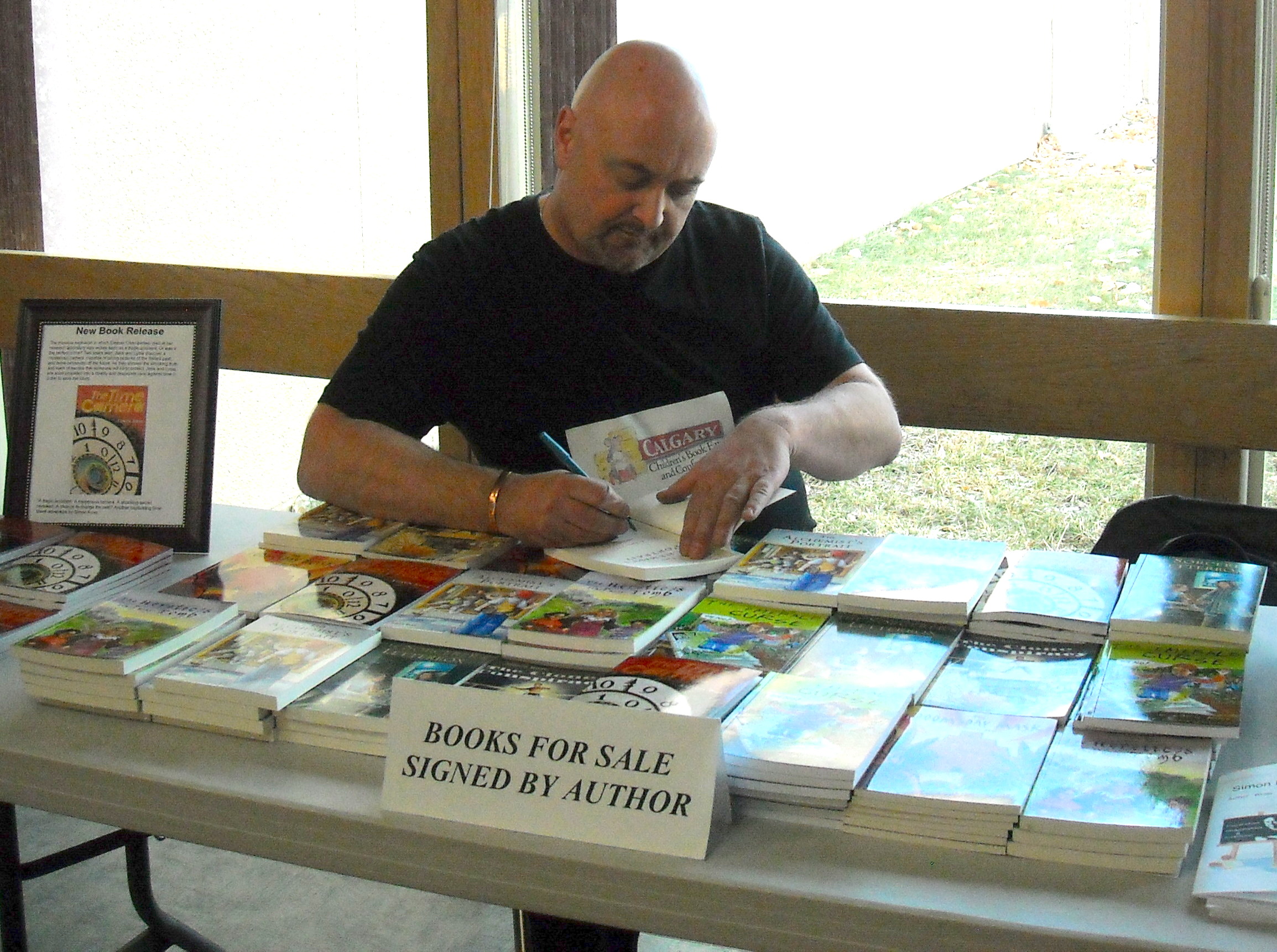 This weekend, I’ll be appearing at When Words Collide in Calgary. This exciting annual literary festival embraces literature of all forms, including genre, and is held at the Delta South Hotel in Calgary.
When Words Collide exists to provide an opportunity for the literary community, from readers to writers to publishers, to gather and share information and inspiration. With the belief that different genres have more in common than they have differences, the festival includes content for all types of literature including mainstream, science fiction, fantasy, romance, mystery, historical, literary, and non-fiction.
My presentations include:
Writing for Children and Young Adults on August 9 at 1 pm
Writers and Editors Speed Mingle on August 9 at 4 pm
Writing Historical Fiction on August 9 at 6 pm
Historical Fiction for Middle Grade and Youth (panel) on August 10 at noon
Time Travel: Not Just a Thing of the Past on August 10 at 3 pm
I’ll be hosting Blue Pencil sessions as follows:
For aspiring authors of novels for children and young adults on August 11 at 3 pm
For authors of work for adults on August 11 at 4 pm
I’ll also be appearing at the the autograph session on August 10 in the evening.
Hope to see you there.
The post When Words Collide – August 9, 10, and 11 appeared first on Simon Rose.
July 23, 2019
What’s it all about? Sources of inspiration for the Shadowzone series
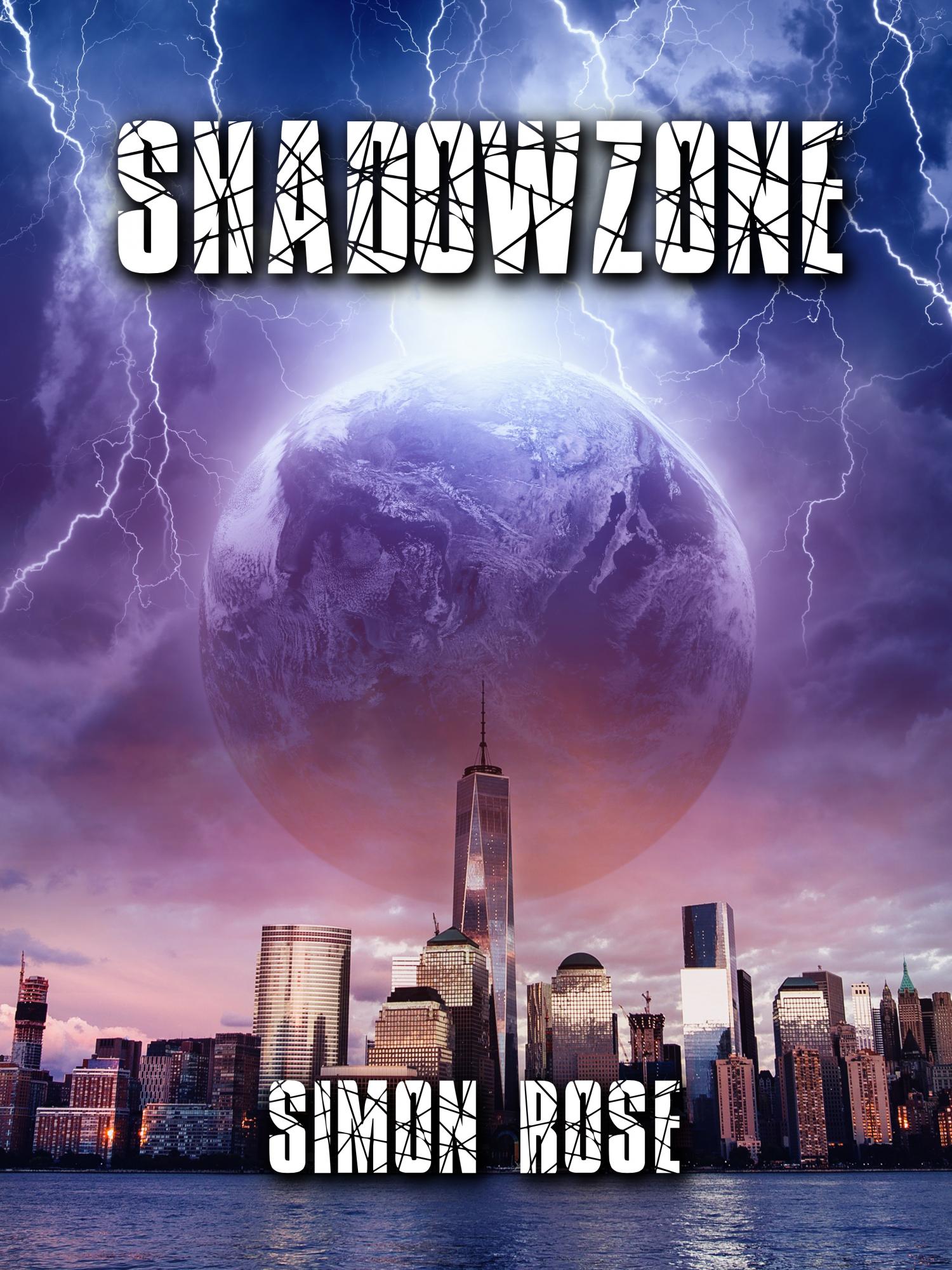 The Shadowzone series involves the discovery of a grim dystopian version of Earth that’s ruled by a totalitarian dictatorship called the Ministry, the threat of a deadly virus, and a race against time to save the lives of millions. Here’s a synopsis for each of the novels.
While watching intense flashes of lightning during a violent storm, Ben experiences mysterious and disturbing visions of another world, one very different from his own. In the chain of events that follow, Ben encounters Charlie, a girl from a dark version of Earth, a planet doomed by the effects of environmental catastrophe, where the leaders will stop at nothing to complete their deadly mission.
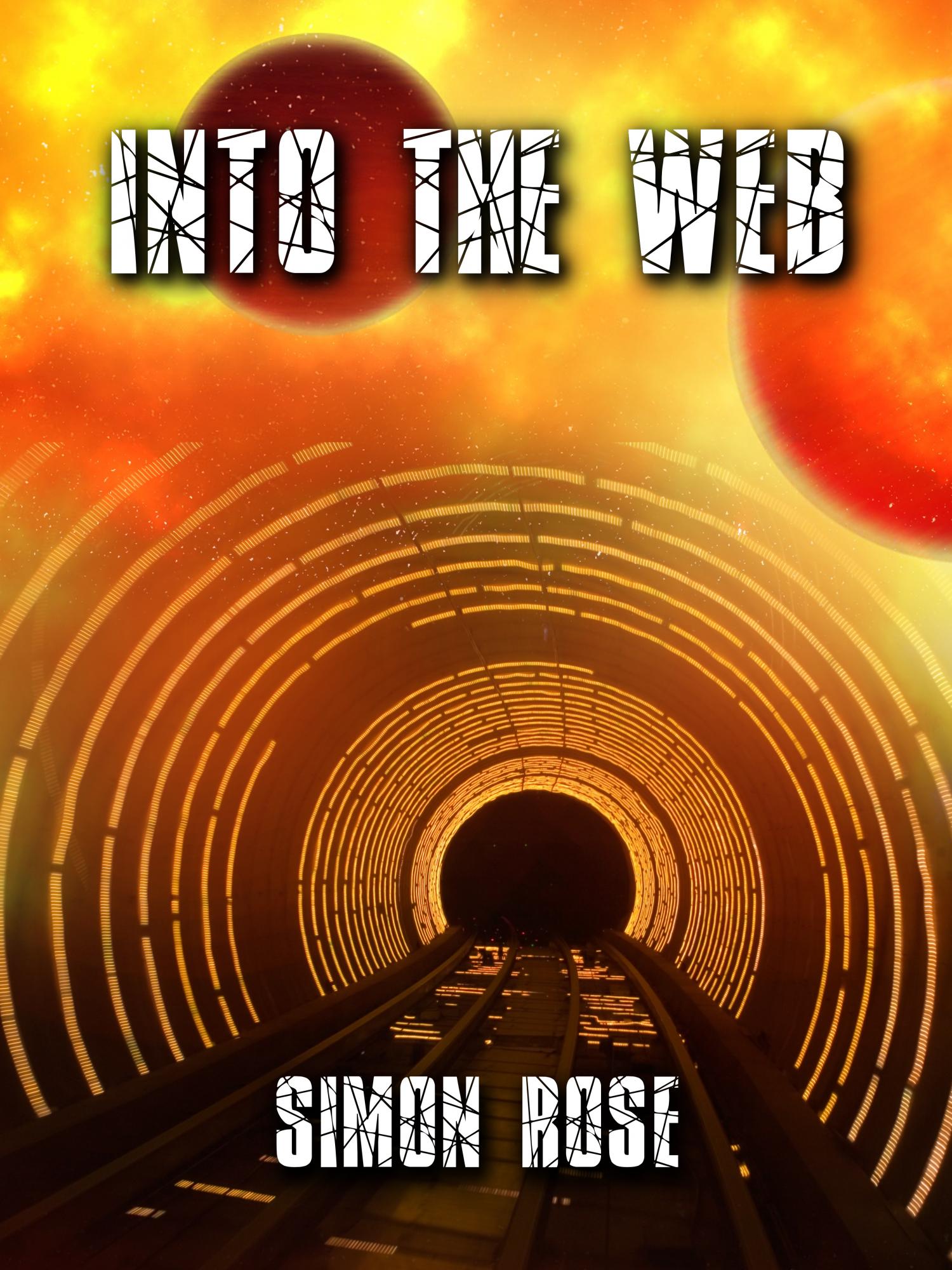
On a doomed version of Earth, the sinister schemes of the Ministry are moving ever closer to completion, with dire consequences for the inhabitants of two worlds. For Ben and Charlie, an unlikely alliance, unexpected reunions, and the mysterious prophecy of the Chosen One offer a glimmer of hope, with the ever-present prospect of betrayal, as they embark on an unpredictable journey into the unknown.
In a dark parallel world, following attacks by its most determined opponents, the Ministry has been forced to change its plans. Yet the ruthless Director-General is prepared to sacrifice anyone to achieve an entirely new beginning, no matter what the cost. In a deadly race against time, as events spiral out of control, Ben and Charlie must risk their lives in a desperate attempt to save two worlds from destruction.
 Sources of Inspiration
The original idea was about someone capturing mysterious images on a video camera of a person that no one else could see. It was around the time that a local hospital was about to be demolished. I imagined that my character was filming the event and captured the image of the person stepping seemingly unharmed from the rubble as the building came down. The idea of capturing unexplained images on film was something that I’ve continued working on and it also inspired me to write The Time Camera, which was published in 2011.
For a while, that’s all I had and it was one of those ideas that I was never sure would come to anything. It was early in my writing career and I put it aside and worked on other stories, but I’d periodically add another element to the story about the camera and the mysterious individual. At one point, I decided that the person that the boy caught on film wasn’t a ghost but from another dimension or perhaps a parallel universe and they were attempting to contact him for some reason. I then began to add details of this other Earth and the reasons for the connection to our world, and it went from there. An initial concept involving kidnappings from hospitals didn’t quite work, so instead I developed the idea of a deadly virus, which was a good fit with the type of government running the other Earth. Once that was all in place, I was able to get to work.
Shadowzone was originally only one novel, but once I’d finished it I immediately realized that the story wasn’t over and that I need to write more. The final 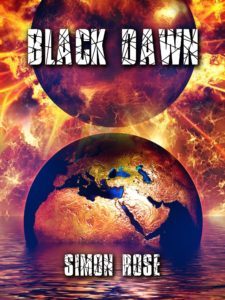 installment was written very quickly and in the process I knew that I needed to expand the earlier sections too, so in the end I had a trilogy.
You could certainly just read Shadowzone, but there’s a cliffhanger ending and hopefully most people will feel utterly compelled to be read on and learn what happens next. Into The Web and Black Dawn also don’t make sense if you haven’t read the first book in the series. Taken together, it’s an exciting, fast paced adventure that I hope everyone will really enjoy.
The books can be purchased as follows:
Shadowzone
Ebook: Amazon / Kobo / Barnes & Noble / iBooks / Smashwords
Paperback: Amazon / Createspace
Into The Web
Ebook: Amazon / Kobo / Barnes & Noble / iBooks / Smashwords
Paperback: Amazon / Createspace
Black Dawn
Ebook: Amazon / Kobo / Barnes & Noble / iBooks / Smashwords
Paperback: Amazon / Createspace
The post What’s it all about? Sources of inspiration for the Shadowzone series appeared first on Simon Rose.