Simon Rose's Blog, page 54
November 20, 2019
Seeing the Light: Writers and Seasonal Affective Disorder – Part Four
 In ancient Greece and Rome, the works of Plato, Aristotle, Virgil and others may have been composed at night, with very little illumination. Monks in the Middle Ages would also have worked all year round and such works as Beowulf or the Anglo Saxon Chronicle would never have been written if everyone in the scriptorium had SAD.
Did Shakespeare only write in the spring and summer? Candlelight was his only option if he chose to write his plays and sonnets after the sun had set. The same applied to Samuel Pepys, who we can assume wrote at least a portion of his diary entries in the evening, as he recorded his reflections on the day, in all four seasons. And of course Charles Dickens was a prolific writer for twelve months of each year, with only candlelight, oil or gas lamps to enable him to write.
For help with your writing at any time of year, check out my coaching and editing programs.
The post Seeing the Light: Writers and Seasonal Affective Disorder – Part Four appeared first on Simon Rose.


November 14, 2019
Seeing the Light: Writers and Seasonal Affective Disorder – Part Three
 So how does SAD affect writers? Are those in Canada, the northern USA, and Scandinavia less prolific in the winter months? Does the cloud cover in Vancouver or in Britain reduce the amount of literary work originating in those areas? Do American writers in Florida create more prose between October and April than their counterparts in Minnesota?
Is a writer in Australia or South Africa more likely to produce a larger body of work because he or she has more sunlight? Many of us may prefer to escape to a sunnier environment each winter if possible, but would it be to a writer’s advantage to live there permanently, in order to become more proficient at his or her chosen craft?
There are undoubtedly writers with SAD who are less motivated to write in the winter. And yet, our ancestors, who had no access to artificial light to illuminate the gloom of winter, still managed to write and their work is no less impressive. Cave paintings may have created in the daytime, when ferocious animals were less likely to be around. Yet in the dark caves, the pictures would have been painted by the light of a flaming torch.
For help with your writing at any time of year, check out my coaching and editing programs.
The post Seeing the Light: Writers and Seasonal Affective Disorder – Part Three appeared first on Simon Rose.
November 9, 2019
Seeing the Light: Writers and Seasonal Affective Disorder – Part Two
![snobben_thumb[5]](https://www.simon-rose.com/wp-content/uploads/2014/10/snobben_thumb5.jpg) Seasonal Affective Disorder is primarily a mood disorder, with sufferers experiencing normal mental health throughout the year, but becoming depressed or generally more down in the winter months. Seasonal variations in a person’s mood may be related to light, or rather the lack of it.
Seasonal Affective Disorder is primarily a mood disorder, with sufferers experiencing normal mental health throughout the year, but becoming depressed or generally more down in the winter months. Seasonal variations in a person’s mood may be related to light, or rather the lack of it.
SAD is often more prevalent in higher latitudes and in Finland, for example, the rate for SAD is close to 10%. Winter depression is a common slump in the mood of the inhabitants of Scandinavia. Researchers estimate that up to 20% of the population is affected, and there are words in the Icelandic and Swedish languages that specifically refer to seasonal affective conditions.
Excessive cloud cover, an aspect of daily life for those living in the Pacific Northwest in North America, may also increase the number of sufferers in a particular region. Researchers have estimated that SAD in U.S. adults is around 1.5% in Florida, yet closer to 10% in the northern states. The effects of the changing of the season on a person’s mood and energy level, even those people in apparent good health, are well documented and it is common for people living at high latitudes to experience lower energy levels in the winter months, both north and south of the equator.
For help with your writing at any time of year, check out my coaching and editing programs.
The post Seeing the Light: Writers and Seasonal Affective Disorder – Part Two appeared first on Simon Rose.
November 4, 2019
Seeing the Light: Writers and Seasonal Affective Disorder – Part One
 At this time of year, many people in the northern hemisphere notice that its getting a little colder each day and it gets darker much earlier, especially after we alter the clocks for daylight saving time.
Many of us develop cabin fever and grow sluggish during the winter months and may eat more or sleep longer when daylight is in short supply and the temperature begins to fall. It may be harder to get out of bed or for some people to even generate much enthusiasm each morning.
These are common experiences related to the change in the seasons, but some individuals can have a far more serious reaction when the end of summer heralds the coming of fall and winter.
Once simply known as the ‘winter blues’, the effect of less light in the winter may be severe for some and is a recognized medical condition, diagnosed as SAD or Seasonal Affective Disorder. SAD can also occur in the summer, when it is known as Reverse Seasonal Affective Disorder.
For help with your writing at any time of year, check out my coaching and editing programs.
The post Seeing the Light: Writers and Seasonal Affective Disorder – Part One appeared first on Simon Rose.
October 29, 2019
“Rose has done a magnificent job with this fast paced medical science mystery.”
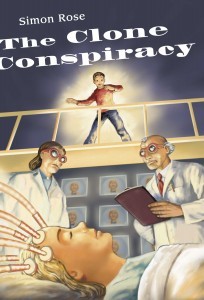 The Clone Conspiracy
At the dawn of the twenty-first century, nervous governments around the world reacted quickly to pass legislation banning human cloning. Panicked as technology rapidly advanced, they didn’t realize that the genetic genie had already escaped from the bottle.
When Luke’s best friend Patrick vanishes and the police quickly close the case, Luke is determined to uncover the truth. Tantalizing clues lead Luke and Patrick’s sister Emma to LennoxGen, where they stumble across a shocking international conspiracy with catastrophic consequences for the future of mankind.
The Clone Conspiracy received great reviews when it was first published and remains a favourite with young readers today.
“This is the first book that I read by Simon Rose, and I couldn’t wait to read more!”
“The Clone Conspiracy definitely finds its mark … Rose has done a magnificent job with this fast paced medical science mystery.”
“This 88 page novel will appeal to boys who like a good mystery – with a twist!”
“A must-read dedicated to unravelling the mystery surrounding human cloning, brain transplants and clandestine laboratories.”
“The action is fast paced and scary enough to keep readers hanging on to every word.”
Read more reviews of The Clone Conspiracy here on my website.
The post “Rose has done a magnificent job with this fast paced medical science mystery.” appeared first on Simon Rose.
October 22, 2019
“The Emerald Curse is a very well written and appealing adventure book. Highly recommended.”
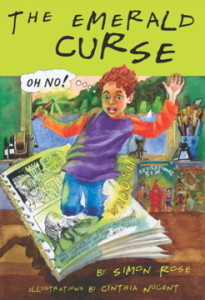 The Emerald Curse
Charles Kelly was the world’s greatest comic book artist, until he disappeared without a trace. Two years later, his grandson Sam discovers a mysterious pen in Kelly’s attic studio. Sam is soon propelled into a bizarre dimension, where super villains are all powerful and disturbingly real, and finds himself in a deadly confrontation with an evil entity, imprisoned inside a mystical gemstone since the dawn of time.
The Emerald Curse received great reviews when it was first published and remains a favourite with young readers today.
“Fast-paced and well-plotted, elementary students are sure to love it.”
“Page turning tension with a resourceful and intrepid hero … and sure to please any child who likes fantasy, science fiction and comics.”
“The Emerald Curse is a very well written and appealing adventure book. Highly recommended.”
“I was immediately hooked into the story and was held captive by the characters, plot, and wonderful energy felt throughout the book.”
“This book is a great way to introduce a child to the genre of fantasy.”
“I highly recommend this book and am sure that whoever reads it will want to read the other books written by this author.”
Read more reviews of The Emerald Curse here on my website.
The post “The Emerald Curse is a very well written and appealing adventure book. Highly recommended.” appeared first on Simon Rose.
October 16, 2019
“The Heretic’s Tomb is a fast-paced tale of intrigue, sorcery and adventure, set in a fascinating period of history.”
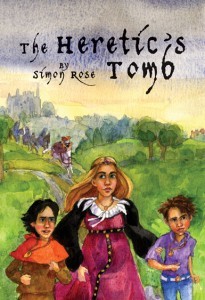 The Heretic’s Tomb
While exploring a medieval archaeological site containing the ruins of an ancient English abbey, Annie discovers the long-forgotten tomb of Lady Isabella Devereaux, who had been condemned to death as a heretic in 1349. When Annie curiously examines a mysterious amulet she finds in the tomb, she is suddenly sent hurtling back to the Middle Ages, encountering sorcery, treachery, treason and the ghastly horrors of the Black Death.
The Heretic’s Tomb received great reviews when it was first published and remains a favourite with young readers today.
“The Heretic’s Tomb is a fast-paced tale of intrigue, sorcery and adventure, set in a fascinating period of history.”
“A well-written combo of science fiction/fantasy with the historical novel.”
“Simon Rose method of combining two different worlds is seamless. Rose keeps the focus narrow so the story line flows smoothly.”
“Rose’s ability to take the reader back in time is flawless and the story is filled with suspense that keeps the reader engaged and wanting more.”
“He does an exceptional job of wrapping historical facts with fantasy, leaving the reader with a clear picture of some of the hardships of the time.”
“Strong character development allows the reader to step into the character’s shoes and experience the story first hand. Overall, it was a fun read that I would highly recommend.”
Read more reviews of The Heretic’s Tomb here on my website.
The post “The Heretic’s Tomb is a fast-paced tale of intrigue, sorcery and adventure, set in a fascinating period of history.” appeared first on Simon Rose.
October 14, 2019
“I think this might be my favourite book ever!”
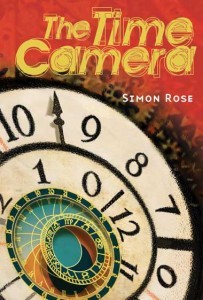 The Time Camera
The massive explosion in which Eleanor Chamberlain died at her research laboratory was widely seen as a tragic accident. Or was it the perfect crime?
Two years later, Jake and Lydia discover a mysterious camera, capable of taking pictures of the distant past and more ominously, of the future. As they uncover the shocking truth and learn of secrets that someone will kill to protect, Jake and Lydia are soon propelled into a deadly struggle to save the future.
The Time Camera received great reviews when it was first published and remains a favourite with young readers today.
“It was really cool when they went forwards and backwards in time.”
“Without being overly technical, the book succeeds in making the concept of time travel feasible. The action is fast paced.”
“With a turn of a camera knob, author Simon Rose takes readers back to the past and into the future.”
“This story will have children thinking about the good, and bad things, that could happen in a world where time travel is possible.”
“I just finished your book The Time Camera! I think this might be my favourite book ever!”
Read more reviews of The Time Camera here on my website.
The post “I think this might be my favourite book ever!” appeared first on Simon Rose.
Author Visits Part Four – Study Guides and Classroom Resources
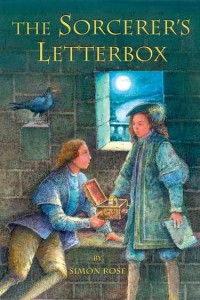 Some authors offer study guides for teachers to download from their website or to purchase, for use either before a visit or just as an ongoing teaching resource. These guides often have exercises connected to certain chapters or episodes in the novel, worksheets about specific characters, or may describe potential projects related to the subject matter of the author’s books.
There are study guides for all my novels in Where Do Ideas Come From? The book examines how The Alchemist’s Portrait, The Sorcerer’s Letterbox, The Clone Conspiracy, The Emerald Curse, The Heretic’s Tomb, The Doomsday Mask, The Time Camera, and The Sphere of Septimus can be used to create workshops and creative writing exercises. These include writing time travel stories, creating superheroes and comic books, inventing imaginary worlds and fantasy kingdoms, exploring fascinating historical eras, imagining future technological developments, and examining ancient mysteries and civilizations.
The Sorcerers’ Letterbox and The Heretic’s Tomb are set in the Middle Ages, so teachers can plan projects about medieval life and society, castles, warfare, research the Black Death and other historical events. The plot of The Alchemist’s Portrait involves an art gallery in a museum and students can be asked to draw inspiration for some creative writing exercises by examining classic paintings and portraits. Children can create superheroes and comic books using The Emerald Curse as a resource or even invent their own unique board game.
Where Do Ideas Come From? provides suggestions and recommendations for teachers developing classroom projects based on the books but might also serve as inspiration for aspiring writers of all ages. I also have word search puzzles for children to download at any time, although I also encourage teachers to make use of these before an author visit, to familiarize the children with my work. Teachers can also access The Super Scavenger Search, where the answers to a series of mind-boggling questions are hidden in different pages all over my website.
Resources like these enable students to learn about the author and thus have lots of great questions on the day of the visit.
I offer presentations, readings, author in residence programs and conduct workshops for children at schools and libraries. Please contact me directly for details of fees and availability.
The post Author Visits Part Four – Study Guides and Classroom Resources appeared first on Simon Rose.
October 5, 2019
Author Visits Part Five – Virtual Author Visits
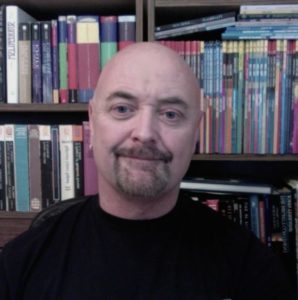
Children are almost always inspired when they meet a real author or illustrator, but it may not always be possible to have an author visit your school.
However, why not put technology to work for you? Now you can arrange a virtual author visit via video using Skype. These can be conducted with large groups in a library or gym or with individual classes. You can get an idea of what a virtual visit looks like by viewing my videos in which I talk about my books, my workshops for adults and schools, plus my various services for writers.
To host a virtual author visit, it’s necessary to download and install Skype, which is available for both Windows and Macintosh, and have a webcam. There are also other platfoms that might be used, including Facebook and Google. Schools also need a projection screen and speakers in the library, gym or wherever the virtual visit takes place. For individual classes, it’s possible to connect via laptop computers. A technical run through a few days prior is also advisable, to ensure that everything runs smoothly on the day of the visit.
Ideally, in preparation for a virtual author visit, students should have read at least one of the author’s books prior to the visit. Personally, I suggest the children familiarize themselves with my work by undertaking the Super Scavenger Search on my website. Teachers may also wish to download the word search puzzles related to each novel.
Study guides are available for all my novels and each book can provide teachers with a wide variety of ways to explore projects with their students and class sets of books are available too.
I offer presentations, readings, author in residence programs and conduct workshops for children at schools and libraries. Please contact me directly for details of fees and availability.
The post Author Visits Part Five – Virtual Author Visits appeared first on Simon Rose.