Simon Rose's Blog, page 52
April 29, 2020
Playwriting Camp in Calgary this July
 Cassa Playwrights will take place once again with Cassa Musical Arts this July.
The 2020 PlayWriting camp will take place from July 13 to 17 at St. Vladimir’s Cultural Centre, 404 Meredith Road NE (Near Memorial Drive and Edmonton Trail), Calgary, Alberta.
In a dramatic and fun-filled week of half day camps, children will learn how to write, rehearse and perform their own unique play in just five days. Children will create the plot, craft the script, write dialogue and hone their acting skills for their very own dramatic production, which will then be performed at the end of the week. Half days are from 9:00 am to 12:00 noon daily.
Details of fees and registration forms are available on the Cassa Musical Arts website.
The post Playwriting Camp in Calgary this July appeared first on Simon Rose.


April 26, 2020
Summer Camps in Calgary
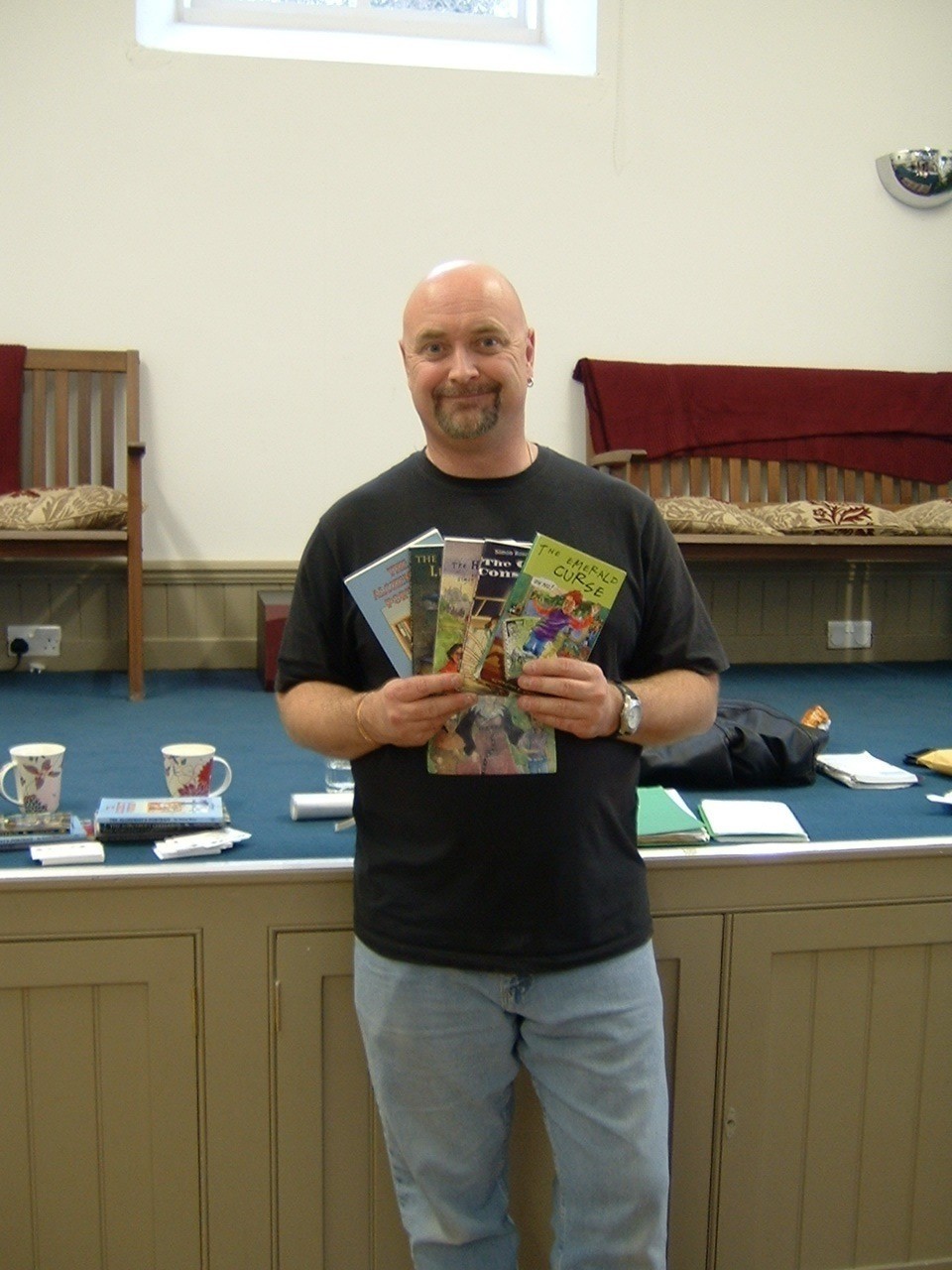 I’m available to visit summer camps in the Calgary area each July and August. I can be a special guest or work as part of the programming. I have a number of presentations, workshops, and other programs that are suitable for summer camps, but am very flexible. I’m happy to discuss ways in which my programs can fit in with the general theme of your camp for a particular week. Contact me for fees and availability for children’s writing workshops and summer camp programs.
I’ve worked with a number of organizations in Calgary and the surrounding area for summer camps and writing workshops over the years.
Calgary Arts Summer School Association
Park 96
The City of Calgary
Northern Hills Community Association
Kaleidoscope Preschool
New Brighton Community Association
McKenzie Lake Community Association
South Fish Creek Recreation Centre
Chestermere Public Library
Enchanted Events
Centre for Learning at Home
West Hillhurst Community Association
Calgary Learning Centre
Trico Centre
WordsWorth
SAIT
Calgary Girl Guides
Airdrie Public Library
Bragg Creek Community Association
Westside Recreation Centre
Vivo Centre
Boys and Girls Clubs
EPCOR Centre
Mid-Sun Community Association
Bright Beginnings
Camp Rivendell
The post Summer Camps in Calgary appeared first on Simon Rose.
March 30, 2020
PlayWriting Camp in Calgary in July
 Cassa Playwrights will take place once again with Cassa Musical Arts this July.
The 2020 PlayWriting camp will take place from July 13 to 17 at St. Vladimir’s Cultural Centre, 404 Meredith Road NE (Near Memorial Drive and Edmonton Trail), Calgary, Alberta.
In a dramatic and fun-filled week of half day camps, children will learn how to write, rehearse and perform their own unique play in just five days. Children will create the plot, craft the script, write dialogue and hone their acting skills for their very own dramatic production, which will then be performed at the end of the week. Half days are from 9:00 am to 12:00 noon daily.
Details of fees and registration forms are available on the Cassa Musical Arts website.
The post PlayWriting Camp in Calgary in July appeared first on Simon Rose.
March 7, 2020
Summer Camps in Calgary
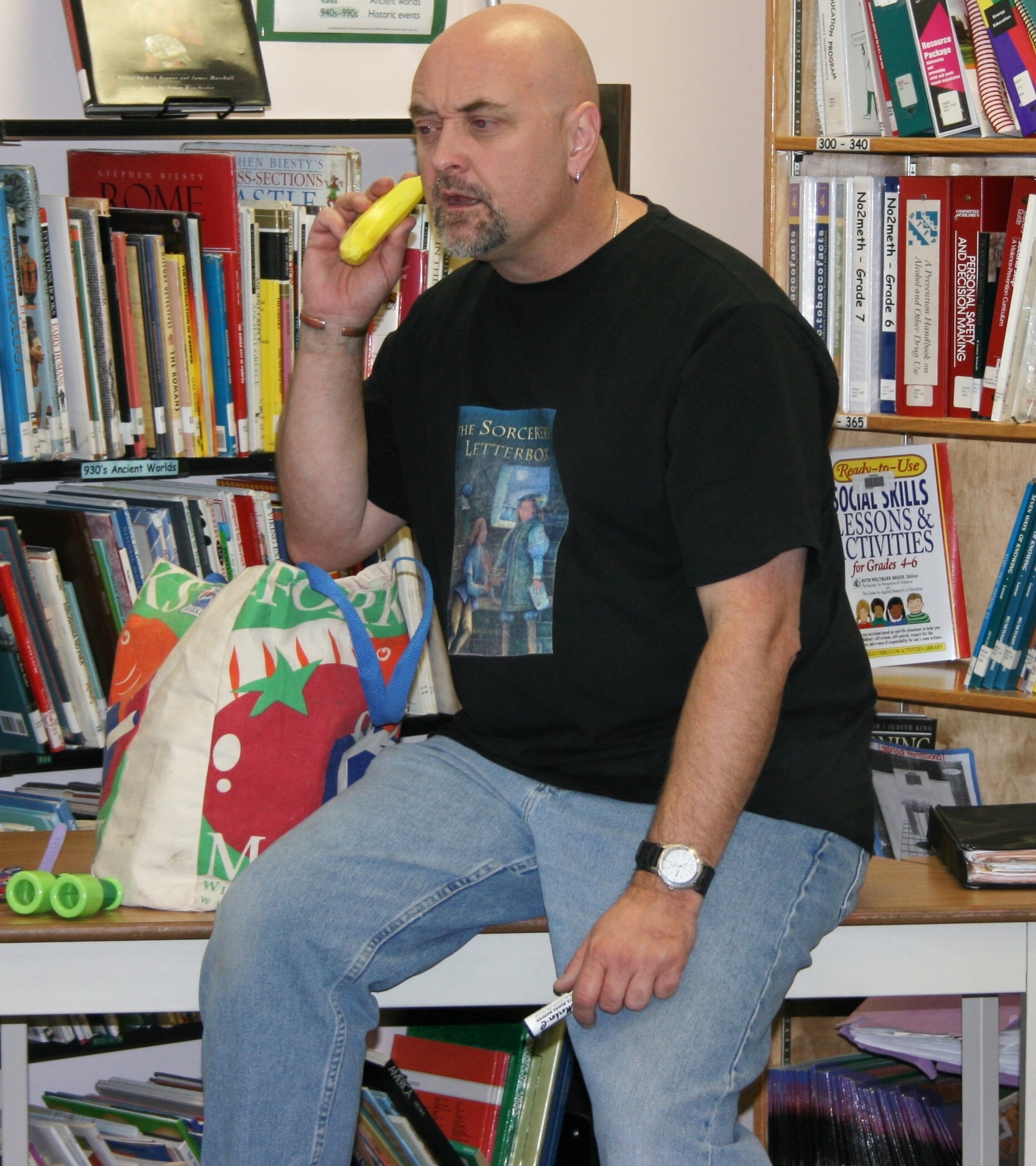 I’m available to visit summer camps in the Calgary area each July and August. I can be a special guest or work as part of the programming. I have a number of presentations, workshops, and other programs that are suitable for summer camps, but am very flexible. I’m happy to discuss ways in which my programs can fit in with the general theme of your camp for a particular week. Contact me for fees and availability for children’s writing workshops and summer camp programs.
I’ve worked with a number of organizations in Calgary and the surrounding area for summer camps and writing workshops over the years.
Calgary Arts Summer School Association
Park 96
The City of Calgary
Northern Hills Community Association
Kaleidoscope Preschool
New Brighton Community Association
McKenzie Lake Community Association
South Fish Creek Recreation Centre
Chestermere Public Library
Enchanted Events
Centre for Learning at Home
West Hillhurst Community Association
Calgary Learning Centre
Trico Centre
WordsWorth
SAIT
Calgary Girl Guides
Airdrie Public Library
Bragg Creek Community Association
Westside Recreation Centre
Vivo Centre
Boys and Girls Clubs
EPCOR Centre
Mid-Sun Community Association
Bright Beginnings
Camp Rivendell
The post Summer Camps in Calgary appeared first on Simon Rose.
February 15, 2020
Spectacular Story Starters – Spring Writing Camp
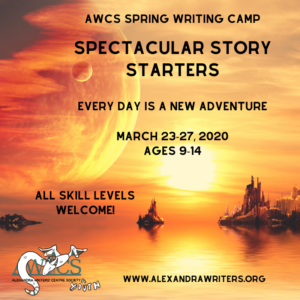 The Spectacular Story Starters writing camp will take place at the Alexandra Writers Centre in Calgary from March 23 to 27.
Explore where ideas come from and how to turn them into stories, basic story structure, plot development, time travel stories, creating characters, developing dialogue, inventing futuristic technology, inventing your very own superhero and more to help develop creative writing ability.
The camp is for participants ages 9 to 14. Registration is available at https://www.alexandrawriters.org/cour...
The Alexandra Writers Centre is located at 460, 1721, 29th Ave SW, Calgary, AB T2T 6T7
The post Spectacular Story Starters – Spring Writing Camp appeared first on Simon Rose.
February 9, 2020
The Importance of Professional Editing
 You’ve finished your first novel after years of painstaking work. You’re sure it could be a best seller and everyone you know is very enthusiastic. Yet your manuscript is returned by publishers, with a form letter providing no clues as to why they didn’t like it. Having your work independently evaluated gives you an unbiased opinion, helping you to tighten your manuscript and fix problems you may have overlooked.
I’ve provided substantive and copy editing services for many other writers over the years. This has been for novels, short stories, fiction, nonfiction, biographies, inspirational books and many other genres. You can view details of some of the projects that I’ve worked on here.
A professional substantive edit involves a comprehensive content assessment. This may include comments and suggestions regarding characterization, setting, dialogue, believability, structure, plot, language, research and references. It also includes a summary of the strengths and weaknesses (if any) of your writing, along with comments on writing technique, format, technical ability and market potential.
The written report on your manuscript features advice on how to develop your manuscript further. I will also answer any specific questions regarding what publishers may or may not like in the story. The time required for a substantive edit will vary depending on the length of your manuscript and the amount of work required.
A substantive edit is different to copy editing. This type of editing covers grammar, spelling, punctuation and many other details that writers are sometimes unaware of but publishers care deeply about. Substantive editing also differs from proof reading, which checks the final details before a book or article is printed or published. Following an in-depth substantive edit, both copy editing and proof reading are still needed before publication.
I conduct substantive edits for manuscripts in most genres of fiction and non-fiction, adult and children’s literature, including science fiction, fantasy, speculative fiction, time travel, historical fiction, paranormal, supernatural, suspense, adventure, action, mainstream novels, mysteries, thrillers, romance novels, picture books and more.
As a final note, it’s important to remember that that a substantive edit of a manuscript and the resulting changes or suggestions, even if acted on by the author, will not necessarily guarantee publication. While the feedback may improve your manuscript, doors will not automatically open. You’ll also still need to thoroughly research the marketplace to ensure that you’re submitting your work to an appropriate publishing house.
Visit my website to learn more about my services for editing, coaching and consulting, and ghostwriting.
The post The Importance of Professional Editing appeared first on Simon Rose.
February 2, 2020
People plotting: Creating unique characters – Part three
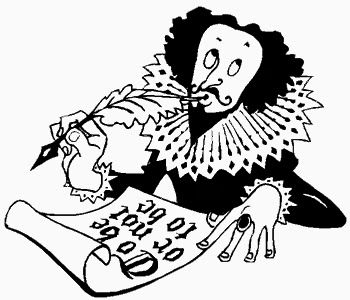 A good exercise is to invent two characters based on pictures. Creating a facial description is relatively simple, although you also need to determine if the people are tall or short, their body type, approximate age, and so on.
You then need to add as much information as possible about each person – personality, mannerisms, jobs, career path, friends and family, likes and dislikes, hopes and dreams, hobbies, pets, favourite foods and drinks, what part of the world they live in, the type of house they have or the car they drive, even where they went on holiday last year – in short, anything that makes them come to life. The characters in your stories will also need names, which usually conjure up certain images for the reader. This topic is covered in detail in the first installment of The Children’s Writer’s Guide.
You might then imagine a situation in which the two people you have invented might meet. They could be stuck in an elevator for ten minutes and have to strike up a conversation or have a minor car accident on a deserted road, then have to exchange information. It could be anything, entirely based on whatever you think the characters might be like, from the impression you received from the photographs. Then to make it particularly interesting, at the end, have the two people discover that they have an unexpected connection. They learn that they are long lost siblings, have the same type of dog, are both looking for the same treasure or whatever idea you come up with.
The post People plotting: Creating unique characters – Part three appeared first on Simon Rose.
January 26, 2020
People plotting: Creating unique characters – Part two
The best writers create characters that you instantly feel that you’d recognize on the street if they came to life. So what kinds of things make us different? Everyone doesn’t like the same food and some are allergic to certain things. People are sometimes described as dog people or cat people but some might be neither or be allergic to dogs, cats, or both, affecting their choice of pets. We all have different likes and dislikes, or specific hopes and fears, things that help to determine our personality.
People’s voices are often distinctive, stereotypical male villains might stroke a beard thoughtfully, some people hug when they meet, others shy away from such close personal contact, some people have firm handshakes and some very weak. These things, and countless others, make up our personalities, differentiate us from others, and make us who we are.
However don’t be tempted to make a character too different. Assuming that you’re not creating a wacky cartoon character, don’t invent someone with bright orange spiky hair, an eye patch, two facial scars in unusual shapes, a hooked hand, a wooden leg, and an unintelligible dialect, since this will not only seem ridiculous to the reader but also risk detracting from the telling of the story.
Any yet you also can’t go too far in the opposite direction and make people too perfect, no matter how tempting that may be. After all, now many of us know any perfect people? Characters need problems, flaws, phobias, whether it’s about spiders, heights, crowds, closed spaces, or indeed anything that makes them more believable.
The post People plotting: Creating unique characters – Part two appeared first on Simon Rose.
January 19, 2020
People plotting: Creating unique characters – Part one
Let’s imagine that you’ve thought of a great premise for a story and even crafted a general plot. You then need to develop some characters to inhabit the world you’re intending to create. So where do ideas for characters come from? How do successful authors invent people for their stories, those imaginary men, women, children, and even animals that are a perfect fit for the story?
Let’s be honest, ideas for characters can come from just about anywhere – on the train, street, plane, TV, movies, pictures and photographs, historical figures, or they can even be a composite of different people such as friends, family, neighbours, or work colleagues.
However, if you’ve described a person in terms of their height, weight, general body type, hair and eye colour, age and clothing, this isn’t really creating a character. All you have are the mere basics without any real meaning. This might as well be a life-size cardboard cutout rather than a character that appears to be a real person. Characters have to come alive so that the reader will identify with them.
It also helps if the character is grounded in reality and has friends and family, pets, homework, annoying siblings, parents and grandparents, likes and dislikes, and so on. The people in the story might embark on extraordinary adventures but if they have an ordinary life it makes them more plausible to the reader. Harry Potter’s school at Hogwarts may not be like the kind of educational institution that most kids attend but the author made Harry a less than perfect student that struggles in certain classes. Most children don’t attend boarding schools where they only go home in the winter or summer holidays and they certainly don’t aren’t educated in the ways of magic. Yet Harry’s struggles make him more authentic as a character.
The post People plotting: Creating unique characters – Part one appeared first on Simon Rose.
January 5, 2020
“The Doomsday Mask is a thrilling page-gripper of a mystery.”
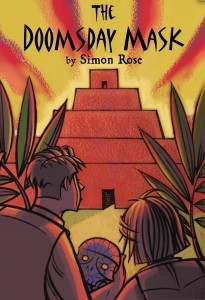 The Doomsday Mask
The legendary crystal ceremonial mask of Kulkaan, high priest of Atlantis, was believed to have been endowed with incredible powers. In the ancient civilization’s destruction, the mask was thought to have been shattered and irretrievably lost, eventually being forgotten. Long considered to be a mere myth, the mask’s crystal fragments have now been found and the mask of Kulkaan reassembled, with deadly consequences for all mankind. In a desperate race against time, Josh and Erica must prevent the mask from falling intact into the hands of the shadowy Crystalline Order to save the world from catastrophe.
The Doomsday Mask received great reviews when it was first published and remains a favourite with young readers today.
“Rose takes the reader on a fast-paced adventure through time and legend.”
“The Doomsday Mask is a thrilling page-gripper of a mystery.”
“Danger lurks everywhere as does the course of history and even prehistory.”
“Juvenile readers from 10-14 will be spellbound by The Doomsday Mask, and they will learn a bit of interesting world history and paleontology along the way.”
“Although The Doomsday Mask may be considered to be science fiction fantasy/adventure, it is solidly grounded in facts of known prehistorical events and speculates from these logically.”
Read more reviews of The Doomsday Mask here on my website.
The post “The Doomsday Mask is a thrilling page-gripper of a mystery.” appeared first on Simon Rose.