Deedee Cummings's Blog, page 6
July 18, 2024
Staying Judgment Free in Our Empathy
How can we show more empathy to others? How can we show more empathy for ourselves? Perhaps the hardest thing about relating to others is the ever-sneaky way that judgment creeps in.
We’re all stuck inside our own heads and subject to our own emotions so that is what feels comfortable to us (even if sometimes we don’t like it). That is our “normal.” We see the world in a certain way that is unique to us, which is both wonderful and challenging.
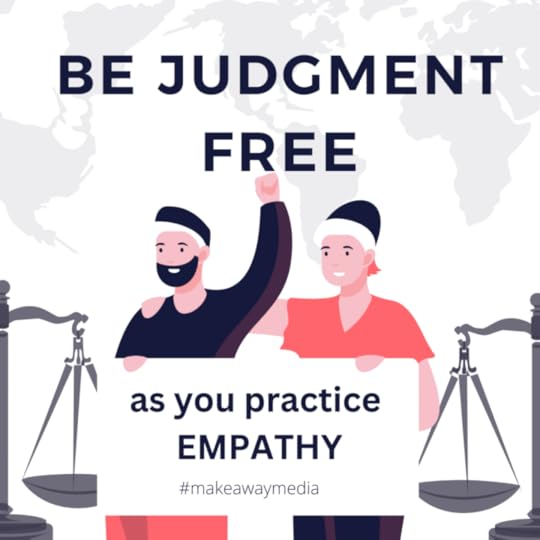
To have empathy for another person means we have to, as best as we can, remove judgment from our thinking. We can’t look at the other person’s situation in their shoes if we are still stuck firmly in ours with our laces tied tight. We have to let go of any judgment we may feel about whatever situation they are in. And that can be HARD!
You may find yourself, while in the midst of conversation, thinking, “I would never do that!” or “Why does she/he do that?” If this is the case, you’re veering into judgment. Empathy means that you’re trying to be with the person in their situation, from their perspective. If you can’t understand it from your perspective, it is because you are still in your perspective.
If you find yourself thinking questions like the ones above, consider the emotion you’re feeling that may be leading to a sense of judgment. Has something the person said made you feel anxious? Sad? Angry? Before we can understand the feelings of others, we have to be aware of the feelings within ourselves and deal with those.
As we practice empathy, we may need to literally tell ourselves to “step out of judgment” whenever we hear our minds asking such questions. Our minds need to be focused on listening to whomever we’re speaking with, not thinking about why they made a decision we might view as silly or what we would have done differently if it were us.
Empathy is a skill that takes practice and sometimes we will feel judgment. What is important, though, is to acknowledge it, understand the feelings that prompt it, and work on putting ourselves back in the other person’s perspective. Being aware of these thoughts and automatic responses will help us lead a life that is filled with more empathy for others. And, an amazing thing happens when we are able to make this a practice– we have tons more empathy for ourselves which is a very beautiful thing.
The post Staying Judgment Free in Our Empathy appeared first on Make A Way Media.


July 11, 2024
Daring to Dream: A Mid-Year Assessment
How can I stick to my goals? January was a long, long time ago, wasn’t it? You may have entirely forgotten your resolutions, your plans, your goals, your dreams–whatever you decided to call them. Or you may be diligently plugging along with the actions you set in place seven months ago. Of course, you may be somewhere in between–aware of what you want to do but slipping and sliding along, sometimes hitting the mark and maybe even missing it completely at other times.
No matter where you are, it’s a good time to take a mid-year assessment to see how far you’ve come and where you want to go.
If your plans fell by the wayside sometime in February, that’s ok. It doesn’t mean you’ve failed. You are actually in good company. Maybe your plans were too broad or you tried to do too much too fast. Maybe you have learned that you really need an accountability partner or a mentor. We often think if we stop, we have to wait for some special occasion to start again (like New Year’s Day), but every day is a new opportunity. Really, every hour and every minute offer new opportunities that we can seize.
If you’re diligently checking off goals, you can stop to reassess whether you’re moving forward with the same goal or whether things have changed–or should change. Are you happy? Is your consistency because you still want that same goal or is it because you’re just good at checking things off? If you have an easy time self-motivating, it is sometimes crucial to ask yourself, “Do I even want this anymore?”
If you are somewhere in between, think about what changes might occur to help make consistency more attainable. Have you scheduled time each week to work toward your goal? In the times when things slow down and you feel a slackening in your resolve, what is going on in your life? Can you make changes or ask for help from others to help pick up the pace for your goals?
No matter where you are, it is always a good idea to reflect on what is working and what isn’t. A mid-year self-assessment will help you ensure sustained movement in the right direction or the need for a pivot to a better course. Keep talking about your dreams. They are much more likely to happen when you are saying the words out loud.
The post Daring to Dream: A Mid-Year Assessment appeared first on Make A Way Media.
July 4, 2024
Parenting and Our Imperfect Union
How do I parent my child in this political climate? How do we celebrate our country while recognizing its flaws? The history of the United States is complicated and messy. It has its positives and negatives, and we can learn from both in the same way that we can learn from the positives and negatives within ourselves or any situation we encounter.
In recent years there have been efforts to put lots of things on pedestals where we as a society refuse to look at them in their fullness. Some have wanted to do this with our country and the history that we teach about how we became who we are today. There have been proposals to minimize or whitewash the often violent and uncomfortable history that is part of the United States, but these proposals do not get us where we need to be.
 We sometimes see parents do something similar with their children, and as a general rule, most people would say this is problematic. Putting one’s child on a pedestal and ignoring or minimizing their faults does not make the child better; rather, it makes it difficult to accept boundaries or constructive criticism. Sometimes parents think that supporting their child means taking their child’s side no matter the issue. But being a good parent means allowing a child to see the natural consequences of their actions while still showing them love. As tough as this may be for us as parents, it is necessary.
We can be proud of our children and love them with every fiber of our being, while simultaneously acknowledging that our children are imperfect and make mistakes. Sometimes they do downright stupid things that drive us bananas. We can lovingly explain their errors, allow them to understand the consequences they face from their decisions, and still support them.
Our country is no different. We can love our country while also seeing its flaws. We can learn all the true history of our country while still noticing all of the things (the good and the bad) to help us move forward with our hearts and our eyes wide open, and just a little closer to that dream of a perfect union.
One of my favorite authors said something that I hope we can all hold onto today as we celebrate the United States of America:
“I love America more than any other country in this world, and, exactly for this reason, I insist on the right to criticize her perpetually.”
The post Parenting and Our Imperfect Union appeared first on Make A Way Media.
June 27, 2024
Conflict and Communication- Goldilocks Part II
Why has Goldilocks been on our mind lately? I don’t know… we are a diverse books site after all. However, there are pieces of this story we can use because they are so well known. And part of the reason they are so well known is because they resonate so loudly with us as a culture. We can all learn something from Goldilocks and the three bears. Last month we talked about the importance of communicating like Goldilocks in a way that is “just right”. Or, Like Rainwater, as my mother would say.
This month we are talking about clear communication. At the heart of almost every story known to the world is conflict rooted in a lack of clear communication. Think of the novels and tales you’ve read or listened to throughout your life: they all involved a conflict of some type and often miscommunication (or a total lack thereof) was part of it. Think of “Goldilocks and the Three Bears.” The conflict: she wanted comfort of various kinds (food, sleep, rest) and didn’t communicate that need to the bears. She just took it. Had she knocked on the door and communicated her need, perhaps the story would have looked very different, and Baby Bear wouldn’t have been so upset.
What we communicate or fail to communicate can, like Goldilocks, lead to conflict with those around us so we need to really think about what we’re communicating and how we’re doing it.
By leaving a dirty dish in the sink instead of putting it in the dishwasher, are we communicating that we don’t value our spouse’s time (I don’t have time to deal with this cup, but you do.) If we don’t make eye contact with our children and instead focus on our phones when they try to talk to us, are we communicating that whatever is on our phone is more important to us than they are? If we don’t speak to someone who has experienced a loss, are we conveying that we don’t care?
In our words and deeds, we are communicating all the time, but we may not always be totally aware of how this communication is being perceived. We may feel blindsided when our loved ones complain, or a conflict develops. It is during these times that we need to ask, “What does me doing or saying ‘x’ communicate to you?”
Most of us think of talking when we hear the word communication, but listening is a huge component of the communication process. When there is conflict and we ask the question above, it is essential that we engage in focused listening so we can understand what our communication is actually saying to the people we have relationships with.
The post Conflict and Communication- Goldilocks Part II appeared first on Make A Way Media.
June 20, 2024
The Ability to Change and the Importance of Having a Growth Mindset
We change throughout our lives, but somehow it has become a little taboo to change one’s mind. If someone changes how they think about something, they are sometimes referred to as being “woke,” which is conveyed in a negative light. But the idea that changing our minds about a topic or situation shows weakness or a lack of confidence or even a lack of intelligence is silly, really.
While many of us might say we’d like to go back to childhood when we had no responsibility, most of us would not want to go back to understanding things as we did when we were children. What we want is not to have to pay bills, to be more free with our time, and to not have our knees hurt, but we don’t want to go back to the lack of understanding we all experienced as kids. We like the mental and emotional growth we’ve experienced becoming adults. We like having a clearer perspective on how the world works and the confidence that comes with having some age and experience under our belts.
This is sometimes referred to as a growth mindset. The skill of being able to grow, gauge, make adjustments, and adapt. It is not only a positive trait, it is crucial to human survival. In a past article we talked about things you can do to step out of your comfort zone and widen your circle here.

We absolutely should change over the course of our lives and we have changed over the course of our lives. We know the value of it. We understand ourselves and the world better. We feel our enhanced perspective- all by itself– is an achievement. That’s growth.
So why would we want to stay stuck in a state of mind that never changes about various topics, from sports to education to health to art to politics?
Imagine what life would be like if people had never expanded their understanding. We wouldn’t have antibiotics, cars, airplanes, houses with central heating and cooling, indoor plumbing, movie theaters, radios, cell phones, cancer treatments, antidepressants or three hundred flavors of ice cream.
Changing our minds isn’t a bad thing, especially if we’ve done the critical thinking that is necessary to formulate our adjustment. Have we read widely and from different perspectives? Have we talked to others or written about the ideas in our heads to work through how we feel about them? Have we considered the pros and cons? Have we looked to history to learn from other people’s mistakes? Changing your mind can be truly beautiful.
The post The Ability to Change and the Importance of Having a Growth Mindset appeared first on Make A Way Media.
June 13, 2024
Empathy Primer
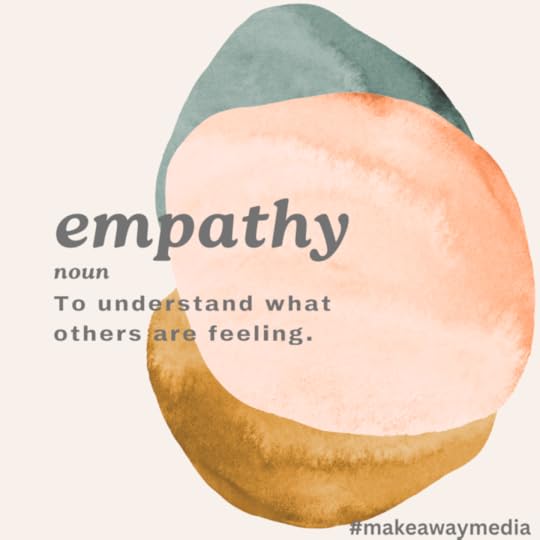
When we talk about empathy, we mean putting oneself in other people’s shoes and seeing the world from their perspective. It is a skill that can and should be learned from the time we are itty bitty, but no matter your age, you can always improve your empathy.
But did you know there are different types of empathy?
Cognitive empathy involves understanding on an intellectual level what people might be experiencing. It means you can think “How would I feel if I was in ‘x’ situation? What would I do?”
Somatic empathy means that we can feel what another person is feeling with our bodies. This is when you begin to tear up when you see someone crying. If they are experiencing embarrassment, you might begin to feel that way, too.
Affective empathy is when we notice and respond to the emotions that someone else is experiencing in an appropriate way. If they feel sad, we feel with our emotions their sadness and relate it to our own experiences of sadness. We literally “know how they feel”.
As we improve our empathy skills, we likely become better at all three types of empathy. We understand others on multiple levels, which is a great thing! It reduces the sense of isolation and disconnection between people.
The more empathetic we are, the more comfortable and safe people feel with us because they know we understand them in a way that other people may not.
There is a chance that all this mental and emotional work can be tiring. Empathy fatigue is a real thing and can happen to individuals who are close in tune with other people, like parents, teachers, social workers, and caregivers. If you feel your emotions and other people’s emotions, it can drain your energy. Therefore, it is important to give yourself grace when you feel tired or when your emotions conflict with the emotions of others. You may understand how they feel- but also want to feel how you feel. This has the potential to create a lot of uneasiness and tension. Having someone to talk to and work through these feelings can be beneficial to your overall mental health.
In summary, empathy is a beautiful thing. Imagine walking through life completely clueless to the plight of others. Imagine walking through life with completely clueless to what was going on with you. Neither scenario feels good. Embrace the beauty of empathy, but be sure you are also showing lots of kindness, patience, and empathy with your own emotions as well.
The post Empathy Primer appeared first on Make A Way Media.
June 6, 2024
Daring to Dream: Celebrating Milestones
Having a dream is a very different animal from making that dream come true; it takes goal-setting and loads of work. It can take compromise and reimagining. Sometimes you may have to back up a few steps, refocus, then restart. One thing you should always celebrate, though, is the milestones you do achieve. 
Here is one of my favorite articles from Psychology Today about why you should celebrate, well, everything! Why not celebrate everything? But here is why it’s important to celebrate all the little milestones of a dream, even if they seem trivial:
First, taking time to celebrate a victory boosts your motivation. Even if it seems insignificant to others, it proves to you that you are making progress in your goal. That success doesn’t have to look like what other people would define as success. For example, if you want to write a book and you get one chapter written, this is a win and a milestone for which to pat yourself on the back. The next milestone you celebrate may be finishing five chapters or ten chapters. Next you celebrate finishing the book. Then you celebrate submitting it to publishers. If you get rejection letters, you celebrate that it was rejected because that is part of the process that every writer experiences. You are still on the road to success!
Second, celebrating milestones gives you an opportunity to stop, reflect and perhaps change something that you otherwise would not have considered. If we have a dream or a goal, it doesn’t have to remain stagnant or static; it can (and maybe should) change. But if we never take a moment to celebrate, we might keep our noses to the grindstone so much and for so long that we don’t recognize that we need a pivot to make the dream happen.
Third, celebrating milestones gives others an opportunity to offer their support. Sometimes people don’t talk about their dreams because if they fail, they would rather it be on the downlow. They don’t want to be embarrassed or ashamed. But reaching a milestone and telling others about it gives your family and friends, colleagues and comrades a chance to be your cheerleaders. They might also offer your important networking or financial support that wouldn’t happen if you never shared your journey and milestones.
In making your dreams come true, make it a point to take the time and celebrate you and the important work you’re doing. It makes a huge difference on your journey.
The post Daring to Dream: Celebrating Milestones appeared first on Make A Way Media.
May 30, 2024
Like Rain Water: Goldilocks Your Reactions
All of us fly off the handle periodically. Life gets the better of us, and we become frustrated. Our anger rumbles deep within us and comes spewing out like a volcano. Our hot angry lava covers the people around us. Even though this explosion may settle the deep discomfort that was roiling inside, we’ve now got a new problem on our hands: the aftermath. We’ve covered our family, our friends, and ourselves with hot, angry emotional lava. And, just like the destruction that lava leaves behind, our anger once spewed cannot be easily cleaned up.
We may think the heat is bad, but would it be any better if jagged, icy shards came flying out from us? If we spew a biting cold that freezes those around us, is this what we want to do to others? Is that kind of reaction any better?
We’re all learning in real life, due to climate change, what extreme temperatures do to our world. Droughts, damaging catastrophic storms, temperature so low we can’t even expose our skin outside are becoming what we see regularly. The same kinds of things happen to our relationships if we have extreme emotional reactions to situations in life. The damage may not be obvious at first, but we often see it later when everyone else’s shrubs and flowers bloom, but ours have just turned brown and brittle.
When you feel yourself having strong cold or hot feelings, consider taking a deep breath and thinking of the rainwater of summer. Like Goldilocks, it feels just right. This idea of rainwater is one you can visualize when you feel yourself getting ready to have an extreme emotion because picturing it can help you change your emotional reaction. Take a deep breath. Imagine the feel of rainwater on your hands or forehead.
This idea of rainwater for “just right” reactions is one Deedee Cummings has used in her children’s books, specifically Like Rain Water. It is an idea that is good for adults to consider but also one that children can understand as well. We can all learn to better recognize and manage the feelings we have so that we aren’t covering our loved ones in ice or fire.
The post Like Rain Water: Goldilocks Your Reactions appeared first on Make A Way Media.
May 23, 2024
Immerse Yourself in Summer and Nature
The end of school and the busyness of the Aug-May schedule is a time for families to get outdoors. There are all kinds of camps and organized activities for adults and children, but structured activities may make you feel like you’re still in the hamster wheel of “go-go-go.” Just making a point to sit in the sunshine, feel the breeze on your face, and look at flowers each day can be refreshing.
It may sound a little odd but there is a Japanese practice known as shinrin-yoku that can make a huge difference to our overall health. What does shinrin-yoku mean in English? Forest-bathing. While you can forest-bathe anytime of year, May, June and into July would be a perfect time because the leaves provide an insulating cocoon. Walking slowly, breathing deeply, and really noticing nature around you and the sound of the breeze can do wonders for your mind and your soul.
Of course, not every schedule allows for daily or even weekly forest-bathing, but there are still ways to bring nature into your life for its benefits.
A way to get our minds thinking of nature is to read books centered in nature. For adults, this might mean reading a book about a natural habitat, like Yellowstone National Park, or an animal. When it comes to children’s literature, there is no shortage of books about every animal under the sun or natural settings, from beaches to mountains to forests to savannahs. Your mind can bathe in nature even when your body can’t.
Another way to bring nature into your life is to watch a documentary film about the natural world. Born to Be Wild narrated by Morgan Freeman and My Octopus Teacher are two excellent options to consider.
If you work in an office or at a desk all day, you might not have the opportunity to get out much to refresh yourself. What about purchasing some inexpensive fresh flowers once a week for your desk? (Baby’s breath is light, fresh, and holds up much better than some more delicate flowers at florist shops or the grocery.) Maybe make your computer screensaver a nature background to at least get some green color into your retina each day.
There are many ways to incorporate nature into your life and it all adds up to one big difference in your mental health for the better.
The post Immerse Yourself in Summer and Nature appeared first on Make A Way Media.
May 16, 2024
Daring to Dream: Recharge
Having a dream and working to make it come to fruition is awesome but also exhausting. As May gets under way, we begin to think about summer break. Since we were kids, summer has come to be associated with rest and relaxation so maybe, even though you are still working toward your dream, consider taking time to recharge.

Sometimes people with a problem they are trying to solve find that as soon as they get in the shower or wake up from a nap, they have found the solution. Our brains often need space and quiet to come up with new and better ideas. But stepping back for a week or two may not feel like it’s in your best interests. We’ve gotten so used to the grind (and the expectation of a grind) that we think a temporary break is going to end everything we’ve worked for, and it just isn’t.
We’re likely to find that when we return to our dreams, our plans, our endeavors, we have renewed energy. We have a better attitude. We feel like the problems we faced before the rest aren’t as monumental. We may even have some new ideas for how to solve them that came from giving ourselves space.
Taking a break doesn’t mean you don’t have to think at all about your dream. In fact, it might be a good idea to keep a journal during this time of rest for any ideas or fears you think about. Writing about your dream while on a temporary hiatus helps keep your mind from straying too far while also giving it a chance to work through sticking points.
We often hear about this term: Self-Care. But what is it and how do we do it? If you are still struggling to understand why or how to put yourself first to avoid burnout on the way to your dreams this article is very helpful.
Take time to read a book during your rest that is related to your dream. For example, if your dream is to learn to paint, read a book about your favorite style of painting and its history. Or read a biography of someone else who had a dream and made it become reality as a source of inspiration for yourself.
Whatever you do, give yourself permission to rest and refresh to help ensure you don’t get too overwhelmed and give up on your dream.
The post Daring to Dream: Recharge appeared first on Make A Way Media.