Deedee Cummings's Blog, page 3
May 29, 2025
How to Explain Holistic Mental Health to Teens
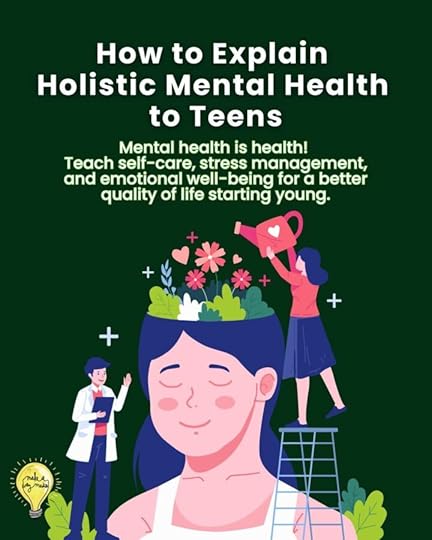 Taking care of your mental health doesn’t have to be complicated or expensive. A holistic approach means checking in with your thoughts, your body, your emotions, your spirit, and even your environment. Try small things in each area—you don’t have to fix everything at once. Just start with one thing, and build from there. You matter.
“Holistic” means looking at the whole you—your mind, your body, your emotions, your spirit, and your environment. It’s like taking care of all the parts that make you, you. If one part is hurting, the others can hurt too. Holistic mental health is about doing small things in different areas of your life that add up to help you feel better, stronger, and more in control.
Why We Need to Talk to Teens About Mental Health
We live in a loud world and it is getting louder every day. Teens today are facing unprecedented mental health challenges with mounting pressure from peers, social media, and testing among other things. It is important to start these conversations early and provide kids with the tools they need to build coping strategies and hoping skills.
An Easy Way to Explain Holistic Health
Explain to the kids in your life that holistic just means we look at everything that affects your well-being—not just your thoughts, but your body, your surroundings, your habits, and even what you believe about yourself and the world. Start pointing out ways that you see different sides of their health displayed throughout the day when you notice that they are:
Tired- they need a napHangry- they need a snack“Bored”- they need to fill their soul with a book or a craftLonely- they need connection. Try a call to a friend or relative.Overstimulated- they need quiet and calming activitiesEasy Holistic Approaches Teens Can Try
Here’s a list of doable, no-cost or low-cost options—each linked to a part of the self:
Mind (Thoughts & Focus)Journaling – Write down your feelings or what happened in your day.Affirmations – Say something positive to yourself every morning like, “I deserve peace” or “Today I’m starting fresh.” Breathing exercises – Try 4-7-8 breathing (inhale 4 sec, hold 7, exhale 8).Mindfulness – Sit still for a few minutes and focus only on your breath or a sound nearby. Body (Movement & Nourishment)Stretching or light exercise – Even 10 jumping jacks or a walk can lift your mood.Eat when you can, drink water – Hydration and steady meals stabilize energy and emotions.Sleep routine – Try going to bed around the same time, even if life is chaotic. Emotions (Expression & Connection)Talk to someone safe – A friend, mentor, teacher, or therapist.Creative expression – Draw, write lyrics, braid hair, dance—anything that lets feelings out.Crying without shame – Sometimes you just need to let it out. That’s healing too. Spirit (Hope, Beliefs, Inner Peace)Gratitude practice – Write or think of one thing you’re thankful for each day.Spiritual time – Prayer, reading something inspirational, or just sitting quietly with yourself.Acts of kindness – Helping others can boost your own sense of meaning and worth. Environment (Surroundings & Influences)Declutter your space – Even tidying one area helps your brain feel calmer.Music check – Listen to songs that build you up, not ones that drag you down.Limit toxic people – Spend less time with people who make you feel bad about yourself.
The best way to teach these as a skill is to do these things right along with them. The more you practice addressing each of these areas together the more likely this will become a habit that will stick for life. Give it a try! We all need to show more empathy to ourselves and this is a great way to implement more self-compassion in your life. Leave a comment about the holistic approaches you have discovered that work!
The post How to Explain Holistic Mental Health to Teens appeared first on Make A Way Media.


May 21, 2025
A Calm Start to Summer: Before-Camp Anxiety Is Real—Here’s a Routine to Help
Summer camp can be a magical experience—a time to explore, create new friendships, build confidence, and step into more independence.
But for many kids, especially tweens, the excitement of camp is mixed with something else: anxiety.
As a therapist and mom, I’ve seen this firsthand. The night before camp (and even the days leading up to it), kids may start complaining of headaches or upset stomachs, saying they don’t want to go, or becoming suddenly overwhelmed or tearful. And if your child is naturally shy or has experienced peer conflict, these worries can be even more intense.
It happened to me with my own daughter, Broadway actress, Kayla Pecchioni. Every single year, I would hear the same thing, “I don’t think I can go mom.” She was afraid of meeting new kids and having new experiences.
The truth is, anxiety doesn’t mean your child shouldn’t go to camp. It means they care. It means they’re anticipating something unfamiliar. And the good news? We can teach our kids how to manage this anxiety—without letting it take the wheel.
That’s why I created a gentle, practical Before-Camp Calm Down Routine to help kids settle their minds and bodies so they can step into their summer adventure feeling more grounded and brave. These tips also are perfectly okay to adapt for use with the question of how to help your child with anxiety at school. Really, these top anxiety tips for kids can be applied to any area of their lives.
Before-Summer Camp Calm Down RoutineThis 15-minute routine is designed to be used the morning of camp or the night before. You can even print this out and tape it to your child’s bathroom mirror or the wall beside their bed. The goal isn’t to erase all anxiety—it’s to remind them that they are capable of handling it.
 1. Stretch and Breathe (3-5 minutes)
Help your child stand tall like a tree.
Stretch arms up to the sky
Roll shoulders
Take 3 slow, deep belly breaths
Inhale through the nose (count to 4),
Hold (count to 4),
Exhale slowly through the mouth (count to 6)
Breathing calms the nervous system and eases the tummy tension that often comes with anxiety.
2. Soothing Sips (2-3 minutes)Warm herbal tea, a little lemon water, or even just a cozy breakfast drink can help settle an anxious stomach. Mint or ginger tea is especially soothing. If your child doesn’t like warm drinks, chewing peppermint gum or sucking on a mint works too!
3. Name It to Tame It (3 minutes)Use this simple journal prompt:
“Right now I feel _____ because _____. But I know I can ____.”
Example:
“Right now I feel nervous because I don’t know anyone at camp. But I know I can say hi to one person and find something fun to do.”
Saying or writing fears out loud gives them less power.
4. Say It with Strength (2 minutes)Recite or write an affirmation. Have your child choose one or say it together:
“I can be scared and still be brave.”
“I’m not alone—others feel this way too.”
“I’ve done hard things before. I can do this too.”
Stick these on their lunchbox or backpack for a mid-day boost.
5. Create a Comfort Anchor (optional)Let them bring something small and meaningful—a note in their bag, a friendship bracelet, a soft scrunchie from home—something that grounds them if they start to feel nervous.
Final Tip for Parents:Don’t rush them. Give the morning a buffer so it’s not frantic. Offer encouragement—but try not to over-reassure. Instead of, “There’s nothing to worry about,” try:
Anxiety Isn’t the Enemy—Avoidance Is“It’s okay to feel nervous. You’re ready for this. And I believe in you.”
The goal isn’t to erase all discomfort. It’s to show your child that they can move forward even with a fluttering stomach or a racing heart. When we teach our kids to cope with these feelings instead of avoiding them, we give them a gift they’ll use for the rest of their lives. Kayla was okay and made it through every year of Summer Camp with no problems. To this day, she thanks me for making her attend a new camp every year because it has helped her begin new jobs which happens frequently in her world. Last year she started a new job at The Great Gatsby on Broadway and she says she hears my voice in her head. Your kids will one day hear yours too. (Click on the link for Gatsby and you will see her face immediately on the video they have up right now. I am so proud of her and all the anxiety she has had to overcome to get here.
So if your child is heading off to camp this summer, try this routine the day before or the morning of. Calm doesn’t mean perfectly fine—it just means grounded enough to take the next step. One breath, one moment, one new memory at a time.
The post A Calm Start to Summer: Before-Camp Anxiety Is Real—Here’s a Routine to Help appeared first on Make A Way Media.
May 11, 2025
How to Hold on to Hope: The Moment I Learned Hope Was a Skill
There’s a moment in every life where something shifts. For me, that moment came quietly but unmistakably—like a puzzle piece finally clicking into place. It happened not in a classroom or on a stage, but in the presence of a young person who had no sense of tomorrow and no ability to dream.
As a therapist, I’ve sat with hundreds of children, teens, and families working through everything from fear and uncertainty to deep despair. But there was one session I’ll never forget. A child—barely a teenager—looked me in the eyes and said, “What’s the point of dreaming if it’s never going to come true?” The words were painful. Not because I hadn’t heard something like it before, but because in that moment I realized something profound:
This child had never been taught how to hope, much less how to dream. 
We talk so much about coping skills—how to manage stress, breathe through anxiety, regulate emotions. But what about hoping skills? Who teaches you how to hold on when everything tells you to let go? Who shows you how to dream again after life has let you down, over and over?
That question stirred something deep within my mind and my heart.
As I sat with that child, I saw a mirror. I remembered the parts of my own journey where hope was the only thing I had left. The times I didn’t know how I was going to keep going—but I did. The truth is, I didn’t just feel hopeful. I practiced hope. I probably poured into hope as much as hope poured into me. I built it, slowly, intentionally, like a muscle that needed training. And I realized then: hope is not a feeling. Hope is a skill.
That realization changed everything for me.
From that moment on, I made it my mission to teach hope the same way I taught emotional regulation, problem-solving, or communication. I began developing tools, writing books, and creating conversations around what it looks like to build hope—especially for those who’ve never had it modeled for them.
That’s how The Hoping Skill was born.
It’s more than a phrase. It’s a lifeline.
Hope is the belief that tomorrow can be different, even if today is hard. It’s the invisible thread that connects where you are to where you want to be. Without it, even the smallest tasks feel heavy. Time feels meaningless. Motivation fades. And dreams? They disappear entirely. And all that lives in your brain about dreams is that they were never meant for you. This is depression. This is a lie. Dreams were made for all of us.
A life without hope is not just sad—it’s dangerous. It leads to despair. To isolation. To a kind of emotional numbness that slowly convinces you there’s no point in trying. Without hope, people stop caring. They stop planning. They stop believing in themselves. They stop seeing their own worth. They stop living.
But hope? Hope brings light. It gives us a reason to get out of bed. It whispers, “Keep going.” It fuels action, resilience, and courage. It reminds us that we might be down, but we are not out.
That’s why every human being must have hope. Not because life is easy—but because life is often hard. And hope is what makes us brave enough to face that truth and still move forward.
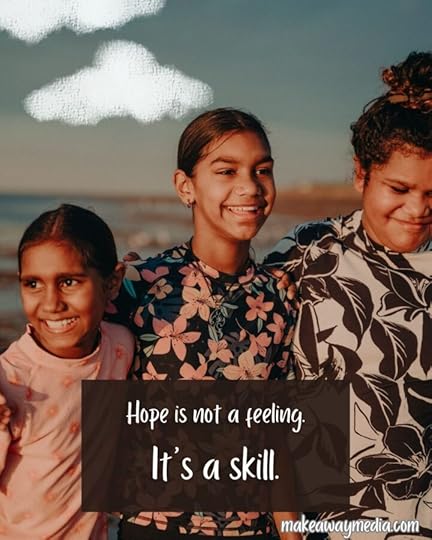 Hope is not just for the privileged or the lucky or the ones born into easier circumstances. Like dreams, hope exists for everyone. But like any skill, it needs nurturing. It needs daily attention. It needs to be seen as essential—not optional.
When did you first learn to hope?
If you’re still figuring that out, I want you to know—it’s not too late. You can learn it now. And it is life changing. You can teach it to your children and to others. You can pass it on like a torch. Because we are not just coping our way through life—we are dreaming, healing, and beginning again.
One hopeful skill at a time.
The post How to Hold on to Hope: The Moment I Learned Hope Was a Skill appeared first on Make A Way Media.
April 25, 2025
100 Ways to Grow Hoping Skills as a Family
 100 Ways to Grow Hoping Skills as a Family
How do you teach children how to hope? How do we teach ourselves? Here’s a practical (and completely doable) guide to building emotional resilience, connection, and belief in brighter tomorrows—together. Don’t be overwhelmed by the list. You don’t have to do it all today. Aim to do one a week, or one a month, or one whenever you can, but be sure to incorporate hope into the life and routine of your child’s developing mind.
Emotional Awareness & ExpressionAsk, “What’s one thing that gave you hope today?”
Share a story about a time you did not give up.
Name emotions at dinner using a “feelings wheel.”
Use colored pencils to draw how your heart feels.
Write each other kind notes and hide them around the house.
Make up a “family emotion dance” for when feelings are big.
Use affirmations during brushing teeth (“I am strong.”)
Say, “It’s okay to feel this way. We’ll figure it out.”
Create a “safe space” corner with pillows, books, and journals.
Watch a movie that sparks emotional conversations, then talk about it.
Storytelling & ReflectionStart a “Hope Journal” as a family.
Interview grandparents about tough times they overcame.
Share bedtime stories where the main character is brave.
Make a “This is Us” scrapbook of hopeful family memories.
Write letters to your future selves and open them later.
Share favorite quotes and talk about what they mean.
Play “3 Things I’m Grateful For” at bedtime.
List 10 things that have changed for the better in your life.
Tell your child about something they did that gave you hope.
Celebrate “Small Wins Sunday” weekly.
Reading & Learning TogetherVisit the library and find books about courage and dreams.
Read a hopeful book out loud together.
Start a “Books That Helped Us Hope” shelf.
Write your own short family storybook.
Turn your favorite children’s book quote into wall art.
Learn about a historical figure who overcame adversity.
Create a dream vision board based on books you’ve read.
Read a bedtime poem about light, dreams, or love.
Write your own “What If I Tried” story.
Highlight the “helpers” in every story—real or fictional.
Goal-Setting & Dream-BuildingSet a family dream goal (trip, project, cause).
Help your child set a 1-week goal and celebrate effort.
Create a “Vision Wall” with dreams, hopes, and affirmations.
Ask: “What’s something you want to be better at?”
Celebrate progress, not perfection.
Make a family bucket list together.
Keep a “Try Again” tracker to celebrate persistence.
Talk about times when hope helped you keep going.
Draw or map out a future goal with art supplies.
Revisit dreams that were paused—talk about reviving them.
Conversation Starters & Connection BuildersAsk: “What’s one thing you’re looking forward to?”
Ask: “If you could create anything, what would it be?”
Take turns saying what you admire in each other.
Have a “no negativity” dinner once a week.
Start each morning with, “What do we want today to feel like?”
Create a Family Hope Jar—drop dreams in all week.
Use car rides for quiet check-ins, not lectures.
Ask, “What’s something you believed in that came true?”
Make a weekly gratitude chain from colored paper.
Say “I believe in you” often—and mean it.
Self-Care & WellnessDo 3 deep breaths together during tough moments.
Practice guided imagery: “What does peace look like?”
Use calming scents like lavender during bedtime routines.
Try yoga or stretching with peaceful music.
Create a family spa night—nurturing inside and out.
Take tech-free walks and listen to nature.
Keep a “Hope Playlist” with songs that lift the mood.
Cook a healthy meal together and talk about nourishment.
Drink water with a “cheers to hope” toast.
Let everyone have a mental health day when needed.
Creativity & PlayDraw a “future you” full of hope and confidence.
Make an “affirmation banner” to hang in a common space.
Paint rocks with positive messages and leave them in the community.
Start a hope-themed photo challenge.
Write a family poem about strength or dreams.
Create your own family hope mascot or superhero.
Craft wish stars or “dream clouds” to hang in bedrooms.
Invent a board game with hopeful messages and actions.
Make hope bracelets with words like “courage” and “believe.”
Have a “Hope Art Day” where everyone creates freely.
Service & CommunityVolunteer together for a cause you care about.
Make care packages for a local shelter.
Plant a tree or garden as a symbol of hope growing.
Host a book drive or clothes donation event.
Send kind letters to elders or kids in hospitals.
Support a dream of another child (fundraiser, letter, gift).
Make a kindness calendar and check off daily acts.
Sponsor a family goal and track progress.
Have kids draw “thank you” notes for helpers in the community.
Talk about how helping others also helps you feel hopeful.
Spiritual & Soulful PracticesSay a hope-filled prayer or intention together.
Light a candle for someone you’re thinking about.
Create a family mantra to say in hard times.
Sit in silence together for 1 minute each day.
Journal about what you believe in—even when it’s hard.
Create a “Hope Altar” with symbols, photos, and items that inspire.
Let kids talk about dreams, angels, magic—no correcting.
Spend time in nature and notice its rhythms.
Tell stories of miracles, big or small.
Use bedtime as a sacred space to reflect and bless.
Everyday Hope HabitsPost a quote of the week in your home.
Tell your child every day: “I’m so glad you’re here.”
Let them overhear you talking positively about them.
Let your kids see you cry—and get back up.
Speak aloud your own hopes—model the practice.
Write hope notes on lunchboxes or mirrors.
Create a ritual to end bad days with grace.
Let go of “perfect” and celebrate “present.”
Laugh together. A lot.
Believe out loud. That’s how they’ll learn to do it too.
If you love this list share it with others in your life who need more hope in their day too.
The post 100 Ways to Grow Hoping Skills as a Family appeared first on Make A Way Media.
April 23, 2025
Why Your Child Needs Hoping Skills™: A New Essential for Mental Health and Resilience
 As a therapist, author, and parent, I’ve seen firsthand what happens when a child loses hope—and what happens when they learn how to grow it. That’s why I’ve created a new concept I believe every parent should understand and teach their children: hoping skills.
Just like reading or riding a bike, hope is something children can learn to do well—but only if we make it a priority. In a world that often overwhelms young minds with fear, comparison, and uncertainty, hoping skills are the life raft they need to stay afloat.
What Are Hoping Skills?Hoping skills are the intentional, teachable practices that help children:
Envision a future they’re excited about
Believe that their actions matter
Stay resilient through setbacks
Learn to emotionally recharge when they feel stuck or discouraged
These are not just feel-good ideas—they are skills. That means they can be practiced, nurtured, and improved over time. And when kids develop strong hoping skills, it changes everything.
Why Hope Isn’t Optional AnymoreMany of the kids we see struggling today aren’t just anxious, angry, or withdrawn—they’re experiencing despair. They’re feeling stuck, powerless, or like they don’t belong. But here’s what we know: hope protects against despair.
Hope has been linked in research to higher academic achievement, stronger relationships, and better physical and emotional health. In short, it’s not a luxury—it’s a necessity.
Yet hope doesn’t just show up. It has to be cultivated. That’s where hoping skills come in.
What Hoping Skills Look Like in Everyday Life
Teaching hope doesn’t have to be complicated. It starts with small, powerful moments:
Helping your child set a goal they care about and supporting them in taking steps toward it.
Celebrating progress, not just outcomes, so they learn that effort counts.
Talking through tough moments and brainstorming ways to try again.
Sharing stories—real or fictional—of people who faced hard things and didn’t give up.
Encouraging self-talk like: “This is hard, but I can try again,” or “I have felt this before and I got through it.”
You’re already modeling hoping skills every time you say, “Let’s figure this out together,” or “You don’t have to do this alone.”
The Real Impact: Addressing Despair Before It GrowsOne of the most heartbreaking things I hear from young people is some version of: “Why even try?”
That’s despair talking. And it doesn’t always look like tears or silence—it can look like anger, withdrawal, defiance, or exhaustion. When a child believes that nothing they do will make a difference, they stop trying. That’s when they need hope literacy the most.
Teaching hoping skills gives them a roadmap back to themselves. It shows them how to:
Reconnect with what they want
Believe in their ability to grow
Know that their life has value and possibility—even when it’s hard
How Parents Can Start Teaching Hoping Skills TodayHere are three steps to begin:
Name it. Talk to your child about the concept of hope and why it matters. Introduce “hoping skills” like you would any new subject.
Practice it. Help them create a Hope Plan: one small dream + one tiny action step + one person who supports them.
Model it. Let them see you practice hope, too. Share your goals. Show how you handle disappointments. Hope is contagious.
Final Thought: Give Your Child the Gift of Hope
Hoping skills are not about denying hard things—they are about building the strength to face them with courage, clarity, and heart.
As parents, you don’t have to have all the answers. You just need to be willing to say: “I believe in you. And I believe we can find a way forward.”
Make A Way Media is working to raise a generation of kids who don’t just dream—but who have the tools to keep dreaming, even in the dark. That’s what hoping skills are all about. Please help us spread this message by commenting and sharing with others. The world needs more hope. The world needs all of us.
The post Why Your Child Needs Hoping Skills™: A New Essential for Mental Health and Resilience appeared first on Make A Way Media.
Reading Saves Lives: How Books Build Mental Health in Children
A message to every parent wondering what more they can do to protect their child’s emotional well-being. 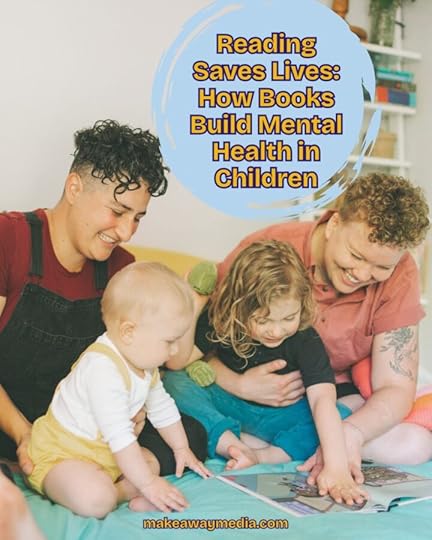
You’ve probably heard the phrase, “Reading saves lives.”
Let’s talk about why this is true.
As a therapist, author, and parent, I’ve seen it again and again:
Books open doors to healing, courage, and hope—especially for children who are struggling. Reading is a crucial component to developing a child’s hoping skills.
In a world where kids are constantly navigating pressure, isolation, and confusion, stories provide more than just entertainment.
They provide lifelines.
Here’s how:
1. Books Help Kids Feel SeenWhen a child reads about someone who looks like them, feels like them, or hurts like them, they suddenly realize:
“I’m not the only one.”
That moment of connection can be everything. It’s a mirror. And it tells them they’re not invisible.
Through characters’ journeys, kids learn:
How to name their feelings
How to express big emotions in healthy ways
How others overcome sadness, fear, loneliness, or bullying
These stories gently model the kind of emotional intelligence we wish every school could teach.
Reading with your child gives you a natural, non-threatening way to talk about hard topics like grief, anxiety, bullying, and yes—even suicide.
A page in a book can open the door to a conversation they didn’t know how to start.
Reading doesn’t just help a child understand themselves—it helps them understand others.
Empathy is one of the strongest protective factors for mental health. The more we raise compassionate kids, the safer and more supported all children become.
Some books help us escape.
Others help us heal.
The best ones do both.
Books remind children that storms don’t last forever, that they are never alone, and that they have the power to change their story.
Final Thought for Parents:You don’t have to have all the answers.
You don’t have to fix everything.
Sometimes, giving your child the right book at the right time is one of the greatest gifts you can offer.
So yes—reading saves lives. This is a completely accurate statement and the reason why we do what we do at Make A Way Media through the books we publish and also through the work of the K Club.
And it might just save the heart of someone you love. Comment below with some of the books that help give your children a dose of hope!
The post Reading Saves Lives: How Books Build Mental Health in Children appeared first on Make A Way Media.
April 19, 2025
How Do I Know When My Child Needs to See a Therapist?
 When Should My Child See a Therapist?
A compassionate guide for parents who want to get it right—but aren’t sure what the signs really are.
First, let’s begin here:
You don’t have to wait for a crisis to reach out for help.
Therapy isn’t just for emergencies—it’s also for emotional strength-building, learning how to cope, and having a trusted place to be fully seen and heard. Therapy is for asking the question: Do I need a therapist?
Here are some signs that it might be time to seek the guidance of a licensed therapist:
Emotional & Behavioral Red Flags:Big emotional swings that seem out of proportion to the situation
Sudden withdrawal from friends, family, or activities they once loved
Persistent sadness, irritability, or hopelessness
Explosive anger or aggression that seems hard for them to control
Excessive worry or fear that doesn’t go away
Difficulty sleeping or nightmares that don’t improve
Saying things like “I don’t want to be here” or “What’s the point?”
Other Warning Signs:They may have experienced bullying, trauma, or a major life change (divorce, death, move, etc.)
Your child may be engaging in self-harm or talking about it
They are avoiding school, complaining often of physical symptoms like headaches or stomachaches with no medical reason
They are asking questions or making statements about suicide
Your child is having difficulty problem solving or making decisions Signs They Might Be Ready for Therapy:
Your child might tell you they feel “overwhelmed” or like they “can’t handle it”
They’ve asked to talk to someone else besides you
They seem tired of being misunderstood
You feel like you’ve tried your best—but they’re still struggling
Your gut says something’s not right.
How to Say It:
“I love you so much, and I can tell something’s been hard for you lately. I want to help, and I think talking to someone whose whole job is to help kids feel better could be really good for you.”
“It’s not because you’re broken—it’s because you deserve support.”
“We all need help sometimes and I am not afraid to tell you that I don’t have all the answers.”
“We go to the doctor when our bodies don’t feel quite right. We go talk to a therapist when our minds feel that way.”
“I am going to go with you. We will figure it out together.”
 Final Reminder:
Therapy is not a sign of failure.
It’s a sign of strength.
It’s like asking for a guide when the trail gets steep. And there’s no shame in that—only wisdom and love. It is better to seek help than to believe you have to struggle alone.
The post How Do I Know When My Child Needs to See a Therapist? appeared first on Make A Way Media.
Conversation Guide: Talking to Your Child About Suicide & Bullying
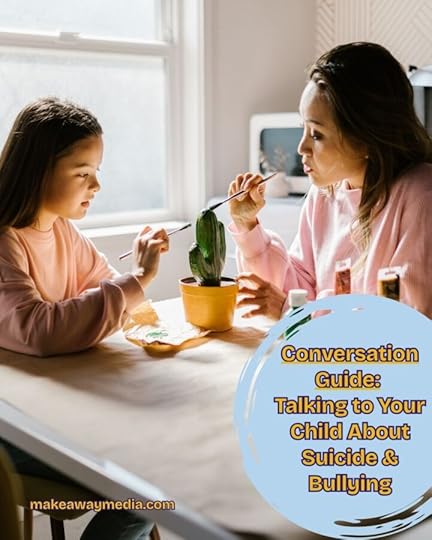 Let this be your gentle guide through the storm. Just like your child is never alone with you, we will not leave you to handle this storm alone. Depression thrives in the dark. The way you shine the light is through talking about what the most guarded thoughts your child has. Do not be afraid to talk with a counselor at school or a licensed therapist about what your child is experiencing.
Gentle Questions That Open the Door“There’s something important I want to talk about—because I love you. And no matter what, I’m here to help you feel safe and supported.”
“Have you ever heard someone talk about suicide at school or online?”
“Have you ever felt really overwhelmed or sad and didn’t know how to explain it?”
“Do you ever feel like no one understands what you’re going through?”
“Has anyone hurt you with words, online or in person?”
What to Say If They Share Something HeavyHow to Normalize Emotional Pain“Thank you for telling me. I am so proud of you.”
“That sounds like a really big storm. Did you know that storms always pass. This one will, too and we will get through it together.”
“I cannot explain everything, but I know for sure that this world needs who you were meant to be.”
End With This Promise
“All feelings are okay. Even the messy ones. Feeling sad or scared doesn’t mean you’re broken—it just means you’re human.”
“It’s okay to feel lost sometimes. You’re never alone on this journey. You have me!”
“Pain is nothing to be ashamed of. Let’s talk about it.”
“No matter what happens, you can talk to me. You will never be in trouble for being honest.”
“There is nothing you could ever say or do that would make me not love you. Ever.”
“I am so proud of you. You’re stronger than you think. And we’re going to make it through this storm together.”
Find more help on this subject here.
The post Conversation Guide: Talking to Your Child About Suicide & Bullying appeared first on Make A Way Media.
Parent Checklist: What Every Family Should Know About Suicide & Bullying
Because the storm will pass—and our children need to be here to see the sun again.
Know the Warning SignsTalking about wanting to die or disappear
Withdrawal from friends, family, or favorite activities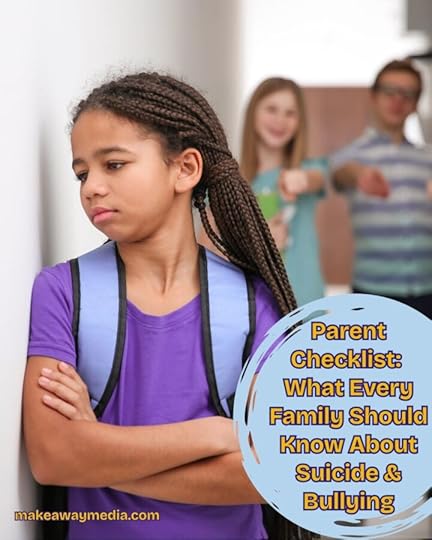
Drastic changes in mood, sleep, or appetite
Not wanting to go to school or wanting to change routinesGiving away treasured items
Expressing hopelessness, shame, or feeling like a burden
Crying a lot, expressing fear or talking about being bulliedIncreased aggression, anxiety, or risky behavior
Daily Connection HabitsWe often ask generically, “How was your day?”
Ask real questions:
“What was hard today?”
“Did anything or anyone make you feel small?”
“How are you really feeling inside?”
Build a family ritual of “Feelings Check-ins”
Encourage open expression of ALL emotions—no shame
Digital AwarenessKnow what apps your child is using and who they’re talking to
Review their apps and conversations on all platforms. If they resist that is even more reason to check.Talk regularly about online bullying or exclusion
Ask: “Has anything online made you feel upset or scared lately?”
Reassure: “No matter what it is, we’ll face it together. Every storm runs out of rain.”
If You Suspect Suicidal ThoughtsDon’t panic. Be present. This is something that can be treated.
Say:
“Sometimes bad emotions are like really bad thunderstorms. Sometimes they are so strong and so bad we feel like they will never pass—but they do. They always do. You need to be here to see tomorrow.”
Don’t dismiss or downplay. Don’t argue or try to tell them how they feel.
Seek immediate help:
Contact a therapist or counselor
Call/text 988 (Suicide & Crisis Lifeline) or your local crisis line
Safe Space ActionsIdentify 3 safe adults your child can talk to– write this down!
Create a “Help Me” code phrase they can use with you
Children need an outlet other than school. They need clubs, sports, or groups.Post a note somewhere that says:
“Today will pass. The world needs you. You are loved.”
Find more resources here.
Note: Books are magical and help children in so many ways. “Every storm runs out of rain.” is one of Maya Angelou‘s sayings.
The post Parent Checklist: What Every Family Should Know About Suicide & Bullying appeared first on Make A Way Media.
We Need to Talk About This—For Our Children’s Lives
Today I’m writing to you not with lighthearted updates or feel-good news—but with something much heavier, and urgently important.
This week in Louisville, we lost a 12-year-old child named Silas to suicide. He was bullied for years. He was only 12. And he saw no other way out.
As a therapist, a mom, and someone who has devoted her life to hope and healing, this shook me deeply. And it should shake us all.
Here’s a truth we can’t ignore:
Suicide is now the second leading cause of death for children between the ages of 10 and 14 in the United States.
Not car crashes.
Not cancer.
Suicide.
Let that sink in.
Someone on social media commented that they could not believe a sixth grader would do this. The truth is, this is not an anomaly. This is an epidemic.
Our children are hurting. Silently. Relentlessly. And we cannot afford to whisper around this topic anymore.
We must talk about suicide. We must talk about bullying. We must equip our children with the words, the safe spaces, and the belief that their pain is not shameful—and it is not permanent.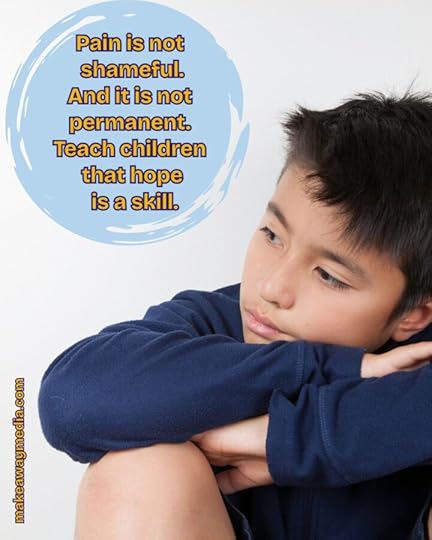
Bullies (and depression) thrive most in darkness. How many times have you heard about parents who wanted to go to the school to address bullying and the children begged them not to? Out of fear that it would only make matters worse. Bullies shame children and then make them feel more shame for standing up for themselves. Depressed feelings leave your child without the words they need to alert others to how bad this problem really is for them.
As a therapist, I want to offer a few simple but powerful ways we can begin having these critical conversations:
What You Can Say to Your Child“If you are ever hurting so badly that you don’t know what to do, you can tell me. You will never be in trouble for being honest about how you feel.”
“There is nothing too big or too scary that we can’t face together. You might feel alone, but I need you to hear me when I tell you that you are never alone.”
“If someone is hurting you—at school, online, or anywhere—you don’t have to protect them. You need to protect you. And I will help you do that.”
“Even if you don’t feel like it now, you matter more than you know. Your life matters. Your story is not over. In fact it is just beginning.”“Things get better. You need to be here to see it.”What Not to Say“You’re being dramatic.”
“Just ignore it. It will go away.”
“You don’t really feel that way.”
“You’re too young to be depressed.”
Our children are living in a world that often overwhelms even adults. What they need is not our dismissal—they need our presence, our honesty, and our ability to listen without judgment. We can also be blunt and tell our children that we do not have all the answers, but together we will solve this problem.
I wish we didn’t have to talk about this. I wish we could stay in the land of bedtime stories and childhood dreams. But the truth is, hope is not just a feeling—it’s a skill we must teach. And sometimes that skill starts with saying the hard things out loud. Sometimes it starts with turning on one light at a time. Our children just don’t have the words to tell us how deep their pain is. There is no way we can expect them to understand something we cannot even understand. Don’t fear not knowing. Fear not speaking.
To Silas’s family, we send our deepest love. And to every child who is suffering quietly, we say: You are seen. You are needed. You are not alone. Find the light that will help you. Find the light that will help you. They are there. They exist. I promise.
Please share this message with someone who needs it. Feel free to forward this email to the families you know whether you think they need it or not because we rarely know the struggles that live inside another home, let alone another mind. And if you’re a parent, guardian, or teacher—please, start the conversation today.
You will find even more resources here. If you would like to support Silas’s family you may do so here.
With love and hope that we will rise together as the village we were meant to be,
Deedee
Founder, Make A Way Media
The post We Need to Talk About This—For Our Children’s Lives appeared first on Make A Way Media.