Manali Manan Desai's Blog, page 44
February 25, 2021
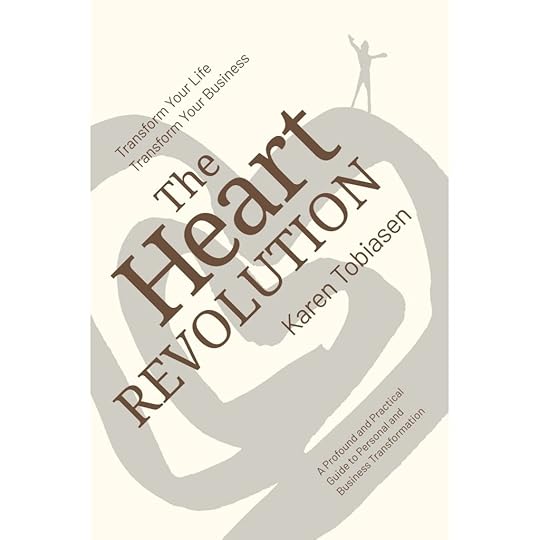
The Heart Revolution® by Karen Tobiasen
Book blurb:
The Heart Revolution: Your profound and practical guide to personal and business transformation. What if change wasn’t something we just “managed to survive”? What if change and transformation is where we thrive and come fully alive?
Change and disruption constantly affects our lives and businesses. Another Industrial Revolution and technology’s advancement is making traditional jobs and industry models obsolete. Regulation, climate change, social justice movements and a global pandemic shows transformation isn’t just inevitable, but necessary for solving our challenges.
The Heart Revolution is your profound and practical guide to doing just that; helping you walk beyond your comfort zone, tear down your internal blockers and follow the Ten Steps of Transformation®. And as you transform, you transform your business – empowering you to stay resourceful, relevant and resilient – wherever you are in your organization, your life and the world.
Fear of change is human, but unhelpful. It drives transformations to fade or fail, making companies live shorter, and many of us exhausted and disengaged from work.
But there is another way; for why, how and what we transform.
It starts with you and me. With every one of us building and sustaining our capacity to transform. By finding deeper meaning to shift exhaustion to excitement. By shifting mindsets to systematically replace fear with love. Because as provoking as it sounds, love is a life and business hack. Not romantic love – but a mindset of love that moves us from a limiting ‘me-focus’, to an expanding ‘we-focus’. A mindset that builds our capacity to solve complex problems and manifest impact for ourselves, businesses and society.
The Heart Revolution isn’t theory; it’s tried, tested and proven practice. It unfolds the Ten Steps of Transformation® – built on neuroscience, psychology, system- and social thinking, and change management – and shares inspiring insights, compelling case studies and practical exercises. It tells real-life stories of transformation at every level – from associate on the shop floor to CEO on the top floor – collected through over 20+ years on the frontline of human and business transformation.
It’s a book that includes and speaks to all of us – at every stage and age of career and life.
Karen Tobiasen’s passion for helping people enrich their lives began when she was a nurse treating terminally ill patients. She saw first-hand how differently people met death, depending on how they’d lived. She took that inspiration into her decades in senior leadership roles working with people and multinational organizations undergoing transformation.
The Heart Revolution is Karen Tobiasen’s powerful invitation to you to disrupt your life – to enrich it, expand your capacity and thrive in transformation. For all of us to not just survive, but come fully alive – as people, organizations and societies.
Genre: Nonfiction/Self-Help/Motivation
Pages: 290
Format: Kindle eBook/Paperback
Price:
Kindle eBook: 99 INR/$12.11Paperback (available only in the US): $29.99My Ratings: 4.2/5
Change is the only constant in our personal and professional lives. This book helps us navigate through planned and unplanned changes in our lives which can help us grow as individuals and as businesses. For anyone looking to bring about a positive development in business and in life, this is a must-read.
The positive impact of choosing love over fear.
What I liked about the book:
–> That it focuses on both professional and personal development, as well as individual and team development.
–> That it tackles a small general concept in a very insightful and lucid manner which is explained very keenly.
–>Happy to see that there is attention being put on this as it is needed in the corporate world where it might be too brutal, fear-based, command and control, toxic masculinity.
–> That it explains the concepts practically with many fictional and real examples. It also strongly elucidates how the heart works and how one should train their mindsets.
–> The author rightfully points out that our thoughts are what make or break us. She has also provided descriptions of how our thoughts work and how they can be slowly and surely modified. This ultimately becomes helpful with chores of mind leading to better productivity.
–>The book lists everyday examples from our routine life which makes it easy to relate and allows the reader to inspect their actions at a personal level.
–> It highlights the subject of transformation that people are ignorant of. Most of the time we tend to stack these transformations as impossible tasks but the book teaches us how to turn them into possible ones.
–> It teaches us to accept and adapt to changes, renovate our thoughts, take on constructive praises, welcome failures and grapple with our problems to reach the goals of life.
What I did not like about the book:
–> At many points it felt more show than tell and I felt myself going, “Get to the point”
–> A few concepts seemed repetitive and beating around the bush. (but this might be more of a ‘me’ thing because I don’t read that many self-help and nonfiction books)
Quotable quotes:
—> Change is inevitable. It is the only constant aspect and therefore our capacity to learn and change is our biggest asset as human beings. The speed of this process is of the essence. Technology sets the pace for how fast we have to adapt. Often, setting it exponentially, a concept we cannot fully grasp as human beings. The world has never been more volatile, uncertain, complex and ambiguous, and we need to learn to see this as an opportunity.
—> We are all perfect CEOs of our own lives and are invited to lead it accordingly.
—> We all need to build the capacity to transform – so transformation does not scare us, but rather enriches us profoundly.
—> When we as humans and business thrive, so will society.
—> We are more than the sum of our parts.
—> We rarely – if ever – achieve anything great alone!
—> The upset with my new boss helped me shift from being a coconut: hard on the outside with an empty core – to an avocado: soft on the outside, yet with a strong core. A movement through a mindset of fear to a mindset of love.
—> We can only change ourselves.
—> Creating safety as a leader is a foundation for peak performance.
—> From a mindset of fear, I generate waste. From a mindset of love … I generate value.
—> I have seen old people dying with regrets and young people dying with grace. It made an everlasting impact on me. It is less the length of your life that matters, but rather how you live it.
—> Death gives the ultimate perspective to life. Not for us to fear, but to understand what good fortune it is to be alive. Seeing death as a perspective to life has formed how I view and interact with the world. We are all privileged to have been given time on this beautiful planet. Life is short. Life is precious. How can we each live life to its fullest?
—> A mindset of fear is one of limitation, protection, scarcity, separation and exclusiveness. It leads also to waste. We want to survive. A mindset of love is one of enough, openness, abundance, integration and inclusion. It creates value.
—> Fear contracts, love expands. Fear diminishes, love enriches. Fear exhausts, love excites.
—> Love is much more than romantic love. Love is a force for good – in all lives, including business lives. It is our heartfelt commitment to be at our best and to do what is best for the totality. It is our commitment to ourselves, our organization, our community, our planet. Love is way beyond feelings. It is a way of being, a way of doing. It is a choice. It is constant practice. It is the reason why we are here. The essence of who we are. In fact, love is all we want.
—> Human transformation enables business transformation and that enables social transformation.
—> How do I do well by doing good?
You do it in big and small ways. When you bring a loving mindset.
—> Doing well and doing good are not contradicting but reinforcing forces.
—> The world is becoming increasingly volatile, uncertain, complex and ambiguous. This requires new organizations, skills and mindsets. If you and I don’t transform, others will be more relevant than us tomorrow.
—> We’re living longer and longer, but these days we’re more exhausted than excited
—> To turn today’s challenges into tomorrow’s opportunities, we need to humanize businesses. When we as humans transform, our businesses will transform.
—> Transformation is an ongoing journey, where you never arrive, but rather constantly evolve, developing your agility,
—> Don’t be shy to focus on you. This is the only place a real transformation can start. Here, you will always be the driver, never the passenger. There is never a dull moment on the journey, even though you are often invited to slow down to speed up. Transformation is like tennis: You never get really good at it unless you practice.
—> Fear can be many different things, including fear of failure, fear of public speaking, fear of losing, fear of the unknown, fear of success and also fear of love. Fear can show up as frustration, anger, shame, blame, exclusiveness, self-protection, self-centeredness, helplessness, manipulation and more.
—> When you choose a mindset of fear, you immediately impact your physical, emotional, mental and spiritual capacity.
—> The fear of failing can make us raise our bar, creating a strong output – at least in the short term, but often exhausting us in the longer run.
—> When we choose short-term before long-term gains, when we choose to stay quiet and safe, it increases the risk of mistakes and – most importantly – of repeating them.
—> When we don’t speak about our mistakes, we will not learn from them.
—> A grateful heart is a healthier heart!
—> Our attitude matters as much as our IQ when it comes to learning and achieving.
—> As you give, you will receive. Love is a non-depleting resource – the more you use it, the more there is. Love is always around; the question is whether you have the courage to live it?
—> My definition of transformation is: ‘A radical change that sets a new direction, doing things differently – creating another level of output. It is a change in appearance, character and perspective. All transformations require change, but not all change is transformational. Transformation means there is no way back. It is a continuous and never-ending journey.’
—> Have you read books before that gave you insight but then you never took it further?
—> Feeling stuck reveals a great potential.
—> When we let go of being afraid of not knowing and approach challenges with more curiosity and openness, we will see the opportunities that exist.
—> When you relentlessly eliminate waste and create value every step of the way, you make things better in every moment of every day through constant innovation and experimentation.
—> We all have the power to have a significant impact.
—> Your first change might be to choose to smile at strangers in an elevator and not stare at your phone.
—> Who are we to point fingers at people stepping into the arena, daring and caring greatly to change something for the better, when we are comfortably observing them from our cozy chair within our comfort zone? From our comfort zone, with these judging comments – we might discourage others from living their life to the fullest, making an impact.
—> Many change leaders did not start by being rich and famous. They took their first brave step being passionate about the topic that was meaningful to them – and one step led to another.
—> Almost anything we think about other people, we can find and relate to in ourselves.
—> Instead of saying: ‘If only … they had as much energy as I have!’ We should say say: ‘Only if I balance my energy, will other people have the space to offer their energy and ideas.’
—> All big changes start small. To change our work and world, we only have to start with one step at a time. One small step – always towards better.
—> Shifting from ‘If only …’ to ‘Only if I …’ allows you to achieve
—> Stress and anxiety exist in the gap between who we are and who we would like to be.
—> The lack of transparency and honesty hinders you from building trustworthy connections to your surroundings and those around you.
—> Many of us waste our time and energy thinking about what we could or should do or what we could or should have done or not done, rather than accepting who we are and focusing on what we want to do.
—> Much energy and thereby waste is tied into ‘should, ought, must’. It feels like a long road that never ends.
—> You cannot pull the grass to grow. It grows when you water and nurture it.
—> You need to slow down before you speed up.
—> Acceptance is not giving in to your life situation and becoming a passive tourist in your life and in the world; rather, it is for you to become aware and to face your reality and then move into action and change.
—> As you practice looking curiously at what is going on inside you, it is rewarding to understand that whereas your thoughts impact you, you are not your thoughts. They serve as important input as to what is going on for you right now. They come and go, like clouds passing in the sky. And the sky (you) stays, even when it is cloudy. Thoughts and feelings are part of you but are not you. Isn’t that a relief? You become more and more aware of yourself, of the world around you and how you relate to it.
—> Feelings give you key input as to what is going on for you right now and what is important for you. Connecting with your feelings is therefore a good way of connecting with yourself. The more you observe and engage with your thoughts and feelings, the more you build your self-awareness and the more emotionally intelligent you become.
—> Presence and focus in all parts of life allow you to connect to yourself and other people, a critical foundation for accepting who you are.
—> Fear often prevents us from tackling our real pain points. When we lose our armor and see and say it as it is – both as human beings and as businesses – we help shape the transformation, so it fits our current reality and our unique situation. We avoid following a generic transformation template that might be money wasted, even though it makes us feel safe for a while.
—> The more you slow down in each of the steps, the more you will speed up your transformation.
—> When you experience positive emotions, including joy, excitement, pride, inspiration and hope, it gives you energy.
—> Finding meaning in life is not always straightforward, but identifying what you really enjoy doing will get you there a little faster.
—> What I give, I receive.
—> You might ask ‘What is it really that drives value or waste in my life?’ The simple answer is: Your mindset.
—> I create my own reality; I change my mind, I change my life.
—> Gratitude has the power to heal, energize and transform lives. It requires courage, combined with self-compassion to change our automatic patterns.
—> My choices are mine to live!
—> Learning every day requires you to hold a mindset of love rather than a mindset of fear, welcoming failure as one of many inspirations for learning.
—> From a loving and learning mindset you start seeing failures as gifts.
—> Mistakes might trigger you, requiring you to slow down, exploring your triggers by asking: ‘What does my reaction to the mistake tell me about myself?’
—> It is not the mistake that is interesting, but rather what you discover about yourself studying your reactions, including how you are judging, defending, camouflaging, avoiding or labeling.
—> Asking for Feedback is core to learning.
—> For you to manifest impact, for you to realize your dreams and your meaning, you need constant inspiration and discipline. Willpower is not enough to make the change happen; rather, the reward you achieve will help you make your change last.
—> We tend to believe that doing more is better than doing less, despite the proven impact of focus yielding much higher outcomes and contributions.
—> Your life is essentially the sum of your habits. How in shape or out of shape you are is a result of your habits; how happy or unhappy you are is a result of your habits; how successful or unsuccessful you think you are is a result of your habits
—>Your brain is lazy, but it is also flexible, provided you work proactively and intensively with it.
—> When you realize something is healthy to you, make it a habit! When you involve other people your success rate increases.
—> Excuses give you permission not to change your behavior in order to manifest what you know is good for you and/or your company.
—> What I attend, I attract.
—> Slowing down at first prevents you from wasting any time, energy or any other resources chasing things less relevant and critical.
—> To create real transformation, you have to look closely at how you operate, including your blind spots, biases and assumptions.
—> When listening to people genuinely, we are likely to become more productive as we, via our listening, help other people to become psychologically safe and less defensive. Good listeners generate more trust and creativity in others. Being listened to makes us more relaxed, more self-aware and more willing to reflect in a non-self-defending manner. Listening enables us to collaborate and connect. Through our listening we can help people change
—> You can turn challenges into opportunities by having a different perspective on your business.
—> For any problem, we hold the keys to the solution.
—> Qualities of courage include bravery, willingness to confront agony and tolerate pain, accepting uncertainty, the preparedness to do the right things, perseverance and patience. Without an appropriate balance between fear and confidence when facing a threat, you do not have the courage to overcome it.—> —–>Not everything of importance can be measured and calculated or found in an Excel sheet.
—> It works when you work it.
—> Work has the potential to become your life enricher and a great place where you can realize your meaning. It is an invitation to all of us to find a role where we can live our passion – what we love doing – with the condition that it contributes to others.
—> The responsibility you have as an individual can both be challenging and incredibly liberating. You are the master of your own experience. Your awareness of your context, conditions and situation allows you to take conscious choices, moment by moment. The mindset shift that holds the greatest potential for you, and for all of us, irrespective of which organization we work for and where we are in life, is the mindset shift from fear to love.
—> Many words, including hope, try, believe, maybe, might, perhaps, probably, possibly, somewhat, kind of, sort of and really, are all fear-activated modifiers, distorting the truth.
Buying details:
Amazon IndiaAmazon.comAuthor’s social media handles:
WebsiteInstagramFacebookLinkedIn

February 24, 2021
The Home-Coming
The rented flat was nothing more than a place to sleep at night for him,
With most of his days spent in the office or traveling to various locations across the world for work,
He hardly ever had time to stay in one place for more than two days at a time, even his own house.
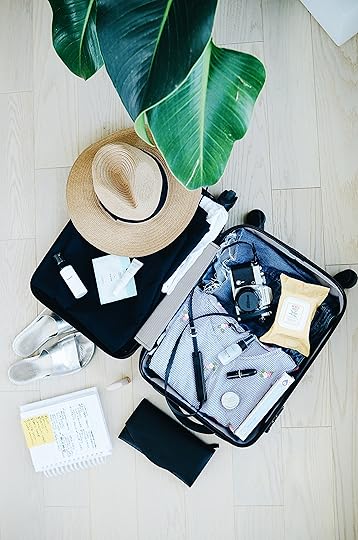 Photo by STIL on Unsplash
One thing he always prided himself on was how easily he adapted to new spaces, without much bother about how it looked or felt,
As long as he had his computer, a good internet connection, his earphones, and occasionally a book with him, he had everything he needed.
Things like food, decor, natural surroundings, sunsets, the hustle and bustle of people, etc, never mattered to him, neither did he bother to notice them.
 Photo by Annie Spratt on Unsplash
Having always moved around-the-clock, the lockdown was for him more than just about staying indoors,
It meant a pause, it meant life coming to a halt, it meant staying at one place for more than just a few days.
The work continued, but he missed the excitement that came with it.
 Photo by Drew Coffman on Unsplash
In the house, all day and with him having no choice but to use it for more than just sleeping,
He began noticing just how beautiful it was,
From the full-sized windows that opened to a spacious balcony garden, to the cozy swing chair and bookshelf next to it,
From the vintage chairs and tea table to the plush sofa and four-poster bed,
Each space became an assigned spot for either, working, reading, working out, having meals, or just basking in the sun,
From someone who never bothered about his surroundings, had now become a man who looked forward to picking a spot for everything.
 Photo by Stephan Bechert on Unsplash
The rented house finally became a space he loved to spend time in, as he not only did his professional work, but even cooked, cleaned, read books, tended to the plants, watched TV, and had time to connect with friends and family.
Each corner became a loved spot, as he finally came to understand the phrase ‘Home Sweet Home’
 Photo by United Nations COVID-19 Response on Unsplash
February 23, 2021
The Death of Me by Chitrangada Mukherjee
Book blurb:
Sukanya Swaminathan is dead. She committed suicide by jumping off the terrace of her building, while her son slept in his room and her husband worked on a high priority project in his plush IT office.
It does seem like a case of suicide. Except for the fact that Sukanya’s face was burnt by acid.
As Inspector Raman and SI Nair investigate the death of a forty five year old housewife, they are befuddled by the complexity of the case.
Was Sukanya just another statistic? A depressed housewife jumping to her death. Or, did someone bump her off? And most importantly, what is Sukanya’s side of the story?
Genre: Fiction/ Psychological thriller
Pages: 53
Format: Kindle eBook
Price: 99 INR/ $3.24
My Ratings: 4.3/5
Sukanya Swaminathan is a housewife with a seemingly perfect life. Her marriage of 24 years with a husband she cares about and their loving son are proof of that. To society, they appear to be the ideal family. But suddenly on one night, Sukanya commits suicide. Why would she do that? Is it suicide at all?

Is it suicide or murder?
What I liked about the book:
–> The story towards the empty and meaningless existence of many housewives in India who are taken for granted by their families and feel unloved/unwanted in their own homes.
–> It is a quick read that can be finished in a single reading of an hour max.
–> You know there is foul play, but you won’t be able to guess the truth.
–> The story keeps you hooked till the end.
–>That the story is narrated in the form of POVs, of Sukanya and the two policemen conducting the investigation of her death.
–> The USP of this book is its simplicity. This is the story of me and you. This is a story of us.
–> The dark and sometimes silly humor.
What I did not like about the book:
–> The conversations between the two inspectors are confusing and felt beating around the bush at times.
–> The characters of the neighbors and their illicit affair seemed important to the plot. I wished they were explored more.
–> The book felt a tad costly for the length which is just 53 pages.
–> The suspense becomes kind of a giveaway after the first few chapters (but this could be just for me because I have read so many thriller books)
Quotable quotes:
—> Life gets so boring at times that only a vision of death brings the focus back to life.
—> Things never work the way you want it to. Does it?
—> Death didn’t scare him anymore. It had become routine. A daily occurrence. And to face it every day, he resorted to using humour.
—> It has been twenty four years since then and life has become fixed and certain. Sometimes, I wonder if the uncertainty and confusion of my youth were better.
—> He was a Malayali from a rich family. How else can one afford to make a living and buy a home through painting?
—> Housewives did commit suicide across India. The statistics were astoundingly high. They comprised the largest chunk of death through suicide, second only to daily wage workers. Every day more than sixty housewives across India died due to depression, economic dependence, arranged marriages, domestic violence, early motherhood and low social status.
—> You don’t have to burn your finger to know that fire burns you.
—> There’s something mysterious and adventurous about doing something the world tells you not to.
—> We do what is forbidden. Life becomes boring and stale otherwise. Routine work and family become tedious after a while. Something new takes us in a different direction.
—> “You know what the ocean reminds me of?”
“Childhood.”
“The mind of a woman. Deep, volatile and mysterious.”
Buying details:
Amazon IndiaAmazon.comAuthor’s social media accounts:
WebsiteInstagramFacebookLinkedInFebruary 22, 2021
A Good Change (A Poem)
He walked out of his home, smiled at the girl opposite door, but did not wait to stop and talk, after all
‘What would people say if they saw him talking to the girl next door?’
 Photo by Jon Tyson on Unsplash
At the office, he cracked jokes and was a fun-loving guy, but only when his juniors were around, with his boss and seniors he was a serious guy, after all,
‘What would they think about him if he joked and fooled around?’
 Photo by krakenimages on Unsplash
He reached home at a decent time, and hardly ever went out or had friends over, after all,
‘What would people say if they heard noises from his house or saw him coming home late?’
 Photo by Chris J. Davis on Unsplash
When the lockdown came, this pattern of living in a shell became deeper. With no excuse to step out of the house, he craved for his mind to worry about
‘What would people say or think?’
 Photo by Erik Mclean on Unsplash
With no human interaction for weeks, the only thoughts were of
what he could have done and then what he could, would, and should do with his behavior patterns now.
 Photo by Qijin Xu on Unsplash
Once the pandemic settled and life was to settle into its previous pattern again, he befriended the girl next door, became the office entertainer, and went out more, even after work hours. He was finally living for himself. After all, he had realized,
‘Who cared what people would say or think if you weren’t happy yourself?’ ‘What was life with or without lockdown, if your heart and mind itself is restrained and locked down?’
 Photo by MARK ADRIANE on Unsplash
Thank you for reading. Do check out my other similar stories.
Self-Growth: A time when personal growth happened in each individual around the worldHouse Arrest:A lockdown friendship taleLockdown Bondings: When it lifted, things changedFebruary 21, 2021
Lockdown Bondings
A little conversation with the self every day,
And something new she learned about herself.
 Photo by Darius Bashar on Unsplash
Discussions with dad every day,
And both dad and son got to know each better and in a new light.
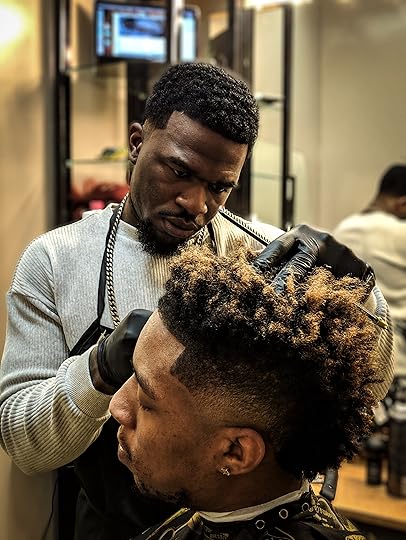 Photo by Obi Onyeador on Unsplash
Cooking and cleaning with mom every day,
And both mother and daughter grew to learn from and admire each other.
 Photo by Walter Gadea on Unsplash
Video calls with friends every day,
And all realized about missed opportunities, vowing to meet each more often.
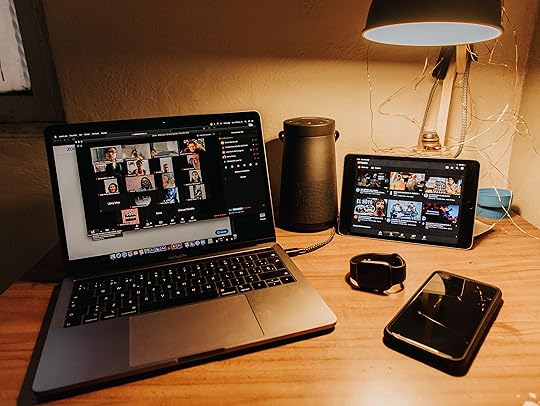 Photo by Gabriel Benois on Unsplash
Playing games with each other every day,
And all learned something new to play.
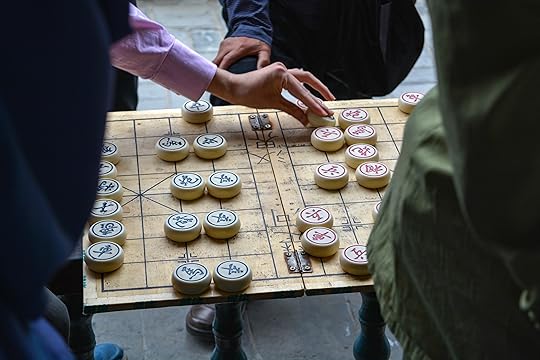 Photo by Damian Patkowski on Unsplash
Watching movies and serials on TV every day,
And they came to know about old and new forms of entertainment.
 Photo by Charles Deluvio on Unsplash
When the lockdown ended they missed that every day,
Despite being grateful about the freedom they craved during all those everydays.
When the lockdown ended they missed that every day.
****
Thank you for reading. Do check out other similar stories.
Equality, Finally: It took a pandemic to get hereNow & Then: Bridging the generation gapLife in Lockdown: What to do?February 20, 2021
Self-Growth (A Poem)
“Who reads poetry? It’s so boring, and I never understand it”
This used to be his response when anyone asked about his favorite poem.
Who would have thought it would become his favorite hobby to read and write such lines when the lockdown came.
 Photo by Priscilla Du Preez on Unsplash
“I can’t paint even if someone made me do it at gunpoint!” Would be her response when she admired paintings by artists and someone whether she was an artist herself.
Who would have thought she’d herself become a self-taught painter because of the lockdown.
 Photo by Alice Dietrich on Unsplash
“I find cooking to be the most boring and menial job”
Was something he used to say when his wife asked to help in the kitchen.
Stuck away from home during the lockdown,
it became a necessity for him to learn how to cook.
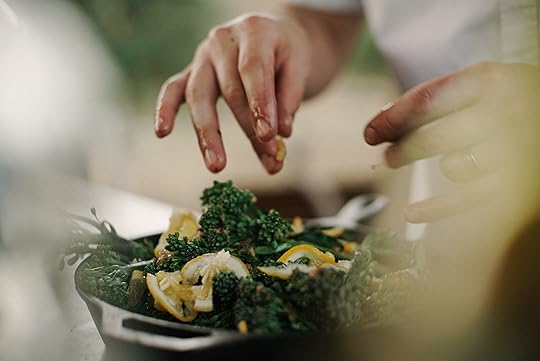 Photo by Max Delsid on Unsplash
“Technology confuses me and I can’t use phones for anything more than making calls”
This was her response when her children used to ask her why she didn’t use her cellphone for entertainment.
Being away from her family during the lockdown,
she learned to make video calls, listen to music, click photos, read books, play games, and do almost everything on that single device.
 Photo by Raj Rana on Unsplash
“Baking seems so tedious and complex. I’d rather order from a bakery than put in so much effort”
That is what she used to think about making a cake or cookies at home.
With her birthday falling during the lockdown, she couldn’t have a cake to cut, so decided to finally learn baking and ended up finding a new passion and hobby.
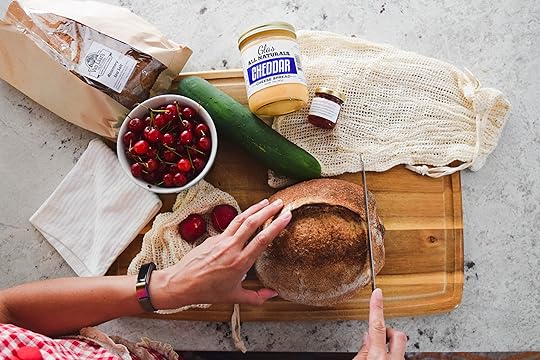 Photo by Grace O’Driscoll on Unsplash
Locked within their homes, either alone or with someone, people finally learned some essential life skills or found a hidden talent.
The lockdown during the pandemic was hence remembered as a time when personal growth happened in each individual around the world.
 Photo by Sincerely Media on Unsplash
Thank you for reading. Do check out my other similar stories.
House Arrest: A lockdown friendship taleLockdown Bondings: When it lifted, things changedEquality, Finally: It took a pandemic to get hereFebruary 19, 2021
A Pinch of Freedom (A Short Story)
The simple click of locking of the door felt like music to her ears. No sooner did the door lock than she ran to the TV room, got hold of the remote control, and switched on the TV. Whoever said chocolate gave the most satisfaction had never had a true taste of freedom! This was freedom for her, being able to do what she wanted for those few hours without anyone telling her, “Don’t stand near the window, what if somebody sees you!” or
“Why did you open the door? We don’t want anyone knowing of your presence in the house.”
 Photo by Mar Bustos on Unsplash
For someone who hadn’t stepped outside the house without being completely covered from head to toe and that too with someone always by her side making sure she never went out of line, freedom meant being alone. It was during those hours when nobody was at home that she felt herself relax and do anything she wanted within the four walls of the house.
It was during one such time that she had dared to come out of her room and explore the house. That had been her first pinch of freedom. That was the first time she wasn’t scared of someone telling her off. In that dark house and with the doors and windows shut tight she felt free; she felt brightness. In fact, she preferred this overstepping outside the house.
From that day onwards, she began exploring more and more. The most joyous moment for her was finding the TV. She remembered how she had to struggle to get it started. It took a couple of days but boy! What joy it brought on when the colors and the people and the places on that 25-inch screen brought the whole world to her in those few hours of respite.
She had to be careful though, of course. Because if anyone found out what she did, even this little freedom would be snatched from her. The people on TV brought the world to her in those few hours and in that tiny space. This wasn’t possible for her when she was out of the house!
What an irony it was that what everyone else termed as ‘freedom’ was out in the world, she understood and appreciated it in terms of confinement within her own house.
 Photo by Joshua Hoehne on Unsplash
Even when she did step out (which was quite rare in itself) she had at least two pairs of eyes constantly eyeing and following her movements. One step out of line and she was admonished for it for days together.
Other than the TV, there were books too! The books were stocked in her father’s library and even one book here and there would make him suspicious so she had to be careful about putting the books where they were. And these took her to a world outside this world. It was the words in the books that inspired her. She didn’t have a pen to write with or a book to write in but knew how to read. It was one of those few things she was taught and allowed!
The TV brought her the world and the books took her out of this world. In those few hours, she became everything she wanted to! She slowly started putting her thoughts into words and they flowed out of her like a prisoner in chains.
The bird chose the cage and not the other way round
It liked the captivity inside rather than the freedom of the world around
It knows not how to escape and does not want to either
The cage is safe and secured but the outside offers neither
Unsure of what is out there and scared of it too
It prefers being a safe prisoner rather than being part of a lost crew.
There were many such poems, couplets, musings, and rants that she had written over the past year or so. She kept them safe under her bedding as she knew if someone ever came across them she couldn’t even fathom to think what would happen. She wrote these on pieces of paper she stole from her father’s bin every day. She could not risk using unused paper from his diary or books. That would be immediately noticed by her sharp father. This is why she used discarded and used paper bits. She felt even that was amusing! A used piece of paper for thoughts of a useless person; she smiled thinking about it every time she picked up a paper from the bin.
A discarded piece of paper
Finds it worth as a scraper
Useful to a useless person
The paper avoids things from getting worsen
Both feel they are worthless
But each other they help nonetheless.
True to her thoughts she did like it here because this was a known and safe place. Though she was bound, she knew there was freedom in that too. She did not crave complete freedom as she did not know what that was. But she kept hope alive through the TV, books, and her own musings.
She knew there was no way out and she wasn’t looking for any. But she also knew it could change, as the future holds hopes for all!
 Photo by Mat Reding on Unsplash
Note: This story was originally published on NakedTruth.in
February 18, 2021
A Little, A Lot (A Poem)
Laugh a lot,
But cry a little too.
Smile a lot,
But frown a little too.

Photo by Lesly Juarez on Unsplash
Learn a lot,
But teach a little too.
Speak a lot,
But listen a little too.
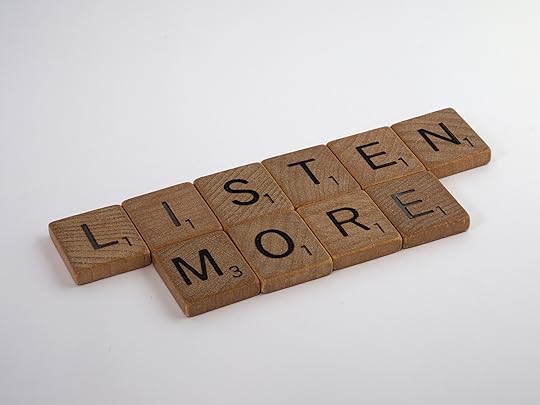
Photo by Brett Jordan on Unsplash
Work a lot,
But relax a little too.
Spread happiness a lot,
But share your sadness too.
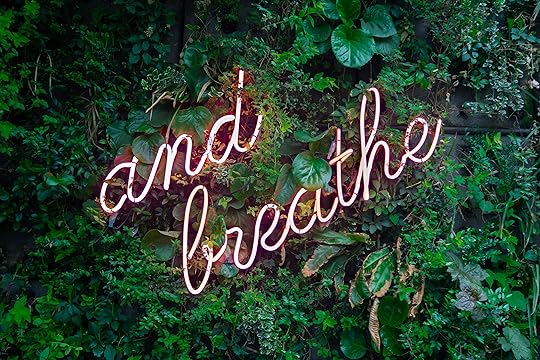
Photo by Max van den Oetelaar on Unsplash
After all, life is about living a lot for yourself, every day,
But also about, dying one day, leaving good and bad memories for others, to remember your every days.
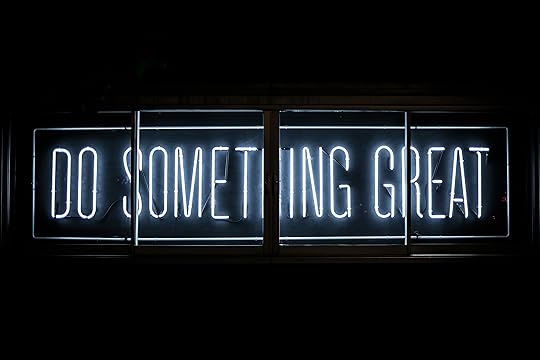
Photo by Clark Tibbs on Unsplash
February 17, 2021
Stretch it Out ~ A Poem
That’s a bit of a stretch,
Said the pessimist.
Let’s stretch ourselves a little more and we’ll get there,
Said the motivator.
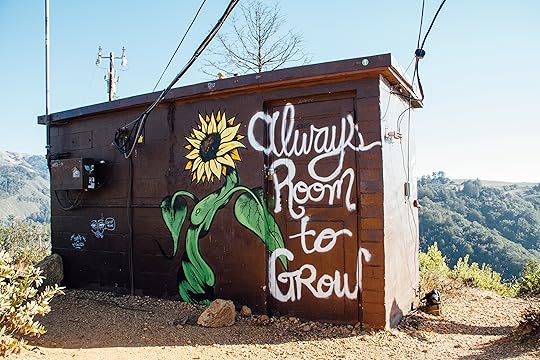 Photo by Kyle Glenn on Unsplash
Stretch your arms and legs for a bit of exercise every day,
Said the doer.
I stretch my body enough for the work I do every day,
Said the sloth.
 Photo by Shashi Ch on Unsplash
Don’t stretch yourself too thin,
Said the condescending.
Spread yourself thick,
Said the considerate.
 Photo by Minh Pham on Unsplash
This poem is in response to the weekly poetry prompt on Writer’s Digest. The prompt for this week is to write a stretch poem.
February 16, 2021
Change is The Only Constant- a poem
I cribbed about not being able to finish my daily tasks,
Also making me anxious about work-life balance.
A simple change of waking up an hour early every day,
and the problem was resolved.
 Photo by Jess Bailey on Unsplash
I always marveled at how my mother managed to cook well every day.
A simple look at the way she did things, aided by help from YouTube,
Which helped me learn and gain confidence as I began to cook regularly,
and I could do it too.
 Photo by Kevin McCutcheon on Unsplash
I could only read a handful of books every year,
It left me unhappy and highly unmotivated to write,
A simple target of reading just 25 pages every day,
and I am now able to read a handful of books every week.
 Photo by Joel Muniz on Unsplash
“I don’t’ have time” was my excuse to justify the increasing weight,
Looking at myself in the mirror made me cringe one day.
A change in my daily diet mixed with an hour’s exercise every day,
and “I can manage time to focus on my body” became my mantra.
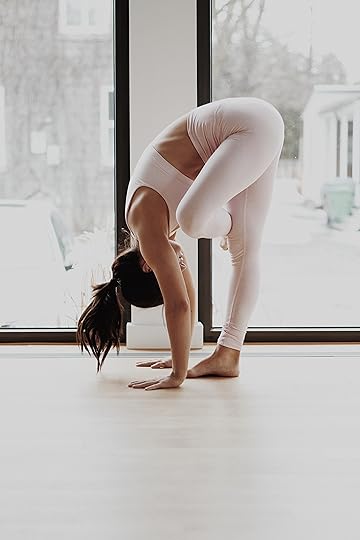 Photo by Mathilde Langevin on Unsplash
I envied others and wondered ‘How are they doing better than me?’,
A change in this mindset and learning ‘How are they doing it?”
Now I get inspired, inculcate their habits in my own way,
and am able to improve my productivity every day.
 Photo by Tim Mossholder on Unsplash
This poem is in response to Tree Langdon’s prompt to write a poem about Routines and Change.