
Arthur Janov's Blog, page 19
July 31, 2015
On the Difference Between Abreaction and Feeling (Part 3/9)
A Syndrome of Failure
When abreaction becomes an embedded groove, it’s like a hellish path to nowhere. It is a defense disguised as a feeling, so it creates no insights and produces no resolution. Instead, abreaction promotes recurrent act-outs that can get reinforced by repetition. When powerful first line is present it doesn't generate genuine insights. In fact it can give birth to fake or far-out "insights." That is the danger of so-called rebirthing therapy, which deliberately plunges patients into first-line pain out of sequence, when they are not ready for it. The technique overwhelms the integrating capacity of the brain and the patient is flooded with strange ideas and bizarre notions. Suddenly, he is “at one with the Universe,” or perhaps “merged with the Almighty.” And if the therapist is mystical, he may not find all this so strange. I have seen people who have gone to rebirthing centers and come to us pre-psychotic. (More on the dangers of rebirthing therapy in a moment.) In these cases, the sequence or order of feeling has been interrupted. The result is serious; we simply cannot order evolution around but rather, we must obey its dictates. Clinically, that means knowing how to identify the right feeling track for the patient and keeping the session on that track, a skill that is trickier than it sounds.
Since abreaction is not curative, patients are trapped in a forever need “to feel.” Nothing is ever resolved so the pain is never felt or emptied out. Thus, in a very sinister way, abreaction can induce a recurrent neurotic behavior that mimics primalling. The pain is forever present, so people are more likely to be triggered. In fact, it is more present than before the abreactive process set in, because all these triggered feelings are called up into consciousness without ever being resolved. They are 'there" all the time, ready to be triggered again with very little provocation.
Abreaction creates a closed circuit of pain, an endless loop travelled over and over whenever part of it is triggered. And every trigger – however different it might be – will bring up the same abreactive feeling: "I want to die. I am in too much pain. I want to die." It will not be attached to anything specific at any time and will remain a litany, or a series of sensations repeated forever. Like a starved monster, abreaction will swallow all these different triggers and feelings to incorporate them into the same loop of physical sensations and/or disconnected feelings. They are all processed by the same defense system. It is truly amazing to contemplate the brilliance of a defense system that can reroute painful feelings into abreaction in order for them – the feelings – to remain unconscious.
Patients who abreact become very entrenched in their "primal” style and very resistant to admitting that what they are doing isn’t "the right way." And of course, they aren't open to change it. Why? First, because it means to them that they aren't doing their therapy right, a reaction associated with feelings of "I am wrong/bad." Secondly, it is hard for them to accept that all the time, effort and money spent for "feeling" was actually a waste. It is hard to accept that what they were doing was not good therapy and, in fact, might have harmed them.
Another element that also makes the patients resistant to change is that abreaction can make them feel better temporarily. Indeed they have released some tension. However, they could run a few miles and have the same result, a false sense of relief. If the abreaction goes on for years, like in the case of people who self- primal for a long time, it may not be reversible: the grooves are too strong as they have become a neurological defense in and of themselves. Most of the time, this abreactive groove is powerful, persistent and deeply entrenched.
I remember the case of a woman who had been self-primalling for about 20 years somewhere deep in a very remote part of the world. Her style was a persistent screaming. That is what she thought the therapy – "The Primal Scream" – was all about. She could go on screaming for hours in a very piercing voice, at the top of her lungs. It was, of course, devoid of all real feeling, content, context, and resolution. She didn't know why or about what she was screaming; she had no memories attached to it. She did "feel" like screaming because "she was in so much pain." It was very hard to listen to, and totally unmoving. As we might expect, she never had any insights and wasn't getting better. Reversing that groove proved to be very difficult.
Trying to stop a patient from abreacting and switch to a whole new way of "really feeling" the pain is usually a long and difficult conversion. That is because the defenses have been reinforced by the abreaction. So trying to get to these real feelings, with all their pent-up force, immediately summons the abreactive defenses created precisely to keep them at bay. The patient is pulled into the abreactive neurological groove, where they feel comfortable. Trying to reverse the pattern can be even more painful than in the regular process of tearing down defenses in therapy. Some patients have never been able to finally annihilate the abreactive trend, so sadly they never get better.
Ultimately, the clinical outcome of abreaction is a syndrome of failure. No insights, no resolution, no getting better. Same act outs, same symptoms, sometimes getting worse. Mostly the tragedy in abreaction is that the patient is going through all this agony forever and with no pay off.
In contrast, real feelings don't need to be felt forever, there is an end to them. In Primal, beyond a certain amount of feelings that had to be experienced over and over for a while – depending on how much pain was attached to them – the need to feel decreases with each felt feeling until, at some point, we hardly ever have to "feel" the old pain again.


July 29, 2015
The Sensory Window Has Closed
I feel that I have to bang on about the sensory window because it has only a brief lifespan. That is why Marilyn Monroe was always headed for disaster. All the adoration in the world was not enough; the expanse of her deprivation equaled her massive need for so-called love. And it could never be fulfilled because the sensory window had close years before. So without knowing it she settled for applause, adoration, interest in her by world leaders and publicity without end. And still she took painkillers by the truckload. You can never love neurosis away. And all those substitutes for what looks like love are just that: substitutes. They are symbolic and never fulfilling except for the moment, which is why there needs to be more and more. And it can never be enough because the exigencies of the need, its asymptote, have faded away, buried with gates shut.
What we can do is offer enough caring and support to keep the pain at bay and well hidden.
So what does this mean in human terms? That the open sensory window when need can be fulfilled has a brief short-life. That once it closes, the symptoms will go on and on. For example, high blood pressure or migraines. When they are of first-line brainstem origin, once the gates are locked we cannot cure the affliction; we can only ameliorate the expression of the symptoms. There is no cure because nothing can penetrate to make a difference. That is why addiction to heavy drugs is so unyielding and obdurate. Once the imprint is locked-in there can be be no change; the gating system makes no exceptions and has no mercy. It is indifferent to other than its key task: to keep pain subdued. Here biology dictates. It keeps pain down so we can go on living and producing. It makes life bearable. And this is why all of the so-called rehab centers fail. They dance around the expression of the pain without ever delving deep down into it. They make the patient feel safe and protected for the moment, but that is the problem. It is momentary.
Until we recognize and accept the powerful force of the gating system we go on trying to do the impossible. Marilyn had the adulation of tens of thousands but when she came off stage she swallowed dozens of painkillers. Clearly symbolic love was and is evanescent. There was the perfect example that we cannot touch emotional deprivation once the gates are closed. She could say a thousand times, “I want to get off painkillers” but ideas and desires are cerebral and are no match for deep imprints. This is assuming that she knew that she was in pain and that she knew where the pain came from. It is never so obvious. And even a therapy such as Primal is no match against the imprint unless the therapy takes place in-house where the patient can be watched and controlled.
That is why an addict needs a nonverbal approach, pills, and sadly, electroshock therapy. We somehow need to get below the top verbal level into the strictly biologic. I am not sure the exact length of the open sensory window but it matches the time when the need is at its height. A mother who falls ill during the birth process cannot come back six months later and love the child daily and expect everything to be fine. There will be a residue of pain. And to make clear, the deprivation of basic need produces unimaginable pain. Of course her love will make an important difference but it may not eliminate the residue of suffering left inside the baby while the mother was away at a hospital. And this is what is diabolic about the human condition. Parents can be loving but due to no fault of their own they have left a grain of pain that lingers.
The mother cannot nurse due to a whole host of reasons or she cannot be attentive because, alone, she has to go to work to help feed her baby. The reasons are infinite but they still spell pure pain. And that pain is a warning that there is unfinished business to be dealt with. And wonderfully, it gives us the means to undo aspects of the imprint and allows us to have the means toward normalcy. It says, “deal with this and maybe you can be normal again and get rid of your addictions and compulsions.” It is not a false promise; it is the promise kept alive by our biology.
It does not give us a potpourri of choices, however. It says we must return to the sender; the sender of pain by the imprint. It is a narrow promise but one of great hope for our stability in life. It says, pay attention, there is real hope. And one day as our research into deep imprints continues we may find that this is true of serious diseases such as cancer and diabetes, of dementia and Alzheimer’s disease. The reason these diseases have been so recalcitrant is that we have focused on the wrong thing; the symptoms the diseases gives out, and ignoring solidified imprint.
Why? Until now we could not see it. Now we can and as a therapist who has been there, I can deliver the key notes from the underground the accompanying maps, that may pave the way for cures.
An Unsung Hero
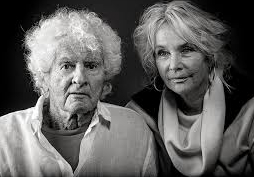
There is someone who is doing heroic work in the shadows, who does not get paid but who works many hours a day. She supervises all clinical work, and teaches the basics of the therapy, runs the administrative side of the Center and deals with all outside inquiries. In short, the pivot around which the clinic revolves.
She is the engine, the motor for the advancement in the practice of Primal Therapy. She is there to help therapists work with patients. Who could do any more? She is our resident savant……Dr. France Janov.
It is hard to realize, even for me, how much work goes into directing even a small clinic, a clinic that has patients from 38 countries, and requires communications among people from many countries of the world. And oh yes, she is my wife of 42 years.
What does it mean to run a psychiatric clinic? It means knowing the latest science so as to help therapists know how our therapy fits in with science. It means knowing the various afflictions people suffer and why. It involves knowing about people from different countries and how they differ as a population; for ex., what is the most repressed country and what is the least? It is a wide-ranging job that requires clinical skills, financial ability, relevant science and how to help our therapists relate to foreign patients some who only have minimal skills in English. Needless to say, it is a job well done, too often done in the shadows by someone who manages to keep it all going well. She has done this for years without pay. It is a labor of love or her and also because Primal Therapy saved her life. She teaches not out of academic persuasion, but because she learned out of her own feelings for a very long time.
Our thanks to France.
July 27, 2015
On the Difference Between Abreaction and Feeling (Part 2/9)
Taking the Wrong Track into Abreaction
To understand more about how abreaction works, let’s see what happens when a session goes off track.
As we now know, there is a critical window during a session when the patient brings in a certain feeling, say, helplessness. If the therapist does not act to help the person delve into the feeling it very well may be too late, later on in the session. When the therapist does not strike at the critical moment, the specific feeling/frequency the patient came in with is now gone. What the patient will be left with is abreaction, the discharge of a secondary feeling, not the key one she brought in. That means no resolution and integration of feeling because the feeling has not been felt. When we measure vital functions after the session, the signs move in sporadic fashion. They do not move in coordinated ways but as though each function moves at a different pace. They seem to have lost their cohesion, which tells us that no primal has occurred.
What I think may happen, and this is only hypothesis, is that when the feeling and its frequency are left unaddressed the patient slips into a secondary feeling with a different brain pattern and frequency. Even though she may look like she connected and resolved the feeling there is a good chance that it is abreaction. It is simply the discharge of the energy of the feeling without connection.
Let me make this clear because so many so-called primal therapists make this fundamental error. There is a time in the session when that feeling is very near conscious-awareness. Without professional help the feeling slides away and the patient, now floundering, manages to get into a different feeling, one that may belong to the therapist’s agenda, not the patient’s. That is because the therapist did not pick up on the entering feeling and then projects his own needs and feelings onto the patient. The patient then goes where the therapist decides, which has nothing to do with attacking the basic need and resolving it. Too often, the patient goes where the therapist tacitly is interested. The patient senses that and becomes a “good girl.’ The unconscious of the therapist implicitly directs the patient.
The pain of lack of fulfillment is always an adjunct to a specific need. To address the wrong need is to forego proper connection and resolution; it is feeling the wrong pain at the wrong time. A depressed patient comes in feeling hopeless and helpless. The therapist may perceive latent anger and urges the patient to hit the wall. The release does offer some relief and they both may think there was resolution. But it was only temporary. The real feeling will return again and again only to be waylaid. Or the therapist may say, “Tell your mother!” But it may have nothing to do with mother, at least not the patient’s. What is coming up is the pain of the doctor; he needs to scream at his mother. Indeed, the patient’s core feeling may date back to a time before words. So expressing the feeling verbally is a false route. It is tricky business. A sound knowledge of the evolution of consciousness will help here.
Doctors are used to being active during therapy sessions so it is difficult for them to see how little there is to do. I speak on average about 50 words a session. My patient feels and then the insights follow. I do not need the majesty of bestowing insights on patients. It is wonderful that they make their own discoveries. And what discoveries they are, up-surging feelings accompanied with their notes from the underground. Telling the doctor what the feelings mean.
On the other hand, therapists have a lot to do when we sense abreaction entering in. At that point, the therapist must be vigilant and hyperactive to keep the patient on track. He must make sure not to reinforce the tributary feeling while steering the patient back to the main feeling. And how, you ask, does the therapist know the difference? By instinct and experience. The therapist has to sense that his patient has taken a detour and he has to know what the real feeling is. That skill you can only acquire by primal intuition. There is no law.
July 23, 2015
On the Difference Between Abreaction and Feeling (Part 1/9)
The ability to distinguish between abreaction and a genuine feeling is an essential skill of good Primal Therapy. The difference between the two is stark, but in practice it still can be deceiving. Feeling is the key to cure, while with abreaction there is no chance of getting well. Yet, despite this crucial difference, the therapist is often unaware of what is going on, and certainly the patient is equally unaware. The insidious part is that abreaction feels like a primal, looks like a primal and smells like a primal, but is far from a genuine Primal. In clinical terms, abreaction is "the devil" because it doesn't allow patients to get better. They remain forever "prisoners of their pain" in an abominable, endless loop of hurt and hopelessness. Once abreaction sets in, it becomes a neurosis on top of another neurosis. And it is unshakeable. It takes months to even try to undo it. The danger cannot be overstated. We have now seen many patients who have gone to mock primal therapy and are stuck so badly in abreaction that it is almost impossible to extricate them from it. If left unchecked, abreaction can even lead to pre-psychosis and psychosis.
It is the job of the therapist to distinguish between abreaction and real feeling. To some extent, that is a skill based on the instincts of a trained clinician and acquired by experience. For some patients who are mired in abreaction, that skill can mean the difference between successful therapy and staying stuck in mock primals that lead nowhere. The good news is that there are also scientific ways to know the difference. We can often tell how if a real feeling has been resolved by changes in cortisol levels, vital signs and other biochemical indicators.
First, to avoid confusion, a definition is in order. Within Primal Therapy, the term “abreaction” means something quite different from its original meaning within Freudian psychoanalysis. In this psychoanalytic sense, abreaction is simply defined as the process of releasing repressed emotions by reliving an old traumatic experience.[1] On the face of it, that classic definition is close to what we would call a Primal, although true “reliving” in our therapy is far beyond what Freud had imagined. In Primal terms, abreaction has nothing to do with any genuine reliving experience. On the contrary, for us abreaction is destructive to any feeling therapy because it becomes a defense against real feeling, as I shall explain in detail shortly.
I must emphasize that abreaction is a non-feeling event. It looks like feeling, often to both the patient and therapist, but there is a qualitative difference. It produces awareness without consciousness, a difference I shall explore in detail in a moment. To a well-trained therapist there is a hollow ring to abreaction. It doesn’t “smell” right. A patient may unconsciously use abreaction as a defense against feeling, slipping into crying the minute she lies down, or simulating a birth primal. The key difference between abreaction and a true Primal, of course, is connection, which takes place in a Primal but never in abreaction.
Before we delve into this, however, let me briefly review some of the basic principles of Primal Therapy. These theoretical cornerstones provide the framework needed to understand abreaction as a deviation from a successful coarse of treatment.
The basis of Primal theory and practice is the concept of the three levels of consciousness, corresponding to an individual’s stages of development from gestation to adulthood. The first line is pre-verbal consciousness from the womb through birth and early infancy. The second line is laid down in childhood as the brain is still evolving. And the third line is current-day awareness, the top-level consciousness of adulthood. Those three levels of consciousness correspond to the structure of our triune brain – the primitive brainstem (first line), the limbic system (second line), and the neocortex, our thinking brain (third line). Pain is experienced and repressed at each stage, stamped into the brain as an imprint on the level where it occurs.
The essence of Primal Therapy is unveiling the old events so we can live in the present. Those embedded memories contain painful and frightful feelings that needed to be repressed and kept from consciousness due to their overwhelming valence. But they are never forgotten. They leave biochemical traces serving as markers that say there was damage here and a hurtful event there. Through therapy, we can retrace our lives and our embedded memories and revisit them in orderly fashion, undoing the traces and (hopefully) reversing history by obeying evolutionary dictates. So we go back into those evolutionary stages methodically, feeling a bit at a time; beginning with the lightest pain in the recent past moving down to the deepest brain levels. In proper Primal Therapy, pain must be relived and resolved in the same evolutionary way it was created on all three levels, but in reverse. If we neglect evolution and do not deal with lesser pains first, we will again make a serious biologic error and force a feeling on a patient that he is not ready for.
There is an adage in science: ontogeny recapitulates phylogeny. The history of the species is run again in our personal evolution. We can see our ancient history in how we evolve from the embryo on (fish fins, wings, tails, etc.). Each evolving individual re-runs the archaic life of the species. We get rid of our tail and are left with a vestige, a “tail-bone.” Similarly, we have vestiges of our old "ancient" personal life, which I call the first line. That is, we have traces of our lives from a time when only the brainstem was our predominant brain structure. And we can visit that ineffable life we lived before birth, and then eschew those traces though Primal Therapy, which can also be called undoing the imprints (or on a molecular level, de-methylation). Imprints mean precisely an event that was so powerful and so painful that it could not be experienced and integrated at the time. However, we are older now and can more safely experience them. But it takes years to be able to relive the past fully and make it part of us instead of a constant alien force.
A well-ordered therapy begins in the present, anchoring feelings in the present-day life. Over time this will lead to deeper levels along that same feeling path through a process I call resonance. Once locked into the feeling, the neuro-biologic system will take charge enabling the patient to go deeper, traveling to more remote and archaic areas of the brain. Over months, as the patient follows that evolutionary path, different aspects of the feeling are gathered up at each level until reaching origins where very deep pain lies. This process cannot be forced or decided in advance by a therapist who dictates where the patient has to go. If feelings are forced out of sequence, no integration will take place.
I stress this methodical step-by-step voyage as a warning, because in no other therapy that I know of can interference into the primal sequence by untrained people cause such lasting damage. They are meddling with the deep unconscious. It took us many decades to understand what to avoid, which is as important as what to pursue. We take great care to make sure that the patient descends the feeling chain in proper sequence so as to avoid abreaction, sliding off into pseudo feelings as a defense against the real pain.
In essence, abreaction is the discharge of a feeling disconnected from its source, making it in fact a defense, or at least reinforcing an existing defense. It can be the release of a feeling from one level of consciousness into another level. For example, first line into third line. Or it can be first line disconnected from any other level, taking on a life of its own to the exclusion of any other levels. The defense system, in its crafty and brilliant way, can promote many forms of abreaction that may lead to strange ideations, crazy delusions and paranoia. Instead of leading to the undoing of neurosis, abreaction guarantees that neurosis will persist. This happens when the therapist allows the patient to skip evolutionary steps, going through the motions of feelings without feeling them.
We must trust the feelings totally. But first we must recognize them and be able to differentiate them from abreaction, which is the discharge of the energy of a feeling without connection. Our job is to provide access to feelings, following evolution every step of the way, from the most recent aspect traveling down to the very origin of the pain in the most distant past. In this way, we go from an awareness of the feeling to its emotional content and then onto its preverbal base. We also go from the lowest valence of pain to the most devastating. It increases as we descend down the chain of pain in our ontology.
When we touch on our beginnings – gestation, birth and infancy – we see the deepest pain and the most danger to the system, which I call the first line. If we do not know brain evolution we can be easily fooled and will rush in to prod a patient’s nervous system to perform in ways it cannot; hence, abreaction. We will make the patient scream or pound the walls when the real feeling is elsewhere. Once a patient is channeled into abreaction it is almost impossible to pull him back. It forms a groove defense that becomes encased, allowing no other feeling in. It becomes a neurosis inside another neurosis. It is the patient who loses, though he may convince himself he is really feeling; or worse, he may be convinced by a therapist that he is feeling when he really isn’t. Sometimes, this may all seem like some kind of plot, but it is simply unconscious reactions to avoid deep pain. Remember, it takes great skill to produce a connected feeling and no skill to permit abreaction.
[1] Gordon Marshall. "abreaction." A Dictionary of Sociology. 1998. Encyclopedia.com. (July 2, 2015).http://www.encyclopedia.com/doc/1O88-...
July 12, 2015
Where Do Nightmares Come From?
I have been in a good position to know about nightmares, having had them all of my childhood, and also because I have hundreds of patients who have had them, relived them and understood them. Let me disclose what should not be a secret but is.
Nightmares are either first line memories (brainstem or lower limbic system) or terrible memory/imprints from childhood that have the punch of first line. That is, basically life endangering. The latter would be the loss of both parents during an auto crash at a young age.
I had a patient like that and it was devastating. In brief, his life became a literal nightmare. He lived it every day: depressions every day, agony, loss of drive, no ambition, giving up, feeling he could not go on. He felt his life was over.
Ordinarily it is the lowest level of brain function, the brainstem with its memories of pain; a mother smoking or drinking, poor nutrition, chronically anxious and fearful, unable to relax, constantly worried and totally confused. Taking drugs at the beginning of the pregnancy. All of this and more, leave an imprint of severe damage. That imprint impacts almost everything. This far we understand, but how do these imprints become nightmares? Because they were! I will use me as an example since I know me best. My mother was always hyper-anxious, a refugee from the Cossacks in Russia, had no parents and was actually a four year old. Illiterate all of her life. She had me by accident but was nowhere near strong enough for such a task, so she handed me over to my grandmother. From the start there was no one and from the very start there was a frantic mother who could not be a mother. I was born afraid. And as life went on with two empty parents I had no support and no care. That exacerbated the problem and it was compounded by terror and pain.
Where did it all go? The pain evolved like the rest of me: terror got partially suppressed but I was a fitful sleeper and never could concentrate. All my marks in school read “nervous”.
As I grew it got worse in school and I did badly. As I became an adolescent I could not learn nor focus, and above all, became plagued by nightmares; not only because of my gestation but because of the total lack of love and support for my terrors. Every night I was terrified by having to go to sleep, knowing that I would wake up terrified in the middle of the night. When I said to my parents I was afraid, they said if it got bad to go sleep with my sister, which I did. That became a nightly affair and lasted years. So how did it happen that my pain from way back and down deep rose to the occasion, so to speak, and pump out nightmares? Aah, here is where it gets complicated.
My pain was compounded daily by a psychotic mother and tyrannical, loveless father. No one to turn to and so the pain just built and built. It reached a critical point where my gating system could no longer hold back the force of the early imprints. The terror seeped through and there was nothing I could do to stop it. No one had any idea what they were, including my doctors. So I suffered due to a mystery that I now understand. Oh. Wait a minute. It is clear to me know that my symptoms evolved with me. I was terrified during gestation with colic and many other symptoms, then I had bad dreams all of the time as my childhood pain broke through, and then finally, when all my defenses crumbled the nightmares began. First line was evident because in my therapy they were the avant garde or forerunner of nightmares to follow. I would come in anxious and could not relax. I also could not concentrate. I was already far along in my therapy, and soon my nightmares rose. And what did they turn into? First-line birth trauma, beginning with severe anxiety and then terror and then suffocating and feeling stuck and unable to move. Wow, that was the content of my nightmares and my early life. They were one. Interchangeable. And the nightmares led me directly to my gestation and birth traumas, which I began to relive. As I did, my concentration improved and my anxiety lessened. I could sink into my skin. The feelings were finally fully experienced, as they were meant to be at the start, only it was too overwhelming to integrate.
So we must always keep evolution in mind when trying to understand all this. All my nightmares were terror filled, and since terror is organized very deep in the brain, that it should be obvious that nightmares derived from there and not later. Just as very fearful dreams may be limbic/feeling brain, but a bit of brainstem to give them power. The content of my nightmares (which have been gone for years) was of being in a dark hole with someone coming to kill me. I could not breathe. Someone coming to kill me was the inchoate realization that death was approaching. I made that terror into a phantom, which is why so many kids love horror films. They can feel that terror for a moment. They think it is the masked guy on the screen but we know better.
And what we also know is that as we evolve and have ideas and words we can be driven crazy by these forces and imagine that the guy in the ice cream booth “wants to kill me”. Our poor victim too sees death approaching and for the very same reason: death is approaching from way down deep. He too, gives it a content: the guy in the booth. I mean he cannot say, “Oh yes, my mother is taking speed or many cups of coffee and that is speeding me up. And also she is drinking whiskey all throughout her pregnancy. “ He has no idea where the danger comes from and that is the real danger because it can be acted out randomly. He will act on anyone in his presence.
One thing I have left out is the evolution epileptic symptoms. They often begin in childhood as petit mal and grow to grand mal major seizures. We have had good luck with seizures, often changing them from grand mal to petit mal, or from grand mal to no seizures as they relive convulsive pain from early on. We change the seizure from a major symptom to a major Primal. Not always but often. We lower the pain/terror threshold. We lower terror/pain to below the level where symptoms begin. They then are not cured but can be symptom free. I make no claims for cure; only that we have had some success with this problem. In the more severe cases what we see is a lessening of the symptoms. It the case of convulsions we see how the imprint impacts the whole system and causes seizures. In the case of nightmares, the terror is still contained within the limbic/feeling system and does not escape out to massively produce serious psychosis.
What stops psychotic symptoms is the same thing the blocks nightmares and panic attacks: first line blockers; heavy duty tranquilizers that put a cap on the brainstem imprint for a short time. Could it be that all three are related? No doubt at all. Do they come from the same area and same epoch of our lives? From my clinical experience, the answer is a “YES.” How so? Because the symptoms either diminish or go away as the terror is relived and brought to the surface. So then we can treat ADD, panic attacks, nightmares and many other symptoms with the same thing? You think I mean drugs? I mean Primal Therapy, which permits patients to travel down deep to reach those terrors that underlie so many divergent afflictions and relive them to be done with them. Oh yes, they also can be dulled for a moment with drugs which help repression. These drugs are called “anti-psychotics.” Why is that? Because they reach deep in the brain where psychosis emanates.
And that is the way with nearly every current therapy, alas. Psychiatry has become synonymous with drugs. Only because they have not observed the imprint which would give them the key answer to all their unasked questions. So they drug what they can’t see and then write theories about the mystery of it all.
A person doesn’t just suddenly become psychotic. He was already disturbed; only we did not call it psychosis. He has gastric problems or asthma or incipient cancer. He was highly disturbed but neither he nor us had any words for it. His system was going awry. Epigenetics was kicking in and methylation of cells was beginning. The whole system was becoming deranged. And compounding of no love and pain was taking its toll. And now we have to rewind the biologic clock and revisit our lives in a real way.
June 30, 2015
The Revolutionary Twins: Truth and Love
I often write that the simple truth is revolutionary but it is also true of love, and just maybe they are twin sides of the same coin. What is true for us humans is the need for love. I have spent my whole therapeutic life explaining in every way possible the effects of love and no love. The ultimate revolutionary truth is love; hence the twain can meet.
Why can’t my colleagues in psychology find the truth of love/feelings? What is so difficult about it. Why in every psychologic theory extant is it missing? It is like some mystery hidden in a closet that we all ignore, something we must not touch. And why is it so closely tied to truth? Maybe it is because the truth is so revolutionary that it means re-creating a whole new approach to psychotherapy reflecting the lack of love. It means overturning every Behavior/Cognitive therapy that is strewn about everywhere in our field. And when we lift the covers from this abstract theoretical blanket we find deep lacks of love wallowing in a cesspool of pain. There are groans and moans and we pay no attention to them because we cannot understand their language.
Maybe it is all avoided because we do not fully understand its importance in the psychologic scheme of things. If a parent pushes his child to succeed and neglects holding him, kissing him and nuzzling him, then of course it will be missing from his life, and above all, from his intellectual theories. How can an unloved child grow up to value it if he has never felt what was missing all of his life? Until this pain is felt it will be covered over and fancy theories will supplant his ideas about therapy. This is how a recent Scientific American explains in a recent title piece how (Too Much Praise Promotes Narcissism: June 17, 2015) We learn how too much praise can make a child self-centered, narcissistic and arrogant. This is what is called in Yiddish, a bubbminsa (spelling), an old wives tale brought down through history to “educate” our offspring. It is not that Scientific American endorsed it; but they gave it a prominent place in the discourse. This is shocking from a scientific journal but not surprising because it all comes from the same paradigm the intellect: uber alles. Or how about nursing a baby too long makes him addicted to sucking? Or how about holding a child too long spoils him? What is missing here? Clinical experience, but much more personal loving experience, being and giving love, which would dissuade anyone from believing this nonsense. What they cite are statistical truths which must take a back seat to biologic truths.
Let me cite one axiom: It has to do with need. If we allow nursing to go on until the baby no longer needs to, there is no problem. If we nurse him due to our need to appear hip and progressive, a great deal is lost and there is addiction in the making. He is no longer fulfilling his need, he is filling theirs. Since their need may be a deep pit, the converse of fulfillment of need takes place. It is too much and produces the same kind of pathology as fulfilling too little. The real need to both cases is ignored. We have abrogated the rule of need. If we hug him every time he cries and never let me cry over a fall, we abort his need to shout out his pain. Of course, he needs solace but he also needs to express himself. I have seen this in neophyte therapists who are far too quick to hug and give solace to a person who needs to feel his pain. It is aborted. We pay attention to his need and not ours things will usually go right; first, we need to have felt our need: to be bright and understanding, to be empathic and blah blah. Choose your unfelt need and you will know. If you need to be famous the child will be pushed to achieve, and love will be nowhere in sight. He will unconsciously be filling the need that you as a parent lacked when you were a child. You need to feel important he will do his damndest to be famous for you. He will be the best athlete in school or the highest level scholar. And you will praise him for exactly what you needed praise for and never got.
Luckily, I had parents who never cared for a moment, not even to know where I went to school. They had no ambitions for me, and there was nothing I could do to feel loved and approved. So I never became anything they wanted because they had no ideas or ambitions for me. I was a pure anxiety case, as a result because there is nothing I could try or be that would make them look at me or talk to me, not the least to say what I never heard --- that was good what you did. After all they were Russian peasants who knew nothing of child-rearing or love except that they should be working in the fields very young. And to quote this august scientific journal cited above, never praise them or else you will spoil them. I can’t believe this kind of thinking still exists but psychologic science seems to be in process of dumbing down, reflecting the zeitgeist. And why is that? For one key reason---FEELING. It went missing and not only cannot be found but no one knows it is missing. Wait a minute, I know where it is.
June 26, 2015
More on Leaky Gates
I have described the gating system several times in my blogs. Basically there are chemicals, not the least of which is methyl (as in methylation) that helped signal danger and also help to suppress its pain. There is serotonin and a number of other biochemicals with a similar function: suppress the hurt. But when the first line pain derived from brainstem activity is loaded with pain and the follow-up life compounds the agony, we have gates that become leaky, less effective and allow some pain to escape.
So when I ask an applicant for therapy if he were loved and cared for, he often will say, “yes”. And If I ask how he sleeps he will tell me, “fitfully”. “Why is that?” I search. And he says, well I often suffer from bad dreams and nightmares. Oh, I say. And then I say to myself, “my god, he has leaky gates”. It means to me that he has terrible deep pain that has taxed his repressive system (and often his immune system) and the terror leaks out. It also tells me to go slow and not to approach deep pain for a long time.
So I say to him, what are your nightmares about? Mostly this and that. Oh I say, this and that…such as? Terror really, I am drowning or being suffocated, or held in a dark prison with no air. And then I think, “If I strip away the content of the nightmare I would have the content of the Primal”. And months later in therapy it leaks out into the session and he is suffocating in the dark and cannot move. There is something that wants to kill him but he does not know what. It signals death approaching, as it did originally but it is still a mystery for the patient. We approach it slowly and over time, not in a single session. It is terror that can be terrible. And it informs us accurately that he is carrying around immense pain that needs to come out and be relived eventually. But in French it is a "compte a rebours", counting backwards. We always begin therapy in the present and get to the beginning at the end of therapy or of a session. Evolution brooks no deviation. Sadly, there are some deviations when the terror/pain is overwhelming, but that is another matter. We want to know what is in the unconscious that Freud said was so dangerous? There it is, right in front of us. We can see it and feel its intensity. Oh my God, what is it! It is the PRIMAL. You mean that is the unconscious, nothing else mysterious and unknowable?
In the nightmare the top level neo-cortex concocts a scenario to explain the upsurging content. It is a content that closely represents the nature of the trauma itself. Now if we look at the recent mass killer we see possibly the same thing; massive pain on the upswing crumbling gates, merging with the current zeitgeist of white supremacy which rationalizes the feeling for him and gives it destination and a raison d’ etre. It is a living nightmare. The difference is that it can no longer be constrained in any way, and has to be acted-out. They need therapy while there is still time. In neither case do we analyze the ideas; we always go for the feeling, the terror and anger. Those deep-lying terrible feelings are the problem both for the therapy patient and for the killer. You cannot say to either, look no one is trying to hurt you, so relax. Something is gaining on him and it is deep sensations/feelings. The killer misplaces the feelings and he has a cultural ideology to merge into. The patient has a state of anxiety that we deal with by attacking the feeling.
In the case of the killer we can call it a psychotic episode, psychotic breakthrough. It is result of the imprint that does make people crazy; and it is the kind of thing Freud warned against when he alerted us to staying away from the unconscious. Does anyone really think that there is a full-blown psychosis lying deep in the brain? One that even has bizarre ideation, which is neurologically impossible? Ideation develops much later in life and then gives form to the crazy feelings flowing up from below.
I have treated a killer. I was reluctant to take him but once he felt deep feelings he was a pussy cat and no danger to anyone.
This reminds me of those who are diagnosed as chronic schizophrenics. I want to alert those in the diagnostic field that schizophrenia is apparent when the cortical gates give way and feelings intrude into the neocortex to produce strange irrational ideas and beliefs. But what happens when there is no intrusion yet and the gates hold on for a while to block intrusion? Where did the psychosis go? Now we get close to what psychosis means. The problem lies down deep in the brain, within the brainstem and lower limbic ares where a total tumult is raging from damage that occurred early in life, gestation or birth. That is what constantly threatening the top level brain. So can we be psychotic down deeper in the brain? Of course, but since it has not yet recruited ideation to handle and cover the rampant feelings we have to give it a different name: cancer, the psychosis of the cells. The cells’ boundaries cannot hold and there is an over-spill. Or the “psychosis" can take on a different form, usually catastrophic in different kinds of diseases. So as the pain mounts we develop new serious diseases, and we give it all new diagnoses. But what is it after all? Pain, a pain so immense as to be ineffable. But that is what it is. It lives on different brain levels, but we need to know what it is so we treat the right thing. What is the treatment of psychosis? Pain killers. And childhood Anxiety and ADD? Pain killers. And difficulty in learning and severe asthma? You guessed it. There is the notion that Schizophrenia only appears in late adolescence as it did not exist until then. But maybe it doesn’t start until we enter adulthood because we now have the language to talk schizophrenia. Now we know about words like “cosmos” and we can imagine we merge with it. We have perfected a new language which is far-out… because it is far in. We are trying to make sense out of an input that has no sense; it is just a massive first-line, brainstem input. We dress it in words even though it has no words; it is pure agonizing pain. The neocortex is scrambling to give it a rationale, that seems so bizarre because it has no rationale.
Over the years of Primal, now almost 50 years of practice, we have gone very deep, and that is what we find: our life experience lying in wait for its time to be free of its biologic constraints. That is the key danger: us. We are afraid of ourselves and what we have undergone, and that means exactly when and where every psychotherapy avoids… first line. Is it dangerous? Yes. Only if we mess with evolution and reach it prematurely. It is dangerous if we are in a hurry, do not understand how dangerous it can be and have no idea about how the brain works. And once there we have no idea how to turn it off. So what happens? Emergency clinics and heavy tranquilizers. Push back the demons is what they understand without ever knowing what the demons are. How could they since they have never seen the unconscious in its full regalia.
And what are those tranquilizers that the emergency clinic offers the freaking-out patient? Some of the same chemicals he depleted in his original attempt to shut down the terror/pain, such as serotonin. It is part of the drugs, Prozac and Zoloft. They are only replacing what was depleted at the start. Because unlike alligators, who are built to handle immediate and brief threats, we cannot deal with prolonged danger without deregulating our whole system.
And now we come to methylation. It is an accurate index of our early, painful imprints. A study by the Society for Research in Child Development, (Sept. 8, 21014), found that children who were abused or neglected early in life are at risk for both emotional ill health and physical afflictions.(See: http://srcd.org/sites/default/files/spr_28_1_newfinal.pdf). “The researchers found an association between the kind of parenting children had and crucial aspects of ……health.” One culprit is DNA methylation. They took two groups of children; one abused and the other not. Abused or neglected kids were likely to suffer mood changes, poor school performance and tendencies toward serious diseases. They also had increased methylation, in particular on several sites of the glucocorticoid gene. Not the fact with normally reared children.
We see aspects of this in our levels of cortisol, an anti-inflammatory. The neglected kids could not handle emotional stress well. Sound familiar? It does to me.
Most important, the methylation process affected nerve-growth factor which augurs badly for brain development.
Our research job will be to point out how and where this methylation takes place and why? We believe, but we want to measure, if indeed our therapy will help undo some of the prolonged effects of methylation; i.e., de-methylation. Above all, is emotional abuse ultimately physical abuse? Of course, and when we see chronically sick kids, we need not only to exam the details of the symptom but also the details of his previous emotional life. There lies the real culprit. The answers lie not in the minute cells of the brain which are reluctant to reveal the truth and often cannot, but in the complications of the person’s life going way, way back. Let us all decide to delve deeper from now on and the surprises will be never-ending.
June 21, 2015
On the Breakdown of Our Adaptive Capacity
Some time ago I wrote about how it is the unrelenting input of pain that taxes our ability to adjust and adapt, causing a breakdown of this capacity. The result is a scrambling of our brain cells and a collapse of our ability to cope. It can lead to early psychosis or mental insufficiency. What does this mean?
Not only must we look at our clinical experience but the latest in brain science. Rockefeller University, New York, and Cambridge University, England (E.Keverne, D. Pfaff and Inna Tabansky. “Epigenetic changes in the developing brain: Effects on behavior.”; See: http://www.pnas.org/content/112/22/6789.full). One conclusion of their work was about methylation, how aspects of the methyl group are recruited to stamp in painful memory and imprint it. When you block methylation you prevent the nerve cells from adapting to changes in their environment. It becomes maladaptive. New learning cannot take place without successful epigenetic programming. And this makes me wonder when so many orphan children cannot learn well, are dyslexic and are slow to form sentences. When there is day in-day out neglect, indifference and lack of love, the ability to adapt falters and damage occurs.
The researchers noted that there is adverse effects on the feeling/hippocampus areas. In short, chronic unrelenting pain overtaxes the native ability to adjust, and we see the results. On the feeling level the person claims, it is all too much. He gives up easily and cannot try hard to succeed. It is not explained verbally by the schizophrenic but he lives it. He needs help to navigate his daily life. He cannot adapt to new circumstances. This is the extreme breakdown of adaptation. This is because the adaptation mechanisms help us evolve and deal with different circumstances. They are crucial for our evolution. We can take minor setbacks, such as being left alone for a day or two, but being isolated for long periods damages our ability to adapt.
If we look for confirmation of all this in hard science, it is there. The Dana-Farber cancer Institute discusses cancer in terms of the epigenetic switching mechanism. (Dec. 8, 2014. “Disorder in gene-control system is a defining characteristic of cancer.” (see: http://www.sciencedaily.com/releases/2014/12/141208145512.htm) (See also Cancer Cell). Here is what they say: “The genetic tumult with cancerous tumors is more than matched by the disorder in one of the mechanisms for switching cells’ genes on and off. The disarray in the on/off switches , known as methylation is one of the defining characteristics of cancer.” (Genes are recruiting methyl to help attach to the DNA—methylation). What I am positing is that Primal imprints are heavily responsible for this Epigenetic tumult and disarray as the entire adaptation process has broken down. Tumors can no longer adapt in any normal way and show highly disorganized methylation. In short, they cannot adapt nor repress effectively. Disordered methylation pervades the entire tumor.
The Dana-Farber group noted “the behavior of a cancer cell is dictated not only by genetics but also epigenetics,” and the derangement of the methylation process has a direct bearing on the effectiveness of cancer therapy. They partnered with Alexander Meissner (Ph.d) of the Broad Institute to find out how to measure this deregulation: “Using bisulfite sequencing , it allows the the scientists to track the presence or absence of methyl groups.” They the devised a simple measure, they call, PDR (percent discordant), to quantify deranged methylation. I consider this a major step in epigenetic research as soon, we may be able to quantify physical and emotional damage to a human being and the degree of damage; and finally the degree of resolution we achieve in a feeling therapy. We are rapidly getting the tools to achieve our aims.
What am I saying? That methylation is in the order of things; it is the key adaptive mechanism, and what I believe, is that in some ways it gets scrambled and can no longer do its job. It has lost its cohesion. Further, that the origin of so many catastrophic diseases begin their life in this disorganization, which is why it is so difficult to treat.
In my opinion, the dangerous time for unceasing pain which threatens the adaptation process is in the womb during gestation. Here the chronic smoker and drinker or pill taker, the continuous depression or anxiety states become inescapable for the fetus and he suffers. It is ultimately imprinted and endures throughout life. It is if he lived in a straight jacket for nine agonizing months, and could find no way to stop the input. He goes to a doctor, and the doctor asks, “Any stress lately? “ Yes ,stress, but decades before anyone, including the patient can even remember it. So he shakes his head and says, “everything has been OK for some time now.” Those imprints are shouting in the only way they can, through the physical system. Migraines, asthma, anxiety, depression, and on and on. He just cannot get comfortable in his skin, because just below that skin is a mountain of hurt and agitation that won’t let him relax. Why agitation? Because the pain is sending a message to awareness that there is serious trouble down below. Alas, there is no one to listen. And even if they could, they could not translate that message because, ALL IMPORTANT, it is not in English. It is in a wholly different brain language where words do not exist. We have to travel with the patient to the inner depths and see for ourselves. And there it is, the agony is right before our eyes. The suffocation, cannot catch one’s breath, the misery on the face, all answer the question, what trouble? And the patient in a session never says, I cannot catch my breath, but we see it before our eyes. When I am in that state my mouth closes and there is no force of will that can open it until the end of the session. Why? Because “force of will” is a higher brain function that has little effect on the deep brain. This begins to sound like some mystic spouting booga booga insights, but it s far from that.
Epigenetic science can help explain all this: it is the agent for repression and its failure to put away the pain and go on. Certain switches turn on and off to accommodate the painful intrusion; when it gets to a certain level there is a breakdown of its efforts and “normal” adaptation is no longer possible. The result: abnormality in physical development and psychological adjustment. The person can no longer be neurotically normal. There is now serious pathology which endures. I say “endures,” because the imprint lasts a lifetime and the person spends his life trying to get normal, seeing this doctor or that; mental hospitals and psychiatrists; all to no avail. They will not response to current treatment efforts because that is not where the damage lies. It is locked up with the epigenetic switches which were overwhelmed early on and no longer function properly. They almost don’t know what to turn on or off. They are as helpless as the patient because they are far out of reach of understanding. Alas, he is condemned.
But wait! There is a way out. If he can travel back in time with us toward the buried vestiges of the imprinted pain and connect with the Primal feeling we can stop the condemnation. Because then the epigenetic switches can be reversed and a salubrious state be achieved. What does this mean? That soon, we will be able to go back down the feeling chain from current to past imprints, observe how deep the pain is by its methyl traces and know where to go for the least dangerous pains first. That it has all to do with feeling feelings in sequential order from current to remote past so as to finally resettle the methylation process; that is, to normalize the biochemistry and allow the genetic switches to normalize so that they can do their job of adaptation.
June 11, 2015
Does Being Poor Make You Neurotic?
The title is "What Poverty Does to the Young Brain" by M. Ostranger.(see http://www.newyorker.com/tech/elements/what-poverty-does-to-the-young-brain) And it does seem to prove the point: poverty hurts us.
I am really not sure. I grew up in a ghetto but never knew it. I always thought that living in overcrowded, noisy conditions, sharing beds and closets, was the way everyone lived. That the same old cheap food was the way everyone ate. If there is no other frame of reference how can we judge and how can it have an impact? We lived apart from mainstream culture, never went to a restaurant to see how others ate, etc. In other words I had nothing in my life to compare anything to.
That was also true of my parents. When I was sixteen, one of my dad’s friends turned to me and said, “Your dad is so cheap he squeaks.” I never knew that. Then I started to put the pieces together: when we bought anything we traveled to the East side to where everything was cheap. It slowly began to sink in. It was not his poverty that was the problem; it was that in his mind he still lived in the ghetto, and never ever got out of it.
When I asked for music lessons they sent me downtown where the lesson was fifty cents. I never thought it should be any different. When the kids on the block took tennis lessons I was the only one who couldn’t because I believed my father could not afford it. In my teens it was no longer true but I was impregnated with this belief and I believed that lessons were too expensive. He had me living in the ghetto most of my early life, afraid to spend (no longer true today). It was only later, by accident, that I learned that he never spent a cent and had money when we were teen-agers. Meanwhile when I could begin to make comparisons it affected me because I felt that I was not as good or as important as other kids. This was compounded by never being hugged or talked to. It was not just poverty; it was a state of mind inculcated into us. That state of mind was made clear to me when I was seventeen, when in an interview a interviewer ask a woman why she wore such outlandish hats? She said, and I remember every word decades later, “for the best reason on earth; I like them.” Her feelings choose them, and for the first time in my life I learned about the important of feelings. I always believed we had to explain and justify everything we did. It carried over into how I did psychotherapy early in my career. The patient had to explain his behavior and justify it. It was never enough to simply feel; it needed to be justified at every minute. So insights/explaining feelings was the sine qua non of my therapy: it was Jewish through and through. It began with that other Jewish guy, what was his name? And spread its intellectual tentacles everywhere in life.
Feelings never counted; ideas about feelings is what counted. And the more brilliant the insights the more we believed the patient was getting better. And he was: only in his head. This was the apotheosis of it all; producing a brilliant mind who could spin out insights on and on and sound like the best therapist on earth. And it goes on with Cognitive/Behavior therapy, to this day; still a Jewish disease which we mistakenly call therapy. Ayayay (BTW: AYAYAY is also a Jewish howl). I guess my point is, Do you have to be aware of lack to be hurt? No. I was hurt by lack of touch even though I never knew kids should be held and hugged. I felt the pain. I was not hiding it from others. I was never aware of it. Being aware is not and never will be the same as feeling it because feeling is where the need/pain lies; where our humanity is sequestered. I felt the pain in Primal Therapy. And to achieve that I had to literally go back in time. So to live in the Now, we must return to the scene of the crime. This was hidden from me my whole life. Worse, I hid it from me. And I dare say, that this is the case with most of us today. And we go to a therapist for help and we get more sickness in its hallowed name. We avoid the one thing that could cure … feelings. And the smarter we get about ourselves the dumber we become. Not because of secret pride; because it lies in the cultural zeitgeist that militates against feeling in almost every therapy extant.
I learned something from this: that feelings will direct you to the pain and make you consciously aware; all by themselves. No instructions needed.
What this disease does, (does this sound anti-Semitic?), no; I describe it is a cultural trait not a jeremiad. The effect is to drive people in their head. “Head” is the reference point; is it logical and fit in with our theory? Then we know it is right. You guessed it. I am anti-head because therein lies so much of the “bad” in treatment. Feelings have become an afterthought. And without feelings we live in the "anti-chambre de la mort". What do I mean, “we will live in this anti-chamber of death?” Because without feelings, the most natural of expressions, we block life.
We block the essence of our humanness. They are meant to be felt and fully experienced. Otherwise they are suppressed and begin their life of damage; they find no way out of their emotional prison, Eventually, the blocking of life leads to early disease and early death; not always and not with everyone but I have seen it so much. Staying alienated from feelings is a DISEASE, not a cure! Psychotherapy as we know it is fatal. It is the ultimate affliction. It reinforces the cleavage between ideas and feelings. Being aware is not life saving; it is the opposite. Being conscious is life saving; it means a cohesion of all parts of us. It means that we are not engaged in the unconscious effort of repressing feelings.
And above all, being consciousness means treating people and our children humanely so that they grow up enhancing the culture, not destroying it.
And now in therapy we get more of the same: Behavior Therapy where feelings take a back seat, if any seat at all, and everything lies in the narrow reaches of the thinking mind. In French there are two words that are close to each other. One is “évènement": an event. The other is ‘Avènement,” an event resting on the highest reaches of achievement. The beginning that heralds a new king or new period or the arrival of a grand new therapy ... a new reign. Behavior/Cognitive therapy seems to be that reign but it is still the old Freudian psychotherapy dressed up on the king’s new robes. All of it, all of it, means saying goodbye to our humanness. Is that what we want?
But aback to my point: day when I was fifteen I was next door at the neighbor’s house, the Winters, their real name. We were talking and joking, when all of a sudden the mother, Mrs Winter came into the kitchen, her back against the chopping block and she rapped and joked and had the best time. She stayed for an hour. I was so shocked that I ran home and said, “Guess what? Mrs Winters stayed with us and talked to us for an hour. It was so wonderful; I wish I had mother like that” Where up My Dad got angry and told me never to talk like that again. In his mind I had committed a crime. In my mind I was expressing a feeling, an innocent one. But I learned something: that mothers are supposed to spend time with you and joke and talk to you. Now, I never know that was a basic need but my body suffered from it without my knowing it. I needed some emotional companionship and I hurt because I never had it. The hurt occurred even though I could not name it nor even know that something like love was missing. I never forgot that day. Being aware of it is a first step and yet a far cry from feeling the pain that is gnawing away at our systems without stop. “Aware” means detached, looking at feeling from far away. Feeling means being in it and being done with it. Awareness means a burden and a sentence for a lifetime. Intellectuals usually prefer intellectual therapy and it is what they get. They have been comfortable with their style of life, their neurosis. Too often we choose a therapy that allows a bit of tweaking and not basic change. It is not either or; we can be consciously aware, and that is the summun bonum.
It is our choice.
Arthur Janov's Blog

- Arthur Janov's profile
- 63 followers
Arthur Janov isn't a Goodreads Author
(yet),
but they
do have a blog,
so here are some recent posts imported from
their feed.

