
W. Terry Whalin's Blog, page 55
October 21, 2015
Grow Your Writing By Teaching Others

Twice last week I taught about helping authors be
more effective on Goodreads. I
helped some of my colleagues at a local meeting of the American Society of Journalists and
Authors. We brought our laptops and worked on improving our Goodreads tools
right on the spot. I'm still learning about Goodreads and feel like I'm far from
an expert—but I was further along the path than the people I was helping.
Then on Saturday, I spoke about Goodreads again to
the Colorado Author League. There were more people in
attendance during this second session and I helped authors increase their
effectiveness on this significant site which has 40 million registered
participants .
From this experience, I want to draw a couple of
principles for you to use in your own writing and publishing life.
Teaching Forces You To Know The
Details
While you may have experimented and learned some
things when you create your own work, I have found teaching forces me to return
to the basics and recall my early mistakes and successes. I have to capture the
sequence of steps that I used and write them down.
As a part of teaching a workshop on a topic, I
prepare teaching notes and a detailed handout for the participant. It is one
step to gather information but quite another to put it into a format where the
listener can take action and apply the information to their own work. I was
focused on the people who take action and helping them succeed with the
promotion and exposure for their books and writing.
Goodreads provides many
tools for authors to help in this effort. It does not happen in a vacuum without
action. It is passive to learn about a topic and gather information. The rubber
meets the road when you begin to do something with this information.
 You may intellectually understand millions of
 people use Goodreads, but if you don't become a Goodreads Author, work on your
profile and use the site, then that knowledge is not being used. I've gained a
much more detailed working knowledge of Goodreads because I taught it twice this
past week to others. You will have the same opportunity as you teach the skills
you learn to others.
Teaching Gets You Out With
Others
Most of us spend too much time in our office and
computers alone and not interacting with anyone. Yes we are cranking words into
our computers and sending emails. That process is great but does not get us out
of our office into the world to interact face to face with others. This personal
time with others is important on several levels. It helps you to listen to
others and their ideas and learn what they are writing and working on. Also it
gives you fresh opportunities.
When I taught twice about Goodreads, at each
session I made new connections with other speakers and also with participants
who attended the event. We exchanged business cards and emails. When you teach, make
sure you bring business cards. As you meet new people, offer the other person a
business card and at the same time, ask for one from them. Because I initiate
this interaction, I'm often surprised that agents and others only have a few
business cards and I get one of those few exchanges. If you bring plenty of
business cards (which I do), you can make sure to be liberal with your business
cards.
Each participant at the event received my handout.
I made a point to include some of my key websites and email information on the
document. Why? Even if I don't exchange business cards with an individual, they
have my information and can easily reach me. It is critical that anyone can
easily reach you.
My major point of this article is the teacher
learns more about a particular subject than anyone else. You can grow your
writing life by learning new areas, then teaching it to others. How have you
found this effective in your own writing life?


October 18, 2015
Enter My Goodreads Giveaway

Until the final day of October, I will be running a Goodreads Giveaway for two of my most recent books. If you are on Goodreads, I encourage you to go over and enter this contest with just a few clicks. You could be one of the winners—but only if you enter the contest.
After you enter the Giveaway, I encourage you to use the social media buttons at the bottom of this post to tell others about it.
If you are an author, are you using these Giveaways? The author or the publisher can set them up and they are simple and inexpensive exposure for your books. It doesn't have to be a new book because I've tried it successfully with older books as well.
The details are below about my Giveaway:
Goodreads Book Giveaway

Billy Graham
by W. Terry Whalin
Giveaway ends October 31, 2015.
See the giveaway details at Goodreads.
Enter Giveaway
Here's my second book Giveaway:
Goodreads Book Giveaway
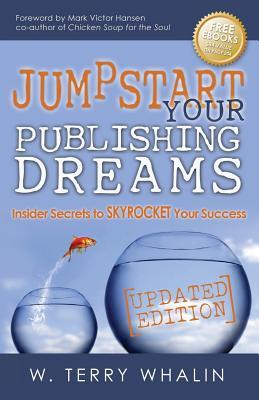
Jumpstart Your Publishing Dreams
by W. Terry Whalin
Giveaway ends October 31, 2015.
See the giveaway details at Goodreads.
Enter Giveaway
I wish you all the best with this Giveaway so enter right away while you are thinking about it and use the buttons below to tell your friends about it. The clock is ticking and it will end the final day of October.
October 17, 2015
Is Book Publishing Like A Marathon or a Sprint?

Many writers want to publish a book. From my
many years in publishing, I find few of them have thought about whether the
process of publishing a book is like a sprint (something with a burst of speed)
or a marathon (steady and consistent to complete the task). I often see authors
who want to sprint to publication or sprint to get a book contract or a bestseller.
Reality is that often it takes consistent, hard work to produce anything of
excellence—the writing or the marketing. Authors are not overnight successes but
instead spend years in the trenches faithfully working to get their work noticed
and sold.
This week a young author outside of the U.S.
wrote and asked if a decision had been made on his manuscript. It had been less
than two weeks since I had corresponded with this author and it took a number of
emails until he gave me what I needed to submit his work. I told this author if
he wants a “no, thank you” then I could do that right away but if he wants a
“yes” with a publishing contract then that takes patience and time.
While there are many keys in book publishing, in
this article, I want to emphasize four important areas.
You Need A Great
Product
Too many authors want to dash off something
and rush it into the marketplace. I've seen it in my own work and the work of
others. Haste often makes waste or mistakes. Take the time to write an excellent
book or book proposal. The book proposal is
your business plan for your book—whether you are writing nonfiction or
fiction—whether you are self-publishing or traditional. You need a plan and it
is important to build the plan with a great manuscript. The writing has to be
excellent. You need others to affirm that excellence before rushing it to the
market.
The devil is in the details. Are all of the details in place for your book
before you take it to the marketplace? Does it have a great title? Does it have
an attractive cover? Does the first page make me want to turn to the second
page? Does the copy on the back cover, draw me to going to the cash register?
This week I was a full-color children's book which had no descriptive
information on the back cover. Yes it had a barcode and the name of the
publisher but nothing to draw me to buy the book. It is a huge omission and
lowers the standard for this product. Don't make these basic errors because you
are eager to get your book to the market.
You Need to Build an
Audience
You've poured a lot of energy and effort into your
book. Will you have readers or people who want to read your work—and who are
excited about it that they tell others? When someone tells another person about
a book, that is called “Word of Mouth.” It is golden when it happens and takes
work from the author. As an author you can't lean on your publisher to market
your book and build your audience. You have to take your own responsibility for
marketing your own book. I understand the reluctance—and I've been there too but
I tell every author as an acquisitions editor at Morgan James that they have 80%
of the responsibility. Our publishing house will sell the book into the
bookstores but all of those books can be returned if the author doesn't promote
their book.

I have much more detail and many more ideas
in Platform Building
Ideas for Every Author which is free (just use the
link).
You Need to Have
Patience
The majority of book publishing is not quick.
You send your material to editors and agents yet do not get a response or
receive a response months after your submission. The reality is that it takes
time to build consensus among colleagues to issue a book contract or to make a
contract offer to publish. As a writer you want to follow-up and make sure the
editor or agent received your material and everything is in process. But in
contrast, you do not want to push because most of the time when you push, you
will nudge that professional toward sending you a polite “no thank you.”
Instead of pushing for a decision, you are
better to begin another project. Write a one page query letter for a magazine article. Pitch a magazine
editor to assign you to become a columnist. Begin a new book project or
book proposal. This effort will
remove your focus on the project which is under
consideration.
You Need to Have More Than One
Project
If you have more than one proposal or one
book, you will be less anxious about the submission and be able to shift your
focus to the new project or new writing assignment. It will increase your own
productivity in the writing world. Recently I was interviewed on this topic of
productivity. I encourage you to listen to Productivity in Writing on the Northern Colorado Writers
Podcast. It's about a 35 minute session about how to become more productive
as a writer.

How do you view book publishing? As a
marathon or a sprint? I'd love to have your comments or any other way I can help
you with this process. As an acquisitions editor, I'm
constantly looking for good books to publish. Don't hesitate to contact me and
my work contact information is on the second page of this
link.
October 8, 2015
New Billy Graham Book Is Focused on Heaven

At the age of 96 (soon to be 97), Billy Graham does
a lot of thinking about heaven and eternity. The title from WHERE I AM is unusual and comes
from John 14:1-3 but also a statement, Mr. Graham proclaimed after his 95th
birthday saying, “When I die, tell others that I’ve gone to my Lord and Savior
Jesus Christ—that’s where I am.”
I purchased a copy of this new book last week
when it released in the bookstores and then I read every chapter before I wrote
or published anything about it. Many times I see people writing a review or
thoughts about a book which reveals they haven't read the book. It lessens your
credibility if you write such things in my view. I always read the books that I
review.
All 36 chapters in this well-written book are
crafted from different sermons that Mr. Graham has preached about heaven. The
chapters start with Genesis and cover the entire scope of the Bible through
Revelation.
I was fascinated with the contents and especially Chapter 24
RIGHTEOUSNESS FOREVER, The Everlasting Foundation (about 1st and
2nd Corinthians), where Mr. Graham writes in the opening, “Staying
youthful was always a goal of mine. Nothing in me was attracted to old things,
not even to my wife’s beloved antiques. When I was young, I could not imagine
being old. I had an unusual amount of energy, and it followed me into young
adulthood. When middle age set in, I dealt with physical weariness, but my mind
was always in high gear, and it never took long for my physical stamina to
return after a grueling schedule. I fought growing old every way I could,
faithfully exercising and pacing myself as I began to feel the grasp of Old Man
Time. This was not a transition I welcomed, and at one point I began to dread
what I knew was coming.” (Page 177-178) Like the rest of the book, this chapter
focused on eternity and that as Christians we will spend eternity in
heaven.
I found reading this book fascinating and encourage
every Christian to marvel at how the theme of eternity and heaven is woven into
the fabric of every book in the Bible. I highly recommend WHERE I AM.
 W. Terry Whalin is the author of BILLY GRAHAM, A
 BIOGRAPHY OF AMERICA’S GREATEST EVANGELIST learn more at: http://BillyGrahamBio.com
September 27, 2015
Three Ways to Redeem Time

Everyone has the same time constraints. Years ago I noticed some people who accomplished more than others. They were prolific writers in several different areas such as blogs, magazine and books. One of the ways to accomplish more is to redeem the time. I want to give you three different ways to accomplish more in your writing life.
1. Look for wasted time and redeem it
Assessment and evaluation of when you are wasting time is the first step. Maybe you get in your car and immediately turn on your radio listening to music or talk radio. Instead could you be listening to a book or some how-to write information? Make a written notice of specific times when you are wasting it and not making good use of it. Admittedly some times it is helpful to have no agenda and waste time but if you do it day after day, then that is time to be redeemed. Are you watching cat videos on YouTube or playing Solitaire or some other computer game? Could this time be invested in your writing or learning about writing?
For example, when I walk for exercise, I've been listening to an audio book on my iPhone. I enjoy audio books and recently learned about two services through my local library. I signed up to Hoopla with my library card and accessed some audio books. Then a librarian told me our library has a greater selection through Overdrive. I downloaded the Overdrive phone app and signed up through my library card. Just like a regular book, you can check out the audio book for a period of days and download the full book on your phone.

Now when I walk, I've been listening to more of the same audio book. For my first Overdrive book, I selected This is the Story of A Happy Marriage by Ann Patchett. I've read about this novelist and bookseller but never read any of her books. This is the Story of A Happy Marriage is nonfiction but filled with relevant and fascinating writing information. As I exercise, I'm listening to Patchett read her book and gaining more insight into the writing world. I tell this story to give you ideas how to redeem your own time.
Bestselling novelist James Scott Bell has a short yet valuable video about how to snatch time. I recommend it as another resource.
2. Set a writing goal and stick with it
This morning a young novelist asked if he has a deadline. I answered there is no deadline for submitting a book. At Morgan James, we receive submissions daily from authors around the world. As a writer, you have to set your own deadlines and writing schedule. Determine that you will write ____ words a day or a week. Then stay with this goal and you will redeem the time and increase your amount of writing. Make sure you set something that you can achieve but the regular writing will help you.
3. Take consistent action
Take a few minutes and dream about what you want to accomplish in the next month. Maybe it is to be a better writer. Maybe it is to be published in more magazines. Maybe it is to speak more.Maybe it is to sell more books. Each person's goal is different but the person who accomplishes it, takes consistent action. Small steps get it done. You need to determine to make consistent progress toward your goal.
I believe you can do it. Why? Because I've been doing it for years. Let me know in the comments how it is working for you to redeem time.
September 25, 2015
How To A.D.D. 3-5 Hours Of Leftover Time Each Week
By Jimmy D. Brown of Earncome

What would you do if you had an extra 3-5 hours of leftover time each week? Play a round of golf? Serve a needy cause? Plan a quality outing with your family? Just plain ‘ol relax?
Go ahead and pencil your answer into next week’s schedule, because I’m going to give you three ideas that will “a.d.d.” an extra 3-5 hours of disposable time to your week.
Seriously, these ideas have been extremely helpful in freeing up time for my clients and me. Might as well add your name to the list too!
1. ACCESSORIZE.
Something I have come to rely on in managing my time is the use of ready-to-go “accessories” that save me valuable minutes every day. The idea here is to create an “accessory” (more on this in a minute) that will help you complete daily or frequent tasks much more quickly. Let me share some of my own…
• Templates. In my business, I find that I spend a lot of time writing salesletters and content pieces. So, I have a standard .html template which is full formatted that I work from in creating new salesletters. There are placeholders (“Main Headline Goes Here”) in spots throughout the page for headline, story, subheadlines, bullet points, call to action, guarantee, etc. Instead of reformatting from scratch, I’m ready to just write. Same thing with my documents. I have a Microsoft Word file that already has a title page, legal page, introduction, etc. already formatted. I simply make appropriate changes and write.
• Swipe files. I have many different collections of swipe files that I use to kick-start my tasks. A few include: email subject lines, universal blog topics, ezine article topics, titles, openings, bullet points, search phrases, types (of articles, of blog posts, of products, of list mailings, etc) and so forth. The idea here is to have a set of easy access idea starters and prompts so I don’t have to spend a lot of time thinking up what “angle” to write from.
• Copy and Paste files. Ever get the same question from customers? Find that your coaching clients solicit the same kind of advice? Do you type the same email over and over again? Plug in the same information into a form? Anything that I type out more than 2-3 times becomes a copy and paste message that I store in a named text file, email predefined or form filler software program. Instead of typing it out again, I simply click a button or two and time is saved.
• Checklists. I rely heavily on my checklists. Not only do they make me more productive in general (a clear list of things to do will have that affect on you; better still is seeing items checked off!), but they also save me a lot of time trying to remember certain aspects of a task that I may not be proficient at. I’m a big believer in printable checklists to keep my on track. I have them for almost everything I do.
• Software. If it can be automated or semi-automated by a software program, app or tool, I’m all for it. I save time every day by using a password program, a piece of software that fills in forms that require my personal details (name, address, phone number, etc.), autoresponders, email filters (for sorting and prioritizing) and so forth. In a future issue I’ll share some of my favorites, but for now suffice it to say that you can save a lot of time each week by automating or semi-automating repeated tasks with software.
2. DISCARD.
While “accessories” create leftover time by completing tasks faster, the “discard” category creates leftover time by NOT completing tasks at all! The idea here is priceless: if something on your schedule (or you are considering for your schedule) isn’t necessary, simply don’t do it.
Let me stress that I’m not talking about becoming a procrastinator here. That’s not my point at all. Procrastination is another enemy! What I’m talking about here is determining which activities are important enough to include on your schedule, and which are not. By eliminating the unimportant things you can free up time to spend at your discretion. Let me give you my three guidelines for determining if something should be “discarded.”
• First, discard anything that doesn’t really matter. It may sound really cool that you have a Facebook® fan page … but does it really matter to your business? (For some, the answer is YES. For others, it is definitely a NO.) Do you really have to get that blog setup BEFORE you get started selling your ebook? Can you get by with three ezine articles on your affiliate resources page instead of five? Anything that doesn’t really matter, discard it.
• Second, discard anything that doesn’t have a significant impact on your business. A step beyond that is looking at the amount of impact an activity has on your business. If you spend 10 hours a week writing ezine articles that bring in 100 unique visitors to your site and you can instead work 5 hours a week as a guest blogger to bring in 100 unique visitors, then make the switch. Whenever possible, look to upgrade on how you use your time so you get a better result. Oftentimes, you’ll also create LEFTOVER TIME in the process. Replace activities that produce minimal results with higher concentrated activities that produce the same or better results in less time.
• Third, discard things that have a low profit return on time investment. Said another way, devote the majority of your time on activities that directly bring in profit. I spend most of my time on creating products to sell because that’s proven to be the best use of my time since my affiliates, partners and existing lists provide 99% of my traffic for me. It would be foolish for me to spend most of my time generating traffic and not working on new offers. Spend most of your time on things that MAKE MONEY. If it’s not making you money, stop doing it.
3. DELEGATE.
Another thing that will absolutely free up time is for you to become a manager and not a marketer. That is, you stop doing everything yourself and start relying on other people to take some of your workload from you. Whether this is outsource to a vendor at Elance.com, handed off to an apprentice, jobbed out to a virtual assistant or split with a partner, getting others to do some of your work can quickly free up your time.
I have three scenarios when I highly recommend you delegate some of your tasks…
• When you are stuck. If you get to a step in any process that you cannot complete on your own, it’s time to consider getting someone else to do it for you. While you may be able to spend the next several hours (or days) figuring it out on your own, why would you? Aside from the frustration that is certain to weigh upon you, it’s also a complete waste of your time. Unless it’s a skill that you need to master (and even then I’d hire someone to show me how to do it initially), your time is better spent on something else.
• When others can do it faster and more skillfully. I can create graphics, but that’s not my area of expertise. I have a designer that I use a lot because he’s much faster than me and much better than me in that area. There’s no reason to do everything yourself – that’s what experts are for in every field. When I’m sick, I go to the doctor. When I’m in legal need, I see my attorney. When I need a webpage created, I call my graphics guy. My time is worth more to me when I use it on revenue-generating tasks instead of other things which someone else could do faster and better.
• When it costs you less than your time investment. This is a big one. I look at how much an hour of my time is worth. Let’s say it’s $100 an hour doing revenue-generating tasks (product creation, licensing, coaching, etc.). If it’s going to take me an hour to create a handful of banners, buttons and other promotional graphics for my new product and my graphics guy will do the set for $27, what do you think I’m going to do? I’m going to hire him. Why? Because I’m trading $27 for $100 when I do it. I could save $27 by doing it myself, but I’d lose the hour and the $100 I would have made on revenue-generating tasks. It’s simple math. Whenever you can get someone else to do something at below what your time is worth for doing it yourself, it’s a no-brainer to delegate/outsource.
If you’ll pick one or more of these ideas and simply begin implementing them into your weekly schedule, you’ll find that you have a few extra hours of “leftover” time each week to spend as you please.
Jimmy D. Brown is the founder of Earncome, a training program that teaches how to earn full-time income in 10 hours or less each week with strategic steps to take every 7 days. Get all the details at http://www.Earncome.com

September 22, 2015
How to Eliminate Your Competition

It is easy to have competitive feelings in the publishing world.
Admittedly there are thousands of books and websites all trying to get your
attention and eyeballs. Whether you have a manuscript and are trying to get the
attention of a literary
agent or publisher or your book is published and in the marketplace and you
are attempting to get readers and buyers of your book. It can feel crowded and
hard to break through the noise.
I've been at conferences and new writers are trying to get my
attention for their project or book.It can be a challenge to have your few
minutes with an editor or agent in that environment. In this article, I want to
give you a couple of tools to eliminate your competition (or at least reduce
this tension).
1. Your Attitude
Some writers view themselves
surrounded with competitors. Others see the competition as someone to partner
with and help. It is old visual of the half-filled glass. It is half empty or
half full? Your attitude will be a huge part in this process. I view my
“competitors” as someone that I can learn from and help. If I help them, then
they are prone to help me.
There is always something new to learn from anyone who crosses
your path—whether they are brand new in the business or they are experienced.
If you take this open attitude, then it will draw others to you instead of
propel them away.
2. Your Actions
With the attitude adjustment, take a careful look at others who
are in your field or niche. Now ask yourself the question, “How can you help
that person or business?” Take several minutes to brainstorm some answers on
paper. Can you post a tweet or Facebook post about that author or business? Can
you write for a review copy of their book, then read the book and write an
honest review? Can you approach them about guest blogging for them or
contributing an article for their website or newsletter? Do they have an
affiliate program? Can you join their program (usually free) and market their
book or product to your audience and make money? These types of efforts create a
win-win philosophy for each party. You are helping them to reach a new audience
and you are also earning money from the effort.
When you begin to be open to these possibilities, you will see
there are many different ways you can help others. The key is to take action and
move forward with these ideas. It does not happen in isolation but in
partnership, great things transpire.

Several months ago, Patricia Fry approached me to possibly
endorse her new book. Propose
Your Book is a targeted to people who want to learn how to successfully sell
a book proposal. If this topic sounds familiar, it should because almost ten
years ago I wrote and launched Book Proposals That Sell, 21 Secrets to Speed Your
Success. The book has over 130 Five Star Amazon reviews and continues to
help many people. I've not updated this printed book in years but I hold the exclusive Ebook rights and
have continually updated the Ebook version. I even created a free book proposal
checklist (follow the link).
On the surface, I could have balked at Patricia's request
because this new book is one of my competitors. To be honest the thought did not
cross my mind and instantly I wrote back saying, I'd be honored to help and
requested a printed copy of the book. If I'm going to endorse a book, I read the
book cover to cover to make sure I have something unique and honest to say about
the book. Patricia sent the book and gave her publisher's deadline for the
endorsement.
Last week, I received an autographed copy of Propose Your Book. Prominently
on the back cover are these words:
“To learn a skill like book proposal
creation, I want to turn to someone like Patricia Fry who is aware of the
current market needs, authoritative, detailed, and honest. Read this book and
follow the instructions, then an editor or literary agent will want to champion
and sell your submission.”
--W Terry Whalin, bestselling author of more than sixty books
including Jumpstart Your
Publishing Dreams
My endorsement helps Patricia but also promotes my latest
writing book. Because Propose
Your Book is brand new, I noticed there are no reviews on Amazon—at this
writing. Often the publisher will include the endorsements on the Amazon page
(something which has not happened yet for this book). Even though I write a
number of reviews, it would look odd to endorse and also review this book. Part
of my effort in helping Patricia is writing this article and promoting it—which
tells people about the availability of this excellent book.
The next move is yours to apply this information to your own
writing life. What actions are you taking today to eliminate your
competition?
September 18, 2015
Our Shrinking Publishing World

While to some people it might not seem different,
the world of publishing is constantly changing. The decision makers change and
move around. The constant in the middle of the change is the search for great
books and writing combined with savvy authors connected to the target
audience.
Ten years ago I acquired books for a different
publisher and I worked in a office cubicle and had dozens of face to face
meetings. What I wore to the office made a difference and some days I would wear
my suit but because of my acquistions editor position, I always wore a
tie.
Much of the work involved face to face meetings with my colleagues talking
about possible books, questions from authors, contracts for authors and agents
and other details of publishing. I drove my car to work and would see my
colleagues at the coffee pot throughout the day. To accomplish my
responsibilities, it was necessary to work inside the publishing house. Back
then, it was rare for an editor to work remote and not be available for
face-to-face meetings at the company. Several times a year, I would travel to
conferences and events but the bulk of my publishing work took place inside a
physical structure.
Today I continue working in the publishing world
and finding great books but the process looks completely different than ten
years ago. In this new environment, I'm working through the Internet, telephone
and Skype with authors all over the world. For example, this morning I emailed
an author in Lebanon asking a question about his contract. I'm speaking via
Skype with another author in Singapore.
Sometimes authors write and tell me they are
planning to come to New York City and want to stop in and for a face-to-face
meeting. I write back and tell them that meeting will not happen in New York
because I work remote and live in Denver, Colorado. While I have a Morgan James
Publishing email and direct dial New York phone number, I am not physically
there working in an office. The publishing world has changed into a global
effort.
Through my acquisitions
work with authors, I've signed authors in Australia, parts of Asia, the
United Kingdom, Russia and even Ghana, Africa. These authors are engaged in the
process of getting their book out into the bookstores and not just located in
the United States. Because of our world-wide printing capability, Morgan James
can print the authors' books in different locations such as the United Kingdom
or Australia. The publishing world continues to shrink.
As an editor in
publishing, I believe we are in the communication business. That means we
need to be communicating. Often authors will tell me that they sent out their
query or book proposal or manuscript to literary agents or publishing houses and
heard nothing in response. For myself, I try and be different in this
non-communicating world and communicate, answer emails and return phone calls.
Just my attention to responding, makes a difference in how author feel and are
treated.

I'm always looking for good books to publish
through our unique system at Morgan James Publishing. If I can help you, don't hesitate to
reach out to me. My email is in my twitter profile. It doesn't have to be about
publishing a book. Maybe you need to improve your marketing for your current
book or something else related to publishing. I look forward to helping you and
hearing from you.
September 15, 2015
Willing to Change
Change is hard for everyone. We resist it and don't
want to do it—unless we are forced to do it. I've moved several times in the
last few years and every time I move, there are many changes that I'm forced to
make—some I like and others I dislike but change happens. It is a constant in
our lives and our writing life.
Right now are you writing something? A book? A
magazine
article? Are you telling an interesting story that others want to read with
a beginning, middle and an end? We sit at our computers and create words. And
after they are created, we wonder if they are the right words and if our
audience will want to read the words. Will the audience enjoy, like, change or
??? from reading our words?
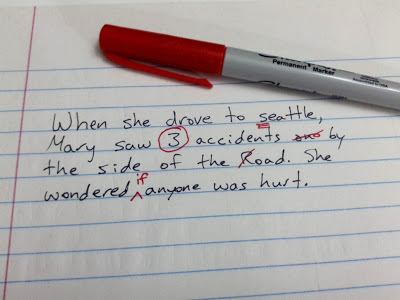
One of the keys is to create it in the first place
and create an excellent work. The next step is to test your words and get
feedback. Some writers gather a group of first readers who will give feedback
about their writing. Other writers have a trusted friend who reads their work
and gives honest insights. Yet others belong to a writer's critique group. If
you are not in a critique group and want to form one or find one, read this
article to learn more details. The key is to write something that is
excellent and others want to read. You will not know if you don't check with the
audience—before you send it to an editor or literary agent. Just using
this process will help you gain an edge over the other submissions—because you
are striving for excellence.
In the journey of going for excellence, you will
have to consider any changes that you learn about in this critique process. Some
suggestions are excellent and you take while others aren't right and you ignore.
You are the only person who can make these decisions about the reactions to your
work.
Finally you have your work ready to send to an
editor or agent. Congratulations. When you send that work, are you willing to
change and follow the suggestions of the editor? Your attitude and willingness
will be critical in this process of finding someone to publish your
work.
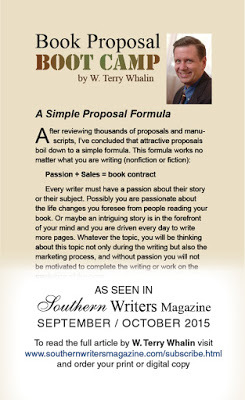
I've been writing for years and I still go through
this process.
Every other month, I write a column about book proposal creation
for Southern Writers
Magazine. I've been writing for them since their first issue. In the last
few days, I completed my November/ December article and sent it to them on their
requested deadline. Each time I send my article, I tell the editor that if
something doesn't make sense or needs to be changed let me know. If I'm honest,
I'm not eager to make those changes and I wonder if the editor will find
something to fix.
Why do I express my willingness to change? Because ultimately
the editor is in charge of their publication. They could decide not to publish
my words. I'm always mindful of who is in charge and has that ultimate power
over what is published and what is not. Sometimes as an editor, I hold that
power but normally it is in the hands of others.
To my relief, I heard from my editor. He loved my
article and sent me the version already laid out for their magazine. I reviewed
it and everything looks great. It is wonderful to have another article in this
publication—but I never take it for granted—nor should you. The professional
attitude is to work with the editor or whoever to produce an excellent result.
Are you willing to change for a better
result?
want to do it—unless we are forced to do it. I've moved several times in the
last few years and every time I move, there are many changes that I'm forced to
make—some I like and others I dislike but change happens. It is a constant in
our lives and our writing life.
Right now are you writing something? A book? A
magazine
article? Are you telling an interesting story that others want to read with
a beginning, middle and an end? We sit at our computers and create words. And
after they are created, we wonder if they are the right words and if our
audience will want to read the words. Will the audience enjoy, like, change or
??? from reading our words?

One of the keys is to create it in the first place
and create an excellent work. The next step is to test your words and get
feedback. Some writers gather a group of first readers who will give feedback
about their writing. Other writers have a trusted friend who reads their work
and gives honest insights. Yet others belong to a writer's critique group. If
you are not in a critique group and want to form one or find one, read this
article to learn more details. The key is to write something that is
excellent and others want to read. You will not know if you don't check with the
audience—before you send it to an editor or literary agent. Just using
this process will help you gain an edge over the other submissions—because you
are striving for excellence.
In the journey of going for excellence, you will
have to consider any changes that you learn about in this critique process. Some
suggestions are excellent and you take while others aren't right and you ignore.
You are the only person who can make these decisions about the reactions to your
work.
Finally you have your work ready to send to an
editor or agent. Congratulations. When you send that work, are you willing to
change and follow the suggestions of the editor? Your attitude and willingness
will be critical in this process of finding someone to publish your
work.
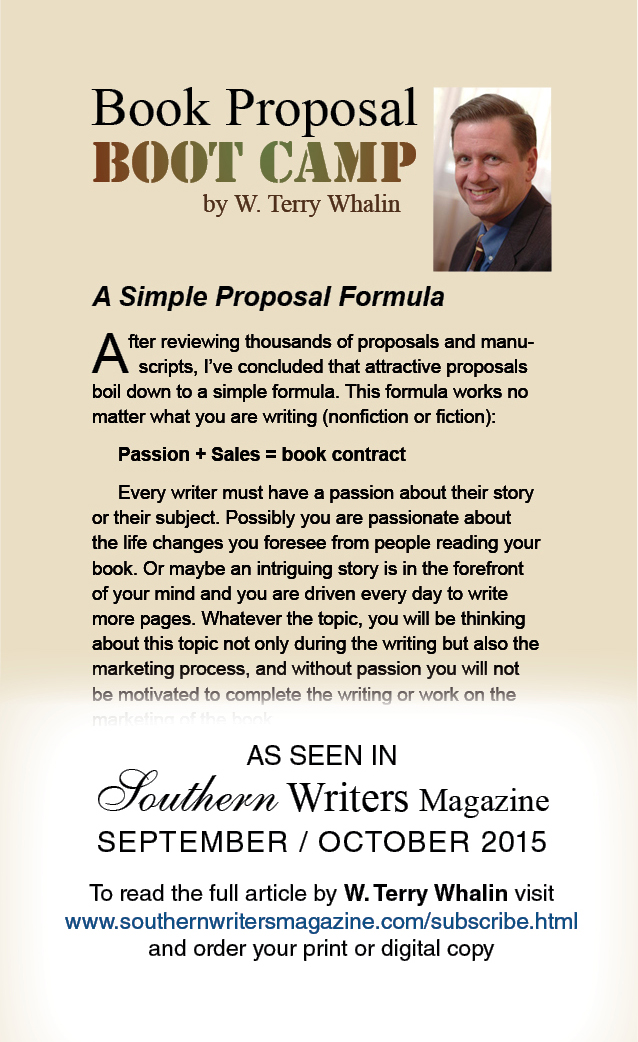
I've been writing for years and I still go through
this process.
Every other month, I write a column about book proposal creation
for Southern Writers
Magazine. I've been writing for them since their first issue. In the last
few days, I completed my November/ December article and sent it to them on their
requested deadline. Each time I send my article, I tell the editor that if
something doesn't make sense or needs to be changed let me know. If I'm honest,
I'm not eager to make those changes and I wonder if the editor will find
something to fix.
Why do I express my willingness to change? Because ultimately
the editor is in charge of their publication. They could decide not to publish
my words. I'm always mindful of who is in charge and has that ultimate power
over what is published and what is not. Sometimes as an editor, I hold that
power but normally it is in the hands of others.
To my relief, I heard from my editor. He loved my
article and sent me the version already laid out for their magazine. I reviewed
it and everything looks great. It is wonderful to have another article in this
publication—but I never take it for granted—nor should you. The professional
attitude is to work with the editor or whoever to produce an excellent result.
Are you willing to change for a better
result?
September 12, 2015
Be More Than An Author
It is terrific to be an author and have books in
the world. Over 80% of Americans plan to write a book at some point during their
lifetime. Many people have published books through traditional publishers or
self-published their book. It's exciting to hold the new book in your hand and
dream of people reading and enjoying your book.
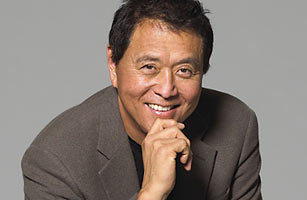
This morning I watched this
eight-year old video of Robert
Kyosaki for at least the third time. Why? Because this video
contains multiple messages and insights from a bestselling author. He and his
wife, Kim, are always learning, always promoting, always selling and do not see
themselves as authors but as entrepreneurs. Leading up to the Quantum Leap
program Steve Harrison offers a series of free teleseminars. The next one is
Thursday, September 17th and you can sign up here. I always learn a great deal from these sessions and recommend it
to you.
If you watch this video, you will hear Kyosaki
encouraging you to be more than an author—to be an entrepreneur. In the last few
years, I've been hearing the term authorpreneur. The word combines the word
author and the word entrepreneur.
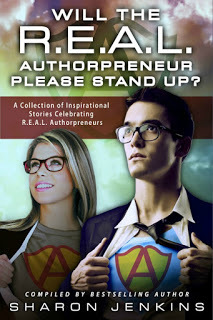
The authorpreneur is “relevant,
entrepreneurial, action-oriented and literary focused.” I pulled these words
from the back cover of Will
the R.E.A.L Authorpreneur Please Stand Up?
An authorpreneur
gets it. They understand they can't simply throw their book into the world and
expect people to buy it just because it exists. No, it takes more effort than
publishing a book to achieve success. I participated in this book and
contributed a chapter to it called Always Learning. If you read this book and
study the content of the various participants, it will get you started on your
own journey to become an authorpreneur.
From my years in publishing, I find many people
looking for the path to become a bestselling author. They are saying, “Just show
me the path and I will follow it.” Unfortunately the journey is different for
each author. If there was a single tool or a single path, every author would
find it and all of our books would sell many copies—which is not happening. The
key from my experience is to always be learning, always trying new tools and new
ideas. If the ideas work and increase your sales and your presence in the
marketplace, great. If not, then discard those ideas and try something else.
The
point is to be taking regular and consistent action in the marketplace. It
certainly will never happen if you do nothing.
As I've written before, 80% of the sales for every
book is up to the author. As an author, I encourage you to follow the
first principle of The Success
Principles by Jack Canfield: I will take 100% responsibility for my
life. It is far easier to blame others and depend on others than to take your
own responsibility.
What actions are you taking today to move forward
for your book?
the world. Over 80% of Americans plan to write a book at some point during their
lifetime. Many people have published books through traditional publishers or
self-published their book. It's exciting to hold the new book in your hand and
dream of people reading and enjoying your book.
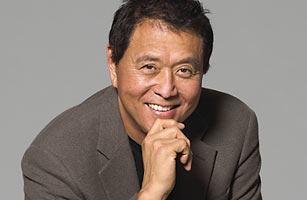
This morning I watched this
eight-year old video of Robert
Kyosaki for at least the third time. Why? Because this video
contains multiple messages and insights from a bestselling author. He and his
wife, Kim, are always learning, always promoting, always selling and do not see
themselves as authors but as entrepreneurs. Leading up to the Quantum Leap
program Steve Harrison offers a series of free teleseminars. The next one is
Thursday, September 17th and you can sign up here. I always learn a great deal from these sessions and recommend it
to you.
If you watch this video, you will hear Kyosaki
encouraging you to be more than an author—to be an entrepreneur. In the last few
years, I've been hearing the term authorpreneur. The word combines the word
author and the word entrepreneur.
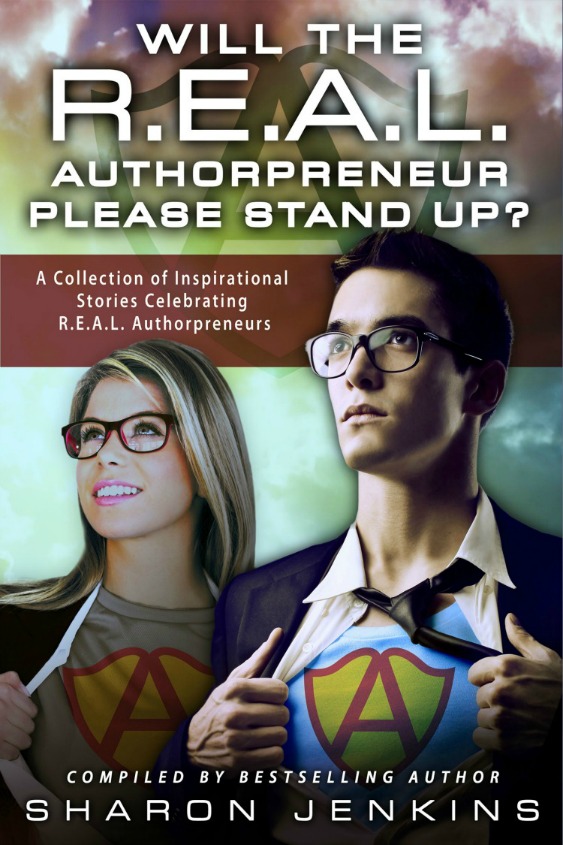
The authorpreneur is “relevant,
entrepreneurial, action-oriented and literary focused.” I pulled these words
from the back cover of Will
the R.E.A.L Authorpreneur Please Stand Up?
An authorpreneur
gets it. They understand they can't simply throw their book into the world and
expect people to buy it just because it exists. No, it takes more effort than
publishing a book to achieve success. I participated in this book and
contributed a chapter to it called Always Learning. If you read this book and
study the content of the various participants, it will get you started on your
own journey to become an authorpreneur.

From my years in publishing, I find many people
looking for the path to become a bestselling author. They are saying, “Just show
me the path and I will follow it.” Unfortunately the journey is different for
each author. If there was a single tool or a single path, every author would
find it and all of our books would sell many copies—which is not happening. The
key from my experience is to always be learning, always trying new tools and new
ideas. If the ideas work and increase your sales and your presence in the
marketplace, great. If not, then discard those ideas and try something else.
The
point is to be taking regular and consistent action in the marketplace. It
certainly will never happen if you do nothing.
As I've written before, 80% of the sales for every
book is up to the author. As an author, I encourage you to follow the
first principle of The Success
Principles by Jack Canfield: I will take 100% responsibility for my
life. It is far easier to blame others and depend on others than to take your
own responsibility.
What actions are you taking today to move forward
for your book?


