
W. Terry Whalin's Blog, page 52
April 11, 2016
When Pitching Select Power Words

In February, the tenth season of The Voice premiered on NBC. I've been watching this program from the beginning and enjoy the Blind Auditions. Four mega-talented recording artists turn their backs to the stage and listen while a contestant has 90 seconds to preform a song. During the song, the four coaches can decide if they want the artist on their team and hit their button. If more than one coach turns, then the contestant gets to select their coach. In this selection process, each of the coaches makes a short pitch to the artist about why they should be selected.
I've been fascinated to watch the words these mega-artists use to entice the contestant to select them. Often the contestant goes into the session hoping to be on one team but the words in the pitch will influence their choice. If you watch the show, I encourage you to focus in on these pitches because you will learn something critical about the power of words. If you haven't seen the show, I encourage you to check out this program.
From my years in publishing, these pitches are similar to the process that happens in with a book proposal or a query or an oral pitch during a writers' conference. In the pitching process, you only have a few seconds to capture the attention of the editor or literary agent. Here's some keys in this process:
1. The writer has researched and knows something about the publishing house or the literary agent. To get their attention, you have to know that professional is interested in your type of writing. You can get this information online or in a writer's market guide or through going to the bookstore and looking for similar books to your proposal.
2. The writer has selected their words to pitch. The subject line for the email is thoughtful and the first paragraph has been written to capture attention. If the pitch is oral and in person at a conference, the author has written their pitch and practiced it so they catch attention.
3. The writer listens to the feedback from the editor or agent. How is your pitch received? Is there interest or a response to send more information? Does the professional suggest some adjustment or refinement? Are you open to those suggestions? The best type of publishing is collaborative where there is some give and take from the editor or agent and the writer.
4. Do you follow-up and submit your materials or whatever is requested? If so, you will put yourself in a different category. One of the surprising facts about this process to me is that many writers never send in their material after a conference. Or they never follow-up on the email from the editor or agent. I've had this lack of response many times in my years in publishing. If you carry through or follow-up, you will be the exception and standout in the pitching process.
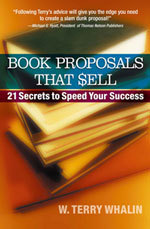 I have much more detailed information in my
Book Proposals That Sell, 21 Secrets to Speed Your Success
. In recent days, I purchased all of the remaining books, have slashed the price and created new bonuses for everyone who gets the book. I wrote this book as a frustrated acquisitions editor who wanted to help writers succeed. Whether you write nonfiction, fiction or children's books, you will learn a great deal from the study of this book. Readers have gotten book deals and top literary agents from using this resource.
I have much more detailed information in my
Book Proposals That Sell, 21 Secrets to Speed Your Success
. In recent days, I purchased all of the remaining books, have slashed the price and created new bonuses for everyone who gets the book. I wrote this book as a frustrated acquisitions editor who wanted to help writers succeed. Whether you write nonfiction, fiction or children's books, you will learn a great deal from the study of this book. Readers have gotten book deals and top literary agents from using this resource.Whenever you pitch, I encourage you to use power words to get the reception you want from the publisher or editor. If the pitch is on target and excellent, maybe like The Voice contestants, you will have more than one agent or editor who wants your work—and you will have a choice in this process.
Tweetable:
What can you learn from The Voice for your own book pitching? (ClickToTweet)


April 5, 2016
Learn the Business of Writing

How do you learn the
business details of the writing world and which tools to use? From my years of
attending writers' conferences, this information is important to your
success as a writer—yet rarely taught.
Later this month, I will
be in Orlando, Florida teaching Business Tools for Every Writer. Much of what I've learned
has been in the school of hard knocks—trial and error. Some of what I will be
teaching is attitude and daily approach. Without a plan or a haphazard plan, you
are certain to hit nothing. If you can’t make this session, I encourage you to
look over my
speaking schedule and try to connect in person at another event.
Part of the challenge of
the writing life is there is no single path to success or a bestselling book. If
an exact formula existed, then publishers and authors would use it every time
with a guaranteed result. It does not exist. Instead there are principles and
actions each of us can attempt for our own books and our own writing life. Then
we can see which ones are relevant and useful and which ones are not appropriate
for you.
Whether you are aware of
it or not, you are constantly making business decisions related to your writing.
For example, when someone wants to buy your book, do you send the customer to
Amazon (or some other online bookstore) or do it yourself? While I've written
more than 60 books for traditional publishers, I've selected several books which
I sell myself. If you look at my book page for
In the last few weeks, I
purchased all of the remaining copies of my bestselling book, Book
Proposals That Sell, 21 Secrets to Speed Your Success. The book has over 130
Five Star reviews on Amazon but don't buy the book there. Why? I've purchased
every remaining copy from my publisher, built my own website, slashed the price
from $15 to $8, created new bonuses if you buy the book from me, written my website (at
http://BookProposalsThatSell.com) and much more.
Yesterday, someone
purchased the book. I took a few minutes, printed a label, printed a packing
slip, packed up the book. Tomorrow I'm headed to my post office to send this
book via media mail. In this process, I made a number of business decisions. I'm
making more money on the book sale. The money is coming directly to me and not
to my former publisher (who paid royalties once a year—which is typical).
Finally I'm putting out more effort to send the book myself instead of sending
it to a bookseller or a third party. Also the person who purchased the book is
on my email list, gets my follow-up bonuses and makes a personal connection with
me—which never happens if they buy the book from someone else.
These small business
decisions are rarely taught—but critical to your own success. First, I encourage
you to be aware of these decisions, then stop occasionally and evaluate these
choices. Is it time to go in a different direction or add a new tool or let go
of a tool which is not working? It is important to learn the craft of
writing and storytelling. Yet it is also important to handle the business
aspects of the writing life.
Tweetable:
Every writer needs to learn the business of writing. Get some encouragement here. (ClickToTweet)
March 29, 2016
How to Make Sense of the Ever-Changing Media World
The world around us is always changing. Magazines and newspapers which existed several years ago are gone. New social networks for authors spring up often. As a writer, you want to make sense of these changes and understand them—but more important than awareness, you want to select the ones which are going to be the most effective for you and your writing.
The advice you find is often conflicting. Some people would say blogging is your path while others will proclaim the key is Pinterest or Twitter or radio. As a writer in the publishing community, you feel pushed and pulled in many different directions so you spin around and around and are unsure which way to go. When I discover this conflicting information, I seek information from long-term experts in the area.

Earlier this month, two PR experts released Mastering the New Media Landscape . I read this book cover to cover and learned a great deal. Some of what I learned is captured in this article.In straight-forward language, Barbara Cave Henricks and Rusty Shelton explain how successful marketing has changed in recent years.
Today’s marketing landscape includes three categories which matter for your focus: rented, earned and owned media. Like a three-legged stool, promotion needs to encompass each area. For years, earned media was the only game in town like television, radio, or a review in the New York Times. As they explain on page 14, “The challenge with earned media is that it is extremely difficult to get.” Rented media is “a presence and content that you control but that lives on someone else’s platform or stage.” (also page 14). Examples of rented media are Facebook, twitter, LinkedIn, Instagram, etc. They are rented because as a user you do not control the platform and for any reason, they could disappear. Owned media is something you control like your blog or website (assuming it is on your own domain) and your email list. Because you own the media, you can make a direct connection to your target audience.

Mastering the New Media Landscape page 15
Mastering the New Media Landscape is packed with current examples and specific how-to information. You will want to use your highlighter with this book and consume every detail, then take action to apply it to the successful marketing of your own products, services and brand.
As they explain in the opening chapter, “The key change we want to encourage you to make is to think of reaching an audience via earned or rented media, not just as the end goal but rather as crucial components of driving people to your owned media space, be it your website or email list, where you can extend that interaction for a much longer period of time.” (page 20)
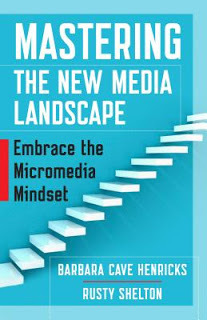
Many authors and even some publishers and “PR experts” have a haphazard plan to embrace the changing media landscape. I highly recommend a careful and thorough reading then application of Mastering the New Media Landscape .
To summarize, here's two key points for every writer:
1. When you need advice, turn to experts—not just the first person who crosses your path but someone with years of experience.
2. Try their advice and if it works follow it. If it does not work for you, stop. Your path to find your audience is different from my path. Each of us need to take action and be working at it. Doing nothing is the sure path to failure. Take action today.
Tweetable:
How do you understand the ever-changing media landscape? Find out here: (ClickToTweet)
The advice you find is often conflicting. Some people would say blogging is your path while others will proclaim the key is Pinterest or Twitter or radio. As a writer in the publishing community, you feel pushed and pulled in many different directions so you spin around and around and are unsure which way to go. When I discover this conflicting information, I seek information from long-term experts in the area.

Earlier this month, two PR experts released Mastering the New Media Landscape . I read this book cover to cover and learned a great deal. Some of what I learned is captured in this article.In straight-forward language, Barbara Cave Henricks and Rusty Shelton explain how successful marketing has changed in recent years.
Today’s marketing landscape includes three categories which matter for your focus: rented, earned and owned media. Like a three-legged stool, promotion needs to encompass each area. For years, earned media was the only game in town like television, radio, or a review in the New York Times. As they explain on page 14, “The challenge with earned media is that it is extremely difficult to get.” Rented media is “a presence and content that you control but that lives on someone else’s platform or stage.” (also page 14). Examples of rented media are Facebook, twitter, LinkedIn, Instagram, etc. They are rented because as a user you do not control the platform and for any reason, they could disappear. Owned media is something you control like your blog or website (assuming it is on your own domain) and your email list. Because you own the media, you can make a direct connection to your target audience.

Mastering the New Media Landscape page 15
Mastering the New Media Landscape is packed with current examples and specific how-to information. You will want to use your highlighter with this book and consume every detail, then take action to apply it to the successful marketing of your own products, services and brand.
As they explain in the opening chapter, “The key change we want to encourage you to make is to think of reaching an audience via earned or rented media, not just as the end goal but rather as crucial components of driving people to your owned media space, be it your website or email list, where you can extend that interaction for a much longer period of time.” (page 20)
Many authors and even some publishers and “PR experts” have a haphazard plan to embrace the changing media landscape. I highly recommend a careful and thorough reading then application of Mastering the New Media Landscape .
To summarize, here's two key points for every writer:
1. When you need advice, turn to experts—not just the first person who crosses your path but someone with years of experience.
2. Try their advice and if it works follow it. If it does not work for you, stop. Your path to find your audience is different from my path. Each of us need to take action and be working at it. Doing nothing is the sure path to failure. Take action today.
Tweetable:
How do you understand the ever-changing media landscape? Find out here: (ClickToTweet)
March 26, 2016
Sell More Books Through Social Media
I’ve lost track of the number of authors who have told me that they’ve heard that social media is great for book sales, but the time they spend on Twitter, Facebook, and Pinterest feels like a complete and total waste.
“I put in lots of hours but it makes no difference with my sales,” they complain to me.
Using social media for book sales is tricky, for sure. Do it the wrong way, and you’re wasting precious time you could be spending writing your next book.
But do it the right way, and you can see those sales start rolling.
Still . . . what’s the wrong way to use social media for book marketing and what’s the right way?
You could spend hours researching that subject on the Internet and get so many conflicting – and wrong – opinions that you’re even more confused (and have wasted even more time).
But help is finally here.
My friend and colleague Sandra Beckwith of Build Book Buzz has talked an expert in social media marketing for authors into spilling the beans and sharing the trade secrets she uses when working with her author clients. They’re collaborating on a training webinar for authors that will teach you “How to Sell More Books With Social Media.”

Date: This Wednesday, March 30, 2016
Time: 7 pm ET/6 pm CT/5 pm MT/4 pm PT (calculate for your time zone)
Place: Webinar – 1 hour includes participant Q & A
Replay: Everyone who registers will get a replay link
Use this affiliate link to learn more detail.
By the end of the webinar, you will know (among other things):
• The secret behind successful Facebook ads
• How to evaluate online book promotion opportunities
• How to identify and find your best readers online
• Popular social media activities that are a waste of time
• How to use your time online to get sales results
Sandra tells me there’s a limited number of seats available, so register now so you don’t miss out. Here’s my affiliate link to register.
I know it will be a great session – Sandra’s training events never disappoint! I’ll watch for you on the webinar on Wednesday!
Tweetable:
Attend this March 30th event to sell more books through social media. (ClickToTweet)
March 22, 2016
Every Writer Needs This Critical Skill

These days almost everyone writes with a computer. Because producing words is so easy, you can be lulled into the idea that anyone can be a writer. Yet the specific words you write are important. Which words are you selecting when you write and are you using the right combination?
Whether you are writing a children's book or a novel or nonfiction or a personal experience magazine article, your word choice is critical. How do you learn this skill? You will use it in many aspects of the work—from the title for your book or the headline for your article. Or the words on the back cover of your book which helps a reader know if they should purchase your book or press on to the next one.
In the writing business, creating words which sell is called copy and the specific skill is called copywriting. The good news is you can learn this skill as a writer.
First, you need to be aware your word choice is important and can drive sales. Years ago as a young journalist, I learned the power of writing great headlines to draw readers. When you write a headline or the words on a website, what is drawing readers? Be aware of the response. Do people click your button and buy your material or do they breeze past it? Awareness is a critical step.
Second, practice. When you write a blog post or a magazine article or a book proposal or a book manuscript. Think carefully about the title or headline. Are you telling a story that pulls the reader into your writing? What are the words doing and are they achieving what you want? This type of internal analysis will help you be more deliberate about your word selection.
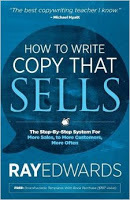
Third, there are skilled teachers who teach copywriting. One of the best in this area is Ray Edwards. Recently Edwards has published a new book, How to Write Copy That Sells . The book is less than 160 pages and covers key topics like headlines, emails, bullet points, irresistable offers, secrets of product launches and much more. Each chapter begins with an inspirational quote like the one for chapter four, “Make it simple. Make it memorable. Make it inviting to look at. Make it fun to read.” — Leo Burnett
As an acquisitions editor, I read a great deal of unpublished pitches and manuscripts. Some writers have learned their words have power and they pull me into their manuscripts. Others lack this critical storytelling skill. If you learn this skill, it will increase your sales potential. It doesn't matter what you are writing at the end of the day you are selling something. The sooner you can learn this skill, the sooner your writing will be published and sell.
Tweetable:
Every writer needs this critical skill. Learn the details here. (ClickToTweet)
March 19, 2016
The Details of Your Writing Life Are Important

Let me begin with this good news. Every writer can learn the skill of handling the details. Some of us are only focused on the big picture with our writing. We are determined to complete a particular book or magazine article and writing on it every day to meet this goal. Yet the craft of your words and storytelling is important. Are you sending it to the right editor? Are you using the correct spelling of that editor's name? The details matter.
Every Writer Needs This Info
In the last few weeks, I purchased all of the remaining copies of Book Proposals That Sell . With over 130 Five Star reviews and great feedback about this book over the years, I know it has helped many writers to succeed in the world of publishing—no matter what type of book you write. I wrote this book from my passion as a frustrated acquisitions editor to help writers send better submissions. If you don't have a copy, it has never been so inexpensive and available only from me. Follow the link to learn more details.
As a part of this effort, I purchased a website, wrote the words for that website, created special bonuses and have been telling others about this effort through emails, articles and twitter. In the process of setting up this launch, I created five emails on autoresponders. These autoresponders contained the bonus items for those who purchased the book.
Today I received an email from one of these people who purchased Book Proposals That Sell . He had not received these bonus item emails. The email clued me that something was wrong some place in the process. I investigated my shopping cart and learned that I neglected to click one button in one place. From working with computers for years, I've learned one simple truth: the computer only does what you tell it to do. I had skipped one important detail and no one got their bonus items. Talk about embarrassing!
One by one, I will be sending all five bonus items via email today to each individual. For anyone who buys the book in the future, I will be watching my shopping cart closely to make sure they are getting these extra messages.
There are several lessons for you from my experience:
1. The details are essential. As writers, you ignore them at your own peril. Your submissions will not hit the target nor get results if you do not work at the details.
2. Listen to your audience. When they tell you something, spring into action or make adjustments.
3. Deliver on your promises. Your word and integrity are important. And if something goes wrong, apologize (everyone is human) and then fix it as soon as possible.
4. Work hard to maintain and keep your relationships. Years ago, I heard John Kremer, author of 1001 Ways to Market Your Book say, “Selling books is all about building relationships.” See the truth in this statement?
Whatever you are writing or promoting, the relationship is critical and the details of your writing life are important.
Tweetable:
Why are the details of your writing life important? Here's four practical lessons. (ClickToTweet)
March 13, 2016
The Constant Wish of Every Author

Are you making wishes as an author?
Several weeks ago I was skimming on Facebook and noticed one of my author friends was talking about a new book. I wrote this friend and offered to review her book. She was going to ask her publisher to send me a book. I promptly pressed on to something else and almost forgot about it. Then the review copy arrived this week. I'm eager to write a few words of review to help my friend.
The publisher launched this book on March 1st. As a part of my process of getting ready to review this book, I checked the book page on Amazon. Nine days after the launch, it looked like my review was going to be the first one. There were no reviews for this book. Reviews are important to every author because they are social proof that readers love your book. It's why I work as an author to ask others to review my book and also review books for others on Amazon and Goodreads.
I emailed my author friend about her lack of reviews. Now this author has sold thousands of copies of some of her other books. She has a full-time job—not as an author. Despite her years in publishing, I found her response interesting. Her email blamed the lack of effort on the marketing department of her publisher.

It is the constant wish of every author to have someone else market and sell their book. Each of us want a marketing department who has the same passion for our book and subject that we have. The majority of authors are introverts and don't enjoy marketing or even want to think about telling others about their book. Recently I heard bestselling author Brene Brown's book, Rising Strong . In this book, Brene describes herself as an extreme introvert. Her view is common among authors from my experience.
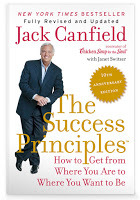
One of my favorite books is The Success Principles by Jack Canfield. I've read the book and also heard the audio on this book. Why? Jack studied the principles that people follow to be successful and I want to be successful as an author. The first principle in the book says, “Take 100% Responsibility for Your Life.”
This principle applies to the constant wish for every author to have someone else market your book. Are you reaching out to your target audience? Have you identified your target audience for your book? Where are they and how are you reaching out to touch them on a consistent basis? It does not have to be daily but it does have to be regular. Give them great content on your topic and in that process point them to more information inside your book.
One of the best ways for you to take responsibility is to create your own marketing plans. Whether you self-publish or have a traditional publisher to get your book into the bookstore, these plans are important. Whether your book is launching soon or has been out for a while, you need to be creating and executing your own marketing plans.
A marketing plan from the author is a key element in every book proposal. The proposal is your business plan. If you have such a plan, are you taking action to execute it? Does your plan need adjustment and updating? I give much more detail about these elements in Book Proposals That $ell, 21 Secrets to Speed Your Success . If you don't have this book, it has never been so affordable at only $8. I have all of the remaining copies so don't try and get it from Amazon (despite the over 130 Five Star reviews). Get it directly from me (use the link).
Whether you have a traditional book or self-publish, you can do it—but you have to take daily action. If I can help you, my personal email is in my twitter profile. In the comments, let me know what actions you are taking to market your book.
Tweetable:
What is the constant wish of every author? What can you do about it? (Click to Tweet)
March 8, 2016
Why Every Author Needs to Understand Your Competition

Consider the competition for your book. When I have
asked authors about the competition, some authors say, “I don't have any
competition. My book is unique.”
Another author thinks about it and says, “Everyone.
My book competes with every other book.”
From my years in publishing, the answer is neither
one and important for every author to understand. Take a few minutes and imagine
your book concept as a real book. If you have one it's easy but if you just have
an idea, think about the cover, title and your name on it. Got that image? What
section of the bookstore will your book appear? With this information, think
about the current titles in this section? what books are facing out on the
shelf? These books are your competition. The reader could reach for your book to
take to the cash register (purchase) or they could reach for the bestselling
title.
Next write down these titles and investigate them
using tools like Google. Can you get any sales numbers or information about
them? This information is important for your pitch to literary agents and
editors. You also need to include these insights about your competition in your
proposal. Your careful consideration here will differentiate your pitch from
others—and increase the chances of a traditional publisher contracting your
book.
Even if you self-publish, you need to have this ammunition for your approach to the marketplace. If your book has been in print,
you still need this information about the competition. Your literary
agent and editor need this information to target your book. Needed it to get
even issue a contract when I worked at another publishing house.
Now with this understanding about your book and
target market.
What steps can you take to reach out and befriend that author and
do something for that book? Take for example, my Book Proposals That
$ell . While this book has helped many people, I've also reviewed other
competitive books which are similar to mine. Just check out this article for more detail.
Why?
A key concept to understand your competition is a
matter of attitude and perspective. Instead of the scarcity mentality where you
have to protect your turf, I encourage you have the opposite attitude of
abundance and cooperation. There are many potential readers and buyers
for every book and every author. You can build bridges instead of
competition. You can work with these other authors to cross-promote and much
more if you have the right perspective.
Do you need more ideas about how to understand and
take advantage of your competition? Whether you self-publish or work with a
traditional publisher, every author needs to understand this critical concept. I
have more information in Book Proposals That $ell, 21 Secrets to Speed Your
Success . This bestselling book has over 130 five Star
reviews but don't get it from Amazon. I've reduced the price from $15
to $8 and included unique bonuses if you get it directly from me. This book is a
tested product which has never been this affordable or accessible.
What steps are you taking with your competitors?
Are you thinking about this critical element and adding it to your proposals?
Tell me your action steps in the comments below.
Tweetable:
Every author needs to understand their competition. An editor gives you ideas. (Click to Tweet)

March 5, 2016
Shocking News For Authors
The Book Business Is A Business First

Before I began working inside a book publishing house, I had written more than 50 nonfiction books, ranging from children's to adult books. I have never self-published a book and always worked through traditional publishers.
However, I was unaware of the financial production numbers for nonfiction books and I found it shocking--and something critical for potential authors to understand. The author never sees these figures for their books as the publisher doesn't reveal them throughout the contract negotiation process. A publisher will produce these financial calculations as simply a part of good business practices. As an author, understanding this helped me see publishing as a business. Authors have huge amounts of time and emotional investment in their words. When I saw these production numbers, I understood that the publisher, not the author, has the largest out-of-pocket cash investment in a book.
Inside the publisher, the editor will gather a sales projection about how many copies the sales department believes they can sell of your title the first year. That sales figure will be used to calculate the production costs of ink, paper and binding for various amounts of printing (5,000, 10,000 or 15,000 copies). As the initial print number is raised, the cost per book decreases.
You may ask, So why not print a large volume each time? The answer is, if the publisher prints a large number of copies, then he has to store those copies in their warehouse (read cost and expense), plus make sure they actually sell those copies within a year's time frame. The cost of tying up financial resources in storing and warehousing books that aren't selling is large. Also the federal government taxes publishers on each copy in storage. These tax rules have forced publishers to think long and hard about how many copies of each book to print.
Inside my former publisher, we calculated the overall printing details of the book (paperback with general publishing look or hardcover with jacket) and the number of books to print before offering a book contract. In short, publishers pour a great deal of work into their books and financial projections before they call you and offer a nonfiction book contract. Understanding this process helps you see some of the reasons it takes such a long time for an author to receive a publishing contract.
Often the publisher returns to an author with whom they have already published a book. If the publisher takes a second or third book from the same author, they are investing in that author's career and trying to build that author's audience and market. If the author's books are selling well, then the publisher will be eager for another project. Each week, publishers monitor sales numbers on their books to see if particular authors merit another book contract.
Many writers focus only on the creative aspects of writing a book and getting it published, but the executives inside a publishing house are business people who want to sell books and turn a profit at the end of the day. It's a delicate balance between creating the best possible product and assuring that each product has the best opportunity to sell into the market and reach the target audience.
Editor note: This article is an excerpt from my bestselling book, Book Proposals That $ell, 21 Secrets to Speed Your Success . It has over 130 Five Star Amazon reviews but don't get it from Amazon. Recently I've purchased the remaining copies and cut the retail price from $15 to $8. I've added bonuses and much more. Get it direct from me at: http://BookProposalsThatSell.com Take action today because supplies are limited.
Tweetable:
Get this Shocking News for Authors from an experienced editor (Click to Tweet)


Before I began working inside a book publishing house, I had written more than 50 nonfiction books, ranging from children's to adult books. I have never self-published a book and always worked through traditional publishers.
However, I was unaware of the financial production numbers for nonfiction books and I found it shocking--and something critical for potential authors to understand. The author never sees these figures for their books as the publisher doesn't reveal them throughout the contract negotiation process. A publisher will produce these financial calculations as simply a part of good business practices. As an author, understanding this helped me see publishing as a business. Authors have huge amounts of time and emotional investment in their words. When I saw these production numbers, I understood that the publisher, not the author, has the largest out-of-pocket cash investment in a book.
Inside the publisher, the editor will gather a sales projection about how many copies the sales department believes they can sell of your title the first year. That sales figure will be used to calculate the production costs of ink, paper and binding for various amounts of printing (5,000, 10,000 or 15,000 copies). As the initial print number is raised, the cost per book decreases.
You may ask, So why not print a large volume each time? The answer is, if the publisher prints a large number of copies, then he has to store those copies in their warehouse (read cost and expense), plus make sure they actually sell those copies within a year's time frame. The cost of tying up financial resources in storing and warehousing books that aren't selling is large. Also the federal government taxes publishers on each copy in storage. These tax rules have forced publishers to think long and hard about how many copies of each book to print.
Inside my former publisher, we calculated the overall printing details of the book (paperback with general publishing look or hardcover with jacket) and the number of books to print before offering a book contract. In short, publishers pour a great deal of work into their books and financial projections before they call you and offer a nonfiction book contract. Understanding this process helps you see some of the reasons it takes such a long time for an author to receive a publishing contract.
Often the publisher returns to an author with whom they have already published a book. If the publisher takes a second or third book from the same author, they are investing in that author's career and trying to build that author's audience and market. If the author's books are selling well, then the publisher will be eager for another project. Each week, publishers monitor sales numbers on their books to see if particular authors merit another book contract.
Many writers focus only on the creative aspects of writing a book and getting it published, but the executives inside a publishing house are business people who want to sell books and turn a profit at the end of the day. It's a delicate balance between creating the best possible product and assuring that each product has the best opportunity to sell into the market and reach the target audience.
Editor note: This article is an excerpt from my bestselling book, Book Proposals That $ell, 21 Secrets to Speed Your Success . It has over 130 Five Star Amazon reviews but don't get it from Amazon. Recently I've purchased the remaining copies and cut the retail price from $15 to $8. I've added bonuses and much more. Get it direct from me at: http://BookProposalsThatSell.com Take action today because supplies are limited.
Tweetable:
Get this Shocking News for Authors from an experienced editor (Click to Tweet)
March 1, 2016
How Do You Respond When You Find a Low Number?

I stared at the number of views on YouTube in disbelief. How could it be that small? Only 80 views? I recorded the interview a year ago with my friend Al Gansky talking about my work with Billy Graham and my book, Billy Graham, A Biography of America's Greatest Evangelist .
After the interview, I blogged about the interview. All of my people on my blog list received a copy of the interview through their email and also others saw it directly on the site. Why so few views? I looked at some of the other people Al had interviewed and they had many more views.
Then reality hit. I had only promoted the interview at the actual time of the event. I had put no on-going promotion in place with my social media or other ways. Immediately I made a decision to pour more promotion into this interview—and hopefully the numbers will increase. I'm embedding the YouTube interview here to make it easy for you to watch:
Al and I were talking about my unique background to write this particular book. I hope you will enjoy this interview and I want more people to know about it.
For every writer, it's part of the process to receive low numbers. Sometimes it is a report on the book sales of your latest book. Other times only a few people have registered for one of your teleseminars or even a live event. I've taught workshops at large conferences where I have two or three people attending my continuing class. Other times I've taught at the same large conference and had a packed room. Each time I decided to teach those couple of people as though I had a room full of people. My teaching was recorded and I determined to take advantage of this recording and continue to promote the results. Please check my speaking schedule to see where our paths will cross in the months ahead.
Back to my original question in the title of this article, how to you respond when you discover a low number? Do you blame others? Maybe your publisher isn't working hard enough to tell people about your book? Instead of trying to put the blame on others, I encourage you to look inside first. Ask yourself, if you poured the right energy into producing a great product. Is the cover well-done? Is the book broadly distributed? Did you hire an editor and make an excellent book?
If the product or event is well-done, then the next question is about the marketing and sales. If the numbers are low, take your own responsibility and be telling more people about your work. Make some calls to schedule more local events. Pitch some magazines with excerpts of your book or write articles on similar topics and promote your book in your bio at the end of the article. You can reach thousands of people using such a strategy. Or step up your social media and get more people viewing your work.
Several weeks ago I received the royalty statement for one of my continual bestselling books. Whenever I speak at conference, for years I sell more of this book than any other. My royalty statement was dismal with low numbers.
I took action to see what could be done. Would my publisher return the rights to the book? Yes if I purchased all of the remaining copies. It was not a small investment on my part to take this action—but a strategic one. As the author, I have the most passion about this topic (more than my publisher). If I own all of the printed copies, then I can reduce the price to sell more books. Also I can create marketing campaigns to sell the book—one by one and also in volume. I'm actively working on these details and you will be hearing more about it in the days ahead. I did not let this important book remain at low sales. I have over 130 Five Star Amazon reviews for this book and it continues to help people. The decision will involve hard work but is worth my efforts.
The book is Book Proposals That Sell, 21 Secrets to Speed Your Success . If you haven't got a copy, now is the time because of the reduced price. Just follow the link. Also you will receive a series of unique bonuses that I've created for anyone who buys the book.
If you have the book and haven't reviewed it, then I encourage you to take a few minutes, write a few sentences of review on Amazon and Goodreads. Please do not purchase the book from Amazon since I have all the remaining copies and you will get it cheaper from me (and if you ask, I'll sign it to you. Just let me know the details in the special instructions section of my shopping cart).
Just like I took action, your actions make a difference. If you do nothing, then nothing will continue to happen. If I can help you, let me know. My email is in my Twitter profile.
Tweetable:
What to do when you find a low number? #marketing (Click to tweet)


