Andy Burnham's Blog, page 216

December 4, 2019

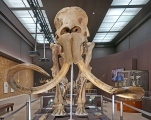
Musée d’Anthropologie Préhistorique

The Museum of Prehistoric Anthropology is located within the Jardin Exotique de Monaco. It was founded by Prince Albert I in 1901 and contains a collection of fossils and other excavated artefacts from the prehistory of Monaco. Famous parts of the exhibition are the mammoth skeleton, the so-called Grimaldi Man and finds from the nearby cave Grotte de l'Observatoire (see the nearby sites on this page), which was inhabited by humans in the Stone Age.
 •  0 comments  •  flag
Share on Twitter
Published on December 04, 2019 06:15

December 2, 2019

UK General Election - Please Vote - an Archaeology Related Roundup to help
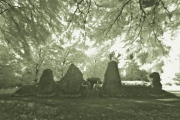
In the UK we are about to have the most important General Election for a Generation. It's not for us to tell you how to vote but it really does matter more than ever this time so please use your vote wisely. To assist, here is a compilation of some links and articles relating to archaeology and heritage issues, along with space for more links and your comments.
 •  0 comments  •  flag
Share on Twitter
Published on December 02, 2019 07:58

November 25, 2019

Northern Earth 159 Out Now
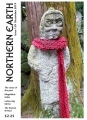
In the December 2019 issue of Northern Earth: Early humans digested - From the Philippines to Tibet, from Denisovans to hobbits, from Australia to Greece * Real fairies- Fairies may be traditional, but have they yet fled our lands? * The monoliths of Mawkywrat, India * Flames in a Yorkshire hearth
 •  0 comments  •  flag
Share on Twitter
Published on November 25, 2019 09:51

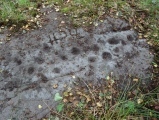
Whitehill 5

A summary account of the excavations at Whitehill 3, 4 and 5 rock art panels in August 2019, more details in the comments on our page. Also new is Visualising Heritage Complexity: Comic Books, Rock-Art and the Cochno Stone by Kenneth Brophy and Hannah Sackett, published as part of Public Archaeology - Arts of Engagement. The whole book is a free download - more details here.
. Rock Art in East Dunbartonshire. This large rock surface is decorated with at least 18 (possibly 21) cup-and-ring marks and 45 cup-marks. Most of the motifs are under turf, but a sizeable part of the panel with cup-marks and couple of very eroded cup-and-ring marks is still exposed.
 •  0 comments  •  flag
Share on Twitter
Published on November 25, 2019 09:00

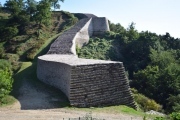
SamnyeonSanseong

A fine and very solid hillfort in South Korea, which can be seen clearly from some distance. It is the only hillfort whose construction is recorded in literature : the construction by Silla kingdom began in 470 CE and was accomplished 3 years later ; ‘samnyeon’ means ‘three years’ (‘sanseong’ means ‘mount castle’). 1,680m circumference.
Now preparing for registration as a UNESCO World Heritage site.
 •  0 comments  •  flag
Share on Twitter
Published on November 25, 2019 02:37

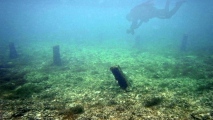
Konstanz-Hinterhausen

The crannog Konstanz-Hinterhausen is located in Konstanz at the Lake Constance (Baden-Wuerttemberg, Germany). It was mainly used between 4000–3500 BC as well as 3000–2500 BC. Finds from the Neolithic Goldberg-III-Gruppe were made at the site.
 •  0 comments  •  flag
Share on Twitter
Published on November 25, 2019 02:35

Arecleoch Standing Stone

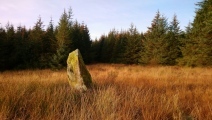
A single standing stone in a clearing in the Arecleoch Forest. The forest is now part of a wind farm. Forest tracks can be walked to within a couple of hundred metres of the stone, followed by walking down an extremely boggy fire break in the trees to access the clearing.
 •  0 comments  •  flag
Share on Twitter
Published on November 25, 2019 02:31

November 22, 2019

Allerød Langdysse 2
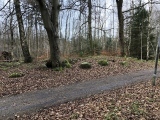
Located directly beside a tarmacked bike lane in Frederiksborg sits the remains of a long barrow. The barrow is clearly visible. It has a total length of 12 metres and a width of 8 metres. Following the edge of the barrow 22 kerbstones are still in place. On top of the barrow are two very large depressions - presumably the location of burial chambers that have been dug up in the past.
 •  0 comments  •  flag
Share on Twitter
Published on November 22, 2019 13:58

Dolmen de Pinsac

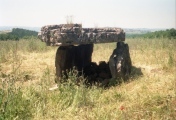
A "look-through-the-chamber" dolmen in Aveyron, photos taken June, 2002 from a colour-negative.
 •  0 comments  •  flag
Share on Twitter
Published on November 22, 2019 13:56

Legis Tor Ossuary

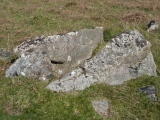
An intriguing structure consisting of two very large parallel slabs on Legis Tor. The site was discovered by William D. Lethbridge who suggests it might be an ossuary. This is quite clearly a man made structure. The two very large parallel slabs look very much like they are an artificial construction rather than natural. One end has a clearly built up wall to form a structure.
 •  0 comments  •  flag
Share on Twitter
Published on November 22, 2019 13:51