Kara Dennison's Blog, page 6
April 2, 2025
What I've Learned (So Far) Running Girl by Moonlight

A while back, I mentioned I'd be taking a crack at GMing properly. I've made small attempts before, but my campaign of Girl by Moonlight: On a Sea of Stars is my first time really digging in and doing my damndest. I've got a great group of players and... well... I also love this system.
Besides just wanting to run a cool game for friends (two of whom are Forever DMs themselves, two of whom don't get to game as much as they'd like), I also wanted to start actually learning how to run games. I'm four sessions in, with many more to go, and there are a few things I've picked up so far. Old news to you old hands out there, I'm sure. But maybe there's someone who, like me, could use some encouragement and a look at the basics.
GMing Also Means Teaching
 Art by Si F Sweetman
The only games that are "easy" are games that are designed to be easy (I'm thinking of Grant Howitt's amazing one-page games, which are great for beginners). No matter how good a game's structure is, or how much it feeds into what you and your group want to do, it still has to be learned. A part of GMing I never expected was the teaching aspect, but in retrospect, it's pretty obvious, isn't it?Girl by Moonlight has a lot of moving parts, and plays with the Forged in the Dark system in interesting ways. For example, everyone gets stress from personal obligations at the beginning of a session, and that stress is wiped at the end (with certain exceptions). Links are also used as a sort of interpersonal inspiration token: take time to get to know your teammates, and in return they can offer you free assistance in combat. In fact, a lot of this system runs on what you're willing to do for others. Healing can only be done by someone else helping you, for instance.
In retrospect, I sort of wish I'd gone the route Luke Westaway did in Oxventure Presents Blades in the Dark. He introduced some of the crunchier mechanics slightly later in the campaign's run, allowing the players to get accustomed to the basics. That said, I've been finding my own ways to teach the system. While NPCs with sheets aren't a thing in Forged in the Dark games, I used a fan-made support playbook to create a sort of DMPC. The way she's built, both mechanically and as a character, I can use her to demonstrate how to get the most out of what's available.
I've also taken to turning references into "tokens" on Roll20, placing them within view but out of the action. That way, players know at a glance what Links can be used for. It's very much dependent on the group, I suppose, how you teach a system. But between the Roll20 integration and making things readily visible to everyone, I think I'm getting there.
You Can Say No to the Book
 Art by Si F Sweetman
Rules exist for a reason: to make games fair and fun. But if there's something in a book that just doesn't suit anyone, and it's not at the core of what the game is or how it's played... it's okay to do away with it. Case in point, Girl by Moonlight's stipulation that campaigns "start during the second season." I understand that generally: it allows players to know each other, build up the Promises that will help them dictate their action, and jump straight into the "good stuff."
Except... to me? The introduction is a major part of the "good stuff." So no, we started at episode 1. And I did the series design privately, working in elements that I knew the players would enjoy. That meant making a few tweaks, like having players set up their Promises after session 1 and altering when and how players first formed Links with their robots. But it's been worth it.
Similarly, I have one player playing the Enigma playbook. Generally, character info is supposed to be readily available over the table—and I do trust these players not to metagame. But the player requested that there be a period of time in which the mystery can be built up even to the players. Is this accounted for in the book? No. But who cares? To that end, we set up a clock that is ticking down based on rolls and events in the game. This means that a lot of mechanics are temporarily off the table. But for the fun of the mystery and the inevitable big reveal? It's worth it.
I'm Still a Player
 Art by Si F Sweetman
Kiiiiind of. It's hard to explain.
Like, GMing is hard. It really is. It's a fun kind of hard—I'm writing on the fly, and I don't get to go back and edit. Ideas get thrown at me that aren't mine, and once in a while I see two that fit together and they make something new, and then I get to integrate it next week. But spinning all those plates is tough, and I'm still getting used to keeping them all in the air.
That said, I don't feel disconnected from the players. I may be the one calling most of the shots, but it feels like we're all here doing the same thing. We're all at a party, I'm just the one cooking dinner. Doesn't mean I don't get to enjoy the dinner, too.
Keeping that mindset—that we're all here for the same reason, that everyone is throwing their creativity down on the table—helps me get over that constant fear that I'll disappoint everyone or make a bad game. But at its best, I don't feel like anything's changed. I'm not against the players, even if I do throw them challenges. When I do the Mission phase, I have a few conditions laid out for what can or should happen. But I don't necessarily stick religiously to those conditions. If someone does something cool that makes complete sense for the scene, so be it: we follow that. I described the Mission phase as a game of chess between me and the players. There's not a stat block with HP, there's just a scene. Once they've outwitted me in a way that I can't help but love, they've done it.
The main thing I've learned, though, is that I want to keep GMing. I also want to keep playing, of course. But I think I like this. All I want in life is for the things I create to bring people joy. And where I initially thought GMing would force me to confront embarrassment and failure in real time, it's more like I'm getting to see something I made—something I am making in the moment—hitting home for people. Ain't no way I'm giving that up anytime soon.


March 26, 2025
COMING SOON: Total Extermination - Peter Cushing's Dr. Who

I'm not unaccustomed to NDAs in my line of work, but it never gets easier to sit and wait for the opportunity to tell people something cool you know or have done. Fortunately, I now get to: I'm in the featurettes for the upcoming 4K UHD release of Peter Cushing's Dr. Who films from Severin Films.
If you don't know what the Cushing Dr. Who films are... welcome, you are from outside my usual demographic! These two films—Dr. Who and the Daleks and Daleks' Invasion Earth 2150 AD—are adaptations of the First Doctor serials The Daleks and The Dalek Invasion of Earth. While they adapt the early series history of the Daleks relatively faithfully, they take liberties with the core cast. For example, Dr. Who (his government name) is a human man tinkering with a homemade time machine, Susan is a literal child rather than a teen, Barbara is another of Dr. Who's granddaughter, and Ian is Roy Castle having an especially awkward day.
When I was approached about being a part of this release, I was told they wanted insight other than behind-the-scenes information. And, seeing what other extras are included, I understand why! Each movie has multiple audio commentary tracks, interviews with cast and crew, and even special features about the 4K restoration itself. The extras across both discs add up to more than ten hours, covering pretty much everything you could hope to know about the films.

Given my background with the Black Archive and my interest in how Doctor Who as a show is put together, I wanted to explore how we look at these movies as modern viewers. While plenty of fans remember these films fondly, they're often also judged based on how (or whether) they slot into Doctor Who canon as we know it. And there's so, so much more to them. How they work as films on their own, why they existed in the first place, and what we miss when we concentrate on canon-welding over meeting these movies where they are.
Beyond that, you'll have to check out the featurette!
While it's not my first time talking about a piece of media (I do that to some degree every day), it was my first time having a film crew in my house. Nervous? Extremely. But the people filming were lovely, we chatted about Doctor Who and anime, and my living room was rearranged for filming and then put back again by afternoon. It was also a good opportunity to get out some of my own model Daleks for set dressing.
I've not seen the full featurette, but you can see a wee clip of me within the first two minutes of Severin Films' March release trailer.

My own involvement aside, I'm extremely excited about this new release. It's going to be amazing to have restored versions of both films, and the people involved with the extras are lovely. Robert Shearman, Mark Gatiss, Mike Tucker, Emily Cook, and so many more people who are really wise about this series and its workings are all involved. I'm especially looking forward to the audio commentary featuring Roberta Tovey (who played Susan) and the archival interview with the late Bernard Cribbins. The first disc will also include the 1995 documentary Dalekmania, which I can't wait to have in my library.
Total Extermination: The Peter Cushing Doctor Who Collection drops on June 24. The slipcase release comes with that awesome case above and both films. You can also order each film separately. My featurette, Kara and the Daleks, will be on the Dr. Who and the Daleks disc.
March 19, 2025
March 2025 Book Reviews

Better late than never, I say! The past few weeks have been busy—equal parts work, health concerns, and things I can't talk about just yet (but look forward to talking about when I can). Nonetheless, five books for you, all new this month! These selections run the gamut from high fantasy to vampire romance, from psychological thriller to Lovecraftian horror. Be sure to check them all out and support your favorite authors!
Bookish Candle: Baba Yaga's Hut is a unique, surprisingly cozy candle, blending woody scents with ember and citrus. Given the sheer amount of eldritch horror and monstrous mystery threaded through this month's selection, it feels oddly appropriate. Use my link to get 20% off your purchase of this and other book lovers' candles!
Tea Pairing: Chapters Tea & Co. is currently continuing their move to the West Coast, with their new return date scheduled for late April. In the meantime, check out the Teatime Adventures collab teas from Friday Afternoon Tea. I've been sampling these as I read through the new source books!

BLOOD AND EMPIRE: THE GATEWAY SAGA, BOOK 1
by James Maxwell
Available now
Bethany Sylvana is a young seamstress with a dream: she wants to become a Diviner. These highly-esteemed adepts open portals in the fabric of reality, leading charges through ancient portals. Her lack of prestige or education initially appears to work against her, but an unfair disqualification from the test is overturned by someone she hoped never to deal with: her father, the emperor.
As Bethany navigates a grueling education to achieve her dream, war is brewing. Julian, Bethany's half-brother, has had his claim to the throne called into question after a deadly duel. With the eyes of the kingdom of Everlast upon him, Julian must face his own challenges: war against a powerful queen and her equally powerful army. Meanwhile, the family of Julian's wife Samara quietly seeks to orchestrate his downfall to avenge the death of Samara's brother—though Samara herself has other ideas. As the first volume draws to a close, these three very different threads will weave themselves together into a story of fractured family and political intrigue.
I don't often say I can't put a book down because the term feels overused. But in this case, it's true: Blood and Empire is unputdownable. Bethany's journey to becoming a Diviner contains brilliant worldbuilding, hinting at a cosmos greater than even most of this setting's characters can conceive. Even in the face of political machinations, Macbethian schemes, and epic battles, her quest to fulfil her dreams—and to be recognized fairly for her talent—shines bright. It begs to be continued, and fortunately, book 2 isn't far behind.

CLAIRE, DARLING
by Callie Kazumi
Available now
After the death of her mother, Claire was convinced she'd never find someone to love her. But she has in the person of her fiancé, Noah Coors: a handsome, successful businessman whom she met in the most ordinary of ways. But one day he goes missing, refusing to answer her calls and texts. What starts as a casual lunch run explodes into a terrifying revelation: not only does Noah not want to see her, but he's living with (and engaged to) another woman. And has been for ages.
With the help of her friend Sukhi, Claire begins digging into the unpleasant truths of Noah's life. Her sleuthing is interspersed with diary entries of her life with Noah and reflections on the physical and emotional abuse she endured from her mother. A rash choice sends Claire's future down an unforeseen path, but the road in front of her will grant her the answers she's been looking for... both vindicating proof and a reality she could never have foreseen.
A word of warning: if you've had an abusive parent or partner, Claire, Darling will bring a lot of uncomfortable feelings and memories to the surface. This isn't a call not to read it so much as a warning to approach it when you feel capable of doing so. If anything, it's good to see a piece of fiction acknowledging the cycle of abuse and the impact that it can have on a person's ability to function as an adult. The twist in the tale at the end is well-wrought and has precedent, but the further sting at the end of the twist feels like a bridge too far. Rather than elevating the final few chapters, it feels like it dampens the effect of the book as a whole, subverting an unusually empathetic depiction of mental health and abuse for a bit of last-minute shock value. But if one ignores the final chapter, Claire, Darling is an excellent first novel for Kazumi, presenting a pointed and poignant view of the long-term effects of narcissism and abuse.

THE NIGHTMARE QUEST OF APRIL MAY
by Rosemary Jones
Available now
Arkham Horror series The Drowned City continues—and we move on from Lucius Galloway to April May, as she encounters her own eldritch horrors. The young journalist spends her days at the Arkham Advertiser taking ads for lost dogs, and her evenings reading Weird Tales. But there's been an uptick in lost dog ads lately. Not only that, but April and the people around her have been having strange dreams, similar enough to make psychologist Carolyn Fern sit up and take notice. She offers free support in the form of hypnosis to these dreamers... but soon twelve of them, including April's friend Nella, fall asleep and won't wake up.
Carolyn and others believe that April, with her artistic mind, holds the key to bringing these dreamers home. But April isn't too trusting of Carolyn's methods. Moreover, she's seen strange things around town: an eye symbol pops up in increasingly odd places, and soon coworkers begin to go missing. To save her friends, and to put a stop to the dark activities going on in Arkham, April will have to face her fears and travel to a world of dreams, where she and others risk being right in the eyeline of the Ancient One.
Aconyte's Arkham Horror series is always fantastic, centering characters that Lovecraft himself likely would have written off as alien horrors rather than compelling heroes. April May is a wonderful addition to the roster, delving deep into Arkham's nightmarish history as she finds her place in American society. While The Nightmare Quest of April May leaves some questions unanswered and several dark sorts active in the wider world, the story never feels rushed or truncated. It comes to a satisfying conclusion while still leaving some threads untucked, hinting at more dark activities to come.

TILL DEATH
by Kellan McDaniel
Available now
Howard is 18 years old and looking for support in his life. His school's Queer Student Union is struggling to make their voices heard, and Howard himself has moved in with his Oma after his parents were less than accepting of his identity. As a youngster into older entertainment and aesthetics, he finds solace in his volunteer work at a retirement home. But a visit to check in on new resident James kicks off a whole new chapter of his life when Howard meets George: a young visitor who, unbeknownst to Howard, is James's eternally young vampire lover.
As George struggles to see his partner through the end of his life while hiding from James's less than understanding daughter, Howard finds acceptance with his new companion. As the two start dating, they discover their lives are more intertwined then they first realized. And the more time Howard spends with George, the more he starts to wonder if maybe the world would be better without the people blocking his ability to be himself.
On the one hand, Till Death is a compelling story of grief and loneliness—of how difficult it can be to care for a loved one when your relationship isn't even accepted by that loved one's family. James and George's story is tragic and heartfelt and beautiful. But once Howard and George get close, things get odd. On the one hand, having someone who can impart both history and support is a valuable thing. On the other, teen vampire romances are messy at the best of times, and the constant hand-waving of Howard and George's relationship because Howard is an "old soul" is far too reminiscent of real-world problems, regardless of sexuality. Considering Howard's change in personality the longer he's with George, perhaps this is intentional. Perhaps this is the story of someone making someone else worse. The result, though, is a fractured narrative: equal parts compellingly beautiful and worryingly toxic.

SALTWATER
by Katy Hays
Available March 25
Helen Lingate has long desired an escape from her controlling, old-money family. Her mother Sarah, an accomplished playwright, died when Helen was young under mysterious circumstances. On the 30th anniversary of Sarah Lingate's passing, Helen teams up with her assistant Lorna to orchestrate a complex plan: one that will free them both from the family's grip. But in the wake of the plan, Lorna herself goes missing under a new set of mysterious circumstances.
A multifaceted, multigenerational mystery unfolds against the backdrop of Capri, bringing in a variety of points of view: Helen herself, Lorna in the hours leading up to her disappearance, Sarah in the weeks and months before her untimely demise, and other players throughout the Lingate family. At the center of it all are a duffel bag full of money, a snakelike necklace of Sarah's thought to be lost, and Saltwater: Sarah's unproduced final play that could air all of the Lingates' dirty laundry. As Helen explores two disappearances at once, she discovers that pretty much nothing is as she originally believed.
Saltwater aims high and exceeds expectations, succeeding where so many thrillers of its kind have fallen short. Every little thread, from Helen's love interest to Lorna's background to the movements of housekeeper Renata, are ultimately woven back into the the overall story in a meaningful way. Hays doesn't make the mistake of showing her hand too early; but when the time does come to play it, she does so to full effect. The twists and turns are surprising without being untethered, stretching even on to the final page. There are no two ways around this: Saltwater is simply an excellent book.
March 12, 2025
COMIC REVIEW - Blade Runner: Tokyo Nexus: Die in Peace Vol. 1

Due to life and health and work things all hitting me at once, monthly book reviews will be a bit later than usual. Thanks for your patience, and look forward to my reviews of this month's new releases next week!
While your mileage may vary on the many, many spinoffs of Blade Runner, there are so many to choose from that you're likely to find one you like. Comics, anime, games of all sorts, and so much more explore the world of the classic cyberpunk movie. The Tokyo Nexus comic book series, set in 2015, follows two veterans of Kalanthia as they become detectives in Tokyo. Their latest job, finding a missing woman, leads them into a battle between Tyrell and the Cheshire company.

Our heroes are the human Mead (we see what you did there) and the Replicant Stix: two very close friends, with the former considering the latter to be more celebratory of life than many humans she knows. While searching for the missing woman, Stix finds himself blamed for some major deaths throughout Tokyo, clearly committed by a Replicant.
The deaths attract the attention of Rurika, a Blade Runner who insinuates herself into the life of Mead and insists that Stix—and indeed Replicants in general—can't be trusted. The trail leads to Cheshire, a company accused of making bootleg Replicants. And their methods are particularly heinous, especially for people like Mead who do empathize with Replicants.
Die in Peace is just the beginning of the story of Tokyo Nexus, which spans 12 issues across three volumes. These first four issues are as engaging to read as they are gorgeous to look at, with a variety of artists finding common ground in a neon-soaked alternate Tokyo. Nor do you need to be a Blade Runner expert to enjoy Tokyo Nexus. Even if you know nothing about what happened on Kalanthia (or Calantha, depending on what you've seen), Mead and Stix carry the story with their chemistry and the story itself is a strong whodunnit. This is also the first outing for Cheshire, throwing Tyrell's Blade Runners a whole other problem to deal with.
The back of the volume, as is the case with Titan Comics releases in general, features all sorts of bonuses. Alternate cover art, works in progress, previews, and much more follow the story proper. That's the great thing about Titan Comics: the strong story and gorgeous art would be enough, but the extras make the books even better.
Die in Peace hits the ground running and will pull you into the world of Tokyo Nexus—and the wider world of Blade Runner in general. It's a must-read for fans of the setting, with potentially broad-reaching consequences on the horizon.
BLADE RUNNER: Tokyo Nexus Vol. 1: Die in Peace is available now.
March 5, 2025
GAME REVIEW: Shadowveil: Legend of the Five Rings

My knowledge of Legend of the Five Rings comes from two very specific places: a 5e campaign my housemate Phoenix ran, and Josh Reynolds's Daidoji Shin novels. Both of these things are very dear to my heart and gave me an excellent impression of the setting. So when I was offered a chance to play and review the first L5R video game, of course I said yes. My knowledge of the world may be primarily comprised of foppish gentleman detectives and the fae romance my friends and I played for a year, but I was here to dive in further.
I was not expecting a play style very, very targeted to me.
A little about myself and my experience with games: between having a strict upbringing and some neurological issues, I don't have the same video game muscle memory as many of my fellow Xennials. When I did start gaming on the regular, I stuck largely to tactical games: things I could think about like chess and that had less danger of seizure-inducing visuals. Super Robot Wars has been a fave, for example.
Shadowveil: Legend of the Five Rings slots right into the type of game I became comfortable with out of necessity. Equal parts resource management, deckbuilding, roguelike, and tactical game, the game puts you in charge of an ever-growing army venturing out into the Shadowlands. You start by choosing between a berserker and a tactician (I recommend the former as you're getting your feet wet), then heading out with ronin to fight off ghosts and goblins.

You can pick your route across the map based on what rewards you'll receive for each battle—items, cards, card slots, and so on. Camping to heal up gives you potential bonuses as well. Cards can be boosted and items can be combined and leveled up for bonus effects.
The combat itself takes place on a hex grid. This takes a little bit of learning, but once you've figured out the quirks of the maps, you can have a lot of fun laying out your combat. Some hexes give you power-ups; others are traps you can lure enemies into. Beating a level by placing your leader behind a spike trap and waiting is, well, weirdly satisfying.
The good news is, defeat gives you opportunities to regroup and try again, better this time. Returning to the watchtower after a defeat triggers dialogue relevant to the circumstances of your defeat, then opens up opportunities to level, recruit, and gain abilities from different crab clan families. The first handful of runs will be short, and you will be brutally defeated, but it's rewarding to start building up a strong squad and seeing measurable improvement.

The art is gorgeous, and cut scenes include voice acting. I don't expect that level of aesthetic for a game like this—I'm happy to move my pieces around the board without all the artistry. The fact that it's there is a bonus, and shows how much the devs care about this world.
As someone on the ragged edge of the Rokugan experience, I still recognize enough of what's laid out to care about the action. I can't imagine how amazing this will be for someone even more immersed. If you're a fan of tactics and deckbuilding, this one is a no-brainer.
February 26, 2025
I Finally Saw the Live-Action One Piece

I think there is a major problem in the world of entertainment: that is, the belief that live-action is the ultimate medium for literally anything. Netflix is subscribing hard to this, especially with its anime acquisitions, and is weeding out what doesn't fly (as far as they're concerned) with alarming speed.
I've talked before on other websites about how I feel there are some stories that, yes, belong in live action. I think SPY x FAMILY would thrive if given the same directorial juice as a Bond film, for instance. But I don't think absolutely everything needs it, and I don't think a live-action adaptation is immediately legitimizing in any way.
That said, I thought the live-action One Piece was really fun and I liked it a lot.

Let's get one thing straight right from the jump: I have not read the manga or watched the anime. I'm not saying I couldn't catch up—I'm a Doctor Who and PreCure fan, so I can do long-haul shows. In terms of what anime and manga I'm attempting to catch up on, it is definitely a choice not to pursue this. I look at how huge it is, I acknowledge that it's long-lived and much-loved for a reason, and I'm well aware I am highly unlikely to see a marathon of it through.
The only reason I'm laying this out is because I cannot, despite being an anime journalist by trade, compare this to the anime or manga. We all have our skillsets. It's why I'm talking about it here on my blog and not on Otaku USA. The journalist's approach belongs to a religious viewer; this is just between us friends.
First and foremost, this has Shonen Jump in its DNA. That seems like an obvious thing to say, but it's interesting to look at how long One Piece has been going and think about how formative works of the past couple decades have been re: what we think of as "Shonen Jump" now. It feels reductive to say "enthusiastic oddball with an unconventional form of strength and a lot of heart wants to be top of his game," but that's kind of the central formula of a SJ Big Three in this day and age.
Luffy is fun to follow because he is, in a lot of ways, Bugs Bunny punching seemingly above his weight. For plot-reasons (i.e. Devil Fruit), he does have a legitimately Looney Tunes anatomy. This is the main reason I considered One Piece a weird get for live action. So much of Eiichiro Oda's work is batshit insane and I couldn't imagine it working well, even with what effects can do nowadays.
But with a few kinda understandable exceptions, it looks like the creators just went for it and did all the weird stuff with no holding back.

Iñaki Godoy absolutely swung for the fences as Luffy. And it's not an easy role to play. You have to be fully goofy on main, but also able to swivel when a friend is hurt. But also able to yell out some frankly ludicrous attacks and make it sound like you mean it. I enjoyed his performance all the way through. Which is not to say I didn't enjoy the rest of the Straw Hat Pirates (all of them were fab), but I don't have as much to go on re: how well they embodied their characters. For example, Nami seems a lot more toned down than the rest of the crew (excluding Zoro), but I don't know whether she's like that in the manga and anime or if she got a Hollywood Tough Girl makeover. Again, this is why these thoughts are on my blog and not somewhere more professional.
However, one good thing about having no idea what was going on was that I got to be constantly surprised. Zeff and Sanji's backstory absolutely punched me in the gut. Nami's whole deal hit me hard, even though I know her character type and figured something along those lines had to be happening. But the one who really through me for a loop was Vice-Admiral Garp.

Vincent Regan (whom I've seen in several things without realizing it) did so much with this character. As I kept telling my housemate, I'm never sure whether I'm meant to love him or hate him. Every time he's swayed me over to thinking he's pretty cool, he swats me back over the line. Every time I think I'd happily do time to put him in the ground, he makes me like him again. The final episode of the season locked him in as a fave, though.
Watching a version of One Piece also helped it hit home for me why the Shonen Jump formula is a formula that works. Especially these days. Chasing your dreams is hard. It can seem too big and daunting, or too small and silly, or selfish and unproductive against the backdrop of current events. But having someone who believes in that dream and is willing to defend it—no matter how impossible or inconsequential it may seem—is huge. The power to chase a dream is one thing; having the support system to see it through is something else entirely.
In short? I can't say whether One Piece lives up to the original manga or anime. Consult fans of the manga and anime about it. But as someone coming in from outside, I can safely say the live-action adaptation has shown me why it's as loved and enduring as it is.
February 19, 2025
REVIEW: The Düngeonmeister RPG Sticker Book

My first outing as a GM has given me perspective on a lot of things. The biggest of those is that I always want to offer my players the sort of game I'd be excited to be in. Whether that means hiding potential subplots throughout the setting that I know certain players will like, working with them to homebrew a mechanic, or spending several hours creating individual tokens for a hangar full of giant robots—those things are worth it. So I've started taking even greater notice of accessories that enhance a gaming experience: not just as a player who'd like it, but as a GM who'd like to offer it.
The Düngeonmeister series has, frankly, offered so many things that enhance play that even I can't keep track. Their latest, The Düngeonmeister RPG Sticker Book, initially just seems like a bit of fun for TTRPG fans. But for all the purely entertaining stickers scattered throughout, there are also actual useful tools scattered throughout.
While the Düngeonmeister team of Jef Aldrich and Jon Taylor heads this book up, the star of the show is the artwork of Kristin Ousley. The front of the book is loaded with character and monster art—perfect for players (or GMs) in need of a quick visual reference, or even for inspiring character looks for newer players. There are also several treasure and armor stickers in a variety of designs, great for handing out treasures and upgrades after a big mission.
My favorite part of the book, though, is the back: where all the utility stickers are. There are stickers for conditions, effects, and advantage/disadvantage—both in print and more cartoony. Best of all, at least in my opinion, is the ability to build a little "crest" for your character. Several pages of stickers indicating class, species, and alignment fit together to make a banner. The species and class stickers have multiple designs as well, meaning you can mix and match images to really embody your character.
There is really only one downside to this book: the stickers are so adorable, you won't want to use them! That said, $16 is a nice price for 500 very useful stickers, so having a couple copies under your belt for a campaign can't hurt. If you're a GM, they're a great way to bring moments to life on the page of your most studious notetakers, or add a bit of flair to your DM screen. If you're a player, they're a great way to accentuate your character notes and diary, adding vivid visuals to their adventures.
The Düngeonmeister RPG Sticker Book is now on sale.
Check out my reviews of other titles from this series:
The Düngeonmeister Book of RPG Trivia Düngeonmeister: The Deck of Many DrinksFebruary 12, 2025
February 2025 Book Reviews

My birthday month is here!... which is neither here nor there, I just sort of felt like saying it. And it's time for many more book reviews. This month's new picks include science fact and science fiction, a murder mystery starring the queen of murder mysteries, and two books from very different fantasy series. Thanks as always to the authors and publishers who send books my way—be sure to go out and support these writers!
Bookish Candle: Frostbeard Studio's candle of the month, Star City, feels very appropriate to my fantasy reads for February. It's a light blend of ocean breeze, citrus, and musk. Use my link to get 20% off your purchase of this and other book lovers' candles!
Tea Pairing: Chapters is currently closed for the month as they move their business to the west coast. In the meantime, check out my London tea reviews—Whittard's English Rose blend would make an excellent companion to the nature-themed fantasy picks this month.
Note: I may receive a kickback for purchases made using these links/codes. Thanks for your support!

ALL BETTER NOW
by Neal Shusterman
Available now
A new global pandemic has begun. Dubbed "Crown Royal," this corona variant has a strange side effect: those who survive are changed. They are happier, more empathetic, more altruistic. Some see the risk of death as a worthwhile tradeoff for an enlightened life; others fear the lack of agency (and potential chaos) that comes with having all your negative emotions dampened. And three teenagers find themselves on the front lines of this evolving war.
Rón, the young son of one of the world's wealthiest men, finds new meaning when he discovers he's an alpha spreader: capable of "embracing" both the willing and unwilling into shared enlightenment. Mariel, a homeless girl who falls for Rón, is the yin to his yang, naturally immune but wishing for a way out. And Morgan, handed immeasurable wealth so its infected former owner couldn't give it away, searches for a cure: not out of kindness, but out of a belief that competition and dissatisfaction power our world. Regardless of who's right and who's wrong, many will die along the way—some from Crown Royale, others as collateral damage.
All Better Now comes on the heels of a massive pile of "COVID books," which ran especially rampant in the sci-fi and horror sphere. While a global pandemic will certainly spur discussion and creativity for years to come, it takes dramatically new angles and insights to keep a title from retreading old ground. All Better Now is about six of one and half a dozen of the other. Hidden in its musings on the morality inherent in the human reaction is the fascinating fictional idea of the perfect viral adaptation: desirability. The book does ask many fascinating questions: is altruism really altruism if it's not a choice? Do we have the right to force betterment on others? Do we really want to numb our darker emotions, or do we need them? While Shusterman's work is filled with excellent prose, interesting characters, and evocative questions, the story itself often feels as rudderless as Rón on his mission of enlightenment. Even clocking in at over 500 pages, it never quite has room to explore everything it's laid out for itself. As a series of philosophical questions posed, All Better Now succeeds; as a story, it flies, then fizzles.

THE FORGOTTEN EARTH
by Brilynn O'Neal
Available now
The world Willow and her best friend Olivia live in is grim. Plants no longer grow, food is scarce, and the last child in their small town has died. But Willow does all she can—both in terms of getting plants to grow again and by spreading forbidden books, even if the spread of knowledge (a privilege of the Elite class) could get her arrested or killed by soldiers. And if the soldiers don't kill her, the zombie-like creatures known as Claeg will.
When an unusually-sized wave of Claeg descends on their down, Willow and Olivia find help in Liam: a soldier who has seen the error of his ways and plans to fake his own death to escape. As the three travel abroad and learn to trust each other, they discover together that Willow has the power to make plants grow and rain fall. Willow and Liam also begin to fall in love, and that love seems to increase her powers. But once word gets out that Liam is alive and a girl who can bring green back to a dead world is out there with him, the Elite and their soldiers are quick to react. As the three separate to find allies, they also begin to discover more about what makes Willow special, and what that could mean for the world.
The Forgotten Earth opens with a lot of promise, especially what appear to be roots in Celtic mythology. But a lot of its promise fades quickly into standard post-apocalyptic YA, complete with a Chosen One and her one true love. Olivia, one of the most promising characters in the story as she navigates the loss of her wife Kat, spends most of her time as the sarcastic sidekick, with most of her actions being winks and smirks. And, while ample content warnings are given at the front of the book, there is a strange amount of sexual assault—moving far past a reflection on real-world systemic injustice into a sense that the author can only think of one way to keep tension high. The final battle feels rushed and strangely truncated, with little lead-up to establish the sheer importance of what is accomplished in said battle. There are threads and tendrils of great story here, but so much of what works feels insufficiently explored or tamped down into stereotypical post-apocalyptic YA. With room to grow, evolve, and subvert, this story could be something more and greater.

THE SIX - YOUNG READERS EDITION
by Loren Grush with Rebecca Stefoff
Available now
First published in 2023, Loren Grush's The Six follows the history of America's first six women astronauts. This month, an adapted version brings this story—the highs and lows, what's new and what hasn't changed in decades—to young readers. But even if you're not a young reader, and even f you've never read Grush's original treatment of the material, this is an excellent read.
This version of The Six starts from each woman's childhood, depicting her early dreams and how they would eventually lead each of them to applying for NASA's space program. Older readers will be all too aware of the reactions and mentalities of the time (some may even have lived through some of it); these historical moments are explained in a way that's culturally easy to understand without being condescending. The narrative is sprinkled with quotes from "the Six" and their collaborators (and occasionally their detractors), and gives insight into everything from the sizing of space suits to the internal investigation of the Challenger disaster.
As an older reader, old enough at least to have been one of the shocked students watching the Challenger in school, I appreciate the time and care given to explaining the changing viewpoints and landscape of the time. As a woman, I appreciate that the Six are never represented as a monolith. They were united in maintaining each other's dignity in front of the press and colleagues, but each had their own valid goals. Some chose parenthood before their first space walk; some put the program before any sort of personal life. Even the inclusion of a makeup kit shows itself to be in shades of grey, where some consider it sexist but another is relieved to be ready for the cameras. I'm happy to see us emerging from the era of there being a "right way to be a woman," instead seeing the uniqueness of each of these subjects allowed to shine alongside their accomplishments.
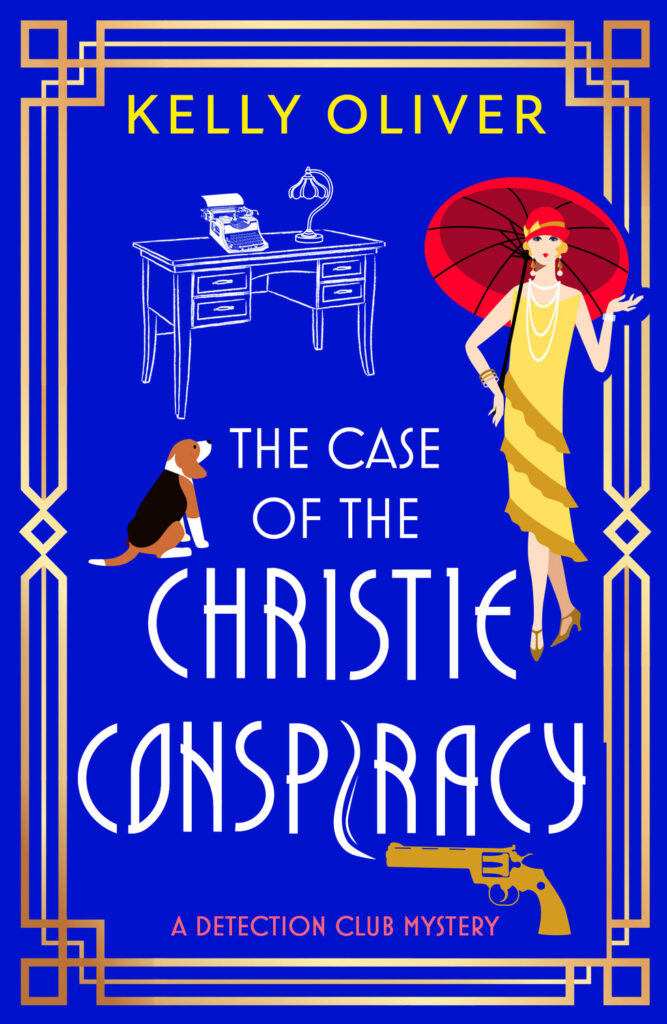
THE CASE OF THE CHRISTIE CONSPIRACY
by Kelly Oliver
Available February 16
Eliza Baker has little interest in the world of fiction, least of all the increasingly popular Agatha Christie. But in order to get a job as assistant to the secretary of the Detection Club—a gathering of murder mystery enthusiasts and authors—she'll have to learn about Christie's work and make nice with her. But on the night the club accepts Eliza's old friend Theo as a member, complete with an overly dramatic initiation ceremony, a man is killed under mysterious circumstances. And the lead suspect seems to be Ms. Christie herself!
While Scotland Yard is on the case, Eliza Baker puts all her talents—both as a clever chess player and as a former member of the force—to the test. While she's leery of "deduction" a la Holmes, the literary-minded Theo makes a bet with her regarding which of them can find the killer first. But the case is a convoluted one. Rather than not enough evidence, there seems to be too much; nearly everyone present seems to have both a motive and a (literal or figurative) smoking gun. Worse still, Agatha Christie has disappeared. Has a guilty murderess fled the scene, or is her life also in danger?
The Case of the Christie Conspiracy weaves real-world history through its narrative, pairing the early days and real members of the Detection Club with the mystery of Christie's eleven-day disappearance. There are hints that Eliza could be a returning sleuth herself, with Theo on deck as a will-they-won't-they paramour and her spy sister Jane asking for further monitoring of the mystery authors. Fans of Christie, and of cozy mysteries, will definitely want to give this one a look. The mystery itself is intriguing and, while astute readers may guess the ending early, the journey is still an enjoyable one.
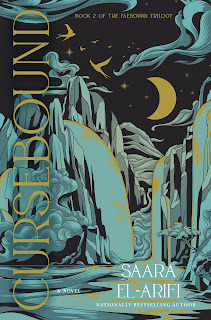
CURSEBOUND
by Saara El-Arifi
Available February 18
Faebound introduced readers to a world inhabited by elves locked in a Forever War, ages after the passing of both fae and humans. But Yeeran, an elf commander exiled from her home by her chieftain and lover, soon discovers that the fae are still alive, if not well: bound by the last of the humans to an idyllic prison. Now the lover of the fae queen Furi and bonded to the catlike obeah—magical beings sacred to fae but hunted by elves—Yeeran finds herself entwined with the fate of the fae.
Cursebound is the second book of the trilogy, placing Yeeran and her seer sister Lettle at the center of political turmoil. There is unrest among the Lightless—fae unbonded to an obeah and thus lacking fae magic—as their situation renders them second-class citizens among their own people. As attempts are made on Lettle's life, the sisters attempt to navigate the intersection of prophecy and politics. Equality among the fae is just one of their goals: they also seek to break the curse of human magic binding the fae to their home. The appearance of Alder, a Nomadic elf with an affinity for obeah and a tendency to speak a strange language when sleepwalking, could change things for the better. But the four factions of elves, once at war, have set their sights on the fae, meaning time is running short.
Faebound, for all its excellent worldbuilding and stunning characters, occasionally showed its hand a little too much when it came to Lettle's prophecies. Rather than making the audience feel clever, it sometimes left Lettle looking a bit slow. Fortunately, El-Arifi has stepped up in Cursebound, striking the exact right balance between reader awareness and character discovery. Some threads can be picked up on and chased down; others will leave the reader guessing right up until the tense moment of discovery. El-Arifi also manages to do something few writers can: create tension from lack of communication without it feeling contrived. All the main characters suffer from the same fear of honesty, leading to a deluge of poor choices; but they are also caught in their hypocrisy when they confront each other about it, or kick off far-reaching consequences. But what shines most is the setting of the trilogy: a delicately intertwined world of magic, where humans are (for a change) the beings of legend and nothing is ever truly as it seems. Cursebound has set the stage for what will hopefully be an incredible finale.
February 5, 2025
Otaku USA Spring 2025 Issue Now on Sale!

It's that time again! The latest issue of Otaku USA Magazine is on the newsstands, and this time I have five pieces in the latest magazine. I've been doing my best not only to keep up with the latest titles coming out, but (where I can) to read or play the source material. It's been making the recent seasons much more interesting and giving me a lot more to talk about with you guys as I put these articles out!

Nina the Starry Bride marks the first of my two reviews—a really gorgeous romantasy series for which I have indeed been reading the manga (and continue to even after the anime has finished). It's a pretty series with a dangerous love triangle, promises of magic, and a unique mythology. I can only hope there will be further seasons to bring to life what I've seen in the manga.

Orb: On the Movements of the Earth is my second review this issue, and is one of my absolute favorite shows of both the fall and winter season. It's a buried treasure that hasn't been getting nearly enough attention. I especially love it as someone with an interest in astronomy and Medieval history. But even if those aren't fixations for you, I still feel like everyone would like this at least a little.

And now, feature time! I'll Become a Villainess Who Goes Down in History falls into that very specific brand of isekai I'm totally into: reincarnated as a villainess. But it also falls under the heading of protagonists who have no idea what wonderful people they're being and how they're improving the world around them. I'm glad I got a chance to talk this one up.

On the other end of the spectrum is The Do-Over Damsel Conquers the Dragon Emperor, which... I had some issues with. On the bright side, writing this feature gave me the opportunity to talk about writer choices and how even having a "legitimate explanation" for something unsavory is still glorifying something unsavory. No hate to anyone who enjoyed it—I kinda can't get past a couple that's 19 and 10 is all.

And back on the up side—I close with a feature on Magilumiere Magical Girls Inc. Much like Orb, Magilumiere ended up very ignored and passed over. It's a darling series that deserves more attention, especially if you're a grown-up magical girl fan looking for something that isn't a grim and depressing subversion. It's nice to know there will be a second season, and I hope to do more coverage then.
Pick up the latest Otaku USA at your local newsstand, and keep an eye on the official site for more articles from me and others every day!
January 29, 2025
TEA REVIEW: Three Teas from London

While Chapters is my go-to brand for tea these days, I can't help but splurge when I go to London. I love coming back with new things (and old favorites I can only get either by going in person or paying a lot for shipping). Several friends got tea and coffee, but I kept these three for me.
Months ago, I promised a friend that I'd review these properly. And for some reason I never did. But scraping the bottom of the tin on one reminded me that it's high time to rate these—and to ensure that you can all try them, too.

English Rose Black Tea
Whittard
One of the first places I go whenever I get into London is Covent Garden, and the first place I go there is Whittard. I know there are other shops, but the Whittard in Covent Garden is where I first discovered my love of rose Earl Grey, so I always stop in to try something and buy gifts. This time I picked up their English Rose black tea: a blend of Chinese, Indian, and Sri Lankan teas with whole rosebuds and rose petals.
When the reviews say this tea is "very rosy," they aren't kidding—and for someone like me who likes rose-flavored everything, that's a plus. It is naturally very sweet, so I wouldn't recommend any kind of sweetener. This is much better as an afternoon tea, since the strength of the rose (even for someone like me) can be a little cloying for morning. I have a feeling this would make an amazing milk tea... again, with no additional sweetener. If you don't like floral-flavored things, sit this one out; this is for people like me who've had the rose teas from other companies and didn't think they were enough.

Christmas Black Tea
Fortnum & Mason
In addition to fig preserves and cognac butter, I had to make sure to pick up some of the Christmas black tea from Fortnum & Mason's Christmas section (which was in full swing in late October). This blend smelled, at least to me, "like Christmas": orange, ginger, and cloves. And when brewed up, it delivers.
The orange and cloves are foremost in this tea, but it's not overpowering or unbalanced. The flavor is very warm and feels perfect for winter in general—and this arctic blast in particular. Does leave a bit of sediment when you brew a pot, thanks to all that clove, but that's easily strained out. This is absolutely best enjoyed hot, possibly with milk if that's your kind of thing, absolutely on a chilly winter morning.

Wedding Breakfast Blend
Fortnum & Mason
Despite not being a royal watcher of any sort, I'll absolutely drink their tea. I'm fascinated by the variety of blends F&M has made for the Royal Family over the centuries. They do tend to be the best of the best, which I suppose makes sense when they're for royal occasions. Their 2013 Christening Blend for Prince George was a previous favorite, so I tried this Wedding Breakfast blend. Unsurprisingly, another favorite.
This blend was made in 2011 in honor of Prince William's proposal to Kate Middleton, and is a blend of Assam and Kenyan teas (Kenya apparently being where he proposed). This is for certain a "tea-flavored tea," with no floral or spice notes added. This is just the leaves standing on their own. And honestly, it's gorgeous. If you like just a good straightforward black tea with no fuss or flavorings, or if you've only had Lipton and wonder what's so great about unflavored black tea, try this. It's an absolute winner.