Dave Reed's Blog, page 2
January 2, 2023
Next in the ongoing saga… Art reveal!
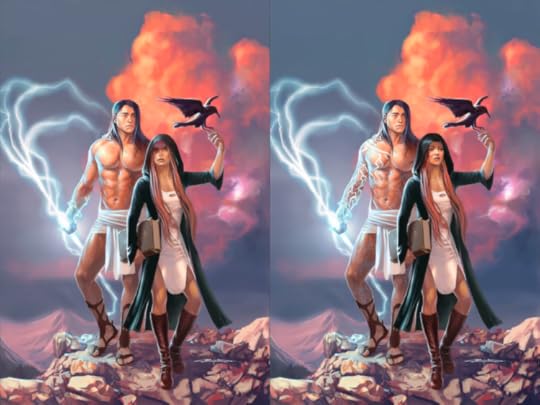
Last January, I commissioned my friend and super-talented artist, J-P Mavinga, to create a piece of art for the Raven Queen, Arise Kickstarter. The “Thunderbird and the Priestess” was inspired by a sequence of the story that didn’t make it into the final novel—because Illyria isn’t in it at all. However, it will (soon!) be the cover of its own story.
I’m developing a novella from the point of view of Conseca, former bedslave and future first priestess of the Raven Queen, that’s entitled Righteous Disobedience. The events of the story take place during the four days following the Battle of the Bridge in Raven Queen, Arise.
Her chosen goddess-to-be gave Conseca the task of preparing Alamar for a coming siege. Seems pretty straightforward, if you’re a goddess-in-the-making: create a lot of scary noise, warn the people of what’s coming, and get them ready.
The only problem is that Conseca is not a goddess. She’s nobody. Less than nobody: an escaped bedslave, a fugitive among a tight knit highland clan, and a flame-haired Azzarean outsider to boot. And, well, there are many more problems: Conseca is not a warrior amongst among Illyria’s warlike kin, then there’s the mischievous Book of the Forbidden that she’s supposed to protect with her life, a sexy but meddlesome thunderbird demigod who won’t take no for an answer, and a long line of gods and goddesses (not to mention Illyria’s frightening warlord mother) who all want Conseca to do things she’s simply doesn’t want to do…
At this point, I imagine the story will be about the same length as Death Descends. But with just a few scenes written so far, anything is possible. My goal is to make it free for subscribers of Dark Tidings in May 2023. It’ll be for sale wide in all the usual sketchy marketplaces—and some of the more noble ones.
Here is the original piece I commissioned side-by-side with the updated version that I asked J-P to create for the cover. Enjoy!


January 1, 2023
Tentacles, Yeah, but Beware the Bite
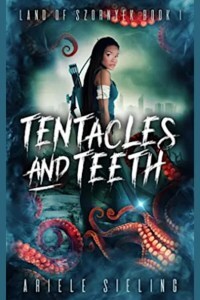
As heroines go, Askari isn’t the most lovable—she’s downright antisocial sometimes. But in a world where megafauna rule the day AND the night, humans have to stick together. Even when they don’t like each other much.
Zero sexy times in this YA action romp, despite the opportunities presented by the titular tentacles and/or teeth. Fun book anyway. The gore level and violence are bit more than the Hobbit or Narnia, but nothing that the average YA reader hasn’t seen before—on par with Hunger Games on that score.
While I wouldn’t want to live in the terrifying world that Ariele Sieling built, but I admire her heroine’s tenacity and independent spirit. Looking forward to the rest of the series. 
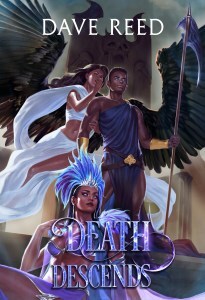
I’ve finally figured out what kind of books I want to recommend. They’ll mostly be on brand for me (grimdark). They’ll all be fantasy (of both the constructed/second world and urban varieties). And they’ll all be authors you’ve never heard of. Because Jim Butcher, Joe Abercrombie, Larry Correia, and Faith Hunter don’t need me to promote them. But indies like me who’re just getting started deserve much more love and attention, because it’s harder for them to get started and harder to finish their books. The world needs more stories and more diversity in its stories than dino pub in New York could ever produce.
If you’d like a free read of that sort, the prequel to the Temple of Vengeance quadrilogy is yours for the taking, Death Descends.
December 26, 2022
Something a little different: My favorite reverse harem (so far)
The author, Naiya Bladesinger, has inverted and subverted the reverse harem cosmos and its tropes as we know them in a delightful and satisfying way. (Be warned! It’s not my normal grimdark fare. This book might make you laugh out loud—it will certainly make you smile.)
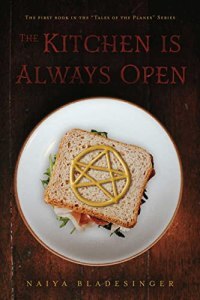
The Kitchen Is Always Open is (ironically) a clean, sweet contemporary paranormal reverse harem composed of demons, devils, and worse.
A cute, kitschy courtship story in which a reverse harem of demons and devils fall in love with a mortal woman in Seattle and proceed to solve her biggest problem against her will.
The world building is fun. The dialog is adorable. The relationships and circumstances are what you’d expect from a romcom even if most of the participants are from Hel or the Abyss. The romance, sexual tension, and heat level are what you’d expect in a teen or adult clean/sweet romance or a Jane Austen novel.
The foreshadowing of renewed conflict between Heaven and the rest of the planes sets up (presumably) the rest of the series. Looking forward to seeing angels, devils, demons, and fae break the universe in their fight over a woman who is too good to be true despite her traumatic childhood.
I’ve finally figured out what kind of books I want to recommend. They’ll mostly be on brand for me (grimdark). They’ll all be fantasy (of both the constructed/second world and urban varieties). And they’ll all be authors you’ve never heard of. Because Jim Butcher, Joe Abercrombie, Larry Correia, and Faith Hunter don’t need me to promote them. But indies like me who’re just getting started deserve much more love and attention, because it’s harder for them to get started and harder to finish their books. The world needs more stories and more diversity in its stories than dino pub in New York could ever produce.
If you’d like a free read of that sort, the prequel to the Temple of Vengeance quadrilogy is yours for the taking, Death Descends.
December 19, 2022
It’s always Wednesday. In my heart.
My love for Wednesday surprises no one. Yet…it should.
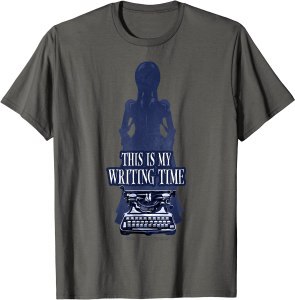
For all its neu-retro gothic vibe, the Netflix series—like its source material—isn’t grim or dark. Not really. While its humor might be, but the superb writing, the lovely cinematography, and the primary plot are all…
Dun dun dun!
A cozy mystery.
(Specifically, it’s a para-cozy: paranormal cozy.)
Nothing against cozy mysteries. They’re just not my usual jam. (Full disclosure, I know that if I really wanted to make bank as a writer, I should be writing cozies. I just can’t bring myself to dress up as yet-another Mrs. Doubtfire cum detective just for the money. Maybe someday I’ll give up and publish the ones I’ve written. But not today.)
Yes, Wednesday (the show) does a few things that even edgy para-cozies normally eschew: blood on the page, gallows humor, and enough teenage angst to kill even self-proclaimed Hufflepuffs. However! I think the show nails all of the other cozy requirements, conventions, and obligations well enough that the audience gave her a pass on her transgressions.
Here are five (plus one) examples:
An obligatory pet: ThingA craft/hobby/pursuit used to solve the crime: mystery novelistA craft/hobby/pursuit for its own sake: celloAn admirable hero/ine: Wednesday tells the bleak truth—and you laugh.Family and relationships are demonstrated to be of the highest value. (Watching Wednesday act more like Morticia every episode despite her valiant attempts to do the opposite was half the entertainment.)The crime is solved through community lore and relationships, not sleuthing.There are plenty more ways, but it’s past my bedtime. Heh.
If you still don’t believe me, strip away the allergy to color and the broody teenage mien and the deadpan flat affect from Wednesday and underneath you’ll find Ms. Marple or any of Agatha Christie’s many other admirable heroines.
Here’s to (hoping for) another dark and cozy season of Wednesday!
While you’re waiting, consider a darker (free) read, Death Descends.
October 20, 2022
It’s Raven Season! Giveaway
October is Raven Season, and I’m giving away an eBookish bundle for Halloween.
One lucky winner will receive:
An eBook copy of Raven Queen, AriseA $10 Amazon eGiftcardJust click here or enter via the Rafflecopter widget below.
The more ways you enter, the more your chances of winning.
Ends at 11:59pm/CST on October 31st.
Good luck, and have fun! 

September 16, 2022
Pregnancy in the Grimdark
Like a lot of writers, I have tons of random interests and a head full of useless facts. One of those is Egyptology. It’s given me a lot of fodder for the grimdark stories I weave, from priesthoods and monarchies to architecture and the afterlife. That said, I’m scrolling through the internet, and what do I find? This article about the first-ever pregnant mummy that was identified.
The mummy was flown to a research facility in Warsaw. It was labeled as a male priest, but thanks to the powers of technology, Egyptologists quickly identified the mummy to be a woman…and a mummy to be. 
Lame pun aside, it got me thinking about how pregnancy and motherhood are handled in the grimdark. First, because there’s so much of history that eventually gets lost that we don’t really know what was up. We can guess based on evidence, but that might not get us that far. Case in point: that one show That Shall Not Be Named with a recent brutal Caesarian section. But I digress. Also, case in point: the article.
Here’s the Cliff’s Notes version: because this was the first mummy they found with a fetus inside of it, they have no clue about the customs surrounding mummification and pregnancy in this case. Stillbirths were commonly mummified separately from the mother, and the mummification process would often dissolve fetuses that hadn’t hit the third trimester, the time when bones begin to gain their density. This pregnant mummy was about 20-30 weeks along, so no one is sure why the fetus wasn’t mummified alongside the mother. As the article said, stillbirths would be removed and mummified alongside the mother.
The find creates more questions than answers about how the Egyptians viewed pregnancy, childbirth, and motherhood when it came to death, and even more questions about their beliefs about the unborn. These led me into questions about how these elements are incorporated into grimdark fantasy.
Other People’s ShoesPersonally, I have never, nor will I ever experience the hardcore process of growing a human being inside me and pushing it out over the better part of a whole day or more. I’m not going to experience morning sickness or have to worry about pre-eclampsia or the entire litany of what people in a “delicate condition” might experience if they have a growing fetus inside of them. Therefore, it’s not something I seriously think about as a personal experience.
Since writing’s the game though, I have to put myself in my characters’ shoes, regardless of my own personal experience (or lack thereof). So, as a grimdark writer, here I go, filling in the blanks on what pregnancy and motherhood is like in the grimdark. Most of which, I’d imagine, is obvious.
Zoom in on the DetailsLike everything else in the grimdark, there’s neither sunshine nor ponies. If there are, it’s only to marinate the meat for your tears later. Pregnancy is definitely that in the grimdark. Someone finds out they’re expecting, the love they have for their sweetheart has been consummated, and it can be a great joy. Conversely, if it’s a conception by rape, well…that’s also a possibility in the grimdark, and like in our own world a horrifyingly real one.
Let’s put a pin in that for now.
The dark side of pregnancy is increasingly talked about on the internet: the health risks, shitty side effects, and the grand finale: labor and delivery, including pooping on the table, vaginal tearing, emergency C-sections, and the chance of dying.
Thanks to modern medicine, the latter is slim, at least, if you live in a country with comprehensive modern medicine. In the grimdark? You’re not so lucky.
Since most grimdark fantasy is set in the Middle Ages or before the modern era, it mimics the reality of that historic period: the chances of dying in childbirth were so shockingly high, it skewed the life expectancy of women. It’s also speculated to be the reason so many fairy tale protagonists don’t have moms!
Dying in childbirth is a gruesome way to go. Plus, the tragedy of a widowed spouse and an orphaned child can breed more tragedy in the form of wicked stepparents, destitution, growing up without a mom, and/or worse, being blamed by the surviving parent for your mother’s death.
AbortionLet’s rewind though, before childbirth and the related perils. If you found out you were pregnant in the grimdark, what would you do?
If someone gets pregnant, there are only three ways to manage it: termination, adoption, and parenthood. The first is more commonly called abortion (yeah, yeah, yeah, it’s controversial, whatever, I’m addressing it as fact), and abortion was around long before Roe vs. Wade. And the methods back in the Middle Ages for abortion weren’t pretty.
Besides dilation and curettage, which can be written as a horror scene in a medieval fantasy world, poisons were more common in the Middle Ages. Using herbs like rue and pennyroyal to induce a miscarriage was common and could be fatal if you took too much of a dose. George R.R. Martin refers to these methods when he mentions Tansy tea: both the tansy tea Lysa Arryn has to take after it’s revealed she’s carrying Littlefinger’s bastard, and the tansy tea Jeyne Westerling is pressured to take after Robb Stark is killed during The Red Wedding; unlike in the show, Robb’s wife doesn’t get axed there.
 Behold, the Tansy Flower
And that opens another can of grimdark worms: forced abortions.
Every Parent’s Worst NightmareThen, of course, there’s adoption and parenthood. Birth in a dark, cruel world. Since most grimdark is based on pre-modern settings, infant mortality was high, and with little to no social safety net, life outside the family unit (even in the family unit) meant destitution, starvation, or worse. Even within the family unit, abuse of all stripes and neglect would be common.
Those of you who are parents know: you’d rather not bring your kids into a grimdark world. Between what they’ll have to endure and the horrible things they’ll have to do to survive, it’s a clear “hell, no” as us moms and dads flip through the pages.
Is my Illyria going to witness pregnancy and parenthood in the grimdark? Will she become a mother herself at some point in the Temple of Vengeance series? Spoiler Alert: I haven’t finished writing that book yet.
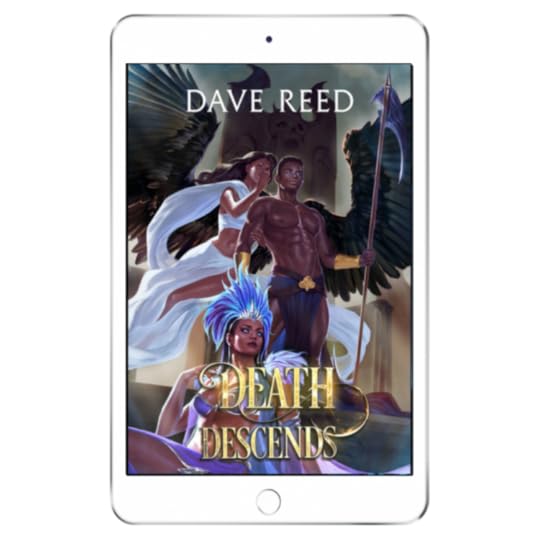
In the meantime, though, check out the free (to newsletter subscribers) prequel to Raven Queen: Arise which features (surprise!) a pregnancy that could have gone better.
July 22, 2022
Viva La Resistance in the Grimdark
Resistance and rebellions in the grimdark aren’t an episode of Star Wars. There may be plucky teenagers who blow up important military bases, and those bases might be able to destroy whole planets, but unlike the Rebels in Star Wars, they’re not going to save the day.
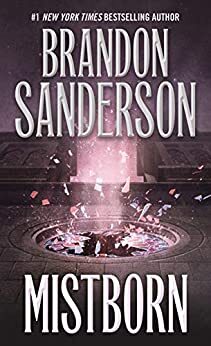
As in real life and Mistborn, at best, the rebels are only going to make it different—trading one tyrant, one kind of oppression, or one catastrophe for another.
But most likely, they’re going to make everything worse.
They may win some battles, they might even win a war, but that’s not necessarily a good thing. Blame history. Tons of resistances fail. If they’re supported by a more conventional army, they have a prayer. Even if they do overthrow tyranny, consult Nietzsche’s “he who fights monsters” quote for the most common result.
In honor of St. Patrick’s Day, which is coming up as I write this, I read a blog on fellow fantasy writer Dan Koboldt’s page. Inspired by Colleen Halverson’s doctoral research and Irish-inspired literature, he broke down her research. Halverson explains the parts of a rebellion in history and then sums up the combatants in terms of their role, not good vs. evil.
Because like the grimdark, history has no good vs evil. Everyone is painted in shades, especially the crap-sack ones.
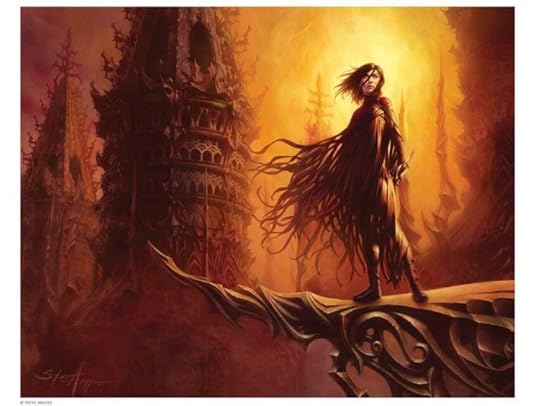 Vin, Mistborn | Created by Brandon Sanderson, Illustration by Steve Argyle Beyond Good vs. Evil
Your freedom fighters are the empire’s terrorists. To the freedom fighters, the empire is the terrorists or the oppressors. Even then, it’s not that simple.
People are people, and they join different causes for different reasons. Some people join a cause for money. Others join it for ambition. Others join because their pet goat was sold for meat by the colonizers (or out of necessity because of the colonizers) and they want revenge. Granted, some join for the ideology, and zealots are often the worst.
Speaking of…
Useful Ideology or Useful Idiots?Ideology on its own is bullshit. But to people in power and the people who can move the chess pieces, it’s a useful tool to move the pieces around. Dan Koboldt brings this up via Halverson via Marx that there’s an ideological theory called the superstructure. This is how empires get people to believe what they’re saying, and then step aside as they burn villages and oppress whoever’s lands they’re holding.
“If you repeat a lie often enough, it becomes accepted as truth.”
—Joseph Goebbels
The superstructure isn’t really a structure. Rather, it’s a carrot-and-stick schtick that empires and the powers that be everywhere keep in place to keep everyone in line. This ranges from laws and penalties for breaking said laws to ideas about who is worthy of governing themselves and in what capacity.
For the Empire, they often paint themselves as the “saviors” of the people they’re subjugating—one country’s regime change is another country’s invasion. They paint themselves as doing their unwilling “subjects” a “favor” since said subjects are deemed unfit to govern themselves by their rulers. This is usually some version of using media and the press to paint the oppressed as backwards savages who need to be taught the right way to live, as if they’re all children.
Does everyone in the Empire think this way? Not necessarily. Most people go about their everyday lives not really caring too much. That said, some do. Mainly, these are people with a vested interest in either a) keeping the empire’s power or b) on the other side of the fence, seeing the rebellion succeed for their own goals.
On the rebels’ side, there are also the opportunists: once the fighting starts, the pillagers and looters come out in full force to make off like bandits with whatever they can carry. There’s also another option, the people fighting for revenge, or because the empire pissed them off in some way.
You can say, “Mission Accomplished” all you want, but the war is never over.
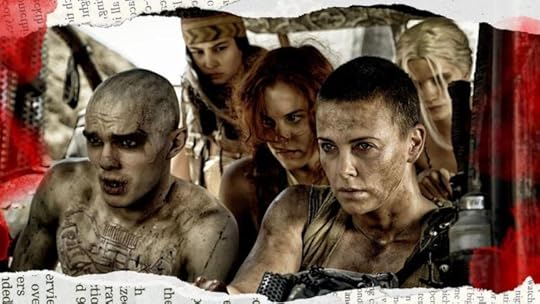 Mad Max Fury Road (Warner Brothers)Good Rebels or Bad Freedom Fighters?
So, yeah, not all rebels are good. On the flip side, not all “empires” that rebels fight against are 100% evil. And not all rebels are good (more on that later).
Goes without saying; the world isn’t divided into binaries, no matter how much cliche wants it to always be “two kinds of people.” Especially considering something Koboldt points out from Halverson’s work: everyone living under the empire is complicit thanks to the superstructure. I don’t know if I believe that personally, but it can make for a good plot point, or a talking point, in your novel. How responsible are everyday citizens for the actions of their rulers? Even if all they want is some food and a comfortable place to sleep. But if you accept Koboldt and Halverson’s premise, then generational reparations make complete sense.
Plus, there isn’t necessarily only one single faction of rebels fighting against a big, bad regime. There could be multiple factions uniting for their own purposes. These factions can range from Boy-Scout levels of virtuous, fighting for the right reasons even if they believe the empire will fight fair. On the other hand, you may have people joining the rebellion to watch the world burn, or people who want to supplant it to impose their own faction as the ruling power. We see this with the Sparrows in ASOIAF, and we see this in real life, when fanatics co-opt revolutions, and then you go from having a despot to having another flavor of tyrant. Or in the words of The Who: “Meet the new boss, same (or worse) than the old boss.”
 Game of Thrones (HBO)Then what?
And that leaves us to the ultimate question: after the rebellion’s successful, after the empire is toppled, then what? Unless the rebels begin with an end in mind, and even then, two words: power vacuum.
The French Revolution of 1789 ended with Napoleon, but before then, France changed hands more times than you remember from history class. And this is the revolution that includes the Reign of Terror, when leaders of the Revolution turned on each other while chopping off more than just the heads of the former powers-that-be.
IRL and in the grimdark, most revolutions are out of the frying pan and into the fire. Even if stability is gained after, the new government isn’t necessarily better than the previous one. Plus, the old empire may have had friends.
What’s your favorite rebellion in grimdark fantasy?
The Temple of Vengeance quadrilogy that begins with Raven Queen, Arise is a rebellion against the high gods and the old who have oppressed mortals through religion and terror for millennia. But tearing down a long-standing superstructure, even with the best of intentions, is fraught with its own problems… Give it a read and see for yourself.

July 15, 2022
Enter The Grimdark Arts Giveaway!
*And now for something completely different*
ICYMI in my newsletter the last two weeks (sign up here so that you can always get the jump on giveaways and freebies), I’m giving away a signed, gold-embossed hardcover collector’s edition of Raven Queen, Arise, eight original fantasy art cards of scenes and characters from the book, plus a vintage, brass raven feather bookmark.
This grimdark-artsy prize package will be awarded to one lucky winner. No purchase necessary to win.There are many ways to enter – the more ways you enter, the more your chances of winning.Giveaway ends 7/31 at 11:59pm/CT.Enter by clicking here, or by using the Rafflecopter widget below.
Good luck, and thanks for playing! 


June 17, 2022
Daddy Issues in the Grimdark
Merry Paternal Unit’s Day weekend! Get your dad a pen and a tie or bake him that cake he demands every year, or else…
Anyhoo, today’s a great time to talk about fathers in the grimdark. There’s a plethora of examples. Some are great, and these guys are usually axed too soon. However, let’s be honest, most fathers in the grimdark deserve to get shot on the shitter by their disgruntled kids.
But let’s not get ahead of ourselves. Fathers everywhere come in all shapes and sizes, including in the grimdark. There are notable heroic, good examples, but a bunch of other crappy excuses for fathers there, too. It’s grimdark – did you expect a world full of Mr. Bradys? At best, you’re getting a fantasy version of Al Bundy most of the time.
So do crappy fathers deserve our sympathy? Nah. But why do the good ones have to die too soon? Raises the stakes? Causes trauma-induced agency? Fill in the quote. You know the one.
Hello! My name is _______. You killed my _______. Prepare to die!
 Photo Credit: 20th Century Studios
What about the foster fathers, stepdads, and other non-bio dads who either lift up our protagonists or make Charles Dickens’ Mr. Murdstone look like Father of the Year? Let’s dive in to that one a little more later. But first, an all-too important question that’s been gnawing at me.
What makes a good dad in the grimdark?To answer that question, let’s turn to the example most people know and love: Ned Stark. (If you don’t, I’m not sure we can be friends.)
Ned loves his kids. He sees them as individuals and motivates them according to their personalities and passions. He sets limits and holds each one to the standards they’re able to meet. In A Game of Thrones, Sansa laments that he seems easier on Arya than her. When they’re on the road to King’s Landing, Sansa notices that Ned doesn’t admonish Arya for picking him a bouquet of poisonous plants and getting herself dirty in the king’s presence. She wanted her father to say “be the lady you were born to be,” (A Game of Thrones, Sansa I). Instead, he indulges Arya. Considering that Sansa’s eleven and poised to be the future Queen of Westeros at that point, and Arya’s nine, Dad made a right call, in my fatherly opinion.
Is this favoritism though? No. Ned is meeting his kids where they’re at in their development. It’s also clearer in the books that Ned holds his kids to cultural expectations, to an extent. In the show, Ned just hires Syrio Forel to train Arya in sword fighting. It’s made to seem like he’s letting her develop her passions. In the books, it’s made clearer: he hires Syrio to humor Arya; he expects that she’ll tire of the hours of drills and then drop her ambitions to own and use a sword (Eddard V).
But the enduring part of Ned, the part that makes him a good dad even after he’s dead, is that he imparted good lessons on his kids. Each one of Ned’s kids carries the lessons he imparted on them: good values, discipline, tenacity, etc. long after he’s gone. It doesn’t do Robb any favors when he weds Jeyne Westerling to preserve her honor, but I’d argue that Bran, Arya, and even Sansa grow from the foundation Ned laid for them. And THAT is what makes a good dad, in the grimdark or in our own world.
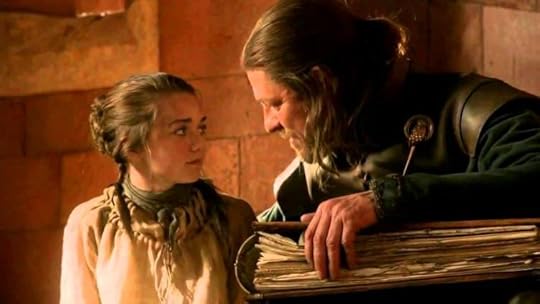 Photo Credit: HBOIt’s always Daddy’s fault.
There are two major types of bad dads in the grimdark: abusive assholes and perfidious fucks who don’t perform their family duties.
Outright abusive assholes are easier to spot. From Tywin Lannister’s derision of Tyrion to Craster, who “marries his daughters who give him more daughters” (Game of Thrones s2e13) and sacrifices his sons to the White Walkers, these sods are so depraved, they make readers’ stomachs churn.
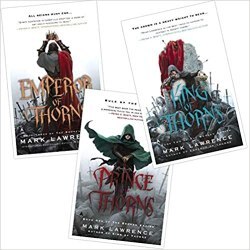
Then there’s fathers who practice perfidy: it seems like he’s going to act in good faith when it comes to his kids, but when the chips are down, he balks. When I say perfidious fucks, I mean so-called people who don’t step up and act like a father: people like Jorg’s father in The Broken Empire trilogy who won’t see his fucking son after he survives an attack on his life. To make matters worse, Jorg’s mother is raped, his baby brother is killed, and he ends up disfigured. Even worse? Jorg’s father signs a peace treaty with the asshole who raped his wife, killed his son, and disfigured his other son! And won’t see him while he’s recovering.
Jaimie Lannister can fit in this category. He doesn’t seem too interested in stepping up to the plate as a dad. If he did, that would undo House Lannister for obvious legal and social reasons, but he still doesn’t take too much of an interest in his kids. Neither did Robert, come to think of it. Sure, he punishes Joffrey when he cuts open a pregnant cat to see the kittens inside, but outside of that, he’s fond of “his kids,” but not as involved as a 21st century audience will expect him to be.
That’s a great segue into cultural standards. Historically, even a couple generations ago, dads weren’t as involved in their kids’ lives as they’re expected to be now. Traditionally, Dad’s job was to be a provider and as long as he brought the bacon home every night, he was considered to be doing a good job. Those days seem to be over, and even in grimdark. Everybody has higher expectations now.
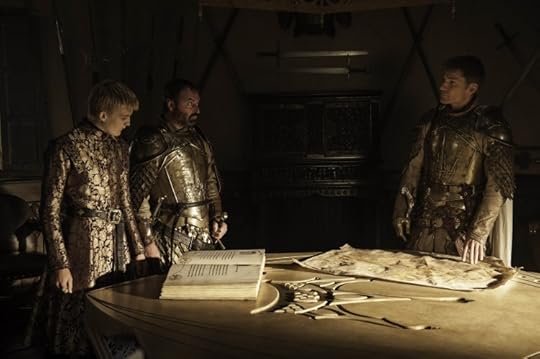 Photo Credit: HBOCan non-bio dads do it better?
Maybe. Perhaps that’s why God invented the mentor figure. As a surrogate father, the mentor figure crosses multiple genres to lend the protagonist a helping hand, from calling the hero on an adventure to walking them through what they’ll face. They’re easier to spot in noblebright. Right, Gandalf?
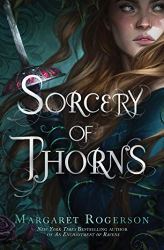
But there are solid father figures in the grimdark. Geralt of Rivia mentors Ciri (thanks to Law of Surprise!), eventually and reluctantly stepping in as her father after she has to flee her kingdom. Not-so-heroic examples include The Hound, who ushers both Sansa and Arya Stark through their loss of innocence while being his affably depraved self. In one I read recently, Sorcery of Thorns, a highborn demon named Silas often takes on this role for the heroine, Elisabeth.
Who’s your favorite grimdark dad? Are there any you love to hate? Sound off in the comments or join the conversation on the socials!
May 20, 2022
Smackdown: Grimdark vs Horror–Is There a Difference?
“Ernest Hemmingway once said: ‘The world is a good place, and worth fighting for.’ I agree with the second part.”
William Somerset (Morgan Freeman) in Se7en
The last line of this horror movie, in my humble opinion, can sum up the philosophy of grimdark, if there’s any to be had down here at the bottom. Yes, the world is nihilistic and shitty, and the heroes don’t always win. But since change is only made and lives are only saved by individual people’s actions, you need to fight to mitigate the crappiness. Most often, most people don’t. Even on the rare occasions when they do, heroes fail a fuckton in both grimdark and horror.
That’s to say nothing of the antagonists. Characters who fight for selfish or evil ends are often characterized as normal, relatable even—if they’re not complete monsters. In horror, they are often otherworldly monsters. But in grimdark, no matter how vile their deeds are, they’re usually human just like you and me. (I find human monsters to be all the more frightening than the inhuman ones as a rule.)
Both genres handle gruesome subject matter and darker themes, but not necessarily to invoke the same feelings or communicate the same ideas. Grimdark can get so gruesome, people often assume it’s “horror fantasy.” But I don’t believe this is actually true. But horror and grimdark are definitely kissing cousins (or more incestuous).
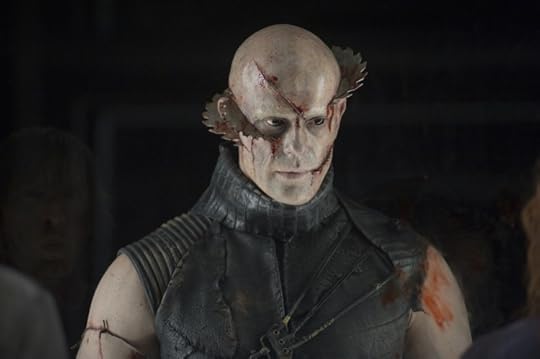 Image Source: Mutant Enemy Productions / Cabin in the WoodsDefining Genre
Even though I’m a genre fiction writer, I have a dubious relationship with the word genre. We live in a post-modern world where genres are broken up into sub-sub-sub genres (what I call a niche). And they all blend over each other to the point where genre can seem like meaningless noise—and even reasonable experts can disagree about which is which. In my observation, what most people think of as genre is really a marketing category anyway.
However, there’s an official definition for what genre is. According to Oxford Languages, it’s “a category of artistic composition, as in music or literature, characterized by similarities in form, style, or subject matter.” For marketing and art purposes, it lets the consumer know what to expect. Soup is soup, but I want to know if I’m getting creamy tomato, clam chowder, or a clam-tomato bisque when I pick up a can at the grocery store.
In novels, genre lets the reader know what elements will be in your book on the surface level, and what themes, characters, and formulas you’re going to expect. When you pick up a fantasy book, you expect magic, dragons, good vs. evil, and maybe some elves and dwarves. Formulaically, you’re expecting the narrative to rely heavily on a monomyth structure. If they don’t, you’re going to expect subversions and deconstructions, some thematic hint as to why your expectations were upended.
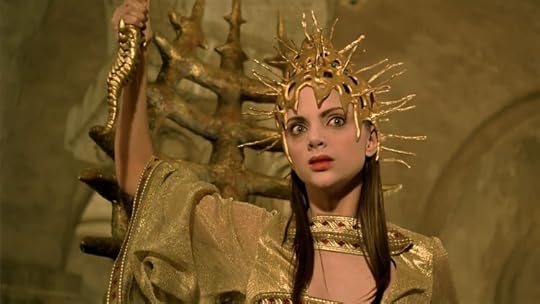 Image Credit: Castelao Producciones / DagonHorror and Grimdark
Horror is a broad genre where the protagonist is typically helpless against their obstacles and succumbs to whatever monster is plaguing them. The monster could be some nameless cosmic horror lurking in the darkness like in H.P. Lovecraft, or it could be your “Number One Fan” who’s holding you hostage until you write the next installment of their favorite series specially for them – *cough* Misery by Stephen King.
The horror could be the madness within, as in countless Edgar Allen Poe stories. Either way, the protagonist is destined to fail, and succeeding often means that the monster is still hunting them, literally or figuratively.
Grimdark has horror elements, sure, but the horrors of their everyday world are a backdrop and can be navigated to a (somewhat) successful conclusion. Sometimes. Well, maybe once in a while. All the main characters need is skill, knowing their limits, opportunities, luck, and reliable support to succeed, or at least, survive. The stakes for failure are grisly though.
The distinction I see is that the horrific experience is the point of horror. It is usually a cautionary tale. Survival itself is the goal for the heroine. On the other hand, the horrific experience in grimdark is just another Tuesday at the office. Survival is certainly at stake in grimdark, but the point is often on the other side: finding meaning, or maybe just finding a reason to go on.
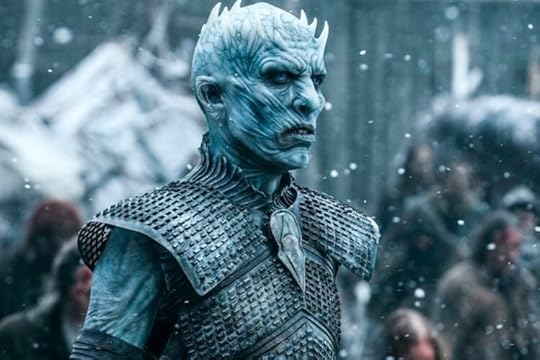 Image Credit: HBO / Game of ThronesViolence and Fear
Violence in literature is like ice cream; there’s at least 32 flavors, and like everything else in art, what violence signifies to the reader varies depending on the theme, message, or what the act is communicating to the reader. Putting bullshit debates like authorial intent aside, violence is a device like anything else in a story. It works with the genre, characters, and other plot elements to weave a theme, to deliver a message, to give the reader something to learn without being taught.
Horror is meant to scare the reader or viewer. Duh. The name of the genre is a synonym of fear. The terror you find on the pages is meant to put you at a sense of dis-ease, employing tropes like insanity, the uncanny valley, and loads of violence meant to terrify you. Jump scares and cheap surprise are great examples. The tension built by describing the stillness of the scene isn’t as visceral as creepy music or certain shots in movies, but it can work in a novel, too.
Grimdark is fantasy rooted in realism. It uses fantasy for catharsis by employing violence to mirror violence in our own world: poverty, disease, war, abuse, torture, and more. It can have horror elements in it. One of my favorite elements of A Song of Ice and Fire was the Nightfort, a haunted outpost on The Wall associated with scary stories, murder, and the possible origin of the series’ main antagonists, the White Walkers.
However, the point of these scare stories isn’t necessarily to establish insurmountable terror for the characters to fight. Other elements establish the upcoming battle between humanity and the White Walkers. They exist to expose the characters’ reactions to these stories in later volumes. When Bran visits the Nightfort, he remarks on the eerie atmosphere and the stories he heard about it growing up, saying “there are ghosts” in A Storm of Swords.
On the other hand, Stannis, a man not given to superstition, decides to make it his seat in A Feast for Crows. Considering that his most trusted advisor is a magician from Asshai, you have to wonder if his decision is dumbassery that will bite him later in the series. Knowing that mistakes have dire consequences in Martin’s works, Stannis’s decision to make a “cursed” abandoned watch post his station (along with the reader’s knowledge that the White Walkers are real), the readers are waiting for the other shoe to drop regarding Stannis’s decision.
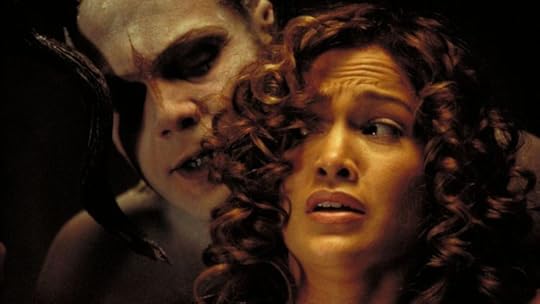 Image Credit: Radical Media / The CellMorality and Survival
Grimdark is cynical. Sometimes, doing the wrong thing is what will get the protagonists closer to their goal, and the right thing will get them killed. A hallmark of grimdark is moral ambiguity, and sometimes, the protagonist has to make a tough decision that would make a traditional fantasy hero blanche.
Horror is actually more moral if you think about it. Evil is evil, and even if the forces of good are powerless to stop it, they’re still good. If they’re not, they become food for the monster precisely because of their failings. A good, but general example is when the teenagers in love have sex and then the slasher kills them, potentially making a metaphor about the dangers of premarital/teen sex or engaging in social taboos.
Going back to the movie Se7en that I quoted, the killer himself sets out to punish those committing the seven deadly sins—including himself. His victims suffer horrific deaths, but the idea behind the violence points to a moral means-and-ends quandary that leads into the final gambit of the killer: turning his final victim into his own executioner.
What are your favorite horror elements in grimdark fantasy?
You may find some of what tickles your adrenal glands best in the free prequel to the Temple of Vengeance series: Death Descends.