
Thomas Frey's Blog, page 34
March 2, 2016
Introducing the Futurist Hall of Fame
Over the coming months the DaVinci Institute will be unveiling the world’s first Futurist Hall of Fame.
As with other “hall of fame” efforts, this one will be dedicated to drawing attention to those who have contributed the most to our thinking about the future.
To be sure, the first iteration of this Hall of Fame will be meager. It will be a hall with photos and videos not sculptures, homegrown narratives instead of meticulously crafted storylines, and self-guided tours through an online app that we will create in-house.
It will be open to the public during normal business hours, and it will be free.
While we have hopes of growing it into a stand-alone facility with museum-quality displays, our primary focus for now will be to create a respectable starting point along with all of the necessary systems in an organization that will live on into perpetuity.
The initial set of inductees will have one thing in common - they will all be deceased. Once a more formal induction committee and process are in place, many of my esteemed colleagues, alive today, will find their way into the Hall of Fame as well.
We also want to draw attention to the future. Many of today’s technologies, demographic shifts, and political decisions will have dire consequences if we do not do a good job of anticipating and managing their implementation. As our awareness grows, and our technological impact spreads exponentially further, it becomes our responsibility to do an increasingly better job of managing the future.
At the same time, we view this as a celebration of the future. Our future is only as bright as we make it and our efforts to study and analyze the future can put us on the path to a truly brilliant world ahead.
‘Hall of Fame’ History
In 1900 the Hall of Fame for Great Americans was opened at Bronx Community College in New York. This was the first “hall of fame” in the U.S. and was based on an earlier concept, the Walhalla Memorial in Bavaria, Germany, which was started decades earlier but completed around 1900.
Since photography was still a poor quality art form with little archival value, both of these museums featured a series of sculpted busts of important people from Germany and the U.S.
Over time the Hall of Fame for Great Americans included displays for 103 people including the likes of George Washington, Susan B. Anthony, Ralph Waldo Emerson, John Adams, Ben Franklin, Edgar Allan Poe, and John Philip Sousa. For a while the term "Hall of Famer" carried greater cachet than "Nobel laureate"
After this auspicious beginning, hundreds of industry-specific halls of fame began to spring up, ranging from Hollywood’s famous Walk of Fame for the movie industry, Cleveland’s Rock and Roll Hall of Fame, and the American Football Hall of Fame, to some rather obscure efforts like the Polka Hall of Fame, Certamen Hall of Fame, and the World Curling Federation Hall of Fame.
In every case, these museums were designed to highlight the best and the brightest and show the importance of each person’s accomplishments.
Common Ground Among Futurists
Studying the future is less of a defined industry than some, but there are a number of key points that futurists hold in common. Even though there are no unifying credentials or rigidly governed associations that define the theories or philosophies every futurist should espouse, several studies reported by the World Future Society have shown a number of shared points of interest and beliefs among the futures community.
Here is a quick overview of twelve of these “common ground” perspectives:
As we improve our thinking about the future, we are better prepared for what lies ahead.
Our understanding of the future directly affects the way we make decisions today.
We are living in unusual times and the concept of “normal” is shifting. What we are going through today is far different than anything in the past.
The ability to improve our understanding of the future requires multiple perspectives, unconventional thinking, and cross-cultural comparisons.
We all participate in creating the future. Futurists generally see their role as liberating the future in every person, and creating enhanced public ownership of our collective future around the world.
Those who study the future are conditioned to think in terms of multiple alternatives, possibilities, and probabilities.
In general, futurists are motivated by change. They are not content merely to describe, predict, or forecast, but want to take an active role in the world as it transforms.
At the heart of future studies is systems thinking. While some are more policy-oriented than others, most believe the work of futurists is to help reshape systems and public policy over the long term.
Futurists are generally practical and pragmatic as they construct long-term perspectives.
Businesses can benefit immensely by embracing futurist perspectives in their long term planning.
We are all drawn to a better future, but the essential ingredients for creating a better future are not obvious, and up to us to discover.
At the heart of a better future is one that is sustainable, preserving the essence of humanity and the environment we live in, inclusive of culture and technology.
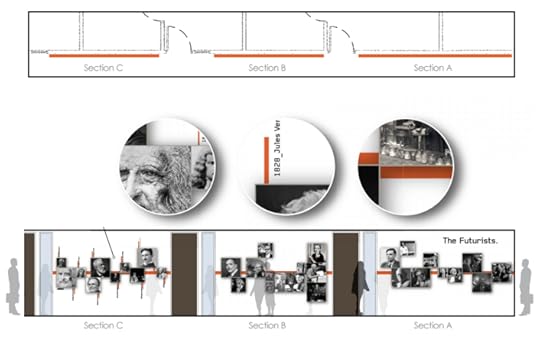
Selecting and Nominating Important Futurists
Since the terms “futurist” and “futurology” have only been around since the 1940’s, with only limited usage until the 1980s, few people before then were considered futurists even though many exhibited the same forward thinking qualities.
As an example, Leonardo da Vinci dedicated over 35,000 words and 500 drawings to the concept of flying even though he lived over 300 year before the first hot air balloon flight and 400 years before the Wright Brothers.
Da Vinci is perhaps the world’s best-known futurist even though few describe him in terms other than artist, inventor, and painter.
Consequently there is a significant difference between having a macro-perspective of those displaying big picture foresight capabilities, and micro-perspective thinking about those more directly affiliated with the futurist community.
With that in mind, here are the people that we’d like your input on, as a starting point, for phase one inductees in the Futurist Hall of Fame.
Keep in mind that we are beginning with people who are no longer alive that displayed unusual talent and insight for thinking about the future.
Please leave your thoughts about those you feel should be included or excluded in the comment section below.
This list is in chronological order by date of birth.
287 BC – Archimedes - Ancient Greek mathematician, physicist, engineer, inventor, and astronomer.
1452 - Leonardo da Vinci - Italian visionary best known for his futuristic designs, invention, painting, sculpting, architecture, science, music, mathematics, engineering and much more.
1642 - Isaac Newton – English physicist and mathematician widely recognized as one of the most influential scientists of all time.
1791 – Charles Babbage – British mathematician, philosopher, inventor and mechanical engineer best known for originating the concept of a programmable computer.
1815 – Ada Lovelace – British mathematician and writer who played a significant role in developing Charles Babbage's early mechanical general-purpose computer, the Analytical Engine.
1828 - Jules Verne - French novelist, poet, and playwright best known for his adventure novels - Journey to the Center of the Earth, Twenty Thousand Leagues Under the Sea, and Around the World in Eighty Days - and his profound influence on the literary genre of science fiction.
1846 – George Westinghouse - American entrepreneur and engineer who invented the railway air brake and was a pioneer of the electrical industry focused on alternating current.
1847 – Thomas Edison - American inventor and businessman who developed many devices that greatly influenced life around the world, including the phonograph, the motion picture camera, and the electric light bulb.
1847 - Alexander Graham Bell - Scottish-born scientist, inventor, engineer and innovator who is credited with patenting the first practical telephone.
1856 - Nikola Tesla - Serbian American inventor, electrical engineer, mechanical engineer, physicist, and futurist best known for his contributions to the design of the modern alternating current electric system.
1863 – Henry Ford - American industrialist and founder of the Ford Motor Company, best known for perfecting the assembly line and mass production as a way of bringing automobile transportation to the masses.
1866 - H. G. Wells - British writer and novelist best known for his visionary science fiction books - The Time Machine, The Island of Doctor Moreau, The Invisible Man, and The War of the Worlds.
1867 – Marie Curie – French physicist, chemist, and first woman to win a Nobel Prize for her pioneering research on radioactivity.
1879 - Albert Einstein - German-born theoretical physicist who developed the general theory of relativity, one of the two pillars of modern physics. Einstein's work is also known for its influence on the philosophy of science.
1895 - Buckminster Fuller - American architect, systems theorist, author, designer, and inventor best known for his work on geodesic domes, and popularizing terms such as "Spaceship Earth", ephemeralization, and synergetic.
1900 - Dennis Gabor - Hungarian-British electrical engineer and physicist, most notable for inventing holography, for which he later received the 1971 Nobel Prize in Physics.
1901 - Walt Disney - American entrepreneur, cartoonist, animator, voice actor, and film producer best known for creating Disneyland and his visionary thinking about future entertainment.
1903 - George Orwell – British novelist, essayist, and journalist best known for his visionary books – Nineteen Eighty Four, and Animal House.
1903 – John von Neumann - Hungarian-American mathematician, physicist, inventor, computer scientist, and polymath best known for his visionary work on game theory and the Manhattan Project.
1906 - Grace Hopper - American computer scientist and United States Navy Rear Admiral best known for her work inventing the computer compiler and developing COBOL, one of the first high-level programming language.
1907 - Robert A. Heinlein - American science fiction writer often referred to as the "dean of science fiction writers."
1911 - Marshall McLuhan - Canadian professor of English, philosopher of communication theory and a public intellectual. His work is viewed as one of the cornerstones of the study of media theory.
1912 - Alan Turing - Pioneering British computer scientist, mathematician, logician, cryptanalyst and theoretical biologist. Inventor of the “Turing Test.”
1917 - Arthur C. Clarke - British science fiction writer, science writer and futurist, inventor, undersea explorer, and television series host. Best known for writing 2001: A Space Odyssey.
1918 - Richard Feynman - American theoretical physicist known for his work on quantum mechanics and the theory of quantum electrodynamics. Often referred to as the grandfather of nanotechnology.
1920 - Isaac Asimov - American author and professor of biochemistry at Boston University, best known for his prolific works of science fiction and for his popular science books.
1921 - Gene Roddenberry - American television screenwriter and producer best remembered for creating the original Star Trek television series.
1922 - Herman Kahn - Founder of the Hudson Institute and one of the preeminent futurists of the latter part of the twentieth century. He originally came to prominence as a military strategist and systems theorist while employed at the RAND Corporation.
1924 - Benoît Mandelbrot - Polish-born, French and American mathematician best known as the grandfather of fractal geometry. He also discovered the “Mandelbrot Set” of intricate, never-ending fractal shapes.
1925 - Douglas Engelbart - American engineer and Internet pioneer best known as the inventor of hypertext and the computer mouse.
1928 - Philip K. Dick – American science fiction writer best know for the blockbuster Hollywood movies produced from his scripts – Blade Runner, Total Recall, A Scanner Darkly, Minority Report, Paycheck, Next, Screamers, The Adjustment Bureau, and Impostor.
1934 - Carl Sagan - American astronomer, cosmologist, astrophysicist, astrobiologist, author, science popularizer, and science communicator in astronomy and other natural sciences.
1942 - Michael Crichton - American best-selling author, physician, producer, director and screenwriter, best known for his work in science fiction, medical fiction, and thriller genres.
1955 – Steve Jobs - American entrepreneur, co-founder, chairman, and chief executive officer of Apple Inc.
Final Thoughts
Deciding on the first phase of inductees will set the stage for a number of follow-on projects.
Besides asking for your input on the above list, we will be asking key individuals for help to form a long term organization complete with systems and procedures that will keep it operating for centuries to come.
As we are able build out the first phase of the Futurist Hall of Fame, we will keep everyone informed about how this will fit into some of our larger plans for a stand-alone facility.
Please take a moment and let us know your thoughts. Your insights and recommendations are greatly appreciated.
Author of "Communicating with the Future"

The post Introducing the Futurist Hall of Fame appeared first on Futurist Thomas Frey.


February 24, 2016
Entering the Era of Super Scalability – The Billion-Benchmark Club
It was a monumental event that no one noticed. Just before 1800 the number of people on earth had climbed to what was then believed to be an astronomically large number – 1 billion.
While this was indeed a landmark event, the occasion passed without fanfare. The combination of too few demographers and disjointed communications between countries caused the entire planet to miss the occasion.
Until recently, the word - “billion” – was rarely used outside of scientific circles. With the isolation of country borders, few were thinking about billions of people on earth, only millions in each country.
Even in academia, before the invention of the calculator, working with billions was hard work.
It wasn’t until the 1970s when the concept of globalization started to creep into the vernacular. The Internet hadn’t entered mainstream consciousness yet but telephones, satellites, cable television, and a growing number of air services between countries started making the world a more connected place.
First it was computers, then connected computers, and eventually the World Wide Web that began breaking down the barriers for people and business. The once-rare designation of being a multi-national corporation became as easy as launching a website.
If you haven’t been paying attention, super scalable companies have become the hottest thing in business. While Wall Street is enamored with company values, this is less about the money and more about landmark achievements.
Here are some thoughts on how this will play out over the coming years.

Reaching the 1-Billion Benchmark Club
Business History - Reaching the 1-Billion Benchmark Club
In a recent interview, Facebook founder Mark Zuckerberg said, ”This may sound a little ridiculous to say, but for us, products don’t really get that interesting to turn into businesses until they have about 1 billion people using them.”
As you can see from this timeline, the number of companies, people, and technology breaking into the Billion-Benchmark Club is growing rapidly.
1916 – John D. Rockefeller – With his shares in Standard Oil, John D. Rockefeller became the world’s first billionaire. In 2015, Forbes Magazine reported that number had grown to 1,826 billionaires worldwide.
1963 – McDonalds - It took McDonalds 23 years to sell their first 1 billion hamburgers.
1968 – Television - First invented in 1927, it took 41 years for the number of TVs to reach 1 billion sold around the world.
1980 – 1 Gig Storage - The race to create the world’s first 1 gig storage device was won by IBM with their 3380 storage device, introduced in June 1980.
2003 – Bicycles – With over 200 years of history, the bicycle industry crossed the 1-billion bicycle mark in 2003.
2005 – Internet - It took the Internet 36 years to reach its first 1 billion users in 2005, but only 5 years more to reach 2 billion.
2007 – Netflix – Starting as a DVD delivery service, Netflix delivered its 1 billionth DVD in Feb 2007.
2010 – Cars – Its estimated that the number of cars in the world broke the 1 billion-car threshold sometime in 2010.
2010 – Google Search - After 12 years of exponential growth, Google reached 1 billion searches a day in 2010.
2010 – YouTube – After only 5 years in business, YouTube averages 2 billion downloads a day in 2010.
2012 – Facebook – 8.5 years after its launch, Facebook reached is first 1-billion users in September 2012.
2012 – Microsoft Office – In 2012, Softpedia announced that Microsoft had officially entered the 1-billion user club for MS Office.
2012 – Psy - Korean pop star Psy was the first to achieve 1 billion downloads on YouTube of his music video "Gangnam Style," a feat accomplished in 158 days.
2013 – Google Android – The open source software released by Google in 2008 exploded to 1-billion users in June 2013.
2013 – Google Play – The app store for Google grew to include its 1 billionth app in July 2013.
2013 – Android Phones – On September 2013, Google announced that 1 billion Android devices had been activated.
2014 – Mobile Phones – In 2014, worldwide mobile phone subscriptions grew to over 7 billion, penetrating 100% of the global population, even reaching the bottom of the economic pyramid.
2015 – Uber - After 5.5 years in business, Uber delivered its 1 billionth ride on December 24, 2015.
2015 - Didi Kuaidi - China’s home grown version of Uber, reached their 1 billionth ride early in 2015 after only 11 months in business.
2015 – Google Chrome - The world’s most popular web browser attracted its 1 billionth use in May 2015.
2016 – Facebook Groups - While it sounds ironic to describe an app with over 1 billion users as relatively unknown, Facebook Groups is exactly that, reaching 1 billion users January 2016.
2016 - What’sApp - The free text-messaging app, owned by Facebook, broke into the billion-user club in Feb 2016.
2016 – Websites – When it comes to the Internet, we will breach the 1-billion website barrier sometime in 2016.
2014 – Gmail – Google’s popular email service reached their 1 billionth user in 2016.
2016 – Apple - In a recent press release, Apple CEO Tim Cook boasted that ”our installed base recently cross a major milestone of one billion active devices.” This covers all Apple products, from MacBooks to iPhones, to Apple Watches, and some users often have multiple devices.
2016 – Adele - Music superstar Adele sets a new record with her music video "Hello" reaching 1 billion downloads on YouTube in just 87 days.
NOTE: A third of everyone on the Internet uses YouTube every day. YouTube now lists 21 video stars who have reached 1 billion views including Katy Perry, Justin Bieber, Taylor Swift, Mark Ronson, Ellie Goulding, Meghan Trainor, Jennifer Lopez, Shakira, Wiz Khalifa, Maroon 5, Major Lazer, OneRepublic, LMFAO, and Sia, with several more already in the pipeline to reach 1 billion downloads before the end of 2016.
A Few that Didn’t Make the Cut
The following are popular web properties that have not achieved the status of the Billion Benchmark Club.
QQ - 860 million monthly active users. (Chinese messaging app owned by Tencent.)
iTunes - 800 million accounts.
WeChat - 650 million active users. (Chinese messaging app also owned by Tencent)
LinkedIn – 400 million active users
Instagram - 400 million active users.
Twitter - 320 million active users.
Yahoo – Home of Yahoo Mail, Tumblr, and more but no single product has 1-billion users.
Weibo - 200 million users. (Popular Chinese social networking app started in 2015)
Snapchat – 200 million user base
Pinterest – 100 million user base
Netflix – It should be noted that even though Netflix is responsible for countless billions of video downloads, they still only have 75 million subscribers.

Defining the laws of super scalability
The Eight Laws of Super Scalability
Those who are looking to launch a super scalable business have a distinctly different frame of reference than those wanting to start something more traditional. This is both a shift in business philosophy and operational mindset of those involved.
Here are eight of the key principals that permeate this type of business thinking.
1. ) Instantly Global: Whenever a company launches a website, it instantly becomes a global enterprise. Global awareness, followed by global connections, global trust, global users, and eventually, global customers.
2. ) Customer Loyalty First: Customers come fast when products are free, or when the business is based on tiny profits from a large number of transactions. Customers love companies that aren’t perceived as gouging them.
3.) The Law of Large Numbers: The greater the user base, the more valuable the company becomes. Every interaction has value and there is always room for more interactions.
4.) Startup Speed: Startups can always move faster, longer, and harder than incumbents.
5.) User Experience: Every transaction can be improved, speeded up, or made easier to use. All customer experiences have room for improvement.
6.) Customer Interactions: Every business-to-customer relationship can be hyper-individualized to the exact kind of interaction every customer desires.
7.) Software and Automation are Far More Scalable than People: Wherever possible, human talent should be replaced by software and automation.
8.) Customers are More Important than Profit: In the early startup years, growing a user base is always more important than short-term profit.

Over the coming years, these types of companies will disrupt every industry, changing the business landscape tremendously
Final Thoughts
Super scalable companies require a different mantra, ethics, and attitude. Every product will have a different type of growth curve, and every approach a different set of problems to contend with.
As with Uber, if taxis suddenly become 50% cheaper, that frees up a lot of money to fuel other industries. If Netflix cuts cable TV spending in half, that money will be applied to something else.
With 7.3 billion people on earth, even averaging a penny from every person on the planet creates a substantial income stream of $73 million.
It should also be noted that when things go wrong, super-scalability can also turn into super-de-scalability.
The speed with which a company gets created is the same speed with which it be dismantled.
We have only begun to test the waters with super-scalable companies. We have yet to see the zero-to-100-million-users-in-one-week company, but that too is just around the corner.
Over the coming years, these types of companies will disrupt every existing industry, changing the business landscape tremendously.
While it will be scary for some, the number of new opportunities being unleashed will be truly breathtaking.
Author of "Communicating with the Future" - the book that changes everything
The post Entering the Era of Super Scalability – The Billion-Benchmark Club appeared first on Futurist Thomas Frey.
February 16, 2016
How Long Before a Robot Chef Beats an Iron Chef?
Will humans soon be battling for their survival against robots?
Even though this has become a favorite Hollywood theme, the likelihood of that happening is nearly zero. Yes, we will have many clashes with human-controlled robots doing battle with other humans or human-controlled robots, but not without people in the background.
The age-old idea of man vs. machine is far more nuanced and complicated than simply having crazed machines killing people just because that’s what they’ve been programmed to do.
However, if we ask, “Will robots, machines, and software replace many of our workers as we move into a far more competitive man vs. machine era?” – the answer will undoubtedly be yes. But following that with a second question, “How long will it take?” – is far more revealing.
When it comes to autonomous cars, it will be decades before the majority of the world relinquishes keys to their automobiles.
When it comes to passenger drones that quickly fly people from point A to point B, it will again be decades before the majority of the world has access to this kind of technology.
The same goes for machines that build houses, do laundry, and grow food.
We are at the beginning of a very long transition, and our relationship with the hardware, software, and autonomous machines that are about to enter our lives will go through as many shifts and changes as the devices themselves.
At times we will love them, hate them, push them off a cliff and turn around and buy even more of them. The hype cycle of automation will be filled with countless shattered dreams; yet technology will find a way and our humanity will survive in spite of itself.
That said, we will measure our progress with benchmarks of accomplishments. In much the same way as IBM’s Deep Blue computer beat the reigning world chess champion Gary Kasperov in 1997, we will see a number of staged competitions - man-vs-machine showdowns – to ratchet our way into this new period.
Undoubtedly, one competition quickly inching its way to the top of this benchmark bucket list will involve food – the Iron Man Chef vs. the Robot Chef.
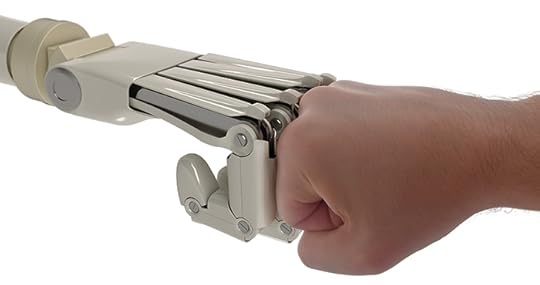
Should we view robots as our friends, our enemies, or something else?
Man Vs. Machine History
While only a few of these competitions actually made headline news, man-vs-machine competitions are about to enter their third decade.
NOTE: I’m not intending to show gender bias, but so far there have not been any women involved in these competitions.
Checkers - 1995 – In the early 1990s the University of Alberta developed a checker-playing computer program called Chinook. In 1995, Chinook beat British Grandmaster Don Lafferty in a 32 game match. The final score was 1–0 with 31 draws for Chinook over Lafferty.
Othello - 1997 - Logistello was a computer program written by Michael Buro that played the game Othello, also known as Reversi. Logistello beat the human world champion Takeshi Murakami six games to none in 1997.
Backgammon - 1997 – In 1997 World Backgammon Champion Luigi Villa was defeated in a 7-point match by Hans Berliner's computer program BKG 9.8. He became the first world champion to be defeated by a software program.
Chess - 1997 - IBM staged a history-making competition between World Chess Champion Gary Kasparov and their own chess-playing computer, Deep Blue.
Scrabble - 2006 - On November 17, 2006, World Scrabble Champion Jim Kramer competed against "Genius", a computer Scrabble opponent running the newest version of RealNetworks' Scrabble. In a three-round "Man v. Machine" match in Seattle, Genius took the initial lead, winning the first game 466 to 419. Kramer came back to win the second game 417 to 406. The deciding, third game came down to the last play, and Kramer won it 442 to 441, taking home the $10,000 prize.
Jeopardy - 2011 - IBM staged a similar competition pitting their more human-like computer, Watson, against the two top Jeopardy players of all times, Ken Jennings and Brad Rutter, with the Watson team walking away with the $1 million prize.
Table Tennis – 2014 – The televised match between Germany’s world champion table tennis player, Timo Boll, and the Kuka KR Aglius robot, where the human contender managed to eek out a last second victory over the machine, turned out to be a hoax, a staged event designed around promoting Kuka robots.
Go - 2016 – Google’s Deepmind program, AlphaGo, recently crushed the current European Go champion, Fan Hui, five games to nothing.
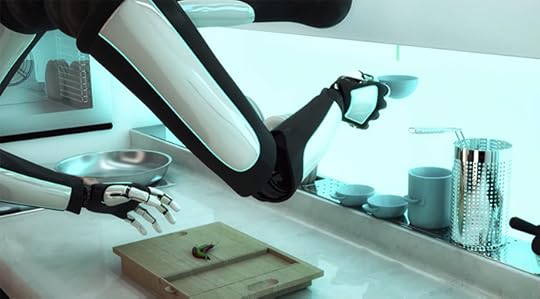
Moley Robotics robot kitchen
Staging an Iron Chef vs. Robot Competition
The original “Iron Chef” cooking show debuted in Japan in 1993. As a timed cooking battle built around a specific theme ingredient, some of the top chefs from "around the world" have competed in the “kitchen stadium” contest to see who’s best.
The popularity of the show in Japan caused versions of the show to spring to life in the U.S., Canada, Vietnam, Thailand, Indonesia, UK, and Australia.
Having a robot chef as a contender will pose a number of unusual complications. While Moley Robotics created the world's first robotic kitchen and has plans to turn it into consumer product by 2017, there is a big difference between preparing food based on a preset ingredient list and competing against the best chefs in the world.
Cooking is very much a human sport, based on tastes and smells, neither of which are quantifiable from an engineering standpoint. There is no such thing as a periodic table of tastes and smells, at least not yet. Nor is there the digital equivalent of a nose and taste buds, essential pieces of sensory equipment that every human chef is already equipped with.
That means the only way for a robot to compete will be to comb through terabytes of data about human preferences and reverse engineer desirable combinations. While that may be possible, the robot will still be at a disadvantage when it comes to smelling and tasting their way from an average recipe to an extraordinary one.
From more of a big picture perspective, our robot chefs are still a long ways from being able to go to a grocery store or food market and pick out the freshest ingredients. Judging the quality of fruits, vegetables, and cuts of meat are human skills that are hard to reduce to machine algorithms.
Eventually all this will be possible and there are undoubtedly new technologies in the works that will make it happen sooner than later. Yet winning a competition like this is only one step in a million-step journey.
A one-time event does not a trend make!
Final Thoughts
As machine intelligence moves its way up the exponential growth curve, I’m estimating a robot chef will win this type of competition somewhere around 2025.
But before that happens we will see driverless cars beat human drivers in an Indianapolis 500-type race, robotic bricklayers beat human bricklayers in a house-building competition, and robotic jockeys beat human jockeys in a Kentucky Derby-like contest.
Keep in mind that staged competitions like this are a form of marketing. It’s an entertaining event designed to capture the whole world’s attention for the purpose of conveying a message - a marketing message.
The competition is never intended to destroy a sport or somehow wreck a piece of the entertainment industry. Chess and backgammon tournaments are still happening today and Jeopardy is still a money-making TV show. Rather, it’s to prove a point. IBM used it very effectively to prove they were the industry leaders in the area of human-thinking computers.
At the same time, I think IBM got it wrong. With both the 1997 and 2011 events, the event was staged, the computer won, and everyone went back to business as usual. When savvy marketing people are involved, the one-and-done approach leaves tons of opportunity still on the table.
If IBM had lost the first 2-3 rounds of the competition, they could have done a far better job of milking public sympathy and, in the end, it would have seemed like a far greater accomplishment.
As humans, we are still very much in control of our own destiny. If we don’t happen to like the path we’re on, we can always change it… or can we?
Author of “Communicating with the Future” – the book that changes everything
The post How Long Before a Robot Chef Beats an Iron Chef? appeared first on Futurist Thomas Frey.
January 31, 2016
Does Social Media have a Polarization Problem?
Wael Ghonim was a young computer engineer working for Google in Egypt when he became a central figure in the events leading up to the Arab Spring in 2011.
In early 2011, Wael created a Facebook page titled, "A Revolution against Corruption, Injustice and Dictatorship," and the number of followers quickly mushroomed.
On Jan 14th he posed a question to the 300,000 followers of the page: "The 25th of January is Police Day. It's a national holiday. If 100,000 of us take to the streets of Cairo, no one is going to stop us. I wonder if we could do it."
In just a few days, the invitation reached over a million people, and over 100,000 people confirmed attendance, on January 25th, his fellow Egyptians flooded the streets of Cairo, calling for change, breaking down the barrier of fear and announcing a new era.
But then came the consequences.
After a few hours, state police shut down the Internet and all telecommunication lines. They also kidnapped Wael and held him in total isolation for the next 11 days.
Three days after Wael was released, Egyptian President Hosni Mubarak was forced to resign.
For Wael, this was the most inspiring and empowering moment of his life. It was a time of great hope. Virtually everyone in Egypt lived in a state of euphoria for the 18 days following the Mubarak resignation.
However, their post-revolution euphoria quickly faded as they failed to build consensus about what to do next. The political struggle that followed led to intense polarization and social media only amplified the problem, by facilitating the spread of misinformation, rumors, and hate speech.
As Wael recounted that period of time, “The environment was purely toxic. My online world became a battleground filled with trolls, lies, and hate speech. I started to worry about the safety of my family.”
Political divisiveness reached its peak as the two main factions - army supporters and Islamists – took to the streets in the middle of 2013.
Activists like Wael suddenly found themselves caught in the middle feeling helpless. “Both groups wanted you to side with them; you were either with them or against them.”
On July 3, 2013, after three days of protest demanding his resignation, the army stepped in and ousted Egypt's first democratically elected president.
With social media the power to tear down far exceeds the power to build up!
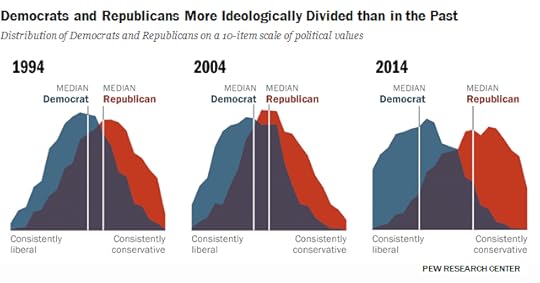
According to Pew Research, the area of common ground in the middle (dark purple) is getting smaller
Choosing Sides
A recent Pew Study concluded that 39% of consistent conservatives and 30% of consistent liberals tend to drive the vast majority of political discussions. These are the people that talk about politics often, and others turn to them as an authoritative voice of information.
Not surprisingly, as our online awareness increases so does our ideologically consistency. Some of the study’s findings included:
For consistent conservatives…
They expressed greater distrust of 24 of the 36 news sources measured in the survey. At the same time, 88% of them trusted Fox News.
As Facebook users, they were more likely to narrow their circle of friends to read political opinions that were in line with their own views.
A full 66% say most of their close friends share their views on government and politics.
By contrast, consistently liberals:
They expressed more trust than distrust for 28 of the 36 news outlets in the survey. For liberals, NPR, PBS and the BBC were the most trusted news sources.
They were more likely to block or “defriend” someone on a social network, or end a personal friendship, because of politics.
On their Facebook feeds, liberals were more likely to follow issue-based groups, rather than political parties or candidates.
With minute-by-minute online increased coverage, intimate social circles, and global awareness, arguments become more refined, groups become more consistent in their messaging, and people have an easier time choosing sides.
“With social media the power to tear down far exceeds the power to build up!”
Social Network Limitations
Robin Dunbar, the Oxford professor of evolutionary psychology that had previously concluded that humans could only maintain 150 close friends in their life, has just completed a new study, and that number appears to be dropping.
While the average Facebook user he studied had around 150 friends, he found that they only had 14 friends they considered to be “close” friends and only 4 they would turn to in a time of crisis.
He concluded that most online friendships are only superficial. While extended networks are indeed valuable for things like finding a job, recommending an auto mechanic, discovering a good restaurant, or fun things to do in Aruba, these are not the people you’re going to call and say, “Hey my mom is dying.”
Dunbar further determined that social media doesn’t actually help us expand our circle of friends, but it may help some relationships from dying off entirely
While extensive “friend networks” may give the impression of massive influence, the true nature of this kind of influence tends to be shallow and reinforcing rather than mind-shifting and game-changing.

Will it ever be possible to automatically fact-check every lie, rumor, or whisper campaign posted on social media?
Five Critical Issues Behind Social Media’s Polarization Problem
Over the past couple years, Wael has spent considerable time trying to ferret out the root cause behind social media’s polarization problem. Here are the five critical challenges that he feels need to be addressed.
Rumors. On social media we don't know how to deal with rumors. Rumors that confirm people's biases are now believed and spread among millions of people.
Echo Chambers. On social media, we create our own echo chambers. We tend to only communicate with people that we agree with, and tend to mute, un-follow, and block everybody else.
Angry Mobs. Online discussions quickly descend into angry mobs. It's as if we forget that the people behind the screens are actually real people and not just avatars.
Hard to Change Opinions. Because of the speed and brevity of social media, we are forced to jump to conclusions and write sharp opinions in 140 characters about complex world affairs. And once we do that, it lives forever on the Internet, and we are less motivated to change these views, even when new evidence arises.
Broadcasting Over Engagement. Our social media experiences are designed in a way that favors broadcasting over engagements, posts over discussions, shallow comments over deep conversations. It's as if we agreed that we are here to talk at each other instead of talking with each other.
Final Thoughts
For social media companies, the polarization problem is more than a little obvious. The solution less so.
Broadcasting a message is easy. Cultivating a thoughtful stand takes time, as every engagement requires human effort, personal attention, and emotional commitment, all of which are in short supply.
Was the message ever intended to supersede the messenger?
As humans we tend to be buoyed by sensational headlines, controversy, and matters of life and death. Good headlines come from the extreme edges and anything that can generate fear has a way of captivating our attention.
For many of these reasons we seem to be caught in a centrifuge of mind-spinning commentary as we feel the emotional center for most schools of thought drifting towards the edges.
Is there a way to create an autonomous checks-and-balance system to offset the natural schisms formed by public commentary? Is it possible to mute the whisper campaigns, rumormongers, and echo chambers being triggered by the ideologically correct?
More importantly, do social media companies recognize this as a problem, and are they working on a solution?
Author of “Communicating with the Future” – the book that changes everything
The post Does Social Media have a Polarization Problem? appeared first on Futurist Thomas Frey.
January 25, 2016
The 1,000-Revenue Stream Lifestyle
In his famous poem, William Shakespeare begins with the lines, “All the world's a stage, and all the men and women merely players.”
But what if that were true in more than just an allegorical sense?
No, I’m not talking about the philosophical underpinnings of divine intervention or manifest destiny. Rather, what if we found ourselves caught up inside an actual “game-of-life” game where everyone was inconspicuously wearing augmented reality contacts or glasses, and the object of the game was to influence the behavior and actions of others? Consider the following:
Pantene is a well-known brand of shampoo developed and marketed by Procter & Gamble. The people managing their affiliate gaming project are an executive team inside the company.
The object of the game you’re playing is to influence as many people as possible to purchase more Pantene. For this reason you will receive points for every time you mention the product name, and extra points whenever a person you’ve been in contact with makes a purchase.
This presumes that companies will have the ability to continually track everything said by the “player” as well as everything heard by the prospective buyer. To make this more interesting, players will have the ability to see a real-time scoreboard hovering in space above the heads of everyone they come in contact with.
Since we all know how annoying it would be to have someone shouting brand names on every street corner, there will naturally be lots of rules to make it a truly effective form of marketing.
Because this is a long-term influencer game, actual sales pitches will cause players to lose points, but well framed testimonials and personal anecdotes couched in interesting stories will land them bonus points and adding predetermined phrases like - “My hair has never looked so good!” – will cause them to level up even faster.
Other rule may include:
Gamers must not mention the same brand names or marketing phrases more than once every 15 seconds and never more than 3 times per encounter
Brand names cannot be mentioned in the same sentence as any competitor brand names except when making a product comparison to show the superiority of the product being talked about.
Gamers must be speaking and prospects must be listening. No prerecorded messages and the recipient must indicate some form of acknowledgement, so no headphones or ear buds.
However, as with all games, they become far more compelling when you can amp up the “fun” part of the equation and you’re making money in 1,000 different ways in the process.
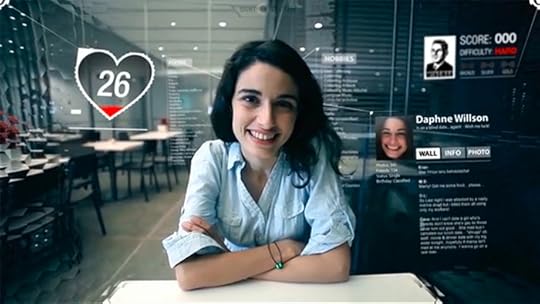
Your income may soon be tied directly to the scores you’re able to achieve!
The Fine Art of Gamification
For those of you who haven’t studied game theory, gamification is a combination of tools using psychology, behavioral modification, goal setting, and intrinsic motivators designed to flip a series of levers and switches inside the human brain to achieve a desired outcome.
There are five intrinsic motivators pre-wired into most people:
Control – Desire to have more control over situations
Mastery – Constant drive for improvement
Purpose – Our need to make a difference
Progress – Internal drivers fueled by our achievements
Social Interaction – Our ability to interact socially with those we come into contact with
Behavioral research has demonstrated that tapping into these five drivers can make virtually anyone’s life or work more focused, fun, and meaningful. For this reason gamification has become the center of attention for unleashing the untapped potential across all employees, including all job titles and all departments.
As we dive into some of the everyday uses for gamification, I will attempt to connect the dots between emerging tools, human motivation, business, and personal success, and show how each of these can be monetized.
Understanding the Payer-Payee Relationship
In the past we would wear a t-shirt of our favorite video game, post pictures of interesting situations, or mention products we bought as a routine part of life. But what if each of these actions had some sort of payment scheme associated with it?
NOTE: As our ability to monitor, collect, and parse data improves, so does the likelihood that we can assign value to every action and exert thousands of new forms of influence through single acts.
For instance, both companies and individuals are willing to pay for things like impressions, endorsements, approvals, referrals, opinions, recommendations, branding moments, and thousands of other forms of influence.
We are also willing to pay for if-then-actions like “if you spot X then take a photo,” or “if this happens then call this number,” or “if you wear these clothes at that event, then I’ll pay you...”
At the same time, we recognize the value of task-specific duties like “clean this up,” or “repaint that wall,” or “park that car.”
In the past, companies would hire people for full-time jobs and project work, but in the future these tasks may be reduced to a single action. Even minor actions like - drop this from a bridge, talk to this person, hand this to her, or throw that Frisbee – may have sufficient value to cause someone to be willing to pay for that action.
Think of this as the next generation of Google’s AdSense on steroids.
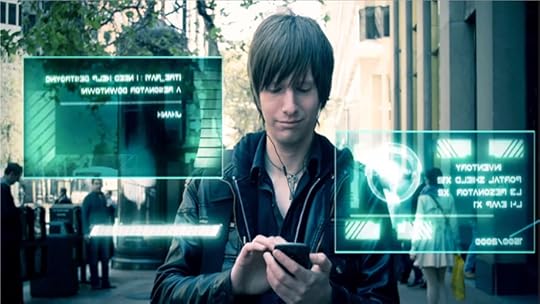
Making money may soon be as easy as jacking in to your personal game exchange website
23 Lifestyle Monetization Scenarios
Gamification is driven by data, and gamification also uses data to motivate performance. In the past, most business was transacted through face-to-face meetings or via memos sent around the office. In the future, businesses will find new ways to leverage both data and people in a far more distributed manner.
In general, a person that comes into contact with 1,000 people on a daily basis is more valuable than someone who only comes into contact with 5.
A person speaking from a stage with a microphone is more valuable than someone talking one-on-one.
A writer that posts a column that is seen by 10,000 people is more valuable than a column read by 12 people.
Anyone with movie star good looks, stylish clothes, charming smile, affable mannerisms, and engaging banter is more valuable than someone who lacks these qualities.
Even a crazy person that can draw a crowd by juggling chainsaws on a street corner is more valuable than most of us from an attention-gathering perspective.
With this perspective in mind, every one of us has a mixture of qualities that can potentially be monetized. Things that we did freely in the past may soon be gamified with incentives. Here are just a few things people may be willing to pay for:
Wear clothes, shoes, and accessories that are clickable, meaning someone can hold up a smartphone, get the information about the product, and purchase it online.
Get paid to mention products, political candidates, brand names, company names, and more on social media.
Become a “terabyter” by wearing gear to record everything you see and do all day long. (Data collectors are hugely valuable.)
Wear a t-shirt with a logo or message and be seen by hundreds or thousands of people.
Suggest someone improve their appearance through a variety of personal makeover services.
Talk someone out of committing suicide. (Public service paid for by government, churches, or social groups.)
Mount sensors on buildings, vehicles, and objects that currently don’t have sensors, or upgrade to the new improved version.
Convince a criminal to turn themself in. (Public service paid for by government.)
Engage people in conversation about specific products.
Take photos of problem areas in a city, in a business, on a highway, or even on a playground.
Recommend a law firm, accounting firm, insurance agent, or spa.
Help someone find a loan, credit card, or crowdfunding opportunity.
Coach someone on finding a job, project work, or networking opportunity.
Fly a drone over a crowd with a promotional message on it.
Help someone figure out how to stop wasting water, power, paper, or bandwidth.
Convince someone to drop out of a gang. (Public service paid for by government.)
Create a video around a specific goal, topic, or opportunity and get money for every download and impression.
Write a blog post, create a charticle, or listicle, or any other form of viral messaging.
Take a survey or poll and make money from recruiting others to do so as well.
Wait in line. (Being a placeholder is a valuable service.)
Mention something on Twitter, Facebook, LinkedIn, Google+, Instagram, Snapchat, or any other form of social media.
Create a spectacle worth mentioning, by others, on social media.
Begin a whisper campaign. (“I don’t know this for certain, but these are the rumors I’ve been hearing…”)
Naturally only those things that someone will wish to offer money for will result in an income stream, but over time, the list will grow exponentially.
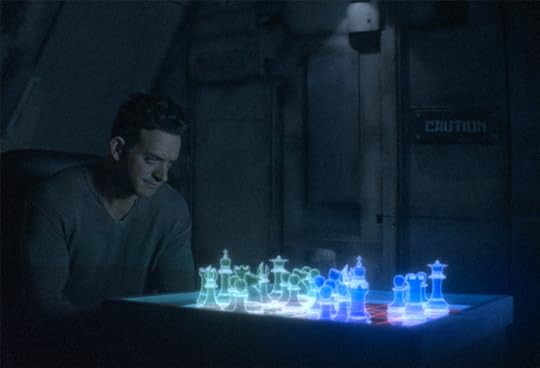
The game of life just got more interesting!
Final Thoughts
In time a few companies will develop global exchanges listing literally millions of task-specific or influence-specific monetizable acts.
Young people working to maximize their earning potential will use AI-assisted coaches to help focus their efforts on one act and immediately switch gears for the next opportunity once the previous one has been completed.
Electronic clothing will shift from one message, product, or logo to the next automatically to maximize each opportunity on a moment-by-moment basis.
The first person to achieve 1,000 revenue streams in a single day will make headline news all over the world causing millions to take notice of this fast-paced, quirky, micro-gig lifestyle.
The terms reporters will use for this kind of work will include everything from affiliate gaming, to human billboarding, to micro-gig whores, to street performers on steroids.
For those who have worked a single job their entire life, this is the opposite side of the spectrum from that. Some will use these techniques to become very wealthy while most will only use it to fill in the gaps.
For some this kind of lifestyle will represent the freedom to work both how-they-want and when-they-want. For others it will feel like they’ve become a total prostitute having to pretend they like thousands of products they don’t believe in.
That said, I’d love to hear your thoughts. Does the prospects of having multiple revenue streams appeal to you, and how much of your day would you be willing to dedicate to it to make it happen?
Author of “Communicating with the Future” – the book that changes everything
The post The 1,000-Revenue Stream Lifestyle appeared first on Futurist Thomas Frey.
January 18, 2016
The Future of Ignorance
In 1901, Dr. Duncan MacDougall set out to discover if the human soul weighed anything.
Working in the local old age home, he conducted a series of experiments where he weighed six patients on a precision scale both before and after they breathed their last breath. Comparing variations in the patient’s weight, he declared his findings, that the human soul weighed, on average, 21 grams.
To underscore his point, MacDougall did a similar study on 15 dogs that were also on their deathbed and reported no perceived change in weight.
Armed with the results of his brilliant study, he was able to confirm that the human soul did indeed have weight and that dogs did not have a soul.
But of course that wasn’t the whole story. Out of his six patients, only the first one showed a perceptible loss of weight. The others had mixed results so they were discarded. Since none of the dogs lost weight, that was all the proof he needed.
This is a story that made headlines in the New York Times in 1907, but the entire episode was based on one of the worst research studies of all time.
So how do you know when you’ve been lied to?
In a situation where one of the country’s most reputable newspapers reports the findings of a reputable doctor, the average reader will naturally assume it to be true.
In spite of those who argued with the findings when they came out, the “21 gram weight of the human soul” became a cultural meme that permeated society for decades, even though several other experiments since then showed no measurable difference.
For those of you who aren’t familiar with the term, a meme is "an idea that spreads from person to person within a culture."
Rest assured, not all memes are based on lies. In fact the vast majority are based on some measurable evidence of being true.
But here’s where it gets confusing. Virtually every lie has some portion of truth in it, and virtually every truth has some amount grey area or falseness associated with it.
This becomes a critically important point to consider as we build artificial intelligence engines based on trillions of “grey area facts” and the primary reason why the topic of ignorance made its way to the top of my list.

Hollywood has turned the distortion of reality into a fine art!
Living with a Distortion Index
The world is neither black or white, right or wrong, or truth or fiction. Rather, every statement comes with a percentage of correctness that we unconsciously filter through our personal “bullshit meter” and file it accordingly in our brain.
Yet we’re being lied to in so many subtle ways its nearly impossible to separate reality from distorted reality. Here are eleven quick examples commonly used by Hollywood:
LIE - Most Hollywood fight scenes show people getting punched in the face repeatedly with no ill effect. REALITY - Even a single blow to the face can be enormously debilitating.
LIE - Teenagers today commonly believe you can jump out of a car at 50-60 mph, roll a few times and they’ll be fine. Hollywood shows this happening all the time. REALITY - Jumping from a car, even at 20 mph, will kill most people.
LIE - In Hollywood, the good guys always arrive at just the right time to save the day. REALITY - This has only happened one time in the entire history of the human race.
LIE - Good hackers can always outsmart any form of encryption, and they can do it in a matter of seconds. REALITY - Nobody is that good.
LIE - Every bomb has a countdown clock and colored wires. REALITY - Very few have either.
LIE - Any gun with a silencer becomes whisper quiet. REALITY - Typical gunfire is at 140-160 decibels while a silencer will only reduce it to 120-130 decibels. A silenced gun is still roughly as loud as a jackhammer.
LIE - Most guns never run out of bullets and Hollywood gunfights often drag on for 10-20 minutes. REALITY - Even a large capacity gun like an AK-47 can fire 30 bullets in 3 seconds. Most gunfights are over in less than a minute.
LIE – Assassins always use lasers sightings that put a red dot on their target. REALITY – They never do.
LIE - Gunshot wounds are quickly cured by extracting the bullet. REALITY - Removing a bullet is unnecessary and will typically cause far more tissue damage than the original gunshot.
LIE – Dogfights always happen at close range where pilots can see each other. REALITY – Close range dogfights are nearly a mile apart and are as exciting as watching a blip on a cockpit screen.
LIE – Bulletproof vests will stop anything. REALITY – Even military-grade vests are vulnerable to an assault rifle closer than 40 feet.
Because of the enormous influence of movies and television, every distortion of the truth, regardless of business decisions based on market demand, creative license, or even good intentions will foster a widely distorted view of the world among impressionable young people.
People make decisions today based on their life history of “perceived truths.” Young adults who consume tens of thousands of hours of movies and television will have great difficulty making sound decisions based on these distorted truths.
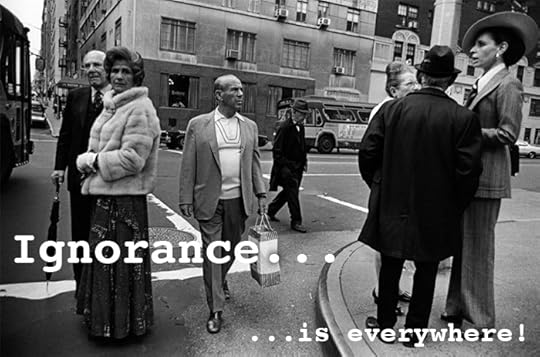
Is it ignorant to think there are only five laws governing human stupidity?
Defining Ignorance and the Five Fundamental Laws of Human Stupidity
The word ignorant is an adjective used to describe a person who is unaware and is often used to describe individuals who deliberately ignore or disregard important information or facts.
Ignorance is different than stupidity even though they have overlapping characteristics. Ignorance involves “not knowing” but stupidity is more about “knowing incorrectly.”
Carlos Maria Cipolla, an economic historian rose to fame by authoring the five fundamental laws of human stupidity:
Always and inevitably each of us underestimates the number of stupid individuals in circulation.
The probability that a given person is stupid is independent of any other characteristic possessed by that person.
A person is stupid if they cause damage to another person or group of people without experiencing personal gain, or even worse causing damage to themselves in the process.
Non-stupid people always underestimate the harmful potential of stupid people; they constantly forget that at any time anywhere, and in any circumstance, dealing with or associating themselves with stupid individuals invariably constitutes a costly error.
A stupid person is the most dangerous type of person there is.
To put this into perspective, if you were unaware of the fact these laws existed, you could appropriately be labeled ignorant. If someone called you stupid for being unaware, well, that makes them ignorant of the fact that they are they stupid one.
But I digress!
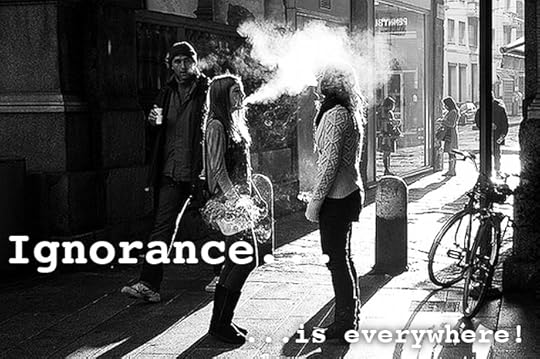
The tobacco industry was the first to make "confusion" one of their primary marketing goals!
Agnotology and the Fine Art of Distorting the Truth
Agnotology is the study of willful acts to spread confusion and deceit, usually to sell a product or win favor. It’s an area of research that got its start in the heyday of the tobacco industry.
In 1979, a secret memo from the tobacco industry came to light that revealed many of the tactics employed by big tobacco to counter “anti-cigarette forces.”
Using a rather generic report title to mislead those who might come into contact with it, the Smoking and Health Proposal was drafted a decade earlier as something akin to a quarterback play-list for the Brown & Williamson tobacco company.
In one of the paper’s most revealing sections, it described one rather deceptive approach for marketing cigarettes to the masses. “Doubt is our product since it is the best means of competing with the ‘body of fact’ that exists in the mind of the general public. It is also the best means possible for establishing controversy.”
As outrageous as some may find this statement to be, it is not much different than marketing tactics used for nearly every other product on the market – use testimonials to emphasize the good, gloss over the bad, and confuse the terrible.
Every person has a number of products that they surround themselves with. Whether its clothes, food, makeup, shoes, furniture, cars, or appliances, we’ve made a conscious decision to associate ourselves with those products.
Do we always select the very best product? Not always. Very often a cheaper product will be good enough.
So if a product came along that was both cheaper and better, would we select that one? That’s where we enter the murky waters of truth, half-truths, and politics. Perception is worth far more than some point-by-point analysis that few people ever do.

At what point are we merely pawns in someone else's agenda?
A New Era of Ignorance
We live in a world with amazing levels of ignorance.
At a talk I gave recently on the “future of advice,” I showed how in the past the advice-givers were the privileged few that had access to the information, but in today’s world, with information being free and easy to access, only the advice-givers will know what to pay attention to.
With today’s abundance of information it has become easier than ever confuse an issue and turn every fact into a series of arguments.
For example, if we consider the fight over climate change, the fight is not just over the existence of climate change, it’s over whether scientists have a political agenda, whether God has created the Earth for us to use, whether government has the right to regulate industry, whether environmentalists should have this much power, and much more.
What somehow got lost in the blurring of issues is the fact that pollution is bad for us and we should stop polluting the earth.
It’s not just about the facts, it’s about motives, hidden agendas, puppet master, conspiracy theories, and just enough facts to make every argument sound plausible.

Most of us today are living with a false sense of expertise.
Ignorance – The Big Picture
Most of us today are living with a false sense of expertise. Any answers we need are only a click away, and whatever preconceived notions we may have, its easy to find supporting arguments online.
If we were to dissect every college course and hold a truth meter next to the core subject matter, we would find a substantial percentage that falls into the arguable category.
Even our most foundational subject matter comes with built-in grey areas. For example, 2 + 2 does not always equal 4. It depends on what type of measurement scale we are using. There are four types of measurement scales – nominal, ordinal, interval, and ratio. Only in the last two categories does 2 + 2 = 4.
As we move into an era where artificial intelligence is making exponentially more decisions on our behalf, we will want the AI to be rooted in solid facts before making those decisions. But the basis for decision-making will likely come from our personal preferences, a compendium of online perceived facts, and the thoughts and attitudes of those in our social circles.
Studies have shown that our most authoritative source of information today is Wikipedia, created through their time honored tradition of having experts argue with experts until the wording is close enough for everyone to live with.
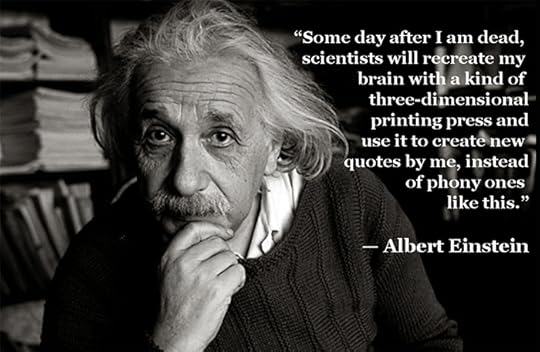
Final Thoughts
In what year did the human race reach “peak ignorance?”
Many will argue that we’re still not there yet.
Misinformation cycles reach their peak every four years leading up to the presidential elections in the U.S. where our bullshit meters are tasked to work overtime.
We are indeed intelligent beings, but with all of our limitations, the intelligence we possess is never enough.
As we think through our systems for automating our decisions, unless they’re based on something far better than the decision points we’ve used in the past, we will achieve little more than having more efficient ways of making poor decisions.
Perhaps a more important question to ask, at what point will we achieve an optimal level of ignorance, and how will we ever know?
As for me, I’m looking forward to the day when I can adjust the dial on my own ignorance settings to “just right.”
Author of “Communicating with the Future” – the book that changes everything

The post The Future of Ignorance appeared first on Futurist Thomas Frey.
January 8, 2016
Twelve Critical Skills for the Future
In the early 1990s, psychologist Robin Dunbar studied the social connections within groups of monkeys and apes. He theorized that the maximum size of their overall social group was limited by the size of their neocortex.
Based on our neocortex size, Dunbar calculated that humans should be able to maintain relationships of no more than roughly 150 people at a time. He also found that many businesses and military groups organize their people into cliques of about 150. This has led to the now often disputed Dunbar Number of 150.
There are indeed limits to the number of relationships we can maintain, but with today’s online tools, we are not restricted to just 150. Yet we all have limited attention spans and the quality of every relationship depends on the amount of attention we dedicate to it.
Managing relationships will be a critical skill both today and for decades to come, regardless of the overall size of your network. But being a successful person in the future will require far more than just forging meaningful relationships.
In case you hadn’t noticed, the concept of “office as a place” has also been evolving. For untethered workers, any place with Wi-Fi where you can sit (or stand) in relative comfort is where work happens.
The age old “office” has transitioned from being a necessary place to go to being more of a power tool for making big things happen. The sterile confines of office buildings have morphed into something that is part-hotel, part-restaurant, part-coffee shop, and part-impromptu meeting space.
Offices with heavy wood desks, file cabinets, and chairs are holdovers from an era of paper, books, and briefcases. The office phone has come and (mostly) gone, much like fax machines, copiers, desk-top PCs, and printers.
Sitting desks have morphed into sit-stand workstations, walk-stations, and even no-stations. Features like workout rooms, bike lockers, showers, and sleep-stations have all entered the employee lexicon, along with massage rooms, happy hours, beer taps, and gourmet-chef kitchens.
Workers are no longer defined by the size and location of their cubical but by the pedigree of thinkers they hang out with.
Twelve Critical Skills for the Future
Equally as important as our Dunbar number or the place we call an office are the rules we live by. We currently have very few rules for how to live our lives in a fully immersive world where explosive amounts of information and technology are flowing around us on a second by second basis.
Since neither colleges nor traditional schools have come to grips with the unusual number of challenges lurking, like landmines, in the world ahead, it is up to us to master the “new rules of engagement.”
For this reason I’d like to help you think through twelve critically important skills you would do well to manage in your future:

Sorry but your next distraction already happened!
1.) Distraction Management – The average smartphone user checks their phone over 220 times a day. During peak times this jumps up to once every six or seven seconds. Total addicts will actually jack-in over 900 times in a day and several reports have revealed incidents where young drama-junkies have been hospitalized from exhaustion because “fear of missing out” caused them to stopped sleeping altogether.
Texting is the most frequently used app on a smartphone, with 97% of Americans using it at least once a day. The average Millennial exchanges 67 texts a day. It takes 90 minutes to respond to email, most will respond to a text in less than 90 seconds.
An average person has five social media accounts and spends around 1 hour and 40 minutes a day perusing these networks, accounting for 28% of the time they spent on the Internet.
In the U.S., YouTube is currently the most popular social network, with a visitation rate 8% higher than Facebook. Since both Facebook and YouTube claim well over a billion users worldwide, this is not a U.S. only phenomenon.
But let’s not forget television time. During peak hours, over 70% of the bandwidth for the Internet is dedicated to video streaming with Netflix and YouTube sucking up over 62% of the entire bandwidth in North America.
The average American spends over 5.5 hours a day consuming some form of video content.
So after all of that, how much time do you really have left for your job, your family and friends, and actually experiencing the world around you? Distraction management will be a critical skill for successful people to master over the coming years.
2.) Emerging Skills Management – How long will it be before you need to know how to pilot a flying drone? If you flippantly say “never,” how will your thinking change when you’ve just been laid off from your job and all your friends are getting high paying jobs as drone pilots?
But maybe it’s not drones. Perhaps the hot new career will be designing parts for 3D printers, or working as an aquaponics technician, crowdfunding consultant, material specialist for contour crafting, sensor engineer, data analyst, game designer, or apps expert for smart clothing?
What are the skills that will be required for your next job? Will you need to know how to operate a driverless car, communicate with your boss over a smart watch, merge spreadsheets on a smart phone, be conversant on the latest Internet of Things devices, use a telepresence room, perform actuarial breakdowns on your new client list, or find Wi-Fi hotspots in the middle of a desert?
If you think you’ll have time to plan your next career move after your job goes away, chances are you’ll be struggling with this issue until the day you retire, and with some of the latest plans for indexing retirement dates, that may be several decades of tortured living.
3.) Communication Management – Where do you get your news today? Yes many of you are still reading newspapers, watching TV, reading books and magazines, and listening to radio.
But a growing number are finding digital substitutes for traditional news. For young people, Facebook, Instagram, Reddit, Twitter, YouTube, Vine, and Instagram are their only news sources.
When it comes to talking to your family and friends, are you more likely to use Skype, send a text message, send a video clip, chat with them while playing Destiny, send photos, use Facetime, Google hangouts,
However, when it comes to doing business, one-to-one or one-to-many verbal communication is still a company’s most prized skill.
On average, women speak around 7,000 words a day compared to only 2,000 for men. With a 3.5 times as much practice, women have a natural advantage in this area.
Communication is an essential ingredient in all of our lives, but too much or too little can have devastating effects.
With new communication channels springing to life in games, social media, and smartphone apps on a regular basis, people suffer great anxiety over not keeping up with their friends and family. And when they turn things off, they suffer even greater anxiety over feeling left out.
Effective ways of managing our communication channels is a critical skill currently not being taught in school.
4.) Reputation Management – By 2020, one study estimates that more than 40% of the American workforce, or 60 million people, will be independent workers—freelancers, contractors, and temporary employees. Exactly how we define ‘freelancer’ will increase or decrease that number substantially.
Recent surveys confirm the biggest challenges facing freelancers is poverty-level income that comes erratically and keeping the project pipeline full.
No one is actually born to be an entrepreneur, but according to LinkedIn Founder and Chairman Reid Hoffman, we would all be better served if we managed our lives as if they were a business.
In Hoffman’s latest book, “The Start-Up of You,” he goes on to explain many of the intricacies of living your life as your own personal brand, and how your online reputation has become a foundational piece of every person’s success.
Our reputations are no longer something that builds up around us that we have little or no control over. With highly personal online content being generated about us from many different sources, it is now up to us to exercise control over what people are saying, the images of us that appear online, videos we’re in, bylines of our work, and virtually every other indicator of who we are and what we stand for.
If you don’t think your online reputation is important, consider the following stats:
88% of those online will avoid doing business with companies that don’t protect their privacy.
80% of divorce lawyers use Facebook to find evidence.
65% of recruiters frown on job seekers who frequently use profanity in social media.
68% of hiring managers have made a decision to hire a candidate because of something they saw on social media.
Clearly this is another critical skill that schools have yet to come to grips with.

Wouldn't it be great if privacy could be reduced to something as simple as a button on a keyboard?
5.) Privacy Management – Privacy and transparency live on opposite ends of the same social spectrum, but they’re both part of the huge ethical issue that falls under the banner of privacy.
Drone privacy is different than social media privacy, which is different than online retailer privacy, Internet of Things privacy, big data privacy, email privacy, and snooping-around-in-my-business privacy.
People can often derive significant benefits from sharing their personal details as they take advantage of relevant and useful services online. However, once collected, businesses often exploit and monetize personal information, leaving people exposed and placing their information in predatory danger.
Yes, protecting and enforcing privacy is an added burden for business, but a lack of privacy creates risk for users and reduces trust. Trust plays a key role in virtually every form of innovation.
The free flow of personal information that respects privacy will do just the opposite, fuel and cultivate innovation. Optimizing the risks and rewards across the stakeholders may lead to new forms of innovation and the release of new economic value. The big challenge ahead will be to establish legal frameworks that foster innovation and facilitate information sharing across jurisdictions in global business environments.
Understanding both sides of this equation will be a critical skill for future generations.
6.) Information Management - In 2008, Roger Bohn and James Short, two researchers at the University of California in San Diego did a study to determine the amount of information people have entering their brains on a daily basis.
As it turns out, the average American spends 11.8 hours every day consuming information in 2008, and that number has been increasing 2.6% every year since then. Other countries are posting similar numbers. People today are being exposed to far more information than ever in the past.
How can we manage all this information better? How can we be smarter about the information we consume and the sources we’re getting it from?
Our ability to effectively manage our personal information inputs and outputs will greatly determine our ability to compete in the global talent marketplaces of the future.
7.) Opportunity Management – Currently 54 million Americans are now freelancers.
A 2014 study done by Field Nation concluded that 88% of freelancers think of themselves as highly engaged small business owners and 97% of them love the idea of working independently.
Being a freelancer is a form or entrepreneurship.
When they start out, most freelancers will try to increase their income simply by working more hours. But once they’ve quit their day job and start dedicating 30 or 40 hours a week to their business, there are really just two ways to make more money - either by becoming more specialized so they can charge higher rates, or by engaging other freelancers to work under their project umbrella, giving them the freedom to tackle bigger, higher-level projects.
Over the coming years we’ll see more freelancers cultivating specialties and forming teams that let them earn bigger revenues than ever before.
At the same time, sharing economy companies are opening the door for new kinds of “gig economy” professionals like Uber drivers, Zaarly pros, Task Rabbit workers, or managers of AirBNB properties. All fall into a transition category for new age job hoppers where the barrier to entry is relatively painless and they can manage their own schedule and job performance without a hovering boss nearby.
8.) Technology Management – The very first Apple iPhone entered the world in 2007. Since then, new tools have been appearing on a daily basis.
What should we be paying attention to, and what can we dismiss?
With sensors becoming a ubiquitous part of everyday living we will soon be wearing smart shoes, sleeping on smart pillows, eating smart food, with smart spoons, while watching our children play with their smart toys.
Our choice of technology defines who we are and our ability to function in an increasingly technology-dependent world.
Very soon we will be downloading apps for our drones, our smart houses, our pets, our cars, our clothes, and even our imaginary friends.
Our relationship with our personal technology will continue to be an ongoing challenge and improving skills in this area will be highly advantageous.

What are the most valuable relationships in your life?
9.) Relationship Management - In a world immersed in social media, we know lots of people, but what kind of relationship do we have with them? Yes those that go beyond the Dunbar number. How do we qualify and quantify the value of those relationships?
As the size of a person’s social network increases, it becomes difficult for someone to have meaningful conversations with each person. Different rules apply to those we have strong ties with versus those who only know by face or name.
The way relationships are managed in the digital age is changing, especially when it comes to our emotional ties like love and marriage. The traditional marriage, which has been a foundational piece of societal structure since the beginning of recorded history, has been reduce to little more than a ceremonial contract of declining importance with each new generation.
Our understanding of the shifting nature of relationships will be one of our most critical skills in managing our future.
10.) Legacy Management – How will future generation remember you? How will they perceive your successes and failures, your accomplishments and misguided efforts, your generosity and perseverance?
While many still view inheritance as the primary way to leave a legacy, people now have the ability to manage the information trail they leave behind. In fact, they can very easily communicate with their own descendants who have not even been born yet.
The body of work we leave behind will become increasingly important. So if we chose to let future generations know who we are and why we set out to achieve the things we did, we can do that today with photos, videos, and online documents.
However, future generations will have far more tools at their disposal to preserve the essence of their personality, using avatars with AI engines to answer questions about issues only future generations will know to ask.
As all of us age, the notion of leaving a legacy becomes critically important, and furthering our skills in this area will indeed serve us well.
11.) Money Management – Banks and credit card companies have been unusually resistant to making the flow of money transparent, mainly because the opacity of our accounts is directly proportional to the unscrupulousness of fees and charges they assess.
In fact the entire money world has become a rich playground for those wanting to pilfer and poach from it. But that will soon be coming to an end.
Silicon Valley’s latest crop of fintech (financial technology) startups, numbering well in excess of 8,000, and funded with billions from VCs and crowdfunding, are out to make the bloodletting stop.
In addition, blockchain technology, the crypto-engineering tech behind Bitcoin, is quickly being implemented throughout the mainstream monetary system and driving the underlying transaction costs of the entire system to zero.
That said, even with total real-time transparency, we will still need to keep very close track of our money. This means ever Apple watch purchase of Starbucks coffee, every Go-Fund-Me donation, Spotify subscription fee, Uber ride, Amazon delivery, in-app purchase, Facebook boost, and IoT micropayment will have to be accounted for along the way.

When was the last time you really felt you had control of your time?
12.) Time Management – The most precious commodity in everyone’s life is still time. You can ponder it, over-schedule it, spend it with others, account for every second of it, make others account for it, squander it, or simply act as if it doesn’t exist. But so far we’ve not found a way to stretch it, reverse it, or buy extra bags full of it when we run out.
Time management systems of the past will need to morph, shift, and change to accommodate lifestyles and business demands of the future.
Every item on the list above boils down to creating efficiencies, and we can’t possibly create these efficiencies without finding better ways to manage our time.
Final Thoughts
Yes, the key word in this list is “management.” It will be up to us to manage every aspect of our increasingly complicated lives.
Is twelve the right number? This was not intended to be an all-inclusive list of skills for tomorrow. Over time, many more will be needed.
My goal was to draw attention to the most critical ones, the ones that currently seem to be overlooked today.
But I’d love to hear your thoughts on this topic. Let me know what I’m missing and where I may be off base. The ideas of the many are almost always greater than the ideas of the few.
Author of "Communicating with the Future" - the book that changes everything
The post Twelve Critical Skills for the Future appeared first on Futurist Thomas Frey.
December 30, 2015
Top 10 Columns for 2015
2015 saw 42 new unicorn companies ($1B+ valuation) take center stage, the most ever, and a clear indication that the scalability of Internet will redefine the business landscape for generations to come. For this reason, no industries are safe, nor should they be.
Many are anxiously awaiting drone delivery from companies like Amazon, but few realize the vast majority of drone delivery will happen on the ground rather than in the air. Also, look for Uber to enter the package delivery business in a big way in 2016.
Sensor technology is hot and the Internet of Things is becoming an active proving ground for new technologies, with “smart” technologies getting into bragging rights issues over who’s smarter.
Few people have confidence that their jobs will still be around ten years from now and most are scanning the emerging tech landscape thinking of how to reposition their careers in fields they find more interesting.
Our new home for the DaVinci Institute at 9191 Sheridan Blvd, Westminster, CO is beginning to take shape and our new coworking offices and Micro College coding classes are filling up. Coworking is becoming big business with over 20,000 now dotting the landscape in the U.S. So look for ours to unfold in unique and interesting ways.
With that in mind, here are the 2015 columns that attracted the most attention over the past 12 months.
10.) The Day the Banking Industry Died
Like many businesses of the past, the money world focused on people with money, leaving countess millions either unbanked or under-banked. But in a highly connected world, where every consumer has networks, influence and value, eyeballs count.
As an industry that had been artificially propped up with innumerable laws and a banker-friendly political system funded by banker-friendly rich people, the final days were delayed far past the time when the first foot entered the coffin. But all industries will eventually end, and this is the story of this one.
9.) The Future of the Darknet: 9 Critically Important Predictions
Commonly thought of as a “mafia marketplace” where illegal drugs are bought and sold, and human trafficking, child porn, and contract killings make all the headlines, the dark net is growing in its appeal with far less offensive offerings catering to a more mainstream audience.
Even though this tends to be an experimental playground for the dregs of society who manage to skirt the law with impunity, it’s unleashing some critically important innovations in the process.
Here’s why the benefits of the darknet will soon outweigh the downside, and nine significant predictions for the future.

8.) Engineering the Secret Engines of Off-Grid Living
Three recent innovations are causing a shift in design thinking, making it far easier for people to become part of the off-grid living movement. The innovations include energy storage for the home, solar-powered Internet drones, and atmospheric water harvesters.
As some point, most of these structures will be designed and produced with some form of 3D printing in a matter of hours.
These advances will give us the tools for creating each of the inputs without wires, pipes, or infrastructure, and managing the outputs without polluting the surroundings.

7.) Technological Unemployment and our Need for Micro Colleges
Technology is automating jobs out of existence at a record clip, and it’s only getting started. But at the same time, new jobs are also coming out of the woodwork.
Bold companies making moves are instantly triggering the need for talented people with skills aligned to grow with these cutting edge industries.
In these types of industries, it’s no longer possible to project the talent needs of business and industry 6-7 years in advance, the time it takes most universities to develop a new degree program and graduate their first class. Instead, these new skill-shifts come wrapped in a very short lead-time, often as little as 3-4 months.
6.) Going Beyond Micro-Payments to Nano-Payments
Over the past decade, micro payment schemes have created successful business models around charges less than $1. As an example, Google’s AdSense charges advertisers as little as a few cents for every click of their ads.
It’s only recently that we’ve been able to consider much smaller charges, even less than a penny.
Here are just a few ways these seemingly insignificant payment schemes could become a big deal in your future.
5.) The Future of South Korea
Even though South Korea received the highest possible ranking in the 2015 Bloomberg Innovation Index, the country is better defined as a “fast follower with great secondary innovations” rather than one that spawns “unicorn companies with primary innovations.” But that description may not be true much longer.
In just a few short decades, this tiny country has gone from being dirt poor and technically primitive to one of the wealthiest and most technically advanced in the world. Framed around a super aggressive culture that permeates virtually every aspect of Korean life, the entire country seems determined to not only reach the top, but go far beyond what anyone else dreamed possible.
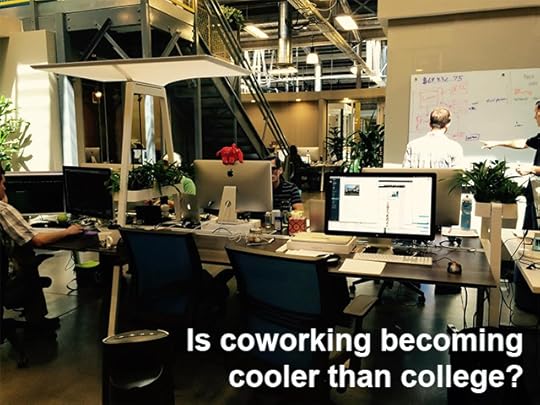
4.) Will Coworking Replace Colleges?
When I first brought up the idea of coworking taking over colleges, it seemed like an absurd notion. But there is a secret reason that very few people are grasping.
At first glance, the highly structured ivory towers of academia seem to be on the opposite end of the spectrum from the unstructured anything-goes world of coworking. But the more I thought about it, it seems inevitable that the two are on a collision course.
3.) What Comes after the Nation State? – Fractal Governance
Since 1648, countries, operating as nation-states, have become the most powerful entities on the planet. With large militaries to defend their interests and advanced monetary systems to build infrastructure, countries have become complex organisms with self-adapting properties.
However, when Internet started providing borderless connectivity, we began seeing national systems transition into global systems. As the need for borders became less clear, traditional ways of defining a country began to erode and the value of citizenship, less defined.
So what comes next? Are we on the verge of yet another shift in global entities?

2.) 12 Emerging Trends that Everyone Missed at CES
In so many ways, CES sets the tone for the global economy, with tens of thousands of private meetings being conducted in the background forcing more deals to be cut in a shorter period of time than virtually any other event on the planet.
Walking across the exhibit floors is quite a mind-expanding experience. Since I tend to use a radically different set of lenses to experience this show, I walked away with some rather unusual perspectives.
For this reason I’d like to mention twelve of the trends that everyone seemed to have missed at CES.
1.) 37 Critical Problems that need to be Solved for Drone Delivery to become Viable
Early stage drone delivery will require a pilot for every package, making it an expensive option. Not only will pilots need to navigate their way to the destination, they’ll need to handle the empty return flight back as well. Eventually this will be automated, but it’s not a simple task.
After considering many of these current deficiencies, I thought it might be helpful to begin listing some of the key technical, system, and regulatory challenges that lie ahead. At the same time, every problem creates an opportunity, and the sooner our emerging drone entrepreneurs learn how to capitalize on these problems, the sooner we’ll see this industry take off like many of us are imagining.
With that in mind, here are 37 near-term issues that will need to be solved.
Final Thoughts
As a professional speaker, my talks have once again taken me all over the world, and over the past year I’ve been to Auckland, Wellington, Majorca, Amsterdam, Antalya, Toronto, Seoul, Jeju, Oslo, Mexico City, and far too many places in the U.S. and Canada to list here. I’ve shared the stage with some amazing people at some amazing companies. While I do have some speaking topics listed, every talk is custom tailored to the audience I’m working with. I love working on unusual topics, provided they fall with my main focus of “technology-driven change.”
My newest book is getting close and should be released early in 2016. Considerable effort has already been put into this new manuscript and will have some unusual concepts for all of us to debate.
The overall readership on FuturistSpeaker.com has more than doubled over the past year, setting the stage for some terrific opportunities that I'll be talking about soon.
Wishing you and your family an abundant 2016.
Author of “Communicating with the Future” – the book that changes everything
The post Top 10 Columns for 2015 appeared first on Futurist Thomas Frey.
December 1, 2015
The Trillion-Sensor Movement
When was the last time you called a repairman to work on the mattress for your bed?
At a recent hotel stay I found myself sleeping on a Sleep Number bed that seemed to adjust itself in the middle of the night. At times I’d wake up on a totally deflated bed and others it would be rock hard. Rather amusing, but not really very comfortable.
Naturally the value of a hi-tech bed is diminished when you lose sleep over it, and have to pay for repairs.
Next generation hi-tech beds will have ways of detecting failures remotely and will either alert the owners and schedule a repairman, or the bed will simply repair itself.
The same is true for any number of common household items that will soon have digital features added to them like spoons, forks, plates, shoes, coats, belts, scarves, and hats.
At first blush it’s hard to imagine why anyone would need a better spoon, but once digital sensors enter the picture, it will be hard to imagine how we got along without them. In the future it will be commonplace to have a spoon that tells you if your food is safe to eat, or what the temperature is, calorie count, ingredient list, dietary facts, and much more.
In fact, once digital spoons appear in the stores, the overall market for spoons will suddenly quadruple overnight. Flatware manufacturers will see an instant spike with hundreds of millions of new spoons, knives, and forks sold every year.
But the utility of these utensils will boil down to a few tiny new sensors that produce added capabilities.
The reason why adding sensors to common everyday items like spoons is so attractive is because it’s a known market with existing manufacturers, vendors, and consumer.
We are now set to reach the trillion sensor milestone somewhere between 2022-2024, but the center of activity for this projection will happen around ultrahigh volume sensors like those I mentioned for spoons.
Since sensors are expensive to develop, the quickest path to profitability is through products with high volume sales. To help you imagine where we’re headed with this emerging new industry, I’ll step you through four of today’s more imaginative uses for sensors and touch on 64 more possible uses.
Hosting the First Trillion Sensor Summit
In October of 2013, Janusz Bryzek, an executive at Fairchild Semiconductor, hosted the first ever “Trillion Sensor Summit,” an event designed around creating a roadmap for achieving the world’s first trillion sensors.
The 250 attendees, representing 100 companies in 40 different countries were focused primarily on the market for ultrahigh volume sensors, the ones in highest demand that could be efficiently produced.
As an example, the first iPhone in 2007 came with only five sensors – proximity sensor, ambient light sensor, accelerometer, magnetometer, and gyroscopic sensor.
Smartphones today come with as many as 21 by adding sensors for temperature, humidity, pressure, GPS, fingerprint, trilateration, ultrasound, touch, beacons, RFID, Bluetooth, and a variety of image and sound sensors to track depth of field, ambient light, audio clutter, dynamic range, focal distance, and more.
With sensors on smartphones doubling every 4 years, we should anticipate over 160 sensors on every phone in 2027.
With annual smartphone shipments projected to reach 2 billion in 2020, any new sensor that makes it as a standard issue feature will be part of this enormous 2 billion phone market.
Similarly, any sensor that becomes standard issue on every car will claim their piece of the 111 million-unit car market in 2020.
The same will be true for kitchen appliances like toasters, blenders, refrigerators, and freezers; or clothing like hats, shoes, shirts, and pants; or everyday products like Band-Aids, toothpaste, shampoo, and hairspray.

Ingestible sensors coming to a doctors office near you
Cutting Edge Sensors
Breakthroughs in sensor technology are now happening very quickly due to advances in material science, data analytics, 3D printing, and a broadening array of tools for doing research.
Since sensors are expensive to develop, many of the new technologies are targeted at health-related applications for faster returns on initial investments.
Here are four rather unusual new sensor technologies.
Ingestible Stethoscopes - Recently MIT announced one of their research teams had developed a stethoscope that can be swallowed. This pill-sized device comes armed with sensors to measure your heart rate and breathing as it passes through your gastrointestinal tract.
Using a tiny microphone like the one in your smartphone, this little device can listen to your lungs and separate inhale-exhale sounds from that of your heart.
Being a new product, the actual market potential for ingestible stethoscopes is still unknown. But if it becomes a common substitute for medical checkups, numbers could mushroom quickly.
Handheld Ultrasound Imager - Following a similar path, in June of 2015, serial entrepreneur Janusz Bryzek (former executive at Fairchild Semiconductor) launched a company called eXo System Inc. to develop a handheld ultrasound imager that requires no training to produce textbook quality pictures and videos of internal organs at a very low cost.
Cosmic-Ray Moisture Sensor – An Albuquerque-based company, Hydroinnova, has developed a cosmic-ray sensor to measure how many neutrons are in the air, and that information translates into how much water is in the soil. A measurement with a low amount of neutrons indicates a high amount of water is present in the soil; a high neutron count suggests a low amount of moisture.
As the mobile sensor unit moves across a farmer’s field, it takes a measurement every minute and reads a 1,000' radius circle, from about 1' into the ground. Essentially, it takes a CAT scan of a field to measure neutrons and soil moisture. The rate of coverage depends on resolution, but on a 2.5-acre grid, the cosmic-ray neutron rover scans 4,000 acres per day.
Edible Food Sensors - Scientists at Tufts University have engineered a silk-based material into a fully chewable food sensors. Pasted onto eggs, stamped onto fruit or floating in milk, it can warn you when your fruit is too ripe, or when your milk has gone sour.
The silk film doubles up as the sensor’s glue, turning sticky when exposed to water. The sensor is then pasted directly onto the food that needs tracking, eliminating the need for additional glue to keep it clinging to the surface.
64 Future Uses for Sensors
In the past, our sensor market was focused on a few key points of detection like heat, light, moisture, humidity, barometric pressure, proximity, rotational movement, and chemical composition.
Even though these forms of detection will continue to make up a significant percentage of the sensor market in the future, the real potential for ultrahigh volume sensors will unfold in thousands of different ways.
Here are 64 examples of how the sensor market may unfold over the coming years.
Personal Safety Sensors
We are all concerned about what new kind of danger might be lurking close by.
I'm-being-stalked sensors – Tracking reoccurring images of people around you.
I’ve-been-data-mined sensors – Who is looking at my data and why?
I’ve-been-hacked sensors – Someone is messing with me.
Evil intent sensors – Spiderman has his famous “Spidey Sense” so why can’t we?
Injury anticipation sensor – Many imminent dangers can indeed be anticipated.
Bad air sensors – Is the air you’re breathing safe?
Bad water sensors – How clean is the water you’re about to drink?
Dangerous food sensors – There’s a big difference between bad-for-you food and dangerous food.
Smart Shoe Sensors
Shoes are one of the primary interfaces between our bodies and the physical world, just like chairs, beds, and pillows.
Pressure point sensors – Dynamically adjust the contour of contact surface with expanding/contracting polymeric gels
Optimal blood circulation sensors – Complete with size, fit, and tightness monitor.
Sweat sensors – To open and close air vents.
Deterioration sensors – To monitor wear and tear of the shoe.
Pain monitors – Where does it hurt and what’s causing it.
Slippage monitors – Anticipating blisters.
Skin irritation trackers – Friction, rash, heat monitor.
Find my shoes beacons – Geo-locator for shoes.
How much do you really know about the person you're dating?
Dating Sensors
At one time or another we’ve all found ourselves in the middle of the dating scene, and virtually everyone wishes it would be easier.
Personality matchers – Focus on key personality traits and how they pair up with your date.
Experience matchers – How is your date reacting to your past experiences?
Musical mood sensors – Does he or she like this music?
Food mood sensors – What food will best match his or her mood?
Taste matching sensors – What is their taste in art, entertainment, furniture, live performances, and literature?
Anticipatory mood sensors – How is my date ranking on the fascination scale? How about the attentiveness, eye contact, or emotional engagement scale?
Anticipatory behavior sensors – How will alcohol, smoking, loud noises, or bright lights affect his or her mood?
Crowd happiness sensors – The overall happiness of a crowd can often determine the outcome of a date.
Smart Garden Sensors
In any agricultural setting the role of sensors can range widely. On one hand, sensors used to monitor pests like birds and squirrels that eat the plants, can be used to trigger a sound frequency that irritates the vermin and causes them to leave. In other cases, the right signal could be used to attract friendly birds that feed off of harmful insects.
Moisture mapping sensors
Chemical composition mappers
Bug identifiers
Rodent spotters
Disease identifiers
Fungus monitors
Germination trackers
Plant health monitors
Smart Student Sensors
The process of receiving information and turning it into a useful skill is still very much a mystery. While we know a few things that work (some of the time), the education process itself remains a crude, imprecise exercise. The right combination of sensors can indeed add some useful metrics to work with.
Alertness/attention optimizers
Discomfort/distraction calculators
Oxygen level/blood flow monitors
Optical/audio registers
Discrimination/discernment analyzers
Light-bulb-turning-on indicators
Epiphany trackers/recorders
Accomplishment mappers
Criminal Activity Sensors
Crimes come in many shapes and sizes. Here are a few thoughts on how future sensors can be used to alter the criminal landscape.
Legal sensors - Is this legal? Will we soon be able to monitor and analyze the legality of virtually every transaction?
Pipeline leakage sensors – Small holes have gone undetected for years.
Data leakage sensors – Is someone stealing your data?
Intellectual property loss sensors – Who is infringing and why?
Illicit drug detectors – Detected from a distance.
Fragility detectors – Expensive, fragile equipment will require a log of who-handled-what-when.
Stability detectors – How stable is this person?
Object recognition sensors – “These are not the drones you’re looking for.” Oh yes, they are!
Smart City Drone Sensors
Whenever an incident happens in a city of the future, their first response will be to “get eyes on it.” This will not only mean cameras, but sensors as well.
Activity monitors – When a combination of people, motion, and emotion reach a critical stage, authorities will be alerted.
Traffic analyzers – With automated stoplight recalculating algorithms.
Bottleneck anticipator – Monitoring and projecting bottlenecks for auto, bike, and foot traffic.
Fire spotters – With infrared and thermal detectors, cities will know about fires moments after they get started.
Aging infrastructure analyzers – The flexing of bridges, swaying of buildings, structural integrity of power lines, and throughput of water and sewer lines can gives cities a minute-by-minute report on their ever-aging infrastructure.
Weapon tracking system – Know where every weapon is at in the city at any time.
Economic activity analyzer – What retail areas are increasing and decreasing, tracking the number of vacant houses, vacant storefronts, homeless people, car values, real estate values, and much more.
Public health tracker – What neighborhoods have higher incident of flu, measles, cancer, diabetes, drug use, obesity, heart disease and why?
Smart Clothing Sensors
Mood casters – When you walk into a building it will understand your mood and respond by adjusting the music, lighting, heat, cooling, entertainment, and much more.
Identity casters – Rather than pulling out a driver’s license or passport, your identity will precede you.
Photo/video shields – Anyone who doesn’t want to appear in a photo or video can simply turn on signal blocking tech to disrupt the visual spectrum around you.
Metabolism sensors – Have you had enough food and water today? Have you had too much?
Anticipatory weather sensors – Know in advance when the weather is about to change.
Shaken-baby sensors – Find out if your nanny or babysitter is abusing your child.
Whole health monitors – Monitor your galvanic skin response, neural activity, blood flow, glandular slowdowns, alertness levels, breathing-sleeping issues, and much more.
Pet mood sensors – Know in advance if the dog you’re about to pet is friendly. Will we have a grading scale for pet happiness?
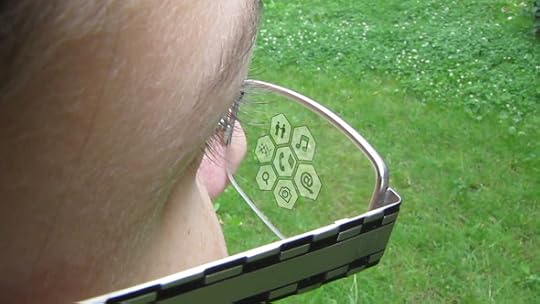
Viewing a world filled with sensors
Final Thoughts
With sensors becoming very inexpensive, tiny, and easy to mass-produce, we will soon see them embedded into paints, varnish, and other coatings. We will soon have information coming from virtually every surrounding surface – sides of cars, sides of buildings, our clothing, and our homes.
The next time you need to determine the optimal level of crispness, smoothness, or ripeness you will probably use a sensor.
Engineers will use sensors to determine things like light seepage, sound seepage, or thermal seepage.
Doctors will use sensors to analyze things like restrictive hair growth, genetic predispositions, causes for hearing loss, and allergic reactions.
Sensors are about to enter our lives in a far bigger way than most of us can imagine, and the opportunities that are about to unfold are truly endless.
If you care to count them, we will reach our first trillion sensors on planet earth in about 6-8 years. Personally, I can’t wait!
Author of “Communicating with the Future” – the book that changes everything
The post The Trillion-Sensor Movement appeared first on Futurist Thomas Frey.
November 19, 2015
Why no industries are safe… nor should they be
The first Internet gold rush ended poorly.
In 2000 we entered the new millennium waiting to see if Y2K would destroy the world, but instead it was our over valued Internet stocks that caused markets to crash.
The second Internet gold rush was just getting started when, in 2007, we watched our global financial systems implode and for several years nothing important got funded.
Rather than solving world poverty we got emoticons. Instead of finding new ways to cure diseases and feed the hungry we ended up with self-stirring coffee mugs. And our quest to educate third world countries gave us Wi-Fi enabled diapers.
Time and again our highest priority goals have gotten compromised leaving us with little more than new ways of rearranging the deck chairs.
It’s not like we haven’t made any progress, but it’s a rather sad commentary when some of today’s smartest people are devoting their intellect to get us to click on more ads.
Yet, in the midst of our lukewarm accomplishments, a few bold innovators are beginning to make a real difference. Fueled with new ways of accessing capital and a massively more scalable Internet, these entrepreneurs have declared war on entrenched corporate business models, setting their sights higher than ever before.
For this reason, every existing industry will soon feel the ground shifting beneath their feet, and if corporate executives think they can rest comfortably on past accomplishments, they’re in for a rude awakening.
The emerging crowdfunding era is on the verge of changing the corporate landscape in some significant ways
The Emerging Crowdfunding Era – Forcing us to Rethink the Role of Gatekeepers
During the first three quarters of 2015 there were 5,640 global VC-investment deals worth $98.4 billion, breaking the record of $88.7 billion in all of 2014.
Yet, according to Gallup, the U.S. only ranks 12th in the world for new business creation and significantly fewer new businesses are started today than in the 1970s, when the U.S. population was much smaller.
That’s about to change. Next year the crowdfunding industry in the U.S. is on track to account for more funding than venture capital.
According to a recent report by Massolution, crowdfunding, in all its forms, has mushroomed from a scant $880 million in 2010 to an estimated $34 billion in 2015.
To put this in perspective, venture capital in 2014 totaled roughly $45 billion and angel capital added another $20 billion.
Still in its infancy is equity crowdfunding, which started in September of 2013 under Title II of the JOBS Act. Restricted to accredited investors only, equity crowdfunding has grown from $1 billion invested online in 2014 to an estimated $2.5 billion in 2015.
If we simply look at how crowdfunding is more than doubling every year, our initial reaction might be that VC investing is in trouble. But the real relationship between crowdfunding and VCs is still unfolding.
Since venture capital has been funding many of the crowdfunding initiatives, the approach that seems to be taking shape is more of a system of organic crowdfunding exchanges that will enable the smart money to leverage both their influence and money.
The very best entrepreneurs will have access to more money faster, and VCs will be able to monitor which companies are getting traction and cherry-pick their investments.
At the same time, these crowdfunding exchanges will enable investors to buy and sell their positions in response to business demands and increase their overall liquidity.
According to one of Silicon Valley’s most prominent venture capitalists, Tim Draper, “…equity crowdfunding gives entrepreneurs access to a new group of investors who might be great assets to their business. I welcome investing in crowdfunded companies. It means that a company has a large number of promoters before I even invest.”
Grand Scale Implications
In a world where everyone dreams of being David in the next David and Goliath showdown, we are creating a whole new generation of super empowered David's, and quite frankly, the old lumbering giants of industry don't stand a chance.
Good entrepreneurs have a way of sniffing out where the very best opportunities are, and good crowdfunding strategies will allow them to capitalize on a window of opportunity very quickly.
Founders will also be able to retain far more ownerships and control, and many more early stage investors will have an opportunity to participate in deals formerly reserved for blue chip backers.
Even though the total number of startups will begin to grow significantly, we will also see more failures.
In a black and white world where winners and losers define success, having more failures would appear to be a bad thing, but it’s just the opposite. We’re entering unchartered territory and failures help us define the edges of the path we need to be on.

All of today's industries will eventually disappear
Death by 1,000 Paper Cuts
In the turbulent world of startups every new business gets assigned to one of our new-age taxonomies like Healthtech, Edtech, Fintech, Agtech, or in the case of those wanting to take on our massively bloated tax code – Taxtech.
Industry observers have a penchant for neatly organizing the battlefields so big companies can keep track of the “nibblers,” those attempting to nibble away at the edges of profitability.
But today’s open thinking has given rise to less-definable indirect forms of competition. For example, companies like Uber and AirBNB were already well established before industry trackers started to take them seriously.
Similarly, today’s startups will take on niche and even micro-niche categories so tiny that big companies will shrug when they finally notice them. But even tiny slivers of profitability can flourish, and one micro-niche can lead to a second micro-niche and before anyone is paying serious attention, corporations can begin to lose control of their key profit centers.
Over the next decade, large businesses will find themselves in dire need of a thousand Has Brinkers who can put their fingers in the dikes to plug the leaks in their profit models.
Not to underestimate the big guys, this may also lead to heightened levels of corporate ruthlessness where a couple well-placed character-destroying articles or a few patent infringement lawsuits can devastate a fledgling startup overnight.
Even so, large companies have far more exposed flanks than they’re willing to admit. And when literally thousands of startups begin a simultaneous attack, it becomes impossible to pay attention to all of them.
Much like a school of piranhas taking bites out a giant whale, the eventual death of an industry will unfold like the proverbial death by a thousand paper cuts.
Final Thoughts
Emerging technology is making every business vulnerable. There are no safe industries…. nor should there be.
As consumers, we should have more choice in the products, service, and performance of all the companies that play a role in our daily existence. Whether it’s the food we eat, the clothes we buy, or vehicles we drive in, all are about to transition in very significant ways.
As humans we are operating at a fraction of our true capabilities. We can do better.
Virtually every once-brilliant new technology that ended up as yet another casualty of corporate meddling in the past is about to make a comeback in the upcoming crowdfunding era.
The graveyards of failure can be a fertile proving ground for those who are interested, and much like a bad zombie apocalypse movie, competing tech that companies had assumed was dead and buried may soon spring back to life in haunting new forms.
As always, I’d like to hear your thoughts on this new age of business. Are we set to begin a wild new ride, or will legacy business still hold us back?
Author of “Communicating with the Future” – the book that changes everything
The post Why no industries are safe… nor should they be appeared first on Futurist Thomas Frey.
Thomas Frey's Blog

- Thomas Frey's profile
- 2 followers

