
Bob Joseph's Blog, page 6
September 26, 2022
Free, Prior, and Informed Consent and Eight Key Dates for the Indigenous Peoples in Canada

The road to adoption of the United Nations’ Declaration on the Rights of Indigenous Peoples (UNDec) has been a rocky one for Canada. Canada did finally “endorse” the Declaration but not without political pressure from Indigenous Peoples. What follows is a brief synopsis of the timeline leading to endorsement:


Free, Prior, and Informed Consent and Eight Key dates for the Indigenous Peoples in Canada
The road to adoption of the United Nations’ Declaration on the Rights of Indigenous Peoples (UNDec) has been a rocky one for Canada. Canada did finally “endorse” the Declaration but not without political pressure from Indigenous Peoples. What follows is a brief synopsis of the timeline leading to endorsement:

Free, Prior, and Informed Consent and Five Key dates for the Indigenous Peoples in Canada
The road to adoption of the United Nations’ Declaration on the Rights of Indigenous Peoples (UNDec) has been a rocky one for Canada. Canada did finally “endorse” the Declaration but not without political pressure from Indigenous Peoples. What follows is a brief synopsis of the timeline leading to endorsement:
September 6, 2022
Why We Need to Stay the Course on Reconciliation

“The report of my death was an exaggeration.”
Mark Twain
Is reconciliation dead? Our trainers and staff frequently are asked this question, and their answer is “No!”
However, some think it’s dead, so I asked Google. My query showed 30,600,000 results. A quick scan of the first three pages of articles declared reconciliation dead (except ours, Reconciliation Isn’t Dead. Here are 94 Reasons Why) or took the approach that it wasn’t dead because it never was alive. Why do we hold this belief when others have thrown up their hands? More progress has occurred in the past few years than ever before. It is not for us or anyone other than the survivors of the residential schools themselves to make that call. For survivors, reconciliation is a journey of healing, dignity and justice. If we give up on reconciliation, where does it leave us as a country?
A Quick Look at the Long History of Reconciliation
The seeds of reconciliation were sown in 1996 with the publication of The Royal Commission on Aboriginal Peoples’ final report. The five-volume, 4,000-page report covered a vast range of issues and 440 recommendations for extensive changes to the relationship between Indigenous and non-Indigenous people and governments in Canada. The federal government responded in 1998 with Gathering Strength: Canada's Aboriginal Action Plan, which included a Statement of Reconciliation that recognized the abuse suffered at the residential schools. Neither the final report and its 400 recommendations nor the Action Plan generated much action on reconciliation.
It wasn’t until twelve years later, in 2008, that many Canadians became aware of the term “reconciliation,” residential schools and the scope of suffering in those schools. For some, it began precisely on June 11, 2008, when the Prime Minister of Canada, the Right Honourable Stephen Harper, made a Statement of Apology to former students of Indian Residential Schools on behalf of the Government of Canada.
“...The government recognizes that the absence of an apology has been an impediment to healing and reconciliation.”
The Truth and Reconciliation Commission (TRC), borne in 2008 from the above apology and the Indian School Settlement Agreement, spent six years travelling across Canada, bearing witness to the experiences of 6,500 residential school survivors and their families. The work of the TRC marked the dawning of awareness about residential schools by bringing this aspect of Canadian history out from the shadows. The TRC hosted seven national events, which drew considerable media attention and the word “reconciliation” began to infiltrate the consciousness of Canadians.
But, it wasn’t until 2015 that the concept of reconciliation finally gained solid traction when the TRC released its Summary Report and 94 Calls to Action (CTAs) to guide reconciliation in all sectors. Finally, there were actionable policy recommendations to follow. And the response from governments, organizations, businesses and individuals was overall positive.
Tangible evidence for us as a provider of Indigenous relations training was a significant uptick in governments and businesses requesting our training to address CTAs #57 Professional Development and Training for Public Servants and #92 Business and Reconciliation. In 2015, when the TRC 94 CTA's were announced, Indigenous Corporate Training Inc. had already been providing training to governments and businesses in Working Effectively with Indigenous Peoples® for well over a decade. Because of this training, many of these governments, organizations and businesses were already well on the way to meeting CTA's #57, and #92 and were on the path of Reconciliation.
We also saw a dramatic increase in visitors to our Working Effectively with Indigenous Peoples® Blog. But, what gives us perhaps the greatest joy and belief that Canadians have embraced reconciliation is the proliferation of Land Acknowledgements. I wrote about First Nation Protocol in 2005 in my first book, Working Effectively with Aboriginal Peoples®, and at that time, no one was doing it. Now, you see Land Acknowledgements in email signature blocks, websites, sports and entertainment events, meetings, convocations - everywhere.
A Sliver Within a Sliver
Back to the question. We hear this question or conversation most frequently around pipeline projects. CTA #92 Business and Reconciliation calls upon the corporate sector for, among other things, “meaningful consultation, building respectful relationships, and obtaining the free, prior, and informed consent of Indigenous Peoples before proceeding with economic development projects.” The issue is that the law around meaningful consultation has many interpretations and can lead to acrimonious relationships.
Meaningful Consultation: Happy Days or Project Delays
And, there’s the frustration that the three levels of government have not consistently adopted the United Nations Declaration on the Rights of Indigenous Peoples - some are, some aren’t, some will, some won’t. It’s the arbitrary approach that is frustrating for both Indigenous communities and businesses.
But we want you to understand that pipelines are just one aspect of the corporate sector referred to in CTA #92 - the corporate sector includes everything from grocery chains to railways to drug stores. Pipelines are just a sliver within a sliver.
Declaring reconciliation dead or asking, “is reconciliation not working?” only looks at a small part of the reconciliation picture. This narrow view damages the work and progress governments, businesses, organizations, and individuals have made on the other 93 CTAs. Think about Pope Francis making the historic apology in April 2022 and following that up with a visit to Canada. That apology and visit would likely not have happened if it were not for the concerted effort of many to fulfill CTA #58:
#58 Church Apologies and Reconciliation
We call upon the Pope to issue an apology to Survivors, their families, and communities for the Roman Catholic Church’s role in the spiritual, cultural, emotional, physical, and sexual abuse of First Nations, Inuit, and Métis children in Catholic-run residential schools. We call for that apology to be similar to the 2010 apology issued to Irish victims of abuse and to occur within one year of the issuing of this Report and to be delivered by the Pope in Canada.
Timeline of the Papal Apology to Residential School Survivors
The 6,500 survivors who lived the horror of residential schools shaped the CTAs for reconciliation. It is they who suffered. They patiently waited decades for their truths to be heard, their suffering recognized, for dignity, justice, compensation, and for apologies from the churches involved in running the schools. They need hope and faith that the country is on a better path for Indigenous Peoples. The survivors alone have the right to decide if reconciliation is dead.

August 2, 2022
Why We Shouldn’t Say "Bury the Hatchet"

Photo: Pexels
Since the Truth and Reconciliation Commission of Canada released its report and 94 Calls to Action, we have seen significant progress for Canada and Canadians on the path to reconciliation. The signs are all around and we are hopeful we are indeed moving the needle on reconciliation.

July 5, 2022
Responses From Some Indigenous Leaders on the Historic Papal Apology
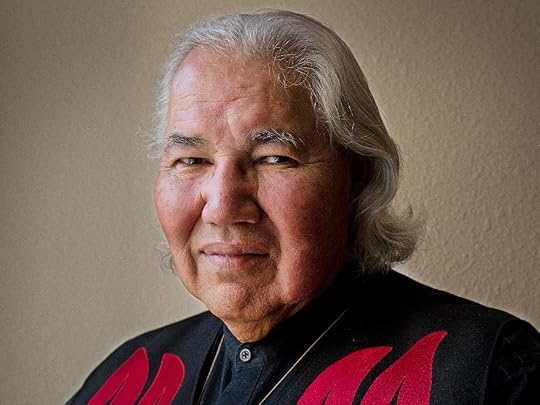
For many survivors of residential schools and their families, the Papal apology was all they hoped to hear, for others it did not go far enough. Here are some thoughts from notable Indigenous leaders on the apology, the implications, and their hopes for the next steps on the journey to reconciliation.

Timeline of the Papal Apology to Residential School Survivors

On April 1, 2022, I held my breath as I am sure thousands of other Indigenous Peoples did while listening to Pope Francis publicly address the Indigenous delegation from Canada. Would the leader of the Roman Catholic Church apologize for the church’s role in residential schools? And then he did.
Photo: Unsplash

May 31, 2022
International Decade of Indigenous Languages
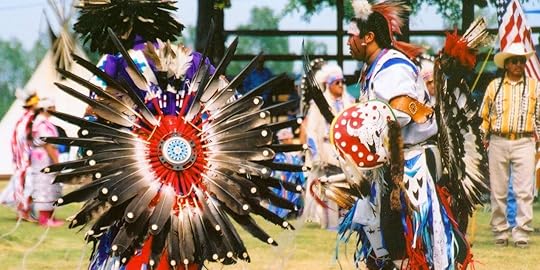
The United Nations has declared 2022-2032 as the International Decade of Indigenous Languages. Many Indigenous languages across the world are in critical danger of being extinct. The International Decade devoted to Indigenous Languages aims to ensure Indigenous Peoples’ right to “preserve, revitalize and promote their languages.” It also offers support and collaboration opportunities to help take necessary steps for the “usage, preservation, revitalization and promotion of Indigenous languages around the world.” Having a decade dedicated to revitalizing Indigenous languages will mean having a global community of language-saving heroes, featuring worldwide events and activities to promote relevant language learning tools and resources. It will also mean giving others a platform to share, endorse their local language, and facilitate and encourage the learning of others.


May 3, 2022
Nawalakw - Cultural Survival in Action
Indigenous Corporate Training Donates $40,000 to Nawalakw Culture Camps
Indigenous Corporate Training Inc. had the recent honour of speaking with K’odi (Hank) Nelson, the Executive Director of Nawalakw, an organization bent upon reconnecting Indigenous People to their culture, land and heritage. K’odi Nelson casts an impressive shadow. His comprehensive knowledge of the Kwakwaka’wakw history, culture - songs, dances, stories - and language, coupled with the skills of a professional athlete and an adventure guide/operator, places him in a unique position to heal and teach.

Bob Joseph's Blog

- Bob Joseph's profile
- 81 followers

