
 Must be signed in and friends with that member to view that page.
Bob Joseph's Blog, page 5
February 16, 2023
Free Prior Informed Consent and Duty to Consult
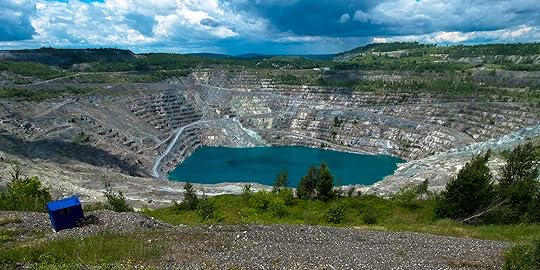
Asbestos mine, Asbestos, Quebec. Photo:
B*lly Frank, Flickr
Looking back
Back in 2014, when we published this blog post, Canada was wrestling with the notion of Free, Prior, and Informed Consent (FPIC) and the duty to consult with no veto. When the United Nations Declaration on the Rights of Indigenous Peoples (the Declaration), drafted in 2007, introduced the right to Free, Prior and Informed Consent for Indigenous Peoples. FPIC, one of the fundamental aspects of the Declaration, is included in six Articles. While all six Articles are significant, Article 32.1 is of particular interest to the federal government and the extractive resource sector in Canada:


February 2, 2023
11 Community Outreach Tips for Indigenous Recruitment - #2 of Community Series
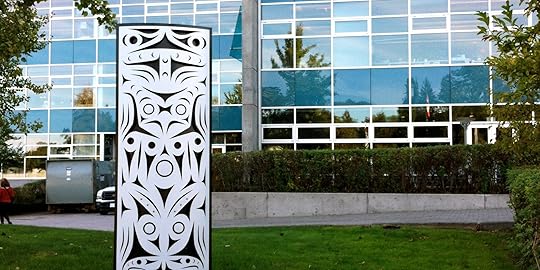
“Sacred Creatures” by Stz’uminus artist John Marston in front of FortisBC’s Surrey office. Photo: Bob Joseph
This is the second part of our series on best outreach practices for the recruitment of Indigenous Peoples. In the first part, Community Engagement for Indigenous Recruitment, we shared a few tips and suggestions on some activities an organization should consider before initial contact with the community/ies. Due diligence activities such as researching the history, culture, issues, challenges and protocols of the community/ies you want to engage for recruitment will prepare you well and help you avoid embarrassing engagement mistakes. By taking the time to do this, you will be aware of cultural protocol for meetings, and you will be aware that the protocol for one community may be different from that of another. Recognize that relationships with Indigenous communities take time to build, and efforts must be made to maintain them.

January 31, 2023
Lower Education - #2 of 8 Key Issues for Indigenous Peoples in Canada

Photo: Unsplash
Education is considered a human right in Canada. Yet, while Canada has one of the world's highest levels of educational attainment, the graduation rate for Indigenous students remains far lower than that of non-Indigenous students. How is that possible? The answer lies in the history of Canada.

January 11, 2023
8 First Nation Reserve FAQs - #1 of 2 First Nation Reserves Series
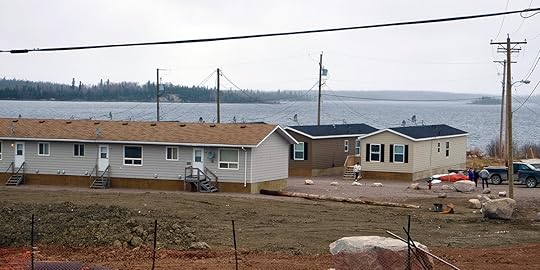
Little Grand Rapids, First Nation reserve in Manitoba, Canada. Photo: Shutterstock
A First Nation reserve is a tract of land set aside under the Indian Act and treaty agreements for the exclusive use of an Indian band (First Nation). Earliest examples of reserves date back to attempts by French missionaries in 1637 to encourage Aboriginal Peoples to settle in one spot and embrace both agriculture and Christianity. As more and more Europeans settled in Canada and on the traditional lands of Indigenous Peoples, it became apparent to the authorities that an effective means to ensure the most fertile land was available to European farmers was needed. The development of the reserve system met this need.

January 3, 2023
Poorer Health - #1 of 8 Key Issues for Indigenous Peoples in Canada

Photo: Unsplash
In 2015, we published an article outlining the eight key issues of primary concern for Indigenous Peoples in Canada. Since then, the article has been viewed over 620,000 times, making it the most-viewed article of the hundreds on our Working Effectively with Indigenous Peoples® blog. Due to the continuing high interest, we decided to take a deeper look at each of the eight issues.

December 5, 2022
8 Key Issues for Indigenous Peoples in Canada

Photo: Shutterstock
Eight of the key issues of most significant concern for Indigenous Peoples in Canada are complex and inexorably intertwined - so much so that government, researchers, policymakers and Indigenous leaders seem hamstrung by the enormity. It is hard to isolate one issue as being the worst. The roots of these issues lie in the Indian Act and colonialism.

December 1, 2022
8 Things You Need to Know About On-Reserve Housing Issues
Little Grand Rapids, First Nation reserve in Manitoba, Canada. Photo: Shutterstock
Did you know that adequate housing was recognized in the 1948 Universal Declaration of Human Rights? Did you know almost one in six Indigenous people lived in a home in need of major repairs in 2021 [1], a rate almost three times higher than for the non-Indigenous population, and more than 17 percent of Indigenous people lived in crowded housing?

November 28, 2022
A Snapshot of On-Reserve Clean Water Issues

Photo: Pixabay
In Canada, access to clean drinking water is considered a given. A given, I suspect, that is frequently taken for granted by those who enjoy clean drinking water at the twist of the tap. For thousands of Indigenous Peoples, clean water at the twist of the fixture is an elusive dream. Entire generations in some communities have grown up under various degrees of drinking water advisories (DWA). The Neskantaga First Nation, with a population of about 240, in northern Ontario, has had a DWA in place since 1996. That means one whole generation has grown up under a DWA, and a second generation is now growing up having never turned on the tap for a glass of water.

October 25, 2022
Tommy George Prince Military Medal and Silver Star Recipient
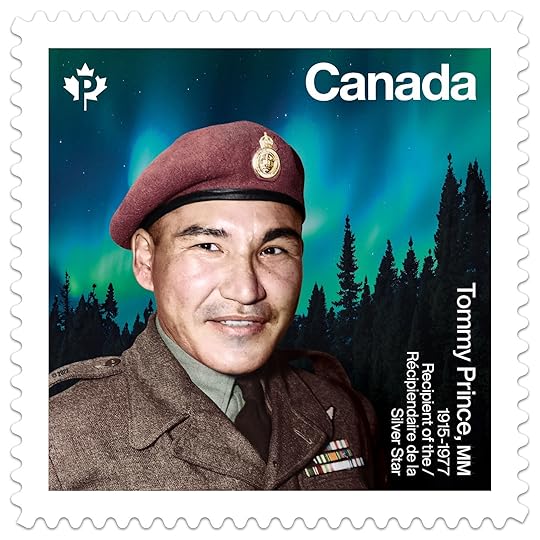
The story of Thomas "Tommy" George Prince, Canada’s most decorated Indigenous soldier, is inspiring and tragic. It also underscores the inequality that Indigenous soldiers experienced upon returning home after risking their lives to fight under the Canadian flag.
Tommy George Prince, born in 1915 on the Brokenhead Reserve in Manitoba, came from a long line of men who were distinguished in battle - family members fought for the Crown in the Red River Resistance in 1870, led the Nile River Voyageurs in 1885, and fought in World War I.

October 4, 2022
Honouring the 'Free' in Free, Prior and Informed Consent
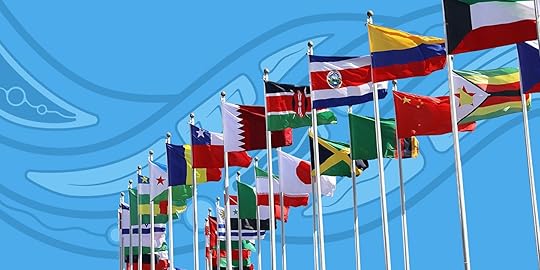
In 2007, the UN General Assembly adopted the United Nations Declaration on the Rights of Indigenous Peoples. Six of the 46 Articles that make up the UN Declaration reference the right of Indigenous Peoples to have “free, prior, and informed consent” (FPIC) regarding any activity that affects their ancestral lands, territories and natural resources.
“FPIC is a principle protected by international human rights standards that state, ‘all peoples have the right to self-determination’ and – linked to the right to self-determination – ‘all peoples have the right to freely pursue their economic, social and cultural development.’” [1]
In this article, we contemplate the 'free' aspect of FPIC. The decision-making process must be free of pressure, intimidation, manipulation or coercion. The decision-making process should also be self-directed by the community from whom consent is sought and free of expectations and external timelines.

Bob Joseph's Blog

- Bob Joseph's profile
- 81 followers

