
Bob Joseph's Blog, page 4
July 24, 2023
The Constitution Express and Its Role in Entrenching Indigenous Rights
This is a brief look at an extraordinary, passionate, grassroots Indigenous movement in Canadian history that altered the direction of the Constitution Act 1982 to ensure Indigenous rights were included. This article is brief, so if people are interested in learning the backstory to the Constitution Express, I suggest they read Unsettling Canada: A National Wake-Up Call by Arthur Manuel and Grand Chief Ronald M. Derrickson.


July 18, 2023
Higher Rates of Death in Children and Youth - #7 of 8 Key Issues

Unintentional injuries are the leading cause of death in Canadian Indigenous children and youth, occurring at rates three to four times the national average. [1]
That staggering figure is from 2012. While there is literature and studies about injuries and why they occur more frequently for Indigenous youth, there is a lack of published statistics as Canada Census no longer includes that metric. Data used in many studies typically dates back to 2012. In Preventing unintentional injuries in Indigenous children and youth in Canada, the Canadian Paediatric Society points out the...

June 6, 2023
Higher Levels of Incarceration - #6 of 8 Key Issues
The incarceration rate of Indigenous peoples in Canada should be labelled a national crisis. The flaws in the justice system are insidious and perpetuate the cycle of poverty and marginalization that is the reality for far too many Indigenous people. The situation is of such enormity that of 94 calls to action of the Truth and Reconciliation Commission, 18 are devoted to Justice, plus another three aimed at Equity in the Legal System - more than double those committed to any other issue.

May 2, 2023
Higher Rates of Unemployment - #5 of 8 Key Issues
Photo: Pexels
Indigenous people are the fastest-growing and youngest segment of the Canadian population. And have been for decades. Based on the 2020 Canada Census there are now 1.8 million Indigenous people in Canada.
There is a direct link between education and employment. Historically, Indigenous peoples have experienced higher unemployment rates than other Canadians. Why? Because historically, they have been offered inferior education, beginning with the cataclysmic residential school system, followed by decades of underfunding for on-reserve schools. Poor education over generations begets chronic unemployment over generations.

April 4, 2023
Lower Income - #4 of 8 Key Issues for Indigenous Peoples in Canada
Photo: Unsplash
“Indigenous Canadians earn about 70 cents for every dollar made by non-Indigenous Canadians, according to Canada's income data. This is a very frequent occurrence in metropolitan areas, where Indigenous employees earn 34% less than non-Indigenous workers doing the same job. The situation is much worse in remote reservations* where non-Indigenous individuals earn up to 88 percent more than Indigenous people.” [1]
*Please note in Canada, we use "reserves", but as this is a quote, we have left it as is.
The 2021 Census marked the first time low-income data was made available for all geographic regions in Canada, including reserves and northern areas. Of the 1.8 million Indigenous people in Canada in 2021, 18.8% lived in a low-income household, as defined using the low-income measure, after tax, compared with 10.7% of the non-Indigenous population. Nearly one-quarter (24.6%) of Indigenous children aged 14 years and younger lived in a low-income household in 2021, more than double the rate among non-Indigenous children (11.1%).
A household is considered low income if its income is below 50% of the median household income; the annual average household income was a little over $75,452 in 2022. [2]
"In the provinces, the poverty rate for Indigenous people (excluding First Nations people living on reserve) fell from 23.8% in 2015 to 11.8% in 2020. Specifically, the rate was 14.1% among First Nations people living off reserve, 9.2% among Métis and 10.2% among Inuit in the provinces. The corresponding rate for the non-Indigenous population in the provinces in 2020 was 7.9%." [3] Please note that the pandemic relief benefits were an essential component of income in 2020 and are considered a factor in the decrease in Indigenous people living below the poverty line. Poverty is often assessed by measuring the number of Canadians with low incomes.
As you can see, the poverty rate for First Nations people living off-reserve is nearly double that of non-Indigenous people. The federal government does not collect data on the poverty rate in on-reserve households for various reasons. But, based on available statistics on education attainments and rate of employment, it can be surmised that the poverty rate is higher for those living on reserve.
What is poverty?
The Government of Canada defines poverty as:
“The condition of a person who is deprived of the resources, means, choices and power necessary to acquire and maintain a basic level of living standards and to facilitate integration and participation in society.” [4]
Poverty is a western construct
The federal government bases its definition on financial metrics, however, for Indigenous Peoples, it should include cultural perspectives on poverty.
Some Indigenous languages do not have a word for poverty, according to the First Nations Perspectives on Poverty report. Many Elders and adults interviewed for the report had a more holistic view of what made a person poor. There was a common sentiment that one may be materially wealthy but culturally poor.
“I don’t equate wealth to money, and richness to money… [T]o be well-off, I think it’s human characteristics: Do you have your language? Do you follow your culture? Do you do your ceremonies? Those things are incredible indicators for us. The only thing that we’re given to measure everything else on wealth is measured …from the outside, so those are my measurement tools.”
Gordon Peters, Eelūnaapèewii Lahkèewiit, Ontario
Indigenous Worldviews vs Western Worldviews
Before the arrival of Europeans in 1492, there was no “poverty” because of the collective commitment and responsibility to the community, looking out for each other, managing and sharing resources, and trading with other communities. The priorities were culture, family, identity and living in harmony with the natural world. The fur trade introduced a fundamental shift from the “bush economy” (hunter/gatherers, agrarian and fishers) to a wage economy and dependency on external markets.
When the Indian Act, 1876 was imposed on Indigenous people, assimilation into European culture was the goal. Ironically, a few years later, in 1881, the Indian Act restricted Indigenous involvement in local economies with the permit systems, which controlled their freedom to leave their reserves and to sell their products, thereby stymying its original goal. Government policies and actions over time have perpetuated cycles of poverty, discrimination, bias and marginalization over many generations.
Indian Act and the Permit System
Under the Indian Act, registered “Indians” living on reserve cannot own the land under their houses; therefore, their houses cannot be sold - which makes it impossible to build up equity in your home, as is possible for non-Indigenous people.
Myth #3: Do First Nations Get Free Housing on Reserves?
The federal government’s Opportunity for All – Canada’s First Poverty Reduction Strategy has concrete poverty reduction targets of a 20% reduction by 2020 and a 50% reduction by 2030 based on Canada’s Official Poverty Line, which, relative to 2015 levels, would lead to the lowest poverty rate in Canada’s history.
These targets also align with target 1.2 of the UN’s Sustainable Development Goal 1: “By 2030, reduce at least by half the proportion of men, women and children of all ages living in poverty in all its dimensions according to national definitions.”
This post is the fourth in a series. Read from the beginning:
Poorer Health - #1 of 8 Key Issues for Indigenous Peoples in Canada
[1] Average Income in Canada: Does Your Salary Measure Up?
[2] ibid
[3] Disaggregated trends in poverty from the 2021 Census of Population
[4] Canada's First Poverty Reduction Strategy

March 30, 2023
Indigenous Title and the Doctrine of Discovery
Photo: Shutterstock
Indigenous Peoples believe they have held title to their traditional lands or territories from the moment their Creators placed them on that land (time immemorial) and bestowed them with the responsibility to care for it... forever. But then European explorers arrived, planted flags, and laid claim to all they saw. How was that possible?

Christopher Columbus and the Doctrine of Discovery - 5 Things to Know
Photo: Shutterstock
The Doctrine of Discovery was used by European monarchies, beginning in the mid-fifteenth century, as a means of legitimizing the colonization of lands outside of Europe. It was issued in 1493, the year after Christopher Columbus arrived on the shores of what is now known as North America. The Doctrine of Discovery continues to impact Indigenous Peoples throughout the world.

March 15, 2023
Trevor Snider: Commemorating a Reconciliation Ally
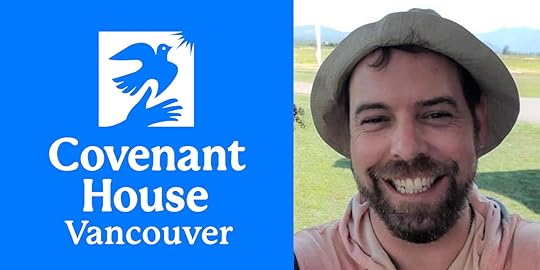
We first met Trevor, Supervisor of Donations Processing for Covenant House Vancouver, when he attended one of our Training Weeks. Trevor took the time to tell us about Covenant House, what they stood for, their goals and what he personally was doing to support reconciliation. Trevor left a lasting impression on our team and was a tireless advocate for truth and reconciliation and for supporting Indigenous initiatives.

March 1, 2023
UN Declaration on the Rights of Indigenous Peoples
Photo: Shutterstock
On June 21, 2021, the United Nations Declaration on the Rights of Indigenous Peoples Act (DRIPA) received Royal Assent and immediately came into force. In doing so, Canada took a substantive step towards ensuring federal laws reflect the standards set out in DRIPA. There are many questions about DRIPA, so we answer the most common ones in this article.

February 28, 2023
Inadequate Housing and Crowded Living Conditions - #3 of 8 Key Issues
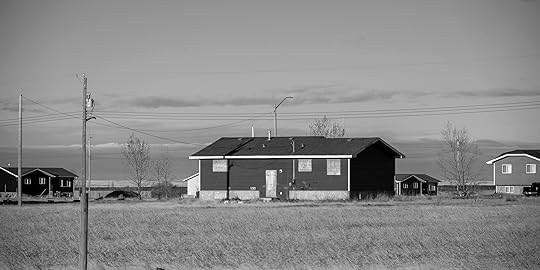
Siksika Nation, Alberta - May 2, 2021. Photo: Shutterstock
“Indigenous People face the worst housing outcomes in the country.” Hon. Marc Miller, Minister of Crown-Indigenous Relations [1]
To understand the complexities of the housing situation, some basic information on the reserve system, created in 1876, is required. The two articles linked below provide an overview of on-reserve housing.
Read:
8 Things You Need to Know About On-Reserve Housing Issues
8 First Nation Reserve FAQs
In Canada, the Indigenous population grew by 9.4 percent from 2016 to 2021; however, the housing stock in Indigenous communities did not increase even close to the same rate. The 2022 federal budget allocated $4.3 billion over seven years towards mitigating the housing crisis, a figure that falls far short of what is needed, according to the Assembly of First Nations, which asked for $44 billion to deal with overcrowding and homes in dire need of repair in reserves.
The housing crisis at a glance:
18 percent of Indigenous households living in urban, rural and northern areas are experiencing core housing needs, meaning their housing falls below at least one of the adequacy, affordability or suitability standards.
18.8 percent of the Indigenous population live in low-income households.
Nearly a quarter of Indigenous children ages 14 and younger live in low-income households in 2021, more than double that of non-Indigenous children.
Almost one in six Indigenous people lived in a home needing major repairs in 2021, a rate nearly three times higher than the non-Indigenous population.
17.1 percent of Indigenous people live in overcrowded housing, almost double the number of non-Indigenous people living in crowded housing
Inuit living in crowded housing: 40.1 percent
First Nations living in crowded housing: 21.4 percent
Métis living in crowded housing: 7.9 percent
Indigenous people are overrepresented among the 35,000 people who experience homelessness each night in Canada.
Photo: Unsplash
Indigenous people are more than twice as likely to experience hidden homelessness (couch surfing), especially in the north, compared to their non-indigenous counterparts.
The higher rates of homelessness for Indigenous people are associated with systemic barriers in education, employment, and the intergenerational effects of colonization.
Indigenous people living off-reserve have lower homeownership rates and are more likely to live in subsidized housing.
According to the Parliamentary Budget Officer, there is a $636 million annual gap between what Indigenous households living in off-reserve rural, urban and northern communities pay for housing and what is deemed affordable.
Assembly of First Nations and the Institute of Fiscal Studies and Democracy released a joint study in 2021 that identified the need for housing in First Nation communities at about 55,000 new units and 81,000 renovations on reserve.
Impacts of the housing crisis
Physical and mental health & housing
As noted above, Indigenous people frequently live in overcrowded houses that need significant repairs. Common issues include poor ventilation, broken windows, leaky roofs, and water-damaged walls, all of which create a fertile environment for the rapid spread of viruses. Moisture in the walls and ceilings leads to mould growth, triggering asthma and respiratory diseases.
Read:
Indigenous Peoples and COVID-19
A Snapshot of On-Reserve Clean Water Issues
Tuberculosis among First Nations, Inuit and Métis children and youth in Canada: Beyond medical management
Overcrowded living conditions impact mental health in many ways:
Stress, anxiety and depression
Sleep problems
Physical health problems
Relationship difficulties
Education & housing
Not having access to a quiet space for homework and studying affects a child’s school performance. Poor performance in school impacts a child’s opportunity for higher education and employment. Children growing up in crowded houses may not get the sleep they need, leading to difficulty concentrating in school, fatigue and behavioural issues. Behavioural issues can result in negative interactions with teachers and peers, which may, later in life, impact personal and professional relationships.
Employment & housing
When physical and mental health and education are negatively impacted, finding and keeping stable employment is also impacted.
Culture & housing
The on-reserve housing crisis drives some community members to relocate to urban centres for better accommodation. Separated from family, community and culture, they are often at their most vulnerable. Students who leave communities for higher or better education opportunities may be unable to return to their communities due to the housing crisis.
Family violence & housing Empty red dresses representing missing and murdered Indigenous women and girls and two-spirit people. Photo: Bob Joseph
Overcrowded, unsafe housing is a factor in the higher rates of gender-based violence against Indigenous women, girls and gender-diverse people. Housing shortages may force women and children to remain in unsafe living situations.
Climate change & housing
Indigenous communities are often identified as most vulnerable to climate change, specifically fire and flood events. When homes are destroyed, it exacerbates the already crowded living conditions as the same number of people are now living in fewer homes.
Reserves were frequently located on floodplains. People living in flood-prone reserves deal with substantial risks, including property damage, deteriorated health, and disrupted livelihoods and education due to repeated and sometimes prolonged, evacuations. Emergency removal from their homes and separation from family is also traumatic for residential school survivors.
“80.7% of the 985 Indigenous reserves have some flood exposure in terms of either population or residential properties at the 100-year return period.” [2]
The Kashechewan First Nation community members have been evacuated 14 times to at least 22 host communities across Ontario since 2004 (consecutively from 2004 to 2008 and 2012–2019) because of actual flooding events or flooding risk and the potential failure of the dike that surrounds the community. [3]
Reserves are also located in forests prone to wildland fires, and it’s projected that wildland fires will increase in number, size, and intensity due to climate warming. Reserves are often remote with limited access, which makes evacuation challenging and exacerbates firefighting efforts.
“Approximately 12.3% of the Canadian population currently live in the wildland–urban interface (WUI), which includes 32.1% of the on-reserve First Nations population. Currently, 17.8% of the on-reserve WUI population is exposed to FRI of ≤250 years, compared with only 4.7% of the remaining WUI population.” [4]
Read:
Forest Fires and Indigenous Communities
Indigenous Fire Management and Traditional Knowledge
The housing crisis is at the epicentre of many barriers Indigenous Peoples endure. The Liberals have pledged to develop an urban, rural, and northern Indigenous housing strategy. They have budgeted $300 million over five years to allow the Canada Mortgage and Housing Corporation to work with Indigenous communities to build to create a plan.
This post is the third in a series. Read from the beginning:
Poorer Health - #1 of 8 Key Issues for Indigenous Peoples in Canada
[1] Standing Committee on Indigenous and Northern Affairs, The Effects of the Housing Shortage on Indigenous Peoples in Canada, Evidence, 4 March 2022
[2] Chakraborty, L., Thistlethwaite, J., Minano, A. et al. Leveraging Hazard, Exposure, and Social Vulnerability Data to Assess Flood Risk to Indigenous Communities in Canada. Int J Disaster Risk Sci 12, 821–838 (2021). https://doi.org/10.1007/s13753-021-00...
[3] Thistlethwaite, J., Minano, A., Henstra, D., Scott, D., Indigenous Reserve Lands in Canada Face High Flood Risk, Centre for International Governance Innovation, Policy Brief No. 159 — April 2020
[4] Erni, S., Johnston, L., Boulanger, Y., Manka, F., Bernier, P., Eddy, B., Christianson, A., Swystun, T., Gauthier, S. Exposure of the Canadian wildland–human interface and population to wildland fire, under current and future climate conditions 9 April 2021

Bob Joseph's Blog

- Bob Joseph's profile
- 81 followers

