Lucy Nichol's Blog, page 2
June 5, 2021
Jeanette Winterson’s book bonfire is symbolic of how we dismiss those working passionately behind the scenes
Whether it was artistic symbolism, a PR stunt or a knee-jerk emotional reaction, the one thing that really stands out about Jeanette Winterson’s book bonfire is the fact that we forget how many people pour their hearts and souls into publishing books.
Nobody with an interest in the world of publishing could have missed the symbolic book burning image tweeted out by acclaimed author Jeanette Winterson yesterday evening. It was a defiant response to the new cover and book blurb written by the team at Vintage which the author felt undermined her work…
Absolutely hated the cosy little domestic blurbs on my new covers. Turned me into wimmins fiction of the worst kind! Nothing playful or strange or the ahead of time stuff that’s in there. So I set them on fire pic.twitter.com/w1udGhu52s
— JEANETTE WINTERSON (@Wintersonworld) June 4, 2021
I think that’s fair enough – we are talking about years and years of work there. But was the ceremonial burning – and subsequent tweet – really necessary? After all, it’s quite likely that somebody has spent years and years working in marketing, honing their skills and pouring their all into that book blurb which has been publicly shamed.
As somebody who has been published both traditionally and independently (or, to use the stigmatised term – self-published) I have seen first hand the number of individuals involved in publishing a book.
From manuscript assessors to my agent’s editorial direction, to the typesetter, marketing and social media consultants, cover designer and book trailer producer – many people have worked with me to get my book out into the world. Yes, it’s my story, but it’s not a book without everyone else’s input.
Yes, it’s my story, but it’s not a book without everyone else’s input.
Which is why I feel that Jeanette Winterson’s tweet – whatever her intention – was unfair and demonstrated to me how little individuals working behind the scenes in publishing or the arts more generally are valued.
I have worked ‘behind the scenes’ of theatre shows, books, films, stand up comedy and dance for many years. While not the artist with a credit on the flyer, I always flexed my creative muscle to produce something that represented the work in the best possible way. And when you get creative, it’s incredibly difficult not to get passionate, too. So there’s usually a lot of emotion involved.
Of course, sometimes, I haven’t hit the mark. But on those occasions, there has been a meeting or a conversation or a direct email discussing the shortcomings of the brochure copy or show imagery with a fair critique and request for revision. Fair enough.
But frankly, I can’t begin to imagine how I would have felt if my one of my former bosses or clients, for example playwright John Godber, took to Twitter with a picture of burning theatre brochures to publicly shame my work. Godber is a straight down the line Yorkshireman, and he might have been blunt in his critique of the marketing team’s work at times and that’s perfectly fine. But he would never set out to humiliate.
Whether or not there was any intention of humiliation on Winterson’s part (to be honest, I don’t believe there would have been) I think this gives us all an opportunity to reflect on the huge number of individuals working their socks off to help get author and artist names and their works of art or literature into the spotlight. They might work for a big publishing name, but they are all individuals – just as an author is. By all means, a member of the public might tear a book – and its blurb – apart on Goodreads. Fine. But you don’t expect your collaborators or colleagues to do the same.
At the end of the day, it might be Jeanette Winterson’s story – but I’m not sure it can ever be solely her book.
Now, that comment about ‘wimmin’s fiction’…I think I’ll leave that one to others to dissect…
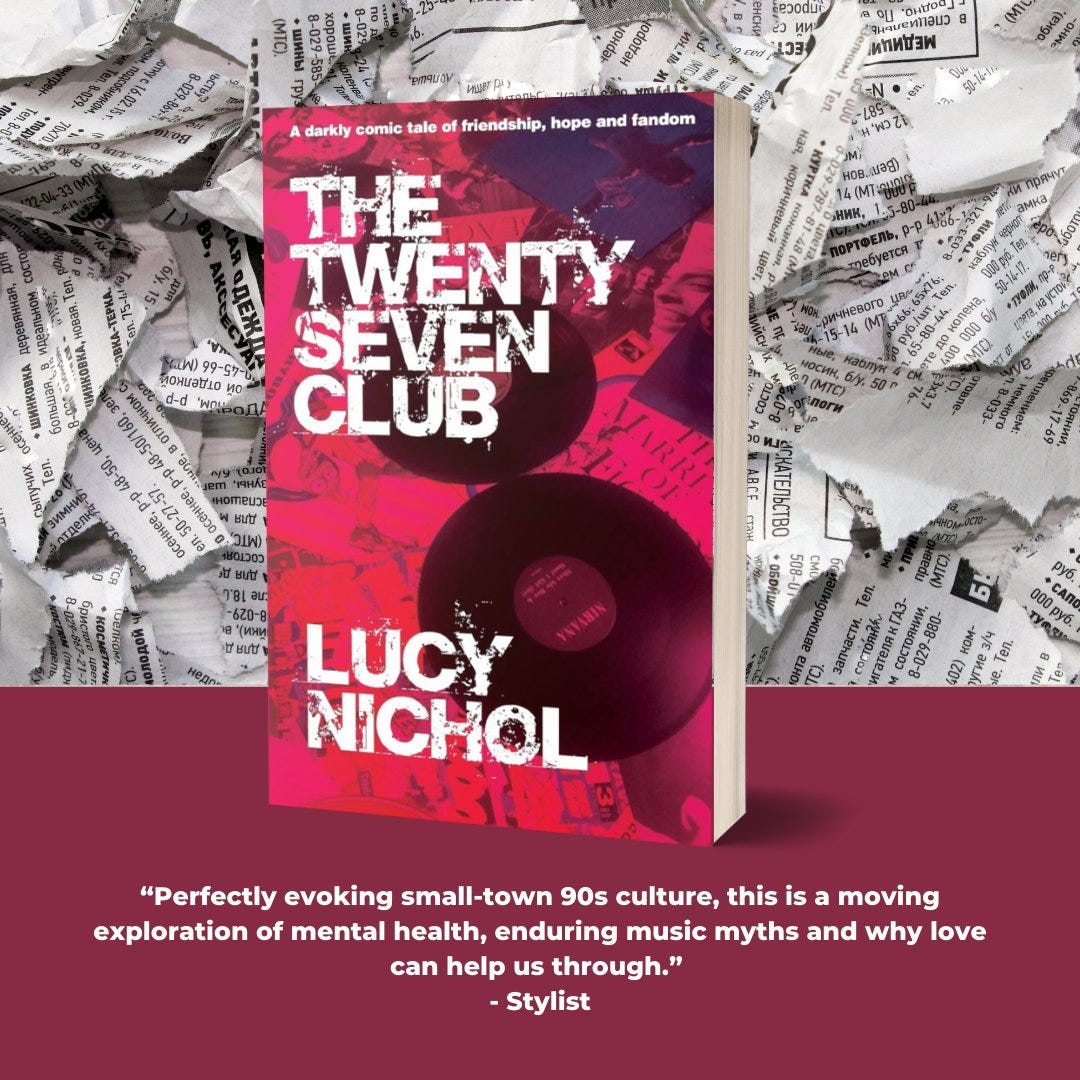
If you enjoyed this, you might enjoy my writing too….Check out The Twenty Seven Club, my first novel, below:


May 29, 2021
Does mental illness make us more creative?
This is a topic that is ALWAYS up for debate. And it’s pretty controversial to boot. There has been a lot of research into whether or not mental illness makes us more creative – acclaimed US psychologist and author Kay Redfield Jamison released an entire book exploring the subject (Touched With Fire if you’re interested). But the upset that can come from assuming this connection is understandable – because illness is illness and at the end of the day, nothing about it is fun.
Redfield Jamison is somebody who has herself struggled with bipolar disorder, so she’s not coming at it from a purely professional perspective – she has that all important lived experience perspective too. But it’s not a straight forward question with a straight forward answer – which is probably why she spends a lot of time and effort exploring the subject.
Reflecting on my own experiences, I could argue that my writing became a more serious pastime when I started exploring my experiences of having an anxiety disorder. However, regardless of whether or not those experiences added to my creativity, I certainly couldn’t write while in the midst of an anxiety lapse/relapse. In our darkest moments of mental ill health being creative, in my view anyway, is completely and utterly impossible.
But given the fact most of my writing is all about mental health, does that mean that, regardless of when I write, those experiences are what forged my creativity?

Well, as a 40-something with an A in GCSE Art and a slightly less appealing A-Level grade in the same subject, I’d say my creativity was always there. Sure, my anxiety levels went into overdrive when I was 15, but then, looking back at childhood photos, I was always a curious, creative kid. So I’m not sure that I can equate my creativity to my mental health problems.
Perhaps, in my case (and possibly in others’ too) our existing creative flair is something that is simply unleashed once recovery has given us the time and space to reflect on our more problematic experiences? It’s something that’s always been there but our experiences give us something to hook that creativity onto.
I mean, does every single person with an anxiety disorder enjoy art or creative writing? I doubt it. If 1 in 4 of us experience a mental health problem in our lives, then 1 in 4 of us would undoubtedly be extremely creative if this link was in fact true.
I know many of my friends are creative, artistic souls and many of us make our living in the arts. But it wasn’t mental illness that brought us together, it was our shared interest in culture and society, music and stand up and theatre.
So while I believe that there is something in how we use our experiences of mental health within our creative pursuits, I don’t believe it is what makes us creative. An artist might have a muse – but that muse isn’t necessarily the reason they became an artist.
I am sure in some cases there are clear links but, for me anyway, I’m not convinced that my creativity wouldn’t stand up if I hadn’t experienced panic attacks and terror. I just think the content of the creativity might be different.
As a teenager I remember complaining to my A Level art teacher that I wouldn’t be a good artist because nothing bad had ever happened to me. Indeed, I did end up with a crappy D in Art – but that was more to do with Lambrini and late nights than it was to do with mental illness.
And those Lambrini and late nights triggered many a panic attack over the years…
We are who we are, and this is made up of experiences, genes, psychology, surroundings, social opportunities and so, so much more. Mental illness I am sure plays a role – but it doesn’t make us who we are. It isn’t our whole. And we don’t need to thank it for our creative talents.
We have nurtured that talent in spite of it – not because of it.
If you’d like to read more of my writing, please do check out my first novel, The Twenty Seven Club – an exploration of mental health, friendship and music myths.
Photo of paintbrushes by RhondaK Native Florida Folk Artist on Unsplash
May 12, 2021
Free Book Sample:The Twenty Seven Club
Fancy having a read of The Twenty Seven Club before committing your pennies to it? Well, turns out that Amazon will let you do that for FREE!
This fictional tale takes you back to 1994, when the music world was mourning Kurt Cobain – and the concept of The Twenty Seven Club emerged – along with a bunch of other ridiculous conspiracy theories. But as someone who has experienced health anxiety, obsessive thinking and panic attacks, I know that if something gets lodged inside our head, we can really start to believe it.
Follow 26 year old Emma, best mate Dave, and beloved whippet Trevor on their adventures in fandom, friendship and existential fear.
See below and you’ll get a good chunk of the book to try for FREE to give you a taste of what it’s about. Hope you enjoy it! Lucy x
May 9, 2021
How anxiety makes the truth stranger than fiction
Trigger warning: Panic and health anxiety
There’s a theme that runs through all my writing – the media’s impact on our anxiety. And my God, it’s very REAL. I’m not blaming the media. Not entirely. It’s just that, for us obsessives, the combination of health anxiety and health headlines is a bit of a toxic cocktail.
So here’s my Sunday morning blah blah blah on the subject to show you what I mean, and what it is that drives much of my writing…
My first book, A Series of Unfortunate Stereotypes, is a bit of a non-fiction rant about how stigma and stereotypes can impact self-stigma and shame around mental health, particularly from what we see in popular culture. And of course in The Twenty Seven Club, the protagonist, Emma, is obsessed by the emerging media narrative about rock stars dying aged 27.
It’s probably no surprise, then, that given how we’re in a pandemic, I’ve been particularly obsessed by the headlines which have, in turn, particularly impacted my health and my behaviour lately.
Back in the mid 90s, in fact when The Twenty Seven Club is set but I’m talking IRL now, I had my first ever panic attack. It was pretty intense and frightening. I had no idea what was happening, but I thought I was going to die of a blood clot. After all, the headlines told us that DVT (deep vein thrombosis) is a real possibility for anyone taking the Femodene contraceptive pill – and particularly anyone who smoked while taking said meds. Of course, aged 15, I was probably feeling pretty guilty about having sex and smoking, so the associated teenage guilt didn’t help matters. But I was one of the people at risk – or so I thought…
One day, I saw a teeny little mark on my arm (NOT a symptom of DVT I might add) and within a split second I was, in my fucked up head, dying of a DVT.
I was drenched in pure dread and doom, fear brought me to my knees (on a busy shopping street in Hull on a Saturday – cringe!) and I went faint, couldn’t see properly and retched. A lot. Yep – in reality, panic attacks are rarely simply the acceptable sight of someone breathing into a bag – they’re actually pretty uninhibited and ugly.
With support from my mum, I came to realise that I didn’t have a DVT, but I was having a panic attack (who knew – it was the 90s – they didn’t exist then, did they?)
However, over the next few years an ache in my leg was the start of a DVT. A warm feeling on my skin was a DVT. A headache was a DVT. And then it kind of grew into a fear of my heart stopping and cancer and meningitis and…pretty much anything I heard about in public awareness campaigns basically. I found myself in A&E on a Friday night waiting for hours to be told I was OK when I could have been at home watching Friends, eating pizza and drinking wine.
And so here I am today, still not protected from Covid, because I keep cancelling my vaccines. Something I’ve bawled and panicked about because I’m so bloody angry with myself for it.
The thing is, I know that it’s far safer to have the Covid vaccine than not to have it. And, although this might sound strange (although those with health anxiety will probably get it) I’m not actually scared of dying from a blood clot. I’m scared that my brain will make me believe I’m dying from a blood clot. I’m scared of the panic, not the vaccine, but triggers are triggers and the idea of blood clots, for me, are wedged deep inside my brain from all those years ago labelled as my number one fear factor.
Let’s talk spiders ( not the club)If you don’t have health anxiety another way to understand it is by looking at it through our fear of spiders (not the nightclub on the industrial estate in Hull that I’m always wanging on about). You know that Horris or Morris or Boris the spider, (or whatever your dad called them when they crawled into your living room in the 80s and he reminded you not to be scared because they ate the flies and in fact – spiders were our friends), you know that they can’t hurt you. But your brain still forces your body to make strange vocalisations reminiscent of a fearful wild animal confronted by its predator, while your feet force you to dance like a pilled up Morris dancer. You ARE scared even if there’s no need to be. And no matter how many times you’re told that spiders in England can’t harm you and that there’s literally a one in a gazillion chance you’re going to find some exotic dude with fangs in your bananas (regardless of that story in The Sun), to you, it still feels like ALL spiders are the enemy. So we dance and wail because no matter what logic tells us, we’re hard-wired to fear them.
That’s what health anxiety is like. I know I’ve got more chance getting run over when I go out than I have getting a blood clot from a vaccine. Just as I know Horris or Morris or whoever isn’t going to harm me (sadly, the same can’t be said about strange creatures called Boris). But I’m hard-wired to believe otherwise. And so, I book an appointment, I want the vaccine, but something triggers me to dance a silly dance and cancel it.
Health anxiety is NOT rational. I imagine some people may have read The Twenty Seven Club and thought – but could Emma really be that silly to actually believe a number could kill her?
They say fact is stranger than fiction, and if I were to write a novel based on my past fear of stigmata, you’d probably think that was a bit far fetched! But anxiety is real and it is based on whatever our brains decide to become triggered from. Whether that’s watching a movie about stigmata, hearing that rock stars die aged 27, spiders hanging out in your living room or the rumour that there’s a very, very rare chance you might get a blood clot from a vaccine.
Let’s face it, if anxiety were grounded in reality, it simply wouldn’t exist.
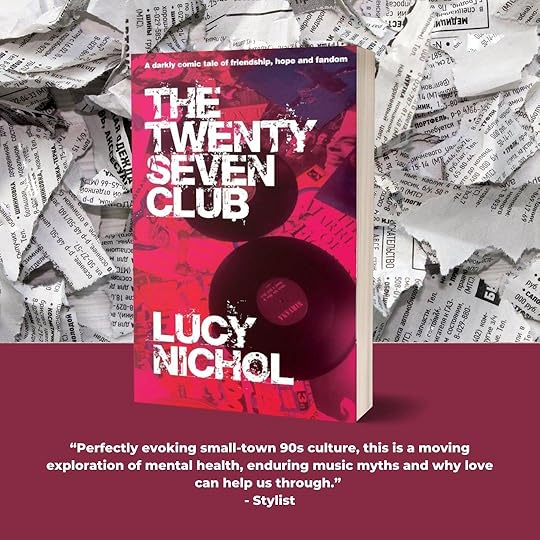
If you’ve not yet read The Twenty Seven Club, you can order a copy below:
Anxiety photo by Hello I’m Nik on Unsplash
April 16, 2021
10 Books on Addiction and Recovery
I’ve spent a lot of time working with addiction recovery charities over the last few years, and, as I was working on a project this morning, it inspired me to share some of the books I’ve read – and some on my TBR – on the topic.
There really are some powerful, honest, inspirational, humorous and moving memoirs, novels and self help books out there. So I’ve picked a few out that I love – or that I can’t wait to read.
Check out my latest vlog for my thoughts on the following:
Rachel’s Holiday by Marian Keyes // My Fair Junkie by Amy Dresner // Recovery by Russell Brand // The Unexpected Joy of Being Sober by Catherine Gray // Sober Stick Figure by Amber Tozer // Hit So Hard by Patty Schemel // Chase the Rainbow by Poorna Bell // The Counsellor by Alison Kerwin // And I Don’t Want to Live This Life by Deborah Spungen // Sing Backwards and Weep by Mark Lanegan
WATCH HERE:
Anyone based in the North East who is struggling with addiction, check out:
For Newcastle:
Road to Recovery trustFor Teesside and south of Newcastle:
Recovery connectionsAnd for general information on 12-step recovery no matter where you’re based….
12-step recovery linksApril 11, 2021
GOING LIVE: The Writing Community Chat Show
Evening all!
I’ve been sticking my face in front of the camera a bit and tomorrow I’ll be doing it again and going live – not with Gordon the Gopher and a sweary phone-in directed at Five Star – but with the Writing Community Chat Show. I’ll be talking all about The Twenty Seven Club, independent publishing and mental health and music myths. Possibly a whippet, too.
I’ve also recorded another vlog – a nostalgic one exploring the ‘stuff’ we had as music fans in the 90s that we tend to forget about these days thanks to the convenience of Spotify or iTunes or whatever.
So here’s one to sign up to, and one to watch now if you’ve got a spare few minutes. And PLEASE share 90s memories in the YouTube comments section….!
Lucy xx
SIGN UP: The Writing Community Chat ShowMonday 12 April, 8pm
WATCH NOW: Music ‘stuff’.A celebration of vinyl, mix tapes, music mags and dodgy GCSE artwork.
April 1, 2021
Why do so many rock stars die aged 27?
I wrote an entire book based on this question. The thing is, I don’t think we’re really asking the right question at all. Which is also why I wrote the book.
It’s easy to find a headline. Especially today – conspiracy theories and drawn conclusions based on….well…a bunch of details we cherry pick from. But behind the headlines, things are pretty complex really aren’t they?
Do you ever look at a news article and wonder why that particular story made the pages at that particular time? It’s clear that we have political leanings within the press – but sometimes they try to disguise them. I remember when fox hunting was banned. Shortly afterwards, some right wing rag put out a story about a fox attacking a child.
There’s no denying the incident happened – there was a real family and a real child. But that story says so much more for making the page at that particular time. Every day there are deaths and murders and attacks, and there’s public money being spent in ways it shouldn’t be. But not all of these stories make the page. Why? Because with some media titles, there’s often an agenda or a prejudice or a privilege. And sometimes, there’s a very, VERY simple driver that’s even more simplistic than ANY of that – sensationalised headlines get people to part with their pennies and by the paper.
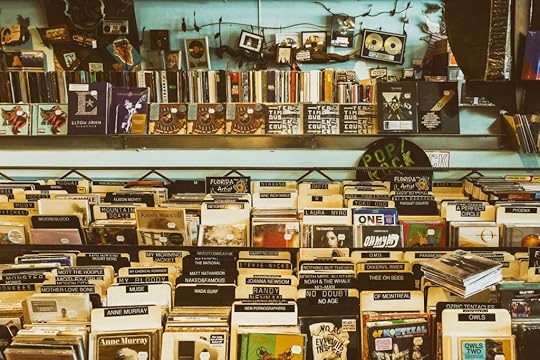
So what’s any of this got to do with The 27 Club?
Honestly. I can’t say for sure – I don’t have the stats, the research, the answers. But I do think we should get more used to asking the questions. To asking why politicians or the media or influencers or conspiracy theorists are saying the things they’re saying.
So back to the so-called 27 club. It’s like the story of the fox and the child. Some rock stars died aged 27, some aged 26, some aged 28 and some aged 87. But we keep focusing on the small number who we know died aged 27. And to find out what they have in common, instead of looking deeper, instead of looking at who they were, we sometimes find it easier to look at the behaviour that results from their experiences, childhoods, personalities or hardships. In the case of the 27 club, it’s always drugs or alcohol that we hear about. But we must remember – not everyone who uses drugs and alcohol gets hooked, overdoses, loses their mind and dies. So why do they?
I think what I’m saying here is that we can’t really know. We can make assumptions – we know that fame is probably difficult to live with. We know that being a performer living on the road might be hard. We know that there could be more drugs and alcohol available to those who work at night. But still, that’s not enough to get every person hooked, to make everyone so sick they can’t carry on. Because some people can flirt with it and walk away relatively unscathed.
This is the issue with mental health generally. Diagnoses, labels, medications – they’re not a once size fits all. Just as all rock stars don’t die aged 27, you can be diagnosed with the same condition as your best mate, and respond in a completely different way to the drugs, or the therapy. There could be psychological, social, genetic reasons – in fact there can be a whole host of contributing factors including the right here, right now. Stars align and create a deadly cocktail of pain and risk. Is there any wonder some people seek oblivion?
So the 27 club, in my mind, is a de-humanising headline. A headline that doesn’t acknowledge the art or the humanity. A headline that simply satisfies our own thirst for answers. Sometimes, as fans, as voters, as the general public, we can’t find logic or reason or patterns. And that’s pretty difficult to admit.
I am a fan of Kurt Cobain. I enjoy his music, I had a major crush on him as a teenager. I dreamt about hanging out with him and Courtney Love and taking drugs and sharing pain. But I didn’t know them. Still, I don’t believe Kurt Cobain died because he was a 27 year old rock star. The sad truth is, we’ll never really know what took him from us. But I imagine that pain was the overriding symptom…
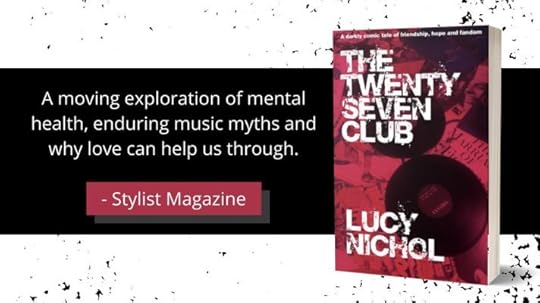
So why call my book The Twenty Seven Club if I disagree with the headline?
Well, all the above words wouldn’t really fit neatly onto a cover. If The Twenty Seven Club title makes you pick it up and read it – great. Because, as a mental health communications professional, I believe I’ve written a pretty responsible story. And as you read it, I hope you will find yourself asking questions about the media, about mental health, about how we view fame and friendships. And most importantly, how we view and understand ourselves.
The Twenty Seven Club is a fictional, moving and humorous tale that explores this topic with a ton of nostalgia, laughter and music to see you through.
Buy a copy hereMarch 10, 2021
How showing vulnerability helped my social anxiety
So, I’ve started vlogging….never thought it would be my thing but I’m giving it a go. It’s focused on mental health, music and arts, and I thought I’d share today’s little ramble which is all about the value of showing your vulnerability…
Please do have a watch / like / subscribe / comment. It’s a brand new channel so I’ve got about 5 subscribers!! Ha! But hopefully it will be of interest and I’d love to hear thoughts on the topics I ramble on about!
Lucy x
March 4, 2021
The Twenty Seven Club – launch day STUFF
Yesterday was e-book launch day! I’m excited about The Twenty Seven Club landing on readers’ tablets – and of course nervous about the response!
Anyway, to celebrate the day, I pulled together some stuff including an interview with former Senseless Things roadie, Gigsy; a celebration of Hull’s music scene pre City of Culture, and of course the Twenty Seven Club ‘mix tape’ (aka Spotify playlist) to enjoy while you read the book.
Lucy xx
The book trailerGet a taste of what’s in store with this cute little book trailer.
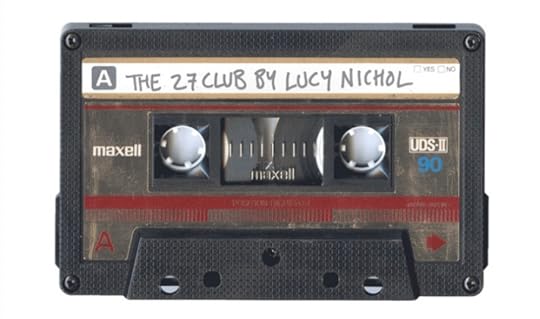
Buy the twenty seven club nowTwenty Seven Club – the mixtapeClick on the cassette tape to access the music – featuring Nirvana, Senseless Things, Hole, Babes in Toyland, Janis Joplin, Jimi Hendrix, Blur, The Beatles and many more!
 On the road with Gigsy and Senseless Things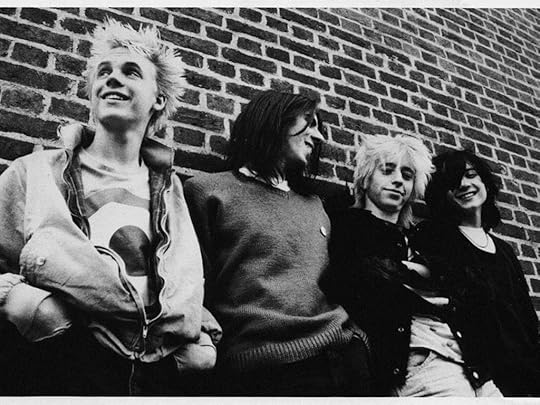
As part of my book research for The Twenty Seven Club, I chatted to Paul McGivern aka Gigsy about his many years touring with Senseless Things. Most of it has been saved to bring the book to life, but here’s a little taster…
Read nowHull – where culture existed way before 2017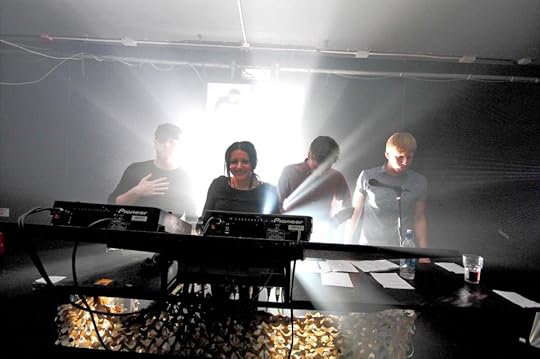
Yep, there was a hell of a lot happening in Hull – the setting for The Twenty Seven Club – way before it became the City of Culture in 2017. So, just for fun, here are some memories of the music venues we Hullensians loved back in the day.
Read nowMarch 1, 2021
Join me for a chat on music and mental health!
Dear all,
I’m feeling pretty excited as we gear up to the official launch of The Twenty Seven Club – with the e-book being released on Wednesday! If you prefer to digest your words digitally, do pre-order yourself a copy and it will drop onto your tablet in just two days!
You can pre-order on:
Apple (there’s a time limited special 99p offer for Apple Books readers!)
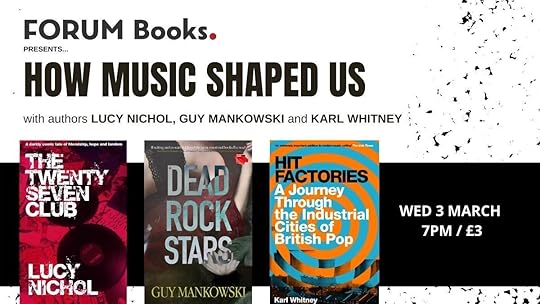
PLUS, I’ll be joining two brilliant authors on Wednesday night to talk all about music, writing and mental health. It’s just £3 a ticket, will take place online and it should be fun as we get nostalgic about our musical influences.
Last chance to book! Grab your tickets here.
Oh, and finally, The Twenty Seven Club now has it’s own book trailer! Put together by the wonderful Simon Crook of Linear Fox Graphics who, rather coincidentally, had the number 27 tattooed across his chest aged 27 to remind him to stay alive!
Hope to see you on Wednesday!
Lucy xx