Timothy P. Brown's Blog, page 34
July 15, 2024
Today's Tidbit... David vs. Goliath - The All-American Bowl
Football fans have always enjoyed a good David and Goliath story, and they had one in a different form in the late 1950s and early 1960s. One of the hallmarks of football's post-season was an all-star game between players from major colleges and smaller schools. It was hosted in Tucson and was known as the Optimist Bowl from 1959 to 1960 before becoming the All-American Bowl in 1961 and 1962.
The NCAA was a simpler organization then, having only the University and College divisions. The divisions...


July 12, 2024
Today's Tidbit... Pop Warner Looks Forward and Back
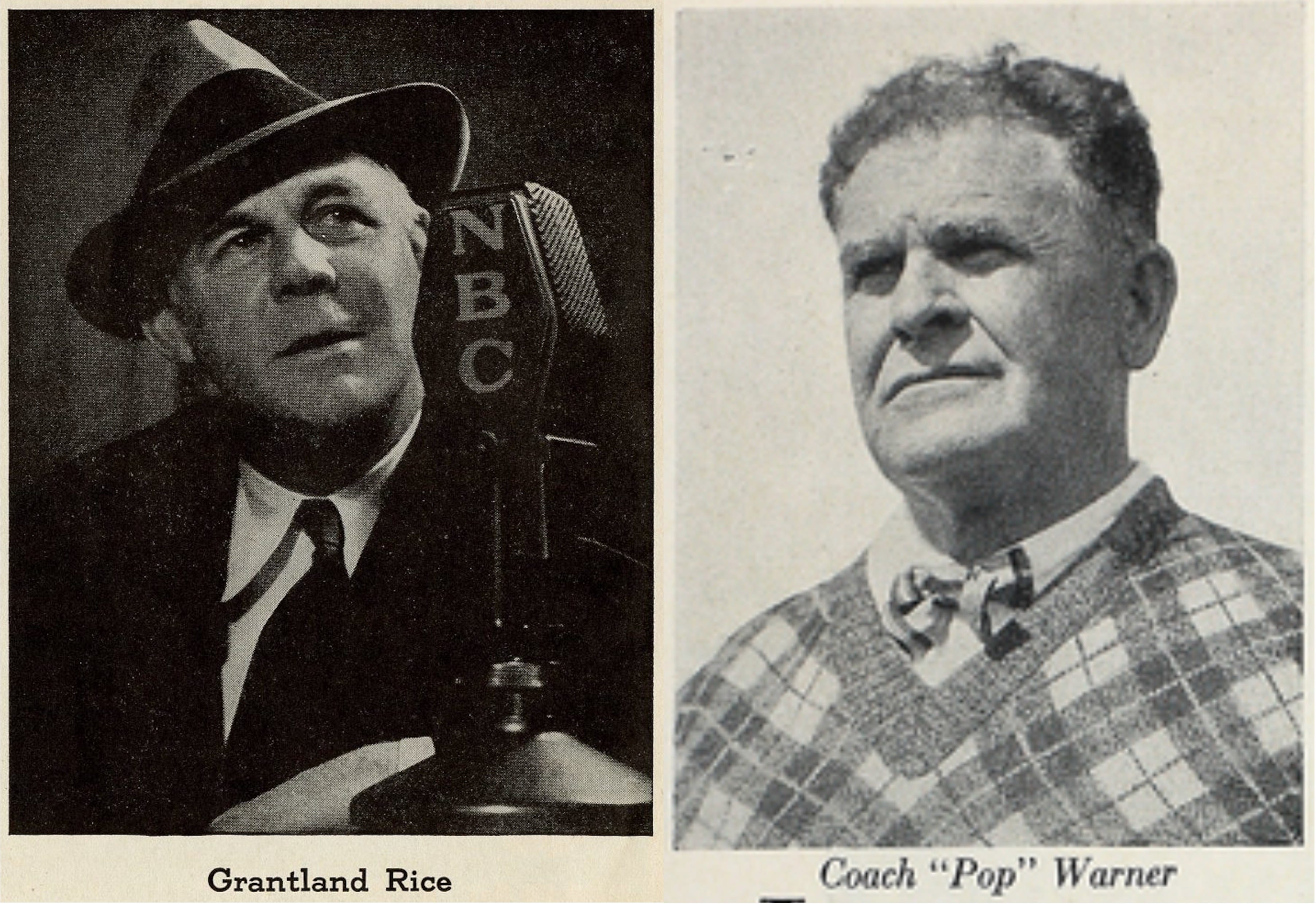
Grantland Rice spent an afternoon at Pop Warner's Palo Alto home in 1950, ten years after Warner ended his 45-year coaching career. Rice had first seen a Warner-coached team play as a 16-year-old in 1896 when Warner's Georgia Bulldogs visited Vanderbilt. The two had much to talk about as Warner recalled the origins of the Single and Double Wing, his skepticism about the Modern T as a passing offense, and his comparison of Jim Thorpe and Ernie Nevers.
 1939 Grantland Rice's Cities Service Football ...
July 10, 2024
Today's Tidbit... Let's Cover Football's Rule Books
Sporting goods companies and others published a variety of sports publications. Wright & Ditson produced an annual football review that included the year's rules until Spalding took over that process with Walter Camp as editor. Spalding also published sports publications emphasizing techniques and coaching points, as did Wilson, Spinks, and others. My previous Tidbit concerning The Fundamentals of Kicking was based on a chapter from a 1923 Wilson publication.
Those publications were generally pub...
July 9, 2024
Pigskin Dispatch Podcast... The Origins of Flip-Style Down Markers
Pigskin Dispatch podcaster Darin Hayes and I discuss the invention and spread of the flip-style down marker and the unfortunate situation in which its inventor did not receive the credit he deserved.
Watch and listen to the discussion on YouTube, hear the podcast, and feel free to read the original Tidbit below.
Subscribe for free for limited content or gain full access with a paid subscription.
You can also support the site via:
July 8, 2024
Today's Tidbit... The Fundamentals of Kicking in 1923
Today, we'll examine Chapter VIII of The Fundamentals of Football, which covers drop kicking and place kicking. It provides several examples of techniques and strategies that made sense under a different set of rules than those that exist today.
Wilson published the volume in 1923 when footballs had more rounded ends than they did after the rule makers resized and reshaped the ball in 1929 and 1934. Drop kicking largely disappeared from football after those changes to the ball.
 (Griffith, John L.,...
July 6, 2024
Today's Tidbit... Factoid Feast VI
As discussed in Factoid Feast I, II, III, IV, and V, my searches through football history sometimes lead to topics too important to ignore but too minor to Tidbit. Such nuggets are factoids, three of which I share today.
This Story Bugs MeWe play football regardless of the weather. Neither snow nor rain will stay our mighty ball carriers from the swift completion of their end arounds. Of course, we do not play when there's lightning, hurricanes, or sometimes when it's hot.
However, at least one ga...
July 5, 2024
Today's Tidbit... Helmet-Tossing Trickeration
In A History of the Football, I mention that stripes were added to footballs for two primary reasons. One was the desire to make the ball more visible under the poor lighting conditions of the 1920s and 1930s. The second reason was that teams wearing brown or white uniforms gained a camouflage advantage when playing with a plain brown or white ball.
There was another aspect of the camouflage issue of the late 1920s that a reader, Carter Claiborne, mentioned coming across in a game played two deca...
July 4, 2024
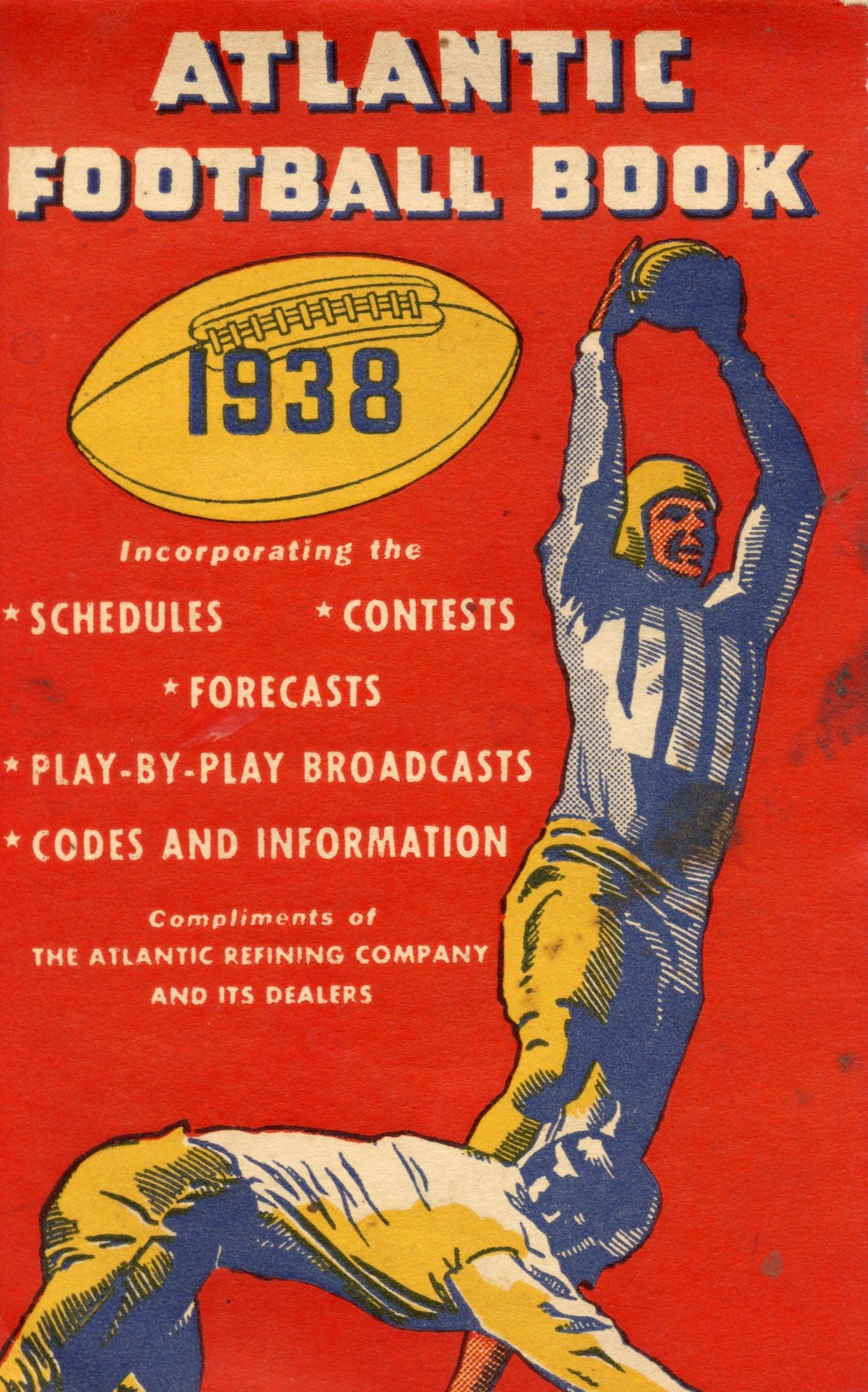
Today's Tidbit... Offensive and Defensive Formations in 1938
 (Personal collection)
Happy 4th of July!
Following up on yesterday's article about Atlantic Gas's annual booklets and the weekly Dunkel Ratings, we dive deeper into the 1938 booklet and its description of the common offenses and defenses of the day. (I will assume readers at least skim through the text in the images below since I will comment on rather than repeat the contents.) -Click images to enlarge.-
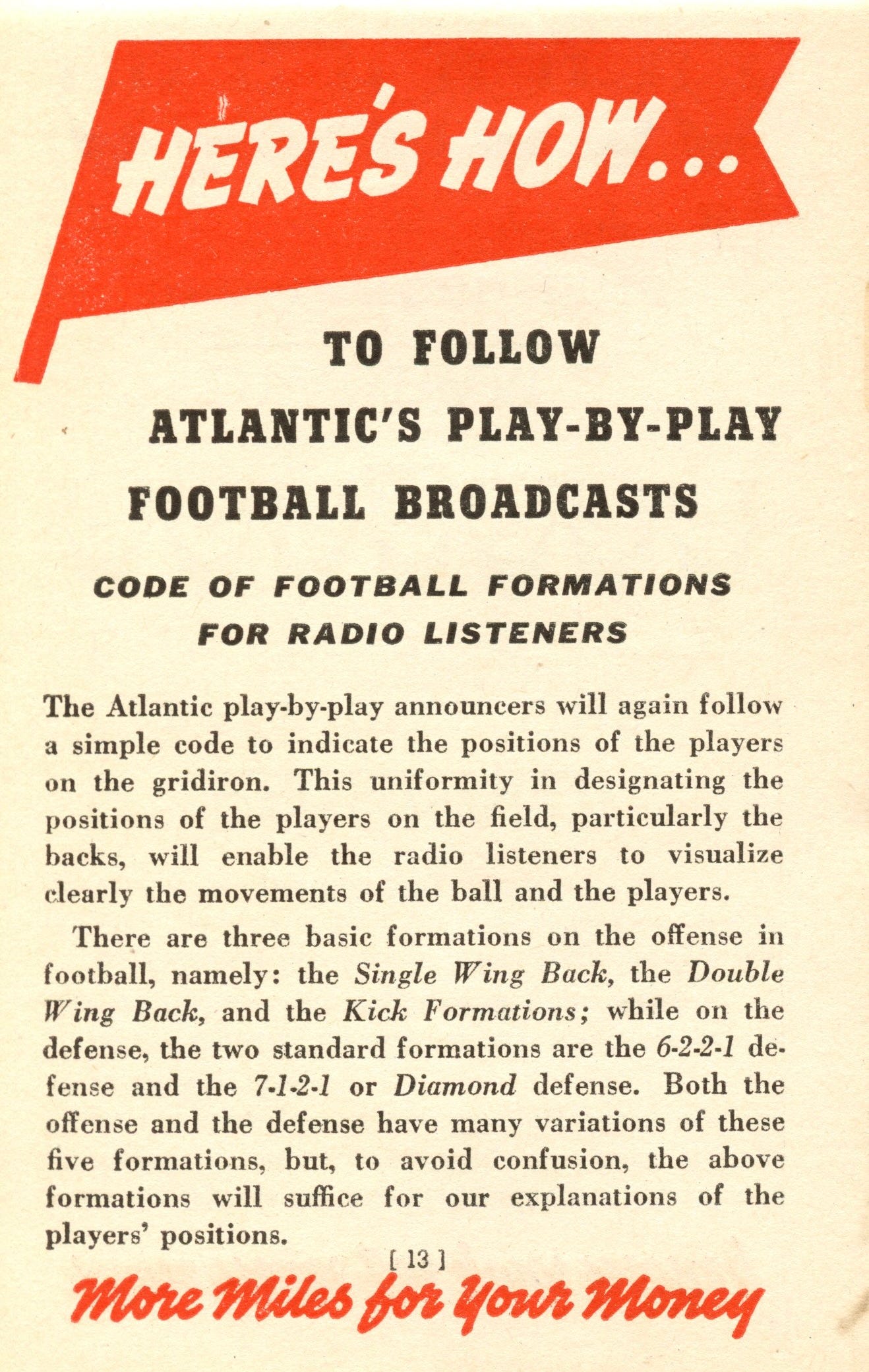
They simplified things, saying there were two offenses, two defenses, and a Kicking Formation....
July 3, 2024
Today's Tidbit... Atlantic Gas Stations and Dunkel's Football Ratings
Atlantic Gas stations sponsored East Coast football broadcasts in the early days of commercial radio and television. For years, they also published preseason booklets listing the games in which Atlantic Gas ran radio and television ads, and there were a lot of them, including many small colleges and a few high schools. Atlantic gave away the handy booklets at all their retail locations.
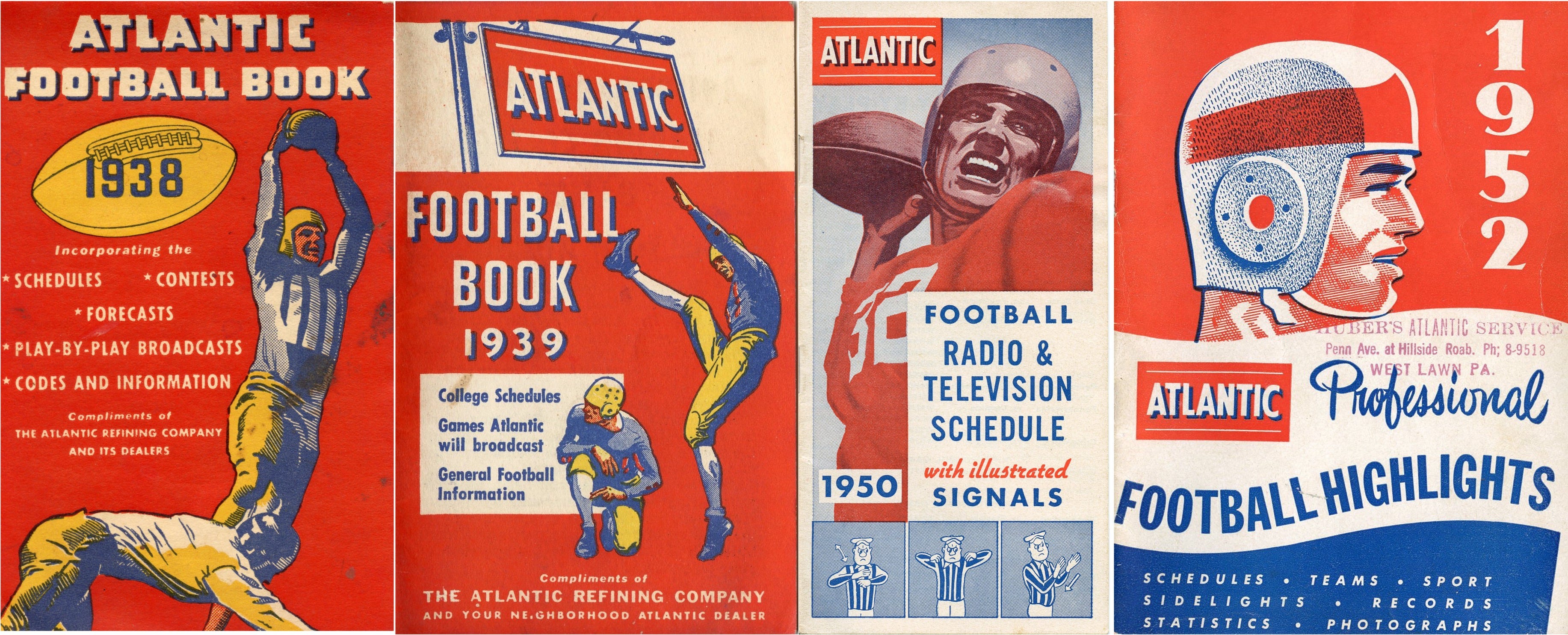 Covers of four Atlantic Gas football booklets. (Personal collection)
In 1930, Atlantic formed a relationship wit...
July 2, 2024
A History of the Football, Ch. 6
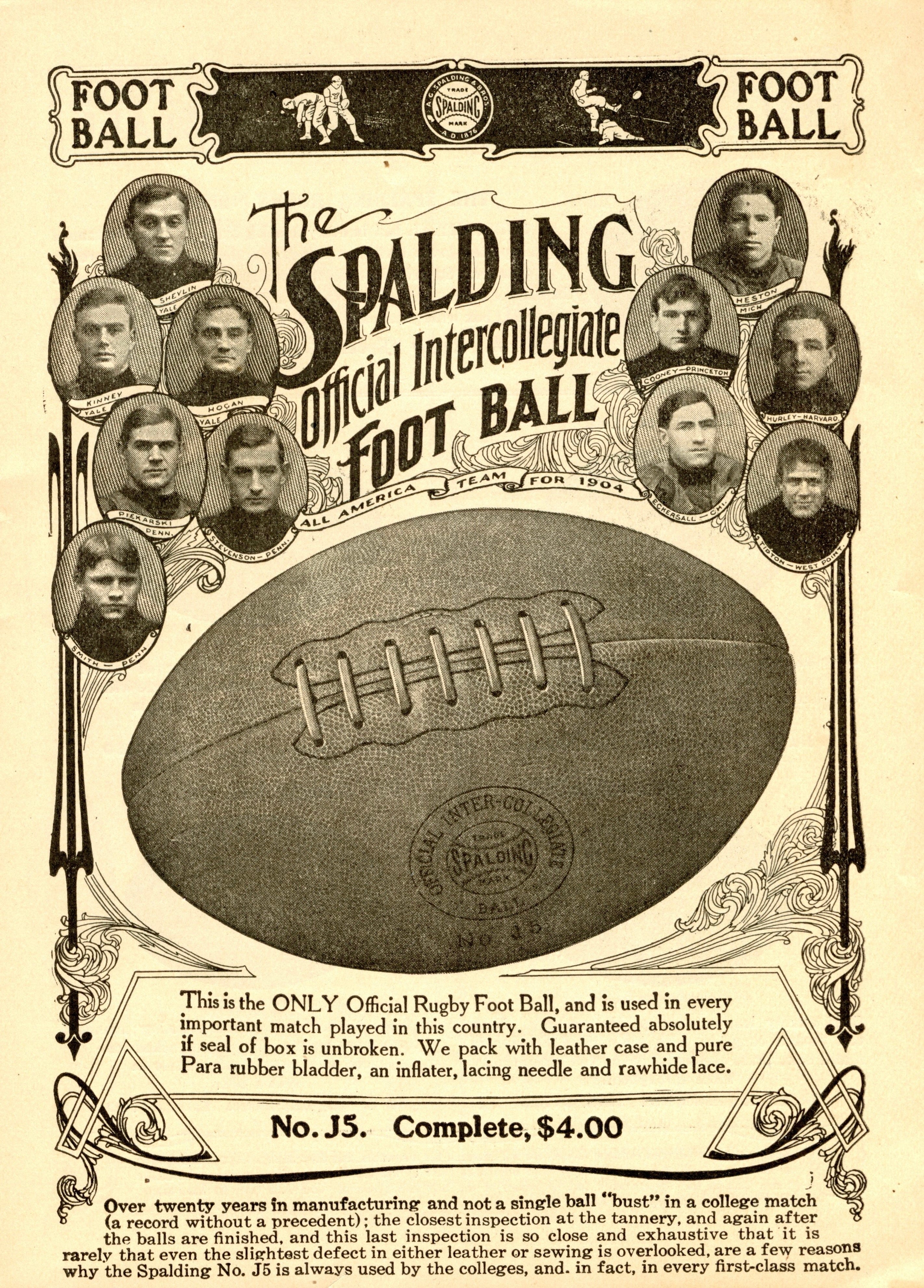 Conclusion
Footballs bridge the gap between life in the Middle Ages and today, taking shape in the mishmash of folk-kicking games that morphed into various regulated regional codes in the 1800s. As each regional game distinguished itself from its folk origins, the balls adapted to those circumstances, morphing over time and becoming less interchangeable. Today, you could play American football with a soccer ball, but you would not want to, and it would be far more challenging to play soccer with ...