Durga Prasad Dash's Blog, page 8
September 28, 2020
when a blind man writes about flowers
The sane common man too has something to do with the flower even though for him it is nothing more than an occasional feel good factor or a way to social networking like the occasions when he gifts flowers to his boss on the latter’s Birthday or a friend who is in a hospital. Or, when he offers them to the stone idols in the hope of reaping multifold benefits for his investment in flowers.
He may even wonder why persons like Pablo Neruda, William Blake or Kalidasa are so much obsessed with the flower. Don’t they have better utilitarian things to do like forcing children to school, opening an NGO so as to beat the drum for being a philanthropist or finding out an investment scheme that tripled their money in three years?
Then there is the scientist. He has a different perspective on the flower. He tries to dissect it to its last chemical composition, or to its last sub-atomic particle. To a scientist the flower is just a combination of some particles that are different in composition from the dead body it adorns. The scientist may miss the sense of beauty of the mystic for the sake of intellectual stimulus. For the poet truth is beauty and beauty is truth. For the scientist all such talks are gibberish. But, then he has his own way of seeing at the truth and developing his sense of wonder.
At least the common man is honest. And the scientist has his own way of seeing the truth without at all being concerned whether it is ugly or beautiful. But the blind man who writes about flowers in the hope of getting a PHD belongs to a different class altogether. Even though he is blind and has never seen a flower, occasionally he has smelled it. He has touched it and felt its textures. Then, to complement his knowledge about flowers he can surf the internet. Lo his thesis is ready. It does not matter if his thesis is ninety nine percent borrowed material. Then there are other blind men who cannot even do this much. So, now he is a hero among the blind men.
But, when a person like Pablo Neruda comes across the thesis he can instantly see that it is all borrowed knowledge. Even a fan of Pablo Neruda can see that it is parroted knowledge. The person has not written it out of his own experience. Other blind men who praise the thesis of the blind man will continue to have the wrong idea about flowers. Their ideas will be so much deviated from the reality that if by chance they get eyesight and then come across a flower they will say, “This is in a no way a flower”.
This puts Pablo in a dilemma – whether to wake up the blind men or leave them as they are, in their own temporary bliss of ignorance and illusion. Jesus must have been more frustrated by such pundits of parroted knowledge than the innocent ignoramus when he said, “ …. nor cast your pearls before swine, lest they trample them under their feet, and turn and tear you in pieces”.


July 27, 2020
Mein nikla satya ke sandhan mein
Re-sharing an old poem for Indispire prompt #335.
(Why is it so difficult to establish the truth? Why is it called naked truth? Does truth really win? #NakedTruth)


मैं निकला सत्य के
संधान में |
दिन दहाड़े , डायोजिनिज के लालटेन ले के
राजधानी के राजपथ पर,
सत्ता के गलियों में,
कलाकारों के रंग मंच में,
मंदिर , मस्जिद और गिरिजाघरों में |
ढ़ूँढ़ता रहा
वो सच्च जो कबका खो गया है,
या सुलाया गया है,
राजनेताओं के सफाई , आरोप
और प्रत्यारोप में,
पत्रकारों के हल्ला में,
क्रांतिकारियों के हल्लाबोल में,
धर्म गुरूओं केशास्त्रार्थ में,
बाबूओं के फाइलों के नोटिंगस् में
विचारपत्तियों के लम्बी – लम्बी
आदेशों में |
सभी ने एक साथ बोला
सच्च का पता लगा तो
गजब हो जाएगा,
देश बरबाद हो जाएगा,
आखिर लोग भी तो अभी कच्चे हैं
सच्च को छूपाने में
है हमारी समझदारी
और हमारी जिम्म्दारी भी
फिर कोई एक मुझे चुपके से कहा
” आखिर दूकान भी तो चलाना है ” !!!
Mein nikla satya ke sandhan mein
Din dahade, Diogenes ke laltan leke
Rajdhani ke rajpath par
Satta…
View original post 135 more words
July 10, 2020
My Village My Country – the book
After being a part of Blogchatter e- book carnival 2020, ‘My Village My Country’ has been shifted to Amazon. This book is a compilation of all the articles I wrote for the Blogchatter A to Z blogging challenge. April is the month when Indian blog aggregator site Blogchatter organizes AtoZ blogging challenge. Barring the Sundays, every day one has to write a blog post, starting with a topic related to alphabet A, then B and so on. There should also be a central theme for the all the posts.
I had not planned to participate in the challenge. It happened due to a series of happy coincidences while I was already working to finish the remaining two parts of my Bhagavad Gita trilogy. Since I was already preoccupied with finishing my Gita project, I did not take any interest in participating till the last day when it occurred to me that this could be an opportunity to share my views on some of the issues which are close to my heart and yet I had been procrastinating to put them to words. A post a day is also a good way to get back the discipline needed to write regularly. Of course the lock down too was an added incentive.
My theme this year was mera gaon mera desh whose literal translation I have used as the title of this book. It is very difficult to capture the essence of India through 26 articles. It is such a vast country geographically, historically, culturally and in terms of diversity. So I chose to write about things that I have had a personal connection with.
Thus in addition to articles that have a pan Indian connection, there are articles about the places I have been closely associated with. There are a number of articles about my native state Odisha. There are exclusive articles about my native village and the small town where I spent most part of my childhood. Even though these places cannot be considered to be representatives of all aspects of India, one can see the similar elements of these places with the small towns and villages of other parts of India. Anyone in any part of India who was brought up in the villages in the 1970s can relate to my childhood spent in my native village.
Even though there are some articles about various localities and local topics, the majority of topics are about the broader aspects of India. The topics I have touched upon are very close to my heart and I have written on them out of my firsthand experience. Having been a regular soldier, educational trainer and yoga teacher, I have travelled and stayed in all parts of India exploring India’s vast wealth of landscapes, land marks, cuisines, cultural roots and spiritual practices. I have chosen topics related to my own experiences and you will find these personal touches everywhere. At the same time also I have tried to include other points of view on the subjective issues I have written about.
Western authors love to portray India as a land of snake charmers. Westernized Indian authors bank on India’s filth and poverty to book their international awards. While his countrymen were looting this land, Charles Dickens thought that the people of India were so uncivilized that they did not deserve to live. Churchill often referred to Indians as ‘those primitive people’. All of them conveniently forgot that when expressions were being given to the highest mystic experiences here in India in the form of Upanishads and the highest forms of science related to human body and mind were being perfected here, monkeys and bears ruled their land.
Come and travel into the heart of India through my first hand experiences. Have glimpse into the soul of India beyond her seemingly hundreds of surface frailties some of which are real and many just figments of imaginations thrust upon us by vested interests. You can get the book from this link. For the time being the individual articles included in this book are still available in this blog. All the posts of the AtoZChallenge can be accessed here.
[image error]
Here are links to some reviews of the book:
https://matheikal.blogspot.com/2020/06/educated-patriotism.html
http://livelife2dfullest.blogspot.com/2020/06/fellow-authors-from-my-land-odisha-book.html
https://chinmayeecreations.wordpress.com/2020/06/19/book-review-10-my-village-my-country/ (this link also contains the author interview)
http://www.anitaexplorer.com/2020/06/my-village-my-country-mera-gaon-mera.html
June 28, 2020
Sri Jagannath: beyond myths and miracles
No religion or spiritual sect is complete without myths and miracles. Stories of miracles abound around Lord Jagannath. Being the Kaliyuga form of Lord Krishna even though he is primarily a Vaishnav God, his devotees have come from diverse sects and religions over the past millennium. After all, the deity is none other than Jagannath – the Lord of the Universe as its literal meaning goes.
The ultimate aim of human life is to become Purushottam – the best that one can be. Puri is also known as the Purushottam Khetra. There is something in its vibes that has made the spiritual minded, irrespective of his sect, creed or religion, to feel the essence of divinity beyond names and forms.
The Lord of Harmony
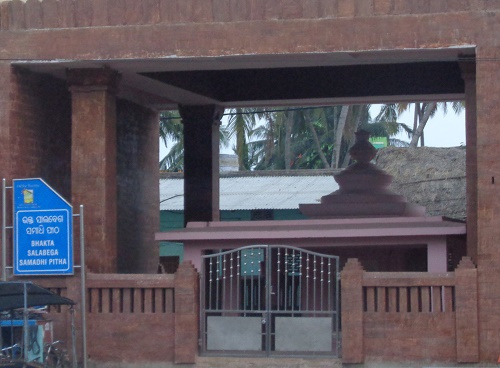
During the Annual Ratha Jatra the idols of Lord Jagannath, Lord Balabhadra and Devi Subhadra are taken in separate huge chariots on the Grand Road of Puri. On the way, the chariot of Lord Jagananth has to make a few mandatory stops. One of such stops is near the samadhi pitha of Salabega.
When the names of great devotees of Lord Jagannath are remembered one name that comes to forefront is Salabega. He was a Muslim by birth. He wrote many devotional poems dedicated to Lord Jagannath. Those poems are highly popular even today.
Over the years Sri Jagannath has emerged as a great symbol of sectarian and religious harmony. In the middle ages when the sectarian differences among the Shaivites, Vaishnavites, Shaktas etc. were clearly visible in the Hindu society, Puri was a confluence of spiritual leaders from all sects.
Adi Shankaracharya, the proponent of advaita philosophy, came to Puri and composed the highly popular devotional Sanskrit poem known as Sri Jagannath Astakam. He also established an Ashram in Puri which is known as Govardhan peetha. It is one of the four original mathas established by Adi Shankaracharya. Sri Nanak Dev came to Puri and is said to have offered his prayers at the lotus feet of Lord Jagannath even though Nanak was primarily a proponent of Nirguna Brahman. He stayed in Puri for some time and established a matha that is today known as Mangu Matha. There was a saint from Assam known as Shankar Dev who was also a Nirguna Panthi. But when he visited Puri he offered his devotion to the Lord who is a manifestation of Saguna Brahman.
Sant Kabir visited Puri and found that there was no difference between Allah and Jagannath. The Kabir Ghat on Puri seashore is testimony to his visit and stay at this divine town. In Puri there is a memorial called Tulsi Chaura. Saint Tulsi Das meditated here and as a result was able to see Lord Rama in the idol of Lord Jagannath. When Ganesha devotee Ganapati Bhatt came to Puri he saw lord Gansesha in Sri Jagannath.
There have bee numerous such devotees from Non-Vaishnav and Non-Hindu backgrounds. When they came to Puri they became overwhelmed with devotion in spite of their backgrounds. The presence of large number of mathas and other memorials of different sects stand testimony to their devotion. Lord Jagannath also puts on different types of costumes and avatars to resemble different forms of Gods like Ganesha, Buddha etc. on specific days to signify that “He is in all” and “all are in Him”.
The Gods who are also humane. Like us.
The rituals related with the Lord of the Universe in any given year may run into millions. There are different types of rituals. Some follow vedic customs, some tantric customs and some folk customs. Following folk customs, the three idols are treated as if they are normal human beings. So they wake up, eat, take bath, go to sleep, fall sick and do other leelas like human beings. The idols also shed their bodies and take new ones once in ten to twenty years. This is called Nabakalebara about which I have written in an earlier post.
The Lord also makes his wife Goddess Lakshmi upset due to his over-attachment with his brother and sister. Lakshmi is so much upset that she breaks his chariot and she has to be propitiated so that the Lord along with his brother and sister is allowed back to the main temple. Such rituals are performed in playful manners accompanied by songs, sweets and role play.
According to some myths God created man in his own image. Such folk rituals associated with Lord Jagannath signify that the reverse is also true. Man creates God in his own image.
Respect for other forms of life. Even for things without life.
Most of the idols of things animate like parrots, horses etc. associated with Lord Jagannath and his annual Ratha Jatra have names. Even inanimate objects like the flags and the steps of the temple have names. Some of the names are associated with deep spiritual concepts and some with different qualities of living beings. It will be a digression if I give the the detailed names and the significance of each name.
The point that I want to make is that such naming is in line with the ethos of our sanatana dharma where reverence for all elements of the universe was at the base of all our worldly and spiritual activities. Assigning a qualitative name and calling something by its name are acts of love and respect. By naming, inanimate objects are given life in our imagination.
[image error][image error][image error]
P.S: The annual Ratha Jatra of the Lords is held around this time of the year. This year due to Corona, devotees were not allowed. But the tradition of chariot pulling was held on 23rd Jun with due precautions and with the help of the servitors and the state administration.
The links to some of my other articles related to Lord Jagnnath are given below:
https://durgadash.com/2020/04/11/from-jagannath-to-juggernaut/
https://durgadash.com/2020/04/07/what-about-some-thoughts-for-foods/
https://durgadash.com/2019/12/21/one-can-travel-for-food-to-these-odisha-temples/
https://durgadash.com/2018/07/29/the-east-india-abode/
https://durgadash.com/2018/07/13/the-big-lord-descends-among-us/
https://durgadash.com/2017/05/23/even-for-gods-one-life-is-not-enough-the-ritual-of-nabakalebara/
June 15, 2020
A Crusade against Wrong Attribution
You say what is in a name?
Whether that spongy syrupy round sweet that you ate was r-a-s-a-g-o-l-a or r-o-s-o-g-o-l-l-a will depend upon where you ate it. It was not so until 29.07.2019 when ‘Odishara Rasagola’ got the GI tag to end the century long war between Odisha and West Bengal over the origin of Rasagola. In the forefront of that battle to get justice for Odishara Rasagola was Dr. Anita Sabat who is coincidentally the author of the book ‘GEOGRAPHICAL INDICATIONS (GIs) Of ODISHA’ that I have picked up for discussion in this post.
Now you may wonder what is this GI tag thing after all? If that is so, you are not alone even though chances are that you may be using products with GI tags regularly. I myself came to know about the existence of Geographical Indicator (GI) tags only after coming across Anita’s blog. So, who better to write a book about GI tags than Dr. Anita Sabat? By the way she has been a crusader for the protection and authentication of things connected with our culture and heritage both with her pen as well as with her field work.
After going through Anita’s book I learn that GI Tags are elements of Intellectual Property Rights in the context of products that are associated with a particular locality. If IPRs are attributed to particular individuals or legal entities, GI tags are attributable to the tradition of a locality.
We are familiar with products being associated with a locality. Products like Banarasi Pata, Kanchipuram Silk, Agra Petha etc. are distinguished by their association with a particular locality. It is difficult to find out which individual invented it. These product got refined by the collaborative efforts of the artisans of that locality over a period of time, sometimes stretching over centuries or millennia. Like Intellectual property Rights, products developed in a locality too need legal protection. Of course mere legal protection is not enough. The public need to be aware of this aspect. This is where Anita’s book on GI Tags fills the gap.
“A Geographical Indication (GI) is an agricultural, natural or a manufactured product (handicrafts, food stuff, and industrial goods) originating from a definite geographical territory”.
Odisha has got 17 GI tags registered so far. In this book the author discusses in detail about each of those products. In addition to Odishara Rasagola, some of the popular GI tag products are Pipli Applique work, Orissa Pattachitra, Sambalpuri Bandha Sari. There are many products which are associated with my native district which surprisingly I did not know earlier. E.g. Ganjam Kewda Flower and Ganjam Kewda Rooh.
You may come across many of such products in different exhibitions. But chances are that some of them could be fake. Here some knowledge about the specialty of that product can help one distinguish the fake from the original ones. This book on GI tags can help as a ready reference in such matters.
Products with GI tags are not usually machine made. Lots of skill and labour go into making such products. Thus it is fair that use of products with GI tags should be popularised and people should also be careful about fake products.
The book also explains why some GI products bear the name like Orissa Pattachitra even though the name of the spelling of the state has been changed to Odisha since 2011. The book also includes information and photos good photos of events associated with the products. The book is not a dry manual for GI tags of Odisha. It is full of tit bits about the history and other associations of the products.
I whole heatedly agree with the view of the author that Geographical Indications can be a major engine of economic growth & can contribute significantly in terms of GDP, foreign exchange earnings and employment. It is heartening to note that in spite of having such rich heritage India has fewer registered GIs as compared to some other nations. When more people are aware of such products and more products get registered, I am sure artisans, weavers & farmers will get a wider platform to get their due.
It is a book which must be read by every one who loves the traditional art, costumes, cuisine and other products of India. Dr. Anita Sabat has written this book out of her first hand knowledge. She has been actively involved for getting GI tags registered for many local products. Even though only the products of Odisha are included in this book, it goes without saying that most of these products are popular outside Odisha.
This book may also be an inspiration for the culture and heritage lovers to be aware of the products of their locality that deserve GI tags. In case it is found that some deserving products do not have GI tags, they can take inspiration from the author and launch a crusade to get those products registered. By the way, the book also contains detailed information about what are GI tags and how to register a product to get the tag.
[image error]
As part of blogchatter ebook carnival the book is available for free download. Get your copy to know more about GI tags and our unique cultural heritage.
My book, ‘My Village My Country’, is also available for free download.
June 14, 2020
Lyrical Landscapes of Dots and Streaks
Poet Ellora Mishra makes her debut as a book author with her collection of poetry titled ‘Dots and Streaks’. It is a part of Blogchatter ebook carnival and is available for free download.
Ellora hails from Odisha – the land of fine arts. She did her degree in Chemical Engineering from BITS Pilani, Rajasthan and MBA from XIMB, Bhubaneswar. After spending twelve years as a corporate banker she decided to take a creative break and thus we have this volume of poetry among many other things. She also blogs regularly at ‘Live Life to the Fullest‘.
The cover aptly portrays the contents of the book by its intricate design that includes the drawing of a human being in fine lines to signify that it is about the intricacies of human life.
Streak means a long, thin line or mark of a different substance or colour from its surroundings. Geometrically speaking a dot does not have any physical existence. It is just a point of reference. Poetry by its very nature tries to capture the elusive elements of life. In fact the intricate and elusive elements of of life which are felt but can never be precisely expressed are best expressed in poetry. Ellora’s poems provide us the insights without themselves being too elusive to our understanding.
The very first poem where time is compared to a palindrome takes our attention to the cyclic nature of life. I was intrigued by the author’s insights in ‘Life as we Know it’. Let me quote from it:
As the lamp post stood there
In its solitude
Forlorn, it couldn't help envying
How blessed must they be
The tree and the bird
For living a life, ....
........
Buoyant and Exuberant
Oh, how I wish…. If only I were any of you
Life, must be such a blessing.
Life’s irony is that if A wishes it were B, B desperately regrets it is not A. The common man is envious of the celebrity. But many times a celebrity regrets the things he misses for not being a common man.
Another poem I immensely enjoyed was ‘A Walk in the Woods’ where in the author has attempted to provide a different perspective to Robert Frost’s famous poem, ‘ Stopping by Woods on a Snowy Evening’.
True to its claim in the blurb that these are short poetic tales of life’s musings, the poems are full of such ruminations. The author has also tried to experiment with various forms of poetry. At many places rhymes are used and there are also a number of prose poems.
Another plus point of the book is the inclusion of graphic elements for almost all poems. Such graphics definitely make the contents more interesting.
[image error]
Download Ellora’s Dots and Streaks for an interesting lyrical journey through life’s intricate lanes.
My book, ‘My Village My Country’, is also available for free download.
June 13, 2020
The Flowering of a Storyteller
Five Petals is the maiden book of blogger Chinmayee Gayatree Sahu. It is a collection of five short stories and is part of the ebook carnival organised by the blogchatter – the prominent blog aggregating platform of India.
Chinmayee is an MBA degree holder. After a stint in the corporate world she has taken up government service. It is nice and inspiring to know that she has kept up with her passion for reading and writing in spite of being a full time professional. She blogs regularly at Chinmayee’s Creations.
There is a saying that literature is the mirror of the society. Most of the stories in this collection justify this saying. Of course the author is not a mere mirror. She has brought her own unique points of view and insights which are usually missed by a casual observer.
If the book cover shows different types of petals, leaves and colours, the stories bring out different flavors of our society and relationships. Like the attractive book cover, all the stories are interesting too.
The very first story, ‘Life- a Roller coaster Ride’ is about illusions and shattered dreams. It is also about surmounting all odds in spite of setbacks. The author has taken life’s illusion to another level in a story that I would like the reader to discover for herself.
Keeping in tune with the current times ‘Quarantined with Family’ portrays how the permutation and combination of relationships undergo change when normal routine of the life is disturbed. Then of course there is this touchy story about sibling rivalries for the love of a grand parent. The author has also portrayed romantic love of different flavors.
In spite of some of the stories being realistic, all the stories are interesting to read. One of the stories brought me to the verge of tears. The entire book is a breezy read. Nevertheless it will make you to pause and ponder at many places. While reading I did make intentional stops to savour the flavours and then continued. You would wish the stories never ended.
[image error]
Download the book and read it. You will find the time well spent. The book is a wonderful creation from a first time book author.
My book, ‘My Village My Country’, is also available for free download.
June 7, 2020
A to Z of Quality Reading
This is the age of content delusion. There are no dearth of contents to match your passion for the audio visual kind or your obsession for reading. It is good to have so much content at our finger tips. But on the flip side it adds to our confusion. What to read and what to skip.
There are also chances that following the normal human tendency to settle for the ‘most shouting one for attention’ we miss the ones that matter. In such a situation books like ‘Great Books for Great Thoughts’ come as a handy guide and a life saving jacket to float above the ‘most shouting for attention yet mediocre’ kinds of stuff.
I have always admired Tomichan Matheikal’s writings; our occasional disagreements over certain issues notwithstanding. But when it comes to a book like this one I could hardly find anything to disagree with whether over his choice of books or the way he has written about the books.
I agree with the author when he says that these are not book reviews. All the books selected have grown out of or survived that stage of being subjected to review by the contemporaries. The books selected seem to be very close to the author’s heart and in spite of the constraints imposed to associate each chapter or book with an English alphabet, the author has not made any compromises. Remember that Matheikal is no ordinary teacher of English literature. His passion for good reading and encouraging good reading habit among others is evident from his blogs and the books written by him. So each book that features in this collection has been selected very thoughtfully.
When we think of classics it is the novels or other works of fictions that immediately come to mind. Arms and the Man, The Grapes of Wrath, Don Quixote, Wuthering Heights and other classic novels and plays dominate the selection. But there are a number of non fiction works like ‘The Rebel’, which is a philosophical essay by Alburt Camus. There is also my personal favorite: ‘Sapiens -A Brief History of Human Kind’. Of course this is strictly not a classic work. But it is definitely a landmark work of non-fiction which has created ripples all over the world for the way it has presented and interpreted human history so as to better understand ourselves collectively.
It is not easy to fully appreciate various aspects of a classic when you read it for the first time. But if you are reading the book after reading about it in ‘Great Books for Great Thoughts’, it will enhance your understanding of the multiple layers of the book. Reading the chapter on Arm and man will arm you with important perspectives that will enhance your pleasure of reading this classic play by George Bernard Shaw.
The author has has aptly titled the book as ‘Great Books for Great Thoughts’. However the cover of the book is not compatible with the contents. It is like wrapping diamond with ordinary gift paper. Such quality content definitely deserves a better book cover. Hope the author will take care of this in his next revision.
In addition to creating interest for the great works of legendary authors, going through this book is like acquainting oneself with the philosophies and thoughts that have played important roles in our civilization. It is a must read for those who care for quality reading experiences.
Download ‘Great Books for Great Thoughts’ for free
My book – My Village My Country – is also available for free download.
June 6, 2020
A Taste of Kolkata for the Non-Bengali Soul
I have a fascination for Kolkata. I have been enticed to travel its by-lanes after many a virtual experiences of its physical and mental landscapes through the hungryalists and other Bengali authors whom I have admired since childhood days. In spite of that, Kolkata is the only big city of India that I am yet to make a proper visit. Coincidentally, the book I have taken for review has the title – ‘KOLKATA CHRONICLE: An A to Z Guide for the Uninitiated.’ Thus I took up reading this book about Kolkata with the fascination of an unmet lover. Oh boy, was I disappointed?
In the second chapter which is about book festivals in Kolkata, the author has quoted Vir Sanghvi who wrote, “You want your cities clean and green; stick to Delhi. You want your cities rich and impersonal; go to Bombay. You want them high-tech and full of draught beer; Bangalore’s your place. But if you want a city with a soul; come to Calcutta.”
I wish Sreeparna Sen had made it the opening quote of her book. If the title of the book gives an indication about the contents of the book, this quote sets out the tone for the things to be expected from the book and the author has succeeded in doing what she set out to do. All the articles explore the soul of Kolkata behind the facade of its events and landmarks.
The first chapter itself highlights the quintessential of Kolkata life – the adda. In big cities you have clubs and many other types of social gatherings where formality, etiquette and show off of social status are the orders of the day. But the Kolkata adda is a gathering where it is possible to let down all barriers and have a heart to heart talk. I feel that it might be the adda life that must have given rise to poetic movements like the hungryalists. The author makes it clear that “The adda of Kolkata is not to be confused with the Hindi word adda, which typically refers to a nest of shady people”.
I have had many Bengali friends and neighbors during my stay in various places of India as part of my nomadic life in military service. But it was a surprise for me to know the obsession of the Kolkatan with tea and coffee. The Japanese are well known for their excellence in formal tea ceremonies. Going by the article on tea, perhaps the Kolkatan would excel in the informal kind.
In the chapter on music she has mentioned the prominent poets Bengal is proud of; the poets who took Bengali literature to the international stage. However I missed the mention of ‘Baul Sangeet’ for which I have a personal soft corner and which was the inspiration for poets like Rabindranath Tagore.
Sreeparna Sen’s writing style has a smooth flow. All the articles bring out the elements that distinguish Kolkata from other cities. The exception perhaps being the chapter about X-mas. Of curse, we have to keep in mind that when each chapter has to correspond to an English alphabet somewhere you are a little constrained.
The life of a Bengali is incomplete without Durga pujo, machher jhol (ilish to be specific), sandesh and other sweets, literature and music. The author has brought her personal connections to all the events happening in Kolkata. I think her description of her first hand experiences will definitely provoke nostalgia among the Bengalis too.
Make no mistake. This book is not your usual layman’s travel guide to Kolkata. It is about how it feels to live in Kolkata and that too as a Bengali. It is about how it feels to be a part of the Kolkata vibes. If you have been in Kolkata but you are not a Bengali, there are chances you might have missed the depths and the ranges of the experiences that Kolkata has to offer. Hopefully, through this book you get a chance to compensate for that.
For the uninitiated, going through the book is a good way to have a virtual experience of the city and its vibes. Especially at time when you do not have the option to physically travel to the city.
My book – My Village My Country – is also available for free download.
May 4, 2020
of dandas, do gaj ki doori and the future of entertainment
Many mainstream news papers are not worried about what will happen to the future of humanity or the future of economy. They are worried about what will happen to Bollywood. Some have even calculated the loss to the industry to the last penny.
Of course they have a point. For many of my generation before the pre-TV days, Bollywood was a staple diet. I remember friends of my college days missing a meal to watch a movie with the money saved. It is a different story that those same friends would not miss a breakfast to buy a book. In the seventies or eighties when life was tougher movies provided the daily dose of amnesia.
But life was not so tough as in these C19 days. In today’s interrelated and interdependent world along with the moneyed who see a down ward spiral of their net worth, down goes the livelihood of the common men who are tied to the sector.
One of the concerns is of course the closure of Cinema Halls. I have a feeling that large gatherings may not happen till a vaccination or a definite cure is found for the Virus. Today with so many TV channels and steaming networks competing for better content, low budget movies should not have a problem. The problem comes only with the Big Brothers of Bollywood whose budget and egos are too huge to allow them to premier on a small screen. But they also can take inspiration from the drive in concert that happened in Denmark recently.
[image error]
Of course it has to be customized to Indian conditions since 90% Indian movie goers may not have cars. So, this could be an opportunity for Ola and Uber who can station their cars there and earn money without having travelled an inch.
Further, you cannot have an open air theater like the above in India. It has to be fortified with walls of at least 100ft height to avoid overcrowding of unauthorized onlookers outside the car zone.
The real problem is perhaps the shooting. In this regard, at least for once Bollywood must stop looking for inspiration from Hollywood. Long before do gaj ki doori became a norm in Covid scared real life there was someone who made it his norm in reel life. I am sure the millennial will not be able to guess, because his real life son failed to carry on his legacy.
[image error][image error]
In his later years, on screen, Manoj Kumar made it a point to maintain do gaj ki doori from his heroines. But he had to somehow show that he was romantically connected with the heroine. So, a danda became a medium through which the emotions of love travelled to and fro.
[image error]
But, of late the same Danda is used to show that no love is lost between the policeman and the indisciplined violator of lock down norms. It is not only in these Covid times, since time immemorial danda has been a symbol of fear, except perhaps for the brief interlude when Manoj Kumar made it a symbol of love.
For an unsporting country, ironically the other source of popular entertainment is Cricket. Coincidentally this too is a game of dandas – six rounded, two flattened and a ball. What if, like the Hunger Games, the matches were held only for TV telecast. Strictly no live audience in the stadium.
In a prolonged pandemic world, cricket could become the only game to be played, albeit without a live audience. The advantage of cricket is that unlike baseball, football, volleyball and many other ball-games, it can be played without the players coming close. Still then a fifth umpire should be used to see to it that the players maintained do gaz ki doori at all times and if players violated this they could be ordered to be quarantined for two matches or two seasons depending upon the bias of the umpire.
Then there should be a sixth umpire to see to it that no player spit on the ground. But going by the long standing habit of bowlers the toughest job will be that of the seventh umpire whose job it will be to see to it that no player licked the ball.
[image error][image error]