Durga Prasad Dash's Blog, page 6
April 8, 2021
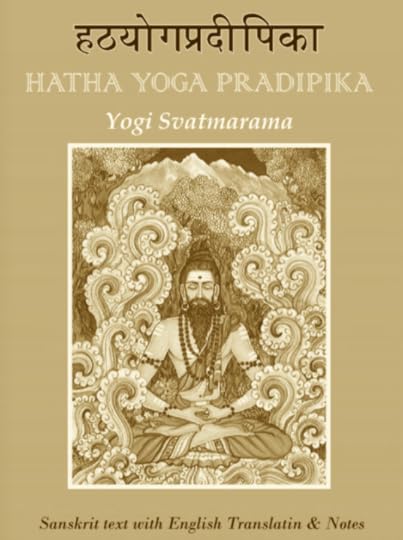
Hatha Yoga Pradipika
We live in the times of market economy. Seeing that yoga has caught the fancy of all and sundry, multi-billion dollar multinational industries have grown around it. Then, to make it more marketable, customer friendly and gain the competitive edge, these days all kinds of body contortions and conceptual distortions go in the name of yoga. Thus you have nude yoga, hot yoga, power yoga, instant yoga, goat yoga, beer yoga and what not.
Then there are the controversies. A state in secular democratic US does not want its students to learn yoga as they fear that by doing so the students will embrace Hinduism. Then there are groups that want to delink yoga from its Indian origin and spiritual context so as to make it more global and seculars and thereby expand their commercial empires in the name of yoga.
The fear of the aforesaid US state is not totally ill founded. Yoga has Dharmic roots. Since ages Hindus, Buddhists and Jainas have used yogic methods for spiritual growth. Even though in popular vocabulary yoga has become synonymous with body postures, it is much more than that. Each chapter of the Bhagavad Gita is named as a kind of Yoga – Arjuna Vishada Yoga, Jnana Yoga, Karma Yoga, Bhakti Yoga etc. The simple meaning of Yoga is to join. In spiritual context it is defined variously as the meeting of Individual consciousness with the universal consciousness, or bringing harmony to various levels of existence like body, mind, soul etc.
Patanjali in Yoga Sutras defines yoga as, “Chittabritti Nirodhah …… ” Yoga is cessation of the modifications or various tendencies of the mind so that one is established in witness consciousness.” Samadhi – a state of total equanimity – is the goal of yoga and in the first section itself Patanjali describes various states of Samadhi. But he has not given any guidelines for body postures or breath control. Same way even though every chapter of Bhagavad Gita is named as so and so yoga, no guidelines are given as to the yogasanas.
By the way yogic practices that use body as the medium are known as Hathayoga. So the Hathayoga Pradipika compiled in the fifteenth century by Swami Svatmarama has guidelines about body postures and various breathing exercises.
There must be a reason why many texts that extolled the virtues of yoga or propounded the philosophy of yoga did not give detailed guidelines as to how to do it. Maybe, it was not considered safe to undertake the path of yoga without the guidance of a living master. Even in Bhagavad Gita Krishna says that to learn yoga you have to go to a master. The Yogasara Upanishad advises, ‘Practise Yoga under the supervision of a Guru’. (Gurur antike yogabhyashet). Particularly in the case of Hathayoga, form my personal experience also I can say that at least in the initial stages one must practise yogic techniques under the direct supervision of a trained master. Don’t worry about all those stories floating around in the media about fallen Gurus. For every fraud Guru there are thousands of authentic Gurus about whom the media never bothers.
I think it is for the same reason a yoga manual was not put in written form till the fifteenth century even though practices have been there since time immemorial. A written manual may help either the master or an advanced practitioner to some extent. But a novice should never start yoga with the help of a book or your videos. Still, if you are interested I will advise to check out the manual put by the Ayush Ministry of Government of India. For a beginner who want to prcatise on her own it may be of some help. But take care not to mix other techniques with this.
Perhaps Hataha Yoga Pradipika is one of its kind when it comes to a manual of hathayoga. The writer, Swami Svatmarama, belonged to a tradition that traced its origin to Adinath or Lord Shiva. Since ancient times yogic techniques have been transmitted in Guru hishya parampara and a few techniques were scattered here and there. Swami Svatmarama is the first to compile all scattered element into a manual. The importance of a Guru is emphasized at many places even in this manual.
Going by the broader definition of yoga, the entire gamut of spiritual literature that originated in ancient India can be considered as part of yoga. However, other than Hatha Yoga Pradipika there some books that specifically talk about yogic methods or explicitly use the word yoga frequently in their texts. They are:
Bhagavad Gita : This is the most popular text of Hinduism. It contains Lord Krishan's advice to Arjuna just before the start of Mahabharat war. Bhagavad Gita is said to contain the gist of the Upanishads. Yoga Sutras or Yoga Darshana of Patanjali: This is also a popular book on Yoga where the philosophy or darshan of yoga is enunciated. Vijnana Bhairaba Tantra: The book contains Lord Shiva's advice to Goddess Parvati about achieving higher consciousness. It contains a large number of meditation techniques. It is said that all the meditation techniques and breathing exercises since ancient times till present times can be traced to this text. Many New Age Gurus, take a few techniques either from Hatha Yoga Pradipika or Vignana Bahirabha Tantra, modify it a ittle bit and then claim it as if it is their invention. Yogasara Upanishad: A small and minor Upanishad clarifying certain aspects of yoga.In case you know of any specific text about yoga, please let me know through the comment box.
********************************
Harsha Charita (Banabhatta) is another notable texts starting with alphabet H.
This is the alphabet H post of Blogchatter AtoZ Challenge 2021. My theme this year is ‘The beauty of Sanskrit and Sanskrit texts’, where in I explore selected compositions in Sanskrit and also some unique aspects of Sanskrit language and texts. Join with me in my journey to understand India’s spiritual and intellectual heritage. All the posts of AtoZ Challenge 2021 can be accessed here.


April 7, 2021
Gita Govindam – the ultimate romance
As I do a little research now to refresh my knowledge about Jayadeva and his Gita Govindam it comes as a pleasant surprise to know that Guru Granth Sahib has some of his verses even though these are not from Gita Govindam for which he is primarily known.
There is no dispute over the facts that Jayadeva’s Karmabhoomi was Odisha and his songs are part of the Jagannath temple rituals and are integral parts of Odissi dance and music. But Jayadeva must have been some kind of a national figure in those days. His fame has been such that it is a matter of pride to be associated with him. That is how three states – Odisha, Bengal and Bihar – each has a place that is supposed to be his place of birth. Like Rasagola, the legacy of Jayadeva is another sweet battle between Odisha and Bengal with Bihar occasionally coming into the picture.
The compositions in Jayadeva’s Gita Govindam are the most preferred non-Odia songs for the Odissi dancers. From my experience I can say that all the 24 songs in this book are so beautiful that it is difficult to rate one above another.
Gita Govindam songs are set to Indian classical raagas and are also known as astapadis. Even though these can be sung in all the three classical Indian styles, these are more popular among Odishi and Carnatic singers than their Hindustani counterparts. One possible reason for this could be that during Mughal rule Hindustani music drifted away from its vedic roots. Moreover, over the years unlike Odishi and Carnatic, Hindustani music became more note based and less composition based.
The first song in Gita Govindam is about the ten incarnations (dashavatara) of Lord Krishna. Yes, he depicts Lord Krishna as the source of the ten avatars in stead of Lord Vishnu which is the standard. In dashavataar of Lord Vishnu, Krishna is the eighth avatar. In Jayadeva’s Gita Govindam, Balarama replaces Krishna as the eighth avatar. Jayadeva’s ten avatars are: Mina (Fish), Kachhapa (Tortoise), Sukara (Boar), Narahari (Narasimha), Vamana, Vrigupati (Parasurama), Raghupati (Rama), Haladhara (Balarama), Buddha, and Kalki.
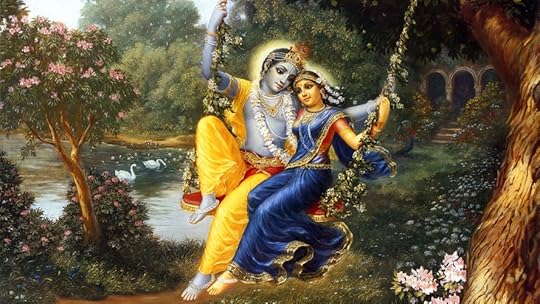
After remembering the leela (divine play) of Lord Krishna across various yugas or over a cosmic lifetime in the first chapter, Jayadeva gives intimate accounts of his rasaleela in dwapara yuga. Following the classical principles of Natyasastras, not only does he portray Sri Radha and Sri Krishna as the ideal and perfect heroine (Nayika) and hero (Nayaka), but also infuse the composition with elements of navarasa – the nine human emotions. Maybe, that is the reason sringara rasa or erotic elements are also part of the book.
It is observed that till the middle ages beginning from Kalidasa, Indian poets have been very bold in graphic physical description of the hero and the heroine and their activities. This is not restricted to Sanskrit poetry. The same is observed in classical literature of Odisha particularly in the the works of noted poets like Kabisamrat Upendra Bhanja and Kavisurya Baladeva Ratha.
So it is not that only the outer walls of the temples built in the middle ages contained bold graphic visuals of sringara rasa. It was there too in the works of the authors of that era as they tried to adhere to the principles of navarasa in their works.
Vaishnav devotees consider works like Gita Govindam as symbolic representations of Bhakti marga that emphasizes divine longing. In Narada Bhakti Sutra, bhakti is defined as the ultimate love (sa parama premarupa). In the path of bhakti the devotee starts with relative love to reach the state of transcendental love or absolute love. In the ultimate state the devotee becomes love.
As Sant Kabir Says:प्रेम गली अति सांकरी, जा में दो न समायThe lane of love is so narrow that it cannot accommodate two.But that happens when the devotee has transcended relative love. The starting point has to be love for someone. It has to be a love that is relatable to the common man – the love for the child, the love for the beloved etc.
The sufis whose path is akin to bhakti marga also use the themes of love liberally in their songs. Ironically many of the songs used in Bollywood romantic films like tujhe dekh dekh jeena are actually sufi bhajans dedicated to the divine. The sufis even use the themes of intoxication as a symbolic representation of ecstatic feeling for the divine. The common men who have never experienced divine ecstasy can only relate to the usual physical ecstasy related with worldly love and intoxication.
Gita Govindam has influenced many authors. Some works of Odia poet Baladeba Ratha have similarities with Gita Govindam. These episodes of Krishna’s life with Radha have given rise to Radha Premaleela – a form of performing folk art which is very popular in the southern part of Odisha.
You may find plenty of astapadis or poems of Gita Govindam sung by various singers in various styles. I will end this post by sharing link to a favourite video:
*****************************************
PS: Since we are in AtoZ season it will not be out of place to mention typical styles of classical Odia poetry compositions that followed a pattern based on the initial alphabets. The aforementioned Odia poets were masters of the game.
Kishora Chandrananda Champu, a set of 34 Odia poems, is similar in theme as that of Gita Govindam. Each poem corresponds to a particular Odia alphabet (consonant) and is known as the champu for that alphabet. Each line of the Ka Champu starts with alphabet Ka, Kha champu with Kha and so on. It was written by Kabisurya Baladeba Ratha. Another unique aspect of this composition is that each poem accompanied Sanskrit commentaries written by the same author.
Chautisha is another form of Odia poetry where the first alphabet of first stanza starts with Ka, the second with Kha and so on. Kabi Samrat Upendra Bhanja wrote an entire version of Ramayana known as ‘Baidehisha Bilasha’ where each line started with the alphabet Ba.
*****************************************
Other notable texts starting with alphabet G are: Gheranda Samhita / Grahacāraṇibandhana / Ganita Tilaka / Ganita Kaumudi (Narayana Pandita) / Garuda Purana
This is the seventh post (alphabet G post) of Blogchatter AtoZ Challenge 2021. My theme this year is ‘The beauty of Sanskrit and Sanskrit texts’, where in I explore selected compositions in Sanskrit and also some unique aspects of Sanskrit language and texts. Join with me in my journey to understand India’s spiritual and intellectual heritage. All the posts of AtoZ Challenge 2021 can be accessed here.
April 6, 2021
Finding out and fixing their dates of composition
Suppose a third world war happened and only two books based on ancient Indian texts survived. One is Devdutt Patnaik’s version of Ramayana and another is Rupa Pai’s version of Bhagavad Gita. As usual the few surviving copies of these books will be ignored by surviving Indians till these fall into the hands of a western scholar who does some research on them. After reading these books, the researcher will not only have a distorted idea about Ramayana and Bhagavad Gita but also about their period of composition. “The Ramayana – a fiction about an abduction and attempted rape of the protagonist called Sita, was written in the early part of the twenty first century / later part of the twentieth century”, the western scholar would write. Leading publishers and universities of that time will take his version as gospel truth. It will be part of all text books including in India.
There is no disagreement over the fact that there was no single author for most of the ancient Indian texts and these texts were repeatedly revised over centuries or even millennia. If a text was originally composed in 5000 BC and its last revision was in 500AD one may date it to 5000 BC and another to 500 AD and both will find shreds of evidence to support their respective views. Ultimately what enters the text books or the popular literature depends upon which intellectual group is most influential.
As I have already mentioned in my article on Dayabhaga, the western writers usually go for a later date than the native Indian scholars. Here I include those Indian writers who write mainly to pander to the interests of specific international lobby groups for reasons best known to them. There are also writers like Devdutt Patnaik who are too lazy to learn Sanskrit and read the original texts. So they base their writings on western sources only.
Some authors argue in favour of a later date for a particular reason. These belong to the schools who are in favour of the Aryan Invasion theory. According to them, like the British and the Moghuls before them, Aryans too came to India from outside and conquered the natives to establish their rule. So there was nothing wrong if the Mughals or the British also came from outside and exploited the natives. But as more and more neutral and Indian scholars are doing research on this they are finding no evidence to support this view. Aryan Invasion theory is a fiction created by the British to redeem their exploitative rule in India.
From twelfth century to fifteenth century India suffered a number of Islamic invasions. Subsequently their rule stabilized in the form of the Mughals till the British took over in the eighteenth century. During Islamic invasions and rules a large number of temples and educational Institutes were destroyed. Temples were not only places of worship but also centres of culture and education. As a result, millions of ancient texts that must have included chronicles and almanacs were lost. Subsequently the ancient history of India was taken up by the British and scholars from other European countries. Many of them were not neutral. A large number of Indic study projects were funded by the Church. The collective view of the western scholars became the mainstream view about the History of ancient India.
Though it is far fetched, there is a school of western writers led by white supremacists who propagate the myth that the knowledge of ancient texts in India including Yoga, Ayurveda, and the Sanksrit language itself originated in the west and subsequently travelled to India. Of course this is done to debunk the fact that many of the mathematical and other innovations of ancient India travelled via Middle East to the West. So assigning a later date also suits the claim of such groups since it is near impossible for them to manipulate the dates related to Greek and Roman civilisations which are well chronicled.
It is encouraging to see that many Indian scholars are now taking interest to do fresh research and are also questioning the flimsy sources on which most of the earlier findings were based. What is more interesting is that western scholars are also willing to examine the latest findings.
The Rigveda is the fountain head of vedic sciences, the ancient spiritual science of the Himalayas from which such systems as Yoga, Vedic Astrology and Ayruveda arose. It is the basis of the Sanskrit language and of the culture, the arts and the sciences of traditional India. It is also the oldest book in any Indo-European language and if recent archeological finds in India prove correct, it may be thousands of years older than the current estimation of it (1500 BC). ---- Dr. David Frawley, American Scholar in 'Wisdom of the Ancient Seers'More research on the recent excavations at Rakhigarhi and Shinauli is expected to throw more light on not only our ancient history but also the period of composition of various ancient texts. I have already examined the reasons for the lack of authentic sources for our ancient history in an earlier post that was part of last year’s A to Z challenge.
*************************************
This is the sixth post (alphabet F post) of Blogchatter AtoZ Challenge 2021. My theme this year is ‘The beauty of Sanskrit and Sanskrit texts’, where in I explore selected compositions in Sanskrit and also some unique aspects of Sanskrit language and texts. Join with me in my journey to understand India’s spiritual and intellectual heritage. All the posts of AtoZ Challenge 2021 can be accessed here.
April 5, 2021
Eesha Upanishad
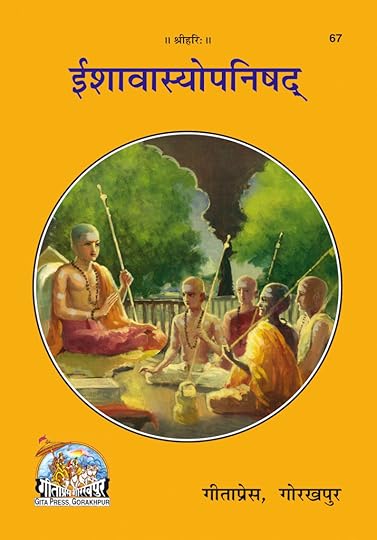
To indicate its proper pronunciation it is written as īśā. Most commonly it is written simply as Isha. Except for the title I will also stick to Isha so that my post is not left out of SEO benefits. But, since in Devanagari it is written as ईशा it should be written in Roman alphabets as Eesha when we don’t use the pronunciation indicators.
Since, as a rule, I will not be repeating a text of the same category in this AtoZ series and Isha Upanishad is my representative book for the Upanishads it will not be out of place to give a brief introduction about Upanishads.
Accounts vary ranging from 108 to 200 as far as the number of Upanishads are concerned. Accounts also vary from 10 to 13 as to the number of Upanishads which are considered as the Principal Upanishads. These Principal Upanishads are parts of different Vedas. Upanishads contains discussions about the ultimate reality and the ultimate goals of human life. Since Upanishads marked the conclusion of vedic activities these are also known as Vedanta.
The ritualistic parts of the Vedas are known as Karmakanda and the contemplative part comprising of the Upanishads are known as the Jnanakanda. Karma and Jnana complement each other and without one the other is incomplete. It is interesting to see that some stanzas the Upanishads outright condemn religious rituals. Yet, these are part of the books which are mostly about rituals. I will take up this issue of such contradictions in a later post.
Isha Upanishad starts with the words Ishavashya, hence the name Isha Upanishad. According to some it is the first Upanishad. It is also one of the smallest- only 18 verses. Or 17 according another version. This number excludes the shanti patha or the seed mantra which is usually recited at the beginning and at the end of the Upanishad. You might have somewhere come across the seed mantra of Isha Upanishad. It goes like this:
Om Purnamadah purnamidam purnat purna mudachyatePurnashaya purnaamdaya purnamebabashisyateI have already written a blog post about the seed mantra of Isha Upanishad. In case you are interested to understand the meaning of this often quoted sloka, please visit the post. Purnat purna mudachayate finds mention in the logos / mottoes of many educational institutes.
Another extract of Isha Upanishad that finds mention in a chain of educational institutes, i.e the Kendriya Vidyalayas run by the Government of India, is ‘tatvam pushan apavrinu‘. It is taken from the 15th sloka of Isha Upanishad which goes as follows:
हिरण्मयेन पात्रेण सत्यस्यापिहितं मुखम्।तत् त्वं पूषन्नपावृणु सत्यधर्माय दृष्टये ॥hiraṇmayena pātreṇa satyasyāpihitaṁ mukham |tat tvaṁ pūṣannapāvṛṇu satyadharmāya dṛṣṭaye ||The face of the pot of truth is covered with a golden lid; O Pushan, remove it so that we can see the truth for the sake of dharma.There are thousands of interpretations of Ishavashya Upanishad. 99% of them are either very ambiguous about this sloka or knowingly twist it to fit in with the basic philosophy of their sect. Belonging to a sect is very attractive. One can get lost in the pleasure of belongingness. The pleasure of belongingness can sometimes be a golden covering that keeps you away from the truth.
Rather than the mundane activities, it is the golden coverings which are more dangerous for a seeker of truth. In puranas whenever a Rishi was in his final stage of self realization, Indra used to send the most beautiful women – the apsaras. Some Rishis thought it was the result of their tapascharya and fell prey to these ploys. Some found it difficult to resist the temptation, forgetting that it was just a golden veil. If they got attached to the golden veil it would be very difficult for them to get to the truth. With so many humane weaknesses, it is extremely difficult a human being to ignore and go past the golden veil. Hence the prayer for additional help. Prayer also makes one humble and takes away the egoistic feeling that one is enough unto oneself to overcome the obstacles to truth.
The second part of the sloka is vey important. Many interpreters miss it – some of them by following someone else’s wrong translation.
To summarise, the seeker here says three things:
1. The pot of truth is covered by a golden veil which implies that the pot of truth is attractive but the greedy will not dare to tear it and there are chances he will just preserve it without ever exploring what is inside. In south Indian Temples the Gopuram is very attractive. But if you are struck with the beauty of the Gopuram you miss the deity inside the Garbhagriha.
2. Human beings are not enough unto themselves when it comes to discovering the ultimate truth. The paradox is that if they think they are enough unto themselves their ego keeps them away from the truth. So Pushan or the Sun God that lights every thing is invoked to throw light and help the seeker.
3. The seeker is seeking truth to use it for dharma and not to misuse it. History is of full of examples as to how those who knew the truth often misused it for selfish ends, quite often with disastrous consequences. Many of the scientific inventions were first used for military purposes. So after knowing the truth there are chances that the seeker may use it for adharma. Hence the seeker is kind of giving an assurance that he will use it for dharma.
Upanishads have been the favourite text for many western scientists including Erwin Schrodinger. When scientists observed the subatomic particles they were stunned by their behaviour. Some of them moved yet seemed to be static. Some of them were here and suddenly appeared at another place without leaving any trace of their path. Here I am reminded of the 5th sloka of Isha Upanishad:
तदेजति तन्नैजति तद् दूरे तद्वन्तिके।तदन्तरस्य सर्वस्य तदु सर्वस्यास्य बाह्यतः ॥tadejati tannaijati tad dūre tadvantike |tadantarasya sarvasya tadu sarvasyāsya bāhyataḥ ||That moves and that moves not; that is far and that same is near; that is within all this and that also is outside all this.Isha Upanishad also sets the foundational difference between Vedanta and Buddhist philosophy. Buddhist philosophy is based on Sunyabaad – ultimately there is nothing in anything. Things come from nothing and go back to nothing. To the contrary according to Vedants everything is filled with Brahman. The first sloka of the Ishavashya Upanishad sets the tone for this:
ईशा वास्यमिदं सर्वं यत्किञ्च जगत्यां जगत्।तेन त्यक्तेन भुञ्जीथा मा गृधः कस्यस्विद्धनम् ॥īśā vāsyamidaṁ sarvaṁ yatkiñca jagatyāṁ jagat |tena tyaktena bhuñjīthā mā gṛdhaḥ kasyasviddhanam ||All this - whatever is moving or static in this universe - is pervaded with IshaEnjoy but with a sense of renunciation. Don't be greedy. After all, whose is all this wealth?The whole universe is pervaded with Isha. Basic constituent of everything whether living or non-living is Isha. The sloka further goes on to add that there should be a balance between spiritual and material life, individual and social life. Enjoy, but don’t abandon the sense of renunciation. Care for yourself but don’t forget your role in society. Enjoy, but don’t get attached to anything. Enjoy with a sense of trusteeship. Anyway you are not the permanent owner of anything.
************************
Other Mukhya (principal) Upanishads are : Kena Upanishad / Katha Upanishad / Prasna Upanishad / Mundaka Upanishad / Mandukya Upanishad / Taittiriya Upanishad / Aitareya Upanishad / Chhandogya Upanishad / Brihadaranyaka Upanishad / Svetasvatara Upanishad / Kausitaki Upanishad / Maitrayaniya Upanishad
This is the fifth post (alphabet E post) of Blogchatter AtoZ Challenge 2021. My theme this year is ‘The beauty of Sanskrit and Sanskrit texts’, where in I explore selected compositions in Sanskrit and also some unique aspects of Sanskrit language. Join with me in my journey to understand India’s spiritual and intellectual heritage. All the posts of AtoZ Challenge 2021 can be accessed here.
**************************
When it comes to preservation, publication and popularisation of Sanskrit texts, the Gita Press, Gorakhpur has played the leading role for close to a century. It is heartening to note that its Chairman Radheshyam Khemka pased away a couple of days back. He also edited many popular periodicals of the publishing house. My heartfelt condolences for the noble soul.
April 4, 2021
Dayabhaga – the earliest legal attempt at women empowerment
Since the dawn of civilization, particularly after human society became agrarian, dispute over property has been a primary source of concern for the society. Needless to say that the whole Mahabharata war was because the Kauravas would not concede the ownership rights of even five villages to the Pandavas.
The issue of inheritance was addressed on and off by various rishis in their treatises on general social customs. But systematic treatises on this issue were made by two ancient scholars. One is known as the Mitakshara School based on the commentaries of Vignaneswara on Yagnavalkya Smriti. Another one is known as Dayabhaga school which is part of Jimutavahansa’s recovered trilogy known as Dharmaratna.
When it comes to dating of any ancient text, it is interesting to note that western scholars usually have a tendency to assign a much later date than their Indian counterparts. Jimutavahan’s treatise on law of inheritance is no exception as scholars put arguments dating it from 10th century AD to 14 century AD.
Lawyers and students of law need no introduction to both these schools. These systems were followed extensively in legal jurisprudence to decide cases of inheritance till major changes were made to the law by enacting Hindu Succession Act, 1956. Subsequently further reforms were made by the succession Act of 2005.
The most glaring difference between these two schools is that while Mitakshara School recoginses succession by birth, Dayabhaga School recognises succession by death. Till the Hindu Succession Act of 1955, Dayabhaga was applicable in Bengal and Assam while the Mitakshara principles were applicable to the rest of India. Basically it was the British who brought prominence to both these schools of law.
Dayabhaga, in a sense, was one of the earliest legal attempts at women empowerment. It recognized the right of a widow to inherit husband’s ancestral property. The Mitakhara system did not give any right whatsoever to women. Some may question – why only the widow and why not any daughter? Let us remind ourselves that we are talking of a time when the child marriage was the norm. At a very early age the child was earmarked to belong to another family. Sometimes girls were widowed long before the marriage got consummated and widow marriage was an absolute no no. Seen in such a context, Dayabhagha system was revolutionary. I wonder why the British did not make it applicable to the whole of India.
After Hindu Succession Act of 1956 there has been uniformity in most of the areas except a few areas like the joint family system. In spite of all the reforms brought out in the latest succession Act of 2005, these two schools provided the foundation for the law of inheritance for the Hindus. Here let it be noted that according to the Supreme Court ruling Sikhs, Buddhists, Jains, and all different sects like Radhaswamy, Swamynarayana etc. are considered as Hindus for the purpose of Hindu Laws.
The major difference between the two schools of law can be summarised as follows:
MitaksharaDayabhagaOrthodox SchoolReformist SchoolRecognizes the right of a son on ancestral property since birthDoes not recognize the right on ancestral property as long as father / father in law is aliveThe basis of inheritance is principle of propenquity i.e., nearness in blood relationship.The law of succession is based on religious efficacy or religious benefits, therefore a person who confers more religious benefit on deceased has preferenceCoparceners has joint ownership on ancestral property and shares of coparceners are not defined till partition.Recognizes individual ownership in coparcener of share in joint family property and share of each coparcener is predefined.Coparcenary comes into existence on the birth of a son and it can consist of son, father, father’s father and father’s father’s father.There cannot be any coparcenary between fathers and son. Coparcenaries come into existence between sons on the death of the father.Father cannot dispose of ancestral property except for the legal necessityFather can dispose of ancestral property
Of course after reading the above there will be scholars who will say, “Look how patriarchal Indian Society India is”. The fact is – these were written in 11th century and tell me which society was not patriarchal in those days. Even western scholars who do Hindu bashing based on Women’s rights forget that it was not untill 1920 that women got voting rights in US.
What is most important to note is that Dayabhaga school attempted to reform many aspects of the orthodox Mitakshara school and gave a foundation for the laws of inheritance while not deviating too much from the prevailing social customs and the complex family and joint family system of India.
*****************************************
Other notable texts starting with alphabet D are: Devi Bhagavata / Devichandragupta / Dasakumaracharita (Dandi) / Dhruvamanasa. In case I missed a book please let me know. Please subscribe to my blog to get my posts regularly in your email. Drop in your thoughts in the comment box.This is the fourth post (alphabet D post) of Blogchatter AtoZ Challenge 2021. My theme this year is ‘The beauty of Sanskrit and Sanskrit texts’, where in I explore selected compositions in Sanskrit and also some unique aspects of Sanskrit language. Join with me in my journey to understand India’s intellectual heritage. All the posts of AtoZ Challenge 2021 can be accessed here.April 2, 2021
Charaka Samhita – a treatise on holistic health
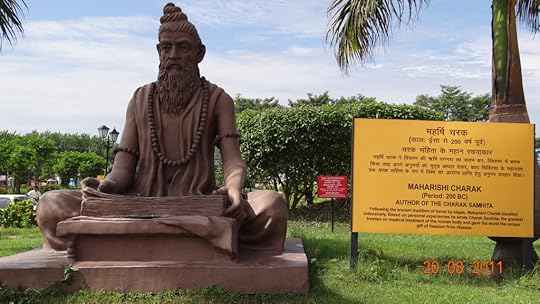 image source: creative commons licenseDharmarthakamamokshanamarogyam mulamuttamam (Charaka Samhita 1:15)Health is the basis of four goals of human life - Dharma, Artha, Kama and Moksha
If grammar books and lexicons can be written in verses so that memorising will be easy, so can be a text on medical science. More so in the case of a text on medicine since easy recall by the physician can be a matter of life or death for someone.
But Charaka Samhita is not your typical reference book for instant prescription. It is much more than that. It will be more appropriate to call it a treatise on holistic health science. Charaka Samhita and Sushruta Samhita are the foundational texts of Ayurveda, the former being much earlier. Ayurveda itself is much more than just a system of medicine.
No doubt Charaka Samhita has detailed prescriptions to remedy all kinds of disturbances to health. But it gives equal importance to preventive health care. While most of the modern systems of medicine examine disturbance to health from a few angles like injury, season, micro-organism, intake of food and lack of physical exercise, etc. Charaka Samhita goes to the entire gamut of human interactions and experiences. It examines not only physical and psychological factors, but also the spiritual sources of diseases and well being. It also recognises that a person’s social life has a bearing on his health.
The Samhita recognizes that disturbances to health can be cause due to suppression of urges and desires. In fact a whole chapter is dedicated to describe various natural urges and the results of their suppressions.
The unique thing about Charaka Samhita is that it emphasizes on customizing treatment and preventive health care depending upon an individual’s typical outer and inner body constitutions rather than recommending the same remedy for same symptoms or prescribing any kind of universal health regimen. Application of most of our ancient wisdom put heavy emphasis on sthana, kala and patra (place, time and the recipient individual).
I combine Ayurveda and yoga as my default way of both preventive and curative health care. There are two persons who have inspired my interest in Ayurveda since childhood. One is my father. He was not any official or unofficial expert in Ayurveda. He was also not a yoga buff.
I remember that he used to keep some basic ingredients like Amla, Bahada (Bibhitaki), Haritaki (Inknut), Pippali (Long pepper) etc. which are basic ingredients in many of the ayurvedic medicines. In case of common ailments first he tried to get some medicines from some of his favorite ayurvedic doctors form the locality. He also understood the limitations of the local ayurvedic doctors and where it was not appropriate did not insist on ayurvedic methods. Charaka Samhita recognizes the role of spiritual practices on overall well being including health. His basic principle was that either he would do a thing properly or would not do it. For example: doing pranayama is part of many Vedic rituals. But hardly anyone one does that. But my father was very particular about pranayama and various mudras (hand gestures using fingers) which are mandatory parts of all puja rituals. Yet even established pundits skip these crucial parts of the rituals.
He lived upto 87. I am sure he would have made it to 100 if he had not met with an accident. If Ayurveda is the science of prolonging life without being a burden on society and for the sake of activities commensurate with one’s stage of life, he was a living example.
Western scholars are puzzled by the emphasis on spiritual element in Charaka Samhita. Some feel it downgrades the otherwise scientific spirit of the text. Here they are missing a basic tenet of ancient Indian Knowledge systems and philosophy that recognized the unity of everything. The ancient Rishis could see through the inter-related and inter-dependence of all knowledge systems and also various aspect of life. Physical health cannot be disconnected from the psychological and spiritual state of an individual. Spirituality was not a narrow faith based concept for the ancient Rishis. They did not say you have to follow only this path or accept only so and so as true God. As we see from the Yoga Sutras, for spiritual practices it is not mandatory to first believe in a concept of God. Since ancient times in India, multiple paths have been recognised and the choice of an individual to follow a spiritual path has been respected.
The second person who inspired was a vaidya who visited our village regularly. We used to call him Radha Makaddam. He was a regular at our house since I had lots of immunity issues during childhood and took his ayurvedic tonics and other prescriptions like goats milk etc. He used to check the nadi (pulse) and talk about bata, pitta and kapha frequently. Even though I did not understand these concepts, I remembered these words due to repeated hearing and later tried to find out what these meant. That is how I came to know that bata, pitta and kapha are parts of the basic philosophy of Ayurveda.
Bata, pitta and kapha are known as tridoshas or three humours according to loosely translated English. According to Charaka Samhita majority of the sicknesses are the results of these three humours going out of balance. A qualified doctor first finds out which dosha or combination of doshas are disturbed depending upon the individual’s ideal composition of humour. Then he recommends regimens, diets and medicines which will restore the balance. Radha Makaddama had jurisdiction over a number of villages. He visited those villages regularly to find out the well being of people. Of course he was also available on demand for the emergency cases.
Some scholars are of the opinion that most of the physicians of ancient times were mendicants and Charaka is a generic term for such mendicant physicians. Some believe Charaka was a school of thought on Ayurveda. But the majority of scholars profess the existence of a person known as Charaka.
Charaka Samhita is usually studied by the Ayruveda professionals. However it has plenty of takeaways for the layman. Actually the layman can better appreciate Ayurveda if he knows the basic principles of Ayurveda like the body composition in terms of the subtle elements of bata, pitta and kapha which in turn are based on the principles of panhcha mahabhutas – the five great elements: earth, water, fire, air and ether.
Coming to holistic diet, Charaka divides food according to their tastes. The six kinds of tastes are- sweet, sour, salty, bitter, pungent, and astringent. A balanced diet should contain food from all these tastes. There are also detailed recommendations as to foods of what taste are conducive or inimical to what kind of dosha.
When people go to an ayurvedic doctor and things do not work out, they usually loose faith in the system of treatment. Usually we do not consider the possibility that the doctor could be incompetent or the medicines manufactured by that particular company might be ineffective. I have experienced the differences in the effectiveness of medicines from different manufacturers. Charaka Samhita has detailed guidelines about a good doctor and a bad doctor. Maybe, if a layman could be educated on that he will be able to distinguish a good doctor from a bad one and will be able to make a better choice with regard to the system of medicine.
******************************************
Other prominent texts of Ayurveda are: Sushruta Samhita, Ashtanga Hridayam, Ashtanga Sangrah, Sharangadhara Samhita, Bhava Prakasha, Madhava Nidanam
Other notable texts starting with alphabet C are: Chandas Sashtra (Pingala) / Chhandogya Upanishad. In case I missed a book please let me know. Please subscribe to my blog to get my posts regularly in your email. Drop in your thoughts in the comment box.
This is the third post (alphabet C post) of Blogchatter AtoZ Challenge 2021. My theme this year is ‘The beauty of Sanskrit and Sanskrit texts’, where in I explore selected compositions in Sanskrit and also some unique aspects of Sanskrit language. Join with me in my journey to understand India’s intellectual heritage. All the posts of AtoZ Challenge 2021 can be accessed here.
April 1, 2021
Bhajagovindam – a wake up call for everyone
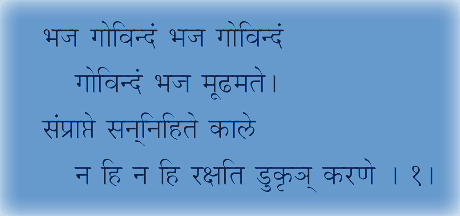 Bhaja govindam, bhaja govindamGovindam bhaja mudhamate.Samprapte sannihitekaleNahin nahin rakshati tukkkun-karane.Oh Foolish Mind, sing the song of the divine, sing the song of the divine, sing the song of the divine. The memorization of grammar will not save you from impending death.
 In Sivasutras it is said, “VITARKA ATMAGNANAM”. One has to transcend logic to attain self knowledge. No doubt logic is also helpful. But it has its limitations. Logic can lead one only upto a certain point. That’s how philosophers and scientists who are stuck with logic miss the ultimate. That is also the primary difference between the western and eastern approach to truth. The ultimate mystery can only be felt and lived but not known. Those who are stuck with the language of the head miss the language of the heart.
But Adi Shankaracharya was an exception. He was a great logician. Using logic he defeated all his contemporary pundits some of whom became his ardent disciples. Using logic he established the supremacy of Adwaita Vedanta and integrated all factions of spiritual traditions of India.
At the same time he has composed some of the deeply devotional Sanskrit hymns. The same person engaged in scriptural debate about the formless Brahman with some of the sharpest minds of his time during day time could be found immersed in singing the glory of the divine-with-form in the evening.
Adi Shankaracharya was born in a village named Kaladi in Kerala. Even though he lived only for 32 years his accomplishments are beyond human imagination so much so that some consider him as being more of a mythical figure than a real life person. For a normal person thirty two years are not enough to master the Sanskrit language and the principal scriptures written in that language. Considering the standard of communication of ninth century India, it is amazing how he was able to travel all over India to establish the four important places of pilgrimage (chardham) and meet with all the renowned pundits to engage them with debate. At the same time he took care of the spiritual growth of his disciples, compiled a large number of hymns, wrote commentaries on many important scriptures like Bhagavad Gita, Principal Upanishads, the Brahmasutras etc.
Now let us come to the background story of Bhajagovindam. While staying in Varanasi, once while going to the river Ganges for completing his ritual, Shanakaracharya came across a very old man, may be 80 years old, trying to master the intricacies of grammar, oblivious to the fact that death was already knocking at his door. Out of great compassion for such a stupid person, Bhajagovindam was born. Our ancient seers divided knowledge into two categories- apara and para. Apara vidya consists of all the utilitarian knowledge that is useful for living in the world: science, mathematics, engineering, language, grammar etc. Para means knowledge of the beyond, spiritual knowledge or transcendental knowledge. Life was also divided into four stages – Brahmacharya, Grihasta, Sannyas and Banaprastha. In the first stage of life which was spent in a Gurukula the child was introduced to both kinds of knowledge. If one became a grihasta or a householder, he continued to practise both kinds of knowledge. In subsequent stages para vidya was supposed to take precedence and in the fourth stage it was thought foolish to be obsessed with acquiring apara vidya.
Bhajagovindam is also known as Mohamudgara. It has just 33 slokas. If printed without commentaries it will be a tiny booklet. But the wisdom is profound and it brings out the essence of Sankarachary’s philosophy and his observations about the wrong practices of both the householder and the renunciate. In the garb of sadhu and sanyasi we have all kinds of people. All of them may not be serious seekers of self knowledge. In verse 14, Adi Shankaracharya says:
Jatilo mundi luncitakesahKasayambarabahukrtavesahPasyannapi cha na pasyati mudhoHyudaranimittam bahukrtavesahBhaja Govindam Bhaja Govindam ....One ascetic with matted locks, one with shaven head, one with hairs pulled out one by one, another parading in his ochre robes – these are fools who, though seeing, do not see. Indeed, these different disguises or apparels are only for their belly’s sake. O foolish mind, sing the song of the divine.On one hand there is this senile householder who undertakes to master grammar so as to avoid the fear of death. At a deeper level most of the activities we do could be just cover ups to avoid getting reminded of our evanescence. There are some who renounce family life and take sanyasa to seriously undertake the journey of self discovery. Then there are those who wear orange robes, do matted hair and carefully put up the appearance of a renunciate. This does does not mean everyone of them has embarked on a journey of self discovery. Far from being seekers of truth, some of them do it just to fill their belly and get all other material benefits.
Some notable other texts starting with alphabet B are: Brihad Aranyaka Upanishad / Brahmasutras / Bibeka Chudamani / Brahmabaibarta Purana / Bhagavad Gita, Srimad / Bhahgabata, Srimad / Buddha Charita / Brahmasphutasiddhanta / Bijaganita (Bhaskar II) / Bhava Prakasha / Baudhayana Sutra. In case I missed a book please let me know.
Please subscribe to my blog to get my posts regularly in your email. Drop in your thoughts in the comment box.
P.S: This is the second post (alphabet B post) of Blogchatter AtoZ Challenge 2021. My theme this year is ‘The beauty of Sanskrit and Sanskrit texts’, where in I explore selected compositions in Sanskrit and also some unique aspects of Sanskrit language. Join with me in my journey to understand India’s intellectual heritage.
All the posts of AtoZ Challenge 2021 can be accessed here.
March 31, 2021
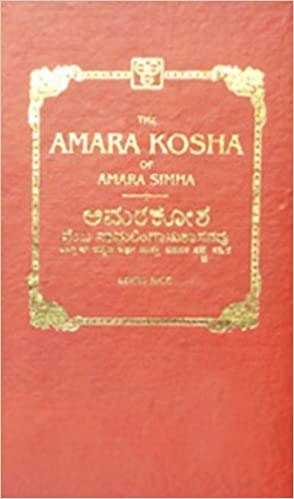
Amarakosha – a thesaurus in verses
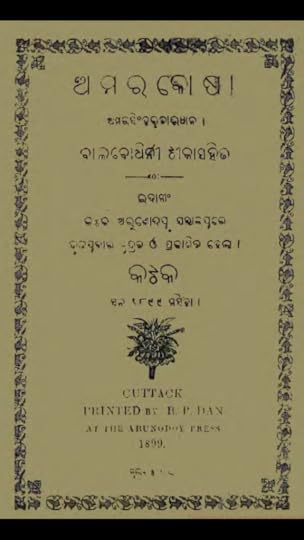
 स्य ज्ञानदयासिंधोरगाधस्यानघा गुणाः सेव्यतामक्षयो धीराः स श्रिये चामृताय चO wise ones! Serve those who are oceans of knowledge and compassion and are pure so as to get the nectar of real wealth and eternal life.
 It was customary for every ancient India text to start with a mangalacharnam – a verse or a short composition seeking well being of every one or seeking blessing for the successful completion of the project. The above sloka is the mangalacharanam of Amarakosha and I have also used the same as the mangalacharam for my AtoZ challenge. The specialty of this mangalacharanam is that, deviating from the norm, it is not addressed to any particular deity. The mangalacharam led some scholars to say that Amarsinha was a Buddist. But scholars like Dr. Sivaja S Nair who have done extensive research on this have found more proofs to the contrary.
This is the first blog post of my AtoZ blogging challenge 2021. Coincidentally this was the first Sanskrit book that I fell in love with. Moreover, my theme being ‘Beauty of Sanskrit and Sanskrit Texts‘, it is appropriate that the first post is about a book on Sanskrit thesaurus.
So we had this large wooden trunk in our ancestral house. I am talking of my childhood days spent in my native village. This trunk was full of books – some consisting of paper and some of palm leaves. There were also a large number of beautifully handwritten books and manuscripts left over as legacy by my grandfather. There were Odia books, Hindi books, English books and Sanskrit books. Some Sanskrit books were written in Devanagari script and some in Odia. In our school days we used to write our Sanskrit exam in Odia script.
During summer vacations when it was no more possible to play outside I used to explore this trunk clandestinely. Maybe in some other post I will talk about this clandestine element. One day I took out this book titled Amarakosha. It was written in Odia script. As I went through it I fell in love with the sheer beauty of the composition in it even though I did not understand the meaning of the stanzas. I can still recall the first sloka:
Swaravyaam swarga naka tridiva tridashalaya Suroloko dwau divyau dwe striyam klibe tribishtapamThis sloka is about various names of heaven or the ether element. You have to believe me when I say that I wrote the above out of memory. Amarakosha is also called as namalinganushasanam which means a treatise in which words with their genders are given. For example in the above sloka the synonyms of heaven are given as – swar, swarga, naka, tridiva, tridahsalaya, suraloka, dwau, divyau, trivistapa. Dwau and div are feminine gender, tribishtapam is the neuter gender (klibalinga), and the rest are of masculine gender.
Of course I do not remember many since I was not serious about gaining any mastery over Sanskrit and I used to try to memorise the slokas in the first one or two pages just for fun and time pass. Another one that I still remember is the following which gives various synonyms of Goddess Laxmi:
Laxmi padmalaya padma kamala sriharipriyaIndira lokmata ma khirodatanaya ramaBhargavi lokajanani kshirasagarakanyakaThat is the beauty of Sanskrit language. Even a mundane thesaurus can be written in verse form. In fact most of the famous treatises on mathematics, dance, music, medical science etc. have all be written in verses as we will see in subsequent posts.
Amarakosha may literally mean the lexicon that is immortal. But here the name means the Kosha compiled by Amara which is short of Amarasimha. This is the most authoritative lexicon for synonyms and for determining the gender of a word. Of course Nighatnu is the earliest Sanskrit thesaurus. But its coverage was restricted to the vedas only.
The fact that apart form all Indian languages, this text was translated into Chinese, Italian, French etc. shows the interest of scholars and spiritual seekers from all over the world in Sanskrit literature. This interest continues even today. Unfortunately, in spite of having proof that the discovery of certain mathematical and scientific concepts which are attributed to western scholars were actually there in Sanskrit texts hundreds of years before these scholars were born, no attempt has been made either by the international or the Indian community to rectify these wrong attributions.
Some notable other texts starting with alphabet A are: Ashtadhyayi / Arthasashtra / Atharva Veda / Agni Purana / Adbhut Ramayana / Adhyatma Ramayana / Ashtavakra Gita / Abadhuta Gita / Atmapuja Upanishad / Aryabhattiya / Abhignanashakuntalam / Avantisundari (Dandi) /Amaru Shataka /Aittiriya Upanishad / Astanga Hridayam /Astanga Sangraha. In case I missed a book please let me know.
Please subscribe to my blog to get my posts regularly in your email. Drop in your thoughts in the comment box.
P.S: This is the first post (alphabet A post) of Blogchatter AtoZ Challenge 2021. My theme this year is ‘The beauty of Sanskrit and Sanskrit texts’, where in I explore selected compositions in Sanskrit and also some unique aspects of Sanskrit language. Join with me in my journey to understand India’s intellectual heritage.
All the posts of AtoZ Challenge 2021 can be accessed here.
March 23, 2021
Theme Reveal: Blogchatter A to Z Challenge 2021

Dear Reader,
For the second year in a row I am participating in the Blogchatter AtoZ challenge. Last year my theme was ‘My Village My Country’ where in I showcased the history and culture of India with specific focus on fields and places close to my heart. Later on it was made into a book and it is now available on Amazon.
This year for the AtoZ challenge I have chosen another theme which is very close to my heart. It is – ‘The Beauty of Sanskrit and Sanskrit Texts’. Needless to say, 99% of the ancient wisdom of India are availbel in Sanskrit texts, because it was the language of the intellectuals of India prior to Moghul invasion.
I am not a scholar of Sanskrit or Sanskrit literature. However, since childhood I have developed a passion for both Sanskrit and English literature. I find that while the average educated Indian knows a lot about English literature her knowledge about ancient Indian literature is dismal.
Whenever we think of Sanskrit literature it is the religious ones that usually come to our mind. It happens because we are more familiar with the religious ones. The religious ones are more widely discussed upon and commented upon. But there are a large number of non-religious texts in Sanskrit which are known only in limited circles and rarely do these make it to the popular discourse. Except of course books like Kamasutra.
Of course many are aware about popular texts like Ramayana, Mahabharata, or the Kamasutra. But there are hundreds of surviving texts about which I find that the awareness is dismal. Sometime even if a person has heard about the text, her idea about the text is very strange. It is in this context that my theme will be helpful in not only creating awareness about many hidden gems but also in dispelling the myths associated with some popular texts.
In spite of the fact that we have lost thousands of original compositions due to destructions of our books and other structures by the zealot invaders and our own negligence, the surviving ones may run into thousands. Some of these are original compositions on various topics and then there are a lot of books which are commentaries on these texts. I have stuck to the former only. Of course there are a number of commentaries which are unique books in their own right. For example Adi Sankaracharya has done extensive commentaries on texts like Srimad Bhagavad Gita, Upanishads and many other texts. I have not considered these commentaries even though these are separate books on their own rights
Most of these books being out of copyright restrictions are freely available in the internet. The problem is that the free resources mostly consist of basic Sanskrit texts. Unless you are an expert in Sanskrit it will not be of any use to you. Secondly, wherever the translation or interpretations are available, from my personal experience I find that most of the freely available translations and interpretations are bizarre. More likely than not you may end up with a wrong idea about the book. Because of copyright issues most of the latest findings and interpretations are not available free of cost on internet. Even coming to the resources available online and offline for a price, most of the readers will have to depend upon translated versions of the texts. I will take up this issue in detail in a separate post.
By default each post will be about a book. But, there may be a few posts about particular common aspect of these ancient texts or about the Sanskrit language. I will resort to this especially when I do not find a proper book starting with that particular alphabet. In such cases it will also be an opportunity for me to pass on my general observations associated with ancient Sanskrit books and their interpretations.
Whenever there are multiple texts for a particular alphabet I will give preference to the one with which I am most familiar with. Further I will give preference to literature of non-religious nature over the religious ones. I will take care that a particular author or a particular subject is not repeated so as to cover as wide a spectrum as possible in the 26 posts. At the end of each article I will also give a list of other texts that start with the same alphabet so as not to miss out mentioning all the ancient texts that I have at least heard of. I request the reader to point out in case I have missed mentioning any book so that it will be a learning experience for me as well.
Please do read my AtoZ posts and provide your feedback in the comment box. In case you do not want to miss my posts, do consider subscribing to my blog by providing your email at the appropriate box.

PS: These days some scholars insist on using ‘Samskrutam’ in stead of Sanskrit. But I am sticking to ‘Sanskrit’ since I am writing in English and till date this is how it is used in English language. Same way when we refer to the language in Odia we say ‘Samskruta’. These minor modifications in another language naturally occur to make any imported word fit in with the phonetics of the language. I don’t find anything wrong in these natural minor modifications.
March 21, 2021
of poets and forests
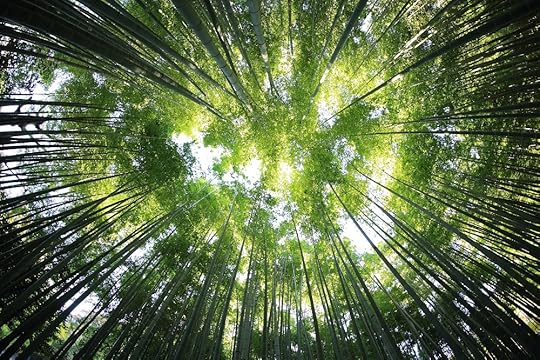
Today is International Forest Day. I also learn that today is Poetry Day.
In our Indian tradition poetry and forests share a very deep and ancient connection. Upanishads contain the essence of Indian philosophy. These are perhaps also some of the most ancient forms of organised poetry and these were written by the rishis dwelling in forests. That is the reason these ancient Indian texts are also known as Aranyakas. Aranya means forest and Aranyaka means ‘born in the forest’. In Sanskrit the poet is known as kabi. The ancient rishi have been referred at many places as ‘kabi’. The biggest of the upanishads goes by the name Bridadaranyaka Upanishad.
While the modern poet who lives in the concrete jungle mostly pictures a dystopian future for the civilization, the ancient Indian poems that originated in the forests provided nourishment for the soul and ample food for noble thought. Upanishadic poems do not take a narrow view point ideolising any particular ism. The insights of such poems are amazing. In our tradition who ever wanted to have a deeper connection with self was advised to go to the forest. Higher forms of poetry or creativity can come only with a deeper connection with the self.
Epic poem Ramayana has a section named as Aranya Kanda. Ramayana itself was written by sage Valmiki who lived in a forest. It is in Aranya Kanda that the foundational events of Rama’s life take place. He kills demons, comes across the most tragic event of his life and makes life long friends and enemies.
The modern popular poet sings – ‘har dil jo pyar karega woh gana gayega’. No doubt falling in love with a person may awaken the poet in some. But it is definitely not as deep as the poetry that happens when one falls deeply in love with the forest. Perhaps that is all the more reason, apart from the environmental ones, to urgently save the existing forests and find ways to replenish lost ones.