Durga Prasad Dash's Blog, page 5
April 21, 2021
Ritusamhara – there used to be six seasons, my love
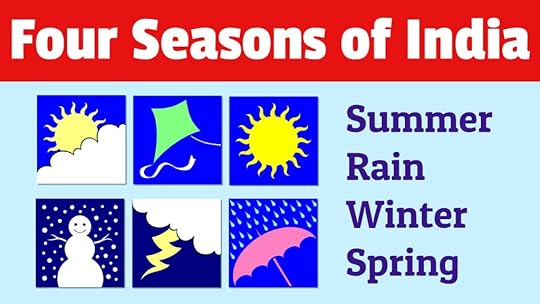 random image collected from internet (supposedly the cover of a You tube video)
Ritusamhara is an odd choice for letter R. Today being Ramanavami, what a coincidence it would have been to write about Ramayana. But the fact is that Ramayana does not fit in with my algorithm for this series. By the way I have discussed about this algorithm in my theme reveal post.
Choice of Ritusamhara may look odd for another reason. Any series on Sanskrit Texts will be incomplete without including a work of Kalidasa. Ritusamhara is a great work. But, it is not the book that would represent the greatness of Kalidasa who has been called as the Indian Shakespeare. I don’t know whether such an epithet diminishes or enhances the stature of Kalidasa. While Shakespeare’s expertise lay in drama, Kalidasa is equally well known for his Raghuvansam and Kumarasambhavam which are works of epic proportions besides his shorter poetic works like Meghadutam and Ritusamhara.
Whether Kalidasa intended it or not, the impact of Ritusmhara on Indian writers of all languages of the middle ages seems to be unprecedented. While his dramas and epic poems are based on themes from puranas, he himself has inspired thousands of writers through Ritusamhara. I can hardly find any author of middle ages who has written poetry about seasons and it does not have major similarities with Kalidasa’s Ritusamhara. Why middle ages, even many writers of modern age who have written about Indian seasons seem to have directly or indirectly been influenced by Ritusamhara. Seen that way, choice of Ritusamhara is not an odd choice after all.
The title Ritusamhara is translated in a variety of ways – Pageant of Seasons, Garland of Seasons, Group of Seasons. I think the meaning is a combined feeling that you get from all the three. Of course some also translate it as ‘The Birth and Death of Seasons’ because another meaning of Samhara is vanquishing. But in that case the translator should have translated it as ‘The Death of Seasons’ or ‘The Destruction of Seasons’.
Coincidentally, as a part of Blogchatter’s ‘Cause a Chatter’ campaign, I have written a blog post titled ‘The Destruction of Seasons‘ to highlight the disturbances to the cycle of seasons. I have briefly talked about Ritusamhara in that post.
Ancient Indian astronomers divided the year into six seasons and gave the exact dates for their duration. This is mentioned in some versions of Ritusamhara at the beginning of each chapter. Kalidasa followed this pattern of six seasons and keenly observed what was happening in the realms of plants, animals, birds, insects and human beings in nature’s grand theatre comprising of earth, water and sky.
I have put the first stanza of the first chapter of Ritusamhara at the beginning of this post. The translation is my own. It may not be the literal translation. But I have tried to convey the meaning as close as possible. I have also tried to sound a bit poetic. In this first stanza itself we find hints about the contents of the work – it is about nature, it is about the emotion of love (summer has set in, my love), and it is about the act of sex (the reference to cupid). Ritusamhara is about the behaviour, play, display and adaptability of all these elements at the backdrop of changing seasons.
Ritusamhara is full of description of the seasonal blooming of various native plants. If Kalidasa has described the magnificent saptaparna in its autumnal glory, he has not forgotten the humble kandali plant (common nettle) that flowers in rainy season. Being a court poet of the King of Ujjain he must have spent most part of his life in central India. But the plants mentioned must have been found in all parts of India those days. As our town planners and landscape designers developed exotic preferences, the native plants vanished from our surroundings. I have a feeling that our younger generation may find it difficult to recognize majority of the native plants mentioned in Ritusamhara. At the end of the post I will give a list of all the native plants mentioned in Ritusamhara. Let us see how many of them are identified by the reader.
Kalidasa has not only described with vivid details the seasonal plights and delights of human beings but also that of animals and birds. The cruelty of summer is described through how the animals lose their basic nature as they find it difficult to quench thirst, or how they run to save their lives due to forest fire. Kalidasa notes the seasonal return of birds to various water bodies. Tiny beings not forgotten. Like the case of kandali plant, Ritusamhara gives the humble indragopaka its fifteen minutes of fame.
In the works of Kalidasa and other authors, the physical description of human bodies or sexual acts sometimes left little to imagination. But it was always within the social constraints. So the love described was usually for the married partner. This has also led a plethora of literature in Sanskrit and other Indian languages about the forlorn lover, about the feeling of the partner who is separated. Great Odia poet Upendra Bhanja who himself was separated from his partner at a very young age has composed many songs and books on this theme. Kalidasa’s Meghadootam is entirely on the theme of the separated lover. In Ritusamhara, the feeling of such a separated lover is described in the context of each of the six seasons. Sometimes it is contrasted with the feelings of those who are presently enjoying the company of their partners.
These days, hardly do we experience the distinct six seasons that Kalidasa talks about. In many places in India the Summer starts from the middle of the so called Spring and continues till Winter sets in, with Rain behaving like a truant and unpredictable guest through out this period. There has been so much change over the last thirty years. I don’t know whether the young generation will be able to connect with the concept of six seasons. I don’t know whether they have got the opportunity to feel the Sharad Ritu or can distinguish between Hemanta and Sheeta Ritu. Coincidentally, I come across many signboards in Bengaluru that say ‘Four Season Spa’ or ‘Four Season Hotels’. I see a plethora of YouTube videos teaching kids about the four Indian seasons. We have already discounted two season in our popular discourses.
******************************************
Dear reader,
having been inspired by my own previous post I am putting three questions to you. Let us see how many you can answer.
Q1: By the way the tiny velvety red Indragopaka is called patapoka or sadhava bohu in Odia. What is it called in your language? Secondly, have you spotted any of them anywhere recently? Or, are they becoming a vanishing breed? My point is – if vanishing of tigers is taken as a serious warning for impending disaster, why not the vanishing of Indragopakas be taken with same seriousness?
Q2: If Kalidasa’s dramas are interesting, according to folklore his own life was no less interesting. Are you aware of any of the dramatic incidents of his life?
Q3: Here is a list of all the plants mentioned in Ritusamhara. How many can you identify as having come across?
Summer: Bhadramusta // Palasha // Sindhura // Bamboo // Salmali // Patala //
Rainy season : Padma // Kandali // Utpala // Bimba // Kadamba // Sarja // Arjun or Kakubha // Ketaki // Bakula // Aguru // Malati // Yuthika //
Autumn: Kasa // Saptaparna // Bandhuka // Kovidara // Kutaja // Sephalika // Nipa or Kadamba // Nilotpala (Blue water lily) // Padma or Kamala or Pankaja (Lotus) // Kumuda (white water lily) // Priyangsu // Asoka //
Hemanta or Dewy season : Lodhra // Kunda // Kaliyaka //
Spring: Amra // Kusumbha // Karnikara //Atimukta // Kurubaka //Saileya // Asoka // Jasmine
(Hardly any wild tree name is mentioned in the context of Winter. Name of some plants are repeated across seasons. Kalidasa was primarily concerned with flowering. Had he been equally concerned with fruiting he would have mentioned the mango tree in the context of Summer also. Well I have fulfilled this shortcoming in my poem titled the summer of separation.  )
)
Please plant / encourage to plant / advocate planting more native trees. The plants mentioned above are not the only native trees. Being chiefly concerned with flowering trees, plants like Peepal, Banyan, Tamarind, Neem etc. are not mentioned in Ritusamhara even though these are very environmental friendly in the context of India.
******************************************
This is the alphabet R post of Blogchatter AtoZ Challenge 2021. My theme this year is ‘The beauty of Sanskrit and Sanskrit texts’, where in I explore selected compositions in Sanskrit and also some unique aspects of Sanskrit language and texts. Join with me in my journey to understand India’s spiritual and intellectual heritage. All the posts of AtoZ Challenge 2021 can be accessed here.
This post is part of Blogchatter’s CauseAChatter’


April 20, 2021
questioning is the key
 Photo by Pixabay on Pexels.comधृतराष्ट्र उवाचधर्मक्षेत्रे कुरुक्षेत्रे समवेता युयुत्सवः।मामकाः पाण्डवाश्चैव किमकुर्वत सञ्जय।।dhritaraashtra uvaachadharmakshetre kurukshetre samavetaa yuyutsavah /maamakaah paandavaashchaiva kimakurvata sanjaya //Dhritarastra said :Assembled in Kurukhetra - the field of dharma,determined to fight it out,what did Pandu’s sons and mine do, O Sanjay?Bhagavad Gita //1:1//
It all started with a simple question. Dhritarashtra was just eager to know what happed in the war. He was worried about his sons. Little had he imagined that in this process he would be one of those few who first heard the deep knowledge of Yogeshwara Sri Krishna imparted to his dearest friend Arjuna just before the start of the Mahabharata War.
Lord Krishna had been Arjuna’s friend since childhood. But he does not give Arjuna the knowledge until unless he is asked, asked in the right context, asked with a desperate attempt to know.
It is interesting to note that most of the ancient texts especially related with spirituality are in question answer format. Bhagavad Gita is part of Mahabharata which is itself a recording of questions and answers. It all starts when a Rishi of Naimisharanya asks the son of a great Rishi about his recent travels.
Whence comest thou, O lotus-eyed Sauti, and where hast thou spent the time? Tell me, who ask thee, in detail?
Mahabharata Adi Parba
Questioning does not end her. The layers of questions and answers continues through out the narration of Mahabharata.
Ramayana too begins with the question of Maharshi Valmiki to Narada Muni:
Is there anyone who is endowed with excellent qualities, prowess, righteousness, gratitude, truthfulness and who is steadfast in his vows? Who is that one gifted with good conduct, concerned with the welfare of all, learned in the scriptures, can do things which others find impossible, and who is incomparably handsome? Who, being established in self, has conquered anger? Who is that brilliant one who is free from envy? Who is that person when excited to wrath, let alone the enemies, even the gods are afraid of? O Maharshi, being curious, I intend to hear about such a man about whom you are capable of narrating.In the first chapter of Vishnu Purana, Maitreya asks his Guru Parashara about the origin of universe. All the eighteen maha-puranas and twenty seven upa-puranas follow the same pattern. Some parts of the Upanishads are in question answer format.
This format is great for exploring a topic in depth. It also shows that without curiosity knowledge is not effective. In Bhagavad Gita Lord Krishna says to Arjuna that this knowledge should not be given to a person who is not interested.
Question is a great way to give context to the topic. Immediately we know what it is about. When we read in this format, along with the curiosity of the questioner our own curiosity is also aroused.
Great western philosopher Plato used a similar method. Most of his writings are in the form of dialogues between his master Socrates and others. In ‘The Republic’ Socrates is not only the questioned one he is also a questioner. However, Socrates questions not to know but to make his disciple find out the answer himself.
All questions cannot be answered. Some ancient seers had realized this. In Rigveda, the oldest text, there is a hymn that is very popular with the agnostics. It is about the origin of the universe and is known as the Nasadiya Sukta. Its ending stanzas go like this:
But, after all, who knows, and who can sayWhence it all came, and how creation happened?the gods themselves are later than creation,so who knows truly whence it has arisen?Whence all creation had its origin,the creator, whether he fashioned it or whether he did not,the creator, who surveys it all from highest heaven,he knows — or maybe even he does not know.Whether the question can be answered or not, questioning is the beginning of wisdom. According to our ancient seers the most important question is ‘Who am I?’. This has been highlighted in many of the indic texts including Yogavashistha. This question is said to be the key to the enlightenment of Shri Ramana Maharshi.
So, questioning is the key. If you get the answer, you will get knowledge. If you don’t, there are chances, you will get enlightened.
April 18, 2021
Panchatantra – world’s oldest written tale
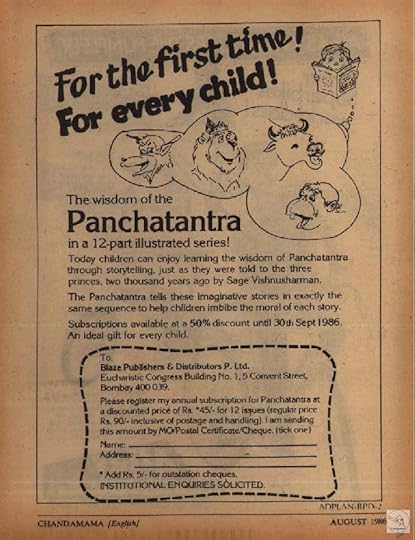
A couple of years back I had suffered mitrabheda– there was some misunderstanding with a friend and we parted ways. It was somewhat compensated by the mitralabha or the gain of friends that happened due to the flurry of online activities during the lockdown last year. What added to the Corona woes were skirmishes with our neighboring countries who tried to catch us off guard. It was like the fights between the thoughtful crows and the devilish owls (kakaullukiyam). Due to lockdown many people suffered from potential financial loss and also labdhapranasha i.e. the loss of what they had already gained. As mankind was facing a new threat , many causalities last year due to Covid Pandemic could be due to aprikshitakaraka – the result of unexamined actions.
The fans of Panchatantra must have already guessed that the italicized words are the names of five books of Panchatantra compiled by Vishnu Sharma (1200 BC to 300 CE). Even though majority of the contents of each book follow the theme as indicated by the name of the section, there are a number of stories in each book which are not related to the theme. Panchatantra has been widely translated to different languages and made available all over the world.
But coming to its global influence over children’s literature, as usual there is a controversy. One school is of the opinion that Panchatantra influenced the animal fables and children’s literature of the world. The other group of scholars argue that though there are similarities in animal fables of different regions, these might have developed independently. But, on one thing the scholars agree – Panchatantra is the first composed fictional work for children.
So during my childhood, Panchatantra was a staple diet for the mind. It was delivered via the most popular children’s magazine of those days – Chandamama. It is disheartening to note that this magazine that provided so many Indian tales to Indian Children in Hindi, English, Sanskrit and their mother tongues has been discontinued. At the same time it was a pleasant surprise to come across their website where they have put many old issues in different languages. I am not sure if any Indian magazine is published these days for children with exclusive desi content.
There is also controversy as to whether the Panchatantra stories are ethical or not. Well it is rare that there will be no disagreement among a bunch of scholars who come from different backgrounds. First of all why do the scholars from different parts of the globe debate whether the Panchatantra stories are ethical. Ethical standards vary from place to place. Panchatantra stories are basically wisdom stories. Of course wisdom teaches us to be clever when needed but not at the cost of disloyalty to friends or closed ones or indulge in illegal acts.
Wisdom teaches us to be careful when people come and talk negatively about our friends. They may be planting seeds for discord which may lead to mitrabheda. Our ancient seers included ‘friends’ while defining Artha. Friends are assets. Mitralabha is the real gain which may even compensate for the labdhapranasha due to out stupidities. The loss of what had been previously gained is mostly due to greed or stupidity. Whenever there is conflict it is wise to use force only as the last option. This perfectly fits in with the ethos of Indian culture. Lord Krishna forgave the misadventures of Shisupala ninety nine times. Mahabharat war happened after all options at peace had been exhausted. The wise crows of kakullukiyam are better examples than the devilish and shortsighted owls. Finally, many disasters can be avoided by being aware of the consequences of aparikshitakaraka, by rushing into action without due deliberation to examine the issue from various angles.
I am repeating the names of original Sanskrit names of sections to drive home the point that Indians will be better able to connect better. For example mitrabheda is translated into English as ‘loss of friends’. But the word actually indicates that there has been a fissure among friends being influenced by a devilish third party. Bheda means entry through a strong structure. Same way some translated versions have funny titles for section-2 like achievement of friends which may also mean ‘what the friends achieved’ in stead of ‘making new friends’.
Hitopadesha is another work of fables written in Sanskrit. Its content and themes have lots of similarity with Panchatantra. Another fable series which is very very large is Kathasaritsagara. Coincidentally, Kathasaritsagara includes the whole of Panchatantra in one of its books. Its eighteen books indicate that the compiler Somadeva wanted to include all the available legends up to that period and give it an epic proportion to match Mahabharata that too has eighteen books.
******************************
This is the alphabet P post of Blogchatter AtoZ Challenge 2021. My theme this year is ‘The beauty of Sanskrit and Sanskrit texts’, where in I explore selected compositions in Sanskrit and also some unique aspects of Sanskrit language and texts. Join with me in my journey to understand India’s spiritual and intellectual heritage. All the posts of AtoZ Challenge 2021 can be accessed here.
April 17, 2021
ones and zeroes

In fourteenth century AD a Keralite mathematician and astronomer wrote about the infinite series. He is known as the Madhava of Sangamagrama to avoid confusion with other Madhavacharyas. In seventeenth century Issac Newton and Wilhelm Leibnitz also discovered the series. However for a long time Newton and Leibnitz continued to take credit for the discovery. It is heartening to know that Madhava’s contribution now has been recognised and the series is now known as Madhava series or Madhava – Leibnitz series.
But many other mathematical discoveries of ancient India are yet to be recognised. As I have mentioned in my chapter on Jyotisha, all the great astronomers of India have been great mathematicians as well. However, it seems experts of fields like music too contributed to mathematics.
Chhanda Shastra is a treatise on composition of verses written by Pingala Muni. Chhanda means rhythm. In terms of syllables Pingala Muni talks of two types – light (laghu) and heavy (Guru). For example take the following line from Gita Govindam :
yahi madhava yahi keshava mavada kaitabha vadamTaking the bold letter as Guru, the combination is Laghu-Guru, Laghu-Guru, Laghu-Guru, Laghu-Guru, Laghu-Guru, Laghu-Guru. This is a simple but very popular style of composition. The poet can work out various types of such combinations and depending upon the combinations various names are assigned. What is more, Pingala gives a formula for the possible number of such combinations. He says that a line with ‘n’ syllables can be written in 2n possible ways. If we take a three syllable line, it can be written in eight (23) ways: LLL, LLG, LGL, GLL, LGG, GGL, GLG, GGG.
If you replace guru with one and laghu with zero, that is exactly the binary system for you. While Pingala’s Chhanda Shastra was written not later than the second century BC, Leibnitz was born in seventeenth century. However, Leibnitz continues to take credit as being the first person to have worked out the binary system.
I feel that two concepts of modern day computer programming which were extensively used by Panini in his treatise on Grammar known as Astadhyayi are algorithm and data compression. Sanskrit grammar seems very difficult to master until you understand its algorithm. Once you understand the algorithm of Sanskrit language it will be easy for you to master its seemingly complicated structure of grammar. This thoughtful algorithm also empowers the language to construct an infinite number of meaningful words out of finite number of root words using prefix, suffix and sandhi.
In my earlier post ‘The Language of Gods’ I have already discussed about the Maaheswara Sutra in connection with the origin of the alphabets. All the alphabets are put into fourteen groups. Panini uses a short hand method or a code to recall all the alphabets of a particular group. This code or shorthand method, or coding method to avoid lengthy repetitioning is known as pratyahara. Today’s data compression techniques are based on similar principles. Of course here I do not want to claim that the person who invented data compression was inspired by Panini’s Astadhyayi. All I want to convey is that many of the so called modern concepts and methods were in extensive use in ancient India.
It is also claimed that the study of Sanskrit phonetics has been helpful in developing speech recognition software. I will discuss in detail about this aspect of Sanskrit language in a subsequent post. There was also extensive use of the features of the branch of a mathematics known as combinatorics. The numbers inside Sri Yantra and other Yantras belong to intricate number series.
Another misplaced credit is in connection with the intricate number series Fibonacci. While the Italian mathematician Fibonacci himself makes references to Indian mathematicians for the inspiration of his work and there is proof of the use of ‘Fibonacci series’ in ancient Indian texts, Mr. Fibonacci continues to hog the limelight as the inventor of the series.
Hope, as awareness increases and more research is done, due credit will come to the original inventors. As in the case of Madhava of Sangamagrama some corrections have been done. More should follow.
**********************************
This is the alphabet O post of Blogchatter AtoZ Challenge 2021. My theme this year is ‘The beauty of Sanskrit and Sanskrit texts’, where in I explore selected compositions in Sanskrit and also some unique aspects of Sanskrit language and texts. Join with me in my journey to understand India’s spiritual and intellectual heritage. All the posts of AtoZ Challenge 2021 can be accessed here.
Narada Bhakti Sutras
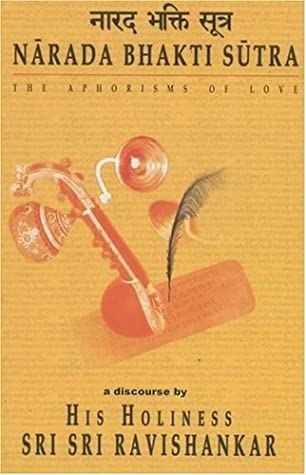
I will take this opportunity to talk about the Bhakti genre of literature as well as the sutra form of Indic texts. Bhakti literature flourished in the middle ages. The poet saints of that era wrote odes to particular form of deities. Those who were devotees of Lord Krishna wrote songs in praise of lord Krishna or expressing their emotions considering him a child, or the master or the ultimate lover. Same way devi devotees wrote songs in praise of the goddess and so on.
But the texts that analyzed various aspects of bhakti were not many. Bhakti topic was discussed here and there in various texts like Rama Charita Manasa, Bhagavad Gita, Udhava Gita, Devi Gita etc. But there are two works that exclusively probe various aspects of Bhakti. One is Narada Bhakti Sutras and the other is Shandilya Bhakti Sutras.
A sutra is a statement. A cryptic statement and these are made as short as possible. Like a telegraphic message. No unnecessary words. Sutra literally means thread. A number of threads can be joined together, held together and carried together with ease. So can be a series of sutras. The logical flow and the interconnectedness further makes it easy to remember all the sutras.
Some scholars say that in ancient times, vedas and many other works were transmitted in oral tradition from masters to disciples for generations and these were not recorded for a long time. The the vedas along with their embedded texts like the Upanishads etc. are known as shrutis (the heard). This goes in favour of this group of scholars. If that was the case, the verse form with rules for strict meter format like those of the vedas and the sutra form must have been useful in remembering. More so in the case of the sutra form of texts.
But some scholars feel that there must have been some form of writing even though we have not been able to discover it. According to them shrutis are divine revelations. They were originally heard by the Rishis during deep mediation. By the way, vedas are called apurusheya, which means – not of human origin.
In the latter case also even if writing existed, it was not easy those days. Narada Bhakti Sutras has 84 sutras. All the sutras can be written in normal text size on both sides of an A4 paper. However, if one writes on palm leaves these may run to 20 pages. And there was no system of duplicating. If another person wanted the text it had to be written again following the same tedious process. In this context the sutra form must have come as a great relief.
I have already mentioned a Sutra text in this series. But Kamasutra is not a pure sutra text. It is a combination of sutras and verses. Vedas also contain sutra type expositions along with verses. Apart from the two Bhakti sutras, Shiva Sutras, Patanjali Yoga Sutras, Brahma Sutras, Nyaya Sutras, Vaiseshika Sutras, and Mimamsa Sutras are some prominent texts in this format.
But the demerit of sutra format is that because of their cryptic nature it is not easy to understand without the help of an expert. Luckily I had the opportunity of hearing the entire series of discourse on Narada Bhakti Sutras from Gurudev Sri Sri Ravi Shankar. When it comes to connecting with the audience with his simple explanations of difficult concepts Gurudev is unrivalled.
Since Narada makes references to Shandilya, it is possible that Narada Bhakti Sutras was a later composition. Narada Bhakti sutras is attributed to Narada Muni who has the status of a Brahmarshi – one who has realized the Brahman or for whom Brahmavidya has been an experiential reality. The knower of Brahman is the ultimate jnani. Coincidentally, Shandilya Muni too is a knower of Brahman. Two prominent masters of jnana yoga not only propound the principles of Bhakti but also emphasize that Bhakti is essential for everyone.
Narada defines bhakti as parama premarupa – it is the ultimate love. Amrita swarupa cha – also the love that is eternal. ‘After getting into the state of such a love, nothing remains to be attained’, he further says.
Narada is attributed to be the author of these sutras. But he himself says that these principles come from lord Shiva and he is just the speaker (narada prokta sivanusasanam). We can find such humble admissions in many ancient texts. The authors never claimed it was their work. They said it came from God. It was a way of saying it came from a higher consciousness.
Same is true of any creative work. After it has happened we cannot exactly say how it happened or where it came from. We cannot predict or program a creative work. If we can program it, it is no more a creative work. In ancient Greece, the artists and poets credited their inspiration to the Muse group of Gods.
***************************
This is the alphabet N post of Blogchatter AtoZ Challenge 2021. My theme this year is ‘The beauty of Sanskrit and Sanskrit texts’, where in I explore selected compositions in Sanskrit and also some unique aspects of Sanskrit language and texts. Join with me in my journey to understand India’s spiritual and intellectual heritage. All the posts of AtoZ Challenge 2021 can be accessed here.
April 15, 2021
Mricchakatikam – the cart of clay
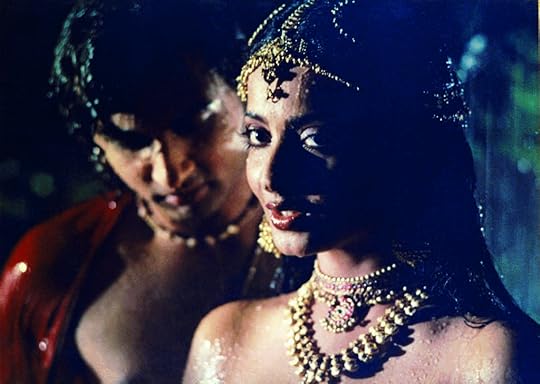
Mricchakatikam, the Sanskrit play of the fifth century AD written by Sudraka, has all the element of a Bollywood blockbuster. It is unfortunate that the movies made on this paly in Hindi and other languages did not become so. Hindi movie Utsav was made on this play and it starred Rekha, Sekhar Suman, and Amzad Khan among others.
Mricchakatikam is a fusion (sandhi) of two words mrit and shakatikam meaning clay and cart respectively. This is my representative text for Sanskrit Drama which became a strong genre during post vedic period especially after Bharatmuni wrote Natyashastra. Out of thousands of Sanskrit dramas written, the works of Asvaghosha, Kalidasa, Bhasha, Bhavabhuti, Harsha, Sudraka and Vishakhadatta and a few others have somehow survived and have been rediscovered.
Mricchakatikam is an odd choice to represent Sanskrit Drama because it is not written by Kalidasa or Bhasa who are the most famous Sanskrit dramatists. Secondly, Mricchakatikam does not follow the norm. Most of the Sanskrit plays of classical period are based on specific events of Mahabharata or Ramayana and the main characters are from royal families. To the contrary Mricchakatikam’s main characters are ordinary citizens and it is based on the social and political life of those days.
So the main reason I choose to write about this book is that it brings back pleasant classroom memories of my High School days. I have briefly mentioned about it in one of my earlier posts. Our Odia teacher Shri Surendra Das was a writer and a prolific story teller. He was also our stand by Sanskrit teacher. During the initial months of an academic year he narrated the entire story of Mricchakatikam in an episodic manner. I still remember after entering the class how he used to take out his spectacles and say, “So where were we last time? Yes, Vasantasena … “. We used to wait for his next class with the same eagerness as of those who waited for the next episode of Ramayana on Doordarshan in the eighties.
From Mrichhakatikam we come to know that corruption and nepotism is nothing new in India. The setting for the play is the city of Ujjayini. Ironically the king’s name is palaka which literally means the one who looks after well. His brother in law seems to be the de-facto power center and he roams around the city with a sense of entitlement similar to the ones enjoyed by the relatives of VIPs in our time. He lusts after the most famous courtesan Vasantasena but is frustrated again and again. Vasantasena is quite wealthy and her eyes are set on an intelligent and popular citizen Charudatta who is not that well off financially though he belongs to a Brahmin family. Charudatta in spite of being married falls for Vasantasena.
What about the clay cart? Well I think clay cart is a symbol for Sudraka to tell that the story is about common men. Those days the children of the nobility had the luxury of carts made of gold. But a clay cart is part of the story and plays a very crucial role in creating the climax.
After visiting a rich friend’s house Charudatta’s son is no more interested in his own clay cart. Taking compassion Vasantasena fills the cart with her own jewelry. While Vasantasena and Charudatta are planning to meet in a park Samstahnaka, the king’s spoilt brother in law, finds an opportunity to take revenge. He strangles Vasantasena and taking her for dead dumps the body behind a bush. Further, he accuses Charudatta as the murderer and produced the jewelry inside the clay cart as the motive of the murder. The king holds Charudatta guilty and sentences him to death.
However, Vasantsena who was not actually dead recovers. A rebel who was trying to overthrow the corrupt king has succeeded. Well, now you can join the dots using ‘all is well that ends well formula’ of a Bollywood blockbuster.
When it comes to breaking the norm another play that comes to mind is Bhasha’s Urubhanga. Unlike Mricchakatika, it is based on incidents from an epic. Urubhanga means breaking of the thigh. In Mahabharata war Bhima breaks the thigh of Duryadhona as a mark of revenge for Duryodhan’s previous misdeeds against Draupadi. In the play, Bhasha explores the mindset of Duryodhana and is rather sympathetic to him. It was not the norm to put a negative character as the protagonist or create sympathy for him.
It seems, interpretation of characters from Ramayana or Mahabharata from a different perspective is nothing new. We can find plenty of such works in Sanskrit and other regional languages beginning from the classical period. But modern writers of ‘retelling’ genre often cross the line by altering the major or ‘the turning point’ events and changing the distinctive qualities of a character.
***************************
This is the alphabet M post of Blogchatter AtoZ Challenge 2021. My theme this year is ‘The beauty of Sanskrit and Sanskrit texts’, where in I explore selected compositions in Sanskrit and also some unique aspects of Sanskrit language and texts. Join with me in my journey to understand India’s spiritual and intellectual heritage. All the posts of AtoZ Challenge 2021 can be accessed here.
April 14, 2021
The Language of Gods
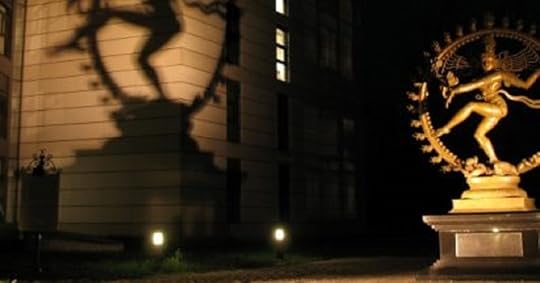 नृत्तावसाने नटराजराजो ननाद ढक्कां नवपञ्चवारम्।उद्धर्तुकामः सनकादिसिद्धान् एतद्विमर्शे शिवसूत्रजालम् ॥In response to the desire of Sanaka and other perfected ones, after the dance had subsided the emperor of Natas played his damaru fourteen times and henceforth originated the strings of Shivasutras.
 So the story goes that Sanat Kumara and other perfected beings (Siddhas) went to Lord Shiva to know the essence of language. Shiva went into a trance with his Tandava. At the end he struck his damaru fourteen times. Thus came out the sounds that became the founding blocks of Sanskrit words. That is how the great Sanskrit grammarian Panini describes the origin of Sanskrit alphabets (varnamala).
Recited together, these strings of sounds are known as Shivasutra or Maaheshwara Sutra. Maaheswara Sutra is more frequently used to distinguish this sutra of Panini from the Shivasutra treatise of Kashmiri Shaivism.
(1) अइउण् / a i u n
(2) ऋऌक् /r l k
(3) एओङ् /e o ng
(4) ऐऔच् / ai ou- ch
(5) हयवरट् / ha ya va ra t
(6) लण् / la n
(7) ञमङणनम् / yan ma nga an na m
(8) झभञ् / jha bha yan
(9) घढधष् / gha dha dha sh
(10) जबगडदश् / ja ba ga da da sh
(11) खफछठथचटतव् / kha pha chha tha tha cha ta ta v
(12) कपय् / Ka pa ya
(13) शषसर् Sha sha Sa r
(14) हल् /Ha la
Apart from its divine origin there are other reasons why Sanskrit is Devabhasha or the language of Gods. Deva does not mean only celestial beings. Human beings also who refined their consciousness or became enlightened became devas. So it was the language of those enlightened beings. They conversed in this language. They infused this language with the essence of spirituality.
Vedic slokas are used in performance of religious rituals. Stutis are poetic compositions in praise of particular forms of divinity. Vedic stanzas and Sanskrit Stutis are composed in such a manner that chanting them properly or listening to properly chanted slokas activates specific energy centres in the body. These energy centres are known as chakras and activation of these chakras leads to awakening of higher consciousness.
The use of selected words to produce specific sounds following the rules of poetic composition (Chhanda) give the chanter and the listener an unparalleled meditative experience even though he may not understand the meanings of the words. I can say this from my personal experiences of listening to the chants of vedic pundits who have mastered the art of reciting the vedas.
That is the reason why I am never in favour of using local languages in Hindu religious rituals even though some are trying to do it, some out of ignorance and some out of mischief. Bhajan and Kirtan in local language is not an issue. But the basic rituals where Sanskrit slokas are prescribed should never be replaced if we wish to maintain the sanctity of the ritual.
In Odia language there are four types of words – tatsama, tadbhava, deshaja, and baidesika. I think most other Indian languages have a similar structure. Sanskrit words used without modification are tatsama. Words of Sanskrit origin used in a modified form are Tadbhava. Deshaja words are native to that region and these words evolved without any influence of Sanskrit. Baideshika words are borrowed from languages other than Sanskrit.
Any high quality literary work or literary work about higher philosophical or scientific concepts in any regional language usually have large numbers of tatsama or tadbhava words. That is how even if you are not familiar with that language, if you have a Sanskrit background you can easily understand such texts on hearing.
When reading a medical text or any scientific work on sex in your regional language, just try to replace the tatsama words with the deshaja words and see how vulgar it sounds. Sanskrit has a kind of sophistication that is not found in any other language. Sanskrit also means perfected, cultured or refined. It is very difficult to be vulgar in Sanskrit. When spoken in Sanskrit even ordinary sentences become respectful, powerful and full of energy. It is said that Devas praise or respect one another while it is in the inherent nature of demons to pull down each other.
The script (lipi) in which Sanskrit came to be written starting from the classical period is known as Devanagari. Of course nagari literally means related to the city. But in those days there was a script known as nagari and it is possible that nagari was a generic name for any script. That makes Devanagari the script of Gods.
********************************
This is the alphabet L post of Blogchatter AtoZ Challenge 2021. My theme this year is ‘The beauty of Sanskrit and Sanskrit texts’, where in I explore selected compositions in Sanskrit and also some unique aspects of Sanskrit language and texts. Join with me in my journey to understand India’s spiritual and intellectual heritage. All the posts of AtoZ Challenge 2021 can be accessed here.
April 13, 2021
Kamasutra of Sage Vatsyayana
The difficulty of writing a post about Kamasutra is that there is so much free material already floating in cyberspace. With about 12000 verses Charaka Samhita may have 12 times more content than Kamasutra. But the wikipedia page of Kamasutra is definitely much more elaborate than Charaka Samhita.
So sex being still a taboo, we would not talk about it openly. Or, write about it without using a pseudonym. But when it comes to reading or writing anonymously, it is THE most popular subject after all. The irony is that still people may ask, “Sex being a basic instinct, do we really need to study about it?”
This question is nothing new. In Vatsyayana’s time (400 BC to 300 AD ?) too the purists must have tried to dissuade him from writing such a treatise by asking such a question. But the sage insists that human beings do need to study it to acquire knowledge about methods of proper application since unlike animals their actions are accompanied by thought and sex is not a seasonal activity for human beings. At the same time Vatsyayana also cautions the materialists who believed only in the principles of pleasure and did not care for dharma.
One unique aspect one finds in most of these ancient texts that explore a field of study whether it is on medicine, music, yoga or kama is the attempt to define the concepts precisely. Having posited the role of Kama in the context of other goals of human life i.e. Dharma, Artha and Moksha, Sage Vatsyayana defines them.
Dharma is defined as doing or abstaining from doing those things as per the injections of the scriptures even though they do not have immediate visible effect. Vatsyayana has given the examples of doing yajna and abstaining from eating meat. But I would like to give an example from a modern context. When we pay money at the shop the effect is visible in the form of goods or service we receive. But when we give money for charity the immediate benefit to us is not tangible. Whether there is injunction from Shastra or not every one has to pay for the items bought. But charity is done because of the injunction of Shastras. By the way atheists too have their own code of ethics.
Today artha has become synonymous with money. But Vatsyayana not only includes knowledge & skill, land, gold, domestic animals, grains, vehicles and friends but also their protection and growth under the definition of artha. (विद्याभूमिहिरण्यपशुधान्यभाण्डोपस्करमित्रादीनामर्जनमर्जितस्य विवर्धनमर्थः). So the broader definition of artha includes all resource both internal and external, tangible and intangible.
Vatsyayana talks of two types of kama- the ordinary kama and the special kama.
Kama is a mental phenomenon caused by the favourable tendency arising out of the contact of five sense organs (corresponding to hearing, feeling, seeing, tasting and smelling) with their respective sense objects. (श्रोत्रत्वक्चक्सुर्जिह्वाघ्राणानामात्मसंयुक्तेन मनसाधिष्ठितानां स्वेषु स्वेषु विषयेष्वानुकूल्यतः प्रवृत्तिः कामः)Predominantly it is the feeling of pleasure concerned with the sense of touch and whose result can be clearly experienced. (स्पर्शविशेषविषयात्त्वस्याभिमानिकसुखानुविद्धा फलवत्यर्थप्रतीतिः प्राधान्यात्कामः)If you are given food which you are not inclined to eat or are made to hear music which you do not like, you will not get any pleasure and that is not kama. All kinds of pleasures are kama. But the special type of kama is concerned with the special kind of sense of touch.
That is is why even though the central theme of kamasutra is about sexual pleasure, it lays emphasis on the sixty four types of knowledge and skills (kalas) which are helpful not only in acquiring the means of pleasure but also in experiencing them. In fact sexual pleasures and other pleasures are seen as complementary. So it encourages young men and women to be adept in as many of the sixty four kalas as possible before marriage. These sixty fours kalas included all kinds of vocational, avocational and artistic activities known to mankind then.
The four fold goals of human life – Dharma, Artha, Kama and Moksha – which are known as the purusharthas are put in perspective in terms of human life. In Kamasutra as in many other texts normal human life span is taken as one hundred years. Some say this is not to be taken literally as ‘one hundred’ is just a symbol of fullness. As a child one should be devoted to studies and acquiring of various skills. In youth one should be dedicated to Artha and Kama. In the last stage one should pursue Dharma and Moksha. In case of conflict of priorities as to Dharma, Artha and Kama the former should always be given precedence over the later. Vatsyayana puts a disclaimer by saying that this system of stages of life corresponding with particular purusharthas is not rigid and allowed flexibility depending upon individual aspirations.
After addressing the whys in the introductory part, the books delves into the hows. Compatibility of partners is discussed based on various permutations and combinations considering physical looks and stamina of both males and females. Then of course there are guidelines about various types of embraces and intercourses.
Subsequent chapters discuss issues of how to select a bride, the art of seduction, types of aphrodisiacs and dos and don’ts for various persons connected with matchmaking and mediating. The sage considers extramarital affairs appropriate only in exceptional circumstances. From Kamasutra it seems that in matters of choosing one’s mate that period was more liberal compared to the present India where forced arranged marriages are still the norm.
From the book one can get a lot of clues as to the social life of ancient India. When we compare the practices of ancient India with that of today we may find fault with many of the social customs and practices of those days. But the social life of a period of any civilization can be compared only with a civilization of that period. Seen from that point of view the period of Vatsyayana seems far liberal and enlightened compared to the civilization of China or Rome, or Greece. The Chinese inflicted many cruel practices on women like making them wear iron shoes so that their feet remained small. Moreover, women in ancient China were considered lacking a soul so that killing them or trading in them could be legal and without guilt. Greco- Roman civilization engaged slaves and it was upto the master as to how to use or abuse them. Their pastime consisted of engaging gladiators who were mostly slaves for fighting unto death. In ancient Indian the violent games never went beyond cockfights. As Confucianism started to dominate ancient China it became increasingly moral based and rigid. But the Indian liberal attitude towards sex continued well upto the nineteenth century.
When we study any kind of literature like Kamasutra we should be careful to find out elements which are timeless and elements which were proper only in the context of that particular period of time. The former should be our takeaway. I wish this standard could be applied to the religious texts also, be it of any religion. What a better and open society we would be having today.
When the British came across texts like Kamasutra they were shocked. But some were surprised that a country that they thought was pagan and primitive could be so liberal in discussing about sexuality. Those were the days of strict Victorian morals in England. Authors were prosecuted for including erotic content in their works. So Sir Richard Burton, the first translator of the book had to devise ways to publish it without getting into legal tangle. Everywhere in the text love was used in stead of the more appropriate word. Even the title of the translated book was – An Aphorism of Love. So, if yo come across Richard Burton’s 1883 translation of Kamasutra please keep this in mind. It is not a faithful translation for a reason.
Coming to present times, even though no one can be prosecuted for reading or writing a book like Kamasutra, purists insist Kamasutra is not a treatise on sex. Surprisingly, many intellectuals, who are usually at logger heads with the purists when it comes to interpretation of Indic texts agree on this. Out of the seven parts only one part contains how to do it, they say. So how can it be called a treatise on sex?
So to save myself from the wrath of the purists, I have also discussed about all the salient features of the text except the one on ‘how to do it’. Let me close this post by saying something whose context can be found on the opening para. Even though I tried it to keep is short, this has become the lengthiest post among all the posts published so far in the series.
**************************************************************************
Other ancient texts of this genre are : Ananga Ranga / Panchasayaka / Ratirahasya / Ratimanjari / Rasamanjari / Smara Pradipa
This is the alphabet K post of Blogchatter AtoZ Challenge 2021. My theme this year is ‘The beauty of Sanskrit and Sanskrit texts’, where in I explore selected compositions in Sanskrit and also some unique aspects of Sanskrit language and texts. Join with me in my journey to understand India’s spiritual and intellectual heritage. All the posts of AtoZ Challenge 2021 can be accessed here.
April 11, 2021
Jyotisha – the lord of light
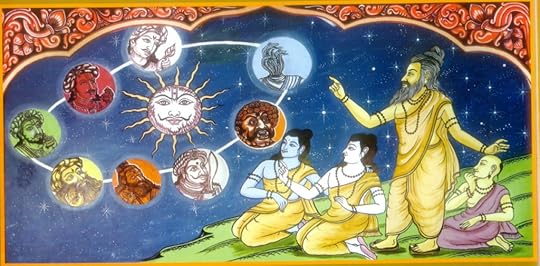
For the earth, the stars and the planets are the natural and large scale sources of light. The amount of natural lights we get impacts all the living beings on earth in terms of health and mood. On closer examination we find that some activities are best suited for morning, some for midday, some for evening and some for night. So there is a time for everything. Time and amount of natural light are connected and amount of natural light is connected with stars and planets.
When it started Jyotisha Shastra concerned itself with finding out auspicious time for agricultural activities and vedic rituals. Later on it branched out to find out how each individual got influenced by the movement of various stars and planets in relation to their position at the time of the birth of the individual. Today in popular culture it is the later part that has come to be associated with Jyotisha. Like yoga it has become a commercial enterprise so much so that news channels that fight against superstition in the evening have regular programs on Jyotisha in the morning to ramp up revenue and TRP.
For Jyotisha, some English commentators use the word ‘astronomy’, while some use ‘astrology’ depending upon whether they want to give it a scientific connotation or an esoteric twist. I feel so many things come under Jyotisha that either astronomy or astrology does not represent Jyotisha properly and it is time the word Jyotisha entered English dictionary. Jyotisha Shastra includes the study of astral bodies, study of individual and group destiny based on their positions, preparation of calendars, and finding out auspicious time for various worldly and religious activities.
Vedic society was basically an agrarian society. Crops being of seasonal in nature, it was important for the common man to know before hand the onset of seasons. As we can see even today most of our festivals are related with agriculture directly or indirectly. It was important that accurate predictions were done for onset of seasons for not only religious rituals but also for agricultural activities.
Vedanga Jyotisha compiled by Sage Lagadha is said to be the first text of Jyotisha Shastra. It dealt with finding auspicious times for various vedic rituals keeping in view the positions of stars and planets. This was a rudimentary work and scholars still find it difficult to decipher many stanzas of this work. Later on Jyotisha Shastra was refined. It is interesting to note that many prominent Jyotisha Shastris like Aryabhatta, Bhasakra, Brahmagupta, Varahamihira and others were also top mathematicians.
Expertise in mathematics helped one in mastering Jyotisha. Many of them pioneered not only in inventing mathematical formulae but also in ingenious ways of using simple instruments to measure the distance of heavenly bodies and their relative movements. Pathani Samanta, born in Odisha in 19th century used pieces of bamboo and wood to measure the shadow and then extrapolate the data using complex mathematical formulae to find out the distance of the sun from earth. His discoveries in the field of astronomy was recognised by the scientific community of the west and his almanac is the one widely used in Odisha.
In Indian there must have been a large number of regional experts of Jyotisha. That is how different almanacs or Hindu calendars are followed in different regions. The zodiac systems followed in India is also different from the one followed in the west. That is how your rashi determined by an Indian astrologer will be different from the one determined by his western counterpart.
Coming to that part of Jyotisha concerned with auspicious times and sacred places, even though there are controversies as to its scientific aspects, its psychological aspects have some significance. When time, place and activities are considered as sacred mind has a tendency to be more aware and respectful.
A large part of inspiration for the achievements of ancient scholars in the field of mathematics must go to Jyotisha Sashtra. In fact many of the Jyotisha Shastras accompanied notes about the mathematical formula used there in. There is another field, an unlikely field that gave rise to amazing achievements in the field of mathematics. That field is music. Maybe, in another post I will explore details about it.
When I say ‘Lord of Light’ something may tick in the minds of the GOT fans. Of course the disciples of the ‘Lord of Light’ of ‘Game of Thrones’ fame mostly use fire and heat and never talk about stars and planets. But, like the modern day astrologers, they are soothsayer. Further, like today’s celebrity astrologers having their own fan following in the form of secular politicians and liberal celebrities, the disciples of the ‘Lord of Light’ have their own royal fan following. Hope now you understand Ekta Kapoor’s obsession with alphabet K.
By the way, predictions are welcome for my next post which will be on alphabet K.
******************************************
This is the alphabet J post of Blogchatter AtoZ Challenge 2021. My theme this year is ‘The beauty of Sanskrit and Sanskrit texts’, where in I explore selected compositions in Sanskrit and also some unique aspects of Sanskrit language and texts. Join with me in my journey to understand India’s spiritual and intellectual heritage. All the posts of AtoZ Challenge 2021 can be accessed here.
April 10, 2021
Interpretation of Indic texts
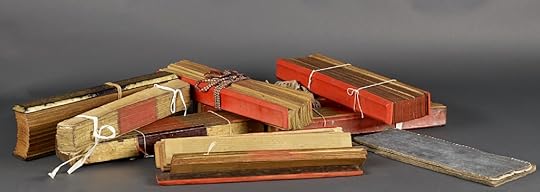
Knowing Sanskrit definitely helps in understanding the essence of Indic Texts. Even partial knowledge of Sanskrit may help to at least have a sense as to whether the commentator has interpreted correctly. Western scholars who are interested in Sanskrit texts usually learn Sanskrit. Unfortunately, this is not so with many Indian intellectuals even though it is easier for them. For an Indian it is not that much difficult to learn Sanskrit since majority of words of any recognised reginal language have Sanskrit roots. Even Tamil, that developed parallelly with Sanskrit, later on incorporated many Sanskrit words.
Institutional authors of any genre usually sideline the individual and independent authors when it comes to reaching the masses. When I say institutional authors I mean the authors belonging to a particular sect or organisation. For examples a large number of devotees belonging to ISCON have written commentaries about many Indian texts. They claim that their interpretation of the Bhagavad Gita is the only original interpretation. It goes without saying there are two hundred other commentators who also claim the same thing.
The reality is that when institutional authors write about such ancient texts their interpretation has to be twisted at many places to fit in with the basic ideology or premises of the sect. Unfortunately, compared to an individual and unbiased author, the institutions are rich in resources and have huge network of their own to market these books extensively.
I include the authors writing for big publishing houses in the category of institutional authors because the publishing houses also have their own ideological leanings and are rarely unbiased. Quite often they accept or reject a book not on the quality of writing but based on whether the author tows their ideological line.
Occasionally, by mistake the work of an honest institutional author goes past their censor board may be due to oversight. Thus was I able to once come across a good interpretation of a text which was sponsored by a missionary organization. When my computer crashed last time I lost a large number of my ebook collection and unfortunately I am not able to recall it now.
Indic texts, I mean Hindu texts in particular have a wide spectrum of institutional and individual interpreters. This spectrum is as wide as the texts themselves. There are more non-Hindu interpreters of the texts than the followers of the religion. Anybody can write anything about these scripture. So far no fatwa has been issued to any one for committing sacrilege by negatively twisting the meaning of sacred Hindu literature.
Of course there are vested interests who intentionally twist the interpretations to suit their agenda. But the texts do pose some inherent problem even for the genuine seeker of truth.
One problem is that words themselves undergo change in meaning over a period of time. Some of these texts were written thousands of years back. Some of these compositions belonged to esoteric schools where the composition was a code for remembering or a veneer while the actual wisdom was transmitted directly from ta Guru to the Disciple either verbally or by creating a situation where the disciple got the intended experience. The literal meaning of the Upanishad is to sit near. The transmission of knowledge or the spiritual experience happened from a guru to a disciple who lived in a very close circle. Thus, there are certain texts whose meaning can be grasped only being close to a skilled master and not by any amount of study or research.
It is surprising that sometimes scientists have been able to connect with some of the Upanishadic texts better than the scholars. Throughout my posts in this series I have brought out a few of these aspects. Those who are interested to know more on this can read the book ‘The Tao of Physics’ written by Fridjoff Capra. He brings out a balanced view without the hyperboles sometimes ebbing indulged in by the chauvinists.
If you are not a mystic or a scientist at least you should have the sprit of a poet to somewhat appreciate the beauty of the Upanishads. That is how scholars miss it. Scholars may be useful when it comes to the interpretation or analysis of non- mystic texts like Charaka Samhita or Kama Sutra. But when it comes to interpretation of Upanishads or other mystic literature they fail miserably. When I say scholars I include both western and eastern scholars. Sarvapalli Radhakrishnan’s commentaries on the Upanishads are devoid of all that is beautiful and profound about these mystic contemplations.
For grasping the meaning of the mystic texts the reader also has to be some kind of a meditator, or an honest spiritual practitioner, or a serious seeker of truth. Here let me make it clear that to be spiritual or to be a seeker of truth you need not be a hardcore religious ritualist or a staunch believer in a concept of God. If you are just a religious zealot or you want to take up reading texts like Upanishads just as an intellectual curiosity, you are most likely to miss their beauty.
Thus, caught in the melee of the ideological battles of the institutional interpreters and honest but novice attempts by nonpartisan intellectuals, the seeker of truth has a tough time finding out an authentic interpretation of the Indic texts.
***********************************
This is the alphabet I post of Blogchatter AtoZ Challenge 2021. My theme this year is ‘The beauty of Sanskrit and Sanskrit texts’, where in I explore selected compositions in Sanskrit and also some unique aspects of Sanskrit language and texts. Join with me in my journey to understand India’s spiritual and intellectual heritage. All the posts of AtoZ Challenge 2021 can be accessed here.