Durga Prasad Dash's Blog, page 3
June 13, 2022
Deva Snana Poornima – the ritual and its significance
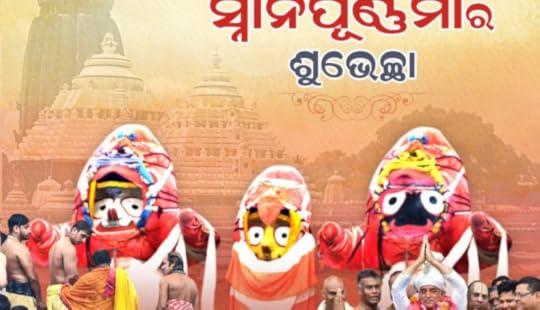
Deva Snana Poornima is an important ritual in the build up to the Annual Car festival of Lord Jagannath. For the un-initiate, on this day the idols of Sudarshana, Ma Subhadra, Lord Balabhadra and Lord Jagannatha are taken out to the ‘Altar of Bathing’ inside the temple premises. An elaborate bath is given which can be termed as the bath of the year. Of course bath is a part of the daily ritual of the four-fold lords. But on this day – the full moon day of the month of the Jyestha – it is a special bath.
According to the folk belief, after this elaborate bath the lords fall ill. So the doors of the temple are closed for the devotees. This period of Lord’s illness is know as anavasara. The Lords recover just in time before the car festival – that falls on the third of the Ashadha Shukla Paksha. This year as per English Calander the day fall on 30th June.
A day before the Car Festival day is celebrated as Nava Jauvana Darshana. On this day, from celestial illness the Lords emerge in their resplendent glory to be beheld with awe by the devotees.
During this period of illness, practically what happens is that elaborate treatment and renovation is done to the wooden idols to prepare them for the rigorous two way journey entailed during the car festival. So there is a practical angle to this ritual.
Of course the devotee does not need any analysis. The devotee does not need any explanation. It is said that the heart has its reasons which are unknown to the head. The devotee is just happy about the effect of such playfulness or leela the Lord has on her at the emotional level. It is not uncommon to sight tears of joy flooding the eyes of the devotees on sighting the Lord and remembering his leela.
If one is not a devotee such rituals may seem very strange. First of all, how can the Lord fall ill?
Bhakti is a form of love. In Narada Bhakti sutra it is said, Sa parama prema rupa – it is the ultimate in love. If there is an ultimate state of love that is bhakti. Of course in the ultimate stage one transcends the relative love and just becomes love. In the ultimate state of love form does not matter.
But to start with one must fall in love with a form- the manifestatatin of the formless ultimate in some sort of a form or symbol.
Once in love, it becomes a two way process. Somewhere it also becomes the responsibility of the Lord to deepen the love. So lord plays small tricks with the devotee. This involves being absent or missing from time to time. As they say nothing strengthens love than temporary absence. Lord Krishna used to paly many such small tricks during his childhood days. These have been lovingly described in the Bhagavata Purana.
These days, particularly among the Hindus, spiritual practices are exceptions rather than the rule. But there was a time, maybe just in my previous generation, spiritual practices were the rule. It was something done everyday. In that context it was a message that occasionally you need to take a break from spiritual practices too. But occasionally only. Of course in our tradition there are many occasions when one is not supposed to go to temple or do any puja activities at home. But these are exceptions only. Spiritual practices are supposed to be part of daily routine.
But the hardcore devotee does not need ‘absence’ to deepen his love. His love is already so deep. He is at the point of no return. For such devotees there is an alternate. They can go to the Alarnath temple at Brahmagiri, located at about twenty five kms from Puri. According to the legend, Chaitanya Mahaprabhu, during his stay in Puri, was directed to go to Alarnath so as not to miss his daily darshan of the Lord during this period. The boulder over which Sri Chaitanya used to do Sankirtan is still there.
The eastern concept of time is that it is cyclic. At macro level all the four yugas get repeated, all the avataars of the Lord get repeated. Leelas like Deva Snana Purnima are at micro level. Every year the Lords take a grand bath and fall ill. Every year they recover just before the grand celebration of Rath Jatra. The rituals of the Lord gets repeated every year like the change of seasons. The rituals get repeated without fail, which is to say they repeat ad infinitum giving life a sense of immortality.
Hearty greetings on the occasion of Deva Snana Poornima. Jai Jagannatha.
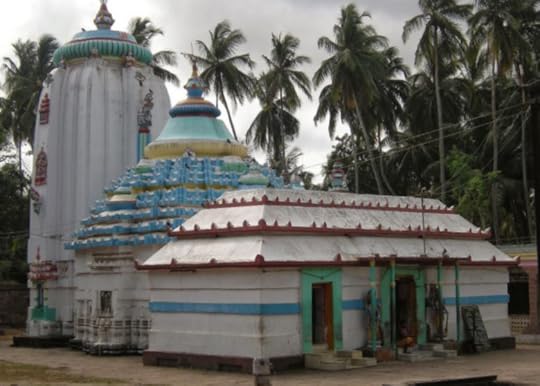 Alarnath Temple at Brahmagiri (photo taken by author)


June 9, 2022
know that food is brahman
So, what is Brahman? Maybe, thousands of slokas in Vedas and Darshanas have been dedicated to describe the nature of Brahman. Most of our principal Upanishads are primarily about Brahman. What I mean is – it is very difficult to define it in a few sentences. But some indications can be given.
Recently scientists were searching for something called the Higgs particle, popularly known as the god particle. What led them to search for the god particle?
Everyone who has passed class VI understands the concept of electron, proton and neutron. For sometime it was thought that atoms were the basic building blocks of the universe. Then they discovered electron, proton and neutron which were the building blocks of the atoms. So it was assumed that electrons, protons and the neutrons were the final frontier. Then we discovered the sub-atomic particles like quarks. Then scientists suspected there must be something beyond quarks, or there must be a field that makes it possible for the production of quarks. So, this proverbial god particle, as of now is the final frontier of the sub atomic particles. Let us understand thus from a layman’s perspective.
However, this proverbial god particle is not Brahman. For that matter scientists are not sure if Higgs particle is the final frontier. But, if you have understood the concept of god particle you have some what come nearer in developing the interest to understand Brahman.
But as if to simplify the nature of Brahman the ancient Rishi at one place in the Upanishads declared – Know that food is Brahman (Annam Brahmam iti byajanat). Taken out of context this statement may seem very strange.
What the ancient rishis are indicating is that whether you are a person only with worldly interests or, you are a person devoted only to spiritual pursuits, the importance of food cannot be ignored.
Suppose you have developed an intense desire to understand the nature of Brahman. Of course you know that it may take years of study and contemplation and sadhana. Now you are given this challenge. You will be locked up for one month. You are given the choice to take inside only one of the two packets which will be your companion for the entire period. Once chosen you cannot reverse it. One packet contains food for one month and another the best book on Brahman.
In Chhandogya Upanishad itself there is a story to drive home the point, even though the Chhandogya Upanishad is primarily about the the nature of Brahman. Sage Uddalaka taught his son Shwetaketu about the nature of Brahman over a period of time. During this period once he told his son not to eat anything for a period of fifteen days and sustain himself during this period only with water.
As directed, Shwetaketu did not eat for fifteen days. After that he went to his father and told, “What should I say?”
Uddalaka said, “O Radiant One, read the Vedas.”
Shwetaketu – “I cannot comprehend anything”
Uddalaka – “O Radiant One. Out of a great fire if only one piece of coal is left burning, it cannot effectively burn anything. Similarly only one sixteenth of your capacity of comprehension or expression is left out now. Hence you are not able to comprehend the Vedas. Now go and take food. You will understand what I say.”
Food is closely connected with our mind. In our culture a lot of importance has been given to the quality of food. Food has been divided into categories based on the effect they have on our mind, body , attitude and the overall quality of our consciousness. But first the quantity. We can think of quality only if we have enough quantity of sustainable food first of all.
Vedas contain a lot of hymns praying and wishing for plentiful of food and resources that help in production of food. Our national song Vande Mataram – describes our land to be sujala, sufala shasya shyamala – plentiful of water, fruits, anna, and greenery.
Other than the man made famine caused during the British rule and the subsequent after effects that caused shortage of food grain till perhaps end of the last century, we never had shortage of food grains. Historically, Bharat had been a land of plenty. In fact that was one of the reasons for its violent subjugation and later colonialization. But it is heartening to see that Bharat is once again becoming a land of plentiful food grains.
Of course the GDP crazy economist would advise to go for more industrial output even at the cost of agriculture. Even when it comes to agriculture, farmers may get tempted to go for more cash crops at the cost of anna giving crops. But, it is important that a country becomes self sufficient in production of food grains. Imagine what would have been the situation of India during the Pandemic if India were to depend upon other countries for food. The situation in some of our neighboring countries should serve as a warning to us as to what happens when we neglect anna giving agriculture at the cost of cash crops.
In ancient times the Rishis used to provide rules of conduct or dharma for both citizens and the rulers. The dharma for the rulers used to be more stringent. It is a different matter that many kings did not follow and turned tyrannic. A king was considered the worst ruler if anyone in his kingdom was forced to sleep with an empty stomach. Well, forms of governance have changed. But even in this age the same rule should be applicable as far as providing sustenance to the citizens is concerned. Some governments of the poorer states in Bharat have given priority to providing free or subsidized food at the cost of reduced budget towards development. Seen in this context this seems to be a step in right direction.
Now that we have the slight advantage of plenty, perhaps it is time to discuss about the qualities of food. Well that would be for another day.
January 9, 2022
Eat Pay Leave -the mandatory new year post
From the title of the post if you guessed that it is going to be a post consisting of lots of random thoughts, you will not be disappointed. I will try to make it as incoherent as possible. Or maybe there will be some coherence if I choose to restrict the post to a few of the happenings around the last week of 2021 and the first week of 2022.
In a tragic, frightening and boring 2021, at least something interesting happened towards the end of the 2021 and it spread to a bit of the beginning of 2022. I am talking from my personal point of view. It is unlikely that we will have a normal world any time soon.
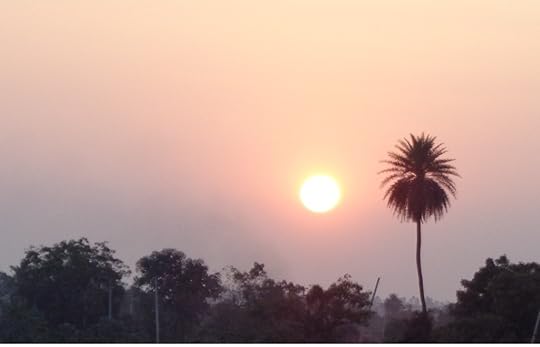
It was due for a long time and it finally happened. We made a road trip to Odisha from Kalaburagi (erstwhile Gulbarga). It started on a slightly misty morning of 25th Dec. Of course we were greeted with a beautiful sunrise just half an hour on to our journey.
There is a background story to why I have used the word ‘mandatory’ in my title. While returning from Odisha we had lunch at a well known restaurant near Annavaram. It cost us about 1000 bucks to have simple vegetarian basic stuff that would leave half of our stomach unfilled. I have to mention this because I spent over a week in a state where the bharpet quality breakfast for three us never exceeded Rs. 100.
Of course the cost in this well known restaurant is understandable. It was neat and clean with a great ambience. There was an overdressed girl with bridal makeup to great us and usher us to a table. It cut down our indecisiveness and saved us from the embarrassment that ensues before settling down on a table. Don’t you usually stand confused when you enter a restaurant and you find more than one table vacant?
Should I take this table or that one? When you choose one, your wife may have another in mind and the son may choose either to go with the choice of the mother or chart his own territory. Well, to save us from all those pains of choosing a table, this usherer was a blessing without any disguise. She guided us smoothly to our predestined table. She had the air of the one who already had a premonition that three tired souls would land up with confusing looks badly in need of consensus to choose a table. She had the confidence of one who knew your preferences and had already reserved a table based on your need and preferences. Considering all these, 1000 bucks for a basic veg meal that barely fills your stomach is nothing. And think of how much employment it generates during these pandemic times.
I remark to my wife much to her annoyance, “Aren’t these girls out of place here with so much costume, make up and jewellery. They should rather be part of a film set doting around the soon to be married heroine of a rich south Indian family?” Then I learn from Google Didi that the hotel is indeed owned by one south Indian film personality. (There is also a story around the word Google Didi. But not now)
Lunch over. Another over-costumed girl with bridal make up comes to take our bill. These days UPI payment in India is very common. You pay and show your mobile, the vendor looks at the confirmation and the matter ends. But not in this case. She wants me to continue showing my confirmation screen till she can meticulously note down all the details displayed on the mobile screen.
Even after that she has unfinished business with me. She asks me my phone number. I am taken aback. I find this an unusual request. Never ever in my history of UPI payment has this happened. Of course I remember some restaurants asking this number in the guise of getting feedback so that they can bombard with their unique offers from time to time. But I am not a localite and there is little chance of visiting this hotel in years to come.
I come , I pay, I leave. The matter should end there.
“Why do you need my phone number? I ask.
“You have to give your phone number, Sir. It is m-a-n-d-a-t-o-r-y“, she says with too much emphasis on the word mandatory and without bothering to answer my why.
At other times I would have engaged in fair amount of verbal duel just for the sake of some fun. Maybe, I would have asked her to quote the law or the rule or the government guideline that makes it mandatory to submit your phone number after eating and paying your bill. But I was in a hurry and without saying anything I got up and walked towards the exit. She followed me all the while complaining to another over-costumed girl, “Madam, sir is not giving the phone number.”
I walked out nevertheless. Luckily I saw no one following me beyond the exit door in search of elusive yet mandatory phone number.
Before my homecoming tour I scanned the news channels of Odisha to update myself about the latest happenings in my home state. What dominated the news channels was really of national, international and global importance. It was more important than climate change and global warming. To cut a long story short the matter is as follows.
A boy met a girl. They got married much against the wish of the boy’s father. Later the gutless boy was pressurized to denounce the girl. The boy filed for divorce barely months into the so called registered marriage. The girl came and sat on dharna in front of her in law’s house.
Now it was like Big Boss on the streets. A golden opportunity for all media houses to increase their TRP. All media houses of Odisha deputed their reporters 24X7 on the spot. I narrowly missed seeing it live on the spot as I visited one relative’s house on a nearby street from the ground zero.
This is really such a global event, it has even inspired a Hollywood movie. Well go and watch Don’t look up. I did it last week.
Hey, I am just joking. I just found a real life local parallel to the theme of the movie that highlights our obsession with the things that provide us with some instant masala at the cost of ignoring the clear and present danger facing our planet. Well go and watch Don’t look up. I strongly recommend it.
Overall, it was a satisfying homecoming tour. Revisited a lot places associated with my early childhood. Could meet with some of the few surviving relatives my father’s generation. Even we, the 1983 pass out High School batchmates had our first official and physical reunion. It was such thrilling and emotional experience to meet some of the batchmates after 39 years.
Only regret is – as I had a packed program in Odisha and the leave period was short, I could not do the journey upto Odisha in a leisurely manner and there by missed visiting many land mark places that came with minor diversions of the route.
I will share more details of my travel in my coming weeks as I have taken a new year resolution to renew my resolution of writing at least one post each month. My last blog post was written six months back and by this time you must have realized how reliable I am in keeping up with my resolutions.
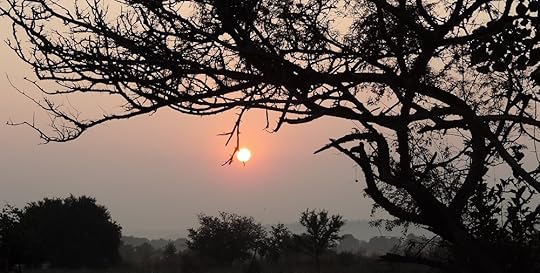
Our road trip ended with a beautiful sunset on the fourth day of the new year.
June 15, 2021
The Essence of Ancient India

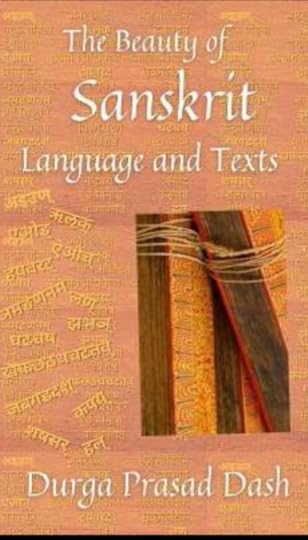
“The seers of ancient India had, in their experiments and efforts at spiritual training and the conquest of the body, perfected a discovery which in its importance to the future of human knowledge dwarfs the divinations of Newton and Galileo , even the discovery of the inductive and experimental method in Science was not more momentous... -Sri Aurobindo“
What is more fascinating than getting to know about your own glorious past? What is more interesting than analyzing how as a civilization have we been shaping up our own spiritual evolution? What is more beautiful than being able to get voluminous authentic , first hand researched material in a capsulated format ? Absolutely Nothing!
But you have everything in front of you with this E book titled The Beauty of Sanskrit language and texts that promises to satiate the hunger for knowledge and wisdom of someone who…
View original post 1,475 more words
June 7, 2021
Top 10 : What to Watch During the Lockdown (Pt-2)


The fans of Game of Throne were upset with the ending. But I think it is a logical conclusion to the story. I feel that the author had planned for this end all along. He also wanted to give a universal lesson. We have enough examples from history to prove that the progenies of royalty and great men degenerate over time. An ideal society should never go for hereditary rule by default.
We have this beautiful example from the life story of Lord Krishna. According to Bhagavata Mahapurana, all the descendants of Yadav clan including the progenies of Lord Krishna get killed at the end. Even though Lord Krishna knew what was to come, he did not do anything to prevent it. Rather it was likely that he himself facilitated it. There are many bhajans in which the devotees lovingly accuse Lord Krishna as the one who plotted the destruction of his own clan. The progenies had grown tyrannical and undisciplined. Did not we see in the beginning of GOT how the King’s son behaved?
There is a saying facts are stranger than fiction. Even though I have started the Top Ten with fiction, the bulk of what I watch are actually documentaries on various topics- travel, societies, food, science, art history, history or anything that caught the fancy of the moment. I found these two series on scientific topics so interesting, I almost went for binge watch. Both were first aired on National Geographic and are now available on Hotstar. One is ‘Cosmos : Possible Worlds‘ and the other is ‘One Strange Rock‘.
Whenever we think of the ‘Cosmos’ one personality that comes to mind is Carl Sagan. Some of my contemporaries may even remember ‘The Cosmo’ serial aired on Doordarshan long back. Actually the first of the series, ‘Cosmos – a Personal vVyage’ presented by Carl Sagan was first was aired on PBS in 1980. By the way ‘ Cosmos : Possible Worlds‘ is presented by astrophysicist Neil deGrasse Tyson who is an ardent admirer cum disciple of Carl Sagan.
What lies beyond our visible range has fascinated us as human beings since perhaps we became human beings. All ancient civilisations had some theories about it. Without knowing what were the contents of the heavenly bodies, our ancients speculated on their effect on us. Science has been slowly unravelling the secrets of what lie beyond the visible universe. There was a time when scientists took pride in thinking that ours is the only planet that harbours life. But now scientists are not so sure. They doubt that life is unique only to earth.
Even though we have landed on the moon and sent spacecraft to the edge of the solar system, our verifiable knowledge of the vast universe is elementary compared to what we are yet to know. But to take interest in the magnanimity of the universe and speculate on it can be a kind of therapeutic experience in itself. Compared to the universe our earth is not even a speck of dust. And compared to the cosmic life time of planets and stars measured in billions of years, what is so significant about the life span of a human being of few decades, however great or small, well-known or anonymous, rich or poor he may be. Isn’t it so humbling and liberating to think thus.
Watching such series not only improves our scientific knowledge but also makes us feel how ignorant we are, how un-unique we are. Can there be a better way of getting rid of our ego and small mindedness. The history of our universes makes us realise how vulnerable we are. At the same time we get a clear vision as to the reality of vasudhaiba kutumbakam – all the world is one family – not only from the perspective of human beings, but also from the perspective of all living beings that have inhabited this planet for millions of years.
Same way, the series One Strange Rock makes us feel our interconnectedness as the inhabitants of the earth. The series is about our planet. Presented by the famous Hollywood actor Will Smith, we get to know our planet from the perspectives of a number of astronauts who have spent months in space. Is it not fascinating to know that the salt mines of Africa do effect the rainforests of Amazon which are half way across the globe? To own responsibility for our actions that may impact future generations, what better way to start with than to understand our planet’s distant past and the clear and present danger posed by our unbridled consumerism since the industrial age.

Walking the Himalayas is another docuseries that I found highly interesting. It is available on Discovery Plus. The docuseries follows bestselling British author and adventurer Major Levison Wood on his walking adventures across the Himalayas undertaken in 2016. He starts from the western end in Afghanistan and completes it in Nepal. In addition to the geography of the regions he passes by, we get glimpses of the social and political life of those regions. His journey faces a setback almost to the point of ending it midway when he meets with a serious accident. But such is his determination that he returns after recovery to resume his walk. His other similar adventures are also available on Discover Plus. Prior to the Himalayas he had walked along the entire length of Nile in 2015 starting from its source.
It is said the if you want to explore a place, the best way is by walking. I have had experience of short walking adventures mostly during childhood and the teenage years. The longest was perhaps when I went to Amarnath way back in 1999. You can find my experience of this trek on this blog post.
Even though I have often fancied long walking expeditions, it has never materialized. During these lock down periods, shows like ‘Walking the Himalayas’ have provided the vicarious experience of going for long walking adventures in addition to being so educative about people and places.
(to be continued)
June 5, 2021
spare a thought for our water bodies
Water is life. The most essential thing after air is water. In my previous post in this series on environmental issues, I discussed about Air. In this article I intend to draw the reader’s attention to water.
There are man made water bodies like the ponds and canals. And there are natural water bodies like rivers, lakes, seas or oceans. Then water bodies can also be classified as static or flowing.
I spent some part of my childhood in my native village. I am talking of the nineteen seventies. We did not have the privilege of piped water supply. There are three ponds towards the east side of the village, one river by the west, and a number of open wells.
I fondly remember spending many a pleasant and playful mornings and evenings beside one such pond which was earmarked for bathing. For this pond, the village had set strict rules as to what activities can be done and what activities were prohibited. I don’t remember having any skin related problem because of taking bath regularly in this pond. In fact our bathing rituals here sometimes lasted hours, as we swam from one end to the other, jumped from the big banyan tree on one of its sides, and did somersault from the top of the customary central pole which is a common feature in most of the village bathing ponds in Odisha.
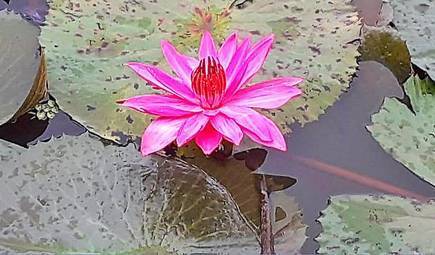
We did not have the luxury of water purifier plants. Nor did we use tons of chlorine to keep the water unpolluted. The pond had its own purifying natural mechanism that consisted of a variety of aquatic animals and plants that had made the pond their home. Sometimes when the lilies were in full bloom what a sight it was.
Thankfully, when I visited my village recently I was happy to find that no damage has been done to this eco system. But I was appalled at what has happened to the water bodies of the small town where I spent my college years. Of course, in those days also these water bodies were filthy. But now I find that some exist only in maps, some do not exist even in maps, some have been converted to entertainment hubs with boating and fancy lighting and resigned to fate, some continue their filthy and neglected existence.
The story of most of the urban water bodies could be similar. Even the water bodies associated with places of pilgrimage and temples are in filthy condition at many places.
Such man made static water bodies are the legacies of thousands of years. These are the gifts of our ancestors. I don’t think other than exclusive swimming pools or small fishing ponds we have created any such water bodies for public use. Rather, we have done away with many including the natural ones.
The vanishing of water bodies and the filthiness apparent on the existing ones are not restricted to static water bodies. In the last four or five decades so much damage has been done either due to climate change or our neglect that many small rivers in India either exist only in maps or are active only during the monsoon. When I was in Coimbatore I found numerous such rivers, or let us say ex-rivers. And those that have survived are in sorry state of affairs.
Rivers are usually signs of beauty. But when they pass through Indian cities these become symbols of filth and ugliness. In spite of regulations and numerous cleanliness drives, rivers in Indian plains continue to be filthy and polluted.
The story of most of the water bodies in underdeveloped and developing countries must be similar to that of India. On a global scale we have not spared the seas and the oceans. Unbridled commercial exploitation of fish and other marine resources have created imbalance in the marine eco system. Added to that we have incidents like oil spill. Harmful chemicals used in farming, plastic and other non bio degradable materials used in day to day life some how finally end in the sea. Of course let us not discount the effect of global warming on all types of water bodies and the ecosystems dependent on it.
If I state the causes for the sorry state of our water bodied and the possible solutions, I will bore you with lines that you have already listened so many times. I will spare myself from being a dealer in clichés. By now every conscious educated person on earth knows what to do and what not to do.
One of my recurring highlights of this series on environment has been the conflict of economic development vs the environment. The conflict has followed us like a shadow since we stopped being cave dwellers. While at individual level we can take pledge not to use plastic and not to dump filth etc., commercial exploitation part can only be dealt with by making clear cut legislation and enforcing it.

image credit: unsplash
This post is part of Blogchatter’s CauseAChatter’. Click here to have an overview of all my previous posts on environmental issues.
June 3, 2021
in search of the origin of a sweet dish
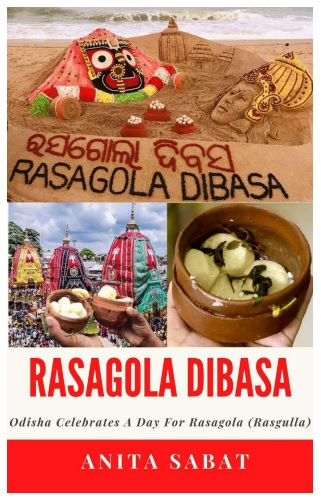
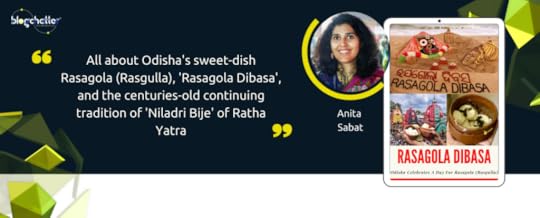
‘Rasagola Dibasa – Odisha Celebrates a Day For Rasagola (Rasgulla)’ is Dr. Anita Sabat’s second book. Here is what the blurb says:
This publication ‘Rasagola Dibasa – Odisha Celebrates a Day For Rasagola (Rasgulla)’ is a sincere attempt to share about Odisha’s centuries-old sweet-dish Rasagola; continuing tradition, Niladri Bije; and the online celebration of #RasagolaDibasa. This eBook endeavours to provide correct information and to create awareness.
Dr. Anita Sabat cares a lot about indigenous arts and crafts. She is very vocal about community issues and has been fighting against cultural misappropriations of various kinds. She is also aware that due to ignorance, many do not share her enthusiasm to set right historical wrongs where in the credit for a product or craft continues to be attributed to a wrong person, place or ethnic group. To set this right, last year she wrote a book ‘Geographical Indications (GI) of Odisha’. You can read my review of the book here.
I myself did not know what are GI Tags until I read her book. In fact if you read that book you will be in a position to better appreciate the book under review even though this book is not a sequel to her first book. Well for the uninitiated, a GI Tag is a kind of official recognition of a product’s origin and development in a particular geographical region and the authentication of the special features of the product thus associated with a particular region. It safeguards a product from being duplicated elsewhere and prevents unscrupulous use of the geographical identity.
In a way this book probes in depth into one such product for which both West Bengal and Odisha have been claiming credit for its origin. Finally both the sates have been awarded with the GI tags for their respective state variants. But, does this bring finality to the debates surrounding its origin ?
Some may feel these are trifling issues. Dr. Sabat has in fact faced flak sometimes for her persistence to find out facts and create awareness so as to undo historical misrepresentations about indigenous products.
It is in the nature of each ethnic group to preserve its identity. But, what are the factors that contribute to such identity? Language or dialect is one such thing. Dress could be another. Then there are age old customs. And of course food. Imagine the indignation of people from Bihar and Jharkhand when they learn that Odias are claiming Litti Chokha as their own ethnic food.
So ‘Rasagola Dibasa – Odisha celebrates a Day For Rasagola (Rasgulla)’ first of all, aims to set at rest all speculations, controversies and misinformation associated with the origin of the sweet. Her book deserves to be taken seriously. She has made extensive research to bring to limelight the facts associated with the origin of Rasagola backed with evidences.
Rasagola is very closely associated with a significant ritual of Lord Jagannath. It is offered to the Lord on the day called Niladri Bije which happens towards the end of the famous annual Ratha Jatra ritual. The day of the Niladri Bije is also the day when Rasagola Dibasa is celebrated every year starting from 2015. Dr. Anita Sabat played a significant role in not only getting the GI Tag for the sweet, but also initiating and trending Rasagola Dibasa.
It may be noted that there are thousands of seasonal and daily rituals associated with the deities of Shri Jagannath Temple at Puri. The rituals have remained unaltered for hundreds of years. For example the ingredients of the daily food offering known as Mahaprasada have remained unchanged since its inception. No new item like potato etc. has been introduced. There has never been any food offering, as part of any mandatory ritual, that has not been native to Odisha.
If this is not evidence enough for Rasagola to be regarded a native Odia sweet, the author submits extracts from ‘The Penguin Food Guide to India’:
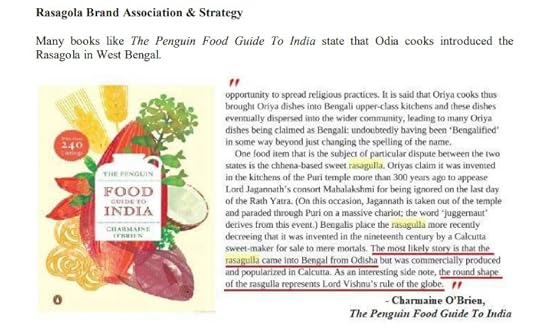
The book is full of such citations from authentic sources to establish the sweet’s origin in Odisha. In addition to making in depth analysis of various historical records and other sources associated with the origin of Rasagola, the book provides fascinating lesser known facts about Odisha and Odia Culture.
Once I started reading the book I could not resist the temptation to finish the book, as I would perhaps when I start tastings a plate of well made Rasagolas. You can download the book from here.
Dr. Sabat’s book is part of Blogchatter’s ongoing Ebook carnival where in a lot of books are available for free download from its library. My latest book- ‘The Beauty of Sanskrit Language and Text‘ is also part of the carnival and you can download it from here.
Happy reading.
May 31, 2021
A Medley of Lyrical Outpourings
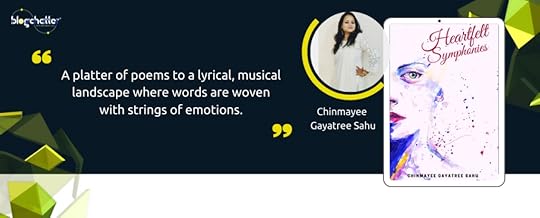
Even though Heartfelt Symphonies is her first poetry collection to be published, Chinmayee Gayatree Sahu is no first time author. She pours her heart out regularly on her blog Chinmayee’s Creations. She has already published a collection of short stories titled Five Petals which I had reviewed earlier.
I have been more familiar with her short stories. So this book came as a pleasant surprise for me. Let me reproducer an extract from the Author’s Note to give an outline of the book:
The Poetry Collection is a debut attempt to showcase varied emotions that may capture the reader’s attention to moments, memories, or musings in their own life. The book is an endeavor to present a few pauses, some flows, little heartaches & a couple of heartfelt smiles that we all experience in our life journey. The book is divided into four parts. The first part comprises of two poems which are dedicated to The Supreme Power, in the second part the muse has been Nature, in the third part it is Fire and lastly, the inspiration has been various shades of Life itself.

Even though the first two poems are dedicated to two divine manifestations representing Shakti and Shiva, these are not prayers. In the first poem the poet raises valid questions that we have not been able to answer in spite of taking pride as Indians to belong to a multi-millenia old civilisation. Of course remembering Shiva after Shakti, which remind me of Yang and Yin, may be the author’s way of emphasizing the complementary nature of the diverse and the seemingly opposing elements of existence.
I feel that the author has rightly used the word symphony in the title. A symphony takes us on a roller coaster ride by way of the varied emotions it may evoke. Same way the poems take us on an emotional and thoughtful journey of multitudes of shades – hope, moment despair, nostalgia, and so on.
In the section dedicated to nature, the elements of nature not only evoke myriads of emotions, but also provide insights into nature of things to serve as inspirations. The summer sun may be harsh. But it promises not to stay for ever and it draws our attention to the transient nature of things.
the Summer Sun smiles and gives out a sigh,
Summer Heat
its nature where change is only constant,
the harsh rays also make life possible,
regulating the life-saving water cycle,
the summer wind makes me realize,
that even this hard phase too shall pass,
The author sings the songs of nature through the change of seasons. If the the magnificence of the landscapes deserves our attention so does the fragility of a dandelion. There is an urge to identify with its vastness and at the same time be vulnerable with its fickleness.
In the second poem we came across various manifestations of Shiva. Same way, in the section titled Fire, the author has attempted to portray various manifestations of Fire. If somewhere it is a symbol of revival, somewhere it is a symbol of death. The poem ‘Love Story of Fire and Ice’ could be considered as the extension of the underlying theme of harmony and coexistence of opposites as symbolized by the principles of Shakti and Shiva or Yang and Yin.
The Sun & the Moon,
Love Story of Fire and Ice
Eternal lovers that they both are,
Keep holding onto each other,
Despite differences in properties,
Teach us some crucial aspects of relationships,
To co-exist in harmony despite the imbalances,
How can the last section called life be out of harmony. I mean this section too is a medley of poems to showcase various shades of life including those that we consider unsavory. While the author cautions women who are over obsessed with the outward look, she does not hide the pain she feels when the society treats women unfairly only because they tries to look better.
I like the theme and the look of the book cover. There are so many things about the book that I would like to talk about. But I would like the reader to discover more for themselves. To do so please download the book from here.
Chinmayee’s ‘Hearfelt Symphonies‘ is part of Blogchatter’s ongoing Ebook carnival where in a lot of books are available for free download from its library. My latest book- ‘The Beauty of Sanskrit Language and Text‘ is also part of the carnival and you can download it from here.
May 30, 2021
Top 10 : What to Watch during the Lockdown

It is rather about the best of what I have watched till date starting from the lockdown of last year. I am presenting this post similar to what a friend would relate to your over a casual dinner. I am not putting things in a definite structure. I am not ranking the programmes. So, if I discuss something first does not mean it is the best or the worst of the ten.
Theatres have either been closed or become out of bound areas for the less daring. I have a TV but I do not have a cable connection. So OTTs have been my only source, Netflix and You Tube being the leading platforms. Many OTT apps and services have been started in India. But they are way behind in terms of the quality and quantity of contents and functionality of their apps.
Up to November 2019 I used to occasionally discuss about favourite movies and serials under a series of posts that I termed ‘watchings of idle hours’. Hope this post will compensate for all the posts I could have written in the last eighteen months, had I continued the series.

This Japanese series Midnight Diner – Tokyo Stories has been a long time favourite. Having watched both the seasons available on Netflix, it was a pleasant surprise to come across the series – Midnight Diner (sans ‘Tokyo Stories’), which was released much earlier, sometime in 2014. It has three seasons. I was surprised to read the New York Times review where in it was stated that you can not binge watch the series as it is slow and meditative. Dear NYT Critic, you may be as wrong as you can be. I have been binge watching it since last week. Maybe you are speaking from the perspective of typical teenagers who can binge watch only fast paced, loud and violent shows. Coincidentally, this is one of those few shows where my wife gives me company or you can say the vice versa.
For those who have never heard of this series let me give a brief. The series is based on a popular manga (graphic novel) series. Most of the actions take place in a small twelve seat restaurant (Izakaya) located on a by lane in Tokyo. It is open from midnight twelve to morning seven. There are regular customers and there are occasional ones. Each episode explores either some interesting background or some interesting episode from the life of those customers. Of course a character’s favourite food is an integral part of each story. What impresses me most is the portrayal of human emotions and relations. The customers come from different backgrounds – some not so honorable. However, we are too human to be black and white heroes or villains. Every one has some weaknesses and some an angelic sides. At the end of the day, the angelic side wins. Everyone also has a survival instinct in spite of not making it big. Quite often it is the so called losers in the stories that leave a more lasting impression than the winners.

Another serial from the far east – South Korea to be precise – that fascinated me and made me binge watch is this romantic drama – When My Love Blooms. I watched this last year perhaps around this time. The series is still available on Netflix. The romance of the main characters that begins in their teenage takes a break and resumes in their middle ages when both are married to different persons and are in totally different circumstances. The romantic stories of the middle age and the teenage run parallel so as to maintain the mystery concerning their break up. This too is slow-paced. But the beauty of the people, the artistic quality of the sets, the enchanting background music, the impressive performance of the characters, superb camera work – in brief, the high quality work done by the whole production unit not only compensates for the slowness but also makes a virtue out of it. I feel that making it fast paced would not have done justice to the theme.

Before you draw the conclusion that being on the wrong side of fifty, it is natural for me to like slow paced shows full of melodrama, let me tell you that I completed watching ‘Game of Thrones’ for the second time. It was not exactly a second time since the supposed first time was not a thorough watch as I fast forwarded often so as to finish watching is as soon as possible.
Game of Thrones is available on Hotstar that has many interesting English movies and series. Problem is, the OTT platform has hardly added any worthwhile show for almost a year. Similar is the case with many Indian OTT platforms. They attract new viewers with a magnum opus and then forget to add worthwhile new content regularly.
I am not going to introduce the series to you. If you have not already watched or heard a lot about GOT and are interested to know, you can visit the wikipedia page or some other site. I would elaborately state my views about the ending of the serial which got a lot of backlash from the hardcore fans. So here is a spoiler alert. If you have not watched the series read no further.
(to be continued)
May 29, 2021
The Gems in our Backyard
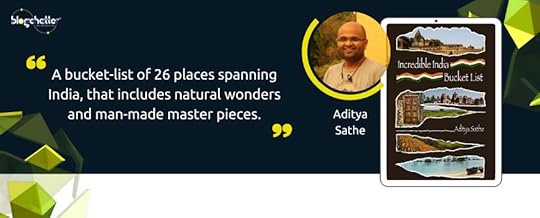
Right from the first paragraph of the first chapter of the book I was highly impressed. Something resonated with me. Maybe because this is something I also profess frequently. We always crave for something faraway. We are fascinated by the tales of the exotic, even though we have hardly explored the gems lying in our backyard.
Well did the book hold my fascination beyond the first paragraph. A definite yes. Welcome to Aditya Sathe’s latest book – Incredible India Bucket List.
Here is the first paragraph I was referring to:
Even I have a dream to travel around the world. However, I am fortunate to be an Indian. There are
so many fascinating places in this country. Every place is attractive because of a unique feature.
A civil Engineer and map maker by profession, Aditya Sathe is passionate about poetry and photography. His earlier work is a poetry collection in Marathi titled Chimukli Swapne. He also writes articles on various issues. HIs blog Adi’s Journal bears testimony to his creative outputs.
Let us keep in mind that this is a bucket list. So the places the author talks about are the ones he is yet to visit. But the fact that these places have made into his bucket list signifies his fascination for these places. the book contains description about 26 places. Since these were originally part of the Blogchatter’s AtoZ challenge the author is limited by the number of posts and by the condition that each post has to correspond to an English alphabet. What I mean is that the author must be having many more places in his mind besides these, but could not include because of the restrictions.
However, the places are chosen in such a manner that they give glimpses into the vast and varied landmarks of a huge country like India. The book starts with the Airavatesvara temple of Tamilnadu and moves to the Basilica of our leady of good health, also located in Tamilnadu. In subsequent chapters all parts of India are represented.
India is a multi cultural, multi ethnic, multi lingual and multi religious country and each of these elements have its own magnificence which are represented by the monuments created by various groups in various periods. India also boasts of one of world’s most bio diverse countries. Through this book the reader can have idea about each of such diverse elements of culture, geography and influence of history.
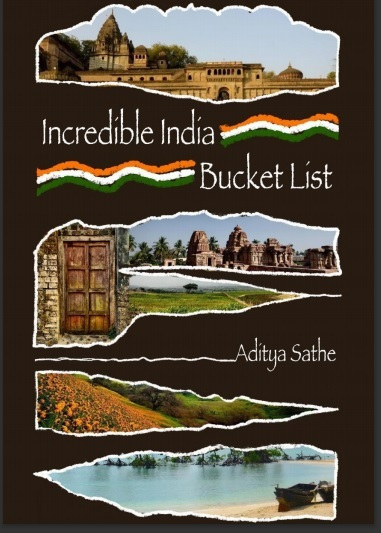
Here is what the book blurb says about the book:
There is a saying in Marathi, “केल्याने देशाटन, चातुर्य येतसे फार” meaning if you travel across the country, you become clever. In the case of our motherland, we are blessed with such a vast landmass and a varied culture. It is very hard to cover all the places from our Incredible India. So, this book presents you a bucket-list of 26 places spanning across India which include natural wonders as well as man-made master pieces which will not fail to impress visitors.
The book has an attractive book cover. What is special about the contents is that each chapter gives just enough information about the place and its background without getting too scholarly to kill the interest. The facts and myths surrounding the places are also presented in interesting ways.
Even though I have visited almost all parts of India, some due to the nature of my job and some due to my own interest, some places mentioned in this book came as surprises for me. I was also happy to learn many new aspects of those places I have already visited.
Finally I wish the pandemic is over soon and the author is able to fulfill his bucket list. I have similar wishes also for the reader who is motivated to create her own bucket list and pursue it after reading this book.
‘Incredible India Bucket List‘ is available for free download from Blogchatter’s library. There you can also browse and download other interesting books including my latest ‘The Beauty of Sanskrit and Sanskrit Texts‘.