Durga Prasad Dash's Blog, page 2
October 13, 2024
With Deepavali a few Days Away
Diwali is a time for revamp. People usually do the annual facelift of their house just before Diwali. In India we follow the Gregorian calendars for weekly holidays, where as for festival holidays we follow numerous Indian calendars. Similarly businessmen in India follow the official financial year (Apr to Mar) for tax and audit purpose, yet traditionally they start with a new set of books of accounts on Diwali. So Diwali is a time for revamp, renewal and taking stock of the year gone by in our Indian way.
This year I am doing a similar thing with my blog. Of course I do not do this traditionally every year. I am doing it for the first time since the blog was started in 2016. My revamp will be mostly about deleting some of the blogposts that have lost their relevance or resharing a few with my own evaluation of such old posts. As I go through the old posts I see that I had written some blog posts as part of a series and it will be worthwhile perhaps to continue such series like ‘Watchings of Idle Hours’, where in I expressed my views about certain movies or TV shows.
It is also heartening to note that I continue to have active interaction with some of the blogger friends who commented on my posts way back in 2016, even though I have not been regular in my blogging activities in last three years.
Being born in Odisha and now semi settled in Bengaluru, it is also a kind of expatriate life for us. Sometimes we do not even notice what we have missed. It is only when I came across a Durga Puja pandal accidentally a few days back that I was reminded of the overwhelming festive atmosphere of our small town in Odisha during these months. Actually the festivities start with Ganesh utsav and goes on till the full moon of Kartik. It is festival time one after another.
There is a saying that in this country we are in festive mood all year round (bara masare tera parava). But these two months of Ashwin and Kartik are special. There are so many festivals one after another, each festival lasting days. Ganesha Utsav, Janmastami, Viswakarma Puja, Durga Puja, Kumar Ustav, Deepavali, and Kartik Purnima to name a few. In Odisha the whole month of Kartik is considered the most auspicious one – even though in the Bibhuti Yoga of Bhagavad Gita Bhagavan Krishna says – I am Margashirsha among month. (By the way Margashirsha month comes after Kartik).
Living here in Bengaluru you miss noticing not only the coming and going of seasons but also various festivals typical of your native place. There are certain festivals and celebrations which are typical of my native place. On the full moon day of Ashwin, which is celebrated as Kumar Purnima, every one including those who are no more kumar and kumari, would wear new clothes. Gambling was not considered a crime during these times. But majority of people never went for serious kind of gambling like the Pandavas. It was light and fun and played among close friends and family members. So it did not matter who won or lost. Those who won considered themselves highly skillful in the art of gambling. It was a big boost to their ego till next year when fortunes reversed. And those who lost, just felt that they are unlucky in this particular area of life and moved on.
In Odisha the Indian month system followed is known as purnima-anta, which means the months end on full moon. It is worth mentioning here because in certain states the amanta system is followed which means the month ends on the new moon day. So the Kartik month in Odisha is one lunar fortnight ahead of the Karthik month in Tamilnadu.
On the first day of Kartik, at the centre of every village or street of Odisha, a long wooden pole like that of a flagpole would be raised. However, in stead of a flag, what would be hoisted is an akashdeep – a multi holed clay pot bearing a lamp. Every evening, after hoisting the akashdeep, a mobile bhajan party would start from the place, make a round of the village or the street and end their devotional chorus under the akashdeep.
Deepavali falls at the middle point of this month. Deepavali is a day when Odias bid farewell to the spirits of their ancestors who were invited during the first half of the previous month which was Ashwin. The significance of the lightings done on this day is that ancestral spirits are guided back to their celestial abodes. Of course there are fire crackers and sweets. But remembering the ancestors and bidding farewell to the their spirits is at the core of the Deepavali celebrations in Odisha. The beauty is that even in India the same festival, the same way of celebrating a particular festival, may have different underlying connotation in different regions.
The last five days of the auspicious month of Kartik are super-auspicious. Relatives say that now a days they feel the heat even in the month of Kartik. But I remember that we would start wearing light winter clothe from the beginning of Kartik. Towards the end of Kartik it would be shivering cold. But during these most auspicious five days of the year, it was compulsory for every one – be young or old, be healthy or ill, whether you love to take bath or allergic to it even in summer – to take bath before the sunrise. In villages we had to go to the nearby pond or river and took bath without the luxury of a cozy bath room or any heating arrangement. Surprisingly, some one rarely fell ill as a result of taking such cold water bath during a shivering wintry dawn.
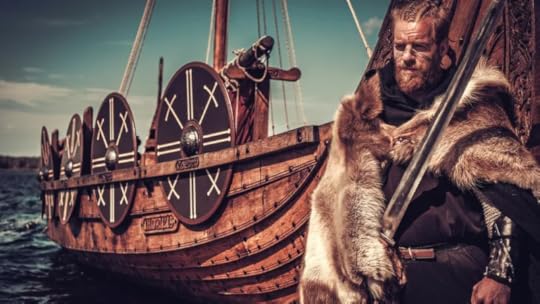
Lots of fairs and cultural activities are organised during this period. The Bali Jatra in Cuttack draws huge crowds. All such religious festivities end on the full moon day of Kartik. On this day Odias do the ritual of Boita Bandana. They gather early morning near running water bodies and set sail to boats made of banana barks. This is done to commemorate their ancestors’ journey to far east countries like Java, Sumatra, Bali etc.
Our ancestors were like the Vikings of Northern Europe.


October 7, 2024
Back after a long gap
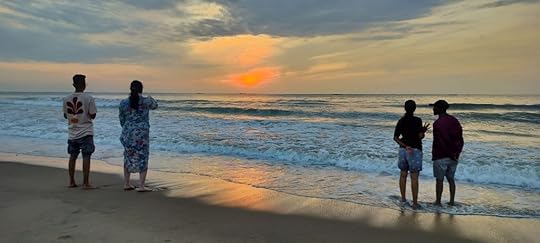 waiting for sunrise: serenity beach Puducherry
I know I have written so few blog posts in the last three years. My last post was way back in August 2023. It is not that I have not been writing. But the things I have written, mostly official things, though in volumes, are destined to gather dust. Since these days even files and folders are maintained in digital format, it would be better to say that the volumes I have written will continue to struggle for recognition among billions of gigabytes stored in an oceanic server somewhere.
It is not that events haven’t happened worth writing about. Maybe, the mood was missing. Maybe I will briefly touch upon what has happened. That will also give a glimpse about what I am likely to write in coming days, provided my mood permits to blog regularly, henceforth for some time at least. Should I assign my serious hobbies to my mood swings so much? That could be material for some serious ruminations another day.
In between I left Bengaluru to live in a small town – Kalaburagi to be precise- for about two years. What a contrast to the life in Bengaluru. From spending three hours everyday on commutation to office to having the office in the same premises as your residence – the contrast was at the opposite end of the spectrum. It was like being partly back to my life in Indian Air Force where having the residence in the vicinity of the office was the norm.
Kalaburagi is located in the north western part of Karnataka. In this town one can find confluence of cultures of Karnataka, Andhra Pradesh and Maharashtra. During that two years we did a lot of road trips to Maharashtra and also to my home town in Odisha via Andhra Pradesh. We covered a lot of interesting non-touristy places in Maharashtra and Andhra Pradesh.
Also a couple of months back we got our first opportunity to travel abroad, courtesy our daughter who lives in Switzerland. Back from Europe tour I wrote a short poem dedicated Uetliberg – a mountain near Zurich where we went for a short trek one day. It was after a long time that the poem happened.
Recently I have taken a fancy to stage performances – mostly to dish out some free and elderly wisdom in community gatherings, or recite a poem or try stand up comedy at any of the numerous open mics happening in Bengaluru.
What else?
Then there is this recently concluded short tour of Puducherry. I was revisiting this place after 32 years. Yes, the last time I visited this place was way back in 1992. So the recent visit was like visiting the place for the first time.
This blog post is a short recap of what has happened since I last blogged regularly till mid 2021. Will my muse be pleased now to bless me with regular creative activity?
At least I may start elaborating on some of the events mentioned here. Unlike in real life, blogging is a saving grace when you start narrating your travel stories. Why do I say this? Let me explain.
Soon after you return from a trip, many friends who know that you have been on a trip usually would ask how the tour was. Some just ask for formality sake. But there are some who evince keen interest by the way they ask. And when you are back from a tour beyond the seven seas, their interest seem all the more real and serious.
So you think, finally you have got a listener who would take interest in your experience. But you are mistaken. You are into your third sentence of your narration, the listener suddenly remembers he has to make a phone call, or else someone’s life would be in danger. Your story telling session has ended before it has even begun.
But with a blog post there is no such danger. Here you are talking to a computer screen, with the hope of someone reading it in future. There is no expectation of instant gratification. At least you can finish what you have started.
What else?
The poetic muse has suddenly been favorable and I have been able to write a dozen more poems and have done extensive revision of some of my earlier written poems. Hope to bring in a compilation soon in the form of a book.
August 15, 2023
Freedom from Anger

If you never become angry congratulations. You are already enlightened in the sense that you have risen beyond all the psychological bonds. You have developed the highest degree of compassion.
If you are not not enlightened, brace for some unsavory remarks. It is either the enlightened or the stupid who never become angry. If Buddha is the word that stands for enlightenment, Buddhu is the word for stupid.
Buddha is also the word that connotes the ultimate compassion. When you are compassionate, you do not allow the triggers for anger to get activated whatever might be the circumstances. Same way the stupid may not feel anger because he may not become aware that he has been sidelined. He may not know that words have been used to make him feel bad.
So the high majority fall somewhere in the middle of the spectrum where stupidity is at the bottom of the scale and enlightenment at the top. No doubt we all feel angry depending upon specific triggers. Sometimes we react and express it immediately. Sometimes we store it to so that we explode at some later stage.
So feeling anger but not expressing it immediately is not the solution. Without being either enlightened or stupid, can we do something so that we cut anger at its root?
It requires an analysis of anger. Without knowing the cause of disease we cannot cure any disease. Same way without knowing what causes anger, we cannot be free from anger.
Let us look at this from the perspective of our ancient seers. Our vedic texts talk of shad ripus – six enemies. There are six internal enemies – Desire/lust (Kama), Anger (Krodha), Greed(Lobha), Obsession (Moha), Self-centeredness (Mada), and Jealousy (Matsyarya).
All these shad-ripus are interconnected. One becomes angry when faced with unexpected obstacles in the fulfilment of desires. The mada-dominated person or the self centered or the narcissist becomes angry or jealous on every social situation when someone else is the centre of attraction.
Sri Sri Ravi Shankar in one of his talks has explained how these shad ripus are only at the periphery of our being. He has emphasised that these are distortions of the positive energy called love. Love is at the centre. Being at the periphery they do not effect the pure being that is at the centre of all of us. These six so called enemies are actually distortions of love. So when one becomes love, or when compassion increases in us these negative feelings including anger do decrease in intensity.
There can be an Ayurvedic perspective to anger. You might have heard someone say – Hey, why has so much pitta gone into your head”. The humour of pitta is associated with anger. Pitta dominated persons are more prone to sudden bouts of anger compared to bata or kapha dominated persons. Pitta is also associated with perfectionism and precise intelligence. Perfectionists cannot instantly forgive themselves or others. Of course they would regret a lot later on.
You will find hundreds of tips and shortcuts given by self help gurus, youtubers and reel makers on how to manage anger, control anger – or rather on how to control expression of anger. But you might have experienced that when you are under the spell of anger, nothing works. Because your focus is wrong. You should focus on elimination of anger, not on control or management of anger.
But elimination can happen only when you are a Buddha or a Buddhu- when you are fully aware or totally unaware.
Seems too impracticable.
However, what is practicable is taking a step to increase awareness, to increase understanding, to increase compassion, to increase love.
July 17, 2023
How often do we call an old friend just to say hello?
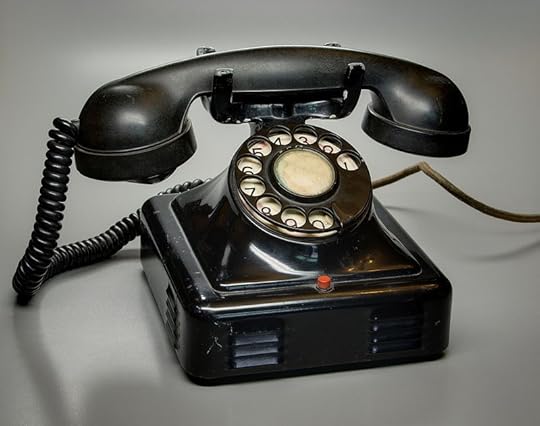
I don’t know if it is happening only with me. Or, it happens to every one past certain age. Or it happens only with the male of the species. Or, the casual sharing of posts in a whatsapp group has obviated such a need.
A few days back, during a conversation, I told a friend that these days hardly anyone called just to say hello. They called only when they needed something. Of course this friend was one of those few exceptions.
Then I realised that I haven’t also called many old friends just to say hello. My casual ‘I-don’t-need-anything-but-called-just-to-say-hello’ calls were limited to just two old friends. So a few days back I thought of calling at least two other old friends just to say hello.
I called them and told them that I am not calling you because I have some work with you. I just called to know how you are. I just called for old time’s sake. I just called because you are a friend. I also said that I was sorry that I was calling after so many years. They disconnected the phone.
After sometime they called me back. Both had similar stories to share. Hardly any one called them just to say hello. Even their own children called them only when they needed something. Needless to say, the conversation went on for hours.
I am not going to elaborate this post. I would like my reader to this. I would like to know whether you also face the same issue or you do have lots of friends who call you regularly just to say hello.
PS: November 21 is celebrated as Hello Day to highlight ‘the importance of personal communication for preserving peace’.
April 14, 2023
understanding panchanga
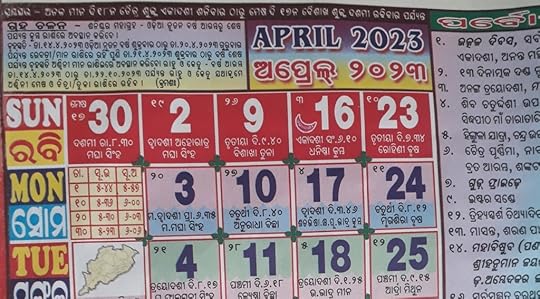
Panchanga means five limbs. Most of us must have heard the term Panchanga in the context of the Indian calendar or while trying to fix an auspicious time for any important event like marriage or grihapravesha. What are these five limbs? What is their significance? How have these been derived? Have we ever wondered about these and related issues?
Panchanga literally means five limbs or five components and these five components are: Vara, Tithi, Karana, Yoga and Nakshatra. Let us get some preliminary idea about each of these.
Vara is actually a short form of vasara. Ra means agni. Vasa means to stay or to provide a base. Vasara literally means provider of agni or fire. There are seven vasaras or varas or weekdays. These are Ravivasara or Ravivara (Sunday), Somavara (Monday), Mangalavara (Tuesday), Buddhavara (Wednessday), Guru or Brihaspati vara (Thursday), Shukravara (Friday), Shanivara (Saturday). Lord Surya (Sun God) presides over the vasaras.
When we talk of an international weekday, it is from midnight to midnight. A new day starts immediately after the midnight. But a Vedic day starts from the sunrise. In the context of our Panchanga also the day starts from the sunrise. This has to be kept in mind while fixing muhurta for auspicious events and also for determining on which vara you were born. If you were born at 4 am in India and the international calendar shows it as Thursday, you were actually born on the Vedic day of Wednesday. For the purpose of determining anything concerned with your birth chart or for fixing muhurta based on your birth chart, Wednesday will be taken as your day of birth.
We know that there is a dark fortnight or Krishna Paksha when the moonlight goes on decreasing till Amavasya or the night of no moon. Inversely, light goes on increasing during the bright fortnight or Shukla Paksha till Poornimaor the full-moon night. Each fortnight is 13 to 15 days long. These two fortnights represent a lunar month which is the time taken by the moon to complete one revolution around the earth.
Sun is our main source of light. Moon is a secondary source. Night time light comes from Sun via the moon. Earth moves around the Sun and Moon revolves around the Earth. Sun, moon and earth share a very peculiar relationship and tithi is the representation of this peculiar relationship. To be precise, each tithirepresents a 12 degree separation between sun and moon taking earth as the base. Thus one complete revolution of moon, which is 360 degree, is divided into thirty tithis.
But a lunar month is not 30 days. The moon takes approximately 27 days, 7 hours and 43 minutes to complete one revolution around the earth. Hence one tithi may not be equal to one solar day. The start of the tithi also does not coincide with the sunrise. During one sunrise to another sometimes there may be three tithis. For the purpose of celebrating any festival and for taking samkalpa before puja etc. the tithi prevailing at the time of sunrise is taken as the tithi for that day. But when it comes to your horoscope or natal chart, the tithi prevailing at the time of your birth is taken into account.
My mother and grandmother referred to days by their tithi names only. They never bothered what date it was as per the Gregorian calendar. But, now a days hardly any one bothers about the tithi unless it is some prominent festival like Janmastamai or Ramanavami. Ours is basically a lunar calendar.
Majority of Hindu/Buddhist/ Jain/Sikh festivals are celebrated based on tithis. Sanskrantis are exceptions because these are based on the movement of sun. Muslims also follow a lunar calendar for their festivals.
Each tithi has a distinct name. Starting from the first day after Poornami or Amavasya these are: 1-Pratipada, 2-Dwitiya, 3-Tritiya, 4-Chaturthi, 5-Panchami, 6-shasthi, 7-Saptami, 8-Ashtami, 9-Navami, 10-Dasami, 11-Ekadashi, 12- Dwadashi, 13-Trayodashi, 14-Chaturdashi, 15-Poornami or Amavasya
You might have observed that most of the tithi names have been derived from the corresponding Sanskrit names of the numbers. Goddess Durga is the presiding deity of the tithis.
One thing to be noted with regard to the tithis is that the starting tithi of a month is not uniform throughout India. In some regions the starting tithi is Shukla pakshapratipada, which means in such cases the lunar month ends on Amavasya. Such a month is called as Amanta or Amavasyanta month. This system is followed in Gujrat, Maharashtra, Andhra Pradesh, Telangana, Karnataka, Tamilnadu, Kerala, West Bengal, Assam and Tripura. Rest of the regions follow the Purnimatna system where in the starting tithi of a month is Krishna Pratipada.
The simple definition of a karanais that it is half a tithi. If a tithi represents a 12 degree separation between sun and moon, a karana represents a 6 degree of separation. As tithis are 30 in a lunar month, karanas are 60 in a month. However, there are only 11 types of karanas. The four karanas – Shakuni, Chatuspada, Naga and Kistugnaare known as sthirakaranas. These come only once a month, spreading over the period from the second half of Krishna Paksha Chaturdashi to first half of Shukla Pratipada. Each of the other 7 karanas, which are known as the charakaranas, is repeated 8 times a month. The charakaranas are – Bava, Balava, Kaulava, Taitilya, Garija, Vanija andVishti. Lord Ganesha is the presiding deity of the karanas.
Mathematically speaking, a tithi is the difference (viyog) between the longitudeof moon and the longitude of sun. Yoga, our fourth element of Panchanga is derived out of the yog or addition of the longitude of moon and that of sun. There are 27 yogas in a lunar month. Thus each yoga represents 13 degree 20 minutes of the movement of the moon around earth. The first yoga starts immediately after Amavasya, which represents zero degree separation between sun and moon. Lord Vishnu is the presiding deity of the Yogas.
The orbit of the moon has been divided into 27 parts and each part is known as a nakshatra. Like the yoga, a nakshatraalso represents 13 degree 20 minutes movement of the moon. But the difference lies in their starting points. The starting point of the first nakshatra is zero degree of the first zodiac sign Aries.
You might have been asked about your JanmaNakshatra on certain occasions. JanmaNakshatra represents the position of moon at the time of your birth. Nakshatra of a particular time represents the positon of moon against the backdrop of that nakshatra at that particular point of time. Same way position of moon at the time of sunrise would represent the prevailing nakshatra of that day. Lord Shiva is the presiding deity of the nakshatras.
Each of these five elements of Panchanga is mapped with one of the five basic elements or panchabhutas. Vara is connected with fire or Agni, tithi with water or Jala, karana with earth or Bhu, Yoga with ether or Akasha and nakshata with air or Vayu.
Elements of Panchanga have been used since Vedic times for fixing auspicious time to conduct important events and rituals. Our ancient Rishis have provided important guidelines which were obtained through their immaculate yogic insights. Apart from use in finding a proper muhurta, skilled astrologers use these elements of panchanga in delineating the horoscope or the natal chart of a person.
March 6, 2023
Lord Brahma’s Advice to His Creation
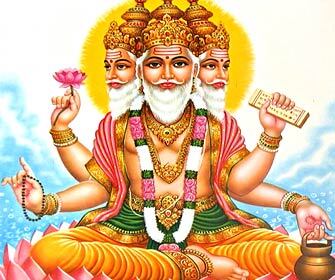
In vedic astrology human births are classified as Deva Gana, Manushya Gana and Rakshasa Gana. It does not mean that those who are born under Rakshasa gana are demonic in nature. Among other implications, such classifications are usually taken into account while matching horoscopes of prospective brides and grooms.
Otherwise also we have lots of examples in our puranas where someone like Prahlad who was born in Rakshasha clan, became a great devotee of Lord Visnu. His divine nature surpassed those of the Devas. On the other hand Indra, the king of the Gods, is notorious for his mischiefs. His obsession for pleasure was such that he was perennially in search of beautiful women. He did not spare even the wives of Rishis. He was cursed time and again.
This story is from Brihadaranyaka Upanishad. When the devas approached Lord Brahma, his advice to them was Da. Here Da implies Dama – or self control. Lord Brahma advises Gods to exercise self control. Gods are pleasure oriented. Only self control can redeem them. Gods have immense power. Unless they exercise self control the balance of the universe may get disturbed beyond redemption.
When manushya or human beings approached him, his advice to them was Da. Here Da means dana or doing charity, giving in donation, or sharing one’s resources with others. Human beings are miserly by nature. Hoarding comes easy to them. They find the greatest pleasure in accumulating things. Human beings, irrespective of their age, are afflicted by greed. We find human beings greedy even after accumulating wealth for fourteen generations. Unless dana is emphasized again and again human beings wouldn’t care for others.Human beings must share. By sharing human life gets enriched. By sharing and caring, earth itself can become the heaven that the Gods would vie for.
When the rakshashas or the demons approached Brahma, his advice to them was Da. Here Da means daya or kindness. Demons are cruel by nature. Hence, they need to be reminded again and again that they need to be kind and compassionate. Due to their cruelty, first they will destroy others and then they will destroy one another.
In reality it is impossible to find a being, who is purely of a deva, or a manushya or a rakshasha by nature. We all have these negative qualities of being pleasure oriented, being greedy and being cruel in varying degrees.
There are some who are generous. But when it comes to pleasure they are over indulgent and there comes a time they find themselves bound by a vicious cycle of addiction from where they find it difficult to come out of.
There are some who are very kind in their behaviour. They may not go about doing harm to others. But at the same time they may be greedy. There may be people who are epitomes of self control. But they may be very cruel to others in word and action.
So the ultimate lesson of Lord Brahma is that – let everyone be aware of one’s pre-dominant negative inclination. One’s redemption lies in heeding the advice of Brahma linked to that dominant negative inclination. If you find yourself being dominantly pleasure oriented, the key word for you is self control and so on.
January 1, 2023
Dashavatar in Jayadeva’s Gita Govindam-1
Pralaya-payodhi-jale …
Jaya Jagannatha ! Vaikuntha Ekadashi greetings to all!
After my series on Jagannatha Ashtakam, I wish to throw some light on the concept of Dashavatar as given in Jayadeva’s Gita Govindam. The stanzas are very popular among Odishi Dancers. Its recital accompanied by dance is (used to be?) a part of daily ritual of Lord Jaganatha before his Sayana-Arati.
What is so different about Jaydeva’s Dashavatara?
Yes it is different. According to the ancient sages Lord Vishnu descends onto earth from time to time taking various avatars. Out of his so many avatars ten are thought to be important. Sage Parashara, in his Brihat Parashara Hora Sashtra, has linked each of the avatars of Vishnu to a particular planet in the astrological scheme of planets.
However, in Jayadeva’s Gita Govinda, the ten avatars are not of Maha Vishnu. According to him Keshava or Lord Krishna took those avatars. Then a question comes as to who replaces Krishna avatar in Jaydeva’s scheme?
But first things first
प्रलयपयोधिजले धृतवानसि वेदम् ।
विहितवहित्रचरित्रमखेदम्॥
केशवाधृतमीनशरीर जयजगदीशहरे॥ १-१
When the world turns into an ocean during the pralaya
Like a ship that gives shelter to a drowning man
O Keshava, you take Matshya avatar – the body of a fish
To rescue the vedas from destructions
O Hari, O Jagadeesh – the Lord of the Universe, may you be victorious!
Many questions may arise. Of course the first one is – why did Jaydeva choose to describe the avatars as those of Krishna? If he did so, what is the avatar that replaces Krishna in his scheme? What is pralaya? Why does Krishna save only the vedas during the pralaya? What about the strange coincidence of the sequence of the avatars with that of the Darwinian theory of evolution? Why does the all-powerful God need our wishes to be victorious?
I will definitely attempt to answer these questions in the coming days. Before that, in order to familiarize yourself with some of the concepts indicated in this stanza, you may visit the following articles:
Gita Govindam – the ultimate romance
of time and place
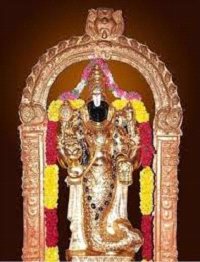
The photo given here at the top is that of the deity at Vedanarayana Temple, Nagalapuram, Andhra Pradesh. It is perhaps one of the very few temples where Shri Vishnu in his Matsya Avatar is the principal deity.
By the way the Matsya Avatar is linked to the planet Ketu – according to Rishi Parashara.
December 31, 2022
Shri Jaganathashtakam by Adi Shankaracharya
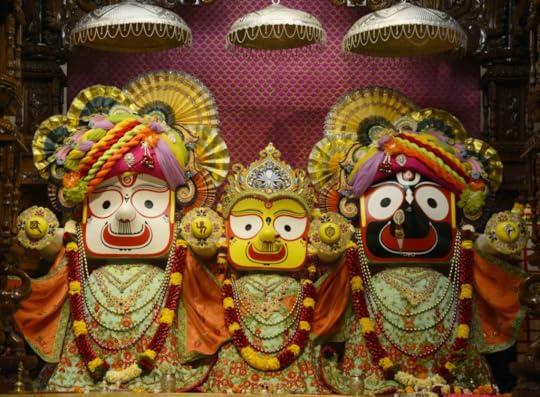
An Ashtakam is a composition in eight stanzas. This is quite popular in the stuti genre of Sanskrit Literature. The Jagannath Ashtakam was composed by Adi Shankaracharya. It is not possible to give the exact meaning of each line. However, I have tried to be as near as possible in my translation. I have also provided short commentaries to provide some clarity, especially for those who are new to the concept of Bhakti.
कदाचित् कालिन्दी तट विपिन सङ्गीतक रबो
मुदाभीरी नारी वदन कमला स्वाद मधुपः
रमा शम्भु ब्रह्मामरपति गणेशार्चित पदो
जगन्नाथः स्वामी नयन पथ गामी भवतु मे ॥१॥
kadācit kālindī-taṭa-vipina-saṅgītaka rabo
mudābhīrī-nārī-vadana-kamalāśvāda-madhupaḥ
ramā-śambhu-brahmāmara-pati-gaṇeśārcita-pado
jagannāthaḥ svāmī nayana-patha-gāmī bhavatu me (1)
Once upon a time you roamed the groves on the banks of Yamuna creating beautiful music (with your flute).
Immersed in the beauty of the faces of gopis – like a honeybee tasting lotus flowers.
Non other than Laxmi, Shiva, Brahma, Indra and Ganesha worhip whose lotus feet.
Oh Lord of the Universe – Jagannatha Swamy- reveal yourself to my vision.
भुजे सव्ये वेणुं शिरसि शिखिपिच्छं कटितटे
दुकूलं नेत्रान्ते सहचर-कटाक्षं विदधते ।
सदा श्रीमद्-वृन्दावन-वसति-लीला-परिचयो
जगन्नाथः स्वामी नयन-पथ-गामी भवतु मे ॥२॥
bhuje savye veṇuṁ śirasi śikhi-picchaṁ kaṭitaṭe
dukūlaṁ netrānte sahacara-kaṭākṣaṁ ca vidadhat
sadā śrīmad-vṛndāvana-vasati-līlā-paricayo
jagannāthaḥ svāmī nayana-patha-gāmī bhavatu me (2)
With a flute in your left hand,
a peacock feather on your head
fine silk cloth around your waist,
and through sidelong glances on your devotees
you continue to present
your never ending pastimes
in the divine abode of Shri Vrindabana.
Oh Lord of the Universe – Jagannatha Swamy- reveal yourself to my vision.
महाम्भोधेस्तीरे कनक रुचिरे नील शिखरे
वसन् प्रासादान्तः सहज बलभद्रेण बलिना ।
सुभद्रा मध्यस्थः सकलसुर सेवावसरदो
जगन्नाथः स्वामी नयन-पथ-गामी भवतु मे ॥३॥
mahāmbhodhes tīre kanaka-rucire nīla-śikhare
vasan prāsādāntaḥ sahaja-balabhadreṇa balinā
subhadrā-madhya-sthaḥ sakala-sura-sevāvasara-do
jagannāthaḥ svāmī nayana-patha-gāmī bhavatu me (3)
Along with your powerful brother Balabhadra
And sister Subhadra in the middle
You rest with ease in your golden palace
Atop the blue mountain situated
on the shores of the great ocean
And give opportunities of service to all the gods.
Oh Lord of the Universe – Jagannatha Swamy- reveal yourself to my vision.
कृपा पारावारः सजल जलद श्रेणिरुचिरो
रमा वाणी रामः स्फुरद् अमल पङ्केरुहमुखः ।
सुरेन्द्रैर् आराध्यः श्रुतिगण शिखा गीत चरितो
जगन्नाथः स्वामी नयन पथ गामी भवतु मे ॥४॥
kṛpā-pārāvāraḥ sajala-jalada-śreṇi-ruciro
ramā-vāṇī-rāmaḥ sphurad-amala-paṅkeruha-mukhaḥ
surendrair ārādhyaḥ śruti-gaṇa-śikhā-gīta-carito
jagannāthaḥ svāmī nayana-patha-gāmī bhavatu me (4)
You are an ocean of mercy.
You are beautiful like a row of dark rain clouds.
You are a delight to Goddess Laxmi and Goddess Saraswati
Your face is like an immaculate full blown lotus.
Worshipped by the chiefs among gods,
your glories are sung by the scriptures.
Oh Lord of the Universe – Jagannatha Swamy- reveal yourself to my vision.
रथारूढो गच्छन् पथि मिलित भूदेव पटलैः
स्तुति प्रादुर्भावम् प्रतिपदमुपाकर्ण्य सदयः ।
दया सिन्धुर्बन्धुः सकल जगतां सिन्धु सुतया
जगन्नाथः स्वामी नयन पथ गामी भवतु मे ॥५॥
rathārūḍho gacchan pathi milita-bhūdeva-paṭalaiḥ
stuti-prādurbhāvam prati-padam upākarṇya sadayaḥ
dayā-sindhur bandhuḥ sakala jagatāṁ sindhu-sutayā
jagannāthah svāmī nayana-patha-gāmī bhavatu me (5)
Seated on your chariot as you move along
Assemblies of Brahmins meet on the way
They sing your praise profusely
And you lend a sympathetic year
Oh Lord Jagannatha, friend and ocean of mercy
Along with Devi Laxmi, reveal yourself to my vision.
परंब्रह्मापीड़ः कुवलय-दलोत्फुल्ल-नयनो
निवासी नीलाद्रौ निहित-चरणोऽनन्त-शिरसि ।
रसानन्दी राधा-सरस-वपुरालिङ्गन-सुखो
जगन्नाथः स्वामी नयन-पथगामी भवतु मे ॥६॥
paraṁ-brahmāpīḍaḥ kuvalaya-dalotphulla-nayano
nivāsī nīlādrau nihita-caraṇo ‘nanta-śirasi
rasānandī rādhā-sarasa-vapur-āliṅgana-sukho
jagannāthaḥ svāmī nayana-patha-gāmī bhavatu me (6)
You are the condensed form of Param Brahhman
(It is indicative of the Brahma-daru pinda inside the body of Lord Jagannatha)
Residing on the Nilachala hill, your feet rest on the head of Ananta Deva
(Indicative of the fact that Jagannath is even beyond the infinity)
You enjoy the cool embrace of Radharani who herself takes delight in your rasalila
(Radha – which is opposite of dhara or flow – is symbolic of inward flow – jeeva taking you turn and moving towards param brahman)
Oh Lord of the Universe – Jagannatha Swamy- reveal yourself to my vision.
(So that I too can take the u turn and start the journey towards the Param Brahman)
न वै याचे राज्यं न च कनक माणिक्य विभवं
न याचेऽहं रम्यां सकल जन काम्यां वरवधूम् ।
सदा काले काले प्रमथ पतिना गीतचरितो
जगन्नाथः स्वामी नयन पथ गामी भवतु मे ॥७॥
na vai yāce rājyaṁ na ca kanaka-māṇikya-vibhavaṁ
na yāce ‘haṁ ramyāṁ sakala jana-kāmyāṁ vara-vadhūm
sadā kāle kāle pramatha-patinā gīta-carito
jagannāthaḥ svāmī nayana-patha-gāmī bhavatu me (7)
I do not ask you to give me a kingdom, nor lots of gold, rubies or wealth, or a beautiful spouse.
I do not hanker for the things usually asked for by people in general.
My only wish is that O Lord Jagannatha, whose praises are sung profusely by even Lord Shiva,
reveal yourself to my vision.
हर त्वं संसारं द्रुततरम् असारं सुरपते
हर त्वं पापानां विततिम् अपरां यादवपते ।
अहो दीनेऽनाथे निहित चरणो निश्चितमिदं
जगन्नाथः स्वामी नयन पथ गामी भवतु मे ॥८॥
hara tvaṁ saṁsāraṁ druta-taram asāraṁ sura-pate
hara tvaṁ pāpānāṁ vitatiṁ aparāṁ yādava-pate
aho dīne ‘nāthe nihita-caraṇo niścitam idaṁ
jagannāthaḥ svāmī nayana-patha-gāmī bhavatu me (8)
Oh Chief among Gods, save me as fast as possible from this worthless samsara – the cycle of birth and death.
Oh Chief among Yadus, save me from the ocean of sins that seems uncrossable
For all the downtrodden and helpless your feet are definitely the refuse.
Oh Lord of the Universe – Jagannatha Swamy- reveal yourself to my vision.
जगन्नाथाष्टकं पुन्यं यः पठेत् प्रयतः शुचिः ।
सर्वपाप विशुद्धात्मा विष्णुलोकं स गच्छति ॥९॥
jagannāthāṣṭakaṁ punyaṁ yaḥ paṭhet prayataḥ śuciḥ
sarva-pāpa-viśuddhātmā viṣṇu-lokaṁ sa gacchati
Those who recite this Jagannatha Ashtakam with regularly with purity.
All their sins get purified and they attain to the abode of Vishnu
॥ इति श्रीमत् शंकराचार्यविरचितं जगन्नाथाष्टकं संपूर्णम् ॥
iti śrimat śaṅkaracārya viracitaṁ jagannāthāṣṭakam saṁpūrṇam
Thus ends the Jagannatha Ashtakam composed by Srimad Shankaracharya.
December 27, 2022
walking the path

In ancient times people undertook journey primarily for business and conquest. And sometimes for pilgrimages.
These days people mostly undertake journey for business and pleasure. And sometimes for pilgrimages.
Even though Yatra literally means journey – any kind of journey, whenever we hear the word yatra we can sense a tinge of holiness or spirituality attached to it. Without yatra there can be no progress in spirituality. This yatra should not be haphazard. It has to follow a path.
The term ‘walking the path’ is normally not taken literally. It connotes a spiritual journey where in one follows certain pratices, usually under the guidance of a Guru to understand one self or in the traditional sense to attain moksha. It may also mean ‘to follow one’s dharma’. In our tradition a distinction is made between dharma and moksha.
The four fold division of human endeavor are – Dharma, Artha, Kama and Moksha. Thus a distinction has been made between dharma and moksha even though the distinction gets blurred in common understanding. Doing dharma without the explicit interest in moksha will bring auspicious results but one has to take birth again and again to enjoy the fruits of those dharmic actions. But when one does dharma with the intention of moksha, with a sense of mumuskhutwa, one is likely to move in the direction of getting freedom from the cycle of births and deaths.
Then, one can do dharma for the sake of fulfillment of desires, or for the sake of getting those resources (artha) so that one can fulfill those desires. But when an intense longing for moksha arises, one will do dharma but without any intention to fulfill worldly desires. Thus should we understand not only the distinction between dharma and moksha, but also the interconnections between these four purusharthas.
Then there are confusions and paradoxes. The longing for moksha may lead one to start the journey in the path of moksha. At the same time, sages say that as long as there are desires how can one get moksha? Even the longing for moksha is an obstacle to moksha – that is the whole paradox.
So to make things simple let us come to the literal meaning – the physical act of walking. In this series I intend to write about certain journeys of religious and spiritual nature which are undertaken by walk. Some of them will be my own experiences and some compiled from other sources including our puranas.
Thus going on pilgrimage is a kind of dharma. But everyone who is on a pilgrimage may not be doing it necessarily for the sake of Moksha. Some are for artha and many are for fulfillment of desires. When we talk of fulfillment of desires it is usually for the desires which have already been fulfilled, and now the pilgrimage is done because a conditional commitment was done earlier.
Pilgrimages are for various purposes. Pilgrimages are in various forms. In ancient times, the major portions of pilgrimages were done on foot as there was no other choice. It took years and months to complete a particular pilgrimage circuit.
With improvement in infrastructure, pilgrimage on foot is not the only choice in majority of cases. Still walking the pilgrimage circuit has a special connotation and many do it voluntarily. In the present series I will restrict myself to India and also to the pilgrimage circuits which have been active for many centuries.
Another thing to note is that – maybe in ancient times the pilgrimage by walk started right from one’s home. These days it need not be so. Usually there is a starting point for the walk and one reaches there by any convenient mode of mechanical transport.
It is understandable when one walks the entire route or those last miles when other alternates are not available or are too costly for an able bodied. But, what makes those take to the path of walking even when easier and less time consuming alternates are available?
And some of the paths of pilgrimages are fraught with lots of perils. Weather, lack of oxygen, tough terrain, lack of amenities are some of the challenges that awaits those who venture to reach Gaumukh from the Gangotri in the Himalayas? In addition to all those, the constant threat of Islamic militants pose immense danger to those who walk the Amarnath trail in Kashmir. What makes those take to by walk such perilous paths for the sake of pilgrimage?
It is said that walking is the best form of travel – whether spiritual or otherwise. In spiritual context walking itself becomes a spiritual process. It is a kind of sadhana, a kind of tapas. In India, millions of hardcore sadhus continue to walk the length and breadth of India covering the places of pilgrimages, many of them barefoot. The answer to ‘why people take to walk’ will become clearer as we explore some of the interesting, intriguing and exhaustive walks of India that people undertake for the sake of dhrama, artha, kama or, moksha.
There are primarily two types of walks. One is from point to point in a linear way. You start from either your place of residence or from a designated point and end up at the place of destination. During the month of Shravana the devotees of Lord Shiva start from a holy river(usually the Ganga), collect water from there and carry the water upto a designated Shiva temple to offer the water to Lord Shiva. Similar type of journey is seen in South India for Lord Murugan and Lord Ayappa. One has to live under certain restrictions during these periods.
There are many local versions of Lord Vishnu and Lord Krishna. If in Odisha Lord Krishna is worshiped as Jagannatha, in Andhra Pradesh the favourite form of Lord Vishnu is Venkateswara. At Pandharapur in Maharashtra Lord Krishna is lovingly addressed as Lord Vithala, Lord Panduranga or Mauli. The history behind such stories is interesting and we will touch upon it later on.
Special walks associated with Lord Vithala is known as wari. During the month of Ashadha and Kartika large contingents of people from various places of Maharashtra and other nearby places undertake wari. In the month of Asahdha, the main waris start from the birth place of saint Tukaram and Saint Dhyaneswara near Pune. Their padukas are taken in a palanquin and people accompany the palanquin on foot singing and dancing on the way. The distance is about 250 Kms and it takes 21 days. While some people are part of the journey from beginning to end, thousands join on the way. The journey culminates on the 11th thithi (ekadashi) of the Month of Ashadha – one of the most auspicious days for the Vaishnabas.
At about one hundred kms from Pandharpur, at Tuljapur is the temple of Goddess Bhavani. She is often referred as the Kula Devi, Goddess of the Clan. Chhatrapati Shivaji was an ardent devotee of the Goddess and the sword he used was specially blessed by the Goddess. Even though Tuljapur is a small place, the Devi temple is thronged by devotees through out the year. Many of the devotees arrive at this temple by undertaking the journey from their hometown by foot.
There maybe thousands of such pada-yatras in different localities of India. Many pada-yatras like the Amarnath yatra, the kawadia yatra or the Ayappa Yatra are nationally well-known. There are many which are quite well known in the region, but are hardly heard of outside.
There is one such lengthy-pada yatra which not much known outside the region in spite of the scale of the yatra. This also brings us to the second form of pada-yatra which is known as parikrama – where in, instead of ending your yatra at a destination, you come back to the same place after going around a sacred mountain or a river.
One such little known parikrama is associated with the Narmada river. Yes, devotees walk around the entire stretch of river Narmada on foot. It involves a journey of about 3600 kms and may take at least 3 months and may stretch upto 3 years. Most devotees start the journey either from Amarkantak or Omkareshwara. While Amarkantak is the place of origin of the river, Omkareshwara is famous for the presence of one of the Jyotirlingas of Lord Shiva. From Amarkantaka or Omkareshwara, the devotees start their journey on the south side of the river towards the sea. At no point of time should they cross over to the other side of the river. Hence they journey upto the point where the river meets the Arabian sea. Through the sea they cross over to the north side and carry on the journey on the north side.
This parikrama, where one ‘returns to the source’ can be taken as symbolic celebration of our cyclic concept of life and time. The Jeeva or the living being or the individual atman is not different from the Paramatma. Our independent existence is only temporary. Some even call it an illusion. This independent existence goes on a journey of life times after life times, but ultimately it has to ‘return to the source’. Same way in our philosophy, time is also conceived as cyclic in nature. In one of my earlier articles I have touched upon this cyclic nature of time. (September 2022 issue of Lighthouse).
Narmada is the only river whose parikrama has been authorized in our scriptures and devotees have been doing this parikrama since time immemorial. However, there are thousands of mountains in various parts of India which are considered as sacred and whose parikrama is done by thousands of devotees. Prominent among them perhaps are the Govardhan mountain near Mathura and the sacred mountain of Arunachala in Thiruvanmalai. There must be many more. I would request you my dear reader to inform through the comment box about any such mountain parikrama that you know of.
During the time of my great grand father, perhaps it was common to walk the distance of 200kms from home to Puri- the abode of Lord Jagannath by foot. These days people staying two kms away do not do it. However, there are still many devotees who undertake the pilgrimage or parikrama on foot in spite of the alternates available. For many sadhus it is a life long activity. There are thousands of anonymous devotees who keep on walking the length and breath of India in search of enlightenment. For them, the sacred walk is not only a journey but also a destination in itself.
October 11, 2022
of time and place
A lot importance is given in our culture and tradition to the concept of time and place. Choosing proper time for starting and doing any important activity is an integral part of our culture. Lots of research has been done in this regard since ancient times and our Rishis have shared many insights which were revealed to them during their deep meditation.
Before doing any religious ritual it is customary to state the purpose and intention (sankalpa) while also stating the time and place of taking such sankalpa. It is not only customary to remember the current time and place, the current place and time are remembered in the context of larger scales of space and time.
Let us examine the sankalpa – stating of intention- done before the start of puja. If a person named Kalpesh belonging to Bharadwaja gotra is in Bengaluru and is doing puja to Lord Ganesha at 8 AM on 15. 09.2022 for the purpose of seeking the welfare of the society, he may recite something like this:
“Jambudveepe, Merur Dakshina bhaage, Bhaaratavarshe, Bharatha Khande, Kaveri Uttara teere, Bangaluru nagare, Shobhana Gruhe, Devata Sannidhau, ……
Aadya Bramhane, Dvitiya Paraarde, Sri Shweta Varaaha Kalpe, Vaivasvata Manvantare, Kaliyuge, Kali Prathama Charane, Bauddhaavathare, Shalivaahana sakhe… Asmin Vartamaane, Vyavahaarike, Chaandramanena, Sri Subhakrit ( शुभकृत ) Samvatsare , Dakshinaayane, Sarad Rutau, Bhadrapada Maase, Krishna Pakshe, Panchami Thithau, Soumya Vaasare, Satabhisha Nakshatre, Soubhagya Yoge, Baalava Karane, Evam guna visheshana vishistayaam, shubha tithau, Bharadwaja Gothrothpanna, Aham Kalpesh Namdheya samaja kalyanartham, Shri Ganapati Prithyartham, Bhagavat preranaaya; praapta Vidyaa anusaarena; Yatha Sakthi Dhyaana-Aavaahanaadi Shodasa Upachaara Poojam Karishye…”
First the present place is remembered in the context of the whole continent that the place is part of. The ancients referred the whole land mass consisting of Europe, Asia and Africa as Jambudweepa. From this sankalpa we also understand that the idea of India is an ancient one even though some modern intellectuals would have us believe that it is only of recent origin.
While describing time, from the largest conceivable unit of time upto the unit of time known as Karana (consisting of a certain number of hours). The present time, step by step is put in the context of larger and larger units of time. Psychologically, if one becomes aware of such lager concepts of time and place, there is an immediate expansion of one’s consciousness. It may also be an humbling experience, when we realise that our present time and place are so negligible in the context of such large units of time and place. At the same time our consciousness is brought to the present time and place. Thus, even though the present time is so negligible in the context of larger units of time and space, all that matters to us is here and now.
The largest unit of time mentioned here is Brahmana. It is said that each daytime or night time of Brahma is equal to 43.2 crore human years. The twelve hour day of Brahma is called kalpa and the twelve hour nigh of Brahma is called as pralaya. Thus the world is created a fresh for each kalpa with the rise of Brahma in his morning and it attains to pralaya (dissolution) when Brahma goes to take rest in his evening. The life span of Brahma is 100 brahman years. Currently we are in the 51st year of present Brahma’s life. Hence, in the sankalpa it is mentioned as adi brahmane dwitiya parardhe … i.e. first year of the second half of his life. When present Brahma completes 100 years of his Brahma life, i.e after 49 more pralayas and 49 more kalpas, it will be the time for mahapralaya – the great dissolution.
So presently it is the 1st day (not night) of the 1st month of the Day of Brahma. As has already been said each twelve hour day of Brahma is called as kalpa and presently we are going through the kalpa known as the shweta varaha kalpa.
Once again each kalpa is divided into 14 manvantaras, a different manu being the ruler of each manvantara. Presntly we are in the 7th manvantara and its ruler is Vaivashwatha manu. Each manvantara lasts for 100 manu years.
A manvantara in turn consists of 71 chatur-yugas. A chaturyuga means a combination of four yugas known as Satya yuga, Treta yuga, Dvapara yuga and Kali yuga. Kali Yuga lasts 4,32,000 human years and each preceding yuga respectively is twice, thrice and four times that of Kali Yuga. At present we are in the 28th kali yuga of seventh manvantara of the 51st kalpa. It is said that Dvapara yuga ended and Kali yuga started with the death of Lord Sri Krishna in 3102 BC.
In the example given in the context of the puja sankalpa done in Bengaluru, the time and dates are given as 8 AM on 16.09.2022. The corresponding time and other details as per Indian calander will be 2079 Vikram Samvat, Dakshinayana (Sun’s sidereal movement is towards south), Bhadrapada month, Sharad ritu, Krishna Paksha, Sashthi Tithi, Shukravara, Krittika Nakshatra, Vajra yoga, Vanija Karana. For someone in Odisha everything will be same other than the fact that the month will be Aswina since, in Odisha, the full moon marks the end of a month and not the no moon day as is done in the south India states.
In day to day practice our concept of date stops at the year. We feel this day 16.9.2022 is unique in the whole time continuum since the beginning of time. However, during the sankalpa our attention is not only taken to the larger concepts of time but also to the cyclic nature of time. When we think of the large concept of time consisting of crores of years we realize our insignificance. At the same time somewhere we feel that we have been here for ever and we will be there for ever when our attention is drawn to the cyclic nature of time.
It is not that our ancestors only thought of larger concepts of time beyond a year. They also conceptualized subtler and subtler levels of time contained within a second. Thus they imagined time not only at a grander macro scale but also in near imperceptible mico scales. The lowest unit of time mentioned in many ancient texts is truti which is 8/13,500 of a second. Vedic texts mention the lowest division of time as paramanu which is 1/18 of a truti.
Another interesting thing to note is that our ancestors had already known from their insights about the relative nature of time even though it may be difficult at the surface level to imagine that even experience of time can be relative. Such concept is getting the attention of scientists only in recent times. A day of Brahma is equal to 86.4 crore human years. Which means our hundred years does not last even an eye blink of Brahma. It may be easy to imagine the relative concept of time, when we come to know that there are living beings inside our body who live and die by the minutes. For them our minute could be like hundred years of their life.
According to ancient texts, apart from Brahma there are other higher realms where they experience time to make our life span insignificant compared to theirs. A year of manu is equal to 30,67,200 human years and a year of devas is equal to 360 human years. Even the pitru-lok, where our ancestors are temporarily put up, have their year equal to 30 of our years.
Even though one may dispute the existence of various lokas stating that such things have not been scientifically proven so far, one cannot ignore the amazing discovery of our ancients about the relative nature of time. Of course there should not be any dispute about the psychological aspect of doing the sankalpa by reciting all units of time and place.