Christopher D. Connors's Blog, page 47
June 14, 2018
Mukundarajan V N It always, always means a lot to see your responses and to know your read my work.
Mukundarajan V N It always, always means a lot to see your responses and to know your read my work. I love your wisdom and your kind words! Wishing you a happy and healthy weekend!


Completely agree, Paul.
Completely agree, Paul. Amazes me how commitment gets a lot of traction in relationships, but is often underrated in our pursuit of our goals and dreams. Thanks for reading!

The 4 Essential Questions to Ask Yourself Before Launching Your Dream

“Love what you do and do what you love. Don’t listen to anyone else who tells you not to do it. You do what you want, what you love. Imagination should be the center of your life.” — Ray Bradbury.
Every dream has to begin somewhere, and it’s often in the unlikeliest of places. If you’re on the road to living out your biggest goals and dreams, you’ll soon find that it rarely takes a linear path. Everyone’s journey is different, and even when we have a solid plan, we often find ourselves doing work or trying things we never would have imagined.
Part of this is the simple reality that we have no control over external circumstances. When we’re just starting out, or even in the middle of our journey, we have the ability to influence outside factors, but we only truly control our attitude and our effort. We have the ability to always embrace positivity, to believe in ourselves and to hope that things will work out in our favor.
We have the ability to work hard and to keep going in the face of adversity, failure and mistakes. Never compromise that which you can control. Always use it to your advantage. But know this — despite your best intentions and best plans, you may find yourself on a course that doesn’t seem to make sense at the proverbial 10-foot level.
It takes time, experience and an ability to see things from a much higher-level that helps put things in perspective. It takes feedback, honest, truthful feedback, from people who care about you to help you make better sense of things. And what you do with that feedback will help determine your destiny. It’s the questions you ask yourself that define success and help build your foundation for what comes next.
In my work with CEOs and senior executives, I’ve found one common thread — successful people and high-achievers always take the time to ask themselves the philosophical questions. They don’t just get on the treadmill and run away without ever stopping to ask, “Why am I doing what I’m doing?” They’re always self-evaluating. Not driving themselves crazy. But always questioning their approach and wondering what they could do to make incremental, even minor, improvements.
1. What will make me most happy?Isn’t this always the most important question? Then why do so few people ask it of themselves? Maybe they don’t know to simply look around them. Take this remarkable research from Harvard University professor, Daniel Gilbert:
“People believe that the best way to predict how happy they will be in the future is to know what their future holds, but what they should really want to know is how happy those who’ve been to the future actually turned out to be.”
So much of what enables us to understand what will make us happy comes from empirical observation and the stories of others. We may be drawn to certain things through our intuition and curiosity, but we also want to know what others experienced on their journey and how it made them feel. Here’s further context from the Harvard Gazette:
Previous research in psychology, neuroscience, and behavioral economics has shown that people have difficulty predicting what they will like and how much they will like it, which leads them to make a wide variety of poor decisions.
Take the time to ask yourself this question. What makes you happy? What makes the people happy that you admire and respect? Find yourself a good baseline and continue asking yourself this question throughout your life, as your tastes and opinions change, and the world changes around you.
2. What skills am I most drawn and attracted to?We’ve heard a lot in recent times around many “in-demand” skills like carpentry and other skilled trades. What about skills like writing, communicating, marketing and a plethora of others? I implore you to determine what skills you have AND what skills you’re most drawn to.
Once you have your list, put together your Venn-Diagram of the two lists to see which skills form the melding of what you have and what you love. It’s absolutely vital that you do this as early on in your career as possible, as it will help you get on the right track to launching the career, passion project or start-up that you really want.
Take an awesome tool like Gallup’s StrengthFinder and discover what things you’re good at, and while you’re doing it balance those strengths and skills against what you love to do most. Maybe you’ll have an epiphany. More than likely, you won’t have the information you desire overnight. But with some effort, application and deeper thought, you’ll keep moving toward that intersection of passion, talent and proficiency.
3. Is this something that can sustain me in the future?“Passion helps us accelerate. We can work with the energy passion gives us and move ourselves into position while infusing our goals with vitality. It’s our commitment that sustains us over time so that we steadily build the skill and competency that will ultimately bring us success. “— Dr. Jennifer Howard Source: HuffPost
In other words, is this just a fleeting thought or daydream, or is this something that burns like fire inside of you that you can commit to? I start with this question around passion and enthusiasm as it’s imperative that you begin there. Please, please don’t start with money. Don’t start with, “there’s a market for this!” Don’t start with, “I’ve seen other people succeed at this.”
Those are absolutely important observations. They are. But they’re not where you should start. When I talk about sustenance, I begin with launching a dream toward something that truly has deep, powerful meaning in your life. Something that you love, draws you in and gives you the goose bumps just thinking about it. This passion will carry you for a long period of your life, or maybe even for all of your life.
It will invigorate you when you feel tired. It will vitalize you when you feel down, dejected or fearful of success and failure. When you build around your passion and make a mental and emotional commit to following through on what you’ve started, you begin to develop perseverance which is essential to helping you continue with your dream.
4. What are all the possibilities I see branching out from this direction?It’s not always how we start, but what we learn along the way and how things finish. I close with this question because it’s vitally important to think “long game” but ask these early questions up-front to bolster your creative imagination and thought process. Think about the possibilities that could come from the launch of your new business, job, idea, experiment or venture.
Then, reflect back on those things, and as you add on continue to expand your mind to think of new possibilities. Start with a plan, too. Entrepreneurs looking to launch their dream should be especially encouraged by this from HBR:
“We found that it pays to plan. Entrepreneurs who write formal plans are 16% more likely to achieve viability than the otherwise identical non-planning entrepreneurs.”
Put together your plan. It will become so much easier to identify new opportunities and build powerful, synergistic relationships. Go ahead and get started. Do the work and move forward in growth to reap the results.
Be Willing to Ask Yourself the Big QuestionsJoin my newsletter and check out my bestselling book, The Value of You. This will give you inspiration to start planning for success on your journey.

The 4 Essential Questions to Ask Yourself Before Launching Your Dream was originally published in Personal Growth on Medium, where people are continuing the conversation by highlighting and responding to this story.
June 13, 2018
Ty Blunt I truly appreciate this.
Ty Blunt I truly appreciate this. It means a lot to see this and makes me happy. All my best to you!

Thank you immensely, Matt!!
Thank you immensely, Matt!!

You’re the best, Ahimsa Porter Sumchai MD!!! Thank you!
You’re the best, Ahimsa Porter Sumchai MD!!! Thank you!

June 8, 2018
Cherish Life — How to Focus on Life’s Greatest Moments and Live Them to the Fullest

What are the moments that matter most to you? Have you thought about them? Are they actually a part of each day — or each week? Are they a part of your life at all? If they’re not — have you actually stopped yourself to ask, why not?
On your journey, I hope you find yourself asking these important questions and determining how much of “what you want” versus “what you’re tolerating” is a part of your life. I use the word tolerating because so many of us just adjust to what life is, without ever pivoting and re-imagining what we really want.
Designing MomentsConsciously design moments into your day. Plan time with your son. When he says he wants to play baseball at 8:15 at night, even when you’re tired and beaten down from the day, do it. You won’t regret it.
You’ll never regret the time you spend with the people you love. You’ll never regret the time pursuing your passion and going the work God put you here to do. You won’t look back and say — I wish I had hustled that extra hour or two at the office to complete that pivot table, so I could file that report on Friday night before the weekend deadline.
Deadlines. Ha! Some may matter, but not most.
Your most important deadline is the opportunity to live a full life. The clock starts ticking for all of us, and some of us figure that out sooner than others. But the moment you do, you free yourself of concern over things that don’t actually matter to you. You focus on running your race and living without fear of what you’re losing, because you’re living a virtuous life filled with purpose that aligns with your mission and values.
Three Ways go Get to Your TruthTake some time, in solitude, free from any distractions, to ask yourself the deep, meaningful questions that you’ve ignored for too long. Prioritize and game plan around the most important things. This might sound simple. But it’s the only way to a truly fulfilling life. And so many of us aren’t willing to do the work that gets us to these answers.Take inventory. Break your day and week down into the activities and people you find yourself spending time with. Is this what you want? What are you following but not leading? The biggest breakthroughs I find people experience are when they isolate and highlight what they’re actually doing, juxtaposed against what they imagine, dream and fascinate about…. but inevitably aren’t doing. Remember this — dreams without goals are just dreams. As Denzel Washington said, “Have dreams, but have goals!”Stop worrying about “lost time” and the time that you’re NOT spending doing things. Focus on what you ARE doing. Be present and concern yourself with what you’re doing now, with an eye on the future. You can’t get lost on the “what if’s” of the now, and certainly not the worries of the past.So plan around the greatest things that shine the most light and beauty in your life. Maybe it’s your family. Could be that your day job, ambition or passion bring you that joy. What gives your life the most meaning? What makes you happiest? What is it that will fulfill you and make you feel full? Why not start asking those questions? The results will speak for themselves.
Sharpen Your FocusJoin my newsletter and check out my bestselling book, The Value of You. This will give you inspiration to start planning for success on your journey.

Cherish Life — How to Focus on Life’s Greatest Moments and Live Them to the Fullest was originally published in Personal Growth on Medium, where people are continuing the conversation by highlighting and responding to this story.
June 1, 2018
If You Had a Blank Slate (You Do) — What Would You Do?

“Regardless of your past, your tomorrow is a clean slate.” — Zig Ziglar
The best way to think about your next big entrepreneurial move is to look at things from a completely blank slate. Kind of like the draft of this article when I first started typing. Nothing but blank space. The funny thing is, when I first started writing everyday, the blank page was daunting. When I launched my coaching business, it seemed impossible to know where to begin.
Maybe you know the feeling.
Now, it’s liberating. Because I’m not encumbered by anything — there is a vast expanse of space to do whatever I choose. In other words, limitless creativity.
The question in the title of this post came directly from a C-level executive that I previously coached. I was there to help him think boldly and out of the box. This existential question got me thinking about how we can all think creatively and use this line of thinking to our advantage. It’s such an important question — one many of us ignore as we move along in life and don’t take time to ask ourselves.
As you’ve matured on your journey, what have you found? I’ve found that some people simply don’t think it’s possible to stop and ask the essential questions.
I’m here to tell you that it’s critical to ask the very basic, formative questions because they enable us to work toward cultivating a beginner’s mind, one that is open, free and ready to entertain new thoughts and boundless possibilities.
I’m often amazed when I coach and advise others but most significantly — when I advise myself — at what I come up with when I start with a beginner’s mind. What I mean by this is, a completely open-minded, free of bias — or negative experiences — view at the possibilities in front of me. It’s why I spend so much time focusing on the belief that we truly do become in physical form what the dominating thoughts of our mind are.
We are shaped by our thoughts; we become what we think. When the mind is pure, joy follows like a shadow that never leaves. — Buddha
What we speak over our lives becomes our reality. If you’re struggling to believe this, spend time in meditation, concentrated thought and prayer each day. Master the skill of autosuggestion to feed positive, empowering thoughts to your subconscious mind.
It’s like pouring fresh, crystal clear spring water into a bottle of dirty water. Eventually, as you keep replenishing, you’ll have entirely fresh water.
Finding the Time To Do Our ThingIf you had a blank slate, would you start in earnest to accomplish the goals and dreams that you’ve been thinking about each day, but ignoring because “you don’t have enough time?”
What I’ve found most interesting about my life is that I’ve accomplished more when I’ve had less time at my disposal. I’ve had to work harder to build-in “me-time,” so I’ve been more judicious with the usage of my time. I’ve cut out distractions and negativity that formerly crept into my mind and led me down the road of procrastination or worse yet — sin.
During my early-mid 20s, I wasted an awful lot of time. Chasing girls, going out bar-hopping, mindless TV shows, video games, Internet distractions, you name it. There’s a saying I picked up from a former Lieutenant Colonel that I worked with during my time consulting with the U.S. Air Force. It goes,“Youth is wasted on the young.”
I was that guy.
I had a lot of great ideas for startups and businesses that popped in my mind, fluttered about and quickly vanished. A great idea is only as good as the action that follows it. The best part is once we learn this truth, we’re that much better to renew our minds at the beginning of each day and begin by taking ownership as the architect of any new plan we wish to design.
When we’re young, the blank slate is flush with robust opportunities, imagination, possibility and the ability to pursue whatever we want. While I do believe that we can still do this as we grow older, there’s no denying that it becomes more difficult. Families, children, bills, illnesses, additional life and career responsibilities increase.
Increasing ProductivitySo while it’s wise to always make the best use of your time, whether you have lots of responsibilities or not, it’s absolutely possible to be even more productive as we inherit more life and career duties. A Stanford University study says:
“As we grow older, we tend to become more emotionally stable. And that translates into longer, more productive lives that offer more benefits than problems…” — Source: Stanford Study published in Psychology and Aging
I believe there’s a direct correlation between productivity and happiness — specifically when we have actively chosen and planned the productivity we are achieving.
Happiness comes when we’re more confident in our abilities and direction. If you know what you want already, then you’re that much farther ahead of the game. Then you can live in the world of focusing on how to get what you want. I believe that comes through experience — trial and error — as well as education, the observation of others and great teachers.
Prioritization increases possibility. Tony Schwartz, CEO of the Energy Project says the following,
“Force yourself to prioritize so that you know that you will finish at least that one critical task during the period of the day when you have the most energy and the fewest distractions.”
Determination and desire are the “fire” that each of us has deep inside. Weactivate these qualities by believing in ourselves, actually going out and doing what we say we’re going to do, then becoming consistent by repeating these processes and backing them with persistence and a positive attitude.
Keep Asking Questions. Keep GoingA positive attitude has worked wonders for me, opening up my mind to believe more than I ever thought possible. It’s led me to become a writer, to meet more people and to test my ideas in the marketplace.
I’m not even close to accomplishing all that I hope to in this lifetime but I know that I’ve found passions — things that I love that I also have skills for — that I will never, ever give up on. My mindset is one of adopting the belief thatperseverance will always overpower rejection.
Adversity is my best friend if I eliminate distracting emotions and harness my energy toward achievement and positivity. I take all of these qualities and re-assess where I’m at each week. Am I looking at my personal ambitions and goals with a clouded mind or a clear mind?
Think of things like you are operating from a blank slate. Then ask yourselfwhat you really want in both your personal and professional lives. From there, you have your answers about what you should pursue. All you need to do isput together a plan and stick to it.
Take the first step. Don’t stop asking questions to others or yourself. The aggregate of the advice that I’ve received in the business world has been toalways question our current state and, to ask ourselves not whether we can improve — but how we can improve our future state.
How can we add skills to keep moving forward toward the path of being who we want to be — the composite of what we’ve written on our blank page? Only you can answer that question. It’s best to begin right there.
Succeed on Your Terms!Join my newsletter and check out my Amazon Bestselling book, The Value of You. This will give you inspiration to start planning for success on your journey. If you want to work with me, connect here and let me know how I can help you!
Other Readings:The Next Step to Getting What You Want
Lessons for My 22-Year Old Self Part 1
Never Accept Defeat- Empower Your Thoughts

If You Had a Blank Slate (You Do) — What Would You Do? was originally published in Startup Grind on Medium, where people are continuing the conversation by highlighting and responding to this story.
The 10 Qualities of an Emotionally Intelligent Person

There are many different kinds of intelligence, and it’s our job to discover what they are and how to integrate them into our lives. Sources of intelligence can be measured in quotients. Most of us are familiar with IQ, or the intelligence quotient, which is primarily associated with our ability to memorize, retrieve items from our memory and our logical reasoning.
There’s also a new up and comer, CQ, or curiosity quotient, which refers to one’s ability to have a powerful motivation to learn a particular subject. What I spend much of my time in both research, and in working with clients and organizations on, is focusing on emotional intelligence.
The definition of emotional intelligence (as first advanced by researchers Peter Salavoy and John Mayer, but popularized by author Daniel Goleman in his seminal, eponymous book) is the ability to:
“Recognize, understand and manage our own emotions
Recognize, understand and influence the emotions of others
In practical terms, this means being aware that emotions can drive our behavior and impact people (positively and negatively), and learning how to manage those emotions — both our own and others — especially when we are under pressure.”
We are emotional creatures who often make decisions and respond to stimuli based on our emotions. As a result, our ability to grow in EQ has an enormous impact in all of our relationships, how we make decisions and identify opportunities. EQ is enormously important. Through my work, I’ve identified 10 qualities that I believe comprise the emotionally intelligent person.
I hope you gain value from this and learn to understand the ways you can influence your mind, and the minds of others, by growing emotionally every day, in all that you do.
1. EmpathyI love this definition of empathy:
“Empathy is the capacity to understand or feel what another person is experiencing from within their frame of reference, i.e., the capacity to place oneself in another’s position.”
There are two different types of empathy. This piece from the Greater Good Science Center at UC Berkeley beautifully depicts what they are:
‘“Affective empathy” refers to the sensations and feelings we get in response to others’ emotions; this can include mirroring what that person is feeling, or just feeling stressed when we detect another’s fear or anxiety. “Cognitive empathy,” sometimes called “perspective taking,” refers to our ability to identify and understand other peoples’ emotions.’
We empathize based on the reaction to others. What I’d also say is that empathy can be cultivated and learned through experiences. Store away in your memory those feelings that you feel both in reaction, and as you put things in perspective. Write these thoughts out, analyze them and determine how you want to treat others in the same way you’d want to be treated.
2. Self-AwarenessSelf-awareness is the art of understanding yourself, recognizing what stimuli you’re facing and then preparing for how to manage yourself both in a proactive and reactive manner. Self-awareness is how we see ourselves, and also how we perceive others to see us. The second, external aspect, is always the most difficult to properly assess.
“Leaders who focus on building both internal and external self-awareness, who seek honest feedback from loving critics, and who ask what instead of why can learn to see themselves more clearly — and reap the many rewards that increased self-knowledge delivers.”
For yourself, ask the introspective questions, yearn for knowledge and be curious. And for others, seek feedback in an honest, caring environment.
3, Curiosity“I have no special talents. I am only passionately curious.” — Albert Einstein
Show me a curious person who’s willing to learn and improve, and I’ll show you a success story waiting to happen. When you’re curious, you’re passionate, and when you’re passionate you are driven to want to be your best. Your “antennae” are up to things you love, to wanting to grow and learn more. This learning mindset positively affects other areas of your life like relationships.
Tomas Chamorro-Premusic writes:
“First, individuals with higher CQ are generally more tolerant of ambiguity. This nuanced, sophisticated, subtle thinking style defines the very essence of complexity. Second, CQ leads to higher levels of intellectual investment and knowledge acquisition over time, especially in formal domains of education, such as science and art.” Source: HBR4. Analytical Mind
The most emotionally intelligent and resolute people are deep-thinkers that analyze and process all new information that comes their way. They continue to analyze old information, habits and ways of doing things to see if they can extract ways to improve. We’re all “analysts” in the sense that we consciously think about all new information that comes our way.
Savvy EQ individuals are problem-solvers and everyday philosophers who contemplate the “Why” of existence, the “Why” of why we do what we do, and who care passionately about living a virtuous life. Having an analytical mind means having a healthy appetite for a continuously improving mindset geared at bettering yourself and always remaining open to new ideas.
5. BeliefA major component of maintaining emotional self-control is using the power of faith to believe in yourself both in the present and in the future. It’s believing that the people and things in your life are there for a reason, and that everything will ultimately work out for good.
Faith alone will not help you. It takes action, of course. But when you combine faith with powerful values like hard work, perseverance and a positive attitude, you have formed the foundation of a champion. Every great leader and thinking uses faith, either in a practical context, emotionally and certainly spiritually.
Spend time in meditation. Think about the way you believe in yourself. Engender a greater faith toward the person you are and who you want to become. And trust and believe that the pieces in your life will come together in a way that will help you live boldly and joyfully.
6. Needs and WantsThe emotionally intelligent mind is able to discern between things that they need versus things that would be “nice to have” that classify more aptly as wants. A need, particularly in the context of Abraham Maslow’s “Hierarchy of Needs” is the basic level stuff like safety, survival and sustenance. Once those things are met, then we can progress to other needs and of course, wants.
A “want” is a big house, nice car, and even the brand new iPhone. We do not need those things to survive, but rather we want them based on our own personal desires or what we perceive to matter to society. Become well-versed in knowing what you truly need to to live, to accomplish goals and to support yourself and loved ones. Make sure you draw a very clear distinction between what it is you need, and what it is you want.
Emotionally intelligent people know the difference between these two things, and always establish needs prior to fulfilling wants.
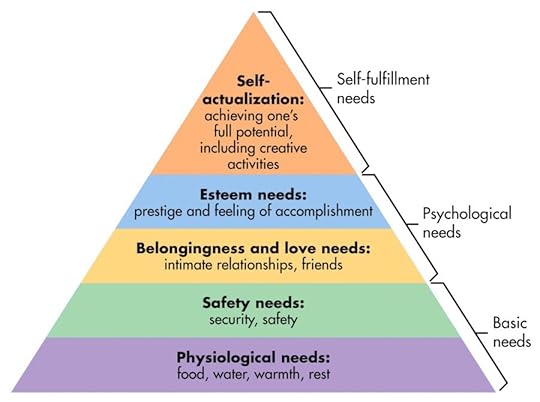 Abraham Maslow’s Hierarchy of Needs7. Passionate
Inspired leadership and love for what you do is born from having a passion for a subject or people. People with a high EQ use their passion and purpose to ignite the engine that drives them to do what they do. This passionate is infectious and contagious — it permeates all areas of their lives and rubs off on the people around them.
Passion is sort of that je ne sais quoi that when you feel it, or even when you see it in others, you simply know. Passion is the natural desire, instinct, drive, ambition and motivated love for a subject or someone. Passion brings positive energy that helps sustain us and inspire us to want to keep going. And there’s no secret that emotionally intelligent people who are passionate are also willing to persevere and power forward no matter their circumstances.
8. OptimisticIf you want to increase your opportunities, improve your relationships and think clearly and constructively, you’re best positioned to maintain a positive attitude. Of all the things that we try to control and influence, our attitude is the primary thing that is always within our control. We can choose to live each day by being positive. It’s that simple.
“When we are happy — when our mindset and mood are positive — we are smarter, more motivated, and thus more successful. Happiness is the center, and success revolves around it.” — Shawn Achor9. Adaptability
“Adaptability is not imitation. It means power of resistance and assimilation.” Mahatma Gandhi
Emotionally intelligent people recognize when to continue their course, and when it’s time for a change. This vitally import recognition and ability to make crisp, swift decisions in your best interest is called adaptability. You must determine when to stay the course, or when to keep moving forward in another direction.
Similarly, when one strategy is not working, try evaluating and determining if something else will work. From the way you treat yourself, to how you treat others, to your daily routine, always stay open-minded and be willing to adapt and introduce new elements to how you think and what you do.
Throughout your life, you’ll need to change course and make assessments on whether you’ll be happy and successful if you choose one path or another. Recognize that you CAN always change. You can always start over. It may not always be the most prudent or wise decision, but only you will truly know in your heart what is or what isn’t. Start with leaving the option on the table.
10. Desire to Help Others Succeed and Succeed for YourselfLast but not least, an emotionally intelligent person is interested in overall success and achievement — not just for themselves, but for their peers. Their inspired leadership and passion, combined with their optimism, drives them to want to do best for themselves AND others.
Too often, we get so self-absorbed and concerned only with “WIIFM,” or — What’s in it for me? We have to be concerned about this. It’s a must, so don’t let anyone ever convince you otherwise. But in the same way that we should be focused on our self-interest, we should also maintain a spirit of desire and hope for wanting to see the people around us succeed.
Not only is this a brilliant safeguard against envy and greed, it also revitalizes our passion and drives us toward achieving our next goal. It helps us gain allies and builds powerful relationships that come back to help us in reciprocal fashion.
Increase Your Emotional IntelligenceJoin my newsletter and check out my bestselling book, The Value of You. This will give you inspiration to start planning for success on your journey.

The 10 Qualities of an Emotionally Intelligent Person was originally published in Personal Growth on Medium, where people are continuing the conversation by highlighting and responding to this story.
May 30, 2018
Your Desire to Succeed Should be as Great as Your Desire to Help Others Succeed

“The most accurate term for happiness…is the one Aristotle used: eudaimonia, which translates not directly to ‘happiness’ but to ‘human flourishing’.” — Shawn Achor
The most important lesson for any new graduate, someone early on in their career or even a savvy veteran to understand is that success only works in a reciprocal manner. What that means is, our desire to succeed should truly be as great as our desire to help others reach their big goals. Once we have this purpose and vision aligned, the sky is truly the limit. The opportunities and relationships we’ve always dreamed of begin to come to light.
Let’s start with the cold-hard truth: at our core, we want to succeed because we want to find happiness and satisfaction for ourselves. It’s only human to look out for our needs and focus on “our game” versus someone else’s. To a certain extent, this will take us far in life. But if you look at it on the flip-side, if we focus only on our path and our needs, we won’t get very far.
For one thing, none of us make it on our own. We need the help of others to advance our careers, our personal ambitions and to find a life partner and satisfying relationships. We want to be happy. But in order for us to be both successful and happy, we have to recognize that the same people willing to help us are also looking for the exact same thing for themselves.
And why wouldn’t they? Isn’t that what we’re trying to do? So how do we get people to take an interest in us — to help us achieve our big goals and purpose? We respond by taking an active interest in helping others back. We don’t just do it as an obligation or because we think it’s the right thing to do. We make an active choice to become personally invested in another individual’s success and happiness.
That investment of time is always time well spent — because it has a compounding effect of interest that helps elevate us in our own pursuits.
Giving back is as good for you as it is for those you are helping, because giving gives you purpose. When you have a purpose-driven life, you’re a happier person — Goldie HawnLooking Out for Yourself and Others
In a constantly evolving world, we have to look out for ourselves and recognize what we need to do to preserve our self-interest. An emotionally intelligent person is interested in overall success and achievement — not just for themselves, but for their peers. Their inspired leadership and passion, combined with their optimism, drives them to want to do best for themselves AND others.
Too often, we get so self-absorbed and concerned only with “WIIFM,” or — What’s in it for me? We have to be concerned about this. It’s a must, so don’t let anyone ever convince you otherwise. But in the same way that we should be focused on our self-interest, we should also maintain a spirit of desire and hope for wanting to see the people around us succeed.
Not only is this a brilliant safeguard against envy and greed, it also revitalizes our passion and drives us toward achieving our next goal. It helps us gain allies and builds powerful relationships that come back to help us in a reciprocal fashion.
Take a look at some of the most succesful people in the world — Bill Gates, Oprah Winfrey and Warren Buffett just to name a few? What is the common thread between these three (aside from their astounding wealth!)? They’re all great philanthropists who give tremendous amounts of money (and their time) to helping causes and people that they believe in.
They’re genuinely trying to leave the world a better place. Their success isn’t enough. Sure, their legacy matters to them, but their humanity enables them to want to help others succeed and find purpose in their lives.
Writing in Time magazine, author Jenny Santi says,
“Our passion should be the foundation for our giving. It is not how much we give, but how much love we put into giving. It’s only natural that we will care about this and not so much about that, and that’s OK. It should not be simply a matter of choosing the right thing, but also a matter of choosing what is right for us.”Help Others and Help Yourself
Help the people who help you. Help strangers — give without expecting anything in return. Seek out the co-workers, community members and partners that are a part of your life. Who in the world would turn down someone who genuinely and authentically wants to help them succeed? If you have a game plan for your own success, chances are you can help someone else with theirs.
If you have the ability, it’s a matter of generating the desire. And sometimes, it’s best to reverse-engineer from what actual success looks like, to help us develop our game plan, which is initially fueled by our passion and desire.
Take this as observed by the Greater Good Science Center at UC Berkeley:
“A recent article published in The Journal of Positive Psychology by Daryl Van Tongeren and his colleagues sought to examine (how kindness and happiness help us find purpose) this relationship. In a preliminary study, the researchers asked over 400 participants to report on how frequently they engage in different altruistic behaviors (such as volunteering) and how meaningful their life feels. Participants who were more altruistic reported a greater sense of purpose and meaning in their lives.”
Wouldn’t you want to have a greater sense of meaning and purpose in your life? Wouldn’t you agree that once you do, it’s that much easier to be successful? When you have clearly defined goals and purpose, you’re able to be successful and help others achieve the same success for themselves. You’ll also find that you’re most happy and well on your way to doing even bigger things than you may have imagined.
Next Step for SuccessJoin my newsletter and check out my book, The Value of You on Amazon for only $3.99.

Your Desire to Succeed Should be as Great as Your Desire to Help Others Succeed was originally published in Personal Growth on Medium, where people are continuing the conversation by highlighting and responding to this story.