
Joseph Sciuto's Blog: A Curious View: A Compilation of Short Stories by Joseph Sciuto, page 20
October 22, 2021
“KLARA AND THE SUN,” BY KAZUO ISHIGURO
“Klara and the Sun,” is the first novel by Kazuo Ishiguro since he won the Nobel Prize for Literature. It is a novel, like the other two that I have read by the author, that leaves you “thinking, contemplative, and dazed” for many days after you have finished the novel.
Mr. Ishiguro’s prose are simple and clear, but the ideas, messages, and revelations in his books are anything but simple and often hit at the very roots of our existence, our fears, and our mortality.
Klara, the main character in the book, is an AF (Artificial Friend) who is bought by Josie, a young, sickly little girl, and her mother who is overly concerned about her daughter. It is through Klara’s outstanding observational powers, empathy, and ability to solve problems that she is able to shed light on the human condition as she watches Josie’s family and friends interact. Her observations hit at the very roots of many of our fears, hopes, and the underlying power of love that makes us all stronger and like the power of the “sun” enhances and energizes our moods and ability to heal.
Simply great!!!!!


October 17, 2021
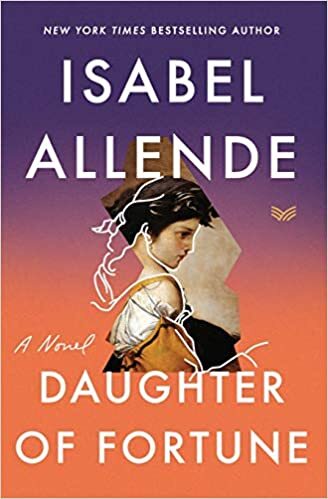
“DAUGHTER OF FORTUNE,” BY ISABEL ALLENDE
This is the third book in the last few months that I wish never ended. The other two were by Ann Patchett. The difference is that Isabel Allende’s, “Daughter Of Fortune,” has a sequel that I have already ordered.
“Daughter Of Fortune,” is top heavy with fantastic characters and as anyone who knows me knows, I am a firm believer that characters are what drive a story, and there are many stories in this amazing book, each driven by unforgettable characters.
It takes place on three continents, Europe, North and South America, but the bulk of the book takes place in northern Ca. before, during, and after the gold rush and Ms. Allende’s portrayal of the American west of the 1850’s is a disturbing, but truthful, rendition of how it really was back then just after America took control of California, Az., Oregon, and Texas from Mexico and from the indigenous Indians. The bigotry and racism against Mexicans, Hispanics in general, the Indians, Chinese, and anyone not completely ‘white’ is appalling and a disturbing look into present day America.
The heroine of this story is Eliza Sommers, an orphan baby left in the garden of the Sommers’ estate, and raised as a rich and guarded child in the British colony of Valparaiso, Chile. She meets and falls in love with Joaquin Andieta, a lower class clerk who by the social standards of the country is not suitable for Eliza.
Joaquin, with the promise of coming back, sails to California in search of gold and without him knowing it leaves behind a pregnant Eliza. Eliza, after a few months, leaves behind everything and sails to California as a stowaway in search of her first love.
It is during her search that the sixteen year old Eliza, who has a miscarriage on the ship, transforms herself from a beautiful, privilege, child in Chile into a person of unbelievable courage, intelligence, and compassion and it is mainly through her eyes that all the other stories are told.
This is a great novel!!!!!!! And Eliza is a character for the ages!!!!
October 8, 2021
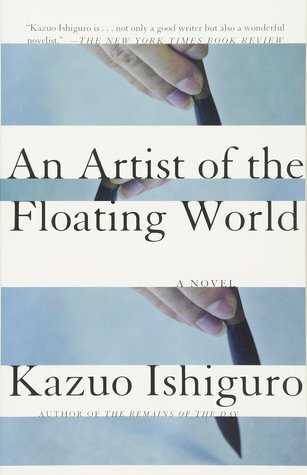
“AN ARTIST OF THE FLOATING WORLD,” KAZUO ISHIGURO
Kazuo Ishiguro’s, “An Artist of the Floating World,” is as different from the first novel I read by him, “Never Let Me Go,” as night and day. It’s not nearly as imaginative, not as descriptive, and the settings and cultures are not nearly alike.
The writing is simple, the message and subject matter are quite astonishing in an underlying way. The one similarity for me was that both books left me dazed, and it took me some time to truly comprehend what I had just read.
The title, “An Artist of the Floating World,” is a reference to the pleasures, entertainment, and alcohol indulged in by the painters and artists who have been chosen to study with prominent masters and their art reflects the celebration of physical beauty.
The main character, artist Masuji Ono, does not want his paintings to be solely about beauty, and he breaks with his master and his great gift as a painter become a symbol of the imperialist movement that led Japan into World War II.
It is three years after the war is over that the story begins. Masuji Ono is an older man with one daughter married and another daughter in the process of getting married. His son was killed in the war, and his wife is dead. His once celebrated works are now reviled, and the prominence of his ‘name’ have taken a serious blow. It is during this time that he reflects on his life and art, and whereas he accepts that his blind loyalty to the government, businessmen, and soldiers was wrong, it is still difficult for him to relive his past with only regrets and sadness.
For one not very well acquainted with Japanese culture, this book was like a history lesson, and Masuji Ono represents not only the culture of the past, but the enlightenment of the future generations through his daughters and grandchild.
October 5, 2021
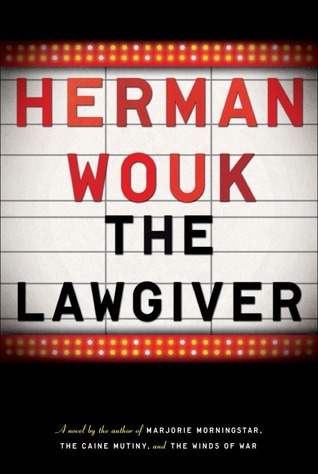
“THE LAWGIVER,” BY HERMAN WOUK.
Herman Wouk’s,”The Lawgiver,” is probably unlike anything else that this Pulitzer Prize winning author has ever written. Yet, since many of his books have been made into movies or into a TV mini-series (The Caine Mutiny, War and Remembrance) it is not surprising he would know how the real Hollywood works.
“The Lawgiver,” is about a movie trying to be made about “Moses” in the twenty-first century (around 2007). For people who are in the film industry or have been in the industry, or around industry people, this book is really funny, delightful, and sadly true. It is written more like a two hundred page memo, e-mail, and text message between a large group of people associated with the film, or simply acquaintances of people associated with the film.
For people not familiar with the movie industry and the “money people” who finance films, it might not be so appealing and the style might throw you off.
In closing it is good to remember that movies, especially really good movies, are made by real professionals: writers, directors, camera people, cinematographers, lighting personnel, actors, actresses, set designers, editors, and the list goes on. The money people, the suits, usually don’t know much and are most useful when they don’t get involved.
Thank you, Lorna, for this wonderful recommendation.
October 2, 2021
KAZUO ISHIGURO’S “NEVER LET ME GO.”
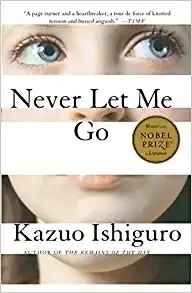 Kazuo Ishiguro’s “Never Let Me Go,” is the first book I have read by this Nobel Prize Winning author. I read it in two days which is very quick for me, and after finishing the book I felt like I was in a daze, and a few hours later when I was no longer in that daze I was in a state of contemplation about what this book was about…for me.
Aside from the science fiction aspect which I had discarded early on, and the moral issue of using other people’s DNA to create a society of children who later in their lives become donors and, in short, instead of living complete lives barely live half a life; even though if not for the donations they are healthy, normal individuals whose life expectancy would be the same as any other individual living in England.
Aside from those two themes, this book represented for me what our lives would look like if the average life expectancy wasn’t seventy-five but thirty-five. Kathy, Ruth, and Tommy, the three main characters brilliantly depicted by Mr. Ishiguro, go through the stages of life (childhood, adolescence, early adulthood) very similar to what you would expect. It is the time they have to make the donations, so early in an otherwise normal individual, that they are faced with the inevitability of death with the questions and doubts and decisions that people approaching this final stage often contemplated with either fond memories, sad times, and what could have been. What could have been, What might have been, and What was?
I was truly impressed and highly recommend.
September 13, 2021
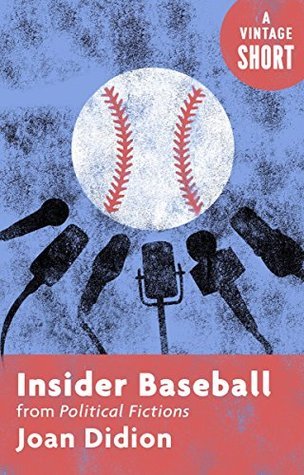
“INSIDER BASEBALL” BY JOAN DIDION
“Insider Baseball,” by Joan Didion is in every sense classic Didion. It is not about baseball, or not really, but about her coverage of the 1988 presidential campaign between President George H.W. Bush and Governor Michael Dukakis.
Ms. Didion has an eye for the ‘unobservable’ that almost everyone else seems to miss, and when she points it out you say, “Holy Cow! How did I miss that?” In the 1988 campaign she points out the absurdity of the whole process, the misconnect between the candidates and the voters, and how everything is so scripted that it’s like a movie… right down to Mr. Dukakis playing catch with a staffer in 110 degree weather while waiting for their plane to take off.
On a personal note I would like to unveil my idea of how we should choose a president. In a nation wide vote the top ten candidates should be relocated to an old style Western town, possibly on the Warner Bros. ranch where they used to shoot westerns. Each candidate should be given a rifle, a pistol, and enough ammunition to easily wipe out all the other candidates.
The candidates should then be all separated, and the object of the game is to kill as many of his/her rivals as you can and be the last one standing…the only one left alive. The last surviving candidate should then take the presidential oath of office and immediately become president. (I having come up for a plan for the Vice President yet but I am working on it). By doing it this way, the American people can at least say, for once, that the president of the US wanted the job so badly he/she was willing to die for it. That’s a lot more than we can say for the last president.
I Highly recommend this essay.
September 10, 2021
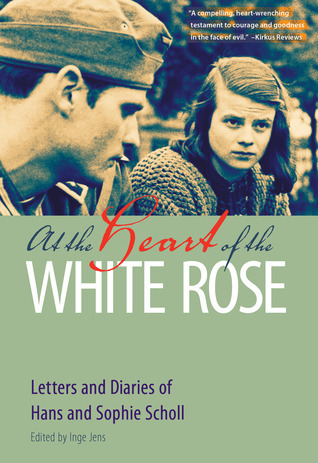
AT THE HEART OF THE WHITE ROSE: LETTERS AND DIARIES OF HANS AND SOPHIE SCHOLL
Two side notes that have to do with the reading of this book: First, I have a very simple definition of heroism. It is when an individual has a choice to turn his back and safely walk away, but instead goes to the help of innocent, victimized, and disabled individuals, putting his/her self in danger and possibly death, to unburdened those individuals and hopefully bring them to safety.
The death of twelve service personnel at the Afghanistan airport wasn’t so much acts of heroism, but tragedy. The choice they made to put themselves in the middle of such a dangerous and humanitarian mission is heroic.
Secondly, Even though the characters in this book often talk about how much better it would be to see and talk to each other together in a house or room, the fact that they wrote so many letters gives us one of the truest accounts of the two most prominent heroes in this amazing account of heroism and humanity.
“At The Heart of the WHITE ROSE: Letters and Diaries of Hans and Sophie Scholl,” is an intimate portrayal of two young Germans (Hans on his way to being a doctor) and (Sophie studying philosophy and art at the University in hope of becoming a teacher). They were raised in a loving German family with three other sisters and brothers. Politics nor class were not the reasons for their dissent. Their dissent is the product of a childhood and youth that were deeply rooted in the humane with religious manifestations.
In both their letters to friends and family there is almost always mention of the beauty of nature. Sophie dreams of becoming part of a Birch tree and Hans talks about the beauty of the Russian landscape when he is fulfilling his military service at the front as a doctor. They marble at God’s creation, and how each spring it brings forth new life. They love people, and don’t discriminate against any one race. Hans talks about the friendliness of the Russian peasants and how they shared food and drinks and sang together.
The ‘White Rose Organization’ put out pamphlets and bulletins describing the Nazi atrocious against Jews, against Germans, against humanity in every country they invaded. They did not blow up buildings or assassinate political or military leaders. For this terrible crime of uncovering the truth with words, Hans and Sophie Scholl and their friend Christoph Probst were sent to the guillotine a few days after they were arrested for distributing handbills at Munich university. Many of the remaining members of “The White Rose Organization,” were eventually arrested and put to death.
Thomas Mann, Nobel Laureate remarked:
“Good, splendid young people! You shall not have died in vain; you shall not be forgotten. The Nazis have raised monuments to indecent rowdies and common killers in Germany—but the German revolution, the real revolution, will tear them down and in their place will memorialize these people, who, at the time when Germany and Europe were still enveloped in the dark of night, knew and publicly declared: ‘A new faith in freedom and honor is dawning.”
Thomas Mann, Nobel Laureate (Broadcasting from exile to Germany on the radio series “German Listeners”
On a personal note: For most of my life I have refused to visit three countries, Germany, Japan, and Italy. Their atrocious against humanity, especially the Germans and Japanese, I cannot find it in my heart to every forgive them. Despite, what one might read, only a small pocket…a tiny pocket…of Germans resisted the Nazis and Hitler. In fact, Sophie and Hans Scholl were arrested because a janitor who supported the Nazis went to the Gestapo and informed on them.
HIGHLY, HIGHLY RECOMMEND. (less)
September 1, 2021
“TRUTH AND BEAUTY,” BY ANN PATCHETT
“Truth and Beauty,” by Ann Patchett is the autobiographical novel between the author (Ms. Patchett) and her friend for over twenty years Ms. Lucy Grealy (a fellow writer and best selling author of “Autobiography of a Face”). Like everything that Ms. Patchett has written and I have read, this is just another example of this writer’s amazing talent.
Ms. Grealy, who lost part of her jaw to childhood cancer, chemotherapy and radiation is a poignant example of what is right and what is wrong with our society. Ms. Grealy, who has had over thirty surgeries to reconstruct her face and mouth, and to look totally normal is obsessed with men finding her attractive, and despite a number of boyfriends, and numerous sexual encounters she never in her mind achieves the attractiveness that will allow her to walk into a room and not be looked at as the one with the deformity.
Ms. Patchett is there for her friend every step of the way, through all the surgeries, insults, and addiction to drugs, as are a number of her other friends. But it is the friendship between the two authors that is at the very center of this heart wrenching, beautiful, and up close depiction of society’s obsession with beauty. Highly, highly, recommend.

August 28, 2021
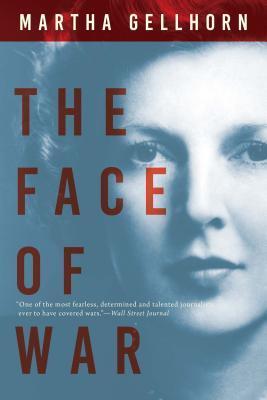
THE FACE OF WAR,” BY MARTHA GELLHORN.
“Martha Gellhorn was a fearless war correspondent for nearly fifty years and a leading journalistic voice of her generation.
“From the Spanish Civil War in 1937 through the wars in Central America in the mid-eighties, her candid reporting reflected her deep empathy for people no matter their political ideology, and the openness and vulnerability of her conscience. “I wrote very fast, as I had to,” she says, “afraid that I would forget the exact sound, smell, words, gestures, which were special to this moment and this place.” Whether in Java, Finland, the Middle East, or Vietnam, she used the same vigorous approach. Collecting the best of Gellhorn’s pieces on foreign conflicts and now with a new introduction by Lauren Elkin, The Face of War is what the New York Times called “a brilliant anti-war book” and has become a classic.”
Bull Buford, Granta, writes “HOW is it possible to have been so ignorant for so long of a writer who has written so passionately about the terror or war?”
The first paragraph is taken from the short biography of the book on the book’s website. The second review asks a question I have been asking myself since I started reading Ms. Gellhorn’s works.
“The Face Of War,” is undeniably one of the best books I have read on the terror of war, the frightful propaganda machine behind wars, and the untold victims of war: The civilians, women, and children, and especially the poorest people in the countries where the combatants are fighting.
Ms. Gellhorn’s book, a collection of articles from more than eleven countries where she covered wars, is unlike any book on war I have read because while covering wars in so many countries she gives us a profile of how differently the citizens of those countries responded to the war that was tearing their lives apart. The citizens of Madrid went about their business of surviving the daily bombing of their city during the Spanish Civil War as an inconvenience, removing the dead, and then going to work so they could buy food and take care of their children.
The Polish immediately set-up an underground to combat the Germans, while at the same time pretending to be their friends, farming the land the Germans confiscated from them, and handing over the food to the lazy, crazed Generals in charge.
During the ‘Six Day War’ where the Arab countries invaded Israel, and the Arabs were spreading propaganda among their soldiers that one had to kill all Jews even if they gave up because they were all evil.
After six days of war, despite the Arabs’ superiority in soldiers {as large as 4 to 1} and with the best of Soviet equipment, the Israelis gave them a lesson in conducting a war that they are still living with the consequences to this very day. After the war was won, the Israelis soldiers stopped sending back Egyptian prisoners of war across the Suez canal because the Egyptian Generals were greeting their POWs with a bullet to the head. The Israelis could not believe such barbaric behavior and had to call in the Red Cross to finish the evacuations.
And as Ms. Gellhorn is quick to point out it was not the average citizens going about the business of living and taking care of their children that started wars, but individual egomaniacs such as Hitler, or Arab Kings, or lying US Presidents such as Johnson and Nixon and Reagan, who started and continued wars with propaganda machinery that tricked the citizens of many countries to the very end.
In one piece she talks about a young German waiter in Berlin after the war. A nice, pleasant young man who tried to convince her and her friends that Hitler was not at all bad. After all he said, “Didn’t you Americans also have at your disposal French culinary delights and Italian pastries?”
 [image error]
August 20, 2021
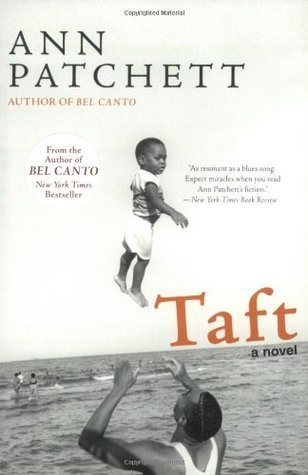
ANN PATCHETT’S, “TAFT.”
Ann Patchett’s, “Taft,” is the third book that I have read by this supremely talented writer that I wish never ended. All and All, I have read seven of her books and the one thing they all have in common is fantastic characters, wonderful stories, and superb writing.
One of the main features of Leonardo DA Vinci’s paintings, a feature that sets him aside from almost all other painters and sculptors, is that there is nothing in a DA Vinci painting, whether it be a sleeping dog, a baby in a crib, the grass beneath a character’s feet, or the blue of the sky above that is not alive and in motion. There is nothing stationary, everything has life and as you look at his works it is hard not to say to yourself what is that dog going to do next, or is the sky slowly going to turn grey.
That is one of the great characterizations of Ms. Patchett’s works. In “Taft,” a girl who walks into a bar, shy and with her head down, with skin so light that it is almost transparent, and who could probably be 10 or possibly 18 years old and seems completely harmless, but with the passage of a little time you are suddenly expecting her to do something crazy and when she doesn’t you breath a sigh of relief. Ms. Patchett’s characters, like a Da Vinci subject, is full of possibilities, despite appearances. I have often called her characters energized as though they are on steroids, and that is as true in “Taft,” as in all her novels that I have read.
“Taft” is a study of fatherhood with two parallel stories, one in first character narrative and the other in third person narrative, that brings to light the importance of fathers in the life of their children, whether they be boys or girls.
It is just another example of the extraordinary talent that Ms. Patchett possesses, whether her novel is taken place in a bar in Memphis like in “Taft” or a home run by nuns for unwed mothers in Kentucky. Highly, highly recommend.
A Curious View: A Compilation of Short Stories by Joseph Sciuto

- Joseph Sciuto's profile
- 169 followers

