
Joseph Sciuto's Blog: A Curious View: A Compilation of Short Stories by Joseph Sciuto, page 17
April 28, 2022
“THE WORLD THAT WE KNEW,” BY ALICE HOFFMAN
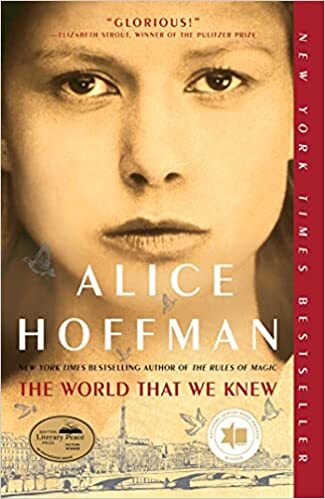
I have read many books about the Holocaust, fictional and non-fictional, and I have known a few Holocaust survivors, but while reading Ms. Hoffman’s fascinating, haunting, brilliantly crafted novel about the Germans’ genocide of the Jewish people two experiences and recollections kept running through my mind: First, while reading a biography on the great Alexander Hamilton the writer recalled an episode in Mr. Hamilton’s life when he defended a Jewish client in court who was literally on trial for being Jewish. Mr Hamilton, turned to the jury that was made up of Christians and asked, “Don’t you find it ironic that you are judging the guilt and innocence of my client for being Jewish while at the same time you worship your God (Jesus Christ) who was a rabbi and also Jewish? Do you dare judge the innocence of Jesus Christ?” Mr. Hamilton’s client was found not guilty.
Secondly, many a year ago at a Christmas Eve party I was sitting at a table with a number of men and women, all devout Christians, quoting this passage and that passage from the Bible, and at the same time expressing their disdain for Jews and how they wished that the school that their darling children attended had not hired a couple of Jewish teachers “because God only knows what disgusting things they were teaching them.” After listening to this bunch of hypocrites I could not take it anymore and more or less told them the same thing Mr. Hamilton had said. They argued and told me what I said was not true. Yes, he might have been a Jew once but it was he who showed the Jews the errors in their beliefs and tried to convert them. I simply replied, “He died a Jew, and the Christian religion did not come about for another three centuries after Christ’s death.” I then got up and left and went to seedy bar where I felt more comfortable.
Ms. Hoffman’s “The World that We Knew,” is a tapestry that weaves together similarities between Judaism and Christianity and delinerates between science and the supernatural that creates a world of wonder, love and sacrifice, cruelty and evil.
Hanni Koln sacrifices her life for her twelve year old daughter, Lea, and sends her away from her home in Berlin to save her from the Nazi regime. In desperation, Hanni turns to Ettie, the daughter of a rabbi, who has been eavesdropping on her father and learns the secret to creating a rare and unusual golem that she names Ava, who is sworn to protect her daughter, Lea.
This takes Lea and Ava on travels through France, to mountain villages, convents, a home of a doctor, a home of family relatives where they are thought to be safe in Paris, until the French puppets of the Nazis’ follow their orders and start rounding up all Jews and sending them either to labor camps or concentration camps. Ava, who is a thousand times stronger than any humans, protects Lea but it is on their journey to find safety that they meet fellow Jews also on the run from the Nazis and are simply trying to survive and to fight back against the evil, soulless Germans.
Strong relationships form among this group and even though they travel different paths they always seem to be connected through love and caring and the hope to be free from the German menace.
Ms. Hoffman has brilliantly crafted a novel, with amazing characters, a myriad of stories and mysteries, that literally leaves the reader glued to the book and the idea that love is never-ending.
I truly magnificent work of literature.


April 25, 2022
“CITIZENS OF LONDON,” BY LYNNE OLSON
During a good part of the covid 19 pandemic over the last three years, I have had a number of people complain to me about wearing masks, getting vaccines, not being able to go to the movies, or visit family during the holidays, and having our rights as Americans infringed upon. My usual response to most of these complaints was simply, “if you think what you are going through right now is terrible, you should have lived in London during the German blitz of that city during World War 2.”
If you have been fortunate enough to read numerous books on World War 2, by reputable historians, as I have, you learn that not one book tells the whole and the true story about many of the key players. It is only now, after reading many books, that I am getting a fuller understanding of Presidents Roosevelt and Truman, Prime Minister Churchill, General Eisenhower, Stalin, General George Marshall, etc.
At times the ineptitude, lack of knowledge, lack of empathy for fallen soldiers and civilians, the ugly display of egos that cost tens of thousands of lives is astonishing.
At other times, the light shines brightest on the real stars of World War 2, the men and women, who most Americans have never heard about.
Lynne Olson’s, “Citizens of London,” shines brightest on the brave citizens of London, who throughout the war lived with the prospect of death at any moment, going homeless, going without food, losing friends and relatives who one second you were talking to and the next second they were dead from explosives from German bombs that ripped them apart. And yet, the citizens of London never thought of surrendering to the Nazi machine and Hitler. They fought on as gallantly as the soldiers on the front lines.
The British were the last defense against Hitler before they crossed the ocean and attacked the United States. By 1940, they already had submarines patrolling off the eastern seaboard of America, but for the majority of U.S. citizens they continued to live their lives as though the war was happening on another planet. Winston Churchill, who did not bow before many men, begged President Roosevelt for help but the U.S. Congress did not want to hear about it, and President Roosevelt did not seem to prioritize the situation. The polls showed little support to go to war.
Joseph Kennedy, the Ambassador to Britain at the time, quit his post in 1940 and came back to America and declared the British finished. The Blitz was a little too much for him, even though he had moved to the countryside that was much safer. He was replaced by the shy, idealistic, former Governor from New Hampshire, John Gilbert Winant, who by the end of the war was the most admired American in Britain, not only by government officials, the royal family, but with the common hardworking British citizens. Unlike his predecessor, he stayed in London, walked the streets of that battered city, got to know the brave people of London, and fought like hell to get U.S. support pouring into Britain. He is the unknown hero of this story, and whereas Americans might not know who he was, the British people honored him with the highest accolades an individual could receive. He was also called a LONDONER (a citizen of London).
Another American called a LONDONER, was the framed U.S. newsman Edward R. Murrow whose broadcasts from London gave Americans their first true understanding and insights into the horrors that the citizens of London were living with every minute of their lives. Fortunately, for all involved, even American politicians and President Roosevelt listened to his broadcasts.
Yet, it was not until the bombing of Pearl Harbor that America joined the war against the Japanese, Germans, and to whatever extent the Italians played. Previous to joining the British and the allies, President Roosevelt picked the millionaire businessman Averell Harriman to run the Lend-Lease program set up by the administration that supplied Britain with much needed armament in exchange for British controlled land in different parts of the world. Mr. Harriman was also a citizen of LONDON but whose glamorous lifestyle was not all that affected, possibly enhanced, while living under the Nazi Bombardment.
The U.S. military apparatus that was first set up in London, under the supervision of General Eisenhower, was so ill-equipped, ill-informed, and lacking in knowledge and well trained soldiers that the British soldiers, at first, thought of them as their answer to the “Italians.”
Naturally, this would change and if not for American involvement and engineering the Germans would have most likely won the war against the allies.
But if not for Churchill’s insistence that we start the British and American counteroffensive in Northern Africa and up through Italy it could have been a disaster. General Eisenhower, and the American military and the administration, wanted to immediately end the war by crossing the English channel and liberate France, in essence, start off with the D-Day invasion that would have been a bloody and devastating defeat for the allies.
What I have written in this review is only a very small sample of this amazing, informative, and comprehensive book. Ms. Olson explores so many different aspects of the war and its aftermath that it is nearly impossible to pinpoint and highlight all of them.
Besides Mr. Winant, she also highlights one other unknown American hero whose contributions and aviation knowledge would change the course of the war, and make the invasion of D-Day a success. Tommy Hitchcock, was recruited by his friend Mr. Winant, who both flew missions during World War 1. After he was turned down, at the age of forty-one, when he volunteered as a fighter pilot it was Mr. Winant who convinced him to come to London as an assistant U.S military attache and would act as a liaison between the U.S. Eighth Air Force and the British RAF’s Fighter Command. After witnessing a new hybrid fighter jet with more speed and more nimble than any fighter jet Mr. Hitchcock had ever seen, he and Mr. Winant petitioned the administration to build the planes. They eventually gave in, and the new fighter jets accompanied the big bomber planes over Germany, and instead of 9 out of 10 bombers being shot down by the Germans, the German counteroffensive against the bombers was eliminated and finally the allies were able to hit their targets without being shot down and returning to base. The new hybrid fighter jets changed the course of the war and made the D-Day invasion a major success and bombing missions over Germany almost risk free.
Sadly, Mr. Hitchcock died when he took up one of the fighter jets to check out a possible fault in its design and it nose dived and crashed. The fault was simply too much fluid in its tank.
Not that it matters, but as of today this is the most important book I have read this year.
April 17, 2022
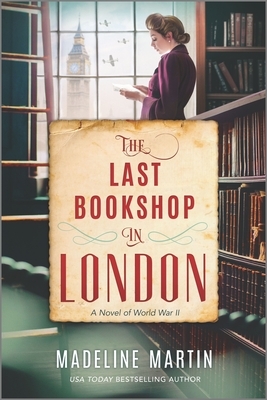
“THE LAST BOOKSHOP IN LONDON,” BY MADELINE MARTIN
“The Last Bookshop in London,” by Madeline Martin is a highly enjoyable, well written novel, with wonderful characters, set in London during the Nazi Blitz, and, in many respects, is a love letter to literature and the ability of books to take us to different places during the worst of times…to give us comfort when everything else looks so bleak. A simply beautiful story.
April 13, 2022
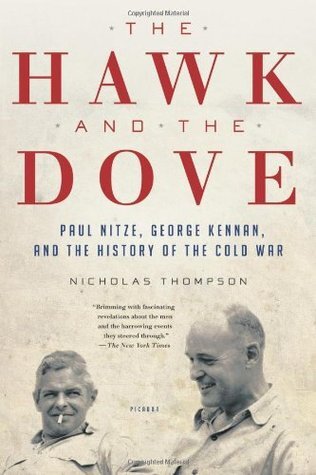
“THE HAWK AND THE DOVE,” BY NICHOLAS THOMPSON.
First, let me just say that in my opinion I would not recommend this book to anybody who has very little knowledge of World War 2 or the Cold War. The author, Mr. Thompson, takes it for granted that one would not probably pick up this book unless you did have that knowledge, and he is probably right.
Secondly, for anybody knowledgeable about the Cold War and World War 2 I would definitely recommend this book.
“The Hawk,” Mr. Paul Nitz and “The Dove,” Mr. George Kennan,” both had great influence on Cold War policies, and Mr. Kennan, while working in the U.S. embassy in Moscow right after World War 2 ended, wrote the famous “X article,” that in many ways predicted the collapse of the Soviet Union and the policy of containment that the U.S. would practice throughout the next fifty years. As years progressed, he became very much a dove in the sense that he believed the race for an advantage in nuclear weapons between the Soviet Union and the U.S. was very dangerous and could mean the end of civilization. He also at times believed that the U.S. should stop building such weapons, and that eventually the Soviet Union would not think of us as an adversary and so not fear a first strike by the U.S.
Mr. Nitze felt just the opposite, and felt that the U.S. should only negotiate an arms treaty if both sides eliminated nuclear weapons based on their weight, not on their speed and actual damage they could cause. Mr. Nitze was at the negotiation table when the Reagan administration and Mr. Gorbachev signed the first comprehensive treaty on the elimination of many nuclear weapons in Europe and Russia. Mr. Nitze could say that his strong stance, along with many others, eventually caused the collapse of the Soviet Union; and yet it was Mr. Kennan’s article “X” that predicted the collapse and laid the groundwork for the policy of containment that was a footprint that the U.S used for over fifty years.
Both Mr. Nitze and Mr. Kennan were born in the early 1900’s and died in the early 2000’s. Their influence and stamp on U.S. policy is undeniable. Yet, in my opinion, I am thankful that neither had the FINAL WORD on any policies or treaties that the U.S. followed or signed during the Cold War.
April 9, 2022
“LIT,” BY MARY KARR.
After reading Mary Karr’s “Liars’ Club” and “Cherry,” the first and second memoirs in the trilogy, I didn’t think it could get any better. I figured, “Lit,” the final memoir, would be just as awe inspiring and breathtaking as the previous two, but my God, was I wrong. “Lit,” was even better and if one puts all three together you have what I call an amazing collection and if I was an English Professor teaching about the art of the ‘memoir’ this is the collection I would have my class read.
“Lit,” explores the underbelly of alcoholism, the struggle to recover, and eventually the spiritual enlightenment of living with the disease but not falling prey to its lingering demons and temptations.
Ms. Karr, a distinguished poet, who uses poetry throughout the memoirs, reaches the highest levels of honesty which is a hallmark of all great poets from Dante, Byron, Keats, Poe, Elliot, and Yeats.
The great editor, Maxwell Perkins, thought that poetry, was the apex, the summit, of all the writing forms; and considering that Mr. Perkins, “The Editor of Genius,” was Hemingway, Fitzgerald, and Wolfe’s editor is saying a lot.
Ms. Karr’s story is horrid, but in the end with the guidance of her son, sister, counselors, priests, nuns, the ghost of her father, and friends she does reach what Dante called “Paradiso.” The final book in his great trilogy, “The Divine Comedy.” She might not reach the highest sphere, but with the help of her guides (Beatrice in “Paradiso”) she comes, to a certain extent, very close to the inner enlightenment and glory of God…to the concept of a Higher Being.
April 5, 2022
“STATISTICAL DECEPTION AT WORK,” BY JOHN MAURO
I bought this book, thinking that the author John Mauro was the same accomplished scientist, inventor, and professor John Mauro who is a friend of mine. When I told my friend, he told me it was a different John Mauro but that he read the book and thought I would like it and he was right.
“Statistical Deception at Work,” is a very readable book that sheds light on the misconceptions about statistical data used, not only by journalists, but by advertising firms, stocks, government agencies, casinos, lotteries, and of course, politicians.
Understanding numbers is essential into not getting fooled, and buying into lies, such as the US economy is in a downfall, even though job growth, housing, and wages are up, and yes inflation is high, but considering all the other positive factors the democrats should be bragging their heads off and yet the republicans, who have not done anything in the last year-and-a-half, are winning the economic game by stressing inflation and nothing else.
This book is a useful tool in understanding the data that is thrown at us on a daily basis, and understanding numbers, percentages, sample sizes, and demographics, to name just a few can debunk many of the myths that fake news channels like Fox News throw at their audiences day in and day out. It can also save the consumer quite a bit of money, and keep them well informed.
April 4, 2022
MARY KARR’S. “CHERRY.”
Mary Karr’s, “Cherry,” is a real “trip,” and I don’t mean that in the literal sense, like a trip to France. In short, it is the best articulation of what it feels like to be on an LSD trip, hallucinating for three days straight, that I have ever read.
“Cherry, is the the sequel to Ms. Karr’s memoir, “The Liars’ Club,” and it is just as breathtaking, honest, and exceptionally written as the “The Liars’ Club.” It concentrates on Ms. Karr’s teenage years living in east Texas, the sexual coming of age of the author and her friends, the use of drugs and booze, the terror of high school and the bullying that goes along with it, and experiences with the police and being locked up.
Ms. Karr’s ability to write what she calls a memoir, like a novel, is a gift that few authors have been able to achieve. The honesty in her writing is the type of honesty most writers only achieve in their ‘Letters,” or in today’s world with emails.
Ms. Karr is a major talent, and I once again, want to thank Lorna for introducing this fabulous writer to me.
March 30, 2022
“THE LIAR’S CLUB,” BY MARY KARR
“All you have to do is write one true sentence. Write the truest sentence that you know.” – Ernest Hemingway.
In short, one can never go wrong writing honestly and truthfully. It’s what makes a great writer, and Mary Karr’s memoir, “The Liars’ Club,” is a example of how honest and truthful writing can lead to literary greatness.
“The Liar’s Club, is tragic…so tragic that at times it’s totally funny. It’s so funny that at times it is totally tragic.
The story follows the life of Mary Karr, her sister, mother and father from the time she is just four years old and her sister a few years older. Raised in East Texas, her family life is filled with turmoil and unspoken, hidden sorrows. Yes, they are what one might call a dysfunctional family, but there certainly exist bonds of love between all the main characters.
Ms. Karr has turned a memoir into a suspenseful, tragic, comedy. It reads more like a novel, with great characters, a story that keeps your interest through out, and the writing is nothing short of superb, honest, and trustworthy. I highly recommend.
Thank you Lorna for recommending this book
March 26, 2022
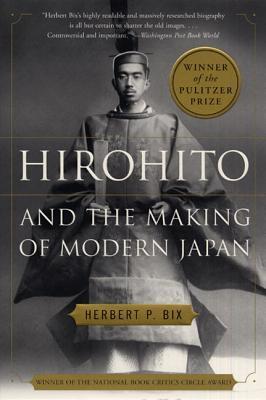
“HIROHITO,” BY HERBERT P. BIX
“It’s extraordinary how we go through life with eyes half shut, with dull ears, with dormant thoughts. Perhaps it’s just as well; and it may be that it is this very dullness that makes life to the incalculable majority so supportable and so welcome.”
— Joseph Conrad
“Hirohito,” by Herbert P. Bix is a very detailed, and for good measure let me repeat, very detailed, highly informative, at times quite difficult to read, and throughout hints of America’s complicity in everything that has gone wrong since the beginning of civilization.
The biography on Japan’s Emperor Hirohito, who at five feet, two-inches tall and sickly looking, was cultivated like former emperors as a living deity from early in his childhood. Strange, that if you look at quite a few of the war criminals during the 2oth century, Stalin, Hitler, and Emperor Hirohito, they were all fairly small in statue…not that that means anything.
Hirohito was fortunate enough to have members of his loyal court, military leaders in the army and navy, politicians and the press behind him in ways, that Donald Trump, would be envious of, and if he was able to read one might think he tried to follow his play book.
The Japanese atrocities, all approved and sanctioned by the emperor, in China during the 1930’s in which the total civilian deaths were as high as five million, the millions of indiscriminate deaths during the war in the the Pacific, especially in the Philippines, and the murder of his own subjects by inciting and training his pilots in the art of the kamikaze attack, and his lack of remorse when the atom bombs were dropped and his only worry being that if he surrendered he might be put on trail as a war criminal. Amazingly, it was emperor’s subjects (citizens) who were the blame for the war and the lost of millions of lives, and strangely enough a vast majority of the Japanese population believed they were the blame. Yes, as the quote by Conrad above states, “It’s extraordinary how we go through life with eyes half shut, with dull ears, with dormant thoughts. Perhaps it’s just as well; and it may be that it is this very dullness that makes life to the incalculable majority so supportable and so welcome.”
With the help from his loyal subjects, prime ministers, military, and that ever disloyal, disobedient, egoistical General MacArthur, Emperor Hirohito was never put on trail. Yes, he was stripped of all his power, but remained in the ceremonial position of Emperor until his death in 1990… never admitting to his hand in all the military atrocities and his sanctioning of the wars against China and the Allied powers.
March 17, 2022
WENDY WATERS, “FIELDS OF GRACE.”
The last book I read by Ms. Waters was, “Catch the Moon, Mary,” which in my review of the book I called it a ‘little gem.’ “Fields of Grace,” is not a little gem, but a much ‘larger, polished GEM.’ It is a beautifully crafted book that covers seven decades (two in great depth), an abundance of great characters (enough for three novels), beautifully written and with multiple plots that are completely realized.
Grace Fieldergill (shortened to Grace Fielder) is a starry eyed young actress from a small town (Devon) who moves to London to pursue her dream of becoming a star on the London stage. She finds fame fairly quickly as she is hired by John Gielgud’s company to be an understudy to the famous actress Peggy Ashcroft who is playing ‘Ophelia’ in Shakespeare’s Hamlet.
Ms. Ashcroft misses a performance which gives Grace a chance to shine, and she shines like the brightest of stars, and is lucky enough to have a famous, extremely rich, actress and a well-known producer in the stands watching her performance. Needless to say, her career takes off like a rocket.
Ms. Waters’ fictionalized versions of Sir John Gielgud, Peggy Ashcroft, Sir Laurence Olivier, David Nivens and a host of other stage and film legends during the thirties and forties in London makes this novel even more delightful, and the author has certainly done her homework on the life and times of these legendary performers, on the impending war in Europe with the rise of Hitler, the war itself and its devastation, the murder of millions Jews, and the sin of being a homosexual in the 1930’s and 1940’s in Europe and the world.
Grace Fielder and that famous producer in the stands during her first real break, John Hopkins-Reimer, who is both a homosexual and half Jewish, fall in love and it is this unusual love affair that becomes the center of the novel and where the many subplots stem from and that the reader becomes fully enthralled and mesmerized in.
It is apparent that Ms. Waters is a lady of the theater. I was able to figure that out even before reading her bio. As a former theater major myself, I can tell you that only someone who loves the theater dearly, could right a book that deals with the theater so convincingly.
At the end of each year, I make a conscious list of the most important book I read that year, the best novel I read, the best poet (which usually turns out to be Byron) and the most enjoyable novel I read that year. Last year the most enjoyable book I read was Pete Hamill’s “North River.” This year and, I know it is early, the most enjoyable book I have read so far is Ms. Waters’ “Fields Of Grace.” It is interesting to note, that I read Mr. Hamill’s book very early in the year, the second week of the year to be exact.
I highly recommend this novel.

A Curious View: A Compilation of Short Stories by Joseph Sciuto
- Joseph Sciuto's profile
- 169 followers

