
Joseph Sciuto's Blog: A Curious View: A Compilation of Short Stories by Joseph Sciuto, page 15
September 10, 2022
ALICE HOFFMAN’S, “THE MUSEUM OF EXTRAORDINARY THINGS.”
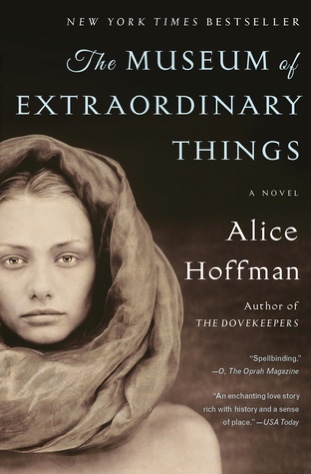
This is not a book I would recommend to everyone. In fact, it is more depressing than it is up lifting. It is work of fiction based very much on actual events: The Russian slaughter of Jews in Ukraine in the late 1890’s, the wave of Jewish and Italian immigrants to New York where they are forced to work for nothing and have no rights which is perfectly okay with the corrupt politicians running Tammany Hall and the bought off policemen, children working 12 hour days in factories with little ventilation and the threat of deadly fires, and a disregard for human life, unless one is lucky enough to be rich.
“The Museum of Extraordinary Things,” is run by the sinister impresario Mr. Sardie who was once a famous magician in Europe until he was forced to leave and come to America where he decides to trade in magic for science and to open shop on the ever expanding amusing park known as Coney Island in Brooklyn. The museum thrills the public by showcasing human beings with deformities, such as a man who is cover with hair and is called the Wolfman or a girl with no arms but when made up looks like a Butterfly. They are paid very little, but since it is the only work they can get they have no choice.
Looking for bigger and better attractions to compete with larger and newer attractions on Coney Island, Mr. Sardie will stop at nothing to keep in business and make more money, including taking the corpse of a young lady killed by a nefarious killer who was hired by an attorney that represents the owners of the factories down in lower Manhattan. The young lady was causing problems and bringing to light the abuses, poor wagers, and horrible working conditions the employees were forced to endure.
Mr. Sardie, the scientist, drains the body of blood and fills it would embalming fluid with the sole intention of cutting off her legs and using it as an attraction (half woman, half fish). This act of inhumanity is one of many stories that carry this hair rising novel to its conclusion.
Ms. Hoffman’s depictions of turn-of-the century New York are as truthful as any novelist writing about this time that I have read. In truth, like I said earlier it is horrifying, yet mesmerizing and educational. Her characters are marvelous and her storytelling, like always, is spellbinding. She is truly a magnificent novelist.


September 4, 2022
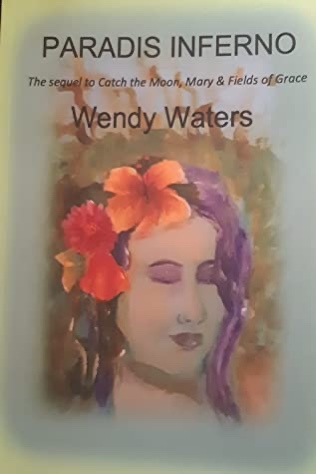
“PARADIS INFERNO,” BY WENDY WATERS
Whatever is begotten, born, and dies.
Caught in that sensual music all neglect
Monuments of unageing intellect.
Monuments of its own magnificence;
And therefore I have sailed the seas and come
To the holy city of Byzantium.
The immortal lines of poetry, above, are from William Butler Yeats’ poem, “Sailing to Byzantium.” Like Dante, Shakespeare, and Shelly, Yeats believed that the only thing that would withstand the worst of all annihilations was ART, and there is no art more likely to withstand destruction than the universal art of music.
Ms. Waters “Paradis Inferno,” (Paradise/ Inferno) runs with this idea mainly through the character of the devil who has taken the deceased body of a pilot and now goes by the name of Stanis Vedil. Mr. Vedil has collected some amazing treasures over the years, such as two sketches by Da Vinci and three hand written plays by Shakespeare. He goes to Sotheby’s auction house, and after they pass the authentication process Mr. Vedil is a very rich man (Probably worth billions). He buys nightclubs around the world and calls them “Paradis Inferno.” Accept for a bombing at the NY club, they are amazingly successful
Naturally, Mr. Vedil is very handsome, thirty-five years old, and in the blink of the eye he is on the cover of magazines and newspapers, but it is not fame he is after but his soul. He buys a Chateau in France and lives with his butler, cook, and wife and befriends a mouse he names Lion, and despite warnings from his staff about rodents multiplying he ignores their advice, and Lion becomes his pal who he has lively conversations with, even if he is the only one talking. Lion, turns out to be a female, and she has a liter and now he has a second surviving mouse to talk to named Lamb.
Mr. Vedil main objective is to meet Mary Granger, the famous concert pianist, whose music is so beautiful that it raises the spirit and soul of all who hear it. Mary has not appeared in over twenty years and it is at the insistence of her son and daughter-in-law that she decides to come out of retirement to perform at an amphitheater before twenty thousand people.
Mr. Vedil, buys a thousand tickets, and asks that he be able to meet the famous musician because it is her music that can revitalize him and re-store his soul so that he and the masses can once again find a path to Heaven.
“Paradis Inferno,” is the third in a series, but one doesn’t need to read the previous two books to know what is going on. Ms. Waters seamlessly introduces characters from the other two books and one is never left in the dark. Her descriptions of Florence, Rome, and Paris are breathtaking. There are many story lines that run through this fascinating book, but like any really good books it has wonderful characters and a theme that is captivating.
Ms. Waters second book in the series, “Fields of Grace,” which came out earlier this year is the most enjoyable book I have this year, but I have to admit “Paradis Inferno,” gives it a good run for its money. I highly, highly recommend.
August 31, 2022
MIKHAIL GORBACHEV
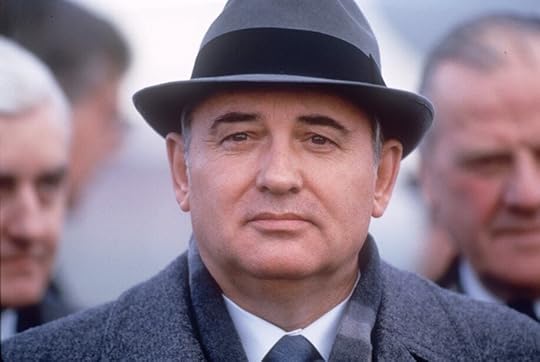
FOR A SHORT, GLIMMERING, MOMENT IN HISTORY YOU MADE THE WORLD BELIEVE THE IMPOSSIBLE. THANK YOU, MR. GORBACHEV.
August 24, 2022
“VIOLETA,” BY ISABEL ALLENDE
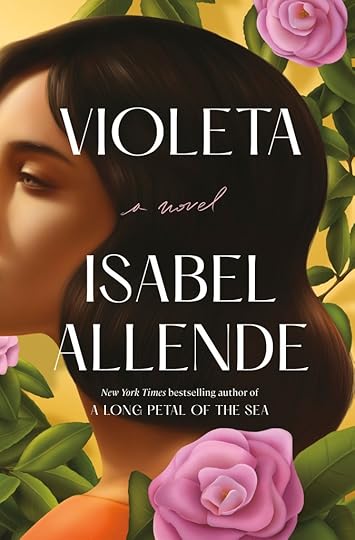
Ms. Allende’s latest novel, “Violeta,” is in many respects a retelling of a history that she has covered in previous books, such as the brutal military dictatorship in Chile, and the discovery of a cave where the bones and clothing of missing people killed by the police are buried.
Violeta, the main character in the story, retells her life story to her grandson, Camilo, in letters that cover a life of one hundred years. Born during the outbreak of the Spanish Flu in her country in 1920 and right up to her one hundredth birthday and the outbreak of the covid-19 virus in 2020.
The novel covers many of the great historical moments of the 20th century, such as the Great Depression, World War 2, the revolution in Cuba, the covert operations of the CIA throughout Latin America and South America, the Mafia’s involvement in Cuba and Miami, and the slow but torturing human rights struggle of women around the world.
But in the end, it is Ms. Allende’s storytelling and her development of great characters that make this novel such a marvelous read.
August 17, 2022
ALICE HOFFMAN’S, “MAGIC LESSONS.”
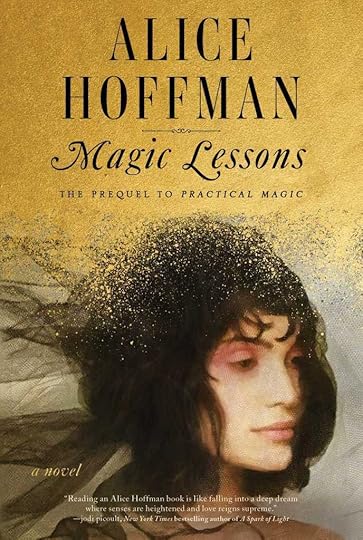
After reading a number of novels by Ms. Hoffman, I think I can say with some certainty that she loves birds of all varieties (doves, crows, sparrows, etc), all animals, appreciates nature to its fullest, has an acute knowledge of history, writes great female characters, and is very simply an amazing writer. “Magic Lessons,” is another literary piece of work by a writer who is at the top of her profession. Like everything I have read by Ms. Hoffman, I strongly recommend this novel.
August 9, 2022
COLSON WHITEHEAD’S, “THE NICKEL BOYS.”
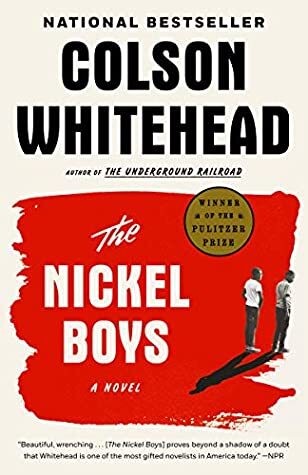
Colson Whitehead’s novel, “The Nickel Boys,” is not the type of book you pick up if you are seriously depressed, or for that matter, in a very happy mood. It is the type of book that like Conrad’s, “Heart of Darkness,” uncovers a horrifying truth that far too many people are unaware of or simply refuse to acknowledge and like Conrad wrote in Lord Jim “It’s extraordinary how we go through life with eyes half shut, with dull ears, with dormant thoughts.” (If it sounds like I am writing a review on Conrad I assure you I am not. Conrad is my favorite author and while mentioning him in relation to Mr. Whitehead’s novel I am giving Mr. Whitehouse the highest praise I could write about a writer).
“The Nickel Boys,” is based loosely on Ben Montgomery’s reporting for the Tampa Bay Times on the Dozier School for Boys in Marianna, Florida.
The main character is Elwood Curtis, a young black, talented, educated teenage boy who lives with his grandmother after his mother and father left Tallahassee and Elwood, and moved to California in the 1960’s. His future is bright and he has just been accepted at a highly acclaimed school, but like so many black teenagers he is arrested unfairly and sent to juvenile reformatory called the ‘The Nickel Academy.’
The Academy is the worse nightmare that one could impose on a teenager. The men in charged are racist, mean-spirited, cruel, and in short, run a chamber of horrors. Elwood survives by reciting quotes to himself from Martin Luther King, and reading anything he can get his hands on. He is not the type to cause trouble and he forms a relationship with another boy, Turner, who thinks Elwood is naive and doesn’t see the world for how crooked it really is, yet despite this they do look out for each other and their bond is strong.
Elwood, despite being a quiet and obeying student, is nevertheless tortured by his white superiors in charge and is left with scares on his legs that are grotesque and mind altering.
It is the ramifications from this type of cruelty, that lead Elwood and Turner down a path that is both riveting and terrifying and takes the reader on a journey of discovery … that there are two Americans, especially in the south right up through the 1970’s: one for the privileged whites and one for the lowly blacks and how that discrimination is passed down from one generation to another.
This is a great book, and I want to thank my friend Lorna for recommending the works of Colson Whitehead to me. This is certainly not the last book I will be reading by this author.
August 8, 2022
David McCullough
America and the world have lost a GIANT. https://www.nytimes.com/2022/08/08/bo...
August 3, 2022
“ELEANOR,” BY DAVID MICHAELIS.
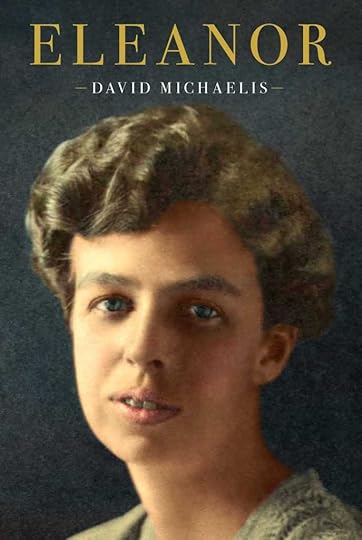
The “Roosevelts” are a political Dynasty the likes that we will probably never see again in American history. From the time President Theodore Roosevelt got into politics in the late 1890’s, to the time of Eleanor Roosevelt’s death in 1962 they were a dominant force whose policies, contributions, and aura were the face of America throughout the world.
Eleanor Roosevelt, who died at seventy-nine, outlived her uncle Teddy, who died at sixty, and her husband FDR, who died at sixty-three. Eleanor was the favorite niece of President Theodore Roosevelt, and if one were to ask who she was most like it was, in my opinion, her uncle Teddy. They possessed limitless amounts of energy, fought tirelessly for progressive causes, and believed that since they were lucky to be born rich they owed their country and the less fortunate much more, and they both left behind a written and oral history of their thoughts and ideas that historians are still and forever finding and reviewing.
David Michaelis biography, “Eleanor,” is a comprehensive history of this extraordinary woman whose childhood was anything but normal. Her mother died when she was five years old and her father Elliot, who she adored, died from alcoholism at age fifty. She lived with different relatives and her grandma on her mother’s side until her late teens. At a very young age, she possessed many of the prejudices of her relatives calling blacks and Jews by repugnant nicknames, but all this would slowly change as she visited the drenches during World War 1 and sat beside wounded soldiers and it would really take off during the husband’s long presidency and never let up. Whereas, her husband lacked empathy, she made up for it in a way that even FDR was hopeless to do anything about it.
She made it known that the internment of Japanese Americans during World War 2 was unconstitutional and Un-American. That the segregated US army represented everything, we as a nation were fighting against in World War 2. She was appalled by the lack of sympathy showed by her husband’s administration and both political parties when it came to the Nazi extermination of the Jews, and our country’s unwillingness to take in what amounted to nearly nothing when we could have taken in millions of Jews who died in concentration camps.
After her husband’s death her crusade for a United Nations that kept countries from going to war was unrelenting if not futile, but that did not stop the Soviet representatives and other countries unfriendly to the US from getting up and applauding this amazing woman’s efforts. She fought tirelessly against segregation and the Jim Crow south, for the rights of women and fair wages, and went after Senator Joe McCarthy and his committee on Un-American activities.
What I have written here is just a small part of this woman’s life that the author Mr. Michaelis’ writes about. He writes about the many intimate relationships her husband had with other women, and in turn, her many intimate relationships while married, and after the passing of FDR. He also writes about the strange relationship between her husband’s mother, Sara, and Eleanor.
It’s as though she lived three lives and I can honestly say she drastically help transform America for the better and she is undeniably one of the most important Americans our country has ever produced.
July 22, 2022
Review of Andrés G. López, “Cooperstown Picasso.”
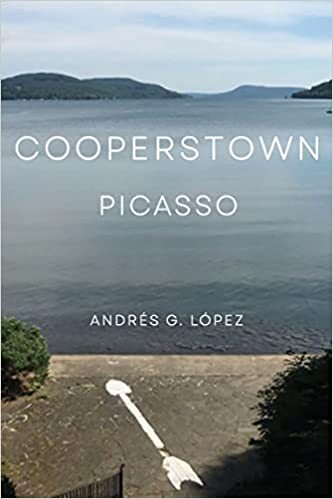
Review of Andrés G. López, “Cooperstown Picasso.”
During the 1990’s, it became commonplace for me to travel to New York the second week of October. One reason was simply to visit my family, and the second reason was because it was during the weekend of the second week that my brothers, friends, and I, all originally from the Bronx, would travel to this enchanted little town in Central New York called Cooperstown.
Naturally, Cooperstown to most baseball fans and even non-baseball fans is the home of The Baseball Hall of Fame. Strangely enough, if you didn’t know the Hall of Fame was in this beautiful and magical town you could easily walk by it and not even notice this so-called monument to the greatest baseball players of all time and that is ideally the way it should be, in my opinion.
When you walk through the town, nestled alongside the picturesque Lake Oswego, it is hard not to imagine that once upon a time most of America was similar to this town with quaint restaurants and bars, bookstores, colonial homes, adjacent farms, lake side homes, friendly and courtesy citizens, happy and cheerful children playing baseball while their parents look on. You doubt that any movie studio could re-create the enchantment of such a place, possibly the façade, but never the heart and soul of the people who live here or visit.
Historians have debunked the myth that Abner Doubleday invented the game of baseball in 1839 in this area of our country, and the novelist Andrés López in his latest novel, “Cooperstown/ Picasso,” takes us behind the façade that we see when we walk the streets of Cooperstown, visit its restaurants and bars, and admire its glorious architecture and pristine natural beauty and in so doing takes us on a gripping, suspenseful ride wrought with lies, scandals, marital infidelities, murder, and a small criminal ring that sells forged paintings from masters like Picasso for tens of thousands of dollars.
The main character, Tobias Pi, a divorced literature professor teaching at Pleasant Hills College is the unsuspecting witness, and eventually a target, of all the unseemly activities taking place in Cooperstown. The novel opens up with Dr. Pi teaching Shakespeare’s sonnet 55 which will have great relevance to the story. Stone and monuments, the poem claims, will be destroyed in war and savaged by time, but the written poem will live on in the fair memory of the young.
Not marble nor the gilded monuments
Of princes shall outlive this powerful rhyme,
But you shall shine more bright in these contents
Than unswept stone besmeared with sluttish time.
When wasteful war shall statues overturn,
And broils root out the work of masonry,
Nor Mars his sword nor war’s quick fire shall burn
The living record of your memory.
Gainst death and all-oblivious enmity
Shall you pace forth; your praise shall still find room
Even in the eyes of all posterity
That wear this world out to the ending doom.
So, till the Judgement that yourself arise,
You live in this, and dwell in lovers’ eyes.
Pi is fifty -one years old and lives in a large, old colonial home in Pleasant Hills and once a week he goes up to Cooperstown to teach a class to nurses. The distance from Pleasant Hills to Cooperstown is about and an hour and the hilly terrain and narrow roads and wintery weather makes for some very exciting, action scenes. Mr. López knows this country and terrain very well, and he uses it to perfection, and, in a sense, it becomes an important character in the story.
Except for Dr. Pi’s visits to Cooperstown, he lives a fairly simple life. He lives alone. His daughter, Constance, has moved to NYC and his son, Christopher, lives in Vermont with his family. Each night before falling asleep he texts each child a “Good-night, Love you, Dad.” His ex-wife lives in San Diego where she takes care of her parents. During the many quiet hours Dr. Pi spends alone he often thinks of his sister Maria, a gifted pianist, who was tragically killed in an accident when she was just fifteen. He used to love hearing her play music, and as a nine-year-old, he used to sit next to her and turn the pages of her music book as she played. Dr. Pi is also a musician and plays the guitar and many of his original compositions to relax. He usually falls asleep watching scientific shows on TV.
He, like so many lonely men, falls into an online relationship with a beautiful and talented young Russian woman, Katerina, who is twenty-four and now lives in Poland. As the relationship grows, Dr. Pi starts sending her gifts, and starts imagining Katerina and him falling in love and having an intimate relationship. They text and post pictures of themselves on Instagram, and he depends on her texts and pictures to cheer him up during the day and make him sleep peacefully at night. He knows the idea of a fifty-one-year-old man and a twenty-four-year beauty ever having an intimate and loving relationship is insane but that does not stop him from seriously thinking of going to visit her in Poland, or inviting her to his home, all expenses paid.
During his once-a-week trip to Cooperstown to teach the nurses, he arrives early and sits on a bench close to the water. He is totally alone until out of nowhere an attractive lady, Janet Brayden, sits on the bench beside him. They exchange pleasantries but that’s about all, and after about fifteen minutes she gets up and leaves.
Pi doesn’t give it much thought until a few weeks later, while in Cooperstown and eating at a bar and restaurant, she approaches his table and reminds him of the night they were sitting on the bench. He invites her to sit down, and they converse about themselves. She tells him that she’s a painter, gives him her card, and invites him to her house to look and possibly buy some of her art.
It doesn’t take him long to visit Janet. She’s not only an artist but is very pretty and around his age, forty-five. She shows him her gallery, which was once a barn, and now is a showcase for her beautiful paintings. He buys a few paintings, and after another visit they start sleeping together and she invites him over to Christmas Dinner to meet her gifted son, Phillip, who is a talented pianist and loves playing the music of the masters.
It is during these visits to and from Janet’s house and gallery that Pi suspects someone is trailing him. Janet had told him that her ex-husband, Ebenezer, has been spreading dirty rumors about her, was jealous, and threatening her. On his way to Janet’s house, on a dark, snowy, and icy night Pi sees a pick-up truck not far behind him, and coming toward him a large trailer truck swinging back and forth on the icy road. He barely escapes a deadly accident, by speeding up and as he barely passes the trailer truck it swings right into the pick-up and kills the driver.
In another near deadly encounter, Dr. Pi is sitting on the bench beside the water at night when he feels a man come up behind him and puts a gun to his head, but before the gunman is able to pull the trigger, Pi who had learned marital arts from a friend in college, swings around and kicks the man in the face and knocks him down. The man quickly gets up and runs away.
Pi reports the attempted murder to the sheriff and the sheriff, and his men recover two teeth that Pi had knocked out of the gunman’s mouth. They are sure the DNA from the teeth will lead them to the ex-husband, but there is no match.
While at the sheriff’s office he gets an urgent text message from Janet that Joe, a friend, and former lover, has been arrested in NYC. When he arrives at Janet’s house she comes clean about herself in the hope of turning around her life. She tells him that Joe and she have been running a forgery business. Her forging the works of masters like Picasso and Joe selling them to the mob for a couple of thousand dollars and, in turn, the mob selling the pieces for as much as fifty thousand dollars.
As more and more lies are uncovered, and more criminal activity discovered, and sexual relationships revealed, and the mysterious Russian beauty Katerina lingering in the background throughout the story, the more and more thrilling and suspenseful this beautifully crafted book becomes.
Keeping with the relationship between Cooperstown and baseball, Mr. López’s novel reads as gracefully and beautiful as Joe DiMaggio playing centerfield in the old Yankee Stadium.
And keeping with the artistic references made throughout the book, “Cooperstown/Picasso,” is as enchanting and spell bounding as Sergei Vasilyevich Rachmaninoff’s Piano Concerto No. 2.
July 10, 2022
“OCTOBER 1964,” BY DAVID HALBERSTAM
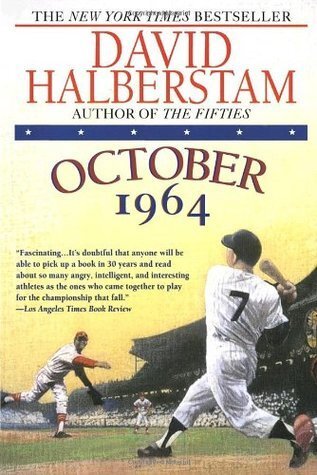
As a child in the mid-sixties and after as a teenager through 1970’s it was baffling to me how one league could dominate another league in the All-Star game. At one point the National league beat the American league like 19 out of 20 games. Statistically, it literally seemed impossible, especially since a pennant winning team who won 100 games, lost 62 games.
Throughout most of the 20th century it was said that baseball was a reflection of the country at the time, and in many ways it was, as were many corporations.
In 1947 the great Jackie Robinson broke the color barrier, and the Dodgers went on to sign a number of outstanding black ballplayers and after awhile the rest of the National league caught on and started signing the likes Willie Mays, Hank Arron, Bob Gibson, Lou Block. Wille McCovery, Curt Floyd, and the list goes on and on.
Now, there was no secret how great the potential these ballplayers possessed and the Yankees could have signed Wille Mays but past on him simply because he was black and the Yankee front office was racist, as were most of the many American league teams.
Despite cries from the legendary Babe Ruth and Ted Williams that it was a disgrace that more black ballplayers weren’t in the majors it seemed to fall on deaf ears in the American league front officers.
The Kansas City Monarch’s of the Negro league, at certain times, had so many future major league superstars on their team that they could have easily competed against nearly any team in both the American and National league.
As I learned more and more about baseball, a sport I truly love, I came to realize that it wasn’t such a surprise that the National League won so many All-Star games. They possessed the cream of the crop, the very best in either league, and they were mostly black ballplayers who the American league passed on.
David Halberstam, one of my favorite historians, dissects the aging and ailing Yankee team in 1964 and the great black stars the St. Louis Cardinals had on their team…top among them Hall of Framer Bob Gibson and Lou Block.
But, he goes much further than just that series and gives us a disturbing look at the history of baseball. A history fulled with a profusion of racism, and corrupt ownership that tried to steal any penny they could from the players.
He also gives us a portrait of ballplayers like Bob Gibson, Lou Block, Mickey Mantle, and Whitey Ford that shows their competitiveness, humanity, and a willingness to play severely hurt that would sideline 95 percent of the players of today. Baseball fan or not, I strongly recommend this book.
A Curious View: A Compilation of Short Stories by Joseph Sciuto

- Joseph Sciuto's profile
- 169 followers

