Michelle Higgs's Blog, page 4
December 14, 2014
DAY 3: 12 DAYS OF VICTORIAN CHRISTMAS CARDS
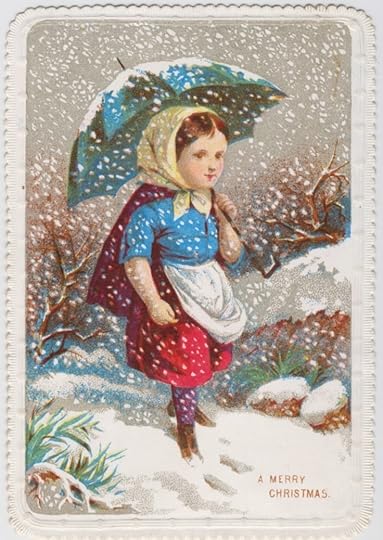
For Day 3 of '12 Days of Victorian Christmas Cards', I'd like to share an early card from the 1860s featuring a girl in the snow. I don't think this girl is really dressed for such wintry weather!
 Copyright Michelle Higgs
These early cards were quite small, about the size of visiting cards which the Victorians left at people's houses to say they had called. Christmas cards from the 1860s had a paper 'lace' border, usually with a scalloped edge. You'll notice that there are a limited number of...
 Copyright Michelle Higgs
These early cards were quite small, about the size of visiting cards which the Victorians left at people's houses to say they had called. Christmas cards from the 1860s had a paper 'lace' border, usually with a scalloped edge. You'll notice that there are a limited number of...


December 13, 2014
DAY 2: 12 DAYS OF VICTORIAN CHRISTMAS CARDS
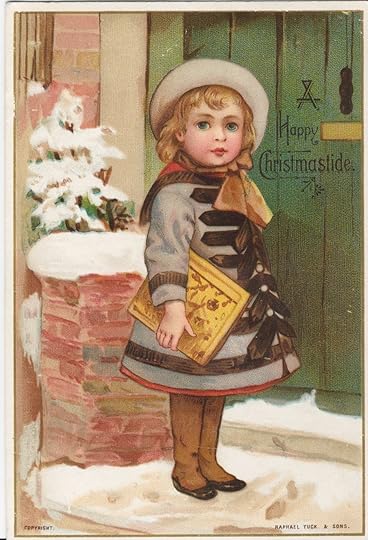
Yesterday, I shared an image of a Victorian Christmas card featuring a scary-looking Father Christmas in a green cloak. Today, for day 2 of '12 Days of Victorian Christmas Cards', I'd like to show you a 'typical' design from the 1880s:
 Copyright Michelle Higgs
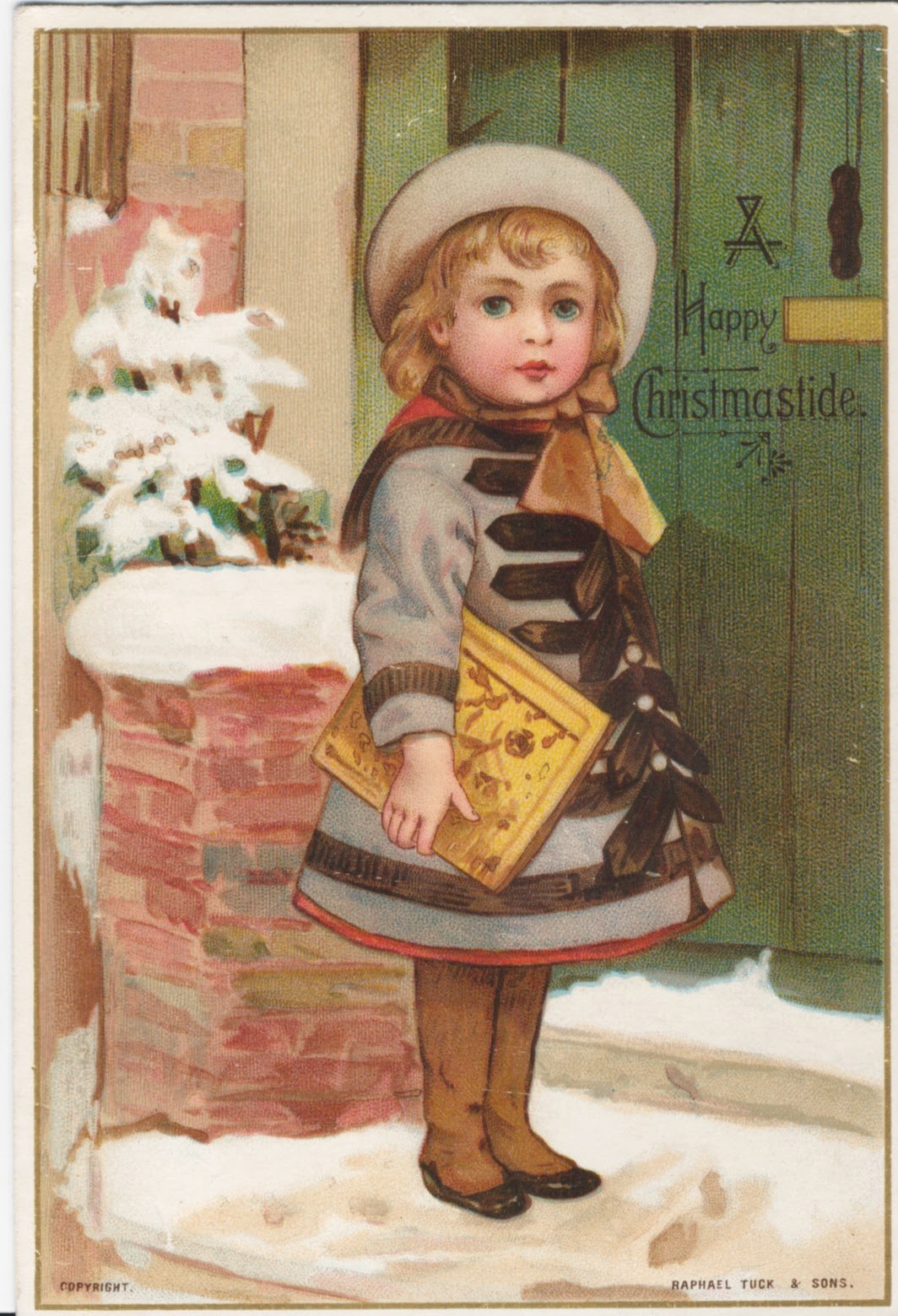
Here, we have a rosy-cheeked child dressed for winter weather, out in the snow. Christmas cards featuring children were commonplace in the 1880s, partly because children made up a good proportion of the target market. As mentioned yesterd...
 Copyright Michelle Higgs
Here, we have a rosy-cheeked child dressed for winter weather, out in the snow. Christmas cards featuring children were commonplace in the 1880s, partly because children made up a good proportion of the target market. As mentioned yesterd...
December 12, 2014
DAY 1: 12 DAYS OF VICTORIAN CHRISTMAS CARDS
My very first book was about the history of Christmas cards (Shire Books, 1999) and I still have a small collection of Victorian cards. Unlike modern cards, they are inventive, humorous and attractive; they are often like miniature works of art because they reflected the changing tastes of the public and the artistic movements of the time.
Although the world's first Christmas card was produced in 1843 for Henry Cole (later Sir), sending pre-printed Christmas cards did not catch on until almost...
Although the world's first Christmas card was produced in 1843 for Henry Cole (later Sir), sending pre-printed Christmas cards did not catch on until almost...
December 9, 2014
SERVANTS' REGISTRIES: HOW VICTORIAN MAIDS FOUND THEIR PLACES
For the past three months, I've been working solidly on my new book Servants' Stories: Life Below Stairs in Their Own Words 1800-1950. As a result, my 'Visitor's Guide to Victorian England' blog has been shockingly neglected so it's time to make amends!
While writing and researching the book, I've been truly immersed in the world of domestic servants. One of the areas I looked at was how maids found their jobs. There was, of course, word of mouth and the 'Situations Vacant' columns in newspap...
While writing and researching the book, I've been truly immersed in the world of domestic servants. One of the areas I looked at was how maids found their jobs. There was, of course, word of mouth and the 'Situations Vacant' columns in newspap...
August 26, 2014
A VISIT TO ST LUKE'S HOSPITAL FOR LUNATICS, 1900
There were some very moving stories in last week's episode 1 of ITV's Secrets from the Asylum with three celebrities uncovering the records of their ancestors who all became patients in lunatic asylums. Aside from some slight over-reactions from the participants, the programme did succeed in showing how people with senile dementia, post-natal depression and general paralysis of the insane (the last stage of syphilis) were treated in Victorian times.
The concluding episode airs on Wednesday and...
The concluding episode airs on Wednesday and...
August 5, 2014
VICTORIAN LUNATIC ASYLUMS: HOW TO GET ADMITTED
It's been a while since I blogged but I'm starting back with a great guest post from Kate Tyte, an archivist, writer and expert on mental health history. Writing about Victorian lunatic asylums, she offers excellent advice about how to get admitted to one and, more importantly, how to get out again:
Any visitor to mid-Victorian England would find the healthcare landscape very different from today’s. There were no state-funded hospitals, but in 1846 each county was required to open an asylum t...
Any visitor to mid-Victorian England would find the healthcare landscape very different from today’s. There were no state-funded hospitals, but in 1846 each county was required to open an asylum t...
June 24, 2014
VICTORIAN SHOPPING - SHOPGIRLS AT THE DRAPER'S
If you visit Victorian England right at the end of Queen Victoria's reign, a look inside one of the luxurious department stores or draper's emporiums is highly recommended. From the 1880s, shopping had become a leisure pursuit for the wealthy and the largest drapery stores, especially in London, employed hundreds of staff to cater to the needs of their clientele.
By 1900, female shop assistants, or 'shopgirls', had become extremely important to the success of the draper's emporiums, not least...
By 1900, female shop assistants, or 'shopgirls', had become extremely important to the success of the draper's emporiums, not least...
May 23, 2014
THE WRITERS' BLOG TOUR
I was very pleased to be invited to join the Writers' Blog Tour recently by my Twitter friend Gillian Mawson at http://whaleybridgewriter.blogspot.co.uk
I hope you’ll enjoy your visit, and will go on to sample the blogs of the other talented writers, highlighted below. We are part of a growing international community of writers, working to introduce our blogs to a wider audience. Christine Findlay, Chair of Bookmark Blair, (Blairgowrie Rattray and The Glens Book Festival) in Perthshire, Scotl...
I hope you’ll enjoy your visit, and will go on to sample the blogs of the other talented writers, highlighted below. We are part of a growing international community of writers, working to introduce our blogs to a wider audience. Christine Findlay, Chair of Bookmark Blair, (Blairgowrie Rattray and The Glens Book Festival) in Perthshire, Scotl...
May 8, 2014
THE PERILS OF BREACH OF PROMISE TO MARRY - ADVICE FOR GENTLEMAN VISITORS TO VICTORIAN ENGLAND
Today, I'm delighted to be hosting a guest post from Denise Bates, author of Breach of Promise to Marry: A History of How Jilted Brides Settled Scores. Her fascinating book sheds light on this little known law and explores the different ways in which it was used to claim for compensation after a seduction led to pregnancy; to exact revenge and financially ruin an ex-suitor; to illegally extort money in order to set up home with another lover; or simply to seek recompense for ‘hurt feelings’....
April 30, 2014
HISTORY CARNIVAL 133
When I agreed to host this month's History Carnival, I was looking forward to seeing the wealth of talent in blogging across all historical eras - and I was not disappointed. My research and writing is usually restricted to the Victorians with occasional forays into the Edwardian and WW1 periods. Reading the outstanding blogs from all kinds of history and other eras was both liberating and exciting, akin to visiting a new country for the first time. I decided not to follow a particular theme...