
Simon Ings's Blog, page 37
June 16, 2018
Putting the Kama Sutra in the shade
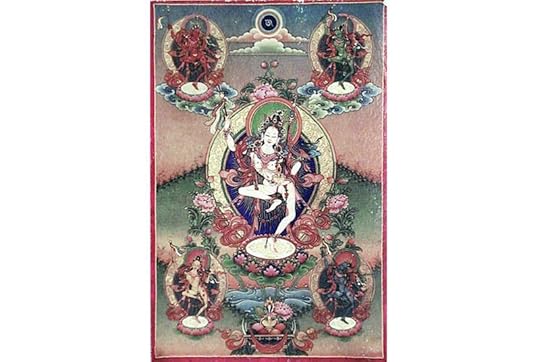
It is impossible not to like Chopel — ‘A monastic friend undoing his way of life,/ A narrow-minded poser losing his facade’ — if only for the sincerity of his effort. At one point he tries to get the skinny on female masturbation: ‘Other than scornful laughs and being hit with fists/ I could not find even one who would give an honest answer.’
Reviewing a new verse translation of Gendun Chopel’s Treatise on Passion for The Spectator, 9 June 2018.


Making the invisible, visible
“Shortly after the Big Bang, there would have been the energies and speeds for proton-proton collisions like this to have shaped the early universe. That’s no longer true. We found ourselves making a piece of work that isn’t really about nature as it exists at the moment. It was departure for us and, a troubling one at first.”
–Ruth Jarman
Another New Scientist assignment, interviewing artist duo Semiconductor, who turn the most abstruse scientific observations into captivating sensory experiences.
May 31, 2018
The unfashionable genius of William De Morgan
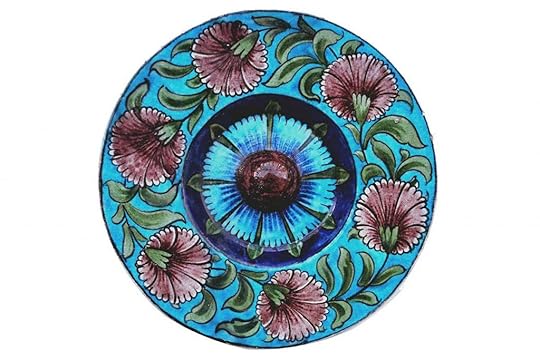
William De Morgan was something of a liability. He once used a fireplace as a makeshift kiln and set fire to his rented London home. As a businessman he was a disaster. The prices he charged for his tiles and ceramics hardly even paid for the materials, never mind his time. And at the turn of the 20th century, when serious financial problems loomed, only a man of De Morgan’s impractical stripe would resort to writing fiction…
Visiting Sublime Symmetry at London’s Guildhall Art Gallery for New Scientist, 28 May 2018
“Indulging in imaginary thoughts”
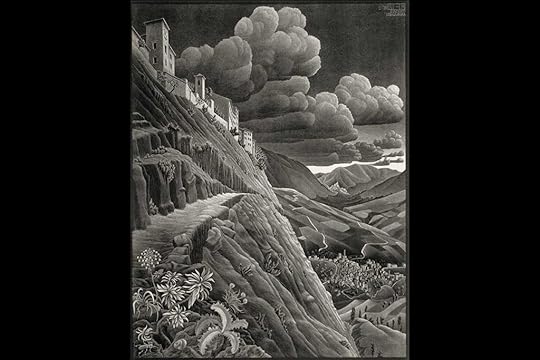
When you’re invited to write about an area you know nothing about, a good place to start is the heritage. But even that can’t help us here. The tiny city of Leeuwarden boasts three hugely famous children: spy and exotic dancer Mata Hari, astrophysicist Jan Hendrik Oort (he of the Oort Cloud) and puzzle-minded artist Maurits Cornelis Escher. The trouble is, all three are famous for being maddening eccentrics.
All Leeuwarden’s poor publicists can do then, having brought us here, is throw everything at us and hope something sticks. And so it happens that, somewhere between the (world-leading) Princessehof ceramics museum and Lan Fan Taal, a permanent pavilion celebrating world languages, someone somewhere makes a small logistical error and locks me inside an M C Escher exhibition…
Beating piteously at the windows for New Scientist, 25 May 2018
May 9, 2018
The ambition of transhumanism
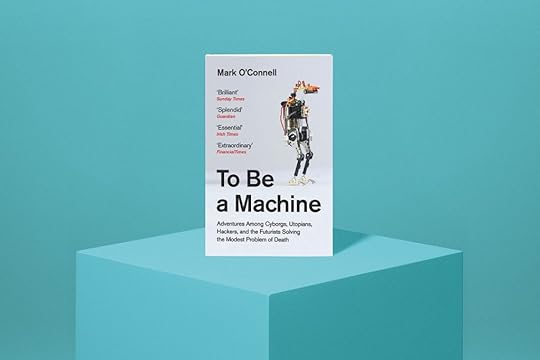
Mark O’Connell’s To Be a Machine, a travelogue of strange journeys and bizarre encounters among transhumanists, has just won the 2018 Wellcome Book Prize. Wearing my New Scientist hat I asked O’Connell how he managed to give transhumanism a human face – despite his own scepticism.
May 4, 2018
Elements of surprise

As Jane Austen’s novels demonstrate, two major “flaws” in our thinking are in fact the necessary and desirable consequence of our capacity for social interaction. First, we wildly underestimate our differences. We model each other in our heads and have to assume this model is accurate, even while we’re revising it, moment to moment. At the same time, we have to assume no one else has any problem performing this task – which is why we’re continually mortified to discover other people have no idea who we really are.
Reading Vera Tobin’s Elements of Surprise for New Scientist, 5 May 2018
April 11, 2018
The Smoke: an interview
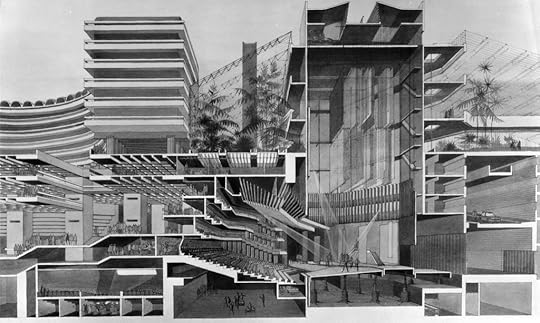
The Smoke went through the usual chaotic process of reinvention as I got more and more interested in why I wanted to do this project in the first place. And it can be best summed up by a WhatsApp message I sent to someone the other day as I came out of King’s Cross Station: IT’S THE FUTURE AND I DON’T UNDERSTAND!
Talking about The Smoke and others to Jonathan Thornton for Fantasy Hive, March 27 2018
Fakery in Dublin
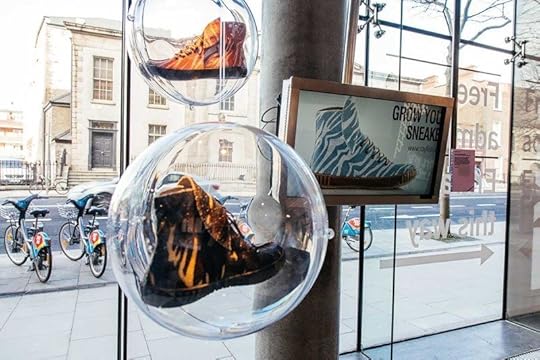
There’s a genuine painting that became a fake when its unscrupulous owner manipulated the artist’s signature. And the Chinese fake phones that are parodies you couldn’t possibly mistake for the real thing: from Pikachu to cigarette packets. There’s a machine here will let you manipulate your fake laugh until it sounds genuine. Fake’s contributing artists have left me with the distinct suspicion that the world I thought I knew is not the world.
Visiting the Science Gallery, Dublin for New Scientist, 14 April 2018
March 23, 2018
Pushing the boundaries
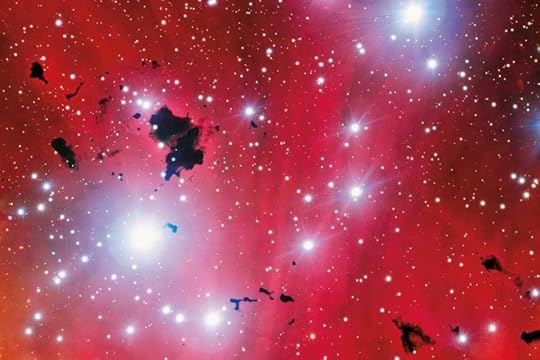
It is possible to live one’s whole life within the realms of science and discovery. Plenty of us do. So it is always disconcerting to be reminded that longer-lasting civilisations than ours have done very well without science or formal logic, even. And who are we to say they afforded less happiness and fulfilment than our own?
Rounding up some cosmological pop-sci for New Scientist, 24 March 2018
Simon Ings's Blog

- Simon Ings's profile
- 147 followers

