
Simon Ings's Blog, page 36
August 14, 2018


July 20, 2018
Timeless avant-garde

This low-budget Lovecraftian thriller explores territory we more usually associate with the heavyweights of the 1970s avant-garde – with the tangled story arcs of Alain Robbe-Grillet, and the cunningly withheld narrative revelations of Andrei Tarkovsky’s film Mirror. In fact, I’ll stick my neck out here: The Endless is very nearly this decade’s Solaris.
Watching Benson and Moorhead’s The Endless for New Scientist, 21 July 2018
July 18, 2018
Parade of the Possible

That’s Friesland for you: a land of 60 languages and 128 nationalities, birthplace of Mata Hari – and when you drive through there’s nothing to see but cows…
Watching the Elfwegentocht parade spool by for New Scientist, 18 July 2018
July 17, 2018
The mechanisms of empathy

“Every culture we know of dances around a fire. Our heartbeats sync up, we all follow this one rhythm, and we feel the tribe unite. If I explain my break-up in words, you will be able to understand to a degree what I’m going through. But if I write a piece of music and play it to you, you might just start crying, and that’s totally incredible because I’m not giving you any framework. I’m not necessarily reminding you of something from your past. It’s purely those patterns that are bringing you to tears.”
A conversation with Keaton Henson for New Scientist, 16 July 2018
July 14, 2018
Life in the dark
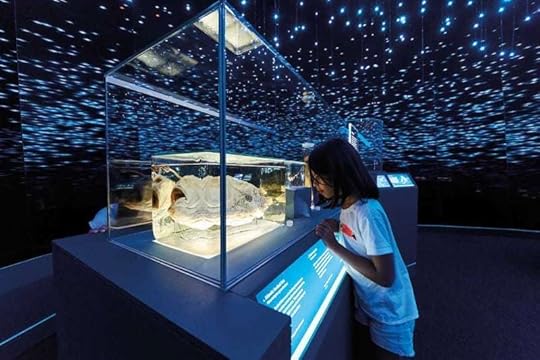
One inadvertent effect of this show was to confirm me in my lifelong aversion to caves. Given enough time, everything that lives in them evolves to go blind. Everything shrinks. Everything bleaches itself out – except for the Mexican cave alligators who, thanks to the guano diet of their prey, turn a sickly orange. On learning that giant centipedes, Scolopendra gigantea, hang from cave walls to pounce on passing bats, I high-tailed it to the section about the deep ocean…
For New Scientist, 13 July 2018: going to the dark side at London’s Natural History Museum.
July 4, 2018
The Art Machine
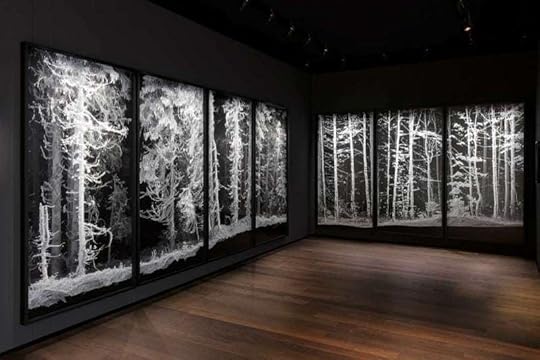
Artists who win Audemars Piguet’s commissions are invited to the company’s headquarters in the Swiss town of Le Brassus, and seem to fall quickly under their patron’s spell. Art history is not short of examples of this sort of arrangement going horribly wrong. But then, not every patron is a watch-maker, whose employees must couple art and science, mechanism and craft..
Skipping merrily about the Vallee de Joux for New Scientist, 30 June 2018
June 26, 2018
A world in a room
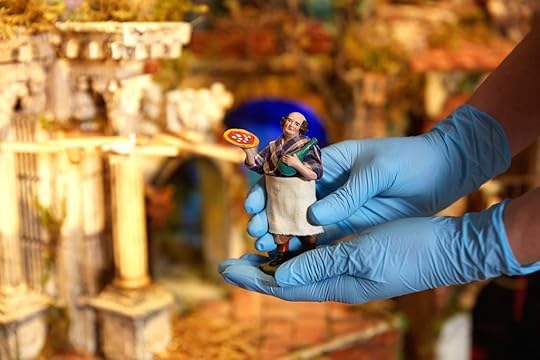
In the Trobriand Islands, a man’s worth is measured by the size of the pile of yams he builds in front of his sister’s house and leaves to rot. Beads mean fertility in South Africa. The Swedes are obsessed with shelving. Anthropology’s great strength – that it considers human practices objectively – is also its fatal weakness; it leaves nothing standing.How can this gallery be leaving visitors, not crushed by the species’ quintessential absurdity, but buoyed up, exhilarated, even to the point of tears?
Visiting the Horniman Museum’s new World Gallery for New Scientist, 26 June 2018
June 22, 2018
Art that brings meaning to medicine
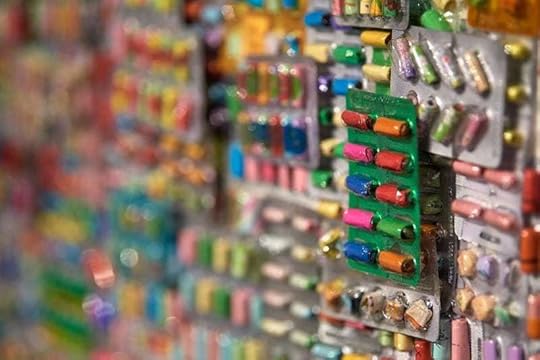
The stereotypical view of contemporary art is that it’s too clever for its own good and heartless with it, constantly tripping the unwary viewer into moments of horrified realisation (ever looked closely at a Grayson Perry pot?) Yanzi’s work pushes in the opposite direction. Those “bloody” smears and stains turn out to be exquisitely detailed miniature scenes of flowing water, framed by “hillsides” of calligraphy, combining poetry with Yanzi’s private thoughts. What at a distance seemed to be a work about violent medical intervention, becomes, closer in, to be something deeply personal, calming – even kind.
June 18, 2018
How Charles Dickens became a man of science
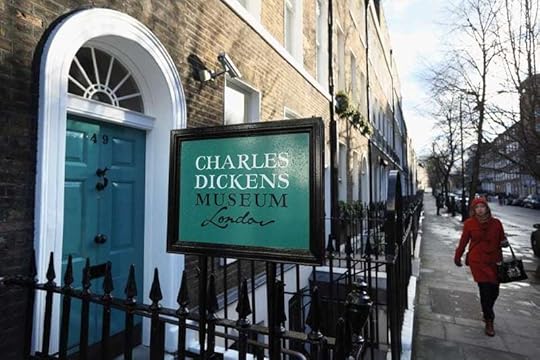
It is not accuracy we expect of Dickens; it is vision. It may be interesting that Our Mutual Friend uses the word “energy” in its new scientific sense. But what really thrills the heart is to follow Krook’s visitors up the stairs as they are about to find his body:
“‘See here, on my arm! See again, on the table here! Confound the stuff, it won’t blow off – smears like black fat!’… A thick, yellow liquor defiles them… A stagnant, sickening oil with some natural repulsion in it that makes them both shudder…”
Visiting Charles Dickens: Man of Science, at the Charles Dickens Museum, London for New Scientist, 16 June 2018
June 16, 2018
A time-traveller’s life

Innokenty’s bourgeois, liberal, pre-Bolshevik anguish over what constitutes right action is a surprisingly successful fulcrum on which to balance a book. And we should expect nothing less from an author whose previous novel, Laurus, was a barnstorming thriller about medieval piety.
Reviewing The Aviator by Eugene Vodolazkin for The Guardian, 7 June 2018
Simon Ings's Blog

- Simon Ings's profile
- 147 followers

