
Slaven Vujic's Blog, page 17
March 1, 2020
Build Your Facebook Tribe as a Published Author
copy by Ben Norr via Blurbarian
You’ve put in the endless hours of typing, coming up with complex characters and plot devices, and doing the research that gives your book shape, structure, and authority. In essence, your book is ready to be sent out there into the wide world of readership… but in order to make the kind of impact (and the kind of sales figures) your hard work deserves, it’s got to reach your target audience, and create the buzz it needs to succeed. In order to achieve this, and in order to gain the required momentum for stellar sales, you’re going to have to use all the tools at your disposal. Your first port of call? Facebook – the world’s busiest, most vibrant, and most populated social network.
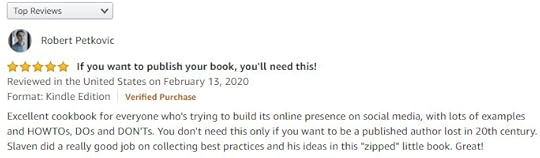
Build Your Tribe on Facebook as a Published Author, by SEO and social media marketing guru Slaven Vujic, is your one-stop shop for everything you could ever need to know about utilising social media as a self-published author. Based upon first-hand experience, and brimming with expert tips, tricks of the trade, and innovative approaches to relationship-based sales building and exposure, it’s the ideal guide for those seeking to improve their sales by making use of Facebook’s extensive network of potential customers. Quite simply, if you’ve written, edited, and published a book, then this guide to improving your book’s performance is nothing short of essential in today’s social media dominated market.
Make no mistake, Build Your Tribe on Facebook as a Published Author manages to succeed where other self-published author guidebooks fail. The reason for its effectiveness? This guide isn’t about direct sales, nor does it teach how to use Facebook as a straight selling tool. As the title suggests, Build Your Tribe on Facebook as a Published Author intuitively assists self-published authors in establishing relationships with their target audience. By creating communities of loyal fans who will not only purchase your books, but who will be your cheerleaders, standard bearers, and the ones to start an enduring buzz about your work, you’ll establish a tribe of your own, which – with the right techniques and approaches – will grow, and grow, and grow.
The world of self-publishing and self-promotion is one that changes with the wind and never ceases to evolve with each passing year. As such, today’s self-published authors need to stay thoroughly on top of every development and know exactly how social media and contemporary forms of communication can benefit their work. Slaven Vujic, with his years of experience helping authors succeed at the cutting edge of the digital marketplace – most notably on leading platforms like Amazon – is the ideal tutor to unravel the most effective and rewarding ways to get your book into the right hands. Clear, concise, and easy to follow, his methods are consistently backed by real-life examples of success, allowing authors everywhere to build their tribe, find their voice on social media, and lay the pathways to success that their hard work and dedication deserves.
The post Build Your Facebook Tribe as a Published Author appeared first on Slaven Vujic.


February 26, 2020
How to Engage Readers with Your Copy so that they Buy Not Stroll on by
Every single day the book marketplace is presented with hundreds of new
authors and books. Their readers are flooded with messages, pictures,
persuasion to buy and promotional offers. The market is fit to bursting. So,
how can you carve your way through the others to try and rise to the top and
your books be picked up from the shelves (virtually or physically!)?
Firstly, you need to remember that you and your book are unique and, as such, in what is such a highly competitive field, you need to hook your readers with promotional material that’s compelling and makes your book stand out from the crowd. Let’s have a look at how top-quality copy for your book descriptions, posts on social media, advertising campaigns and websites can help you rise to the top ahead of the competition.
Who is your target audience?
Catering for the right audience with your promotional material is one of the most efficient (not to mention economical) ways of building up you as a brand and selling your books. Find your target audience through searching and watching online. Search for keywords, add a poll to Facebook or Instagram and scour the web for ideas. Once you know who your readers are and how they buy their books, you can target your marketing and promotions accordingly.
On average, people spend under eight seconds taking in the cover of a
book or reading an advertisement before they click to buy or read more. Therefore,
your promotional copy must be really enticing and appropriate to their
interests. If you understand your readers, through your copy you are speaking
directly to them – so make them feel
like you are.
Write enticing taglines and headlines
They’re ever so important! Why? Because they draw in your readers. Your
headlines need to be specific and clear so that you don’t confuse readers. Additionally,
you need to play to your readers’ interests and simple hyperbole won’t cut it. The
phrases you use need to resonate on an emotional level with your audience. Lastly,
keep them succinct. Lengthy headings put people off. If impressions are made in
the first few seconds, don’t put off your potential readers with waffle!
How to write your book description
Your readers need to know why they should buy your book when there are
so many others there to consider. Writing the book description is therefore
crucial. Writing the description should not be that different from writing the
opening page of the book itself. It needs to grip the reader and make them want
to find out more.
The description should be short and in small paragraphs that are easy to
read. Remember, they’re not going to stand there and read a lengthy passage,
they could just open the book and begin to read if they wanted that! Keep it
short and sweet! Secondly, be specific.
Why should your reader want to read it? Make sure here that you use the
keywords mentioned above that will hook in your target readers. Importantly,
don’t give the game away! It’s not meant to be a synopsis! It should give just
enough information for the reader to want to read on without any spoilers.
How to write author newsletters
A newsletter allows you to be in contact with your readers and let them know of up-and-coming book releases or promotions. It’s a great way to get pre-orders in too! However, for this to work, your readers need to sign up in the first place, then they need to open the newsletter email rather than scrolling on the past. So, how do you achieve this?
Firstly, you need to carefully get the right kind of readers to
subscribe to your newsletter. It won’t matter how good the wording of your
newsletter is if your target audience isn’t getting it. To get readers to
subscribe, don’t go for hefty, large prizes as you are bound to get some people
signing up for a chance to win before unsubscribing at a later date. Instead,
opt for smaller giveaways, such as a free book, or something that is
appropriate for your book.
Secondly, again you need to think of the interests of your readers. Yes,
your newsletter should be about you as an author and your books, but readers need
to be able to engage with the content that you write. A book recommendation
might work well, or maybe a shared photo of something inspiring could be
appropriate.
Thirdly, don’t be click-happy and send lots of emails. Clogging up inboxes is going to put people off and they’ll unsubscribe, rather like you ‘hide’ those Facebook friends who post multiple banal statuses a day.
Social
Media Content
Social media has really taken off and it would be wise to capitalise on this lucrative platform. It’s a great tool to grow your following but, as with your newsletters, you need to be careful not to be an all-too-frequent a poster. You don’t want your followers to get fed up of you right before your next book launch. Using a 10% versus 90% split works well, with 10% being book promotions and 90% being related content such as recommendations or a shared interest such as cooking or animals. If you engage your followers in your likes and dislikes (and ultimately theirs too) they will be much more likely to see and engage in your book promoting posts.
Our tips for compelling copy and promotional material should hopefully give your book sales a boost. A key piece of information to take out from all our tips is that less is sometimes more, whether that be shorter book descriptions or less frequent social media posts. With these tips, you may just find that your readers actually end up buying more.
The post How to Engage Readers with Your Copy so that they Buy Not Stroll on by appeared first on Slaven Vujic.
February 24, 2020
NEW AUTHORS How to Make your New Book Release a Success
Marketing takes organization, planning,
and consistent action: it’s hard work. Fortunately, marketing is about
fostering relationships and connections, which can prove rewarding to you and
your fans.
And since you know your book very well,
your reasons for writing, your backstory, and who the ideal reader is, you need
to put a plan in place to best connect with the intended audience and share
your story.
You have put a lot of effort into writing,
editing and making arrangements for your book to be published that thought of
adding more work isn’t a less appealing idea. But if you launch a book without
a marketing plan, very few people will read it.
This will hamper the success of the book
you are working on and those you will publish in future. Therefore, if you
dream of being the bestselling author, or if you need your book to assist you
to reach lifestyle goals, a book marketing strategy is an essential key that
will ensure your success.
Having an overview of what you can do and
the time and effort that it will take can help you better plan for your
marketing plan.
Here are the recommended book marketing
strategies that you need to make your book a success.
1. Design an eye-catching cover
When potential readers are browsing
Amazon, they will be checking at books thumbnail. Ensure that they will click
to have a closer look by having an attractive cover. You can check some of the
best covers to get an idea and create something similar to that. The cover should
clearly show what the genre of the book is so that you attract the right
readers. Since readers judge a book by its cover, ensure that you have a great
cover.
2. Craft a great book description
The best way you can come up with a great
book description is by creating different iterations and ley friends help you
choose the best one. When you have found the right one, polish it. Every word
and sentence should excite your readers. Don’t try describing the whole plot:
they need to read the book for that. Try making your book sound like something
they would look forward to reading.
3. Assign clearly defined genre
You should reach your target audience
without confusing anyone, especially when people know your genre very well.
Sometimes, some authors expertly blend genres, which can make marketing
difficult.
Everything about your book from blurb to
cover to the story should clearly define the genre of your book. If you write
about science fiction that talks about space and galactic war, the cover can
feature a spaceship. Then the blurb can describe an alien invasion.
Even if your novel includes various
elements from different genres, it helps to choose one genre and market to
readers. You want a perfect view to purchase ratio on book pages on retailer
sites. Retailer algorithms tend to favor pages with high conversion rates. You
can achieve this by defining your genre.
4. Hire a professional editor
If you work with traditional publishing
houses, chances are that you are working on a book with a professional editor.
For indie authors, you need to hire an editor. Your book should be professional
like other books out there.
5. Source early reviews
Socialize with your readers in a Facebook
group and try getting some early reviews. You can ask readers in the group if
anyone wants an advance review copy. Before you launch a book, email advance
review copies to your readers and ensure that they are loaded on their Kindles.
Chances are that most of them will post reviews after launch.
You can also have some author friends to
read your bool and offer short quotes. You can post these in the ‘Editorial
Reviews” section.
6. Select relevant keywords
In the KDP interface, you will find a
keyword field. Choose good keywords for the book. They serve two main purposes:
•
They help Amazon browsers to find your book
•
They help a book reach extra subgenre categories
7. Launch an email campaign
Building an email list can take time.
There are many ways you can use to grow your email list. Perhaps you can offer
free novels to anyone who signs ups to your newsletter list. You can also add a
link to signup page on the last page of your novels.
On launch day, remember to email all the
subscribers on the list. Add a book cover, blurb and a contest where the
readers win something. You can send a reminder on the next day, promoting the
bool and the contest.
Concentrate on building your mailing list.
Its one of the best marketing tool you can use.
8. Setup your website
Many authors They need a website since
they can promote a book through the author platform on Amazon and social media.
They are wrong.
It makes a huge difference. Having an
author site is the difference between renting and purchasing a property. When
you rent, you are living in a space that’s not yours.
Since it doesn’t belong to you, they can
easily cancel your lease anytime. Having your site on a hosted server and with
your domain name is like having that piece of real estate.
You can customize your website, and
publish content whatever you want. You have full control.
Marketing your book on your website has
many benefits. You can:
•
Post blogs about your upcoming books
•
Publish a book’s landing page on the site
•
Create a countdown time for the release date of your book
•
Set up an affiliate link to your Amazon page and you will get
commissions on book sales
•
Add links to video clips about your book on the site
•
Communicate directly with email subscribers about new releases
9. Launch your book at a low price point
You can launch the book at $0.99 to gain
high visibility. After a week or so, you can raise the price to $2.99.
Launching at a lower price will help you hit the Amazon bestsellers list on the
first. You will stay there.
10. Create a BookBub Ads campaign
Create a BookBub ad and target it to fans
of your genre. Spend some money on the ad and choose a high maximum to ensure
that you get as many ad views as possible. This will get you many extra clicks
to your book’s product page on Amazon.
11. Publish a good book
One of the attributes of a book that will
be successful is that it must be a good book. All the steps above will help
market you’re your book and reach your target audience, but a good book will
make people read it.
12. Reach out to influencers
In book marketing, nothing will have a
bigger impact on the book than influencers. They market your book through
endorsement.
An influencer can be authors with strong
email lists, bloggers and podcasters. It anyone with an established platform
that will get you noticed when they notice you.
Influencers have a long reach. Identify
those in your niche and reach out to them. Introduce yourself and ask them if
they can help in promoting your book. They will want a free copy to read and
review.
13. Leverage two social media platforms
Using social media to promote your book is
one of the best ways to reach potential readers. There are thousands of people
you can engage with.
One big scare about social media is that a
lot of time is spent trying to get everything done. If you try connecting with
everyone, you will match up with nobody.
When marketing and promoting your book,
you can’t waste time being everywhere and doing all things at once. That’s why
it’s recommended that you pick two social media sites to work with and post
content regularly on them.
14. Reach out to get interviews and podcasts
A podcast and local radio can introduce
you to new readers. It might sound intimidating, but you can pull this off like
a pro if you prepare well.
Look to podcast hosts, local college, or
local radio stations for interviews.
Hosts love interviewing upcoming authors,
so you get surprised at the many offers that will come your way after reaching
out.
Reach out and let them know about your
book and why it might be fascinating to the audience. Consider offering them a
free sample so that they can determine if you would be a good fit.
When you go on, present a good story about
the book and get your audience excited.
15. Connect with book clubs
You can consider local book clubs to
attract new readers. They might have liked your book. Find these groups and
connect with them.
You can attend a meet-and-greet and offer
the readers a free signed book. Also, get your book listed in Facebook Groups
and other groups for readers.
You can also consider paid lists, like
Buck Books. Your book will probably reach tens of thousands of readers.
The post NEW AUTHORS How to Make your New Book Release a Success appeared first on Slaven Vujic.
February 21, 2020
How to Reach Best-seller Tags on Amazon?
is this title a great click-bait or what? 
February 13, 2020
Why Email Mailing Lists Form The Lifeline For Self-Published Authors
As a self-published author, gaining
visibility and reach that too in a short span is certainly an overwhelming task.
But it is not an unattainable one.
All you need to do to grab the attention of
your target readers is spread word about your work, which is possible only when
you communicate with them.
If you are looking to making your work
memorable and become a successful author, you need an attentive audience. The
perfect way to build your name as an author of repute is to build an email
list.
Is
an email list necessary?
Many authors are skeptical about the need
for an email list. But an email list serves as a powerful marketing tool, which
not many self-publishing authors utilize to the full extent or even use it for
that matter.
Here is what an email list can do:
Build
trust
Email creates a better rapport with your
readers when compared to social media interactions and blogging. It is much
more personal. When a reader sees his or her name alongside all their friends
and other people, it is sure to build trust.
Directly
connect
Unlike other mediums such as Twitter,
Facebook etc. you don’t have to reach out through the channels. With email you
can connect directly with your readers without the need for going through a
third party.
Contact
personally
With email you can converse more
effectively. Readers can share their thoughts without others being privy to
their info.
Universal
medium
Email is a universal medium. Every reader
is bound to have his or her own email address. Email is the leading marketing
medium that businesses use with success. It outnumbers Facebook, Twitter and
LinkedIn and other popular channels with its sheer size. Why not exploit this
tool to your advantage?
Failing to capitalize on the exposure and
reach you can gain with email marketing can make you miss out on an amazingly
effective medium. You will find that it is easy to connect with your readers
and engage in meaningful conversations with them.
Build
a targeted list
When you have an email mailing list, you
will be able to focus solely on your target audience and provide to them more
effectively. With the list you can easily make use of every little opportunity
that comes your way and use it to develop a viable future as an author.
Widen
your audience and sales numbers
How big an audience you have is the
deciding factor on whether you are on the best seller list or just barely
survive being a self-publishing author.
To make your book a best seller you need
readers interested in buying it. When you build an audience ready to pounce
upon your work, as soon as they hear about it, your work is made easier.
With an email list all you need to do is
send an email informing about the book launch and have a buy button for them to
click and buy your book. Your work is as simple as that!
An email list reduces your marketing
efforts in addition to making you interact closely with your readers, build a
rapport and gain their loyalty.
You
are in control
An email list can do for you a lot more
than what your followers on any of the social media networks can do. While you
may be proud of building thousands of followers on your Twitter handle or
Facebook page, you do not control them. You cede your power to Facebook,
YouTube or Twitter as your account can be suspended or blocked anytime.
This is not so in case of your email
mailing list. You have full control over your email account. You can reach out
to your readers, take control over the conversation and build a long lasting
bond with your readers.
Social media is more about being social
without any real and meaningful rapport. It is a public platform where you
discuss anything and everything. It is difficult to make your followers focus
on your work and take the interest forward.
Boost
sustainability
When you have a list of emails of people
who are eager to know about your work and expertise, you will have built a base
on which you can develop your business into a flourishing one.
As you use the list to communicate with
your readers and they become more familiar with your work and personality the possibility
of your readers turning into devoted fans is very high.
Loyal fans help to make your work more
visible. They inform you about opportunities that you were not aware of and
will be ready to take up on the deals and offers you plan in future.
When you build a base of interested and
well engaged readers you can easily develop your status as an author, speaker
and expert in your specific genre.
Now that you know
about the importance of building an email list, it is high time you begin the
first steps towards establishing a large email mailing list.
Start building
that email list today, it’s never too soon to start. How do you go about it?
Make use of a
reliable email marketing provider like ConvertKit, Aweber or MailChimp, have an
opt in signup form put up on your site in the form of plugins or popups, and offer
a free ebook or some other valuable thing your readers would love to read.
When you have a
list, start mailing to the people in the list regularly, at least once a week.
It need not be anything elaborate, just a short but informative and interesting
message would do. Remember to ask your readers to share the content. You are
all set.
Final takeaway
To wrap it up, an
email list is the shortest route to round up your audience, make them
interested in your work and sustain their interest over the long term. An email
list may well be your lifeline in your journey as a self-publishing author
struggling to be recognized and reap the rewards of your work.
Why wait for your
readers to come to you when you have such a potent marketing tool that makes
short work of a task you considered difficult to achieve. So, start on your
mailing list now and see the changes it brings to your work.
The post Why Email Mailing Lists Form The Lifeline For Self-Published Authors appeared first on Slaven Vujic.
February 4, 2020
SEO Basics for Authors
Writers might think that they don’t
need to know much about SEO, but big organizations depend on it for traffic. If
you have a website, blog or online store, SEO can help your business grow. SEO
is important because many search engine users usually click on one of the top
five links in the results page. The main goal of SEO is to show your value,
your website pages will be ranked highly for queries relevant to the content.
SEO helps your customers to find you.
What
is SEO?
Search engine optimization (SEO) is a
way of formatting content on a webpage so it appears in a high rank within
results of what people look for on search engines.
What should be added to articles and
blog posts for it to show in search engines?
For SEO purposes, consider tagging
your posts and articles with descriptors including:
•
Keywords
•
Alt tags
•
Links
•
Meta links
•
Permalinks
What
is website traffic?
This is anything that visits your
site. It includes both human visitors and automated programs.
What
are organic results?
When people use search engines, they
are shown a page that contains search results for the keyword they used. Each
result page has two types of results: organic and paid.
Organic results are listings on that
page that appear because of their relevance to search terms. Paid results are
ads paid for and displayed when someone types in terms that match advertiser’s
criteria.
How
is traffic measured?
A specialized website analytics
service is used to measure website traffic. It works by including a short code
to your web pages. This shortcode is generated by the service that you use.
Depending on the service, the code will track all things including the visitors
that visit your site, the pages they visit, how long they stay, the browser
they are using and their location.
What
are permalinks?
WordPress uses the title of the
article as a permalink by default. However, sometimes the title is too long
that search engines don’t pick up. WordPress offers a permalinks tool to edit
the URL of the article. You should edit the permalink link to about 4 keywords.
That helps in making the article rank better. When the article goes live, it
will be too late to edit the permalink. If you try to, it will cause “file not
found” or 404 error. This causes Google to remove the article from the index.
What are Keywords and how best can I
use them?
Keywords are phrases or words that
sum up the article. The best way to snag traffic is by adding keywords in
headlines and subheads.
Should
writers worry about keyword density?
Keyword density describes web content
in such a way that many keywords are packed into few words. Writers shouldn’t
worry about keyword density. A research has shown that keyword density doesn’t
matter. A well-written content always wins in the long run.
What
is the best way to choose keywords to describe a post or story?
There are a lot of keyword tools to
use. You can use Google AdWords Keyword, Soovle and SpyFu to get popular
keywords. Use the keywords in your content. These are the words that people use
to search for a specific topic. These are the words that you would use if you
were a user to search for content. These phrases are added to the headline or
first paragraph. Use the topic and search and see what comes up. Use different
word combinations and phrases. Look at
keywords that brought people to your site and use the terms when writing on the
subject again.
What’s
the importance of Links?
To improve SEO, add links to other
web pages in blog posts or stories as a way to get quality websites linking
back to you. This will boost traffic and results. Adding links to your Facebook
page or blog help in raising credibility with search engines. Sites with
outbound links to other websites usually rank better.
How
does anchor text relate to links?
Anchor text is a text that you click
on in a link. You will see it on most websites as blue or underlined or both.
What
are alt tags and what’s their importance?
Alt tags are text descriptions of
images that search engines pay a close attention to. A good page has images and
these images have alt tags with keywords.
How
do you know if the SEO formatting on your blog post is working?
You will need Google Analytics to see
recent top keywords and trends over time. These tools will help you get what
people are searching for and you can write about that. If you have a website,
blog or news operation on WordPress, you can use the Google Analyticator
plugin. You can also use Google Webmaster tools to know where your site ranks
on specific keywords.
How
can Fiction writers use SEO?
They can use SEO to build audience
and reputation. Fiction writers can also use SEO to generate traffic and then
convert the traffic into Facebook fans and subscribers.
How
much time is required for SEO?
Some experts recommend an hour per
day. However, you can take as much time as you can. A website will be useless
if it can’t be found by users. Writers should focus on what they are good at
and hire someone for SEO work. It is a good option if you can afford.
What
are some of the SEO mistakes that most writers make?
The mistakes that writers make
include using free blog hosts and failing to use Google Analytics. If you want
a successful website, get away from Blogger and get a website. Always use
Google Analytics to see the trends. You should remember that search engines
must understand your content. Create a search-friendly site. Search engines use
links to determine trust and authority. Adding more links means more high
rankings and trust.
Why
do writers need SEO?
Writers need SEO to increase their
share of website traffic. Some researchers estimate that total searches per day
can go up to 6.5 billion. Since top-ranked results get about all of this
traffic, you need SEO to have your site at the top of the search results.
Why
is SEO that important?
The only way for your site to rank
higher without paying for ads is by performing SEO. SEO helps in maximizing the
advantages of using search engines as a marketing channel.
What
is web crawling?
This is the process of discovering
content on the internet by use of a web crawler. This web crawler is sometimes
called a spider. This is an internet bot that search engines use to browse the
internet.
How
does a web crawler work?
A web crawler is a program used to
discover updated pages for adding in a search index. Google Crawl process starts with some web
page URLs. These URLs are generated from earlier crawl processes and then
augmented with Sitemap data.
As this bot visit each website, it
detects links on every page and adds them to a list of web pages to crawl. A
new site will become existing sites and dead links are used to update the
search index.
What
does web crawling in SEO mean?
Without Googlebot crawling and
indexing your web pages, you won’t generate any free traffic.
How
can I get Google to Crawl my site?
Web crawlers use automated processes
to determine the sites to crawl, the number of times to be crawled and the
pages to fetch from each site.
This process cannot be impacted as
Google doesn’t accept payment to crawl a website frequently. However, all you
can do is ensure that Googlebot knows you. Ensure that Googlebot is not
blocked. Create a Sitemap and submit to Google Search Console.
How many Search engine ranking
factors are used?
When a user types something on a
search engine, Google algorithm searches the index that matches web pages and
shows the user results that are relevant. There are over 200 factors that
determine relevancy.
Best
Practices for search engine optimization
Here are the best practices that
apply to all sites irrespective of size, language, topic etc.
•
Use words in URLs. Use a structure that makes visitors know where they
are on your site.
•
Make it easy for users to go from general content to specific ones. Add
navigation pages.
•
Use text most of the time for navigation menus and links.
•
Have a custom 404 page that helps users to get back to a working page
•
Choose a title that communicates the topic of content
•
Use brief descriptive titles
•
Create unique title tags
•
Use descriptions for each page
•
Write an easy to read text that is on topic. Break the content into
logical chunks.
Conclusion
This is just a brief guide to SEO. There
are more to it than this, but if you do the recommended ones, you will see good
results. Follows this guide to generate traffic and get more audience for your
writing and books. SEO optimized pages generates more traffic which directly
leads to more people being converted. It will work great when you have great
content and ensure that you use the right keyword in the content.
The post SEO Basics for Authors appeared first on Slaven Vujic.
January 10, 2020
FREE eBook: 30 Facebook Tips for Authors
It’s understandable why most authors will fail at marketing a book. After all, they are writers and not marketers. Those who go for editorial don’t have to worry about marketing as indie authors do. They pay an editorial for their social connection, promotion expertise and book marketing.
While there are many ways to promote your book, very few methods work perfectly unless the basics are done the right way.
The truth is, eBooks and books amount to nothing if an author fails to market and promote it the right way. If you have written a good book and you seem to get fewer results than you expected, this guide will equip you with everything you need to start seeing results.
So here are 30 marketing hacks for authors that are essential in giving your book the best chance of selling.
January 7, 2020
Build Your Facebook Tribe as a Published Author
By now, you’ve probably realized how difficult it is to stand out as an author in today’s ultra-crowded environment. Let’s say you’ve managed to write, edit, and publish a book. It even has a listing on Amazon, and a couple of stellar reviews.
Now for the tough part: figuring out how to connect with people who will want to read your books. This means knowing where to find them, how to engage them, and how to win their loyalty and trust.
Where can you do all of these things? Facebook, of course.
This book will not help you directly sell your books on Facebook. Your audience is on Facebook to socialize, not to buy things. Instead, this book will teach you how to use social media the correct way—to create a community of loyal fans who are excited to interact with others on your Page—and ultimately buy your books. You’ll discover how to:
Perform market research and identify your target demographicCreate an effective Facebook Page and GroupAttract (and keep) followersEducate and entertain your fans while creating a sense of community with your contentConvert your followers into customers who can’t wait to read your booksAnd more!
How I Built a Highly-Engaging Audience In Just 90 days
Yes, I did it. And this is certainly not one of these „earn $10.000 in just 30 days“ posts. I’ll be very honest with you; if you build communities just to sell things, you are completely on the wrong path. Communities focus on values and as a founding member, you need to identify values to build your community around. When writing a book, you are listening to your creative flows, and after „The End“ you are hoping to find readers who will enjoy it. With communities, the „workflow“ is much different. You create communities FOR readers, and you WORK HARD for them. If it’s not your passion, then this is the place where you can quit reading the article and focus on something less ambitious. Excuse my French, but building a community is a huge liability!
The Right Mindset
In February 2019 I decided to create Tolkienology. I’m a huge Tolkien fan and overall a fantasy fan. Fantasy is my hobby, my secret passion. Make no mistake, I’m not a hardcore Tolkien fan and not even close knowledgeable like many Tolkienists are.
Anyway, if you want to build a readers club, you need to give readers what they want. Fantasy readers want a simple thing: MAGIC. They want your community to be different from any other community – they want to join something magical, positive, funny, inspiring. As a community manager, you build experiences. If you are interested in building just another place where you can blast book links, there are better ways of spending your time on social media.
Goals and How to Reach Them
When building your audience, you need to have very clear goals. You are about to invest a great deal of your time (and possibly some money), so wasting it is something you cannot afford as a business-savvy person. Yes, being an author can be a hobby, but publishing your books is a business. If your products are listed on marketplaces, you better acquire a business-savvy mindset.
Growing Your Mailing list
This is absolutely your #1 goal. Your own mailing list is your biggest asset and your primary marketing channel. If you don’t grow your own list, you risk losing all the hard work on social media if the platform decided to jail you or suspend your account. Those are things you can’t control, so from the very begining, you need to set your focus on building channels you CAN control. Obviously, a mailing list of your subscribers is your gold mine. With each new release, you can hope for better kick-offs if your list is growing steadily.
Building Your Website Audience
Your own author website is your most valuable web property. You need social profiles to interact with both authors and readers, but your content should be always hosted on your website. The content you post on social media carries absolutely no SEO value for your business as social media profiles and pages are not being crawled by Google and other search engines, as they are private.
If you host giveaways and other incentives on your own website, you’ll probably end up with lower engagement rates as this require a couple more clicks from your fans or group members. Don’t worry about the numbers! If they are too lazy to join your giveaway and visit your website, they are probably fans you don’t need. Focus on fans who are happy to engage!
Build your Author Group
Facebook Groups are a very powerful tool. I’ve built my entire book marketing business using Facebook groups as a very top of my sales funnel. I use the same strategy when building readers clubs and branded author groups.
Why groups? Entire Facebook is built around interests. Groups are more focused communities then pages and ideal to build stronger connections with people how are likely to enjoy your content. Facebook Groups tend to appear often in users feeds and notifications, leading to much bigger engagement rates. I call group members a Phalanx. Those interested in history will recognize the ancient origin of this military formation. While page fans are considered your Tribe, your group members are your „battle“ formation, the very basic unit of your community, but also the essential core of your social media audience.
Build Your Facebook Page
Some people say, if you have a Facebook Page, you have your business presence. Facebook pages are easy-to-use tools for building your brand. You can set up your page in a matter of minutes and start publishing your content and promoting it.
This is where you start building your audience. It all starts with a highly-engaged page! However, if you don’t create a Facebook Group out of your Page, your page is useless. If you don’t build your website and your subscribers list out of your Facebook group, your group is useless.
It all starts with a Facebook Page.
10 Steps to Your Own Exceptional Audience
Creating a community takes a lot of creativity and consistency, but planning your activities is equally important. Here’s how my Tolkienology scrapbook looked like on February 1st:
Tolkienology.net domain purchaseGetting the content ready – 50 popular imagesResearching Tolkien pages and groups on Facebook – two weeksCreating the content plan – 7 days in advanceStarting the PagePreparing the group content / when the Page reach 300k+ monthly engagements
Now it’s time to get our feet really wet! How did I actually build such an amazing community of fantasy fans?
Step 1: Knowing your readers
Everyone is saying this, right? You have to know your ideal reader to be able to create content he/she is likely to consume. I’ve observed dozens of Tolkien pages and groups and I’ve written down all posts and images with high engagement rates. I was happy to learn that those clubs used some of my original ideas because that was proof that I was on the right path.
For example, one page had thousands of engagements on „Tag a friend you would take to Middle Earth“ image, that was actually the map of Middle Earth. I saved this image and created a similar one using Canva. If you don’t feel confident enough to use Canva, you can easily find freelancers on Fiverr or Upwork who will design your images for as low as $5.
Always a safe bet are images containing well-known book quotes. You don’t have to be original here, just play it smart. Join Pinterest and browse for great images with quotes and save them. Thinking as your reader, you are probably able to understand that familiar content will make you feel like belonging to the community. Use common quotes and try to attach them to fresh images to create a unique experience around well-known values, to get the most of it.
What I’ve learned about my Tolkien readers?
Most of them are not hardcore fans and 90% of them are attached to movies as wellThey love memes / they want to have funThey have their favorite heroesThey are interested in reading articles that expand their knowledge about Tolkien’s worksThe most popular character is Gandalf, followed by Aragorn
Now when I know my readers, I’m able to create content that is most definitely going to have high engagement rates.
Step 2: Creating the Content
When building your Facebook page you need to create your content plan in advance. The same is with your group and your website, but we’ll cover that later.
These were my guidelines for my first week on Tolkienology:
10 posts a day, mostly image quotes from Tolkien’s books50% of the postings related to Lord of the Rings25% of the images related to Gandalf10% of images related to Aragorn30% of the images are memes
So, if I’m posting 10 images a day, that means at least two are related to Gandalf. Therefore, for the first week on Tolkienology I need about 15 Gandalf images. Why Gandalf? Because my Step 1 research indicated that Gandalf is in fact the most popular character among LOTR fans.
Step 3: Promoting the Content
Please read this carefully as this is one of the crucial steps in building your community. Most authors fail to establish readerships on Facebook because their original page Tribe is made of friends, family members, and fellow authors.
I didn’t invite my friends nor my colleagues to like Tolkienology!
The reason for this is that I want ONLY targeted fans interested in Tolkien’s work. Of course, some of my friends are also interested in Tolkien, but I’m actually focused on NEW READERS. There are several ways to acquire readers. Most authors spend time in big groups, looking for a chance to reach readers. Why readers would care to engage the groups populated with book links? Who wants to get bombarded on a daily basis with recent book releases? Trust me, this is the wrong way to build your OWN AUDIENCE, although it’s the easiest road to take.
The best results in creating a healthly community come from targeted fan acquisitions. In more simple words, you need to create ads or boost your posts to the right audience. The best strategy is to boost your images for $5 to learn which are performing the best in terms of dollars spent per engagement. The idea is to get close to $0.01 per engagement and this is perfectly doable even in early stages of your community.
THE GATEKEEPER STRATEGY
As mentioned above, the most popular Tolkien characher is Gandalf. This means that there are numbers of users willing to engage to anything related to Gandalf. My startegy here is to create some great Gandalf quotes and boost them to English-speaking Facebook users with a very particular interest (not Lord of the Rings in general, but Gandalf!)
The best performing post with the best engagement rates becomes your gatekeeper. This means you’ll allocate more funds to this post since your advertising cost per engagement is getting lower, due to more organic engagements (shares).
You’ll pin this post to your page and this will not be your main fan acquistion post, but also a social proof of your content’s strength!
This is my Gatekeeper:
[image error]
As you can see, this post has 10k+ likes, 4.2k shares, and 215k+ reach. Those numbers are massive results of two-week long advertising, totaling $70 ($5 per day).
In 24 hours this post had 1k+ likes which was a great signal that upgrading it to a Gatekeeper post and boosting it’s potential will result in more organic engagements.
Step 3: Acquiring fans
Obviously, you acquire your fans by inviting them to like your page AFTER they liked your posts. You don’t want to go fast here and risk Facebook blocks, so invite no more than 200 users/day. This is a Marathon, not a sprint. Take it easy and always stay focused on your next content.
One very important activity is to keep posting images that specific fans are likely to engage. You need them to really start following your page. The more they like your page and share its content, the often your page will appear in their feeds. So, feed them with more Gandalf, so to speak!
Step 4: Being consistent
One of the biggest hits your page can take early on, is a significantly lower reach due to inactivity. This is why you should plan your activities and use a scheduled post feature to create the basic content for the entire week. Even if you have no time to do the networking part, your page will keep running on autopilot with scheduled posts.
So, a golden rule here is: never leave your post! Spend as much time as you can in the early stages of your community. Learn more about your new fans, often make comments to their comments. Encourage them to interact, keep them happy and positive.
Step 5: Testing waters for your Facebook Group
No one can really tell you when it’s the right time to create your group and ask your fans to joint the group where they can find more content.
Experimenting is always the best answer. Don’t be afraid to take actions and adjust your strategy. You are only human, mistakes are allowed!
This is the strategy I used with Tolkienology to determine if the Tribe is ready to take the new step.
Remember me writing down the „Tag a friend you would take to Middle Earth“ post from one of the Tolkien pages? This is a call-to-action kind of post, so it’s ideal to check if my community is likely to answer the question and tag their friends and fellow Tolkien fans.
So, here’s what I came up with, resulting in 300+ likes, 115+ shares and 200+ comments:
[image error]
It was fairly easy to conclude that I have an engaging community, ready to join the special group.
Step 6: Analyze
Facebook Page Insights are your best friend when making decisions about your future page content. There you can find so many useful details, starting with your best performing posts, demographic dana, competitive analysis and more.
A smart entrepreneur (and you are one, since your works and available for purchase) analyze data regurarly, especially before making a strategy, or a business decision.
I use Insights to determine which posts had the best performance and by doing so I’m revealing ideas for my next posts. Obviouisly, if Frodo memes were doing great, we’ll work on more memes.
Also, a demographic data come handy too, to determine the best posting time. If you live in Europe, and 82% of your fans are from the United States, you need to adjust your content posting to their timezone. This is how I found out that 3-5 PM EST are the best posting times for my page, followed by 8 AM EST.
I also often use „Watch Pages“ to compare my page with similar pages with larger fan base. It’s always a great feeling to see your page climbing up and becoming a player!
Step 7: Repeat
The best perfoming content from your analysis should be repeated. Not exactly reposted; I tend to use different images to deliver the same message again. Since your fans have already liked some images, they are likely to like the same quotes if they come with fresh graphic details.
Repeat your best performing post because this has a big impact on your organic growth! If users are engaging to most of your posts, Facebook will consider your page relevant and your page will appear more often in feeds. When this happens and you see your page likes climbing up, use the momentum and feed your audience with fresh content to keep them hooked up.
I’ll share some posts that had the best engagement rates, which led me to re-use them and to come up with similar posts:
[image error]
[image error]
[image error]
[image error]
[image error]
[image error]
[image error]
Step 8: Create the Group
Exactly 60 days after my Tolkienology page was published, I decided to create a Tolkienology Club Facebook Group.
It was time to start building the Phalanx, out of the Tribe! This is the step when you acquire your first brand ambassadors and fans who are developing a strong attachment to your values. These fans are not just your top members; they are also a vital part of your business! It’s likely that they will join your incentives and call-to-actions, so this step is actually a segmentation of your initial Tribe.
The Phalanx Strategy
Since your ultimate goal is to have a highly-engaging community and a growing list of email subscribers, the idea behind Phalanx strategy is to build a smaller community units that breathe and move as a whole. Your tribe members needs to become members who interact with each other and you need to be one of them! A phalanx is armed by the same values and goals, they „fight“ for mutual interest, they protect the property you are building.
Everyone gets negative comments when trying to build things. As an author, you have probably faced some negative feedback from readers. Your Phalanx is your own special tribe that will always vouch for you. They join because of the same interests, but they become a team because you ake them feel special.
So, how to make them feel special?
Obviously, only group members will have access to your incentives. I’ve seen authors trying to host giveaways on their author pages. This is so wrong! You don’t want to attract common prize hunters and people who are in there just for the prize. The purpose of your giveaway is not just to get more members, but to get the RIGHT MEMBERS!
So, keep your best giveaways and incentives to your group members.
In order to run everything smoothly, you need a weekly group schedule. One incentive per day is more than enough. For example, you can host a giveaway on Monday, a „post your image/meme“ on Tuesday, trivia contest/games on Wednesday and so on. Yes, you need to invest time. I’m sorry, but no shortucts here. If you want to create a magnificent audience, you need to put a tremendous efforts in this. Don’t follow blogs who are saying you can build your audience by using magical tools. Tools can be helpful, but not a single one can replace time needed to get recognition and respect in your own community.
Some other ideas to make your group members special:
Ask for their opinionsLet them introduce themselvesLet them post their own content (according to your group’s schedule)Interact a lotSend a personal note to every prize winner
Step 9: Create a Website / Set up the mailing list
I created a special website for this project – www.tolkienology.net. The purpose of the website is to host unique content, not seen anywhere else. Something that your Tribe and your Phalanx will most likely to consume because it’s right their alley and unique. Creative content on social media is not that important, because no one really knows if your images have been already published on some other pages. However, the content of your website has to be unique! Not only unique; your website should apply a smart keyword-rich content strategy, to attract visitors from various platforms, especially from Google.
As said before, your website should grow your mailing list. Emails are still the best channels for digital marketing so growing your subscribers list is a must. Recent reports suggest that subscribers are 34% likely to engage your content than occasional readers.
When creating tolkienology.net I followed these principles:
SimplicityUnique contentFrequent updates (1-2 entries per week)
Did I want to make the best Tolkien site ever? No. I started rather slowly, but from day one I started collecting emails. As much as the traffic grows, the email list will grow too.
What about content?
I used the data from Step 2. I noticed that the most popular content is related to Gandalf, new angles on characters and stories, Middle Earth timelines. Since my writing is nowhere near exceptional, I’ve hired a freelancer to help me with some original content. The first articles were focused on wizards, as Gandalf seemed to be the most popular character. We aimed at 1500 words per article, with topics broke into several articles so we can boost page views via internal linking.
The beauty of the highly-engaging community is that you don’t have to bang your head against the wall thinking about new topics. They have plenty of ideas, but they are also happy to contribute. A healthy community is able to produce big chunks of content is everyone is appreciated for the effort.
In today’s marketing content is a king. Always work on your content and try to find creative angles on common topics and argumented answers to most common questions. Your marketing heavily depends on your ability to provide the right answers. In Tolkienology’s case, one of the answers was related to the origins of Tolkien’s wizards. I simply used that common question to give my new blog a boost by answering it in a creative way.
Here’s the link to the article:
https://tolkienology.net/the-five-wizards/
I’ve invested $10 in Facebook ads since I already knew that the wizard topic will receive great engagements. Here’s what I got from this campaign:
[image error]
One important note I want you to remember: you don’t own your Facebook Page nor your Facebook group, but you do own your website. This is why your audience needs to become part of your website. Pages and groups are affected by Facebook algorithm changes, but your website is totally under your control.
Step 10: Connecting your channels
Your page, your group and your website are one. If you post something on your website, you promote it in your group and on your page. Although you can promote your content in other pages and groups, I suggest you take a slower route to build your web traffic and source it from your own social media communities. Why? You should focus on your own community, rather than to random posting in groups that are filled with dead likes. Since you are putting a lot of time in your own community, use that time in the right place. Rather spend your time chatting with your group members than spamming Facebook groups with minimal reach.
Don’t forget to add website links to your group descriptions and to your Page info. Use the Page call-to-action button (the blue one) to encourage sign-ups to your group. Use every opportunity to promote your website link (especially on images) but never spam your own communities with links to your website. If you have an article to share, simply share it only once on your page and in your group. Follow up 48 hours later with „In case you missed it …“ post and that’s it. If you want to bring your old posts back to life, simply come up with a new post, containing internal links to your older entries.
Also, don’t forget to attach your social share buttons to your posts, to make it easier to share and pin your posts. Remember that users’ attention is very short and keep it simple for them.
Tolkienology in numbers
Tolkienology Page
Created: February 2019
Fans: 16.300+ (on June 29th)
Monthly reach: 1.2m+ users
Monthly engagements: 800k+
New fans/monthly: 3.300+
Tolkienology Club (the group)
Created: May 29th 2019
Members: 1000+ (June 29th)
Monthly engagements: 10k+
Tolkienology.net
Launched: June 1st 2019
Visitors/month: 1545
Page views/month: 2575
Most article reads: 1517
Subscribers: 211
$$$ Investments:
$70 Gatekeeper post
$50 10x $5 Boost posts
$20 2x $10 Best performing posts boost
$50 5 x $10 Article Boosts
$100 Freelancing gigs
TOTAL ($): 290
January 6, 2020
Quick Guide to Building Your Brand Identity as an Author
Why is branding business important?
Your writing is great. Perhaps even perfect. Your family and friends love reading your work. You have always wanted to write a book, and you have written one already and it’s time to publish it.
Everything is excellent. But why would other people want to read your book? Do people know that you exist? If they do, why should they care?
Writing a good short story, blog post, feature, article, or a book is a good beginning. When you have an excellent product to offer, people will want to buy it. But you should know that a product needs to have a brand. An identity that can convince buyers so that they can trust in your books and work.
What crosses your mind when someone mentions Coca Cola, John Grisham, McDonald’s, or Stephen King? You will realize that people will rarely vary on things that cross their mind when such names are mentioned. That’s because there is a powerful branding the names. These names stand for something that someone can trust over and over again.
For the case of McDonald’s and Coca Cola, they have a famous logo that can be easily recognized everywhere, famous worldwide taglines, and consistent product quality. John Grisham and Stephen King have a consistent writing style, faithfulness to the genre and a distinct author persona.
If you are a serious self-publishing author, there is no shortcut around this. But nowadays you have to put in as much work into promoting your book as a traditional author as you be required to if you were a self-publishing author. Usually, a traditional publisher will pay more attention when you have an active community around your writing in place. For one to get a devoted fan-base that will be around to purchase your books and root for you, author branding is a must.
If done correctly, a well-developed brand will help you in building your reputation as an author.
What do you require for you to build a brand around your books and work?
You will need consistent work and take goal-oriented steps to develop a powerful brand around your work. Here are the eight things you can get right away to get started.
1. A persona
You need to decide how you want your readers to view you. Consider writing down a mission statement. Where do you intend to take your writing? If you had to come up with a tagline, what would it be? Which genre do you want to write in? It’s recommended sticking to just one genre. That one genre would be your identity. Zadie Smith writes literary fiction, Tolkien used to write on high fantasy, James Patterson writes in Crime-thriller, and John Green writes in YA. You need to pick the one genre you are good at and stick to it.
Saying that doesn’t mean that you can’t write in other genres. You can always write in other genres if you want, but it will become more complicated to balance your personas. Perhaps you will build different websites for different books, or maybe you will write under your pen name. Whichever the path you take, writing in different genres may become challenging to manage. Without focusing on one thing, you will be putting in more work trying to manage the different personas.
2. A logo
Maybe you might not need an actual logo. But if you want a real logo, you can go for it. You need a good designer to create for you a personal crest or coat of arms that you can use on book covers and anything you publish.
You can keep it simple and make a logo out of your name. You can make it in your handwriting, made up signature or just in a font that you will be suing everywhere in one or two specific styles or colors.
3. Business card
Being an author, you will probably visit events and book conferences, and you may also be planning on reading at a literary café or host a book signing.
You will need a business card. It’s like a handshake, crucial to have during these events. Publishing and book events are perfect places you can make connections with agents, publishers, readers, and fellow authors. You should have something they will use to get in touch with you.
You can use Canva or Moo to design a good business card. If you can’t do it on your own, you can hire a professional to do it for you.
4. A head-shot
Most people believe that this must be an entirely professional set up. However, it doesn’t have to be that way. If you can afford a professional shot, then get it. But having a friend who is good with cameras take a head-shot of you can work just well. The head-shot must be taken under natural light, should be sharp in quality and should show the shoulders and full face.
Remember, selfies don’t count. As cute as how your children or a pet is, try not to include them.
5. Social presence
You should start using social networks as soon as possible. Get to Twitter, Facebook, Pinterest, YouTube, Snapchat, Instagram, and any other social media network. Consider doing some research on effective practices you can apply to get more recognition on the platforms and try them out. You need to stay true to your persona. If someone stages photos with books and the coffee cups are not your style, don’t do them. Consider sticking to what you know, try new things after a while, and remember to offer fresh content all the time.
Remember that not all platforms will work for you. If you are a crime-fiction writer and maybe spend a lot of time putting info-graphics and boards on Pinterest and your pins end up being buried, then maybe Pinterest will not work for you. Maybe it worked on a nonfiction travel writer you know, but it doesn’t mean it will work for you.
You need to try out all platforms and see the ones that you are most comfortable with and the ones that offer more engagement with readers. Drop the ones that don’t do that. You should remember that real engagement is far much better than getting new follows.
Do you need help setting up a professional and SEO optimized Facebook Page? Check out our Facebook Starter Kit and get it for just $45.
6. A blog
You need a blog to share about your work, personal journey as a writer, your problems, book events, your books, reviews, your characters, travel food, writing advice, and any other things. Try producing content consistently and make sure that the content is relevant to some of your readers if not all of them.
Pick a platform with caution. Consider something affordable, and one that allows flexibility with additional apps and widgets. Pick the one that also lets you track your audience through comprehensive and quick-to-understand analytics. If it’s possible, consider guest blogging and blogging on different platforms whenever you can.
7. Website
You need a website since it acts as a portfolio. It will allow you to add links to your blog posts, writing samples, upcoming books, articles on the Internet, your bio, social links, contact info, and buy information for your readers. A website is your online identity and a place where anyone can find all the information about you.
Nowadays it’s super easy to design a website by yourself. All you need is a little technical knowledge and design sense. If you opt for do-it-yourself, your first step should be Bluehost. For just $3.95 you can get your website going! If you go that route, keep reading our blog and you’ll acquire all the skills needed to run your own website.
If you don’t have the technical knowledge (because, the truth is you are a writer, and that is what you are best at), you can hire a professional to help you in making a professional website.
8. A media kit
Having a media kit is crucial. It’s like having an information capsule where a journalist can refer to when writing about your or your book.
However, they are not just to be used by a journalist. They can be used by bloggers who want to write reviews for your book or interview you, agents, publishers, editors, podcast or radio hosts, book libraries, bookstores, and event planners. This information capsule will offer them all the information about you and your work. Remember to add the following to your media kit:
Author contact and bio information – your writing background, head-shot, current location, education background, etc.
Books – their blurbs, covers, excerpted testimonials, editorial, links to reviews, interviews, links to book trailers, author pages on different platforms, agent and publisher’s name if you already have.
All links – for guest posts, articles, website, blog, and social media.
You don’t have to add anything fancy. Add essential information only in a professional way. It should be brief and efficient.
The steps above are the quick steps you can take when you want to build an audience around you and your book. It always requires consistent hard work and clear goals or your brand to work the way you want.


![[image error]](https://penwarriors.com/wp-content/gallery/tolkienology/popular2.png)
![[image error]](https://penwarriors.com/wp-content/gallery/tolkienology/popular3.png)
![[image error]](https://penwarriors.com/wp-content/gallery/tolkienology/popular4.png)
![[image error]](https://penwarriors.com/wp-content/gallery/tolkienology/popular5.png)
![[image error]](https://penwarriors.com/wp-content/gallery/tolkienology/popular7.png)
![[image error]](https://penwarriors.com/wp-content/gallery/tolkienology/popular8.png)
![[image error]](https://penwarriors.com/wp-content/gallery/tolkienology/popular9.png)