
Slaven Vujic's Blog, page 16
March 29, 2020
GainReads Comes Up #stayhome Initiative To Bring Joy In A Coronavirus Hit World
GainReads.com Press Release
Under the new book marketing initiative, GoodReads aims to provide free and discounted books to worldwide readers who have been forced into isolation due to the coronavirus pandemic.
[Zagreb, Croatia] dated [March 20th]: At a time when
coronavirus cases have hit the 2.5 million mark globally, most people around
the world are now forced indoors. To ease up these times, GainReads has come up
with a wonderful initiative for #stayhome support that will help the
children, as well as young adults, dive into an amazing world of fantasy and
science fiction.
Under the new #stayhome initiative, GoodReads has been inviting the community of global authors to help people from around the world ease up their tension by offering new exciting books for free or discounted to 99 cents. The idea behind this free book promotion plan is to make these books available to as many house-ridden readers worldwide as possible.
Jane Alvey Harris, an author, currently associated with GainReads, was quoted, “As an author, I am proud to become a part of the GainReads initiative to support #stayhome during the coronavirus pandemic. As a part of the global coalition of authors dedicated to providing affordable books across a variety of genres such as Romance, Fantasy, Sci-fi, Paranormal, Mystery & suspense, horror, non-fiction and children, our goal is to assist in flattening the curve and strengthen goodwill during this difficult time.”
She further added, “We are
dedicated to promoting a one-world mentality of love and responsibility, and I
feel incredibly thankful to the GainReads for providing us this remarkable
opportunity. In fact, I myself look forward to discovering new reads and
adventures, just like millions of readers all around the world.”
A noble authors association initiative that aims to fight the impending economic crisis that looms in the current world scenario, GainReads is set to play an important role in the #stayhome support that has lead people to self-isolation with limited resources. The man behind the idea, Slaven Vujic, who is also a marketer and a blogger at slavenvujic.com, hopes that GainReads.com becomes a giant library of affordable or free books that will, in all likelihood, open the door to experiencing joy and adventure once again and unite everyone around the world under one common umbrella.
About GainsReads.com
GainReads
is a Global Authors Initiative during the COVID-19 crisis that aims to engage, educate and entertain local and international
neighbours through an influx of free and discounted books under a
variety of genres that will be offered for either free or will be discounted to
99 cents.
CONTACT
INFORMATION
Contact Person: Slaven Vujic
Email: slaven@gainreads.com
Website:
https://gainreads.com/
###
The post GainReads Comes Up #stayhome Initiative To Bring Joy In A Coronavirus Hit World appeared first on Slaven Vujic.


March 19, 2020
AUTHORS, This is Your Time to Shine!
If you are a self-published author, you probably realize that also the publishing industry will see a bitter downfall due to the coronavirus crisis. You don’t need a master’s degree in economics to draw such conclusions, right?
So, what should you do and how should you promote your books when the eyes of the world are set on an invisible enemy called COVID-19? Well, you’ll probably call me a cold-blooded marketer for this, but I do think that this is your time to shine!
Facts check.
The majority of the world’s population is isolated, with most of them being self-isolated, meaning – they stay at home. And we all should! Not to read books, but to fight effectively against coronavirus. My self-isolation will be a combination of online work, movie nights and READING. That’s probably what most of us are going to do during this worldwide crisis – we’ll stay at home with our families and watch movies, read books, play games and follow the news.
Having said that, it’s safe to say that in the coronavirus-season we’ll have more readers than ever before. That’s your golden opportunity, but this opportunity will not wait for you. Netflix and Amazon Prime are already increasingly active with their marketing campaigns. It’s simple math for them – more people will demand the products they sell. The same is with books.
Is it right to be excited about this opportunity? It’s undoubtedly much more important to defeat coronavirus and keep our world safe. We should all support the #stayhome initiative because it can save lives. That’s what’s important and there is no doubt about what the priorities of mankind are today, but whether you want to sell more books to people who stay at home shouldn’t be a moral dilemma. You should be a business-savvy publisher who is trying to make a living from writing. Opportunities like this one are extremely rare. It’s not that people are stuck at home because of something you did; they need to stay home to stay safe and keep others safe. We shouldn’t be happy about the situation, but yes, this is your time to shine!
How should you shape your marketing plan that fits the coronavirus era?
More people watching movies and more people searching for books. It’s kind of late to invest your money in SEO (Search Engine Optimisation) which is arguably the most powerful marketing tool today because SEO techniques usually take 3 to 5 months to deliver results. You have 8 or 12 weeks. Your focus should be on advertising your special offers and using book promotion services to expand your readership base during the crisis. However, BEFORE you engage in such activities, you have to understand that lowering your book prices and boxing your books in sets won’t be enough! There are already thousands of free books and best-selling boxed sets priced at $2.99 or even lower, so the competition is still fierce. Make no mistake, big publishers have their own marketing experts and they are adjusting their marketing plans as we speak. To be competitive in publishing during the coronavirus outbreak, you need to consider some of the following points, if not all:
Stay focused on your brand values
The world bleeds. In the last 24 hours, thousands have died due to coronavirus. Now, perhaps more than ever, we need encouraging messages that keep are united. Keep your social tone positive, add up to hopes that this crisis will end soon. Deliver strong messages, it’s not a shame to use quotes from famous people or movies. “You Shall Not Pass” now draws an entirely different picture in our mind if we are the fellowship and our unity is Gandalf himself?
Take a look at what I came up with on Tolkienology:
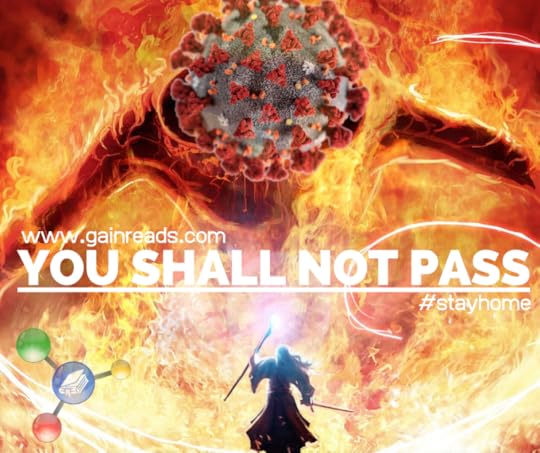 Your Shall Not Pass meme
2. Provide great values for money
This doesn’t necessarily mean that your books should be either free or priced at 99 cents. There are so many ways how you can attach more values to your existing offerings:
give a bonus book to each purchase with the proof of purchase e-mailed to youoffer your short story free to download (and get subscribers!)launch a creative giveaway with prizes that offer top products from the publishing industry (forget about gift cards, everyone is doing that – think outside the box!)
This is an example of my latest giveaway at Tolkienology.net:
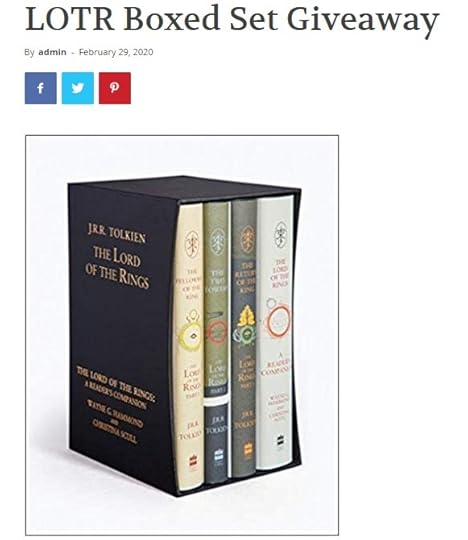 LOTR Boxed Set Giveaway
To stay at home people this wonderful 60th anniversary boxed set by Harper Collins comes handy, right? The giveaway attracted 750+ participants with no ads, just through the power of social shares.
3. Accelerate your blogging
Your readers are not just reading books. They are following news and spending a great deal of their #stayhome time online. So, write for them! Here are a couple of blog ideas:
come up with TOP15 titles of all-time in your genredo a literary portrait of a famous author that you are a fan ofwrite about how coronavirus affects your writing if you are a mystery writer, come up with TOP10 detectives of all timeif you are a fantasy writer, come up with best fictional characters of all time
The point is to blog about well-known topics that are easy to provoke comments and increase engagements. You always write from your point of view, giving your readers an insight into your reading interests. If they accept you as a reader, you are the part of the herd. Your brand grows, your popularity increases and your books smile a lot more.
Since I blog about marketing, I’ve increased the frequency of my articles with social media how-to’s being the most frequent articles:
Social Media Activities that can Hurt Your Voice (and thus Your Brand)How Authors Can Use Twitter Effectively10 Reasons Why Authors Should Use Pinterest
4. USE IMAGES!
It’s no secret that images are more efficient than plain text in terms of user engagements. Please note that to get the attention of an average scroller or lurker, you need eye-catching content. It’s a matter of SECONDS. Your message should take a cozy place in the reader’s brain immediately. Books are adventures, but the marketing message is not – it has to be concise and far from misleading.
You don’t have to be a designer to deliver such messages. If you browse Google images, you’ll always find images that fit your message. Use simple tools like Canva to edit your images, or online meme generator like ImgFlip to create your memes in a split second. I do most of my graphics by myself using Canva templates with imported fonts and clipart.
Here’s an example of how I delivered a message about my latest project GainReads.com where readers can enjoy free and 99 cents books during #stayathome:
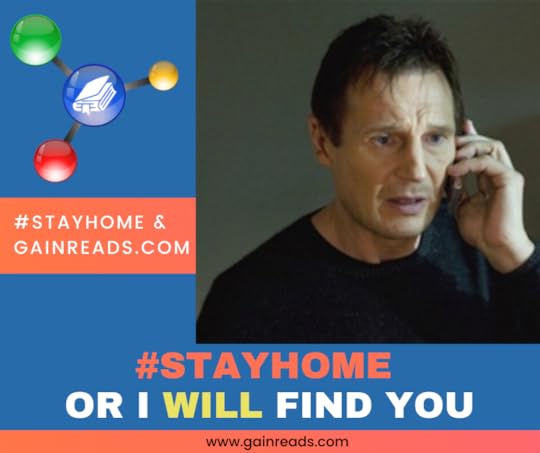 #stayhome campaign
5. Use helpful tools and websites
Personally, I use a wide array of marketing tools and I enjoy exploring them. The right tool in combination with the right marketing messages can give you the edge in these competitive times.
My tool #1 is MailerLite. According to a survey by Gigaom, marketers believe email is still the strongest tool in their arsenal, outranking both social media and SEO when it comes to raising awareness, increasing acquisition, starting the conversion, and supporting customer retention.
If you are new to e-mail, I suggest that you read Neil Patel’s Begginer’s Guide to E-mail Marketing.
Why I prefer MailerLite?
Easy to use dashboardGreat reportingFree accounts + affordable upgradesAmazing customer support
There are many mailing list services out there, with MailChimp being popular over the years. You can have up to 2000 subscribers for free, which is 1000 more than with MailerLite. However, MailerLite Premium for up to 2500 subscribers is just $10 and their pricing structure is based on the size of your list. Even if MailChimp offers 10x more free services, I would still prefer MailerLite because of its amazing chat support.
The second tool I use most frequently is SocialPilot. If you want to run your social media accounts on autopilot, this easy-to-use social media marketing tool comes handy. The Professional license is just $30/month and you can handle 25 social media accounts with it, with full reporting, bulk scheduling, content curation, and many other useful features.
If you think that $30/month is a big investment, try writing down hours spent on posting to various social media platforms. SocialPilot saves you a lot of time that you can allocate to other marketing efforts. It’s also a very insightful tool that will most definitely improve your social media management skills.
When it comes to websites, there are numerous book promotion services available out there.
Let me mention some that I use frequently for my clients:
BookBub Ereader News Today Fussy Librarian Book Barbarian
Dave Chesson at Kindlepreneur has a more comprehensive list of the top 120+ free and paid book promotion services, so you might want to check this out. Dave is also a resourceful guy, so reading articles on Kindlepreneur is certainly not a waste of your time.
Wait, that’s not it, we have a new kid on the block! Ladies and gentlemen, make sure you don’t just #stayathome when you can #gainreads too at GainReads.com! Obviously this is me shamelessly promoting my own project, but since we have FREE book promos available during coronavirus crisis, this should be the moment when you simply CLICK HERE and apply!
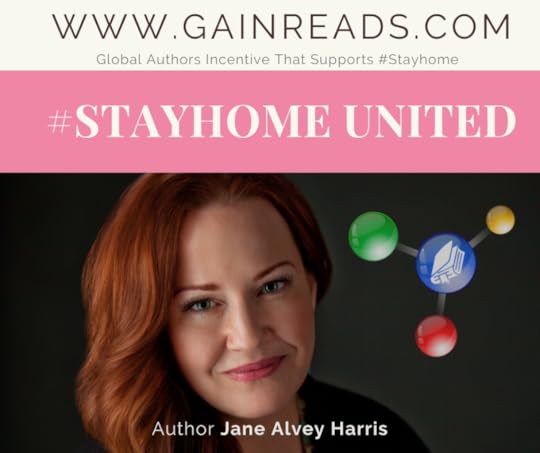 Author Jane Alvey Harris
Conclusion
This is your time to shine! That doesn’t mean that you are not part of this world that suffers deeply due to coronavirus casualties. Actually, this is everyone’s time to shine. Now more than ever before we need people who are there for the people. We need optimistic energy-generators. We need encouragement, hope, and magic. We need things that are already in your books. You just have to bring them out to the world.
p.s.
Now it’s the best time to drop the “help a struggling author” line! You are not a beggar. You are a published author and it’s a huge achievement. Now go out there and SHINE!
The post AUTHORS, This is Your Time to Shine! appeared first on Slaven Vujic.
March 17, 2020
GainReads.com: Your Best #stayhome Companion
Coronavirus. Probably the
most Googled word in the last week and one of the most terrifying enemies of
mankind today. Over 7000 people have died because of the virus which has about
200.000 confirmed cases at the time of this writing. Yes, deadlier things than
COVID-19 exist in our world, but we are still losing lives at a very rapid
rate.
There are countless
negative impacts of coronavirus and almost all industries will suffer great
losses. How is this COVID-19 crisis going to affect the publishing industry? No
one can say for certain. It’s too early to make predictions, but the publishing
industry relies on the population’s purchasing power. Since this power is about
to decrease, the book-buying frenzies can hardly appear on Amazon’s radar.
Having said that, I spent
an entire night thinking about how we can make a difference but also save our
own industry, especially a self-publishing industry. Since the purchasing power
is expected to decrease, authors need to adjust and undertake countermeasures
right away. The market is already stacked with millions of books and even in
regular conditions, it’s becoming more challenging than ever to stand out and
make sales. The coronavirus makes it even harder!
So, how can we overcome the
downfall of our economy? First: priority check. Our highest priority is lives.
We have to be responsible and smart to save lives in our society. This means we
should really #stayhome as the officials suggest. This doesn’t make us feel
less brave – it makes us smart and it could save some lives. So, we should
really #stayhome for the time being.
While we are at home, we
can still go on an adventure and take others with us. We can help to create a
more joyful environment for those who stay at home. That was my original
thought when I sat behind my computer to create GainReads.com. Although I represent authors and help them in building
their careers, I was focused on families whose lives have been severely
affected by coronavirus and self-isolation. I wanted to create a place where
children can enjoy eBooks and picture books for free, the place where young
adults can dive into some amazing worlds of fantasy and science fiction. Since
it isn’t only readers who are now self-isolated and with limited resources with
respect to pre-coronavirus life, I decided to invite authors to join our
platform for free during the COVID-19 crisis. The only condition is to make
their books free or discounted to 99 cents.
And there you go! 48 hours
ago I was thinking which countermeasures to launch to save the self-publishing
industry and my clients’ businesses as well. Today we have an up & running
website where authors can join for free and make their books available to house-ridden
readers worldwide. GainReads.com is going to be a
giant library of affordable or free books, designed to open a door to worlds of
joy and adventure in times that are going to be remembered under the united
call to #stayhome.
The post GainReads.com: Your Best #stayhome Companion appeared first on Slaven Vujic.
10 Reasons Why Authors Should Use Pinterest
In this world of social media applications, Pinterest is a social media website and mobile app which allows the users to have a visual insight into food, fashion, politics, and other social platforms.
We all know that Pinterest tends to be one of the last social media tools that authors use for their writing purposes. Authors are using Pinterest to store pretty pictures, and dare I say it, even to procrastinate. However, it is essential to know that Pinterest is much more than just a place to find and categorize inspiration photos. It can be a useful inspiration tool for your books, and of course, an excellent promotion tool.
Here are ten reasons that Authors/ Writers should use Pinterest. Let’s check them out:
1. Character visualization
Authors can describe the main characters in their boards, showing the real essence of the story. The clothes of the characters, the colors they wear, and the backgrounds can visually inspire a lot of people to get the book to read. This visual description is necessary for the reader to get attracted to a specific book, which is not possible without putting pins and boards on Pinterest.
For example, Jennifer Niven uses Pinterest to intrigue the followers by giving a peek into one of her main character’s songs playlist. The sharing of a main character’s music interest is also a motivating factor for the followers to buy the book. While another author Leigh Barduga uses the clothes of her main character for her Pinterest boards to arouse curiosity among her followers. The Russian kaftan of the author’s main character was a unique sight and allowed the people to fascinate a lot more about the other characters too.
2. Free content promotion
The authors can offer to upload a few of their content for free on their boards to gain more attention from the followers. The content should be available for download for the readers. The author can promote their work and can also share other in-process work to gauge the response from the readers. An author Katie Ganshert uses graphical illustrations on her boards along with her short stories to conspire more interest in readers. Another author James Patterson made his board a genre-specific and deliberately offered free book previews for the readers that are available for download.
3. Interviews and blog posting
The author can promote his brand by setting up his meetings and interactions with other fellow authors. The photos and video posts of these interviews can enable the author’s followers to feel more close. For example, Hugh Howey has created a specific board of his meetings, book signings, and other social interactions on Pinterest for his followers. In this way, the readers can have a chance of meeting their favorite author through the pins he posts. Another writer, Elizabeth Gilbert, dedicates a separate board for the talks, chats, and interviews she gives to show people how she is excelling through her work.
4. Organic Reach
As we know that there are more than 20 social media platforms, and each one of them offers unique and attractive benefits when it comes to booking marketing for authors.
These free platforms provide an excellent opportunity to build a connection with your readers, find out what they are interested in. Sharing life experiences and celebrate successes with other people is quite amazing.
However, it is crucial to know that organic posts on social media platforms are now reaching only a tiny portion of followers. Authors have to pay to display ads for their work to targeted members of the audience.
On the other hand, when someone goes onto Pinterest, they are actively searching for specific information regarding topics or problems or to be inspired by new ideas. Furthermore, Pinterest will provide effective search results in the form of images and pins attached to virtual pinboards.
5. Reading Groups
Pinterest also encourages reading by sharing your recommended reads; those books you enjoy reading. People who like your taste in translation will also enjoy your books. However, it is essential to keep in mind that when pinners repin a pin, a pop-up box encourages them to follow another board. Moreover, the more you pin and repin, the more chance you have of growing more followers.
6. Gain Inspiration
Authors could use Pinterest to find inspiration for your novel. It is fascinating to see pictures of people that resemble your characters and pin them to a secret board. In this way, you can only the person who can view them.
It allows you to describe the character’s appearance and makes them ‘come to life’ for you. However, the same goes for settings for the book. Just imagine writing a description of a derelict barn on a stormy night, you will find plenty of images on Pinterest for inspiration.
7. Discoverability
It is essential to know that Pinterest is not a social media platform, but it is a search engine. Its users are very different from other internet platforms because they are not only there to chat and share photos, but they are there to be inspired and buy products.
Pinterest is also a visual discovery tool for an audience who is looking for information. When you type a search query into Pinterest, you can get multiple suggestions regarding your niche and interest.
Although the pin is visual, so each pin will be a direct link to your blog or book page. Moreover, you can also pin a copy of the book cover of your latest release with a link that takes the user directly to the selling page.
Pinterest is beneficial to market directly to your ideal readers, who are actively looking for you and your work.
8. Show Potential Readers Some Sneak Peeks
When your book is published, you can show your fans and readers these pins. Now it’s up to you that either you show by making the secret group a public board or by repining the pins into another board.
It’s good news that enthusiastic readers of your novel would love to see more insight into the work behind the book.
Abby Green, an Irish author of romantic fiction, has several inspiration boards on her Pinterest account. Moreover, Lisa Wingate also uses Pinterest to inform readers about the historical background of her invention, along with showing them artifacts and dresses that would have been worn by people at that time.
9. To Sell Your Book
Pinterest is a visual tool that is used to catalogue the pictures into different mood or inspiration boards. The best thing for those selling online is that every pin carries a link to its source. If you have pinned the front cover of your book from where it can be purchased online, it will always take that link.
It allows people all over the world to click that link and purchase your book. Furthermore, Pinterest works best when you use it with your target market’s wants in mind.
10. It easily interlinks with other platforms
It is fascinating for the authors that Pinterest also stands out for being easy to interconnect with other social networking platforms. This platform emphasizes the use of keywords and hashtags. Although it is not suitable for search engine ranking also makes content easily visible to other platforms. You can easily link them with other social media platforms.
Tips for creating a Pinterest account for Authors/ Writer:
Create your business account on Pinterest
An author is supposed to sell his or her books, and you want to do marketing for your books on Pinterest, so start with your business account. The Pinterest account should be a business one for the author, not a personal one. The business account requires the author to create his individual or unique boards and then add pins. One board can have similar and linking pins to describe a specific thing from the author’s side.
An attractive profile for the author
An author should have an appealing profile that can optimize your brand for the followers. First, all the information you are providing should be accurate and do not fake about anything on your profile. The essential things that should be kept in mind for gaining more followers through your author profile are:
The display picture
high resolution and clear headshot photos are most appropriate for setting up on the pattern for your business account. The photo should be from a recent past. You can add fun pictures too to look cool.
Display name
Use your pen name or author name. Keep the name more uncomplicated and keep it consistent. Do not change your display name after time. Changing your name now and then can make you look some fraud too.
Location
As this is for setting up a business account for you, do mention a complete and actual address of the place where you reside. The exact address of your residence is an essential step for shipment purposes too.
Bio information
In the bio section, there are 160 words margin for you to write things about yourself, what you do, what your work is all about. It can include relevant keywords from your boards to have more attention from followers.
work on your boards
If you write books on specific genres, then you must create your boards on those particular genres. The pins within a particular board can be inter-linking with each other and profoundly describe the style of the board. Like, an author is a romantic story writer, and most of his works are on romantic stories, then he can create a committee under the keyword of “Romantic stories” and his pins there.
The post 10 Reasons Why Authors Should Use Pinterest appeared first on Slaven Vujic.
March 10, 2020
Social Media Activities that can Hurt Your Voice (and thus Your Brand)
Let me tell you a story about a woman named
Justine Sacco. She was Director of Corporate Communications at IAC, an American
holding company with some of the most recognizable brands on the planet. Ms.
Sacco had a Twitter account with about 170 followers. In December 2013, she
used her account to post tweets during a plane trip from New York City to Cape
Town. One tweet went like this:
Weird
German Dude: You’re in First Class. It’s 2014. Get some deodorant.
While on a layover at Heathrow, she made
another tweet:
Going
to Africa. Hope I don’t get AIDS. Just kidding. I’m white!
Ms. Sacco then boarded the plane for an
11-hour flight, completely unaware of the maelstrom that awaited her when she
landed in Cape Town.
During the flight, her tweet went viral and
captured the attention of bloggers, celebrities and multiple news outlets. She
was publicly villainized, and most importantly, she lost her job. The hashtag
#HasJustineLandedYet was created as the world waited for Justine to land and
realize her fate.
As of 2018, Justine Sacco is now running
corporate communications at a spin-off of IAC. Despite her fortune, this certainly
isn’t an “all’s well that ends well” moment for Ms. Sacco: she endured being
publicly fired and shamed because of one off-color tweet. You don’t want to spend years resurrecting your career
and reputation because of a post. So let’s talk about what social media mistakes you want
to avoid from the beginning.
Don’t
be that Person
Now that you have a brand, it has a
reputation too. By extension, you have a reputation too. You must defend this
reputation at all costs. One careless mistake can cost you your tribe, future
tribe members, and money. Good luck selling anything once you’ve ostracized
your base.
So before you add content, be sure you:
Make
sure that your brand’s voice is heard. If your brand is classy, keep it classy. If
it’s masculine, make sure it will resonate with your male audience.
Think
a bit about the tone. Is this is a laidback conversation or a bit more serious?
Proofread
your posts. A
few typos can hurt your credibility. We all make mistakes (and forgive me if
you find any here), but many of these mistakes can be avoided with a quick
once-over before posting.
Edit
your posts. I’m
not talking about in a grammatical sense. You might not always feel like it,
but you’re a professional, even on social media. Nobody wants to interact with
a negative, arrogant, or obnoxious social media personality. Make sure you
check your content for decency before posting online. Think carefully about things like:
Swearing
Tongue-in-cheek references
And
just say no to:
Vulgarity
Obscenity
Discriminatory references
Avoid
attacking anybody in your posts. You want to avoid attacking competitors, members of your
Tribe, or people who gave your book negative reviews. Again, you’re a
professional. And professionals don’t launch crusades. If someone else is
managing your site, be sure to set clear expectations and have a style guide
available. You want to ensure that your brand’s voice is properly heard.
By
extension, don’t gossip. Unless you’re Perez Hilton and unless your Page is meant
to dish out the hottest celebrity gossip, avoid trash talking others
altogether. This includes not only fans, but your boss, your local
representatives, your ex, the guy on the plane whose snoring disturbed your
reading, and the British Royal Family. I’m sure I missed some things, but you
get the point. Don’t gossip.
Don’t
be a dictator. You
run a Page, not a prison. A few community guidelines can create a welcoming
community, but too many will make your fans feel oppressed. Your Tribe should
be able to disagree with you without fearing retaliation. Similarly, they
should feel as if they can provide constructive criticism without being
blocked.
Host a
party. We
don’t like dictators, but we do like party hosts. What makes a great party
host? They make their guests feel welcomed. They provide an environment and
enough tools to facilitate conversation. Then, they
back off and let people enjoy themselves. Every so often, the host checks in with their
guests to see if they’re having a good time. They ask if they can get them
anything. They host the party while being part of the
party.
That’s what you should do for your Tribe: give them everything they need to
have a good time, then step back and let them have a good time. And remember,
you’re a member of the group too: you have every right to interact with your
Tribe and have fun too!
Don’t
share too much either. It’s easy to overshare on social media, but you want to engage, not overshare. You can develop a sense of familiarity
about your Tribe without endangering yourself or your brand. Things you might
want to share include:
J.K. Rowling just released a new book (this assumes that
your Tribe also likes J.K. Rowling)!
Your new rescue dog!
Milestones (your book just launched on Amazon! Your book
got 50 reviews on Amazon! The size of your Tribe has tripled in the last five
months!)! Your Tribe wants to celebrate with you!
There are also some posts that aren’t worth sharing because they’re not beneficial to your
Tribe. Remember, you always want to keep them in mind when creating content:
What you ate last night, or anything along
those lines.
Any content your Tribe won’t get immediately. Posts are like jokes: if you have to explain
the context, then it wasn’t that good.
Cryptic, dramatic, or suspenseful posts. The only exception is if your Tribe can
expect something very cool in their feed tomorrow.
Anything that falls under the banner of TMI. No one wants to know about your bowel
movements, your recent visit to your proctologist, or the minutiae of how your
body works. Let’s keep it professional here.
Finally, there are things you should never post. Not only are these kind of posts too
personal, but revealing this kind of information could be dangerous:
Where you live.
The fact that you’re staying at X resort in Y country on
Z days.
Any photos or posts that can be used to locate you.
An argument with your significant other, your boss, your
landlord, etc.
Private message communications.
Inappropriate photos of yourself.
Unsubstantiated claims about someone else, especially if
it could damage their reputation. You could also be in legal trouble if you’re
caught.
Complaints or comments about others, because it could
damage your reputation.
Videos and photos of others without their permission.
Any personal information about others without their
information (see note about children).
Note
about children: If it’s not your kid, don’t post images of them, even if
they’re your relatives. Or at least not
without their parents’ permission. You can get in trouble for that. If the
photographed kid in question is your kid, be prudent and consider your child’s
privacy as well. Photos of children are shared among creeps at an alarming rate
on Facebook.
All of these seem intuitive, but we are a
society of oversharers, and many of us don’t think twice before uploading to
Facebook. You have to be even more cognizant of your sharing tendencies now
that you’re marketing a brand. Facebook is not a professional site like
LinkedIn, but you’re effectively using it like LinkedIn. So keep it that way.
Don’t
spam. How
annoyed are you when you get spammy Emails from a store where you bought a pair
of pants from once five years ago? Your Tribe will likely feel the same way
about being bombarded with chats, personal messages, and Emails. Exercise
restraint when communicating with the members of your Tribe.
And
don’t forget…this is not your online store! Many businesses indeed have online stores,
but they’re typically not on Facebook. Your Facebook Page is a social media
forum, not a marketplace.
You can use your Facebook page to announce book
launches and new products with links to the appropriate sites. Your Facebook
Page or Groups are also good places to find your next beta readers. If they
like you and like your content, they will likely appreciate your book as well…
Don’t
Create a Divided House
This is an extension of the “Don’t be that
Person” section. Your Tribe is your community, and community members want to
feel like they belong. Your Tribe will share the common interests that brought
them to your Page, but they might be different in other regards. It’s critical
to make every member of your Tribe feel welcomed regardless of their
background. To do that, you might want to avoid
the following topics:
Politics and political figures.
Race.
Religion.
Geopolitical discussions.
Cultural discussions.
Money and personal finances.
The exception is, of course, if you’re
moderating a Facebook Page dedicated to having these kinds of conversations.
And
think pretty hard before talking about:
Sex and sexuality.
Gender differences.
Age differences.
Ableism.
Personal relationships.
“The Good Old Days.” The world’s still working on
equality, so while you were enjoying the “golden days,” of yore, someone else
was likely fighting for basic rights.
These topics are good ways to ostracize the
members of your Tribe who don’t share your opinions. They can also cause
unnecessary drama among Tribe members. If you misstep, apologize, and quickly. You’re not perfect, but you need to realize
when it’s time to take ownership of a faux pas. Everyone has their own way of
apologizing, but here’s an effective strategy for online acts of contrition:
Be authentic. Avoid the “I’m sorry, but…” kind of
apologies. The “I’m sorry you took it that way” variety of apologies isn’t very
useful either. While your apology might contain an explanation for your behavior (I
was misinformed about the stereotypes surrounding the dinosaur community), it
certainly shouldn’t contain an excuse (I didn’t know this was such a sensitive
issue for you). Note that your apology doesn’t even need an explanation in most
cases.
Be specific. This ensures your audience that you know why
you’re apologizing. Sometimes you will have to apologize for your behavior, and
sometimes you will have to apologize for how your behavior made someone feel
(even if this wasn’t an expected or desired effect). This is the difference
between intent and impact, or how the message was intended versus how
it was received.
If you find yourself saying “I definitely
didn’t mean it like that!” there may have been a difference between what you
said and how others took it. And in some cases, they’re right for being
offended. In today’s world of increasing political correctness (which isn’t
always a bad thing), ignorance of prevalent stereotypes is no longer an excuse.
But in cases where’s it not entirely clear (to you) why someone is offended,
you need to convey that you recognize that they’re offended and apologize for
it, even if you’re not sure why they were offended. Why? Because even though it
wasn’t your intent, your post had a negative impact on your community, and you
never, ever want that. So explain yourself, and apologize for any
misunderstandings.
Explain why it was wrong. If it’s a clear-cut case of foot-in-mouth
disease, your audience wants to know that you’ve learned from your mistakes.
Saying “I’m sorry for what I said yesterday” isn’t going to cut it unless what you said was so offensive that it should never be
repeated. Saying “I apologize for saying that all Quirks are Dirks, when in
reality some Quirks are also Irks” is more specific, and it tells your audience
that you’ve reflected on where you went wrong.
Say you won’t do it again. And then don’t do it. Ever. On any platform.
And if you’re wise, you won’t even make a similar mistake, because someone on
your platform can and will resurrect old posts to prove that you have a habit
of making the same insensitive comments. You don’t want your Tribe to think
that you didn’t learn your lesson the first time. That’s a classic case of
“first time, shame on you, second time, shame on me.” They will leave before
being shamed again.
Don’t be dismissive. There’s one thing that’s worse than messing
up online, and that’s being unapologetic about it. Refusing to apologize,
diffusing blame, and dismissiveness will not gain you any fans.
But
what if someone from the Tribe initiated the conversation? There’s a way to reduce the chances of this
happening. A good social listening program can help you identify potential
issues before they turn into a crisis. Examples of social listening programs
include:
Hootsuite
ReviewTrackers
Audiense
Brandwatch
Synthesio
But what if you don’t have (or can’t afford)
and of these programs? Then the first course of action is to address it immediately! Your Tribe will respect you for de-escalating
the situation, but you’ll appear spineless if you don’t. Also, if something is
glaringly wrong, your Tribe will expect you to intervene.
After that, there are some ways to diffuse
and mitigate an online crisis:
Make sure it’s a crisis. Some people are very rude online, but their
opinions are not crises. Negative comments aren’t always crises either.
Sometimes, they’re good feedback about how to improve your Page and your brand.
Decide what you’re going to say. If it is a crisis, you’ll want to respond
appropriately. Part of this is acting quickly. The other part is knowing what
to say. Your response needs to convey that the crisis has your attention,
you’re taking the situation seriously, and your plan of action. If a Tribe
member is combative, respond, but do not escalate. Do not get into an argument
online, and do not appear threatening or confrontational. Discourage other
members from getting involved, and try to move the conversation into a private
message.
Learn from the experience. Reflect on the crisis. What more could you have done? How could you have handled the situation better? What worked? What didn’t? Now might be the time to develop or modify your social media communication plan to prevent a similar crisis in the future.
Ooooops, you have reached the end of this article! If you liked it, you may consider purchasing Build Your Tribe as a Published Author book as it’s designed for YOU!
The post Social Media Activities that can Hurt Your Voice (and thus Your Brand) appeared first on Slaven Vujic.
The Importance of Logo in Author’s Branding
Subject:
The Importance of Logo in Author’s Branding
Have you ever stopped by and suddenly
realized that you’re fully able to identify a business pretty much instantly
and feel an emotion you have in regards to it by merely glancing at its logo?
Even at those times when business’ name is
not included or the nature of the business is not presented. You may even be
able to pin-point the nature of the business despite never having heard of it
before.
We all know that we, humans, consciously
and even more so subconsciously, prefer thinking and talking through symbols.
They present the most efficient and succinct way for aspiring author’s to
communicate about themselves, their products, business or brand image to their
target audience.
This is exactly why Logo presents one of
the most important parts of your company’s overall brand. An integral element
of your business that can literally not only significantly impact, but pretty
much completely shape the public perception of your company…
Hence why most world class marketing
experts tend to consider the investment into a quality logo one of the most
important branding investments authors, self – publishers as well as small and
medium sized businesses can make.
We tend to 100% agree.
You may wonder: what makes Logo Design SO important?
You see, logo is literally the face of your
company. Considering that, as we said just a moment ago, we humans tend to
think primarily through symbols, your Logo design literally presents the very
first thing a potential customer will not only notice, but also remember when thinking about your
business.
This is why Logo is so much more than a
mere image; it’s a crucial point of recognition and an integral foundation of
all your company’s branding efforts. Maybe you’ve found yourself wondering why
do some of the most successful self – published authors (who later went on to
the mainstream and made a fortune) such as Mike Omer, Andy Weir and Meredith
Wild, or, if we look back to the last decade, Rhonda Byrne, who wrote “The
Secret”, one of the most successful books of the first decade of 21st
century, and similar literally spent serious dollars on their logo.
They’re not spending it on a mere image.
Far from it… They’re spending it their brand
image. The perception their target audience has about them. Considering
that customer’s opinion on a business that is selling the product or a service
is the number one factor in making a decision whether to buy or not – the
billions of dollars of profits are directly dependent on customer’s perception
for huge corporations.
This is why they’re willing to spend
millions on research on how to design a logo that will do this job the very
best way.
The truth is: despite the fact that small
businesses, authors and self – publishing professionals will probably rarely
reach millions of buyers or have the need to spend hundreds or millions of
dollars on their logo – it’s still more than crucial for their brand image,
profits and ultimately – business success, to pay special attention to the
importance of their logos.
A well – designed logo is hands-on the best
way to convey to your potential customers that you are a serious professional,
highly trustworthy, reliable and committed to delivering quality goods or
services on a consistent basis.
All of the above can be achieved with one
simple thing: a powerful, inspiring, quality logo.
You know how they say character is destiny?
Well, in pretty much the same way, logo
design is destiny.
It can literally make a break small
business, author or a self – publisher looking to stand out and make sure the
first impression customers form about their business is the one that’ll make
them want to do business with them.
A high quality logo is crucial for
countless of reasons which we could spend ages talking about, but the most
important ones you need to pay attention to are:
A quality logo will grab customer’s attention and make them feel
GOOD about your businessAmazing logo design will make potential customers want to do
business with youA Logo literally represents the foundation of your Brand’s identityInspiring logo designs are memorable.
In the overly competitive
market where competitors are literally one click away, you really want
your business to be remembered.
It’ll make you stand out.
Remember what we said
about the competitors that are only one click away? Be one of the competitors
who get clicked and purchased from.
Good logos nurture brand loyalty.
Do you know that research
has proven that on average it costs around 70% less to convince an existing customer to purchase again than to acquire a completely new customer?
We firmly believe that making your logo
distinctive enough for it to be easily recognized and remembered and simple
enough for it to work across the multiple media authors, self – publishers and
small businesses are presenting themselves on.
It’s crucial for your logo to be memorable
and make a great first impression while
retaining functionality. Meaning – it’s highly effective at any size,
whether it’s on a pen or on your local town’s billboard. Sacrificing
functionality for artistic value or personal taste and preference is a mistake
often made by authors and self-publishers. A mistake that usually ends up
costing them a lot of money, time and nerves…. Something you definitely wish
to avoid.
That’s why making sure your logo is
impressionable and functional is crucial.
If you don’t have a logo, or a logo that
stands out and inspires your target audience, you can absolutely rest assured
that you’re missing a huge opportunity to make your business, book or product
stand out and stick to the minds of your target audience.
Still not convinced to invest in a quality
logo? Well, if you don’t take our word for it, take the word of the 99% of the
best marketing and branding experts of all times. They all say: you need a top – notch Logo.
Designers at PenWarriors.com are firmly committed to providing authors and self – publishers with top quality Logos that will aid their brand recognition and simultaneously do wonders at improving their business performance.
The post The Importance of Logo in Author’s Branding appeared first on Slaven Vujic.
March 6, 2020
How Authors Can Use Twitter Effectively
Writing a book
seems like the complicated part of the job for an author. Finding your
characters, developing your story, ending it with a boom and even thinking of
ways to continue it throughout more books can take up most of your time (if not
all). But do you know what the real struggle is for most authors? Marketing
their books!
Writers, especially
those who still can’t afford a publicist to do the job for them, or simply authors
who want to be involved in every part of the process, need to step up their
marketing game. Nowadays there’s plenty of options for audiences to read, and
you need to find a way to stay relevant for people and make them want to keep
up not only with you, but also with your projects. A great tool to accomplish
your author
marketing is Twitter. This platform has many advantages if you know how
to use it properly. Keep reading to find out how to make use of Twitter
effectively in a book marketing campaign.
Make a rich and complete profile
We can’t stress
this enough: if you want to be someone on Twitter you need to start by being
someone. What does this mean? Nobody is going to either pay attention to you or
take you seriously if your profile looks like a fake account made by a bored
fan. The first step for a strong author marketing game is to make sure people know who
you are and what you’re about. Set up a profile picture where your face is
visible, set up a cover that maybe has something to do with your latest book,
fill in all of the fields about you: where you’re from, what you do,etc. And
don’t forget to write a compelling mini bio, after all writing this should be
easy for you, right?
It’s not all about book marketing
This might sound a little confusing since the sole purpose of using Twitter is to do some book marketing (at least for some authors). But you might want to know this before you start your activity on this social platform: people won’t care about you if all you do is promote your work! Twitter is a platform made for interaction of all sorts: discussions, Q&A’s, retweets… It’s only natural that your fans want to learn a bit more from you asides from your work. Talk about your hobbies, your likes, and dislikes, maybe throw in some behind the scenes about your books… Any piece of information your fans might crave should be in your Twitter profile.
Interact with similar authors
A good -and
promising- author knows the importance of surrounding themselves with bigger
names that can teach you some valuable lessons. The best tip of author marketing
is to follow similar writers with a bigger career or at least a bigger number
of followers. Not only do you have to follow them, try to interact with them
and make subtle hints to your work. This will get the author’s fans to pay
attention to you and maybe even visit your profile. This point works wonders
because you’ll be reaching out to new audiences that you know are most likely
to be interested in your books.
Don’t be afraid to throw some hashtags
Remember that you
can enjoy using Twitter to express your opinions and talk about your work, but
don’t forget to do some book marketing also. In most social platforms,
hashtags are the equivalent of SEO; a way to position your content so that
people find it when looking for relevant topics or words. A rich tweet has to
include at least a few hashtags that relate to the field you work in and work
from the most general to the most specific. Example: #books, #scifi #UFOs.
Hashtags will be your best tool when you still don’t have a huge audience and
are trying to make yourself visible to others.
Ask your followers for some interaction
The cool thing
about Twitter is that it’s a two way street for communication. Just like you
can reach out to other accounts or respond to messages, you can receive
feedback from your fans, thus expanding your community. Don’t be afraid to ask
for interaction that can end up being very interesting for audiences. Create
polls to know people’s opinions on your books, ask them about their favorite
characters, you can even openly ask them about how they think your current book
should end. Getting interaction from fans is a great way to make them feel
close to you AND you’ll also get valuable feedback for your next projects.
Reveal details from your books
We don’t say you
spoil the ending of your new book, but a great way to do author marketing
and make people WANT to follow you is to give them exclusive sneak peeks from
your work. You can start from broadcasting the release dates of your new book,
giving tiny bits of information on the fate of some of your characters and
making a big cover reveal.
Use every inch of your profile to do some marketing
Remember every space in your profile is an opportunity to do book marketing. Instead of filling your feed with tweets announcing your books, which can end up being super boring for your followers, use all of the fields in your profile to do it. The space available for you to provide a link can (and should) go directly to an excerpt of your new book, your Bio can talk about the upcoming dates of your book tour, and the cover of your profile should be a compelling image about your latest work. Make use of every source available to boost your projects!
The last piece of
advice we’d like to share with you is to remember Twitter is a platform where
content has a very short lifespan. People like to talk only about the latest
topic so it’s important to keep your content relevant. Asides from your work
remember that people will want to feel connected with you as a person. So if
you don’t have Twitter create your account and start following our tips, soon
you’ll find yourself with a fair amount of faithful followers who love both
your work and your tweets!
The post How Authors Can Use Twitter Effectively appeared first on Slaven Vujic.
March 3, 2020
GIVEAWAY! Win a 1-year Membership ($550 value)
As a founder of PenWarriors, I’m excited to provide this wonderful opportunity for you.
By entering this giveaway you earn your chance to win a 1-year Elite Membership package!
Here’s what’s included:
2x Featured Deals in book-buying events every other Thursday1x Author Spotlight on PenWarriors.comSocial Media Giveaway Booster (Fb + Instagram)1x Book of the Day feature in the book-buying groupKeyword package for your blurbs (new releases only!)Backlink Builder (increasing your chances to be found via Google)Access to our special Facebook Group
.rafflepress-giveaway-iframe-wrapper iframe {
width: 1px;
min-width: 100%;
*width: 100%;
height: 1000px;
}
.rafflepress_iframe_loading {
background-image: url('data:image/gif;base64,R0lGODlhEAAQAPIAAP///wAAAMLCwkJCQgAAAGJiYoKCgpKSkiH/C05FVFNDQVBFMi4wAwEAAAAh/hpDcmVhdGVkIHdpdGggYWpheGxvYWQuaW5mbwAh+QQJCgAAACwAAAAAEAAQAAADMwi63P4wyklrE2MIOggZnAdOmGYJRbExwroUmcG2LmDEwnHQLVsYOd2mBzkYDAdKa+dIAAAh+QQJCgAAACwAAAAAEAAQAAADNAi63P5OjCEgG4QMu7DmikRxQlFUYDEZIGBMRVsaqHwctXXf7WEYB4Ag1xjihkMZsiUkKhIAIfkECQoAAAAsAAAAABAAEAAAAzYIujIjK8pByJDMlFYvBoVjHA70GU7xSUJhmKtwHPAKzLO9HMaoKwJZ7Rf8AYPDDzKpZBqfvwQAIfkECQoAAAAsAAAAABAAEAAAAzMIumIlK8oyhpHsnFZfhYumCYUhDAQxRIdhHBGqRoKw0R8DYlJd8z0fMDgsGo/IpHI5TAAAIfkECQoAAAAsAAAAABAAEAAAAzIIunInK0rnZBTwGPNMgQwmdsNgXGJUlIWEuR5oWUIpz8pAEAMe6TwfwyYsGo/IpFKSAAAh+QQJCgAAACwAAAAAEAAQAAADMwi6IMKQORfjdOe82p4wGccc4CEuQradylesojEMBgsUc2G7sDX3lQGBMLAJibufbSlKAAAh+QQJCgAAACwAAAAAEAAQAAADMgi63P7wCRHZnFVdmgHu2nFwlWCI3WGc3TSWhUFGxTAUkGCbtgENBMJAEJsxgMLWzpEAACH5BAkKAAAALAAAAAAQABAAAAMyCLrc/jDKSatlQtScKdceCAjDII7HcQ4EMTCpyrCuUBjCYRgHVtqlAiB1YhiCnlsRkAAAOwAAAAAAAAAAAA==') !important;
background-repeat: no-repeat !important;
background-position: center 100px !important;
height: 100%;
}
The post GIVEAWAY! Win a 1-year Membership ($550 value) appeared first on Slaven Vujic.
March 2, 2020
One Reason Why Your Books are Not Selling
Book
marketing is tough. That’s something you’ll hear over and over again among
authors. Even for me, as a professional marketer, writing books is tough. Truth
be told, I’m simply not as good at it as I’d like to be – English is not my
first language, I don’t know where to begin and how my writing should be
structured. As a result, I find it tough! Don’t let this blog fool you though;
I’ve got an editor cleaning up my mess!
The very first reason why I consider writing to be so tough is due to the fact
that I simply don’t know much about it. More precisely, I don’t think I possess
skills and knowledge to get a properly structured and consistent non-fiction
flow. The result? I find it tough as hell! 
Never Skip Chapters
The same can be said for marketing. If you don’t possess the skills needed for
successful digital marketing, lack the knowledge and data about marketplaces,
or miss out on the latest research data on industry trends, it’s highly
unlikely you’ll manage to come up with a well-structured, effective, and in-depth
marketing plan. Just as your book needs chapters, your marketing plan requires
milestones. Although all authors wish this wasn’t the case, there are no single
milestones which possess the potential to be game changers. In reality, all
milestones need to work together, in order to create values that present your
work in a sellable fashion.
Above all else, there’s ONE big reason why most authors fail when building
their audience. If you have tried Facebook, Pinterest, traditional advertising
and other methods of gaining more clicks to your books, you will have been able to evaluate your returns on investments.
On the other hand, if you have failed to make a noticeable footprint as an
author on two platforms, it’s likely that you’ll pass on the same failure to
the third, fourth, and fifth platform as well. The very reason for this? The
visual presentation of your values has not been accurately matched against
platform-specific target groups. To put it simply: your graphics don’t tell a
story.
Graphics That Tell a Story
They say you should never judge a book by its cover. However, as authors and as
readers, this is exactly what we all do. As an author, you are probably already
highly familiar with the importance of book covers. After all, that’s the very
first thing your potential customer on marketplaces like Amazon will see when
browsing your page. Your cover needs to reflect your story, and you probably use
a paid designer to deliver the best possible visual message to your unknown buyers. That’s the very nature of
digital marketing and e-commerce: delivering values in split seconds, using the
most powerful visual presentation you can get.
The same goes for your marketing efforts across social media platforms
(especially Facebook), Pinterest, or on your own website. Whatever it is you
are trying to deliver through those marketing channels needs to be visually
impressive, as the visual impact is going to be the first one you’re likely to
make. You are the only one who knows what your marketing message is, and the
crucial point is to make this marketing message as clear as possible to your
target audience. This means you need to present your values using fascinating
images that act as an enticing and effective call to action.
Why do most author blogs fail?
Let’s imagine you came up with a truly brilliant blog (just like this one).
You’ve covered some important angles that successfully bring new value to your
readers. What could that be? Well, as a Fantasy writer, in your moments of
absolute brilliance, you came up with an insightful new reading of Tolkien. His
following on social media is absolutely huge – comfortably in the millions – so
your targeted readership could not be better. OK – so it might be a little bit
broad, but at the end of the day, those readers are mostly those who are
passionate about the fantasy genre, right? In this article we are not focusing
on specific targeting (although that’s a very important subject, and one worthy
of another blog), so let’s get back to my original thoughts. You have an
amazing piece on Tolkien, packed full of insightful ideas, that most Tolkien
fans would love nothing more than to read. The question is – how to get those
fantasy fans clicking on your piece, and soaking up every word?
Visual Click-baits
Why is the media rich? Quite simply, because we all click on their click bait
pieces, even if we don’t necessarily believe that they really lead to exclusive
content. We don’t have to be all that aggressive in getting the attention of
our target readers, though, but it’s undoubtedly essential to come up with a
brilliant and tempting visual presentation of the value you are offering to
your readers. What does this mean? It essentially means you should be using
click-bait too… but in altogether more subtle ways. If you have thousands of
words to share, you’ll need to consider that such a large amount of words will
not satisfy the short attention-span of most social media users users. You have
little more than a couple of seconds in which to get your message across, and this
is why your images need to tell your story, or at the very least get people
hooked in order to learn more.
The Technique I Use
Okay, this is where things start to get tough. It’s all very well talking about
hypothetical Tolkien fans… but at the end of the day, it’s all easier said than
being done, right? I’ll share some of my ideas, which should give you an
insight into the marketer’s mindset.
Let’s say we have a brilliant blog entry to promote, something that can add
real value to a certain community. While working on this blog, I was already
working on five different images for Facebook group promos, and a further ten
different images for Pinterest. As you probably know by now, Pinterest is an
absolute goldmine for marketing, being the largest source of blog traffic, and
boasting over 250m members who primarily use Pinterest as a visual search
engine.
As
much my blog should be focused on real values rather than my tangents,
thoughts, and babbling, a fair amount of time needs to be invested into nailing
down those promo images that have athesacred mission of getting the right
audience hooked into what I want to say. The beauty of this is, unlike with
book covers, I can use multiple images for my marketing channels, especially on
Pinterest. We want to aim for different images spread across different boards,
all leading to a single source article.
What you gain from this technique:
More traffic. 10 images will receive considerably more
clicks than just one image can.Your
blog will end up looking bigger and more relevant than it really is.On
Pinterest, you’ll achieve far more repins with 10 images.On
Facebook, you’ll be recognized as a fresh content contributor by its
algorithm, instead of being a spambot using the same image in multiple
places.Tailor-designed images to meet
specific requirements by social media platforms, in terms of suggested
dimensions and quality
Conclusion:
You might be the most talented new writer on the scene, with a mind swarming
with ideas, and the kinds of skills that would make Shakespeare gasp. However,
writing a good book is simply not enough. Make no mistake: making use of a book
cover which will represent it on various marketplaces is an absolute must.
Digital
marketing relies heavily on content – this is why the entire marketing era is known
as ‘content marketing’. As a content contributor on both social channels and
visual search engines, you need to design your “covers”. Even exceptional
content will ultimately fail to reach its audience if it’s not presented in a
visually impressive way… and there’s no getting around this fact. No matter how
good you are in creating valuable reads, all the bridges to your readers are
built on visual attachments which entice, intrigue, and achieve a far greater
reach.
What to take away from all this? The one reason most efforts on social media channels fail is that the story lacks the cover(s)!
The post One Reason Why Your Books are Not Selling appeared first on Slaven Vujic.
10 Marketing Mistakes You Need to Stop Making
Stop Press! Authors, you may just be making some big mistakes when it comes to marketing your books. We know that, as authors, you want to share your story with the whole world. But, sometimes, an author’s eagerness to share may just cost them. Below are our top ten marketing mistakes that authors make. Have a gander – are you guilty of any of them?
Taking a back-seat approach
Put simply, if you sit back and do nothing, don’t expect there to be a driver driving forward sales of your book. Books don’t sell themselves and, realistically for most of us, “sleeper hits” just aren’t something that’s achievable. If you don’t put in the hard graft and start doing some work on selling and marketing your book, then it simply will not sell. Books sell primarily through word of mouth, be that actual talking or through recommendations from other in other formats such as a web algorithm, on the radio or in a newspaper, to name a few. This is a conversation that needs to be started. And it needs to be started by you, the author, or it will never get off the ground.
2. Stop Making Sales Excuses
It’s the school holidays so parents are too busy to read.
Amazon has changed its search algorithms.
There’s been a difficult general election.
It’s summertime and the weather is too nice.
It’s Christmas.
The economy is doing well so people are doing more expensive activities than reading.
The economy is bad and so people can’t afford to buy books.
Ever uttered one of these excuses? I know I have! With these market “macro” effects, they are actually often a total illusion. I know that I am extremely sceptical about some of them! If you’re a relatively minor author, then these effects really should not be of concern. Sure, if you’re Penguin or Bloomsbury then you may need to worry a bit. But for a small-town writer, the biggest influence in your sales are the “micro” effects such as when you last published a book, or when you last advertised or promoted your work. These things have the biggest effect on your sales, not the fact that there’s been no rain for the last five weeks.
3. Be Audience Perceptive
When you see a friend in Walmart, you wouldn’t greet them in the same way as if you were to talk with a stranger. The same must be said about the way you promote your book. It takes skill to judge an audience and get the tone right. Some audiences are friendly and warm, whilst others are colder and want to be impressed or blown away. Some audiences will be looking to buy, some just coming for a nose in what’s going on. In being able to judge your audience, you will learn best how to market to them. If an audience is colder, you shouldn’t approach it with a hard sell. An advert that’s softer can work better. Likewise, if someone has just subscribed to your mailing list, they probably don’t want to get inundated with emails asking them to buy your latest book. They may be wondering what it is that you can offer them.
4. Advertising Platforms: They’re not all the same!
The way you approach different audiences should also be applied to different advertising platforms. Amazon and Facebook are both unique platforms and you will get the best sales from your books if you tweak your methods to make them more appropriate for each platform. You’ll climb up the ladder quicker if you work with the nuances of each platform rather than expecting all platforms to conform to your method of advertising.
5. Being a little bit too “out there”
We’ve all heard the adage of “thinking outside the box” and we authors are always searching for new ways of bringing books to the market. Sometimes this can go too far the other way. The authors that are most successful focus primarily on producing good stories regularly and market them appropriately (which these days usually consists of book sites, emails and on Facebook). Go too far away from the norm and you might just miss that money that is inside the money box.
6. Trying to be here, there and everywhere
It’s important to be good at marketing your books but that doesn’t mean that you need to do it on all platforms equally. If you’re awesome at Facebook Ads, then concentrate on that. You’ll be much better off sticking to one (or maybe two) platforms than trying to promote your books on ten different sites. As an author, you simply do not have the time to spread yourself thinly over all the platforms. Pick a focus and learn to master it. There will be time to learn the other ways later.
7. Be logical, commercially speaking
You love your book. You’ve spent countless hours writing and re-writing it. It’s your literary baby. When it comes to marketing it and the business side of things, it pays to be level-headed and not to get side-tracked trying to sell it. Don’t step out of your target market in the hope of drumming up sales. If you do, this could lead to confused “also bought” recommendations on Amazon and other sites. It can be a huge waste of money. Stick to what you know and stick to your guns about your target audience.
8. Targeting Readers is about more than just advertisements
Put yourself in your reader’s shoes. Are you fun and quirky who writes satire? Or are you serious and factual and write historical novels? Whatever your style, your marketing and communication should reflect that at every given turn. When a customer buys a book, they are also buying a piece of the author to take home. Don’t disappoint them in your approach to advertising and marketing by making it vastly different to what they expect and have chosen to read. Your business emails and sign-up forms need to reflect your writing style and it needs to be seamless.
9. We can’t all be the next J.K. Rowling
A lot of authors come about through chance and luck. Take J.K. Rowling: discovered, poor Edinburgh author, writing from a café to save on heating bills. We can’t all be the next big thing and nor should we expect to be. There are more than seven million Kindle books in the Kindle Store. Should we really expect that we are going to be discovered and have documentaries made of our lives and movies from our books? No, we shouldn’t. You need to make sure that those who do look at your books retain their focus. What will make them want to buy and subsequently read your book? Likewise, what will keep them engaged and wanting to buy our next book? Good aftercare is important for keeping audiences growing. Having a holistic approach to marketing can work in your favor.
10. Non-stop Marketing
This may seem contradictory, but you can stop with the all-day, all-night marketing strategies. Sure, I want you to market your books, but I don’t need to see marketing at every hour God sends. Your most powerful marketing tool is always going to be a new release and new releases are accompanied by marketing pushes. If you’re not ready for a new release then pushing your sales on Amazon a few days every month will do more good than if you were constantly at it, trying to drum up more sales. You can afford to coast some days and it will be more beneficial for your long-term marketing strategy than if you were constantly working on it.
So, there
you have it! Which ones are you most guilty of? I know I can tick off a few of
these!
The post 10 Marketing Mistakes You Need to Stop Making appeared first on Slaven Vujic.


