
Taryn Bashford's Blog, page 3
September 6, 2017
Birth of a Book
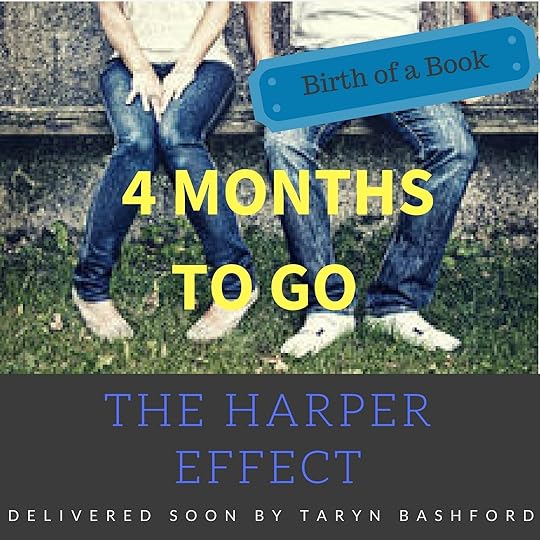 I'm not the first to describe the process of having your first novel published as similar to the concept of giving birth, and I won't be the last - because that's how it feels. There's finding that partner - a great agent - to support and believe in you. The publisher plans for the best delivery of your book into the world and that 30 week scan puts a face (a book cover) on the book baby. Working out what to name the baby is another happy problem and in my case Game Face became The Harper Effect. Then, all too quickly, after much preparation and worry, the delivery happens and the writer has given life to a concept, a story world, a handful of characters that are so real they're practically living on the same street. Suddenly your baby is out in the big wide world and that's when you realize you'll never stop worrying about that baby, no matter how old they get! Lol. I'm a nut, I know. But this did seem like a good place to share what happens after you sign that contract with a publisher, in my case Pan Macmillan. So watch this space and please feel free to ask me any questions. I'm here to share...So in the interests of getting on with that sharing, Macmillan, like any great publisher, has a very thorough editing process. First I was given an editorial letter from the publisher which was quite general and broad-reaching. I was pretty happy that a lot of those red comments in the side bar were compliments, not only corrections :) That edit was completed over six months ago.Then came the structural edit which, as the name suggests, looked at the structure, but also broader issues like deepening characterization. Then came a further edit from the editor who works with the publisher which felt like a back up to the structural edit. And now the copy edit. This is less 'big picture' and more sentence and word level. The process of editing is often likened to a funnel - wider, big issues level, down to the narrow part of the funnel with word level corrections.I have to say I've enjoyed the editing process very much. There's something satisfying about refining, tightening and perfecting a manuscript. It's like carving a piece of art, shaping every nuance, no matter how tiny, so that the end product is as good as it can be.After that copy edit landed, I did have some laughs with my editor due to some little anomalies in the story. For instance, I'd had a character unpack their bags in one scene, only to describe his bag still bulging with clothes two pages later.That's the kind of stuff editing picks up on. They check you have timelines straight, seasons correct, that traveling across the country takes the right amount of time, and little nuances like someone can't fry bacon, chop mushrooms and wash spinach in the space of saying one sentence. I love my editorial team!With the launch looming faster each month there's a lot coming up in the next few weeks, I'm told. From choosing a book cover to the final proofread. Watch this space for more info and please feel free to fire any questions at me.


May 10, 2017
Reading Emails Doesn't Count As Quality Reading Time
 I tend to avoid emails because they distract me from my writing, but today I received a pleasant email in my inbox:Hey, you’re a Goodreads Author now!Your application has been approved, and you now have access to your author dashboard, which provides you with all the tools you need to manage your presence on Goodreads.To get started, visit your author dashboard, or choose from the following topics:Fix your Book ListingsGet the right books showing on your author profile with the right coversPromote Your BooksFind new readers with giveaways and advertisingInteract with ReadersLearn how to communicate with your readers and avoid common mistakesFor more great tips and super quick answers to your questions, join our author feedback group, exclusively for Goodreads Authors.My debut novel THE HARPER EFFECT, is not due to be published until December 2017 but this is where a new chapter in my life as a writer begins...and I'm very excited to be writing answers to reader questions and writing speeches for school visits alongside the next draft of my next novel. It's really happening. Pinch! Pinch!
May 9, 2017
What's on your bucket list?
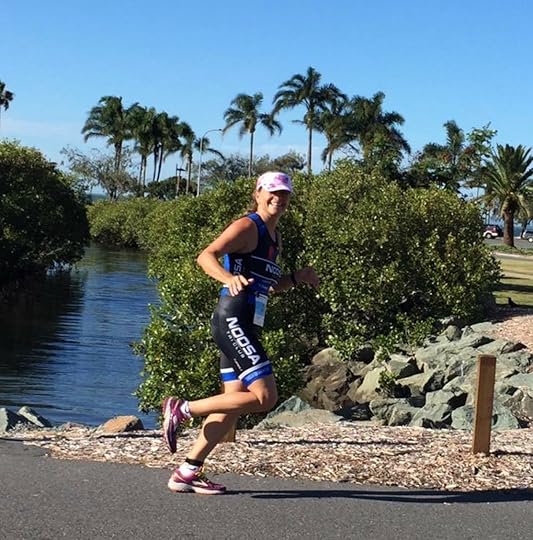 I started a bucket list toward the end of Primary School and have added to it ever since. It began with a fascination with Egypt and so by the time I got to see the River Nile with a pyramid in the background - aged 28 - I sobbed with awe. Much the same happened when I found myself dwarfed by the Sydney Opera House - hailing from the UK, Australia seemed like another planet and there I was, 2 hours off my flight, in front of this amazing icon.It wasn't just things to see and places to go though, it was things to do. What would it feel like to jump out of a plane? Could I ski down a steep mountain? Surely floating in the Dead Sea can't be true...and soon enough I was flying off bridges with a bungee around my ankle in Queenstown and paragliding over the Map of Africa. But then I got married, had a family, and the bucket list got forgotten for a while.Now in my 47th year, I've decided that was a shame. Bucket lists give you a goal, and they keep you experiencing things you may put into books or characters you're writing about. Let's face it, you can never travel enough in case you find a perfect location for the next novel. So on my last writer's retreat I finally found myself hanging 2,000 meters from the ground - abseiling, and I'm now training for an Olympic length triathlon in November. Not only is it great material for books (even just the emotion of things if you can't put the experience into a book or character), but it's made me feel like I'm in my twenties again.Of course bucket lists don't have to be heart-stopping activities - seeing the Pope at the Vatican City was awesome, meeting a famous author, learning to knit, riding a bike down the coast - they all count.Go on - start a bucket list and get planning - for the sake of your writing and for the feeling of living life to the fullest. Yup - that's me in the photo, having just finished the open water swim in Moreton Bay (just a half Olympic triathlon, but training is going well).And I'd love to know - comment below - what's on the top of your bucket list?
October 5, 2016
This Writer Played Hookie and Learnt Something
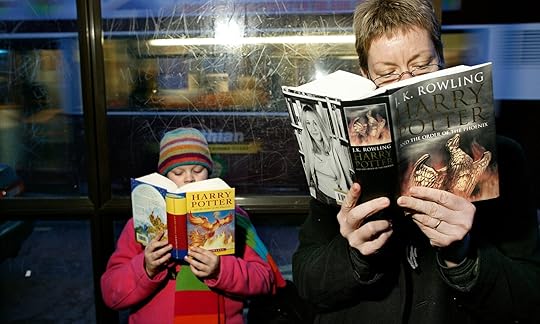 Here's a little insight into the life of a writer ... yesterday I found myself stuck with a decision: wait for the edits from my publisher, or start draft 3 of my new book. But if I start that draft I won't want to stop when the edits arrive from the publisher. Maybe I should just wait?So I actually did something I never allow myself to do - I played hookie (or as my writing group friend called it - I played 'bookie'). Well it was all in the name of research! I went to watch the movieMiss Peregrine's Home for Peculiar Children, based on the book by Ransom Riggs.Interesting fact: Ransom is married to the wonderful Tahereh Mafi, author of the Shatter Me series. Can you imagine what it's like around their breakfast table with their awesome imaginations existing in the same room? I wonder if they can write in the same room?Anyway, back to my point, which is this - I was once again watching an amazing movie based on a young adult novel. So many movies coming out of Hollywood are finding blockbuster stories in theYoung Adultaisles of the bookstore. But why?Most people think movies based on young adult novels began with Harry Potter, but they began way before then - think The Wizard of Oz in 1939, The Outsiders in 1983, The Princess Bride in 1987, Little Women in 1994, and even Alice in Wonderland which has been made into a movie ten times. But it's fair to say there's been an influx lately from Divergent, The Hunger Games, and Twilight to The Book Thief, Paper Towns, The Fault in Our Stars and If I Stay. I did a little research and found out some interesting facts:55% of YA readers are actually adults according to astudyfrom 2012.YA novels appeal to teens and adults alike because of their escapist nature--whether it's retreating to Narnia or going back in time to high school, adults enjoy the escape from reality as much as teens. Adults love to revisit times in their past too, high school included.The issues raised in YA novels, from coping with death, to accepting who we are and more, are addressed in a safe place and it seems many adults are still keen to confront these issues in books to perhaps help when coping with them in real life.YA authors don't talk down to their readers. Apart from the fact that the novels contain characters who are teenagers and address issues relevant to teens, they are written just as beautifully, convincingly and memorably as adult novels, therefore not excluding adults from their fan base.Though young adult novels are quite a new category in the history of book publishing, many teens who began reading Harry Potter are now adults. Just because they're now 24, doesn't mean they stop reading what they loved to read ie Harry Potter and other YA labelled books. They don't necessarily jump to liking classics or 'adult' genre novels, just because they are now legally adults. This is good news for YA authors as their audience doesn't 'leave' the YA section and indeed fans continue to use word of mouth to spread how much they enjoy teen fiction, while at the same time younger children are growing into teens, expanding the young adult audience at both ends of the target age group.So I guess the reason for the popularity of these movies across all age groups is their universal appeal that continues to grow year on year, not to mention they are based on amazingly written original novels that appeal to out emotions, our desire to make sense of our lives, and our need of escape.Long live the YA novel!
September 14, 2016
Project Awesome: The Final Say
 I’m talking about Project Awesome again today, which aims to help teens go from feeling awful to feeling awesome about themselves. This is A WRAP UP after going through the five steps to healthy self esteem. If you want a recap, they’re on this blog or if you'd prefer to watch the videos, then click thevideotab or find me onYouTube.In dealing with improving self esteem we do so in a BALANCED way. Ie we recognise we’re not perfect and have weaknesses, but we establish that some of how we value ourselves is opinion and not fact. The five steps we’ve just gone through show you how to do this.Working on your self esteem doesn’t mean you’ll never think of yourself in a negative light again. It happens and that’s okay. It just means you don’t do so as often or you are being factual when you berate yourself for something – ie it’s fact that you didn’t bother doing that homework and chose to watch TV instead, whereas it’s opinion that you are too stupid to complete the assignment.Hopefully you’ll now know how to handle situations where you feel lacking in self esteem in a more positive way now. Practice new ways of thinking and behaving every day, and you will wear down old ways of seeing yourself.So I thought it’d be fun to share some of the feedback I’ve had from you guys about your Awesomeness journals – and your awesomeness journeys!!!I particularly liked one suggestion I got; why not find a self esteem accountability partner – an awesomeness partner! That means you team up to remind each other to talk and think positive, to point out what is fact and what is opinion, and to go through the five steps regularly until they’re a part of your head-space. I think this is a great idea and it also makes you accountable – so you don’t stop doing it!Another of you got a t-shirt printed up saying ‘I heart me’. You can change the slogan, but it’s another great idea.Cromby41 said whenever they face a situation they’re uncomfortable with, they stop and say “I choose to do this” or ”I choose not to feel like I’m stupid, or ugly or shy.”Two friends from Newcastle in England say they tell each other one thing they like about the other every morning before school. The important thing I’d add here, is that they should give specific examples of why they like that quality or when it was shown so that it’s personal!For mega101, she says she used to find it hard to TAKE compliments. She says she’s working on accepting compliments instead of rebuking them or rejecting them and the person saying them. This makes her feel better about herself. So try saying a simple ‘thank you’ when someone compliments you and OWN IT!Lots of you are using your Awesomeness Journals, which is great. If you don’t know how, just watch the fiveshort videosor read the blogs here.I’m so glad that so many of you are having positive results and feeling far more awesom than you did a few weeks ago. Keep your feedback and comments coming, and I'm always here for advice and questions. Just comment below.
August 31, 2016
STEP FIVE: PROJECT AWESOME.
 FIVE STEPS TO GO FROM FEELING AWFUL TO FEELING AWESOME ABOUT YOURSELF.Today we’re going to look into adjusting biased expectations. What are biased expectations? They’re negative thoughts about yourself that occur when you’re in what you perceive to be a difficult or awkward situation. In these situations your negative core beliefs come in to play and you go ahead and make predictions to yourself about how things are going to turn out in this situation. These predictions tend to be negative and lead to anxiety.You will likelyOverestimate the likelihood that bad things will happen •Exaggerate how bad things will be •Underestimate your ability to deal with things if they don’t go well •Ignore other factors in the situation, which suggest that things will not be as bad as you are predicting.For example if you have the core belief ‘I AM STUPID’ you’re likely to have a rule or assumption that you must never show others how stupid you are. You therefore avoid situations like quizzes. But what if you HAVE to participate in a team quiz at school? Your biased expectations are likely to be that you’ll make the team lose and suddenly you’re feeling very anxious.So you need to challenge this biased expectation by pretending to be a lawyer or someone else, looking at yourself. Remember the core belief about yourself – I’m stupid – is opinion not fact.So in this situation where you think the team will lose because of you, your natural reaction is to refuse to take part. This means you never get to challenge that biased expectation. In this instance, you need to change your behaviour by going ahead with the quiz. It’s likely that you’re no dumber than the average class mate and by going ahead, you’ll actually prove that to yourself. This means you can challenge your expectation and therefore also the core belief about yourself – perhaps you’re not so stupid after all….This is just an example. If you use your Awesomeness Journal to write down some of the biased expectations you have about yourself, and then determine to change your usual pattern of behaviour to see if your expectations are true, you’re on the path to better self esteem. So for instance, if you think you have nothing to contribute to a group school assignment because you’re shy, then challenge that expectation of yourself by making yourself contribute. So go do some research, make a valid contribution and realise that you can be shy while still contributing to a group project. How good will you feel about yourself after that?I hope step five really helps you in the steps to feeling awesome about yourself.If you’d like to send in comments about how you are going with your Journal, or how you cope with low self-esteem, I’d love to hear from you.This information is sourced from the Centre of Clinical interventions.This is the final step in Project Awesome. You can also watch the video of this informationhere.Next week we'll see how some of you are going with your Awesome Journal and improving your self esteem.Cya then.
August 3, 2016
STEP FOUR TO FEELING AWESOME
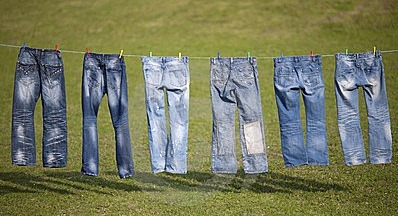 Want to go from feeling awful to feeling awesome about yourself? I’m talking about Project Awesome again today, which aims to help you do just that! In step 4 of this 5 step program, we're going to look into what unhelpful rules and assumptions we live by.Life is full of rules and assumptions. Some are helpful ie don’t drink and drive. But these rules are usually learned formally or part of the law.Unhelpful rules are learned informally – usually during or after a social situation we face. For example, you are in class and like to ask questions of the teacher a lot. Some students comment that you must be stupid because you ask so many questions. You learn from this that you shouldn’t ask questions or else people will think you are stupid. This is a rule you have learnt.It is a negative rule because it a. isn’t true, b. is inflexible and c. makes you feel bad about yourself; If you ever feel you need to ask for help, you’re going to think it’s because you are stupid. However you stick to this rule so no one will think you’re stupid.But do you see how that rule keeps your negative and low self esteem in place? And by keeping the rule, you never give yourself the chance to disprove the belief that you are stupid.From here you not only don’t ask questions in class, meaning sometimes you don’t understand an assignment and therefore you under-perform (confirming that you are again, stupid), but you don’t ask questions in social situations either which can lead to making the wrong decisions within your life.Other rules might include; the only person you can depend on is yourself. This came about when someone close to you let you down. But now you have a rule about not asking for help again, or refusing to depend on others so that the expectations you have of yourself – to go it alone – are sometimes hard to keep. When you fail, you feel bad about yourself.Another rule could be – if you quit, you’ll never be successful. This is again inflexible and limiting. Sometimes, it’s okay to quit something – you can’t be great at everything you try.Evaluate the rules you live by – the ones you’ve learned through experience that you’ve made for yourself. Are they accurate in every situation? Can you sometimes ask for help? How helpful are these rules to you?CAN YOU REPLACE THEM WITH MORE FLEXIBLE AND HELPFUL RULES?It’s time to get out your awesomeness journal and write down the old rules and how you plan to change them for new, more flexible and realistic rules.So can 'I MUST NEVER ASK QUESTIONS' be changed to – I must listen really well in class, but if I still don’t understand something, I will talk to the teacher afterwards, or email the teacher, to ask for help.And can you change the rule that IF YOU QUIT, YOU’LL NEVER BE SUCCESSFUL to – some things are important to work at and never quit – like school or studying for an exam - but what if you’re finding that piano practice is taking up a lot of time, you don’t enjoy it and you don’t want to play the piano as you’d rather be playing tennis as you’re really good at that and a little extra practice there will make all the difference at upcoming tournaments. Sometimes it IS okay to quit something.Write your new rules down and keep reading them over so they start to become part of what you truly believe. You’ll find that you start to make more positive decisions in your life ie you’ll work on a project with someone, knowing that sometimes people let you down, but sometimes they can be really helpful and a new friendship can form. Or you’ll ask for help from a teacher and find that your grades improve because you understand something you hadn’t previously comprehended.I hope step four really helps you. If you’d like to send in comments about how you are going with your Journal, or how you cope with low self-esteem, I’d love to hear from you.The next blog is the final step in the process of going from feeling awful to feeling awesome.Cya next week.
July 26, 2016
Lessons From a Writer at Varuna House
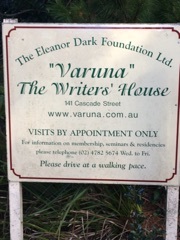 Once upon a time on a blog far far away I wrote this little piece about going to Varuna House—that was 3 years ago and it’s interesting to now compare that visit with the visit this year.2013:When I first read the email informing me I'd won a 2 week residential fellowship at Varuna House - the National Writer's House, the icon of writer peace and tranquility, I simply sat there shaking. Oh, and there was a humungous grin on my face.According to their website, Varuna, the National Writers House is a creative retreat and writers’ network for Australian stories and ideas. Eleanor Dark married DrEric Payten Dark in 1922, and soon after that the couple moved to Katoomba, to this amazing house, where Eleanor wrote eight of her 10 novels. Her best known novel was the best-selling The Timeless Land (1941), the first part of a trilogy, with Storm of Time (1948) and No Barrier (1953).I could tell Varuna House and their wonderful staff and volunteers knew exactly what they were doing. I was perfectly set up in the Ladder Room (there are 5 rooms named Main, Green, Bear and Maid) which was my bedroom and it had an adjoining writing room. The desk was set up in a bay of windows and overlooked the scenery of the Blue Mountains. I didn't look up much - I simply wrote and wrote, some days for fourteen hours - sometimes at three in the morning, or five in the morning - there was nothing and no one to stop me.The house is equipped with everything you could hope for - a selection of tea bulged across a shelf in the kitchen, the fridge was fully stocked, the biscuit tins beckoned, dinner was cooked and delivered to the table - and we're talking five star. All I had to remember to do each day was to shower and brush my teeth.
 Life couldn't intrude: the other four writers and I worked silently during the day, no phone calls allowed, and we refused to let that outside world, that world of plate-spinning and to-do lists, into our minds. At night we assembled to chat over a glass of wine and a lovely meal. Each of the writers I met (published and unpublished) had something to offer in terms of humour, experience, advice, passion for writing and friendship - we are all still in contact via email, sharing our various setbacks, highlights and frustrations. You can't buy that sort of experience.I hope we'll all unite again in the form of our books lined up next to each other on one of the many bookshelves at Varuna House. My advice - get yourself there. Enter one of their awards, buy yourself a spot, just make it happen. You won't regret it.
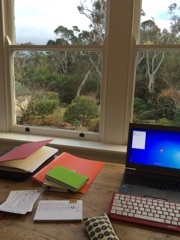 Once lovely aspect of my stay was sitting with Mick Dark, Eleanor's son, for a pot of tea each Tuesday. It was he who decided that Varuna, their family home, should become a gift to Australian literature in memory of his parents.We chatted about all things book, historical and nature, plus his childhood here--his was the Ladder room.Some unexpected advice I received during my stay?There's always advice, but this was a little surprising and different: The real work is in re-writing - but don't worry about a misplaced comma - if the story is compelling and the characters are besotting, no editor will reject you for a misplaced comma or an extra dialogue tag. Be brave - send your novel out to the world. If you're unpublished, see yourself as a writer. If someone asks what you do, tell them you're a writer. When filling in forms, under the question for occupation, state writer. Buy yourself a mug with the word writer splashed across it. Believe you are a successful and serious writer . . . then watch your motivation, focus and word-output improve. Don't get so sucked into writing every minute you can find, that you forget to live - writers need material, so you need to 'live' to seek, notice and store material you can use in your novels. So while I was there, on day 9, I went abseiling!Bye Varuna - till the next time!2016:When I first read the email informing me my novel had been selected by Varuna House and Pan Macmillan for the Publishing Introduction Program, I was so excited about the prospect I sat on the floor and cried—happily. The idea of being back in that surreal world of writers and writing, and getting to enjoy Sheila’s cooking, was just too amazing.
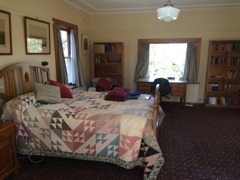 This time I was set up in the Main room--Eleanor Dark’s room. It was filled with historical sunshine, furnishings and character—and a kettle for all the tea I could consume. In fact, with all the windows I felt like I was in a treehouse.Apart from that, it was exactly the same as my first visit—except this time I forgot to shower and brush my teeth and there was no time for abseiling. However the hours of writing, the amazing company, the awesome food, was exactly the same. Speaking to someone else who’d been there 5 years earlier, she confirmed nothing had changed either. It’s like a writer’s dream existing between the here and now and Narnia. I only wish I could step inside my wardrobe and visit whenever I want to.
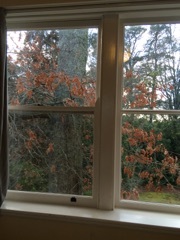 The only difference was Mick Dark was no longer there for our pot of tea. Like my own father, he had lived with Parkinson's for many years, and died in 2015 having had an active involvement and impact on Varuna his entire adult life. His son continues to tend the garden and chop firewood--a family of givers.I guess there was one other important change that marked my stay: this time I could look at the bookshelves and know my book was soon to join the novels there because the Publishing Introduction Program led me to my book deal. So I still say get yourself there. Enter one of their awards, buy yourself a spot, just make it happen. You won't regret it.Some unexpected advice from this stay?Well everything I learnt last time is true. Plus this: give up watching TV wherever possible as it’ll buy you another 15 or more hours per week for reading/writing. Also, sit down and write every single day—even at weekends and even if only for a couple of hours. Finally, as a writer, it’s your job to keep the tea companies in business so think teapots, not cups.Bye Varuna - till the next time!
July 14, 2016
STEP THREE TO FEELING AWESOME
 I’m talking about Project Awesome again today, which aims to help teens go from feeling awful to feeling awesome about themselves.Today we’re going to look into what our core beliefs about ourselves are and where they come from. Most importantly, how to change them. This is the third step out of five that will help to change your mindset.So what’s a negative core belief?I’m stupidI’m ugly and no one will ever love meI am a failureI’m no good and will never amount to anythingWhat are your negative core beliefs? The first step to changing your core beliefs is to identify them. Do you have just one negative core belief or many?So first, tackle one core belief at a time. You cannot just squash them and pretend you don’t believe them anymore. That won’t work. You need to identify the belief, then figure out where it came from and how accurate it is, and finally replace it with a new and more positive core belief.So here’s an example.You believe you are no good and will never amount to anything.Where did this come from? You identify it’s from the way your very intelligent and older brother tells you that you are a mess up and compared to him and his straight A’s and dreams of being a lawyer, of course you’ll never be as good as him. You’ll be lucky to get a job at all. Secondly your single mum doesn’t seem to stop your older brother saying this stuff. And finally, your school grades aren’t up to much and your teachers give you that ‘disappointed’ look a lot.So that’s why you believe this about yourself.So how accurate is this belief? The way to decide on this is to look at the evidence from another angle—be a lawyer and detach yourself from your role as little brother. Could it be that big brother is just asserting his authority over you-showing he’s boss? Sure you don’t get straight A’s, but you do alright with some B’s and mostly C’s. So do a lot of people. They are not mess ups. And you don’t want to be a lawyer anyway. Maybe your brother is way above average, but you’re doing okay at average and you prefer sport anyway. You’d rather be a sports teacher than a lawyer. Does that make you a mess up?And mum – maybe she doesn’t stop her brother saying stuff because she’s so exhausted all the time and doesn’t want to start an argument. But there are times she does tell him off. Maybe there are more times than you realise because you only focus on the times she doesn’t.And as for your teachers, are they really mad at you for B’s and C’s. Could it be true that they are more disappointed at the lack of effort you put into your work? You do tend to rush, not check stuff, and you’re disorganised so you miss deadlines. And you do this because you think 'what’s the point?' because you're a mess up. Maybe if you put more effort in, got organised, you could get better grades and the teachers wouldn’t give you ‘that look’.So maybe your core belief isn’t so accurate? Maybe there’s a different interpretation or solution?Now you need to replace that core belief with something more positive.Remember some thing’s you’ll be average at, others stronger, and others still you might be really great at. So in this example you could start to think:I am great at sport, especially basketball.I am going to get organised and put more effort into my school work because I’m not really a lazy person, based on the fact I train at sport a lot.I am good at setting goals and will stick to this new goal.I can be disorganised so I should write down deadlines so I don’t miss anything. Then I will be an organised person.Now test this out. Follow through on your new core belief about yourself and see the changes happen. This will lead to more positive belief in yourself and you can tackle the next negative core belief you may have. Remember it’s a one step at a time process and won’t change instantly.After some time has passed, go back to how you used to think about yourself – now do you still think that? Your grades are mostly B’s now, which is above average. You’re a more organised person. Your teachers are praising your efforts. Sure your brother still calls you a mess up, but that’s him teasing and mum’s still busy but she’s noticed your improved grades and is pleased. Not being a straight A student doesn’t mean you’re a mess up and will not amount to anything. You can do anything you set your mind to- because you just proved it.See how your negative core belief can change?I hope step three really helps you. Next time we’ll cover how to adjust UNHELPFUL rules and assumptions about life that we may have.If you’d like to send in comments about how you are going with your Journal, or how you cope with low self-esteem, I’d love to hear from you.With STEP FOUR you’re almost at the final step in the process of going from feeling awful to feeling awesome.You can also watch all the Project Awesome videos right here on theVIDEOlink.
July 8, 2016
CLOUDWISH BY FIONA WOOD
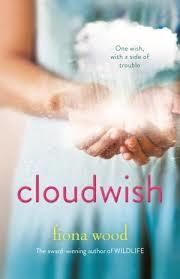 Totally loved this book. I have a new favorite author!The concept of the wish, the protagonist's uncertainty throughout, the insight into her family's history - mesmerising, and such a great way to end the book (no spoilers allowed). I will defo be reading more by Fiona Wood. She is a master storyteller.


