Jeffrey Miller's Blog: Jeffrey Miller Writes, page 5
August 5, 2016
Book Review: The Next Better Place
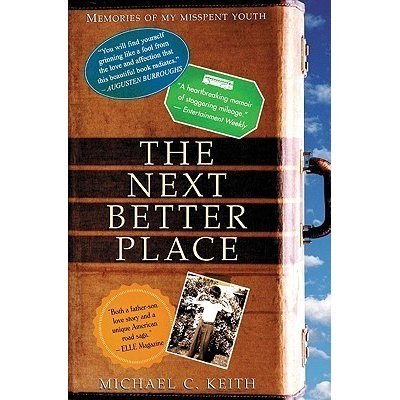 Imagine a young boy and his estranged father on the road traveling across the United States on their way to California. Imagine also, the boy and his father having one adventure after another and along the way, the boy and his father both learn something about themselves and each other. Could anything be more romantic in a post-World War II, Kerouac world?
However, in Michael C. Keith’s brilliant and moving memoirs, The Next Better Place: Memories of my Misspent Youth, a coming-of-age story set in the 1950s, the story is much more complex and poignant.
Keith takes readers on an amazing and memorable journey as father and son leave Albany, New York on their way to California. Their journey is fraught with one misadventure after another as they travel by bus and hitchhike across America in the 1950s. Half Kerouac and half Stephen King’s “Stand by Me” this coming-of-age story is just as much a story about a father and his son having the chance to spend some quality time together as it is about the son’s valuable life lessons he learns on the road.
Along the way, the narrator and his father meet an interesting and colorful assortment of individuals who pose all sorts of problems and windfalls. I love the way Keith wove these characters into the story and how each one’s back story added to the overall story of Keith and his father. One of the more memorable moments in his book (and there were many!) was when they were picked up hitchhiking by a couple and their kids who were on their way to join a carnival. Having worked for a carnival myself, when I was the same age as Keith, I got a kick out of this part of the journey and the story. Their encounter with the family is typical of the many encounters Keith and his father have with various individuals as they criss cross the United States.
Throughout the journey, we see Keith and his father coming to terms with their fragile relationship. There are some awkward and painful moments which underpin their journey, but these moments become a defining moment in their father-son relationship. With each new adventure and in many cases, misadventure, this relationship is tested. The journey is what inextricably links Keith and his father; their survival on the road is dependent on one another if they are ever able to make it across America and eventually back home.
Each of the chapters in this poignant and moving rites of passage saga could be read as a stand-alone story. That’s where the genius of Keith is most noticeable and shines through chapter after chapter. After all, he has made a life out of writing short fiction and he knows how to control this genre/medium to its full potential and power. Readers will most assuredly savor and enjoy each chapter, perhaps even flipping back to enjoy and savor again.
This is a most impressive work from an acclaimed and award-winning author. Even if you haven’t had the chance to experience Keith’s literary achievements, The Next Better Place: Memories of my Misspent Youth is a good place to start. One thing is for certain: after you read his memoirs you are going to want to explore his other writings.


August 4, 2016
Book Review: Sync City
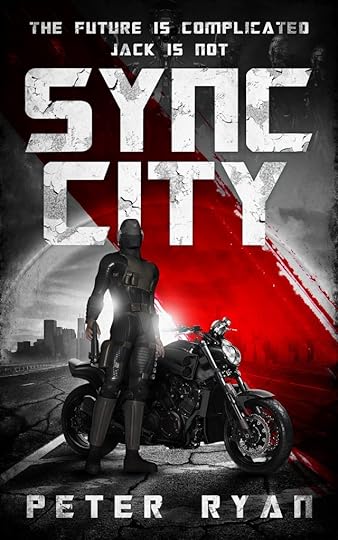 I know it’s probably not fair to compare an author’s work with another literary or cinematic work, but a few pages into Peter Ryan’s sci-fi powerhouse Sync City, I’m thinking, “Wow, this reminds me so much of Blade Runner” – especially the hardboiled detective underpinnings with the characters and snappy dialogue. The fact that I love Blade Runner should give you a pretty good idea how much I enjoyed Sync City.
Ryan has penned an exciting, gripping novel about the future and time travel. I’m a big fan of time travel—who isn’t, right?—but this is unlike any of those other time travel stories. I really like his premise behind the novel in that the Earth’s timelines are all askew which allows marauding groups from the past and the future are traveling through time, and in the words of the author, “mucking up things.” It’s up to our protagonist Jack to set everything straight. After all, the future or the past—depending on where one is—is up for grabs. It is a brilliant idea which Ryan masterfully develops throughout the story.
Ryan’s got a winner here. If you’re a fan of Raymond Chandler or Philip Dick, I highly recommend you book the next trip to Sync City. You won’t regret it.
You can pre-order copies from Ryan’s Inkshares page (the book is currently in post production now) and be the first on your block in the past, present, or future to enjoy this exciting book.
August 3, 2016
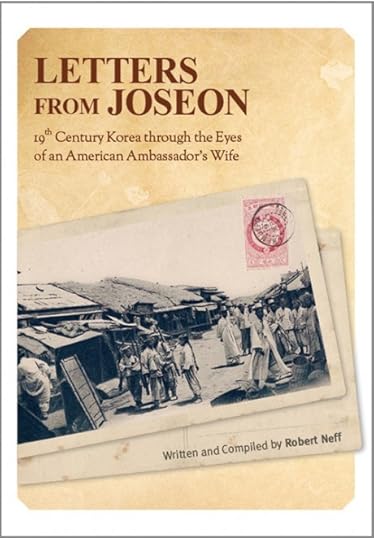
Book Review: Letters from Joseon
 Korea in the late nineteenth century was a turbulent time. John Mahelm Berry Sill, the American Minister to Korea from 1894-1897, couldn’t have asked for a more difficult posting. In that time there would be the Sino-Japanese War, the Gabo Reforms, the murder of a Korean queen, and the subsequent refuge of King Gojong in the Russian legation.
In the fascinating and historically rich Letters from Joseon, 19th Century Korea through the Eyes of an American Ambassador’s Wife, Korean historian and freelance writer Robert Neff has given us a unique window on a bygone era in this very readable and enjoyable trip back in time. Relying mainly on the personal letters and correspondences between the Sills in South Korea and their family back in the United States, this period of Korean history comes alive as the letters offer insights into life at the American legation as well as what was happening outside the walls. To be sure, as Neff writes in the book’s preface, “these letters provide a candid view of life in not only the American community in Seoul, but also in the Russian legation, where King Gojong and the crown prince sought refuge following the murder of Queen Min.”
The book is divided into three parts which coincides with the three years that Sill was posted to Korea. In Part One, the Sino-Japanese War is the historical backdrop for the letters and correspondence, which signals the beginning of Japan’s grip on the Korean peninsula; in Part Two, the letters cover a wide range of events inside and outside the legation and ends with the murder of Queen Min; and finally, in Part Three, the letters offer insights into King Gojong’s refuge in the Russian legation and the subsequent period of unrest in Korea.
Neff keeps his commentary to a minimum, though he augments the letters with numerous notes and asides to provide readers with related information to the events and people he describes. Though Sill was not looked upon too favorably for his actions, or lack thereof as minister, Neff lets the letters tell the story and is only there to amplify any historical references.
Although scholars will find this book as an indispensable source of information about the late Joseon period, other readers will enjoy this window on Korea’s past, especially Korea in the late nineteenth century on the eve of the eventual Japanese colonization of the peninsula. Neff has carved out a niche for himself when it comes to the study of this period of Korean history. His knowledge and expertise in this area is commendable. He might not be the only Korean specialist writing about this period, but he certainly has become one of the most prominent.
August 2, 2016
A Hard Rain’s Gonna Fall

Not much of a rainy season in Korea this summer. Had some torrential rain for about three days in mid-June. Hasn’t rained much since. Now that August has arrived, we are entering typhoon season. Had some really wicked typhoon seasons in the late 90s. I remembering coming back to Shinch’on from teaching a class at SNU in 1998 and it rained so much traffic in some places in Seoul was at a standstill.
This is a stream/drainage ditch not far from where we lived in Daejeon. This is mild compared to some heavy rain we had here in 2011.

August 1, 2016
Book Review: Tina Barry’s Mall Flower
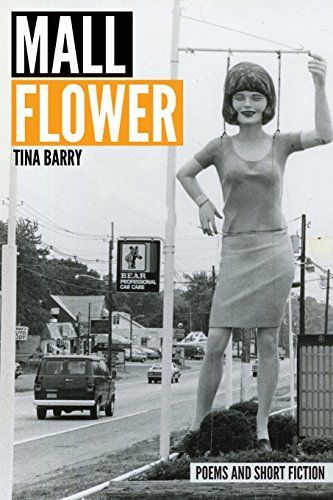 One of the joys of reading is discovering a new author and immediately falling in love with his or her writing. Such was the case when I heard about Tina Barry’s Mall Flower.
The stories and poetry in this collection are just as much visceral as they are bittersweet images and vignettes of school, broken homes (and lives) and lost souls trying to find meaning in a world that is not always fair and kind. And don’t get me started on the cover! If you can forgive me for saying, the cover rocks!
But it’s what is inside what counts and there’s plenty to move you. I was immediately drawn into the short fiction and poetry in this collection by Ms. Barry’s poignant use of language and imagery. Whether it’s a reference to Bill Murray and Gilda Radner as Emily Litella talking about “all the violins” in movies on Saturday Night Live (which by the way is one of my favorite SNL moments!) in the story “What’s All This” or the terribly painful “Table Talk,” where the protagonist’s mother listens in on a phone conversation about her father’s latest misdeeds—“Mother sits at the dining room table, legs thrust underneath, a filmy nylon nightgown brushing her knees, her calves dry and scratched. I’m stretched out beneath the table watching her feet rub together like another pair of fussing hands”—Barry is nothing short of brilliant with the prose and poetry in this collection. To be sure, these are stories and poems that will stay with you long after you have read them.
July 31, 2016
On the horizon…
 Not one, but three new books coming down the pike.
The first one is a collection of short stories, The Roads We Must Travel, which is being published by the Big Table Publishing Company. I’m really excited to have this collection published by an indie press, especially this one which has published some very good titles the past few years. Two of Big Table’s highly acclaimed titles, Finding the Wow and Fat Girl, Skinny (which has been nominated for a Pulitzer) are at the top of their respective charts.
I’ve also completed my sixth novel, a thriller set in South Korea. I’m keeping this one under wraps until I find some beta readers and it’s been edited, but I can tell you this, it’s about a plot to smuggle 1000 kilos of methamphetamine from North Korea to the United States.
I had toyed around with the idea of publishing it through Inkshares which is this publishing platform combining the best of social networking with publishing to help authors from writing to publishing. One of my former colleagues, Peter Ryan is publishing two books with the company. Check out his first one, Sync City, which is in production now.
I’m not sure if my novel would be a perfect fit for Inkshares because from what I have seen, most of the books that do well are either science fiction or fantasy.
And finally, I’m just about finished with a novella set in the Midwest which is about fracking.
Lots to look forward to in the next coming months.
Hot Enough For You?
 The dog days of summer are upon us and it’s been one sweltering, humid day after another with no relief in sight. It’s without question one of the hottest and most humid summers I have experienced in all my years in Korea.
There have been some hot summers here in Korea that come close to this summer. The summer of 1994 was a wicked hot one. Back then I was teaching at Yonsei University’s Foreign Language Institute and had an early morning conversation class that started at 7:00. By the time I walked to school from Yonhui-dong, which was about a 15-minute walk, I was already drenched. The school didn’t turn on the air until 8:00 so that first hour was a brutal one.
Not many folks had air conditioning in their homes back then, either. I was living in this boarding house, just down the street from former South Korean president Roh Tae-woo, and I had one window in my room which looked out on another house. I spent two years in that boarding house; some rough times indeed during the summer months.
I read that other day that this heat wave is expected to last until the middle of August.
The daytime temperatures hover around 90-92 degrees with 100% humidity. It’s been that way for almost two weeks now. It’s done wonders for my morning workouts. I’ve been working out every morning from 6:00-7:30. I start out with an hour on the treadmill. Thanks to the heat and humidity, I’ve been able to sweat off a couple pounds.
February 17, 2016
A Boxful of Books
 One of my fondest memories of elementary school was the day the books from the Scholastic Book Services arrived in my classroom. Back in the 1960s/70s when I was in elementary school, there would be a Scholastic Book Services book fair at school or our teachers would hand out a two-four page flyer-like catalog with books that we could order such as The Trolley Car Family, Homer Price, and 100 Pounds of Popcorn. We would take the flyer home, which also included an order form that we would fill out and then bring it back to school with our money. After our teacher collected the money, she would send it off to the Scholastic.
And then we would wait.
And wait.
And wait.
One week would pass; then another week.
Every day we would come to school we would look toward the front of the class to see if the “box of books” had arrived.
Another week passed.
And then one day it was there! Yes, right there on the teacher’s desk! It was like Christmas, the Fourth of July, and our birthdays all wrapped up into one and inside the box. We couldn’t wait for our teacher to arrive and distribute the books. One by the one, our teacher would call our names, and we would march to the front of the class, grinning from ear to ear as our teacher handed us our books. And then we would be back at our desks ooh-ing and aah-ing as we thumbed through our new books.
That’s kind of how I felt today when I received a box of my books. It’s one thing to see your book posted on Amazon or someone’s Facebook page; it’s entirely something else when you see your books that you ordered inside the box. This was the first time that I had a multiple title book order, so there was a lot of ooh-ing and aah-ing when I saw all these titles together in one box.
I’ve come a long way since Washington Grade School in Oglesby, Illinois but one thing remains the same: the thrill I get when I look inside a box and see “my” books.
February 14, 2016
A Reflection of a Winter Day
 Yesterday in Daejeon it was a balmy 61 degrees; today it was back down to a more seasonal 30 degrees.
It’s been one of the colder winters in Daejeon but not one of the of the coldest I’ve experienced. My first winter here was brutal. I remember hanging up my clothes in the laundry room in my apartment in Chamsil 2-Danji and finding them frozen stiff a few hours later.
And no snow to speak of. There was some accumulation back in December but that was it.
This photo was from 2012 when Daejeon got a lot of snow; the most it has snowed in the nine years that I have lived here.
January 25, 2016
For Crying Out Loud!
For those of you fa miliar with Amazon’s new payout scheme for Kindle Edition Normalized Pages (KENP), authors get paid for the number of pages read versus books sold. It theory it sounded like a good idea for authors who would write very thin books and then get paid the same rate for an author who wrote a much larger work. In the past, an author could expect around 1.14-1.35 for each borrowed through KDP Select.
Yes, in theory, it sounded like a good idea, but, to excuse the pun, it’s not really paying off in the long run.
When Amazon started this last year, I would get .0056 per page read. Then it was .0049 per page. Last month, .0046 per page.
The bottom line is that an indie author cannot make it out in the cruel, cold world of indie publishing without a friend like Amazon. Even though my books could be bought at other online sources, most people feel very comfortable and secure with buying only from Amazon. In addition, reviews left on Amazon do drive sales.
I look at any sale, whether a book is purchased or borrowed, as a way of getting more exposure. However, one has to wonder if Amazon’s KENP is really worth it.