Jeffrey Miller's Blog: Jeffrey Miller Writes, page 33
May 21, 2012


May 20, 2012
Chris Backe’s Review of Waking Up in the Land of the Morning Calm
 There hasn’t been much press about my recent book, Waking Up in the Land of the Morning Calm, but Chris Backe has some good things to say about it in his review last December.
This was going to be the book that I had thought about writing in 2009 when I wanted to compile all the articles I wrote about the Korean War commemorative events in Korea.
Instead, I ended up writing War Remains.
When I hear some of the horror stories that some expats have had in Korea teaching English, I am one of the luckier ones. I probably wouldn’t have stayed here for as long as I did had I taught somewhere else besides ELS and Y0nsei.
And don’t forget those six years of writing for the Korea Times.
Like I said, Chris has some nice things to say about Waking Up…
It’s a fairly rare expat in Korea who can claim twenty-plus years in Korea. Jeffrey Miller is one of those guys, of course, and his first-person perspective on Korea’s history since 1990 is a rock-solid one.
Read the rest of the review here.
May 19, 2012
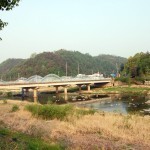
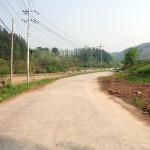
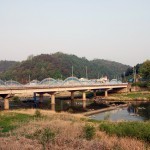
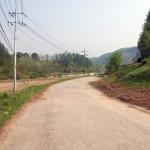
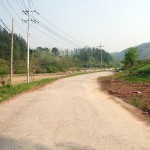
Return to Massacre Valley; The road from Changbong-ni — Hoengseong, South Korea
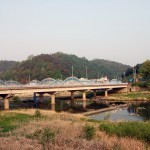
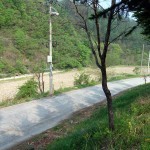
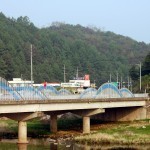
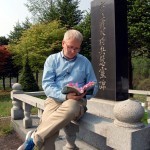
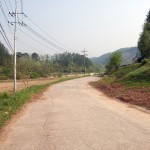
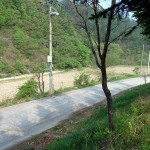
 Down a small grassy knoll behind the US Second Infantry Division Monument in Massacre Valley is the original road which ran from Changbong-ni to Hoengseong. Although the road was narrower and unpaved in 1951, one can still see how dangerous it would be for withdrawing troops to use this road. They men were literally sitting ducks for the CCF which controlled the high ground. Like the Gauntlet in November 1950, the men of Support Force 21 were doomed as soon as they entered the valley. Sadly, US troops would pay another dear cost for being road bound. As soon as the Chinese knocked out a tank or howitzer, a bottleneck was created and chaos, horror, and death ensued.
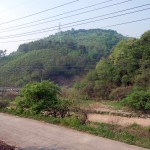
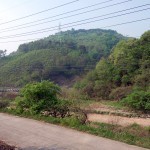
Today, the valley looks so peaceful and bucolic.
One can only imagine the horrors of battle here those fateful days in February 1951.
May 14, 2012
How to deal with a symbol of subjugation — Independence Museum, Cheonan, South Korea
 The structure in the center of this photograph stands a little over thirty feet high. This steeple or pinnacle at one time used to sit atop a magnificent building in downtown Seoul, Korea.
However, that building was the symbol of Japan’s domination over Korea. After the Japanese annexed Korea in 1910, the Japanese erected a massive edifice for government administration directly in front of the great royal palace known as Kyongbok and inside the Gwanghwamun Gate at the end of Sejong Boulevard. Not only did the new building block the view of the royal palace, but it was also said to disrupt the “chi” 氣 emanating from the mountains and streams behind the palace.
And it also broke the spirit of the Korean people.
After the Japanese were ousted in 1945, the building was used by the Korean government for several years as the capital. In September 1950, Supreme Commander, General Douglas MacArthur stood on the steps of the building and turned the city back over to South Korean President Syngman Rhee following the liberation of Seoul. During the ceremony, glass and masonry fell down from the top.
Later the building was used as South Korea’s National Museum. In March 1991, just a few months after I arrived in Korea, I visited the museum for the first time.
Finally, after many years of debate on whether to demolish, preserve, or move the building, the building was demolished in the mid 1990s. Only the crown was preserved, which you can see nestled amidst some simulated ancient Greek ruins, in a bucolic setting.
The symbolism here is rich.

The crown/pinnacle was removed during a ceremony on August 15, 1995. In the months after, this building which once broke the spirit of the Korean people was demolished.


My first reaction when I saw the remains of the Japanese administrative building was that it reminded me of the ruins someone would see if they were visiting the ruins of ancient Greece. One could ponder the symbolism for hours while staring at these ruins.
Redeployment of Tactical Nukes on the Korean Peninsula?
This is the kind of news that’s going to raise some eyebrows. A lot of eyebrows.
If folks in Korea were concerned about Mad Cow disease earlier this month when they took to the streets, I wonder how people are going to react to this news.
Seoul officials and experts cautioned against the redeployment of tactical nuclear weapons on the Korean Peninsula proposed by some in the United States, which they fear could refuel an atomic arms race in Northeast Asia.
The US House Armed Services Committee on Thursday approved an amendment to the fiscal 2013 national defense authorization bill that calls for the re-introduction of the sensitive weapons to South Korea, according to the diplomacy publication Foreign Policy.
While the South Korean government is not openly criticizing the idea, concerned ministries say that Seoul remains fundamentally in favor of denuclearization of the peninsula and that such developments will bring little security benefits for Seoul.
Read the rest of the article here.
In the East Asian Politics class I am co-teaching this semester, the authors of our textbook talk about the notion of a critical juncture. I’m not really sure if this qualifies as a critical juncture, but it definitely is going to get people talking about it. And how is Pyongyang going to respond to this?
May 13, 2012
Sure you can text and walk at the same time
 Just as long as it is not in Fort Lee, New Jersey. Otherwise you could be fined.
Avid texters beware: Fort Lee, N.J. police said they will begin issuing $85 jaywalking tickets to pedestrians who are caught texting while walking.
“It’s a big distraction. Pedestrians aren’t watching where they are going and they are not aware,” said Thomas Ripoli, chief of the Fort Lee Police Department.
Ripoli said the borough, which is home to approximately 35,000 residents, has suffered three fatal pedestrian-involved accidents this year. He hopes his crackdown on people who display dangerous behavior while walking will make his town safer, but not everyone is on board with the idea of issuing $85 tickets.
Read the rest of the article here.
This is a really big problem and nuisance in South Korea. I have to constantly move out of the way of people walking and texting. However, it is not the texting that is the real problem. It’s all these folks walking around watching television on their smart phones. They’re the ones who have to watch out for when you are out and about. I’ve seen people walk across busy streets with their phones in front of their faces oblivious to traffic.
You know that line from Repo Man when Miller tells Otto, “the more you drive, the less intelligent you are?”
I think we can tweak it for our times. The more you text, the less intelligent you are.
May 9, 2012
Welcome Home, Cpl. Clyde E. Anderson
Another soldier returns home from a “forgotten war.”
The remains of Cpl. Clyde E. Anderson are being returned to his family. The Korean War veteran will be buried with full military honors on Saturday in Blanchester, the Department of Defense announced.
Anderson, 24 when he died, had been listed as missing in action since his disappearance near the Chosin Reservoir in North Korea, U.S. military officials said. Anderson was last seen on Nov. 28, 1950, driving a Jeep in a convoy that was ambushed by communist forces, American officials said.
He was with the 31st Regimental Combat Team that was advancing along the eastern bank of the Chosin Reservoir, according to the Defense Department. His unit came under attack and withdrew to positions near Hagaru-ri, south of the reservoir.
Read the article here.
I’ve said this before and I’ll say it again, these stories about a Korean War soldier or Marine finally coming home from the war always get to me. I always think about the closure that some family will finally have because their father, brother, or uncle has finally come home.
At the same time, I am very proud of my Korean War novel War Remains and the story about the search for war remains. That’s why I hope more people will read my novel and never forget those men who haven’t come home yet. The story is one that resonates strongly in the hearts of all those family members still waiting for their loved ones to come home from this so-called “forgotten war.” When you read the last couple of chapters you will understand exactly what I am talking about. Just make sure you have a box of Kleenex nearby.
The nation which forgets its defenders will be itself forgotten.
Calvin Coolidge
Welcome Home, Cpl. Clyde E. Anderson.
Rest in Peace, Sir.
President Ronald Reagan’s 1982 Eureka College Commencement Address
It was twenty-five years ago today that I graduated from Eureka College. Although I was only there for two years (I was a transfer student) everything good about my life started back then.
This is a very important speech by Reagan. In many ways, it was the beginning of the end of the Cold War.
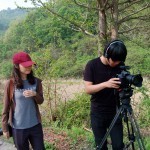
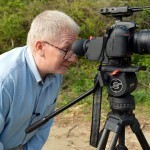
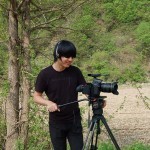
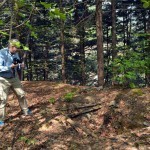
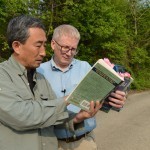
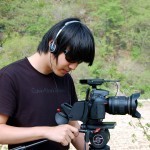
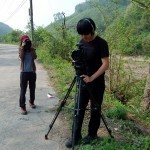
Through the Viewfinder — Hoengseong, South Korea
 There was a time, many, many years ago when I once dreamed of becoming the next Steven Spielberg, Francis Ford Coppola, or Martin Scorcese before I started to study film at Southern Illinois University and “Bubbles, the Nudie Dancer” (Damaged Goods) shattered that dream.
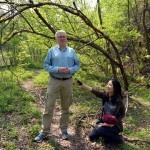
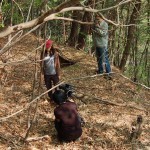
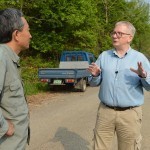
Working on this Korean War documentary in Hoengseong this past weekend, reminded me a little of that dream, especially when it came to setting up a shot and blocking the scene and then having to run through a particular shot a few times.
It was a thrill looking through the viewfinder and watching and hearing me talk about the Battle of Hoengseong.
May 7, 2012
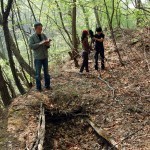
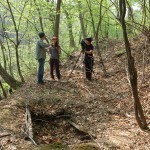
Foxholes from the Korean War — Hoengseong, South Korea
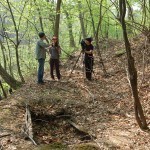
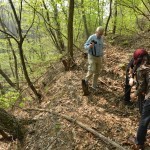
 After Producer/Director Park Jongwoo and his crew shot some footage in Massacre Valley, our next stop was to Hill 930, north of Changbong-ni where the 21st Infantry Regiment of the 8th ROK Division was dug in on the north side of the mountain on the night of February 11, 1951.
From their vantage point on the north side of this mountain, they would have a clear view of Sammachi Pass and any enemy infiltration. Back in 1951, there were hardly any trees on this mountain (which was the case for most of the mountains throughout Korea; the Japanese had heavily forested much of the timber their the occupation period) which gave the ROK soldiers an unobstructed view.
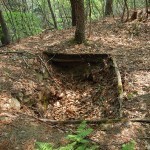
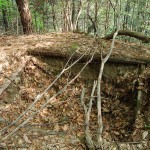
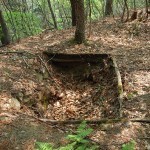
What was most interesting about climbing up the northern side of the mountain was seeing the foxholes these ROK soldiers had dug over 61 years ago. Surprisingly, these foxholes were in very good shape having been undisturbed for all these years; even, some of the timber used to buttress them were intact.
One foxhole in particular (the one pictured here) had one wall made with stacked stones, which reminded me of some of the fortifications made by soldiers at Gettysburg.