Shauna Letellier's Blog, page 7
August 7, 2018
Moments with the Savior
In 1998, before basic nouns were preceded by the vowels i and e (iPhone, iBooks, email, ebooks), I picked up a hard cover book in an actual book store. I’d been searching for a new devotional. What I discovered wasn’t actually a devotional, but it was a fabulous find.
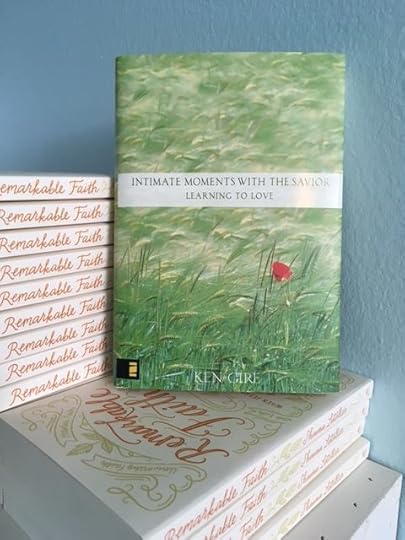
Intimate Moments with the Savior: Learning to Love[image error] by Ken Gire has been a favorite. If you’ve never read it, you might want to join the 100,000+ people who have. It is beautifully written and timeless.
Life is a kitchenful of preparations that has a tendency to distract the Martha in all of us. It is the purpose of this book to help bring us out of the kitchen for a few minutes to sit, with Mary, at the Savior’s feet.
For there the words of Jesus wait so patiently to enter our hearts. There, in his presence, we learn to listen. There we learn to look into his eyes. And there we learn to love him. (p. XIII)
He’s right.
I also learned to empathize with the people who interacted with Jesus.
Gire writes about the hemorrhaging woman, “…with a thin thread of faith, this frail needle of a woman, stitches her way through the crowd.” His simple and picturesque sentence helped me see the anemic woman ducking through the crowd and then straining on tiptoe, peering ahead, to make sure she hasn’t lost sight of Jesus.
It’s easier to empathize with an ill and desperate woman than to feel compassion for a scowling swindler in first-century Jericho. But as I read Gire’s reflection on what might have been Zacchaeus’ backstory, my heart broke with the trampled boy inside the striving man clawing at bark and branches to catch a glimpse of Jesus. It stirred empathy for Zacchaeus, compassion for people who remind me of him, and love for Jesus who notices someone everyone else has tried to forget.
For tax gatherers are despised as ruthless bill collectors for a corrupt government. Even the Talmud looks down on them, allowing a Jew the sanction of lying to a murderer, to a thief, and…to a tax collector.
True, Zacchaeus has power. And he has wealth. But the stature he sought among the others has eluded him. And so has friendship.
But Zacchaeus has heard stories about this Jesus who was a friend of tax collectors. Who ate and drank with them and stayed in their homes. Who changed the life of Levi, the tax collector at Capernaum. For whom Levi left a lucrative career, left everything. And not for higher wages, but for no wages at all. This Jesus must be some man. There’s even talk of him being the Messiah. The thought captivates Zacchaeus: A Messiah who’s a friend of tax collectors. And with a schoolboy’s eagerness he shinnies up the sycamore to see him.
{Taken from Intimate Moments with the Savior: Learning to Love by Ken Gire Copyright © 1989 by Ken Gire. pp. 73-75. Use by permission of Zondervan. www.zondervan.com}
Gire’s book taught me that people in the gospels were not mere characters of ancient fiction. They were humans whose stories have been remembered through centuries because of the historical record of Scripture.
With seventeen short chapters, Intimate Moments with the Savior is perfect devotional reading for a few weeks this summer. If you’re headed for a road-trip or vacation, this book would be a gentle companion for morning and evening readings.
As promised, I’m giving away a SIGNED copy!
Email me at shauna@shaunaletellier.com and let me know which Bible character or story has had the greatest impact on your walk with Jesus. Your email and answer is your entry. I’ll contact the winner via email on Friday, August 10th!! Follow on Instagram and Facebook to find out who won!!
Psssst: Since there can only be one winner, you can also purchase a copy here[image error]. The entire first chapter is excerpted when you click “look inside” on Amazon!!
{As usual, all links to books on Amazon are affiliate links, which means Amazon pays me a few cents for telling you about such a great book, but you won’t be charged a penny extra!}


June 12, 2018
Not by Sight
You know how it happens on the web…you click on an interesting title, then read a moving article, investigate the author’s bio, peruse the books he or she has written, and before you know it, 90 minutes have passed, and you can’t remember how you ended up clicking “buy now” on Amazon.
That’s how I discovered, Not by Sight: A Fresh Look at Old Stories of Walking by Faith by Jon Bloom.
“Through the imaginative retelling of 35 Bible stories, Not by Sight gives us glimpses of what it means to walk by faith…” When I read the description, I panicked. Pretty sure I cried. Because I’d been thinking about writing Remarkable Faith for several years and when the description sounded so similar, I worried there was no need for my book. Perhaps I was too late.
I read the whole book and discovered that while there were similarities, on the whole, they were distinct. Thankfully, publishers want to know about “comparable books” when they are considering publishing yours. Just like a real estate agent will provide you with a list of comparable houses recently sold in your neighborhood, a publisher wants a list of books recently sold in your genre. So what felt like disappointment initially, turned out to be a gift. I had a comparable book proving there was indeed a desire for a book like mine.
I’ve chosen an excerpt in which Bloom imagines Zacchaeus making good on a promise: “Look, Lord! Here and now I give half of my possessions to the poor, and if I have cheated anybody out of anything, I will pay back four times the amount.” (Luke 19:8 NIV)
Imagine a father and son inside a first-century home when an unwelcome visitor arrives. Bloom even catches our attention with a provocative chapter title.
Dismembering an Idol
“Dad, there’s a man at the door. He said his name is Zacchaeus.”
“Zacchaeus!” Judah’s face flushed with sudden anger. “What does he want?” Under h es breath he muttered, “The little vermin.” His young daughter didn’t need to hear that.
“I don’t know.”
Judah moved brusquely past his daughter, clenching his jaw. If the little weasel even hints at more money, I swear… a thunderstorm of violent thoughts broke in his mind.
When he saw Zacchaeus, he exploded, “WHAT?” Zacchaeus reeled slightly from the verbal blow.
“I’m here to return something to you, Judah.”
“What do you mean?” The tone sounded more like, “Get out of my sight!”
Zacchaeus held out a small moneybag. Judah was suspiciously confused. This man had robbed half of Jericho collecting taxes for Tiberius. No one was more conniving and slippery with words. Fearing some kind of setup, Judah didn’t move.
“What are you doing, Zacchaeus?” Cynicism hissed through Judah’s teeth.
“I’m dismembering my idol.”
Judah’s fiery glare turned to stony bewilderment. “What are you talking about?”
“Judah, I know how strange this must sound. And you have every reason not to trust me. I’m here because I’ve defrauded you. I’ve charged you more taxes than Rom required and kept them for my wicked little self. I know that you and everyone else knows that. But now I’ve come to ask your forgiveness for sinning against you like that, and to make restitution. That’s what’s in this bag.”
Zacchaeus held it out again. This time Judah tentatively took it. He looked inside. “There’s a lot in here. It’s got to be more than you overcharged me.”
“Yes. It’s four times what I overcharged you. I’ve got all the records, you now. Zacchaeus smiled.
“Why are you giving me four times what you owe me?” Judah’s distrust was not dispelled.
“I’m keeping a vow. I promised Jesus that I would repay everyone I defrauded fourfold.”
“You mean Rabbi Jesus? You know him?
“I do now….”
(Taken from Not by Sight: A Fresh Look at Old Stories of Walking by Faith, by Jon Bloom, ©2013, pp. 43-44. Used by permission of Crossway, a publishing ministry of Good News Publishers, Wheaton, IL 60187, www.crossway.org.)
I love his practical rendering of what it might have looked like for Zacchaeus to do the unthinkable. Think of the logistics–sifting through records, calculating, filling bags with currency destined for a particular taxpayer, and finally the delivery and explanation. In the tax booths of Jericho, his unforgettable act of restitution was long remembered and discussed. And so was the Savior he honored.
I’m giving away a copy of Not by Sight later this week. Look for a reminder on my Facebook page and giveaway details on Instagram in the next few days!

March 29, 2018
An Easter Ballad for the Day In Between
I can trace my love of imaginative, biblical narrative round and round the grooves of an LP 33 speed record album.
Maybe you don’t remember, but a record album (pronounced reh-kerd al-buh-m) was in popular use shortly after the invention of the wheel and hieroglyphics–or so it seems.
In the late 70s my parents bought an advanced piece of music technology. A stereo. This miracle of musical machinery was ensconced behind glass doors to reiterate the fact that all the blinking knobs and dancing decibel lights were off limits to three wide-eyed children.
Half the fun of the stereo was the delicate show on the turn table. The shiny vinyl balanced on the spindle, spun, wobbled, and finally dropped onto the record player. But perhaps the most impressive feature was the set of speakers. They were protected by a distinctively smelling squishy foam, and at four feet high they were taller than me.
My sister and I would lay on the floor in front of those gigantic speakers with one ear pressed into the foam and wait for our favorite Easter song on our favorite record album. As the needle crackled, we prepared to be
transported by the voice of Don Francisco to a first century scene. And there, in our mind’s eye, we saw the grieving apostle Peter.
Perhaps that sounds a bit strange. Your favorite song was about the grieving apostle? Well, not exactly. It’s just that we knew the story didn’t end there. The crescendo of the finale was coming, but it always started with a sorrowful Peter.
After contributing to the horrors of the crucifixion, Peter was terrified of arrest and crippled with shame. Don Fransisco sings Peter’s story:
The gates and doors were barred and all the windows fastened down,
I spent the night in sleeplessness and rose at every sound,
Half in hopeless sorrow half in fear the day,
Would find the soldiers crashing through to drag us all away.
Then just before the sunrise I heard something at the wall,
The gate began to rattle and a voice began to call,
I hurried to the window and looked down to the street,
Expecting swords and torches and the sound of soldiers feet,
He’s Alive by Don Fransisco
(Lyrics are here if you’d like to read instead.)
 The song ends with the Peter’s encounter with the resurrected Christ. All year long, Don Francisco, my sister, and I would belt it out together: “He’s Alive!!! He’s alive, and I’m forgiven!”
Interestingly, this song was the longest-running chart single in the history of Christian radio.
What makes it so good?
Why was it our favorite?
Why do I always cry?
I think the answer lies, at least in part, in the lyric, “Everything I’d promised Him just added to my shame.”
What had Peter promised? When Jesus warned His 12 friends that they would all bail on Him, they each, including Peter, said, “Surely you don’t mean me?” Then, as if to shore up his devotion, Peter pumped his fist into the air declaring, “Lord, even if all fall away on account of you, I will not! Even if I have to die with you I will never disown you!”
I’m sure Peter meant it. He wasn’t lying to Jesus. Amidst the solemnity of the Passover meal he was earnest. He was ready for heroics! But he wasn’t ready for the humiliation of grace. He was not yet willing to let Jesus die for him.
I think this is why I love the story of Peter and perhaps why so many have loved Don Francisco’s ballad. It is a portrait of God’s grace given even to those who’ve tried to “do it right” and heroically.
I have promised Jesus big and small acts of faith in earnest: Lenten sacrifice, Christmas generosity, and everyday devotion. But everything I’ve promised points to the fact that I can’t even keep my own promises. I fudge on the sacrifice. I’m cautious in generosity. I fall short of goals I was certain I could accomplish. How much more have I fallen short of a Christ-like generosity and sacrifice?
When we recognize our ineptitude to perfectly carry out our tiny acts of goodness, we are finally able to receive what Christ offers: His death instead of yours. His perfect life credited to you. In the words of Martin Luther, “The Great Exchange” where Jesus is the hero.
To “celebrate” Christ’s death on Good Friday may seem cryptic or harsh. But we know what Peter didn’t. Saturday is the grand crescendo and Sunday morning is the celebratory finale.
Happy Easter, Friends.
He’s still alive, and we can be forgiven.
Remembering Holy Week: Five Remarkable Stories of Unremarkable People
is my 5-day e-devotional. It is available for one more day. Click here to find our more, and sign up to receive your FREE copy via email.
January 23, 2018
The Resolution I Kept
 It’s a well documented fact that I’m not good at keeping New Year’s resolutions. My ambitious diet and exercise goals usually go the way of last month’s wrapping paper and packaging, and aggressive reading goals like “read more books” get gobbled up by January’s schedule. It feels like a sad commentary on an undisciplined adult.
So several years ago, rather than documenting what I was going to DO, I decided to document what I’d already done. And in only one arena: Reading. I resolved to “keep track of books I read.”
So in celebration of the resolution I kept, I’m sharing a few recommendations and favorites you might enjoy this year. (Interested in past recommendations? Find them here: 2017, 2016, 2015 )
2017 Reading: Favorites
Fiction Favorites When Crickets Cry[image error], by Charles Martin
Amazon says it’s about “A man with a painful past. A child with a doubtful future. And a shared journey toward healing for both their hearts.” I enjoyed it! I’ve also loved Martin’s books Long Way Gone[image error], (here’s my review) and The Mountain Between Us. If that title sounds familiar, it’s because they recently released the movie, which deviated from the book and left readers disappointed in the film (The book is always better!). Charles Martin is a fabulous writer and story teller. I’ve also learned he is a tremendously gracious human as evidenced by his response to the movie’s deviation.
June Bug[image error], by Chris Fabry
It begins with this genius first line from the child narrator, “I believed everything my daddy told me until I walked into Wal-Mart and saw my picture on a little poster…” Chris Fabry, radio host and author, has a knack for stories with an unexpected twist, and I enjoyed this one.
Nonfiction Favorites The Secret Thoughts of an Unlikely Convert : An English Professor’s Journey into Christian Faith[image error], by Rosaria Champagne Butterfield
Butterfield deals with the cultural controversy surrounding homosexuality and Christianity from an insider’s perspective. Her beautiful writing style treats both communities with candor and grace. Referring to her conversion as a “train wreck,” her story is shocking and honest, and her life a uncommon example of walking in faith and obedience to God.
Love Idol: Letting Go of Your Need for Approval and Seeing Yourself through God’s Eyes[image error], by Jennifer Dukes Lee “If you, like so many of us, spend your time and energy trying to earn someone’s approval―at work, home, and church―all the while fearing that, at any moment, the facade will drop and everyone will see your hidden mess . . . then love may have become an idol in your life. In this poignant and hope-filled book, Jennifer Dukes Lee shares her own lifelong journey of learning to rely on the unconditional love of God. She gently invites us to make peace with our imperfections and to stop working overtime for a love that is already ours.” (I got to meet Jennifer this year and she is as delightful as her writing style. Follow her on Facebook and Instagram.)
Here’s to keeping the same resolution in 2018!!
What are you reading this year? What book do you love to recommend?
Four recommended reads for 2018. What book do you love to recommend?
Click To Tweet
Other 2017 Fiction:
Watership Down by Richard Adams A long children’s classic, with excellent characterization of a little community of rabbits.
A Prayer for Owen Meany[image error] is a brilliant writer and a master of characterization, but I did not enjoy it mostly because of lengthy opinions on the Vietnam war and tons of adolescent angst.
Ears to Hear[image error], by Joyce Cordell. A short work of biblical fiction based on the biblical Malchus.
Other 2017 Nonfiction:
Misreading Scripture with Western Eyes by Randolph Richards & Brandon O’Brien: An explanation and comparison between western and non-western cultural norms and how it affects our understanding of the Bible. Fascinating but also something akin to looking at a world map upside down. Still accurate, but hard to get used to.
Behold the Lamb of God[image error] by Russ Ramsey: Fabulous 25 day Advent devotional I will heartily recommend in November 2018.
A Great and Terrible Love, by Mark Galli: Rich prose on the attributes of God.
Holding On to Hope by Nancy Guthrie: Her painful story of loss and restoration.
The Hiding Place[image error] by Corrie Ten Boom. I made my kids read it this summer, so I read it again too. Everyone should read it.
The Polygamist’s Daughter: A Memoir[image error], Heartbreaking story of growing up in a polygamist cult, and how she escaped.
Talking with God, Adam Weber: Short read on prayer by a Sioux Falls pastor.
Still Waiting, Anna Swindell: Her story of God’s presence while hoping for a cure and yet still waiting.
What are you reading this year? What book do you love to recommend?
P.S. Last year I applied to be an affiliate with amazon.com. This means if you buy one of these books through the links in this post, Amazon will pay me a few cents for recommending it to you, but you will not be charged anything extra. It’s just a way for amazon to thank bloggers for getting the word out about good books or products. Bloggers are required to disclose this information to their readers. 
January 9, 2018
On Caring for Yourself without Rolling Your Eyes

Self-Care.
Stop right there. Did you just roll your eyes?
I did. Or at least I used to.
“Self care” sounded like a personality assessment, painted toe nails, and coffee with an elaborate drawing in the foamed milk. It seemed less than helpful to me. I mean, as believers in Jesus, aren’t we supposed to spend ourselves on behalf of the poor (Isaiah 58:10)? And shouldn’t we to consider others as better than ourselves (Phillipians 2:3)? And don’t we work heartily as though we’re working for the Lord (Colossians 3:23)?
Well…Yes. But…
You know the line from the airline attendant? In an emergency secure your own oxygen mask before assisting others. That’s a pretty convincing reason to care for yourself. It doesn’t require a tropical vacation, or a stranger slopping polish on your toes. It’s just securing emotional and spiritual oxygen so you can safely assist others.
The reality is that life is made of assisting others. It’s a blessing and a privilege and ultimately it is for the Glory of God. But that doesn’t mean it’s not tiring, and there’s no shame in admitting it. In fact admission is the starting point.
Emily Allen, founder of Kindred Mom, recently wrote about the reality of caring for self and others:
“I must begin to see that in order to do all of those things, I can’t “give it my best shot” and resign myself to a dramatic crash-and-burn every few months. I have to value myself as a human person who has real needs, real limitations, and real desires that long to be fulfilled. I must build my life around wholesome and restorative habits that allow me to be a strong and steady presence for my family without ignoring myself in the process.”
Her words reminded me of a scene from the gospel of Luke…
*******
Martha tip-toed into the room where Jesus was speaking to the guests. She padded around the table setting plates at each spot. She did not want to disturb him or her other guests.
She did, however, want to disturb Mary. She let the last plate clatter into place to get Mary’s attention. But no one noticed.
Not even Mary.
Martha hurried back to the kitchen where the kettle was spitting into the fire. She snatched it out, and when she did boiling water splashed out the spout and splattered on her toes. She pressed her lips closed, let out the faintest growl, and dabbed the droplets off her toes.
Martha, huffed in the doorway once again to catch Mary’s eye and rouse her from laziness. Perhaps an uncomfortably long stop in the doorway would shake Mary out of her childlike trance. Martha waited, but Mary was hopelessly caught up in every word Jesus was saying.
It was a sight. And Martha intended to end it. When Jesus paused mid-sentence Martha interrupted, “Lord, don’t you care that my sister has left me to do the work by myself! Tell her to help me!”
Mary started to stand, but Jesus held out his hand directing her to stay.
“Dear Martha,” He shook his head. “You are worried and upset about many things.” Yes! Martha had wanted to answer, that’s why I’m mentioning it!
“Only one thing is needed.” Jesus turned back to Mary settling in again on the floor at his feet, but He spoke to Martha. “Mary has chosen what is better, and it cannot be taken away from her.”
*******
This is Martha, in the words of Emily Allen, crashing and burning. And this is Mary, in the words of an airline attendant, securing her oxygen by learning from Jesus. He is gentle and humble, and as Mary listens He gives her rest. Sounds a little like “self-care” to me.
The irony is that caring for ourselves by receiving rest and care from Christ enlivens our efforts to assist those around us. In his book The Radical Pursuit of Rest,[image error] John Koessler writes, “The effort of the Christian life is energized by rest. Biblical rest does not make us passive or unproductive. It is the secret to all productivity in the Christian life.”
When we begin from a place of rest—mind, body, and soul—we can more effectively spend ourselves on behalf of the poor. In our own families we’ll be better equipped to consider others before ourselves. And we will experience hearty work for the Lord as a privilege and a delight because the work we do for Christ is the natural outworking of what he has already done for us.
Self-care? Don’t roll your eyes. Caring for yourself by receiving rest and care from Christ is the best place to start in caring for others.
If you find yourself in need of self-care (or more convincing of its necessity!), here are two places to start:
Kindred Mom Self-Care Series: Founder Emily Allen writes specifically to moms, but her words ring true to all. Through a series of beautiful essays and podcasts Emily and her team remind us that “self-care is essential and that engaging it is not as costly, nor as complicated as many of us make it out to be.”
{Find the essays here, or receive them via email by signing up here. Listen to the podcast here.}
The Radical Pursuit of Rest: Escaping the Productivity Trap[image error], by John Koessler, (chair and professor of pastoral studies and Moody Bible Institute.) This mercifully short treatise on biblical rest is insightful and beautifully written. He restores the biblical meaning of the rest Jesus offers. Koessler writes for “ordinary people who hope to experience the easy yoke of Christ in the midst of struggle under normal circumstances…”
December 21, 2017
On that First Christmas…

On that first Christmas, just moments after Jesus was born, it probably appeared to Joseph that the long-expected Messiah had arrived at an inappropriate place with no fanfare or announcement at all. Between the baby’s delivery and the shepherd’s disturbance, Joseph might have thought he was the only one.
God had hidden from Joseph many future events. He knew Jesus was God’s Son, born to save His people from their sins. And for Joseph, at this moment, that was all God chose to show him. And it was enough.
In a sense, you and I are living in that same space–between the wonder of all God has done and all trials and glory to come. We know about the manger, the cross, and the empty tomb. The rest He promised is still somewhat hidden. Though we cannot fathom the extent of future hardships or blessings, we know Jesus and He know us. And that is enough for now.
Dear Lord,
You have veiled that sacred night with so few details. The details of the moment that
divides history, you have kept private. But its implications you have declared as Good
News to all people. The Israelites waited more than 400 years for deliverance through
two water-walls, and over 400 years for your promised Deliverer—a baby. And we are
waiting now, some two thousand years later, for your glorious appearing when every
knee will bow and proclaim, “King Jesus!”
Amen
December 12, 2017
Merry Christmas 2017

Merry Christmas from my crew to yours!
I spent an inordinate amount of time trying to entertain you with a Letellier family parody on “The Twelve Days of Christmas.” Unfortunately, (or perhaps fortunately!) my creativity was only good for six days worth of parodies. You’ll have to work a little to fit the traditional melody around the Letellier lyrics, and you’ll have to start in the middle of the song…
6 months of basketball.
5 cell phones.
4 licensed drivers.
3 ball game schedules.
2 decades of marriage.
And a book launched into the wide world!
If you’re on a road trip or passing time as you travel, perhaps you can write your own Christmas carol parody! Be sure and post it in the comments if you do!
Thank you so much for reading and visiting with me this year in our little corner of the world wide web. It’s a wonder, isn’t it? To think that Jesus came to the world he created in order to rescue us from the spiritual disasters we’ve created. Why? Because he loves us, and it pleased His Father.
What a relief and a gift! Merry Christmas, indeed.
December 5, 2017
How to Read the Christmas Story as if for the First Time

Barbara Robinson’s classic novel, The Best Christmas Pageant Ever, has been read and performed in classrooms, Sunday school rooms, homes, and community theaters. For 45 years readers have giggled, wondered, and maybe even cried with narrator Beth Bradley as she introduced us to the Herdman children–“the worst kids in the history of the world.” All six of them smoked, stole, and fought. And “Since none of the Herdmans had ever gone to church or Sunday school or read the Bible or anything, they didn’t know how things were supposed to be.”
Then, rehearsal after rehearsal, we watch the Herdman children hijack the traditional church Christmas program.
One reason this story clings to the Christmas season is because it provides fresh perspective for those of us who are dangerously overfamiliar with the biblical Christmas story. Through the unfiltered outbursts of the motley Herdman children we get to observe the story of Jesus’ birth as though we’d never heard it before.
For most of us, overfamiliarity causes us to yawn through the angel’s song and saunter up to the manger unsurprised to find a baby in a feed bucket. Perhaps this year we can take a cue from the unpolished Herdmans and un-familiarize ourselves with the Christmas story. Not in order to forget it, but in order to read it again as if for the first time. Perhaps a slow and imaginative Bible reading will return the wonder of God’s extraordinary plan as we take a fresh look at the familiar.
Here are 5 tips for reading the familiar Christmas story as if for the first time.
1. Zoom in: Start with one verse and observe the fine details. Take Matthew 1:28 for instance. “Mary was pledged to be married to Joseph, but before they came together, she was found to be with child through the Holy Spirit.” (NIV) Zoom in on Joseph and put yourself in his sandals. He was a carpenter, and when his fiancé was “found to be with child,” there’s a good possibility he was distracted when he went to his woodworking that day. See his knuckles whitening around the hammer? Hear the lumber thrown in a pile? Watch him leave his workshop before sunset to see to the Jewish logistics of a quiet divorce. Because he was a righteous man, observe how he sought to follow God’s law even in the wake of a devastating announcement.
2. Confine yourself to a limited perspective: Remind yourself that Joseph and Mary did not know the rest of the story as we do. Joseph did not have a trip to Bethlehem planned. From his limited perspective, he was staring down a future of disgrace, embarrassment, and—if he ever hoped to be married–another long engagement period in the distant future.
3. Ask their questions: List some questions Joseph might have asked. Didn’t I choose the right girl? Is this punishment? What does obedience look like now? Is my anger righteous? Will my family be ashamed? Is there anyone else in this small town who will marry me? What will happen to Mary? What will happen to the baby?
4. Pray their prayers: How would a righteous Old Testament man have prayed the night before he went to the synagogue to write a “certificate of divorce” (Matthew 5:31)? If he was at a loss for words, would he employ the prayer of the Psalmist? “How long must I wrestle with my thoughts and day after day have sorrow in my heart? How long will my enemy triumph over me? Look on me and answer, Lord my God. Give light to my eyes, or I will sleep in death.” (Psalm 13:2-3)
Or would he have acknowledged God’s sovereignty with words of worship borrowed from King Hezekiah “Lord Almighty, the God of Israel, enthroned between the cherubim, you alone are God over all the kingdoms of the earth…” Help. (Isaiah 37:16)
5. Retell the story: After your sanctified imagination, governed by the parameters of history and scripture, has walked a day Joseph’s sandals, return to the passage and read it again. Feel the devastating weight. Then move to the next few verses and experience the holy exhilaration of a divine assignment. Retell the story to yourself or a friend.
You can repeat this exercise with any character you find in the Christmas narratives–Zechariah or Elizabeth, Anna or Simeon, or maybe the first shepherd who “hurried off and found Mary and Joseph and the baby” (Luke 2:16). Take the challenge offered by Dr. Howard Hendricks to pray as you read, “Lord, clothe the facts with fascination.”
A word of caution though. Use these tips as tools for taking a fresh look at the familiar, not a basis for building a doctrine. It’s a method of placing yourself in the position of a real person in history and to glimpse what it meant for them to trust and obey God.
When you step back into your ordinary modern-day life you’ll be filled with fresh wonder at what God can do with ordinary humans who are willing participate in his extraordinary plan.
5 tips to read the Christmas story as if for the first time #RemarkableAdvent
Click To Tweet
I’ve used this very method to write a 25 day advent e-devotional titled “A Remarkable Advent: Stories of the Ordinary People God Chose to Fulfill His Extraordinary Plan. Sign up to receive your copy by clicking here.
November 28, 2017
Ordinary & Useful

For those of us who’ve heard the Christmas story a time or ten thousand, there is a tendency to slide right through Luke 2 this time of year without much thought.
There it is again. “In those days a decree went out…”
It hasn’t changed since last year — or for the past two millennia for that matter. There doesn’t seem to be much in this story that applies to ministry, work, marriage, or parenthood. Sometimes it’s hard to imagine the Christmas story as anything but nostalgia and rehearsal.
But a closer look at the people we find there might tell us more than we even want to hear.
The people God chose were not worthy of human notice in their era. Yet two thousand years later they are household names, the subjects of stained glass, sermons, and statuettes. Each of their stories points to God who orchestrated the events of their ordinary lives to achieve His extraordinary plan.
Take, for example, Zechariah. He was an ordinary priest, and an old one at that. His was a part-time ministry, since his responsibilities at the Temple came around only twice a year. In the passing of sixty-some years of service, Zechariah was not rewarded with a promotion, or even a divine appointment to burn incense before the Lord — a privilege for which he was qualified, equipped, and so far unchosen. Despite increasing corruption in his place of worship, decade after decade Zechariah served. Such long-term, habitual obedience in ordinary duties drew the attention of no one but God.
Zechariah’s wife, Elizabeth, had married a priest. Not a notable one, but a God-fearing man nonetheless. He wasn’t perfect, but he loved God, fulfilled his responsibilities in the temple, and had always urged her to do the same. They would have made a good parents. Or so she thought. But God had not given her the reward of children. She was righteous and childless. Disappointed and faithful.
Joseph was a twenty-something guy from a denigrated town where nothing good usually emerged. Like every other boy, he learned a trade from his father and continued in the work whether he liked it or not. He wasn’t scouting marriage prospects because even his bride was chosen for him. At a decade past puberty, he was anxious to be married. And for his righteousness and patience he was rewarded with an announcement of scandalous infidelity. His girl was pregnant. Marrying an adulterer would make him an adulterer as well. So to avoid further disgracing his family and his fiancé, Joseph meant to break it off quietly. He’d swallow the embarrassment, follow God’s law, and endure a heartbreaking obedience.
Mary was young and barely a woman. She’d been pledged by her father to marry a hometown guy who would ensure that their future brood of children would grow up under the shelter of both sets of nearby grandparents. She would make a home and he would be the spiritual leader and provider of their little household. No one expected anything but the ordinary course of things from Mary.
Each of these people were ordinary, obscure, and quietly faithful to God. When the eyes of the Lord roamed throughout the earth looking for participants in His extraordinary plan, He found four individuals whose hearts were fully committed to Him (2 Chronicles 16:9). God reached down into their ordinary lives and shattered their small plans in order to create a divine mosaic from the broken pieces.
For the old priest, God granted a once-in-a-lifetime ministry opportunity. While performing that duty, God gave him the news that in the coming year he’d be cradling a son. And not just a son, but a prophet, known throughout the world and centuries as John the Baptist. The forerunner of Christ (Luke 1:8-17).
For the old woman, whose aches and fatigue had long ago caused her to stop begging for children, God granted the biggest surprise of her long life: a resurrected biology, renewed strength to carry a baby to term, and the certainty of knowing that her son would grow to be great in God’s sight (Luke 1:57).
For the young man whose obedience meant embarrassment and disgrace, God rescued him with new instructions in a dream he could never have imagined: a confirmation that Mary was not unfaithful–not even a liar–but an obedient girl whom he should go ahead and marry. (Matthew 1:20)
And for the young girl naive enough to believe God could choose her to carry His son, God granted courage and humility to declare herself the Lord’s servant. Even if it meant being thought a liar, an adulterer, and maybe a single mom, she pledged her life, and the use of her womb, to God (Luke 1:38).
God is still seeking those whose hearts are likewise committed to Him. (2 Chronicles 16:9).
God is looking for you.
For you who are faithful with the little things, who maintain integrity before God in the smallest details of part-time ministry.
For you who are obeying the parts of God’s word that you do understand, even while continuing to study the parts you don’t.
For you who quickly turn away from “small sins” and “big sins” and run to Jesus for forgiveness and help, when people notice and when they don’t.
These are the little things, the things right in front of us, in which we’re called to be faithful. Despite corruption in ministry. Despite life-long disappointments. Despite obedience that requires a disturbing reversal. And despite the perceptions of others.
God is seeking faithful obedience from ordinary people—like you and me—to fulfill His extraordinary plan.
The story of Christmas is proof.
Would you like to take a fresh look at the familiar Christmas story? A Remarkable Advent: Stories of the Ordinary People God chose to Fulfill His Extraordinary Plan is a free 25 day e-devotional. Find out how to get your copy by clicking here.
November 14, 2017
Unlikely Reasons for Gratitude: Needing Help
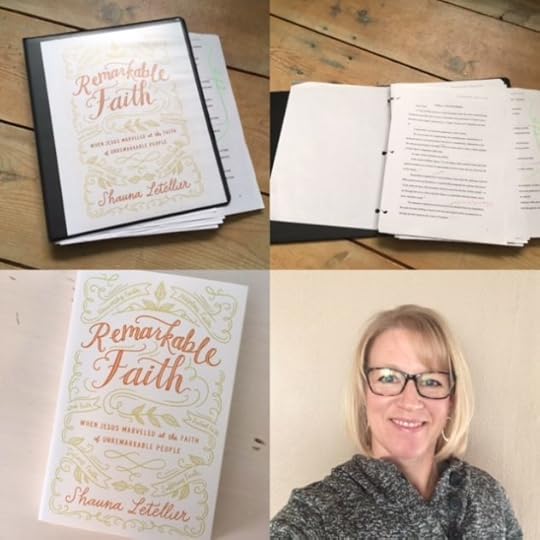
{ From binder to book. (and my new glasses