Shauna Letellier's Blog, page 6
February 5, 2019
What to do when you’re not “joyful in hope”
When I wrote my first book, Remarkable Faith, I felt like I had made a pioneer discovery. I saw a pattern in the gospels that demonstrated a biblical truth, and I wanted to share it with everyone. Like a child wide-eyed over a fossil dug from a backyard sandbox, the matter of faith as dependence rather than performance had always been there. But I was just discovering the vivid illustrations in the people Jesus met.
Writing my second book, Remarkable Hope, was more of an investigation. Not so much, “Hey! Look what I found!” but more “I wonder why that is?”
The apostle Paul wrote to his friends in Rome, “be joyful in hope, patient in affliction, faithful in prayer.” (Romans 12: 12). Faithful in prayer and patient in affliction, I understood. Keep praying and trust God in the hard times. But “joyful in hope” struck a dissonant chord, like a toddler banging on the bottom three keys of a piano.
If we’re called to be joyful in hope, I wondered why I inwardly rolled my eyes when I said, “I hope so.” Hope sounded more sarcastic than joyful. “I hope so” felt like ineffective fairy dust sprinkled on an impossibility.
I went to my Bible to discover true hope, to learn from the folks who saw Jesus face-to-face and still experienced severe disappointment, even despair. It didn’t seem to harmonize.
My own usage of the word “hope” was throwing me off. My definition was the eye-rolling, doubt-filled sarcastic verb I had been employing.
I hope I don’t get sick.
I hope we make it on time.
I hope it doesn’t rain.
Much of the time I ended up wet, late, and sneezing. In my mind, hope was more akin to doubt than joy.
But biblical hope, the kind written about by Paul, Peter, and John is active waiting for a good future you can count on. Its fulfillment is not predicated on weather or timing or health. It is held in place by Jesus’ finished work for us. His timing, purposes, and plans are sometimes confounding and, in our minds, disappointing.
 Even people in the gospels—who met Jesus, who ate with him and hosted him in their synagogues—even they experienced differing degrees of disappointment. But after studying eight of those people, I can confidently declare with the apostle Paul that “our hope does not disappoint us.” (Romans 5:5)
Remarkable Hope: When Jesus Revived Hope in Disappointed People, is the result of that study and reflection. It retells the stories of eight hopeful people in the Bible who appeared—at first—to be disappointed by Jesus. Their stories reveal a pattern of being surprised by him in drastic ways. As we observe Christ’s faithful commitment to them, we will be wowed by his unseen plan and revived by his enduring presence. With unexpected methods and surprising gifts, Jesus transforms disappointment into the certainty of remarkable hope. Not only for them, but for us too.
Pre-order before March 5 and receive three gifts! Here’s how you can get them:
1. Pre-order “Remarkable Hope” from any online retailer:


2. Fill out the form with your receipt number by clicking HERE.
3. Check your email to confirm and receive your gifts!
The post What to do when you’re not “joyful in hope” appeared first on Shauna Letellier.


January 16, 2019
Recommended Reads 2019
 If we’ve been connected for a while then you know the story behind this recommended reading post. In the past I’ve called it, “The Resolution I Kept.” The resolution was to “keep track of books I read.” But it’s really turned into an annual conversation about books we read and loved (or didn’t love).
A speaker once asked his audience, “Do you think you’re rich?” Most people answer ‘no’ based on their bank balance. The speaker countered, “If you can read that book you bought, you are rich.”
We live in a time when unsold books are turned into pulp and recycled into other books. We live in a country where styles, topics, and creative works of every variety abound. And we are educated to such a degree that reading is as involuntary as breathing (Don’t read this. See what I mean?)
Indeed, we are rich.
Of the 21 titles listed below, I’ve highlighted my top two favorite fiction and nonfiction books of 2018. The remaining 17 books are listed below in the order I read them, not the order of preference. (The links below are affiliate links, which means Amazon pays me a small percentage simply for directing you to their store, but you are not charged one penny extra.)
NonFiction
Humble Roots: How Humility Grounds and Nourishes Your Soul[image error]
by Hannah Anderson
[image error][image error]
Hannah Anderson is a gardener and biblical thinker. In Humble Roots she combines her interests with her gift of writing. Each chapter features a horticultural wonder that parallels truths about the Christian life. I enjoyed the analogies that point to the fact that humility, rest, and peace are linked by God’s design. She writes, “The goal of Humble Roots is to understand how pride manifests itself in anxiety and restlessness; and how humility frees us from the cycle of stress, performance, and competition.” (P. 12)
Where I End: A Story of Tragedy, Truth, and Rebellious Hope[image error]
by Katherine Elizabeth Clark
[image error][image error]
I heard a radio interview with Katherine Clark and made a mental note of her title in my unreliable memory until I could order the book. Where I End is the story of God’s faithfulness and care for Katherine and her family as they survive the tragedy of Katherine’s serious injury. It is also a vibrant and refreshing testimony that faithfulness to God in the midst of suffering is not only possible, but beautiful and inspiring. I’m so thankful she wrote this book.
Fiction
Before We Were Yours: A Novel[image error]
by Lisa Wingate
[image error][image error]
This was easily my favorite book of 2018 and was recommended by the most voracious reader I know, Yolanda Smith (follow her on Instagram for her monthly-ish recommendations). My past favorites are linked my a common and surprising theme. I adore books that are emotionally gripping, but there’s generally an element of heartbreaking tragedy that always makes me feel a little guilty saying “I LOVED IT!”
From the back cover: “Memphis, 1939. Twelve-year-old Rill Foss and her four younger siblings live a magical life aboard their family’s Mississippi River shantyboat. But when their father must rush their mother to the hospital one stormy night, Rill is left in charge—until strangers arrive in force. Wrenched from all that is familiar and thrown into a Tennessee Children’s Home Society orphanage, the Foss children are assured that they will soon be returned to their parents—but they quickly realize the dark truth. At the mercy of the facility’s cruel director, Rill fights to keep her sisters and brother together in a world of danger and uncertainty.”
A descendant of one of the orphaned survivors follows the buried clues of separated siblings and seeks to uncover the truth to reunite those who remain. This is a fantastic read. You don’t have to take my word for it. 8,000+ reviewers on Amazon agree with me!
The Prisoner in the Third Cell[image error]
by Gene Edwards
[image error][image error]This is a novella, “told as an unforgettable drama, for those caught up in circumstances they do not understand.” (From the back cover.) Obviously you know my love for biblical fiction and this is the fictionalization of John the Baptist, believer, servant, forerunner of Christ as he sat in prison wondering about Jesus, who did not live up to John’s expectations. Does that sound harsh? Heretical? Consider this:
“John, meanwhile, had been locked up in prison. When he got wind of what Jesus was doing, he sent his own disciples to ask, “Are you the One we’ve been expecting, or are we still waiting?” (Matthew 11:3, MSG)
It’s confounding at first glance. It set me on a search and John’s story became a chapter in my upcoming book, Remarkable Hope.
Speaking of Remarkable Hope, it’s now available for preorder, and I have links to three online retailers here. If you purchase today it will be shipped to you on March 5–release day! In the next few weeks I’ll have some surprises and free bonuses to celebrate the “birth” of the book, so to speak.
While you wait for your copy to arrive, here are the rest of the titles I read in 2018. Happy reading in 2019!
What books do you recommend? (comment below or email me!)
Other Nonfiction:
Four Seasons in Rome, Anthony Doerr
Everybody Always, Bob Goff
Understanding Teaching: Creatively Prompting Biblical Life-Change, Gregory C. Carlson Ph.D. (As a former student of Dr. Carlson’s, I had the privilege of endorsing this one!!)
The Surprising Grace of Disappointment, John Koessler
Revitalize: Biblical Keys to Helping Your Church Come Alive Again, Andrew M Davis
All the Pretty Things, Edie Wadsworth
Shoe Dog, Phil Knight
A Place to Land, Kate Motaung
The Freedom of Self Forgetfulness: The Path to True Christian Joy, Timothy Keller
Devoted: Great Men and Their Godly Moms, Challies, Tim
It’s All Under Control: A Journey of Letting Go, Hanging On, and Finding a Peace You Almost Forgot Was Possible, Jennifer Dukes Lee
A Long Obedience in the Same Direction, Eugene Peterson
Other Fiction
About Grace, Anthony Doerr
Send Down the Rain, Charles Martin
The Masterpiece, Francine Rivers
Flirting with the Forbidden, Steven James
Meeting the Mystery, Steven James
Need more recommendations? More lists and favorites linked below!
The post Recommended Reads 2019 appeared first on Shauna Letellier.
December 18, 2018
“Through the Inkeeper’s Eyes” with Guest Charles Martin
This December our guest is Charles Martin. Charles is the author of 13 novels, (several of which I have recommended in the past).
When I saw he had applied his novelistic mastery to this tender moment in the Christmas story–on Earth and in Heaven–I was spellbound. This piece was first published on his website and eventually found its way into his newest book. He graciously gave me permission to share it here.
Grab a little piece of quiet, and settle in for this one. You’re going to love it.
The night is cool and turning colder. The air smells of woodsmoke, lamp oil and manure. Quirinius is governing Syria. Caesar Augustus has issued a decree. “Register the world! Take a census.” Under the dominating hand of Rome, men and their families scurry to their birth homes to register. Jerusalem is overflowing. Bethlehem is packed.
It is dark. Past the evening meal. A young man leads a young girl riding a donkey up a small trail and into Bethlehem. He is pensive. Every few seconds, he glances over his shoulder.
The rumors have preceded them. As have the whispers. She’s pregnant but not with his child and to complicate matters, they’re not married. It’s a scandal. According to Jewish law, he should put her out and she should be stoned.
The innkeeper has had a long day. He watches warily. The tired young man asks, “Sir, do you have a room?”
The innkeeper shakes his head. “Full up.”
The young man strains his voice. “You know of…anywhere?”
The innkeeper leans on his broom handle. Half-annoyed. His patience is thin. “Try down there. But…you’re wasting your time.”
The girl winces. The contractions have started. The stain on her dress suggests her water broke. The innkeeper’s wife eyes the barn and whispers. “We can make room.”
Hours later, the couple returns. The young girl is sweating. Doubled over. The young man is frantic. The innkeeper is in bed. Upon hearing the knock, he rises reluctantly and unlocks the door. “Son, I told you…”
“Please sir…”. He proffers to the young woman. “She’s bleeding.”
The innkeeper’s wife appears over his shoulder. She says nothing, which says plenty. The innkeeper trims his wick, and for the first time, looks into the young man’s eyes. The innkeeper gently grabs the reins of the donkey and leads the young woman to the barn where he spreads fresh hay to make a bed while his wife appears with a towel and some rags. She brushes the two men out and helps the girl.
The innkeeper and the young man stand at the door of the stable — little more than a cave carved into the rock wall. The animals seem amused at the ruckus. The innkeeper lights his pipe. The young man shuffles nervously. Behind them, the screams begin. The innkeeper speaks first.“You the two everyone is talking about?”
The young man doesn’t take his eyes off the cave. “Yes sir.”
Another puff. Another cloud. “What happened?”
The young man is not quick to answer. “You wouldn’t believe me if I told you.”
The innkeeper laughs, “I don’t know…I was young once. She’s a pretty girl.”
Another scream echoes out of the barn.
“Is the baby yours?”
The young man rubs his hands together. Calloused, muscled. They are the hands of a stone mason. “No, he’s not. I mean, he will be but…I’m not the, well…”
The innkeeper chuckles. “You sure it’s a he?”
The young man nods. “Pretty sure.”
“You intend to marry?”
The young man glances over his shoulder. “Soon as she heals up and…”
Another scream and the the innkeeper changes the subject. “You here to register?”
The young man nods.
“What family?”
“House of David.”
The Innkeeper raises an eyebrow. “Good family.”
The screams have risen to a fever pitch. The young girl is out of her mind. The innkeeper’s wife calls from the stall. “Honey, I need some hot water.”
The innkeeper disappears and leaves the young man alone. Above a star has risen. Abnormally bright.
Elsewhere, in the throne room of heaven, the Son of God rises from His throne and takes off His robe and the golden band about His chest. He unbuckles His sword and leans it in the corner of His throne along with his diadem. Then He removes His priestly and kingly garb where it is folded by attending angels —each having three sets of wings. When finished, He stands naked save a loin cloth. “His hair is white wool, as white as snow, His eyes like a flame of fire, His feet are like fine brass as if refined in a furnace, and His voice is the sound of many waters.” (Rev 1:13-16) Like Niagara. Or the break at Pipeline. Finally, He takes off His crown and places it on the seat. The heavenly host — millions upon millions — bow at His feet, and yet…it is pin-drop quiet.
God the Father rises as His Son crosses the fiery stones. The Father hugs the Son, buries His face on His son’s cheek and kisses Him. The time has come. On earth, the sons of Adam have lost their way. Each gone their own way. Astray. Things are bad. The entire human race has been taken captive and the enemy is torturing them. Not one of them will survive the night. The Son has volunteered for a rescue mission but it’s a prisoner exchange. Their freedom will cost the Son everything.
His life for theirs.
The Father holds His Son’s hands in His and tenderly touches the center of His palm. He knows what’s coming. A tear rolls down the face of the Ancient of Days. The Son thumbs it away. “I’ll miss you.” He glances at the earth below and hell in between. Billions of faces shine across the timeline of history. He knows each by name. They are the “joy set before Him.” (Heb 12:2). He turns to His Father, “I will give them Your Word. And declare to them Your Great Name.” (Jn 17:14, 26). The Son looks with longing at His home. As He turns to leave, He says, “And…we’re going to need more rooms in this house because when I come back…”. He waves His hand across the timeline. “I’m bringing them with me.” The Son — who’s countenance is like the sun shining in all its strength — exits heaven blanketed in the singing of more than 100 million angels and bathed in the tears of The Father. (Rev 1:16)
The Innkeeper returns as the cries of a baby pierce the night air. His lungs are strong. The Word made flesh. (Jn 1:14) The wife clears the mucous and the cries grow louder. The young man exhales a breath he has been holding for a little over nine months. The innkeeper stokes the fire in the corner and hugs the young man, “Come!”
The hay beneath the young woman is a mess. The baby boy has entered the world in much the same way the nation of Israel left Egypt. Through blood and water. The animals look on. The rocks cry out. (Lk 19:40)
The woman places the baby on the mother’s chest and the two lie exhausted. The young woman is exposed and the young man is uncertain as to his role. He has yet to know her. The innkeeper’s wife leads him to the young girl’s side where he cuts the chord and then slides his hand inside hers. His heart is racing. She is exhausted. Sweaty. The afterbirth arrives and the innkeeper’s wife begins cleaning the woman. The young mother stares at the boy and hears the echo of the angel that appeared to her some ten months ago: “He will be great, and will be called the Son of the Highest; and the Lord God will give Him the throne of His father David. And He will reign over the house of Jacob forever, and of His kingdom there will be no end.” (Lk 1:32-33)
But, it is a bittersweet moment because she knows well the words of both Isaiah and the Psalmist. How the Messiah will suffer. Be cursed. Bruised. Pierced. Despised. Rejected. Oppressed. Afflicted. Cut off from the land of the living. He will bear our griefs. Carry our sorrows. All His bones will be out of joint. His heart will melt like wax. He will give His back to those who will beat Him, pour out His soul unto death, bear the sin of many…and become unrecognizable as as man. (Is 53, Ps 22)
She turns to the man who did not leave her when he had every right. The honorable man who will be her husband. She hands him the boy and speaks His name, “Yeshua Hamashiach.”
The young father holds his son and whispers, “The Son of Righteousness has come with healing in His wings.” (Mal 4:2)
The innkeeper and his wife stand at a distance. They can’t take their eyes off the boy. She whispers, “Every male who opens the womb…shall be called holy to the LORD.” (Lk 2:23) On the air above them there is an echo. Faint, at first, it grows louder. The innkeeper stares at heaven. The star above them is daylight-bright and casts their shadow on the ground. Finally, he can make it out. Voices. Purest he’s ever heard. Singing at the top of their lungs: “Glory to God in the highest, And on earth peace, goodwill toward men!” (Lk 2:14)
The innkeeper knows now. He bows low and speaks loud enough for the young couple to hear. “…The Lord Himself will give you a sign; Behold the virgin shall conceive and bear a Son, and shall call His name Immanuel.” (Is 7:14).
God with us.
But all are not so inviting. In the dark night air, invisible armies draw invisible battle lines. Forces gather. Battle plans are drawn. Even now, the boy’s life is in danger.
Just over the next hill, beyond earshot, lies another hill. Mt. Moriah. It is an ancient and storied hill. It is the hill where Melchizedek reigned as Priest to God Most High. Where Abraham raised the knife above Isaac. The hill where Ornan the Jebusite built his threshing floor. Where the plague stopped. Where David danced before The Lord and returned the ark. The hill where Solomon built the temple — which towers even now. And in about three decades, forces will gather on this hill to execute this boy.
Daylight breaks the horizon, the innkeeper tends the fire and “the people who walked in darkness Have seen a great light; Those who dwelt in the land of the shadow of death, Upon them a light has shined.” (Is 9:2) Mary wraps Jesus tightly in swaddling clothes, lifts Him from the stone trough, and cradles the suckling baby: “who, being in the form of God, did not consider it robbery to be equal with God, but made Himself of no reputation, taking the form of a bondservant, and coming in the likeness of men. And being found in appearance as a man, He humbled Himself and became obedient…” (Phil 2:6-8).
Joseph kneels and presses his lips to the forehead of his son. He knows the words by heart. Written over 600 years ago, Isaiah is speaking about his Son. About this very moment. About this improbable beginning. About this King who stepped off His throne to become a boy who will grow into a man and walk from this cave to that hill — and down into hell — to ransom you and me.
“For unto us a Child is born, Unto us a Son is given; And the government will be upon His shoulder. And His name will be called Wonderful, Counselor, Mighty God, Everlasting Father, Prince of Peace.
Of the increase of His government and peace There will be no end, Upon the throne of David and over His kingdom, To order it and establish it with judgment and justice From that time forward, even forever. The zeal of the LORD of hosts will perform this.” (Isaiah 9:6-7)
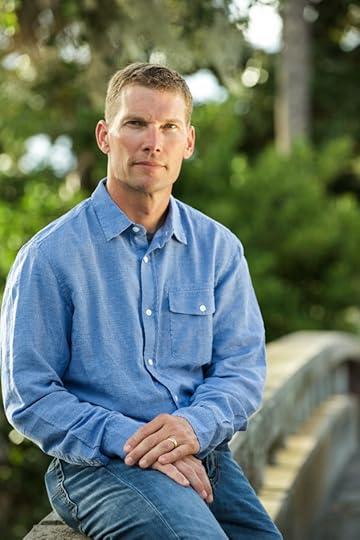
Charles Martin is the author of 13 novels. His newest book is nonfiction and titled, What If It’s True?: A Storyteller’s Journey with Jesus[image error]. In it, “Charles ignites our imaginations as to what the life, ministry, death, and resurrection of Jesus Christ mean to us today.”
Charles shares the story behind his book and reads the first chapter for us here. I guarantee you will not be disappointed. Pre-order you copy here, and it will ship on January 29.
The post “Through the Inkeeper’s Eyes” with Guest Charles Martin appeared first on Shauna Letellier.
December 11, 2018
The Family Behind Bars
Two years ago I had the privilege of speaking to an extraordinary church. Like many churches who find themselves meeting in borrowed buildings, this little group met in a cafeteria. Folding chairs were arranged in rows in lieu of church pews. A long line of stainless steel counter-top stretched behind the congregants where a sound booth ought to have been. The words to Christmas hymns were not projected onto a flimsy silver screen, but onto stark white painted cinder blocks.
Congregants rolled a piano over the tile floor and arranged it beside the pulpit. The guitarist plugged in the amp and tuned to the piano. Singers gathered around a single microphone. My friend welcomed everyone and began the service with prayer.
It was much like any service you might attend in your town, except for one thing. This church met in the State Women’s Prison. The doors were not “swung wide open” for anyone to attend. There was no “Visitors Welcome” emblazoned on the marquee. Come to think of it, there was no marquee. Visitors were required to obtain a background check, fingerprinting, fill out forms, and give several weeks notice of their visit. I checked my cellphone and coat with the guard, and received an emergency call device to keep in my pocket. At the proper time, and not a moment before, two electronically controlled steel doors opened, and we were permitted to pass into the hall on the other side.
I sat sweating at the end of the front row as my friend prayed from the pulpit. Not because I was afraid of the surroundings, but because I have a love-hate relationship with public speaking. I am always grateful for the stressful privilege of sharing God’s grace, but I am always nervous. And sweaty.
I delivered my talk with shaking hands, a few tears, and an overwhelming sense of wonder at the Family of Christ. These were my sisters. They are women like you and me. A trained pianist. A bass player. Women who’d sung in children’s choir and swing choir. Readers who’d shopped at Barnes & Nobel. Worshipers who raised their hands while singing with Carrie Underwood, “Jesus take the wheel.” They are leaders gifted with initiative and ideas. They are mammas and sisters and daughters. Though they are temporarily in prison, they are permanently in Christ. And despite their circumstances, they serve their sisters at the Church of Hope.
Delightful Indictment
The good news of the gospel recounts the punishment of The Innocent One while the guilty walk free. I wondered how those terms settled on the ears of those suffocating in the language of legal briefs, attorneys, and indictments, particularly around Christmastime. “Christmas is an indictment before it is a delight,” writes John Piper. “Jesus Christ came into the world to save sinners…” (1 Timothy 1:15).
It brings to mind my favorite quote from Sally Lloyd-Jones in her Jesus Storybook Bible when she tells of Jesus calling his disciples.
Who would make good helpers, do you think? Clever ones? Rich ones? Strong, important ones? Some people might think so, but I’m sure by now you don’t need me to tell you they’d be wrong. Because the people God uses don’t have to know a lot of things, or have a lot of things–they just have to need him a lot.
Perhaps this is where my sisters in prison have an advantage. Their circumstances make them more acutely aware of a need for a Savior. Please note, I did not say they need a Savior more, but I suspect they are are more aware of the universal, spiritual need for Christ. If we are not aware of the consequences of our sin we have no idea we need a Savior, and Christmas becomes a strange, over-the-top recounting of a wintertime fable. But if we know and acknowledge our need for Jesus to rescue us from that which seeks to destroy us, then Christ’s birth is exceedingly good news.
An angel once declared to terrified shepherds on a Bethlehem hillside, “I bring you good news that will cause great joy for all the people. Today in the town of David a Savior has been born to you.” (Luke 2:10-11).
The gospel is still good news for all the people. For prisoners and people “on the outside,” for felons and fakers, for those who pray, “Jesus take the wheel,” and for those who use the same lyric as a hashtag.
Our environments are different, but our need for Christ is identical. Our struggles manifest themselves differently, but at the root we are the same. We pray for strength to say “no” to sin, even when our bodies are screaming to say yes. We fight addictions to chemicals and food. We numb unwanted feelings with drinks or endless scrolling. We struggle to trust God to provide for our needs. We ache when it seems he has not heard. We grieve what we cannot do for our children. We worry, and then we return to His word to find the stabilizing truth that “Christ came into the world to save sinners.” (1 Timothy 1:15). When he saved them, he cried out, “It is finished.”
It’s the reason we call crucifixion day “Good” Friday, and the reason a baby in an obscure feed box is cause for a merry celebration. For the Family of Christ in every locale–fancy or foreign–what began as an indictment becomes the thrill of hope and the reason we delight.
If the good news of Christ’s descent to Earth sounds old and familiar, consider taking a fresh look at the story this year with my Advent e-devotional. To get your free copy click here.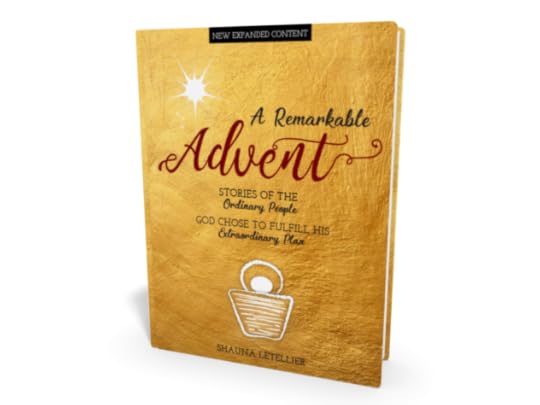
The post The Family Behind Bars appeared first on Shauna Letellier.
November 24, 2018
How to Celebrate Advent…for all ages
If you’ve been around here very long you know I love the Advent season. Though I didn’t know much about it growing up, it’s been a life-giving practice in my adulthood. If “Advent” is new to you, it’s simply the four week period leading up to Christmas. Churches often have a special scripture reading and light a candle each of the four Sundays before Christmas. Individuals and families might light candles on an advent wreath and read a daily or weekly devotional that prepares their heart to worship throughout the season.
Last year, I stumbled upon several incredible resources, and I have been waiting ALL YEAR LONG to share them with you! I have used them and loved them. Any of these resources will move you toward Jesus, and relight the embers of a love that might have grown dim through the year.
Daily Readings for Kids and Families
The Jesus Storybook Bible: Every Story Whispers His Name[image error] by Sally Lloyd Jones (
[image error] [image error]
Granted, it’s not a Christmas book. It’s not even a complete children’s Bible, but the subtitle says it all: “Every story whispers His name.” And so the author starts at the beginning and shows how each story in the Old Testament actually pointed to the coming of Jesus. If you begin reading the book on December 1, and read one story each night, on Christmas Eve you will finish with the story of the wise men bringing gifts to baby Jesus.
I don’t know if the publisher planned it that way or not, but it is my favorite Advent tradition. And this is the book where I make my boys humor me. I read it out loud to them. Because I’m the mom. (Watch for sale on Christianbook.com (Friday-Monday) when this full-color hard back is $5!!)
Daily Reading for Adults and Teens
Behold the Lamb of God[image error]: An Advent Narrative by Russ Ramsey (
[image error][image error]
With artful storytelling and bits of biblical history sprinkled throughout, Russ Ramsey is a gentle theologian. In 25 short chapters, he draws from Scripture and looks “toward both wonder and ground-level detail…he brings to life the people, the places, and the earth-shaking significance of the greatest story ever told—the true tall tale of the coming of Christ.” (quote from the back cover).
This was what I read in December last year, and I’ve been waiting all year to share it! Mine is dog-eared and underlined.
A Remarkable Advent: Stories of the Ordinary People God Chose to Fulfill His Extraordinary Plan (FREE)
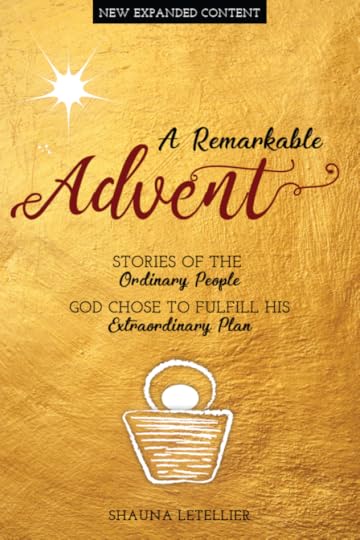
Sound familiar? This one is mine 
November 19, 2018
Cluttered Faith
I turned the doorknob with the precision of a safe cracker and closed their bedroom door. There couldn’t be so much as a click-clack to wake any of my five napping kiddos. I was too tired. Tired of meeting needs and feeling needy. Tired of being a grump and dealing with grumpy kids. Tired of trying so hard to be a faithful example and failing so often. Tired of praying for things to get better while circumstances remained unchanged.
I tiptoed over squeaky floorboards toward my living room and accidentally kicked a mound of unmatched socks. Books I meant to read were piled on my side table. My Bible laid opened on the ottoman, with red pen scribbled across the 91st Psalm and a three-year-old’s signature scrawled over the footnotes.
Collapsing in my armchair, I began to cry. Not loudly, of course. I didn’t want to wake the nappers, which made the shoulder-shaking, headache-inducing cry that much more miserable. My overwhelming fatigue required release, but it had to be silent if I wanted to “have my cry” all alone. And I did.
{Read more… I had the privilege of writing at Kathi Lipp’s blog. Continue reading here.}
The post Cluttered Faith appeared first on Shauna Letellier.
November 1, 2018
Where is the Bright, New Day?
If your personal suffering has you straining into the distance aching for a shred of hope, or if national conflicts have you wishing for a better country, read on. I’ve invited my friend Glenna to be our guest this month. She’s a singer, speaker, adoptive mom, and a survivor of several long-term trials. She knows a little something about finding hope, and like an experienced guide, she leads us to the certain hope of our bright new day.
Every Sunday night we have movie and charcuterie night at our house. I slice up cheese and sausages, lay out crackers, pickles, dried fruit, and popcorn, and I put stacks of napkins on the coffee table in lieu of plates. Everyone puts on their pajamas, and we crowd around our snacks together on the floor.
Sometimes my husband and I introduce our kids to classic movies from our childhoods, and sometimes we rent the latest animated box office hit. It doesn’t really matter what the movie is about because at some point the plot will take us to a predictable point of disaster, followed quickly by the denouement when everything is put back together again.
On our most recent movie night, we watched an animated tale unfold with the same old classic story line of setting, rising action, climax, falling action, and resolution. It’s often between the climax and the falling action when the story seems to be irreparably broken. You know it will be fixed in the end, but first you have to feel the tension of a questionable outcome. True to form, our movie of the night seemed to be heading in a bleak direction when the protagonists were feared dead and the world they lived in was in absolute shambles. You’re pretty sure the story doesn’t end there, but you wonder how it can be fixed.
When we got to the bit between the climax and the falling action, our ten-year-old turned from the screen to look at us with questioning eyes and said, “Where is the bright, new day? I hate this part when everything is falling apart. We need the bright, new day to show up.”

My husband and I laughed because of course the bright, new day was only minutes away. This was an animated film, after all. Sure enough, the story righted itself and ended happily ever after. But I thought my son’s question was an interesting response to a broken story.
Our Broken Story
Because we’re always trying to think with a gospel lens, I think my son’s question is the one we often have when we look at a world that seems irreparably broken. Just in the last three weeks my husband has preached two funerals. In the last nine months, we’ve buried three church members. People we love have been diagnosed with diseases, lost loved ones, and have faced financial ruin. We watch earthquakes reduce nations overseas to rubble, and we struggle to reconcile the deep political divide in our own country.
Sometimes a psalmic “How long, O Lord?” is all we can muster when we look at the sin and suffering around us. When will the Lord fix a shattered story? Sometimes it’s the suffering we see in the mirror that begs the question. How long, O Lord?
I love that question because it sounds a lot like Where is the bright, new day? It suggests that there is a different ending coming, even if we can’t yet see it. As believers in Christ, we know that suffering and sin and death have only a short-term hold on us. We know that this bit between the climax and the falling action feels long, but one day the Lord will return and we’ll have a denouement like no fiction writer could ever imagine. The gospel story follows the classic story line but comes with a double resolution.
The Double Denouement
The first climax of the big gospel story occurred at a manger, a cross, and an empty tomb, and reconciled us to God. But the gospel story doesn’t end there. Though the kingdom has come, it is still coming, and the centuries-long tension that begs the question, Where is the bright, new day? will shatter when the King shows up as a warrior to right all the brokenness of earth. He’ll come to judge those who have rejected Him and raise those who have hoped in Him. Death will not have the final say for the people of God. Jesus will. His first victory secured a coming, final one.
Paul says to the Colossians, “When Christ, who is your life appears, then you will also appear with Him in glory” (3:4). Glory is coming, and with it our rest and resolution. Christ is our bright, new day, and His coming is sure even when we find ourselves standing in the rubble of a broken story line. The resolution is sure because our hope is sure. If you’re struggling to put the pieces back together after an explosion of grief and heartache, if you’re staring down your final chapter with fear, if you’re looking for the bright, new day without success, know that for those who are in Christ, the happiest of endings is still coming. He is our bright, new day, and in the end (which will also be our new beginning) He will bring all the resolution our hearts could ever hope for.
Dear friends, we are God’s children now, and what we will be has not yet been revealed. We know that when He appears we will be like Him because we will see Him as He is. And everyone who has this hope in Him purifies himself just as He is pure. (1 John 3:2-3)
{This article first appeared on GlennaMarshall.com on October 8, 2018}
 Glenna Marshall is married to her pastor, William, and lives in rural southeast Missouri, where she tries to keep up with her two energetic sons. Glenna is the author of The Promise Is His Presence (P&R, 2019). You can connect with her at glennamarshall.com, where she writes about suffering, biblical literacy, and God’s faithfulness.
October 2, 2018
When “Let Go and Let God” is Bad Advice
Around here, and maybe in your back yard too, the crops are drying up. Days are shorter. Evenings are cooler. Sunflowers have bowed their heads and corn stalks have gone crispy. The landscape isn’t as lovely as it was this summer, but brown fields mean harvest time is coming. It’s a perfect metaphor for the benefits of hanging on in brown and dry seasons of life. Today we have a guest who has written beautifully about “hanging on.” My friend and fellow author, Jennifer Dukes Lee is with us today sharing this beautiful excerpt from her new book “It’s All Under Control.” I think you’re going to see why I loved it, why I keep writing about it, and why I’m absolutely thrilled to have her as our guest today!!
When “Let Go and Let God” is Bad Advice
Sometimes “let go and let God” is bad advice. Let’s all take a deep breath and not let that sentence scare us.
I understand why “letting go” becomes our default phrase when we want to live surrendered to Jesus. “Letting go” definitely sounds more Jesus-approved than “hanging on.”
But there will be times when you simply can’t let go. You’ve got to hang on tight, as if your life depends upon it. It will feel like you’ve hitched a ride on the back side of a hurricane. Your hands will get calloused and cramped. This isn’t the kind of surrender we usually hear about, is it? This kind of sweat-on-the-brow surrender is fiery and wild. It will ask so much of you that it will hurt.
Perhaps you will be able to let go later. But not yet.
Don’t let go when it gets difficult. Let go only when it’s time.
Until then, hang on.
Scott and I had to hang on tight a few years ago when uncertainty hit our farm like a punch to the gut. Scott’s father, Paul, died of leukemia. Scott would not only grieve the loss of his father and business partner, he would also care for the land alone.
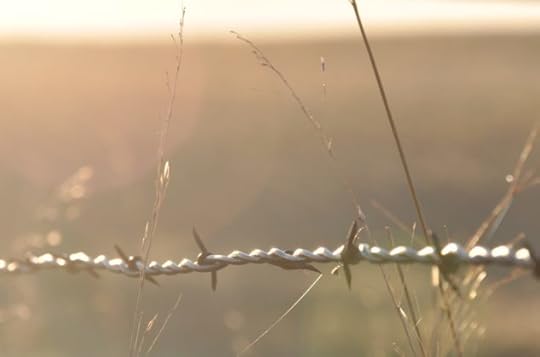
Paul died in the cold of winter. That spring, we were so grateful for the mercy of God when our crops grew tall, thickening over the rows so everything green was touching. There was something so beautiful and hopeful about that. It felt like everything was going to be okay, even though Paul’s old John Deere cap drooped, sad, on a nail by the back door.
We had hope.
But then October came. Not a single plant had been harvested when we awoke to find a thick blanket of snow covering the crops. The snow stole the hopefulness we’d felt earlier that year.
Late that afternoon, a farmer who lived a few miles away tapped his knuckles on the back door. I opened it and found him standing on the doormat with his fists shoved into a thick quilted jacket with a corduroy collar. He showed up at our house on a really hard day, during a really hard year.
“Scott home yet?” he asked. “No,” I told him. “Still doing chores.” “Well,” the farmer continued, “you just tell him that I stopped by because I want him to know something for certain. I want him to know that the harvest always comes. You’ll let him know?”
I nodded my head, feeling a catch in my throat.
The farmer had come to remind us, in his own way, what the Bible says about hanging on in hard times. “At the proper time we will reap a harvest if we do not give up” (Galatians 6:9, emphasis added).
Friend, I don’t know exactly what you’re going through. Maybe it feels like the harvest will never come. Maybe if feels like all hope is lost. Perhaps you want to “let go” or give up. But what if you need to hang on a little longer?
Today I’m the friend at your back door, tapping my knuckles to see if you’re home. I’m standing on your doormat to tell you the same thing the old farmer told me: “The harvest always comes.”
And I’m here to tell you that the farmer was right. Weeks after he stood on our stoop, the harvest did come. The snow melted, and Scott drove the old green combine back and forth across a gently sloping hill and harvested the crops.
Don’t give up, friend. Hang on when God tells you to hang on. He is still in this.
Hang on. Yes, it’s hard, but it might not be time to let go.
Hang on. This might be only a season, with relief around the corner.
Hang on. When you hang on with bravery, you emotionally strengthen others who are struggling to hang on themselves. You’re showing them that it’s possible to do hard things.
Hang on. For your marriage. For your kids. For your church. For the people that your ministry bravely serves. For the hurting. For your friends who don’t know if they can hang on anymore.
Hang on. Because Jesus will meet you in the middle of your hardest battles.
Hang on.
 Jennifer Dukes Lee is the wife of an Iowa farmer, mom to two girls, and an author. She loves queso and singing too loudly to songs with great harmony. Once upon a time, she didn’t believe in Jesus. Now, He’s her CEO. Jennifer’s newest book, It’s All Under Control, and a companion Bible study, are releasing today! This is a book for every woman who is hanging on tight and trying to get each day right―yet finding that life often feels out of control and chaotic.
 Adapted from It’s All under Control: A Journey of Letting Go, Hanging On, and Finding a Peace You Almost Forgot Was Possible by Jennifer Dukes Lee, from Tyndale House Publishers.
September 18, 2018
A Tale of Two Disciples
It’s no big secret that Peter is one of my favorite characters in the New Testament, and it’s not because he’s always a shining example of Christlikeness. I suspect many of us relate to Peter because he’s so…well, so much like us.
He was the disciple who worked all night long. He lent Jesus his boat and ferried him just beyond the shore where Jesus could teach the crowds with a little breathing room. Peter recognized power when he saw it, and he was quick to leave his nets and follow Jesus. He was the first to ask questions and the first to argue.
When things went badly, he forged through, taking the most reasonable course of action. He lied. He swung for the head of the High Priest’s servant. He ran away tormented by the fact that his determination to keep things headed in the right direction had led to the worst place Peter could have imagined. He tried to control the outcome in the most desperate and determined ways.
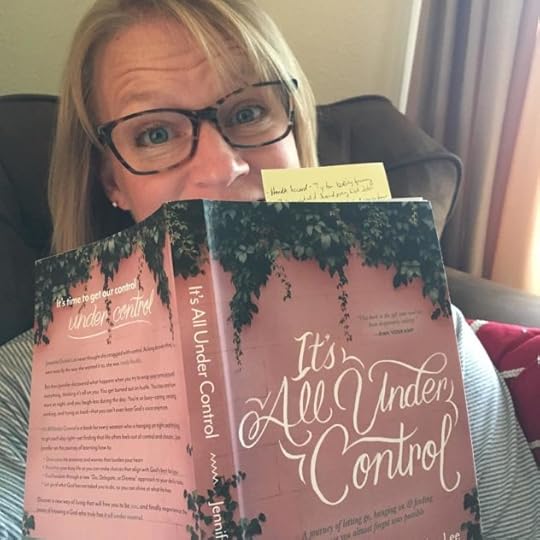
I recently read “It’s All Under Control,” by Jennifer Dukes Lee, and a particular line from the book keeps rattling around in my mind.
She makes a contrast between Peter and John, and writes, “I feel bad picking on Peter, but I’m guessing that Peter might have described himself as “the disciple who loves Jesus” instead of “the disciple whom Jesus loved.” (p. 54)
Perhaps it stood out because I find myself in that boat too (pun intended!). I want to serve Jesus and do what He asks of me, and I want to be “really good at it.” But sometimes my desire to be “really good at it” means I take on responsibilities I’m not called or equipped to shoulder.
The year after I graduated from college we were attending a small church. We were newlyweds with no kids, two incomes, and loads of free time. That Spring I was asked to direct the Vacation Bible School Program. Warning: the following is an unfiltered look into my heart. I was flattered. They barely knew me, but someone clearly perceived that at the ripe old age of 22, I was organized, intelligent, theologically sound enough to lead adults and children for a week.
Even though my only real-life experience was my childhood attendance at VBS, I said, “YES!”
Two days later, the same person called back to say, “Never mind. Someone else might be better suited.” And so began my volunteer work, where I was “fired” before I even started. (See also, my dismissal from jury duty.)
It’s stung a little, because they didn’t even have another volunteer in mind. But it also stung, because I wanted to be known as “the disciple who loves Jesus,” and directing VBS seemed like a great way to gain that reputation.
Turns out, directing VBS is a MONSTEROUS amount of work, collaboration, and preparation. I’m not fantastically gifted at organization, logistics, or decorating!
A decade later, in another state, at a new church, with my three young sons in tow, I found myself teaching the Bible story in a humid VBS classroom packed with preschoolers.
As I retold the Bible story about Daniel and the lion’s den—to children with mouths agape–I felt overwhelmed with gratitude for God’s love and care, for Daniel and for me. The fresh wonder on those faces–with Oreo crumbs crusted at the corners of their smiles—alerted me to the great privilege before me. This was not, as the hymnist wrote, an “old, old story.” God’s love, care and power were freshly astonishing to these young ones. The fact God had given me the great pleasure of sharing His power and care made my voice crack with emotion as I spoke.
As I recall those two different experiences, I wonder if the contrast in my own heart reflects the difference between Peter and John.
Jennifer Dukes Lee made this observation: “John was a dear friend of Jesus, one of the closest, and it’s indisputable that he loved Jesus deeply. Skim through the pages to see proof of John’s love for Jesus. How close he kept himself to the Teacher! See how John loved Jesus so much that he sat next to him at the t able in the upper room, how John was the disciple who stayed near the cross as Jesus died. At the end of his life, Jesus asked John to help care for his mother, Mary. The Gospel of John reveals the disciple’s great love for the Master.
But—get this—John doesn’t describe himself primarily as someone who loves Jesus. Instead, he identifies himself primarily as “the disciple whom Jesus loved.” (p. 53)
What a contrast from trying to be the awesome “disciple who loves Jesus,” to taking on the identity that Jesus’ friend John ascribed to himself. On the first-century equivalent of his lapels, John slapped a name tag that said, “Hello…my name is The Disciple Whom Jesus Loved.”
To be fair, the gospels tell us that when Jesus was arrested, “all his disciples deserted him and ran away.” (Mark 14:50, NLT) But sometime, perhaps the next morning, John came out of hiding. And in the following days, God’s love and grace for Peter would bring him back as well.
If the starting point of service to Christ is proving ourselves to others, to ourselves, or even to God, it will be an unsatisfying burden. And if our goal in serving His church is to control how others perceive us, spiritual disaster is not far off.
When we understand that we too are called, “the disciple whom Jesus loves,” service to Christ, because of his great love for us, becomes a delight. Not always easy and smooth, but always a satisfying joy.
“Because of his unceasing love for you, sometimes he’s going to ask you to say no. He will empower you to do it. Other times, he will ask you to give your brave yes. …Let all that you do be a response to Jesus’ love for you.” {p. 59}
On occasion, he may say “no” for you. In doing so he may deliver you from a train wreck you didn’t even see coming, in order to give you a gift didn’t envision.
{Quotations taken from It’s All Under Control: A journey of letting go, hanging on & finding a peace you almost forgot was possible by Jennifer Dukes Lee. Copyright © 2018. Used by permission of Tyndale House Publishers, Inc. All rights reserved.}
P.S. MAJOR GIVEAWAY!!

That’s Jennifer Dukes Lee ^^ the author!! I’m so excited to be a part of her HUGE giveaway to celebrate the release of It’s All Under Control. She and her publisher, Tyndale, are giving away 50 copies of the book in celebration of its release!
1. Giveaway ends September 30.
2. Winners will be notified by Tyndale House Publishers.
3. Enter below to win 
August 21, 2018
When the Story Comes True
 It was a story I’d heard all my life, or a version of it anyway. Yesterday, it came true.
My grandpa, the same one I wrote about last summer, who’s systematic prayer life explains a lot about my own life, was a storyteller extraordinaire. Besides that, he had learned his mother’s tried and true play-it-by-ear piano techniques—major and minor chords, the trilling of an octave, and a jolly be-bopping melody–and when he combined the two, it was a grand performance.
But his performances were limited to family rooms where wide-eyed grandchildren stood by listening to him spin a yarn where we were the heroes of the adventure. In his stories we made wise decisions. We attempted courageous endeavors, and in every episode we saved someone or rescued something.
I’m not sure my grandpa could have taught a class on the elements of a narrative with words like, “inciting incident,” “forward action,” “conflict,” or “resolution.” But the great thing about storytelling is that you don’t have to know what the parts are called, you just have to know how to use them. My grandpa was a master.
Imaginary Adventures
On our walk we’d come upon what writing instructors would call the “problem,” but Grandpa usually called it an injured animal.
He’d play the bouncing tune on the piano where you could feel yourself skipping to the beat when suddenly, he’d bang out three ominous chords. Dun-dun-duuun!
We’d jump, and the three strolling heroes would hear or see something alarming. Often it was an injured rabbit, which we would carry home to mom and beg her to help us nurse it back to health. Sometimes it was a nest of eggs fallen from a pine, or a mallard with a broken wing.
Occasionally, we’d accidentally stump him with questions, “But Grandpa, if I touch the nest the mamma bird won’t come back to her babies!” He’d quickly help us imagine that we’d brought gloves or that we could certainly maneuver a nest back onto a branch with sticks. We believed him.
He always included an element of urgency, too. It was almost evening. We were supposed to be home for supper. Rain clouds were rolling in. Even with the impending doom of darkness, storms or a suffering critter, he’d tap out a music-box melody as he convinced us that our fictional selves knew exactly how to splint the foot of a cottontail or hand-feed a robin.
In the end, the animal always healed, and I always found myself with a little lump in my throat as he described us releasing the restored animal into the wild.
Actual Adventures
When I walk in the mornings, I am regularly startled (see also, scared half to death!) by unseen animals crouched over nests or hidden in brush, until, unbeknownst to me, I get too close and they dash through the weeds or flutter from a branch. Pheasants make quite a racket when they take off, and in the stillness of a morning, it always sends my heart into my throat.
Yesterday, on my walk down to the lake, I heard the characteristic thumping of pheasant wings. Over and over the wings beat, but no bird emerged from the ditch. As I approached the roadside commotion, I saw a hen, scared by my closeness, but unable to take flight. I thought maybe she was trying to scare me away from chicks. But as I came closer I could see she was pinned down.
Our road had recently been resurfaced and rolls of straw stuffed into a plastic netting had been laid along the roadside to prevent washout. She had become tangled inside the straw-stuffed net. Her head and neck stuck through a tear in the netting, and with great effort she could flap her wings, but they were trapped inside the net.

I had the strangest sense of deja-vu. I have been here before. At age seven, I had walked an imaginary road with my siblings. At age 43, I was getting exercise along a road recently resurfaced by the state. When I came upon a problem, I knew what to do.
The plastic netting was sturdier than the bags that hold citrus fruit, and I had no knife. I thought I may need to bite through the netting, which involved some risk to my health. Bird Flu and Histoplasmosis for starters. Certainly I wanted to rescue the bird, but when it comes to wildlife in real life, I have my limits. I resolved not to put my lips on her feathers. I don’t think grandpa would have advised it, and I wonder how he’d have solved the conundrum. Most likely my brother would have remembered his pocket knife.
Unfortunately, my brother and his pocket knife were in Nebraska.
Eventually I ripped the net with my fingers and pulled it away, but she just sat there. Her wings worked, but too many furious efforts at flying away had left her despondent, and I’m sure I terrified her with my humanity. I lifted her a bit, and the instant she felt free, she flew.
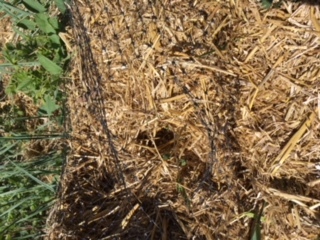
The netting and the straw. Admittedly, its not a great photo.