Shauna Letellier's Blog, page 3
March 23, 2021
Does it Seem Futile?

It’s time to leave the beach, and I dread making the announcement.
The beach has become a reprieve for me in the busy days of parenting our three little boys. They were born within three years, so we never had time to store the stroller. I just kept squeezing them in and strapping them on—the youngest in the proper seat, the middle son curled into the fabric basket beneath it, and the oldest straddling the stroller’s canopy.
Aside from a few squabbles over the good goggles and the buckets without cracks, the boys have been happy and entertained for hours. They are slippery with sunscreen. Sand clings to every inch of their skin and sticks in the creases of their chubby arms and legs.
But now it’s time to go. I try to soften the blow, “In five minutes, we’re going to start picking up our toys.”
“Noooo!” They protest and go on digging, scooping, and filling their sandpits with scoops of water, only to watch it seep away.
I shade my eyes and scan the beach for misplaced towels and water bottles. I toss forgotten shovels and rakes into a mesh toy bag so the sand will gradually fall off and stay at the beach. Sweat trickles down my temple, and when I wipe it away, I realize I’ve swiped sand from one side of my forehead to the other.
Finally, I give the fun-squashing direction, “It’s time to leave. Go wash off in the water.”
Shoulders slump. Heads drop. Protests erupt.
I herd them toward the water to wash away the sand. If they weren’t slathered in three applications of sunscreen, the process would go faster. I remember that hogs supposedly use mud as a sunscreen, and I try to make light of this task. “You’re muddy as a little pig. This sand caked on your neck probably kept you from getting sunburnt.”
The joke goes unnoticed, and as I’m dipping them in the lake, trying in vain to flush away oily sand, the fun officially stops. I’m irritated, and I start barking commands. “Stop. Hold still. Stand up.” I wash one son and send him to put on his flip-flops, but the sand is hot and burns his toes.
“Stand on the wet sand and wait for me,” I holler. He does, but not without kneeling in the sand…again.
When I have completed our de-sanding ritual, we pile toys and towels onto the stroller, and I shove it across the beach toward the car.
For the next 30 minutes, my life goal is to keep sand out of the car, as if my salvation depends on it.
If I can just stay ahead of the chaos to stave off my kids’ meltdowns and messes, then (I falsely believed) I was doing well and pleasing God. This manic race for cleanliness reflected the striving in my heart to stay in God’s good graces.
Back then, I didn’t understand that as a believer in Jesus, my standing before God was fixed. Because of Christ’s death and resurrection on my behalf, I was already in his good graces. In fact, I was “blameless in His sight” (Ephesians 1:4) regardless of how many meltdowns I was mitigating or how many pounds of sand I had to vacuum out of my car.
But on that hot summer day at the beach, I didn’t understand that yet.
So I brush off sand, wipe hands, shake towels, and bang flip-flops together.
Then, from under the stroller, I retrieve my most important ally in my war against sand: my ice cream bucket of cool water. I set it on the pavement, and I lift each boy by his armpits and dip his feet in the bucket. They swish their little toes around, and the water turns brown.
After I buckle them in their car seats, it’s my turn to wash my own feet.
The water is dirty, and my feet don’t really fit in the bucket. I stand on top of my sandals while I try to get every last grain off. Finally, I leap from my sandals into the car. I lean out the driver’s side door and grab my sandals to bang off the sand. Then I swirl the bucket’s sludge into a watery vortex and fling it into the parking lot.
Finally finished, I look around the car to discover that somehow, we are all still covered in sand.
I am reminded that foot-washing has always been a futile chore.
During Holy Week, Jesus knelt in that upper room to wash the feet of his disciples. Their feet were covered in dirt and dung left in the streets by livestock. It was a smelly job. By the time the twelfth pair of feet was clean, the water was filthy. The basin was half-empty, and the towel was sopping and gray.
Was Jesus shaking the towel, flinging dirt, wondering how in the world he was going to keep everything tidy?
I don’t think so because Jesus’s main goal wasn’t clean feet. “You do not realize now what I am doing, but later you will understand” (John 1:37), he told them.
“No,” said Peter, “you shall never wash my feet.” All of Peter’s bold-acting, fast-talking, hard-driving devotion to Jesus couldn’t keep him in God’s good graces. Peter didn’t understand that Jesus wasn’t as concerned about his feet as he was about his heart.
Friendship with Jesus requires a clean heart, but only Jesus can clean it up. Only he can brush away the oily sludge of angry insults we lob at people we should love. Only he can provide the solvent that cuts away the gritty sin that chafes, causes infection, and eventually brings death.
But Peter didn’t understand that yet because the cross was still to come.
Jesus would wash all his disciples’ feet that night as an example of service in a degrading and futile chore. Jesus would love them to the end. But they would still flee, deny, and betray him because a foot-washing, even when given by Jesus, doesn’t permanently cleanse the heart.
In a few short hours, Peter’s feet will be soiled again. He’ll kneel in a mudpuddle made with tears over his denial of the only Savior who could make him spiritually clean.
At the cross, Jesus endured the punishment that Peter—and you and I—deserved. He felt the burning wrath of his Father against the sin that injures the people he loves. The futility of scrubbing away dirt to make oneself appear holy will finally be revealed for what it is: a symbol, not a solvent.
God will wring from his Son the true solvent—the only detergent that can permanently wash away the sin that clings.
A few weeks later, the Resurrected Christ will invite Peter to walk along the beach and talk. With one question asked three times—Do you love me?—Jesus will assure Peter that his place in God’s Kingdom is secured. He’s been permanently cleansed, even if there is sand stuck between his toes just now.
It’s time for him to leave the beach too. He’s got good news to share. Jesus doesn’t say, “It’s futile.” He says, “It is finished.”
Remembering Holy Week: A 5-Day DevotionalOnce again, in preparation for Easter, I’m offering my free Holy Week devotional. Sign up below to receive your free copy.
The post Does it Seem Futile? appeared first on Shauna Letellier.


March 3, 2021
Waylaid

Hiram woke to the sound of ripping fabric. He tasted blood and felt gravel digging into his cheek. He tried to open his eyes, but only one would yield. Through a single slit of vision, he saw an empty water pouch lying in the middle of the road, its torn edges curled as they baked in the sun. If he could just reach it, maybe there’d be one drop. But his limbs would not obey.
Sandals shuffled around his head, and dust settled on his lips. Fabric ripped again. Cool liquid drenched his wounded hand and sent raging pain through his arm. Hiram groaned and shut his eye in exhaustion.
***
When he awoke, he was on his back, and the sun was gone. Fuzzy lines ran along the ceiling forming corners. Stone shelves jutted from the wall. An oil lamp flickered on an unfamiliar table cluttered with several glass bottles, and a figure sat hunched in a corner chair beside it. Hiram gasped. His quick breath induced a cough, and pain tore through his ribs.
The slumping figure jumped up and swept the bottles from the table into a satchel. Hiram heard them clank together. One crashed onto the floor, and Hiram smelled wine. The man mumbled and bent, disappearing from Hiram’s view. When the man reappeared, he stared at Hiram as if wondering whether he was awake. His head covering was frayed, and his cloak was smeared with blood.
Hiram wanted to scream, but he could only manage a shallow breath. He felt cold and leaden.
The man shook his head, tipped a bottle to his own lips, and then sighed. Warm, fermented breath settled over Hiram like a nauseating fog. The man covered Hiram’s mouth with a rag soaked in balsam, and Hiram nearly choked on the pungent smell. He tried to yell, but a gurgling groan was all that came out. Hiram thrashed to free himself from the intoxicating aroma, but when he tried to sit up, stabbing pain ripped through his shoulder and arms. He fell limp, unable to fight.
When the door latch clicked, Hiram turned toward the noise and watched the man with the torn head covering slip through the doorway. Coins and bottles clinked together in his satchel as he hurried away.
***
Hiram woke to muffled voices and realized he could now open both eyes, but the sunlight flooding the room forced them shut again. A dull ache galloped in his head, and he winced to the cadence. Every beat rushed in his ears and drowned out the conversation so that he only heard every other word.
The door creaked open, and a robust woman waddled through carrying a pot. Steam curled upward, and Hiram smelled meat. The corner chair was empty, and the table was cleared of bottles. She set the pot on the table and dragged it toward his bed. It scraped across the floor with a groaning protest as if it didn’t want to move either.
Hiram reached for his ears to block out the scraping noise, and when he did, he saw a blood-soaked bandage wrapped around his hand. His other arm was heavy with torn linen strips wrapped from his elbow to his wrist.
“Who are you?” Hiram whispered.
“I’m Anna,” she said as she tugged the chair toward the bed. “And who are you?”
“Hiram,” he paused and then remembered, “of Jerusalem.”
“Ahh. Then Shalom, Hiram. Can you sit up a bit?”
He tried and moaned, “My ribs…”
“Yes, I’m sure.” She dipped a spoon in the pot and brought it to his lips. “Bone broth.”
As soon as Hiram swallowed it, she was ready with another spoonful. “Where are my things?” he asked.
Anna held the dripping spoon over the pot and looked behind her and all around the room. “I don’t see them. Did you leave them with the innkeeper?” Another spoonful was at his lips.
Hiram didn’t remember coming in or where he’d left his water pouch, his satchel, or his money. He shivered.
“Isn’t the broth warming you?” She laid the spoon on the table, “Hope you haven’t got the fever.” She stood, and her chair scraped against the floor again. “When a body’s been flung around the desert and leaked blood, it’s bound to react.” She ducked out of sight, then pulled another blanket from under the bed and draped it over his legs. “Soldiers come through here worse off than you, though.”
The thought of Roman soldiers made him uneasy and reminded him he was somewhere he hadn’t planned to be. The weight of the extra blanket and the warmth of the soup made him drowsy again, but he felt afraid to sleep.
“You’ve got soldiers laid up in here too?”
“Not right now, but I’ve got several other travelers just like you. Bloodied as butchers.” She shook her head.
As Anna tipped the pot and loaded the spoon, Hiram asked, “Who was in here last night?”
“Nobody,” she stiffened, “I gotta sleep too.”
“Somebody was,” he pointed to the empty corner where the chair had been.
“Not a chance.” Her brow furrowed, and she stopped spooning. “Plenty of bad fellows passing by, but none gets in here.” She pointed to the window. “Guards,” she nodded. “They’re always patrolling. Rome gets its taxes, and we get their protection.”
“There was a man in here,” Hiram insisted, “And he wasn’t a guard.”
She stood and hugged the empty pot. “I’ll ask the innkeeper about your things.”
And before he could ask when he’d arrived or how he’d stumbled in, she left.
He knew what he saw. Whoever it was had sneaked past the guards, the innkeeper, and Anna.
Dread crept from his stomach to his neck, and his head began to throb again.
However Hiram had gotten himself here, staying meant he’d be racking up a debt he’d have to pay before he could leave. But he could not work. He couldn’t even stand. He vowed to rest, eat, and drink as well as he could so he could leave as soon as possible and keep his obligations to a minimum.
But rest wouldn’t come. He tried to recall the man’s face, but it had appeared dark and fuzzy. In his mind, he could only see the blood smeared across his cloak and the ripped linen framing his face. He remembered the sound of coins jingling in the satchel, and he cursed his fate.
Anna returned in the evening with two warm loaves of barley bread, white curds of cheese, and the bad news Hiram had expected. Nothing that belonged to him was on deposit with the innkeeper.
With great effort, he sat up in bed and turned to hang his legs over the side. He rested his bound hand and wrapped arm upon the bedside table. “Anna,” he said, “I’ve been robbed.”
Anna cocked her head. “Of course. That’s why you’re here.” She tore the bread into pieces and slid a little bowl of olive oil towards him. “Can you dip it yourself?”
He showed her he could. “How long have I been here?”
She bit her lip and squinted. “Two days? Three? I can’t remember. I’ve got four mangled travelers in here, and I haven’t had a moment to write down a history of who came when.” She threw her hands in the air.
Hiram bit the end of the bandage on his hand and unwound the soiled strip. It dropped to the floor. “I can’t stay. I have no money to pay.”
“You wouldn’t be the first, but that’s not my concern.” She handed him another piece of bread. “You’re in no condition to travel.” She stooped to pick up the coiled bandage and held it out to him. “Look at that. It matches your cloak.” She laughed.
The same stitch that circled his sleeves ran the length of the bandage, now stained with dried blood.
“I’ll get water and a clean bandage,” she said, “But it won’t match your cloak.” The door slammed shut.
“It’s not my cloak,” Hiram said to himself. He hated feeling like a beggar. Lepers, Samaritans, and Romans were all accustomed to taking, but Hiram wasn’t. He pulled the green-stitched sleeve up to his elbow and made a weak fist. The cut on the back of his hand parted like a pair of thin lips.
Hiram was not strong enough to fight if the man returned, but he wanted his things back. But why would he return? He’d already taken everything. Hiram had nothing left but a borrowed cloak and mounting debt.
He glanced toward the window. Daylight burned his eyes and made his head ache again. If he meant to work himself out of this place, he’d better get started.
With great effort, he stood. Standing felt wonderful and horrible at the same time. He shuffled toward the window and shaded his eyes.
Outside, Roman guards flanked the entrance below him. A narrow road slithered past the gate, over the bare gray hills of the Judean wilderness, on down to Jericho. And suddenly, he remembered.
In the last light of the moon, Hiram had pulled his cloak tighter around his neck and started for Jericho. It had been foolish to travel alone at that hour. The guards at the city gate had mocked him for it, but Hiram hadn’t been deterred.
Romans were never in favor of anyone leaving their taxable jurisdiction.
But this was not Jericho.
The latch on the door clicked, and he flinched. The sudden motion sent pain through his ribs, shoulders, and head. Anna was back with bandages, a little clay pot, and a pitcher of water balanced on a wooden tray. “You’re up and about?”
She set the tray on the table and fetched him from the window. It was a good thing. Dark clouds fluttered at the edge of Hiram’s vision. His face went cold, and he collapsed onto the bed. When he raised his unwrapped hand to push the drumming from his temples, he smelled wine and balsam where the bandage had been.
Anna examined the gash and flushed it with water. She gently scrubbed dried blood from between his fingers. “Aren’t you going to flush it with wine or balsam?” he asked.
Anna wrinkled her nose. “Do you want it to sting?” She dried his hand, turning his palm toward the ceiling and then down toward the floor. “I only use honey for cuts like this.”
She lifted the lid from the tiny jar, twisted a wooden spoon, and dribbled honey across the back of his hand. When it was rewrapped, she asked. “Can you wiggle all your fingers?”
He could.
***
Hiram spent the next week trying to ward off headaches with sleep. When he was awake, he swung between hatred and fear of the man in his room that first night. When he tried to sleep, he found himself calculating the charges he’d incurred and concocting far-fetched plans for payment or escape.
The lump on his head had flattened, and the gash on his hand had sealed, though he didn’t dare make a fist for fear of opening it again. His ribs had stopped screaming with every breath. Anna had unwrapped his left arm, and aside from breathtaking pain when he bumped it, only the yellow stains of an atrocious bruise remained.
In the mornings, Hiram explored the inn, its courtyard, and the donkeys kept there. Every day, a man with a bandage covering one eye cleaned up after the donkeys corralled outside Hiram’s window, and that had given Hiram an idea.
He’d asked Anna what work he could do to defray the costs of his stay. “Don’t be ridiculous, Hiram. You need to rest. Besides, we don’t need you calling down curses on this place every time you bump that arm.”
But when he wouldn’t let the idea go, Anna became irritated. “If you’re dying of boredom, go feed the donkeys a few handfuls of barley straw. But do it in the dark before the stablehand gets there.”
“Will it count against my bill?”
“I have no idea. The innkeeper pays me to fix the beat-up men that stumble in here, and he thanks me to stay out of everything else. So if you get caught feeding those donkeys, don’t you dare say I knew.”
When Anna brought supper, she left a single copper coin. It was an insulting wage, but it was his way out. First, he’d buy a knife, maybe from a guard or a traveler. He held up the coin, and Anna shrugged her shoulders. “Don’t say a word about it,” she scolded. “You just keep getting yourself fresh air in the mornings and remind your legs what they’re supposed to do. If you lie down all day, you’ll be here longer than anybody wants.”
Every day he felt stronger, and if he stayed out of the sun, his headaches stayed away too.
***
As the lavender morning flamed into orange, Hiram let the donkeys nibble the last bits of straw from his hand. Anna had insisted he give only a handful to each, “You feeding them extra makes extra work for the stablehand,” Anna warned, “Be done before he’s up.”
A third donkey was tethered in the courtyard this morning, so Hiram hurried back to the stack of straw piled on the other side of their corral. The guest’s donkey took the straw from his hand in one chomp, and as soon as she swallowed, she bawled for more. Her braying grated on Hiram’s fragile nerves, and he didn’t want to rouse the one-eyed stablehand. When he reached to quiet her with a scratch on the nose, she swung her head and smacked Hiram’s bruised arm.
Hiram doubled over. He pressed his lips closed, exhaled loudly through his nose, and swallowed a string of curses. He silently cursed the donkey. He cursed this insulting little job and the offensive wage. He cursed the robber who’d sent him here. The donkey had scampered to the far side of the corral, and Hiram hurried indoors, still cradling his arm.
Inside, he saw a traveler settling accounts with the innkeeper. Stacks of silver lined the counter as the innkeeper calculated weeks and services rendered. “There will be a charge for the return trip, Natria,” said the innkeeper.
“Of course,” Natria answered. He reached for his satchel. When he hoisted it over his head and plopped it on the innkeeper’s table, bottles clinked together. A stack of coins slid to the floor and rolled in every direction.
Hiram froze. He had dreaded and anticipated this moment, but he never dreamed it would come to him here so soon. He clenched his teeth, balled his fists. His cut threatened to reopen, and his throbbing arm shook. He hadn’t earned enough to purchase so much as a knife, and the clay water pitcher on the counter wouldn’t do.
Natria knelt and gathered his money, counting as he collected it. The last coin had come to rest near Hiram’s feet, and when Natria stood, Hiram smelled wine and balsam.
The innkeeper looked up from the scale. “Well, there he is.” He pointed to Hiram. “Still alive.”
Natria turned to look at Hiram. “Oh. Yes.” He looked Hiram over. “I didn’t recognize you.”
“I don’t doubt it, you snake.” Hiram scowled. He pointed to the satchel and said, “Where’s mine?”
Natria backed toward the counter. The innkeeper squinted and asked, “Your what?”
“My satchel? My cloak? My money?” Hiram’s voice rose with each accusation, and his whole body quivered.
The innkeeper came around the table, “What are you talking about, you worm?” He stepped in front of Hiram. “Yours was stolen.”
“I know,” Hiram answered through gritted teeth as he pointed toward Natria.
“Ha!” the innkeeper laughed. “You were in a naked heap when Natria found you, and he hauled you in here with nothing but makeshift bandages and a borrowed cloak.”
Natria wedged himself between Hiram and the innkeeper. “I’m sure he has no memory of it. You saw him.”
The innkeeper’s ire waned, but Hiram began to shake with rage. The pounding in his head told him he needed to sit. He pulled out a chair, and the innkeeper hollered for Anna. She rushed in scolding, “You know the sunlight aggravates your head.”
Hiram felt a lump in his throat. His temples throbbed, and he squeezed his eyes shut. He cursed his weakness as Anna peppered him with questions. Had he been drinking the water she’d left upstairs? Had he slept well? Why was he roaming around? She promised bread and fresh milk as soon as he returned to his room, then she scurried away to prepare it.
The room had quieted, and Hiram cracked open one eye. The man with the satchel full of coins and bottles was gone.
The innkeeper returned to his scale and began wiping its pans clean and reordering the counterweights. He looked up from his work and thrust the dirty rag in Hiram’s direction. “Where’d you think that fancy cloak came from anyway?”
“You? Anna?” Hiram puzzled.
“A cloak from me?” He laughed and surveyed the room, “Am I running a Samaritan dress shop?” The innkeeper was exasperated, “It was Natria’s cloak!”
Hiram dropped his head and saw the green stitching on the hem of his sleeve. No wonder he hadn’t recognized it. He’d never had dealings with Samaritans, and here he was draped in a robe that was likely to get him kicked out of the synagogue. His skin should have been crawling. He should be scrambling to get it off.
“Is he gone?” Hiram asked.
“Can’t say I’d have stayed with that kind of treatment.” The innkeeper poured a stack of silver into a box and locked it.
Hiram was stunned and humiliated.
“I should find him.” Hiram tried to stand, but his head immediately began to pound, and he sat back down.
“Don’t bother,” the innkeeper laughed. “He only paid for you to go as far as Jerusalem, and he doesn’t live there.”
“He paid?”
The innkeeper cocked his head and squinted as if he expected Hiram to know. “Yes.”
Hiram felt heat drain from his face. “What do I owe?”
The innkeeper rolled his eyes. “Numbers are going to be tough for you now, I suppose.” He stopped what he was doing and looked straight at Hiram. “You owe nothing. It’s all been paid.”
************************************************************************
For many years, I thought the Good Samaritan was a story about doing good deeds. Everyone knows we ought to be kind and help people in need. When we say someone is a “Good Samaritan,” we mean they have done kind and probably unexpected deeds.
But as I read and reread Jesus’s story in the gospel of Luke, I discovered that one of the most remarkable aspects of the Good Samaritan is that he showed lovingkindness to a needy person who, in any other circumstance, wouldn’t have been caught dead with him.
He sacrificed clothing, medicine, strength, money, time, and perhaps his own reputation to rescue someone who hated him.
When Jesus told the story to a lawyer who wanted to justify himself without God’s help, it sounded pretty far-fetched, like a tall tale that was too silly to believe.
And I think that’s why Jesus had to tell a story to make his point. There was nothing he could point to, yet, that would encompass the scope of loving one’s neighbor. So as he traced an outline of the ultimate good neighbor, he stirred a longing within his listeners for a rescuer who would lay down his life for his friends as well as his enemies.
To some, the good news of the gospel still sounds like a far-fetched story of sacrificial love.
But believers who have been changed by it–who have gladly exchanged their sin and self-effort for the gift of Christ’s perfect record credited as theirs–they have remarkable stories.
If you have been in the metaphorical or literal ditch; if Christ has bandaged your wounds, cleaned them with the oil and wine of his sacrificial death, and restored your life; if you have found yourself in the safety of Christ’s declaration that all has been paid for you, would you tell that story?
The world is dying to hear it.
Want stories and devotionals like this sent directly to your inbox?The post Waylaid appeared first on Shauna Letellier.
February 17, 2021
The Far-Fetched Stories of Sacrificial Love
It’s hard to explain love to a preschooler. You’d be wasting your breath giving a definition like “warm personal attachment.” Instead, we read stories like The Runaway Bunny, in which a young bunny tries to run from his mamma, but she lovingly, and sometimes stealthily, finds him and brings him home. In addition to reading far-fetched stories, parents “explain” love by caring for the children, even when they don’t want us to.
Even adults find it hard to understand God’s over-the-top, spring-loaded desire to show mercy and lovingkindness to his children. That’s why God’s love also demands a story.
In his book, The Jesus I Never Knew, Phillip Yancey writes, “Since stories are easier to remember than concepts or outlines, the parables also helped preserve [Jesus’] message:…it is one thing to talk in abstract terms about the infinite, boundless love of God. It is quite another to tell of a man who lays down his life for his friends….”
The word parable comes from the Greek words “para”—alongside and “bole”—to throw. A parable is a story with familiar elements thrown alongside an unfamiliar truth. When we compare the two, we learn something new.
When Jesus told parables, he described familiar settings—a farmer’s field, a well-traveled road, a pasture. He depicted characters with whom his listeners could identify—a parent, a traveler, a herdsman. The familiar elements drew an outline of an unfamiliar kind of love.
In a culture that disowned rebellious children, he told of a father, waiting, watching, and finally running to meet his wasteful son (See Luke 15:11-32).
In a culture that reinforced ethnic biases, he told of a traveler who tore his own garments to bandage an enemy (See Luke 10:25-37).
In a culture that viewed possessions as a mark of God’s favor, he told of a shepherd who left his herd in search of a single lost lamb (Luke 15:1-7).
Through a series of vignettes, Jesus drew an outline of how he loves us. But his first-century listeners didn’t get the full picture. To them, his outline seemed like arbitrary scribbling.

When I was little, I loved art projects. Watercolors, tissue paper, crayons, and hot glue were my love language, but my creative genius outmatched my skill level and my scant art supplies. I cried when too much water and paint dissolved my paper and it tore. When my popsicle sticks wouldn’t stick together, I learned that even hot glue has its limits. My mom saw my disappointment and suggested a simpler alternative.
She taught me to scribble slowly.
I’d outline a huge figure-eight on my paper, and without picking up my pencil, I’d draw waves like frequencies through it. As a drawing, my slowly-scribbled wavelengths made no sense. My page was a design of intersecting curves and lines. But when I had scribbled from edge to edge, I had the outline for what would become my crayon mosaic.
I filled in every oddly shaped section with a different color. If there were more than 64 spaces, I ran out of crayons, but I’d reuse my favorites, making sure the last pink was far away from the first pink.
When I had colored the final space, it looked like stained glass—or Crayola-stained paper—and I was thrilled with my colorful masterpiece.
When Jesus told parables to outline the shape of his love, his listeners saw only scribbles.
What father welcomes a wasteful son? Who cares two cents about someone who hates you? What kind of irresponsible shepherd leaves a herd to find a measly, disoriented lamb?
They couldn’t imagine it. So he cast a vision for that kind of love with far-fetched stories to display a magnificent truth they wouldn’t understand until later.
The outline of God’s love was shaped like a cross, and Jesus colored it with the story of his life, death, and resurrection on our behalf.
It seems fitting that on the first day of Lent, the shape of God’s love is often drawn upon us.
God’s love was shaped like sacrifice. Not the kind that gives up fries or coffee, but the more-than-sufficient sacrifice of Jesus who laid down his life for people who didn’t know they needed him.
“Follow God’s example, therefore, as dearly loved children and walk in the way of love, just as Christ loved us and gave himself up for us as a fragrant offering and sacrifice to God” (Ephesians 5:1-2).
Could you throw a party for a kid who squandered half your net worth? Would you foot the hotel bill indefinitely for a person who hated you? Should you leave your job to chase down a disoriented employee and carry them to safety?
Sacrificial love is difficult by nature. Just ask Jesus. But it isn’t always that extreme.
Whether you observe Lent or not, life in Christ is characterized by sacrificial love all year long.
You can lay down your life for others by laying down your phone when they speak. You can give up your routine to give someone a ride. You can sacrifice your alone-time to talk with a lonely neighbor.
We don’t sacrifice chocolate or Netflix to get something in return. We sacrifice ourselves for the glory of God and the benefit of others because Christ did it for us first.
“We love because he first loved us” (1 John 4:19).
Sacrificial love rarely comes naturally, but it transforms the giver and the receiver. And people who are changed by sacrificial love have beautiful stories that can’t be explained but are hard to forget.
The post The Far-Fetched Stories of Sacrificial Love appeared first on Shauna Letellier.
January 6, 2021
Book Recommendations for 2021
Depending on which source you consult, between 300,000 and 328,000 books are published in the U.S. every year. Worldwide, 2.2 million new titles roll off the presses annually.
How do you decide what to read next?
Years ago, I resolved to keep track of the books I read. Since then, Goodreads has come along and made keeping track a whole lot easier. (If you’re on Goodreads, let’s connect here!)
If you need a few recommendations to begin your reading year with a bang, I’ve listed my favorite books from my three favorite genres below. {Each link is an “affiliate link,” which means, if you click the cover image and buy it, Amazon will pay me a few cents for recommending it to you, but you will not be charged anything extra.}
If you read any of these, I’d love to know what you thought!
Memoir
If I had to pick a favorite genre, it would be memoir. This year I heartily recommend three. None of them are new releases, but each one is beautifully written and had a powerful impact on me.[image error] I’m not sure why, but the memoirs I love most always include some profound tragedy. So when I say, “I LOVED this book!” I don’t mean I loved the devastation. I simply mean I was powerfully impacted by God’s penchant for bringing beauty from ashes.
The Waiting: The True Story of a Lost Child, a Lifetime of Longing, and a Miracle for a Mother Who Never Gave Up[image error]
[image error] [image error]
I hear about this story back in 2016 when the literary agent gave a little teaser about this profoundly redemptive story. But I didn’t know the first tragic scenes took place just a few hours from my house in a town I visit several times each year.
From the back cover: In 1928, 16-year-old Minka was on a picnic in the woods when she was assaulted and raped. And suddenly this innocent farm girl―who still thought the stork brought babies―was pregnant. The story that follows has been almost a hundred years in the making. After a lifetime of separation, Minka whispered an impossible prayer for the first time: Lord, I’d like to see Betty Jane before I die. What happened next was a miracle. Written by Cathy LaGrow (Minka’s granddaughter), The Waiting brings three generations of this most unusual family together over the course of a century in a story of faith that triumphs, forgiveness that sets us free, and love that never forgets.
Fire Road: The Napalm Girl’s Journey through the Horrors of War to Faith, Forgiveness, and Peace [image error]
[image error] [image error]
Fire Road was recommended by a reader after I posted by 2018 list. It only took me two years to get to this one, and it did not disappoint. I remember seeing this iconic photo when I was growing up. Now I know it’s origin and “the rest of the story,” as Paul Harvey might have said.
From the back cover: Get out! Run! We must leave this place! They are going to destroy this whole place! Go, children, run first! Go now!
These were the final shouts nine year-old Kim Phuc heard before her world dissolved into flames―before napalm bombs fell from the sky, burning away her clothing and searing deep into her skin. It’s a moment forever captured, an iconic image that has come to define the horror and violence of the Vietnam War. Kim was left for dead in a morgue; no one expected her to survive the attack. Napalm meant fire, and fire meant death.
Against all odds, Kim lived―but her journey toward healing was only beginning…
Fire Road is the true story of how she found the answer in a God who suffered Himself; a Savior who truly understood and cared about the depths of her pain. Fire Road is a story of horror and hope, a harrowing tale of a life changed in an instant―and the power and resilience that can only be found in the power of God’s mercy and love.
Peace Child: An Unforgettable Story of Primitive Jungle Treachery in the 20th Century
[image error] [image error]
Kurt’s cousin has been telling me about this one for years. When I was looking for a Christian memoir for my boys to read this summer, she recommended it again. It was a beautiful reminder that the gospel of Jesus Christ is good news for every tribe and nation. Christ has already laid the inroads to the human heart, and he empowers willing servants, like Don Richardson, to explain the gospel in culturally meaningful ways. My 15-year-old son especially enjoyed it.
From the back cover: In 1962, Don and Carol Richardson risked their lives to share the gospel with the Sawi people of New Guinea. Peace Child told their unforgettable story of living among these headhunting cannibals who valued treachery through fattening victims with friendship before the slaughter. God gave Don and Carol the key to the Sawi hearts via a redemptive analogy from their own mythology. The peace child became the secret to unlocking a value system that existed through generations over centuries, possibly millenniums, of time. This new edition of Peace Child will inspire a new generation of readers who need to hear this unforgettable story and the lessons it teaches us about communicating Christ in a meaningful way to those around us.
Nonfiction
Yes, I know, Memoir is nonfiction, but here are two Christian nonfiction recommendations I simply couldn’t leave out.
Gentle and Lowly: The Heart of Christ for Sinners and Sufferers [image error]
[image error] [image error]
Strangely, this book was recommended to me by Amazon. It was in that long line of “customers who bought this book also bought…” I rarely pay attention to those, but this title kept popping up. I don’t remember what stood out that made me click “buy now.” Perhaps it was simply God’s grace because Gentle & Lowly was hands-down the best book I read this year, and probably the best one I’ve read in a decade. If you read my October post, The Gospel According to Halloween, then you’ve already heard me gush.
Some books make you want to change yourself or change your world. This book mades me want to kneel in adoration and worship Christ.
From the introduction: This is a book about the heart of Christ. Who is he? Who is he really? What is most natural to him? What ignites within him most immediately as he moves toward sinners and sufferers? What flows out most freely, most instinctively? Who is he?
This book is written for the discouraged, the frustrated, the weary, the disenchanted, the cynical, the empty. Those running on fumes. Those whose Christian lives feel like constantly running up a descending escalator. Those of us who find ourselves thinking: “How could I mess up that bad—again?”
It is for that increasing suspicion that God’s patience with us is wearing thin. For those of us who know God loves us but suspect we have deeply disappointed him. Who have told others of the love of Christ yet wonder if—as for us—he harbors mild resentment. Who wonder if we have shipwrecked our lives beyond what can be repaired. Who are convinced we’ve permanently diminished our usefulness to the Lord. Who have been swept off our feet by perplexing pain and are wondering how we can keep living under such numbing darkness. Who look at our lives and know how to interpret the data only by concluding that God is fundamentally parsimonious.
It is written, in other words, for normal Christians. In short, it is for sinners and sufferers. How does Jesus feel about them? (Ortlund, Dane C. (2020-03-17T23:58:59). Gentle and Lowly . Crossway. Kindle Edition.)
Everyday Faithfulness: The Beauty of Ordinary Perseverance in a Demanding World (The Gospel Coalition) [image error]
[image error] [image error]
Everyday Faithfulness reminded me that nourishment from God’s word is more like the steady drip of an IV than an occasional shot of steroids to cure what’s ailing you. Marshal cites real life examples of women who remained faithful to Christ through the hardships and long season of life.
Tim Challies, a pastor, author, and blogger who recently and suddenly lost his son, wrote, “Learn your doctrine in peacetime so you can deploy it in war. When you know who God is you can trust him for what he does.” Glenna Marshall’s book embraces that sentiment.
From the back cover: What does Christian faithfulness look like when life feels unpredictable, hard, or just plain ordinary? We want to follow Jesus, but it’s easy to become more focused on our present situation than on a long view of faithfulness. Working through the unique challenges that come with seasons of waiting, caretaking, suffering, worry, spiritual dryness, and more, Everyday Faithfulness delves into practical ways to build habits into everyday life that will aid in spiritual growth throughout a lifetime.
Fiction
Neither of these would be categorized as “Christian Fiction,” but in both stories, the characters wrestle with the circumstances God inexplicably allows. Both books were beautifully written. And in keeping with my knack for choosing stories that emerge from tragedy, these two offer heartbreak, redemption and surprise.
The Book Woman of Troublesome Creek: A Novel [image error]
[image error] [image error]
From the back cover:
The hardscrabble folks of Troublesome Creek have to scrap for everything—everything except books, that is. Thanks to Roosevelt’s Kentucky Pack Horse Library Project, Troublesome’s got its very own traveling librarian, Cussy Mary Carter.
Cussy’s not only a book woman, however, she’s also the last of her kind, her skin a shade of blue unlike most anyone else. Not everyone is keen on Cussy’s family or the Library Project, and a Blue is often blamed for any whiff of trouble. If Cussy wants to bring the joy of books to the hill folks, she’s going to have to confront prejudice as old as the Appalachias and suspicion as deep as the holler.
Inspired by the true blue-skinned people of Kentucky and the brave and dedicated Kentucky Pack Horse library service of the 1930s, The Book Woman of Troublesome Creek is a story of raw courage, fierce strength, and one woman’s belief that books can carry us anywhere—even back home.
This Tender Land: A Novel [image error]
[image error] [image error]
From the back cover:
In the summer of 1932, on the banks of Minnesota’s Gilead River, Odie O’Banion is an orphan confined to the Lincoln Indian Training School, a pitiless place where his lively nature earns him the superintendent’s wrath. Forced to flee after committing a terrible crime, he and his brother, Albert, their best friend, Mose, and a brokenhearted little girl named Emmy steal away in a canoe, heading for the mighty Mississippi and a place to call their own.
Over the course of one summer, these four orphans journey into the unknown and cross paths with others who are adrift, from struggling farmers and traveling faith healers to displaced families and lost souls of all kinds. With the feel of a modern classic, This Tender Land is an enthralling, big-hearted epic that shows how the magnificent American landscape connects us all, haunts our dreams, and makes us whole.
Your turn!
What were your favorites this year? Comment below, or email me!
The post Book Recommendations for 2021 appeared first on Shauna Letellier.
December 2, 2020
A Monumental Christmas
A few years ago, I was driving around town doing the after-school shuffle. I dropped off my youngest at swim team and rushed to the middle school to pick up my middle son. One of his friends needed a ride, so I gladly ran him home. I planned to return library books and pick up a prescription before heading home for supper.
I was zipping around town, feeling super productive and on top of my taxi-mom game. So, I was slightly annoyed when the large red pickup in front of me slowed to a crawl.
Our town isn’t large, but we were on a main street. It runs past the state Capitol, the beautifully landscaped Capitol Lake, the middle school, and a myriad of government buildings. But all of that was in my rear-view mirror when the break lights jerked me from my vehicular efficiency.
I’m not one to road-rage, but I have been known to mumble while driving.
What are you doing?
Go. Go. Go.
But the big red pickup did not go.
The driver could have veered left and driven past the Governor’s mansion. He could have veered right to meet up with the highway that leads out of town.
Instead, he pulled over right where that main street forks and parked beside the triangular patch of grass between the two routes.
I was slightly alarmed when the driver’s side door opened. I wondered if I was about to become a victim of small-town road rage.
Was I following too close?
Had he seen me pound my steering wheel?
Maybe he could sense my irritation.
But he waved me around him, and I carefully passed him on the left.
“What on earth is he doing?” I mumbled.
As I glanced into my rear-view mirror, I saw him helping a little girl out of the passenger side. He took her by the hand, and they walked through the grass at the awkward and busy fork-in-the-road to view the monument standing at the center.
For 17 years, I’ve driven by that monument, but all I’ve seen was a triangular patch of poorly placed grass. I have never stopped to view the statue or read the plaque. I can’t tell you who it honors or what it commemorates because I’ve been too hurried to notice, much less stop.
A monument is something we build or display in memory of a person or event. It’s meant to be a gift to posterity so we can give the gift of honor and retell the story.
But if we never stop to look, read, or remember, we won’t properly honor the person or be able to tell others what happened there.
When God stopped the Jordan River so his people could enter the promised land, he told Joshua to have 12 men bring a stone out of the river to create a memorial, or a monument, so they could remember what God had done.
Joshua told the people that in the future, when their children ask, ‘What do these stones mean?” they’d be reminded to recount what God had done there (See Joshua 4:1-9).
Monuments help us remember.
‘Tis the season for many long-remembered traditions to surface. We string lights on evergreens. On the plains of the Midwest, even the cottonwoods are good candidates for a Christmas light display.
Retailers run sales on snow blowers and wrapping paper. Organizations host fundraisers and coat drives. Kids thumb through catalogs and make helpful lists for parents and Santa. Parents hide unwrapped gifts in nooks and crannies until they have a chance to wrap them.
Year after year, we happily, and sometimes frantically, whiz through the season without stopping to remember and tell about the reason our monumental traditions exist.
We plunged into this year with plans for a “2020 vision for the future.” But it turns out we couldn’t even see the forced slow-down that was just a few weeks away. We collectively pulled over on the thoroughfare of our schedules and parked for a while.
Your internal driver might be banging on the steering wheel of your calendar chanting, “Go. Go. Go.” But while you’re already slowed down, maybe you can park beside a monument you normally pass, even if the world zooms by.
Why do we celebrate Christmas? What was so monumental about it that we still celebrate? Who was there?
If we peer through history’s frosted window and look at Scripture, maybe we can get some answers.
If you’re ready to view the monuments that tell the story of what God has done for you, join me this month in reading Remarkable Advent.

Every day we’ll stop at one scene in the story of Christ’s birth. We’ll slow down to see who was there and what might have happened. We’ll honor the people who participated and the God who orchestrated it.
But we’ll find that we are the recipients of the gift that came to Bethlehem on that very first Christmas before anybody knew what Christmas was.
Slow down. Park yourself where you can reflect on God’s monumental goodness to us through the birth of Jesus.
If you’re not sure where to begin, here are a few suggestions.
Start with Scripture: Read Luke 2 and Matthew 1. If you’ve read it a million times and it sounds unremarkable, try reading it in a different version. Read it out loud or have someone read it aloud to you. You can also listen on your Bible App.
Read a daily Advent devotional to keep your heart and mind focused on the reason we celebrate. May I recommend Remarkable Advent (affiliate link), a 25-day devotional by me? Many families have used it as a daily read-aloud, and children as young as 6 have enjoyed it. (People as old as 78 have also enjoyed it…I’m looking at you, uncle Fred!)
Stick with your plan, and don’t quit just because you “missed a day” (I’m preaching to myself here!)
Don’t let anyone hurry you past Christmas, because Jesus isn’t merely worth remembering, he’s worth worshiping.
Come, and let us adore him.
Find my other Advent & Christmas book recommendations here.
The post A Monumental Christmas appeared first on Shauna Letellier.
November 18, 2020
The House a Dumpster Built & The Surprises Inside
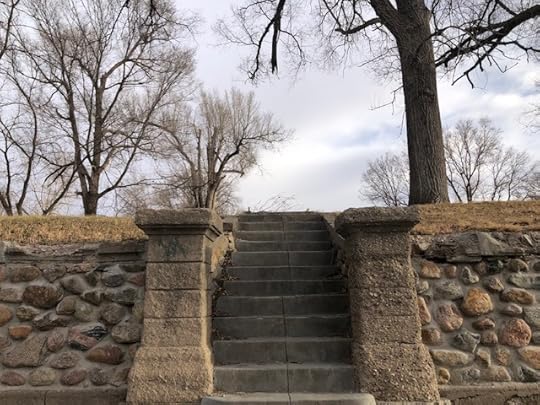
Even in the daylight, it looked like a scary movie set.
We stared through our minivan windows, waiting for Oliver to emerge from the scene. I double-checked the house number Oliver’s mom had given me.
My six-year-old son had invited two school friends to Wednesday night church. It felt like a throwback to the days of Sunday School busses. Since my grandpa had a CDL and the disposition of Andy Griffith, he was the driver. Since I was the oldest grandchild, I got to ride along.
I remember sitting in the first seat, wrangling an enormous bag of bubblegum, which I held out to every kid who climbed aboard. Before we got to church, the floor was littered with pink and blue wrappers, and the bus smelled of gum, exhaust, and Sunday morning hairspray.
Thirty years later, I was driving a minivan with no bubblegum to offer our guests. We picked up the girl and drove to the boy’s house. I was nostalgic and proud of my son’s kind invitation. In hindsight, it probably had more to do with his wanting capable dodgeball teammates for game time than it did with sharing God’s love. Either way, I saw it as a kind gesture.
I parked on the street, and my heart flipped. Its roof was steep with sagging peaks. The second story was white, and the sprawling first story was a patchwork of faded red siding, surely the mismatched remnants from a construction site dumpster. One upstairs window was cracked, and an air conditioning unit hung at an angle out of the other one.
The screen door to the porch was swung open, but I saw no activity. Broken plastic toys littered the yard. An old tree leaned away from the house. Its roots had clawed up through the dirt, and their ends were exposed where rain had washed away the soil.
I hoped I had the wrong address. Normally, I’d have sent the kids up to the door to fetch him, but I hesitated. I’ll give him another minute.
Sure enough, Oliver came bounding out. We opened the van door, and he hopped in.
“Hi, Oliver!” I greeted him. He smiled and buckled himself in.
Then, as six-year-olds are prone to do, my son asked the question on all our minds. “Oliver, is that your house?”
I glanced in the rear-view mirror in horror, searching Oliver’s face for signs of embarrassment. I was ready to pounce with a ludicrous redirection forged in the hot fires of a panicked mother’s mind.
I was considering, “Oh my goodness! There’s a three-legged unicorn!” or “For heaven’s sake! Is that a money tree?”
But before I could decide which one to ask, Oliver nodded and said, “Yeah.”
I held my breath.
A smile spread across my son’s face, and he and the little girl exclaimed in astonished unison, “That’s huuuuuge!”
In the rear-view mirror, I saw Oliver smile while the other two children refused to let their amazement die.
“That’s bigger than my house.”
“Yeah, mine too.”
“It’s the biggest.”
In my utter discomfort and fear of what might be said, I took control by asking questions about school lunch and recess.
A dozen years have passed since I first parked by that huge, haunted-looking house. Oliver’s family has moved. But every time I drive past, I recall my surprise and shock. And then I feel thankful.
I was surprised about the house, but I was shocked by the kindergarten dialogue in the back seat. Every time I drive by that house, I’m thankful for everything that was not said.
For good or for evil, experiences of shock and surprise sear memories into our minds. In positive instances of shock and surprise, those moments also generate heartfelt gratitude.
One of my favorite verses, Psalm 116:2, is seared into my mind, not because I used rote memorization strategies, but because its message surprised and shocked me.
I love the Lord, for he heard my voice;
he heard my cry for mercy.
Because he turned his ear to me…”
How do you suppose that verse ends?
If you’d made me guess ten years ago, I’d have said, “Because he turned his ear to me, I’d better not screw this up,” or “Because he turned his ear to me, I’d better pay him back.”
But the Psalmist’s lyrics record the surprising truth. “Because he turned his ear to me, I will call on him as long as I live,” (Psalm 116:2).
I had been worried God’s time for me was limited, and I was wasting my allotment with my neediness. I was afraid I’d receive notification about how I’d be charged for calling on him, something akin to “Messaging and data rates may apply.”
But God is not constrained by time. He’s reliable. Because he bends down to listen, like a father stoops to hear the whispers of his child, we have the privilege of calling on him as long as we have breath.
When I first read it, it shocked me. But as I read my Bible, I see that God has often used shock and surprise to cement his truth into people’s hearts. Once it was locked in, his people gratefully passed it along.
When Jesus told the story of the man who was beaten on the Jericho road, none of Jesus’ original listeners were surprised that three religious people passed by and ignored the dying man. After all, those busy folks had religious obligations to keep.
But the surprise that sent his listeners reeling in shock was that the man who knelt in the bloodied dirt on the side of the road, who bandaged wounds and hefted a grown man into a saddle, who transported him to shelter and paid for his expenses—that man was a person the original listeners hated. He had bad blood. He was from the wrong part of town, and he didn’t worship at the right place.
Jesus surprised them with the story, but perhaps it was the shock of his command, “Go and do likewise,” that seared it into the Apostle Peter’s heart. Years later, Peter told the story to Luke, who transcribed it in a letter we call the Gospel of Luke (See Luke 10:25-37).
Holy surprise begs to be shared.
A month ago, I drove by Oliver’s huge old house. The upstairs windows were boarded. The screen door was closed, and an excavator was parked on the city street. I felt sad. Not because I wanted anyone to live there, but because it housed a memory.
Holy surprise leaves a mental mark so that even after the occasion has passed, the house is razed, and your Bible has closed, you still remember.
This year has been a little like that old house—scary and patched together with remnants from a dumpster. We’ve been afraid of what might come out of the door. But it has also housed moments of holy surprise.

Because our schedule has slowed dramatically, I’ve been writing down those surprises in the form of a quick thank you note to God. No fancy sentences or metaphors. Just a few words at a time in the evenings.
“Thank you for all the time the boys have had to go fishing. I love walleye!”“Lord, thanks for the seven-minute, screen-free conversation with my teenage son.”“Thank you that his car was drivable after he hit the deer.”“Thank you for the athletic trainer who fixed the dislocated shoulder, so we didn’t have to visit the ER.”
To me, these are holy surprises. They are events and results I didn’t expect, but I’m exceedingly grateful for each one. Writing them down helps me remember God’s faithfulness even in a ramshackle house, banged-up car, and the strange uncertainty of 2020. Perhaps someday I’ll stop feeling surprised by his goodness, but I hope not.
What are the holy surprises you’ve witnessed this year that you won’t soon forget? Have you written them down or shared them with someone?
If not, I hope you will. It will bring glory to God, reassurance to you, and hope to the person who hears about your holy and surprising God.
The post The House a Dumpster Built & The Surprises Inside appeared first on Shauna Letellier.
October 28, 2020
The Gospel According to… Halloween?
What if the gospel is more like Halloween than Christmas?
If you grew up hearing that Halloween was the celebration of evil, you might feel as shocked as I did when the question was posed to me. When I considered how the two holidays might relate to the gospel, the thought of Halloween being a superior picture seemed downright heretical.
Until I took my youngest son trick-or-treating.
Costume design is not my forte, so my son dressed in his baseball pants, his team t-shirt, donned his ball glove, and went as a baseball player. As we strolled down the sidewalks, I counted about 27 princesses and nearly as many ninja warriors. A walking vending machine wobbled around us as we stepped up to ring a doorbell, and a few pixelated Minecraft characters flew across the yard, taking a shortcut to the next house.
Considering my own lack of costume-creativity, I was enthralled with the artful parade of of characters.
But there were also scary and downright disgusting costumes that made me want to cover the eyes of every tiny trick-or-treater on the street.
Hordes of people trickled down the sidewalks and streets, stumbling over cumbersome costumes, running door to door.
Head wounds.
Scars.
Feigned diseases.
A man with a supposed gouged eyeball.
Creatures limping and growling.
I stepped back for the wide view.
It occurred to me that Jesus’ earthly ministry was probably a little more like Halloween than I like to imagine.
I thought of Jesus and his disciples disembarking on Galilee’s eastern shore when they were startled by a mad man running and screaming at them. Broken chains dangled from his limbs, and his naked body bore a web of scars and scabs from self-inflicted wounds (Mark 5:1-8).
Disgusting.
Another time, after a horrific night at sea when his disciples mistook him for a ghost, Jesus stepped ashore at a place called Gennesaret. When the people there recognized him as the one who had fed a multitude on the other side of the lake, they brought all their sick friends, family, and neighbors to him.
Gross.
Parents brought him their children suffering from hacking coughs, oozing sores, injured limbs and faces. Desperate sufferers cried, moaning and hollering so they wouldn’t be overlooked. Mothers carried lethargic babies, and fathers cradled skeleton-like children.
People on the verge of physical and spiritual death flocked to Jesus. (Mark 6:45-56). They came in hordes from all over the surrounding country, begging him for help and hope. (Matthew 4:23-25)
And what did Jesus do when the helpless and harassed came running down the streets and shores to him?
He wasn’t disgusted. He had compassion on them. To him, they were like sheep without a shepherd, and as The Good Shepherd, he welcomed every desperate soul. He also taught them, spoke about the kingdom of God, healed their sick, and changed them (Matthew 9:35-36).
[image error] [image error]
In Dane Ortlund’s new book, Gentle and Lowly: The Heart of Christ for Sinners and Sufferers, he shines a glorious spotlight on the heart of Christ and who he is. Ortlund unpacks the biblical case for Christ’s most natural response to needy people who come to Jesus for help. “The posture most natural to him is not a pointed finger but open arms” (p.19).
Ortlund writes, “[Christ] does not cringe at reaching out and touching dirty sinners and numbed sufferers. Such embrace is precisely what he loves to do. He cannot bear to hold back. We naturally think of Jesus touching us the way a little boy reaches out to touch a slug for the first time—face screwed up, cautiously extending an arm, giving a yelp of disgust upon contact, and instantly withdrawing” (p. 24).
But, he continues, “…if the actions of Jesus are reflective of who he most deeply is, we cannot avoid the conclusion that it is the very fallenness which he came to undo that is most irresistibly attractive to him” (p. 30).
Ortlund expounds, describes, and biblically proves that the very heart of Christ (as well as what he has done) is the “wonderful extra good news” we sang about so many years ago in Sunday school.
Some books make you want to change yourself or change your world. This book made me want to kneel in adoration and worship Christ.

I don’t know if Jesus would have had a bowl of candy at his house or not. He never claimed a permanent earthly address. But I know that if he had, the line at his place would have been long because Jesus drew a crowd everywhere he went (Matthew 4:25).
The line wouldn’t have been moving fast, either. It was his life’s work to address physical and spiritual needs, and that takes time. His miracles weren’t “an interruption of the natural order but the restoration of the natural order. We are so used to a fallen world that sickness, disease, pain, and death seem natural. In fact, they are the interruption” (p. 31).
I suppose His disciples would try to hurry the line or disperse the children. Parents worried about getting home before dark might urge their children to “skip that house.” But I bet Jesus would tell them all, “Whoever welcomes one of these little children in my name welcomes me” (Mark 9:37).
“Let the little children come to me, and do not hinder them, for the kingdom of heaven belongs to such as these” (Matthew 19:14).
Jesus was never one to miss a teachable moment.
Whether we admit it or not, without Christ, we are spiritually helpless and harassed. Without Christ, we are the sinners and sufferers. It’s just that in the 21st century, we’ve figured out how to dress it up and rename it so we don’t come across as spiritual beggars–people unable to earn what we desperately need.
But the kingdom of heaven belongs to people like that.
Our best hope is to come to Jesus with empty hands, offering him nothing as payment for what we need and cannot buy:
Grace.
Mercy.
Forgiveness.
Everything that flows from his gentle and lowly heart.
And to everyone who receives him, to those who believe on his name, he GIVES the right to become children of God (John 1:12). No matter how you’re dressed. No matter how sick you’ve been, or how desperate you feel. He gives to everyone willing to receive what he is handing out.
Come empty. Leave full. Be changed by a Savior who delights in showing compassion and mercy to those who know they need it.
For the kingdom of heaven belongs to such as these.
The post The Gospel According to… Halloween? appeared first on Shauna Letellier.
September 9, 2020
God, what are you waiting for?
A dear friend of mine is about to plunge herself into a spiritual challenge of heroic proportions.
The problem is, she doesn’t realize it.
Right now, she’s just doing what’s in front of her and planning her next step of obedience. When I visited with her about increased responsibility, exponential stress, and a zillion “what ifs,” I found myself wishing she had someone to help her. For various reasons, the kind of help I can offer her is limited. She needs more, and I cannot provide it.
She’s remarkably capable. She has the constant presence of the Holy Spirit guiding her. But sometimes, life requires the help of a person with skin on.
We finished our conversation and discarded a pile of snotty tissues. Hard days are ahead, and I asked God, once again, “God, what are you waiting for? Hurry and send someone to help her!”
A few days later, I read this line from AW Tozer.
God never hurries. There are no deadlines against which he must work. Only to know this is to quiet our spirits and relax our nerves.
God has no deadlines.
For him, nothing takes too long. The ticking clock does not unnerve him. He’s s not wringing his hands worrying about fulfilling his plan before the timer goes off. Through the prophet Isaiah, God declared, “My purpose will be established, And I will accomplish all My good pleasure,” (Isaiah 46:10, NASB).
But from my perspective, my friend needs someone in a hurry. I charge God with tardiness. I wag my finger and ask again, “What are you waiting for?”
When I am waiting, I tend to wonder if God is working.

In first-century Jerusalem, just outside of the Temple grounds on the northeast side of the city, a pool of water was supposed to have healing power. Some claimed the sheep used for sacrifice were washed there and lent a healing property to the water. Some said an angel came to stir the waters on feast days, and the first to step in would be healed.
Whatever the mystery, disabled citizens congregated around the edges of a stone pool, staring into the water, waiting for God to work.
A blind man’s nephew led him to the edge and situated him on steps that descended into the water. A husband carried his frail and disabled wife through the streets. At the pool, he propped her against a pillar under the shade of the portico. A mother hummed a tune and rocked the child, lying limp in her lap, waiting and wondering.
One man has suffered from his disability for 38 years. How many times has he come to this pool? Do the waters only heal during the feast? Which days? Who makes the schedule? Has anyone witnessed the healing power of the water? Has a cripple ever dragged himself down those stairs, fallen into the water, and climbed back out with two strong legs?
No one knows. Infirmity surrounds the placid waters. They come and wait for God to work, but they do not see him.
Someone stoops to visit with the crippled man who says he hasn’t walked since childhood because no one stops to help him into that water. He hopes his story might convince an empathetic feast-goer to hoist him off the thin mat and drag him down the stairs. Maybe he could finally be the first one in.
Instead of lifting and supporting and enlisting help, the feast-goer told the man to get up, pick up his mat, and walk. Then he slipped away into the crowd.
A man who hasn’t walked for 38 years rolls up his mat and skips toward the Temple. (John 5:1-18).
No one is staring at the water.
 Photo by Ümit Bulut on Unsplash
Maybe you want to accuse Jesus of being 38 years late, but we don’t hear that complaint from the man with a mat tucked under his arm. The religious leaders accuse Jesus of working on the wrong day, and as proof, they point to the man tapping his foot to the beat of the worship music.
Whether we see God’s hand at work or not, whether we think he should hurry up or slow down, Jesus tells us, “My Father is always working, and so am I” (John 5:19, NLT).
His work is not restricted to certain days, and he’s not constrained by what we can conceive.
When you suppose he has misunderstood because he hasn’t helped a crippled man into the water, he’s at work in an unexpected way.
When you believe he’s inactive, Jesus is working to accomplish his purpose for you.
When you accuse him of being out of sync with your schedule, he works even when you rest.
What is he waiting for? He’s not waiting.
He’s working. But he’s never in a hurry.
A woman in her 70s recently told me that she and a group of friends had been praying for their church. In their estimation, there was a large group of pew-sitters who would not take spiritual responsibility in their families or church community. These women asked God to enliven the inactive, revive the spiritually dead, and provide godly leaders for their church and community.
But for 25 years, the inactive group sat in the pews picking hangnails and nodding off. It would have been a fine opportunity to ask, “God, what are you waiting for?” But the women kept praying.
They couldn’t see what God was doing, but they believed he was working because he had promised.
Some would call it a heartbreak and doubt God’s promise. Some would roll their eyes and say it was a futile waste of time. Because those people never did liven up.
But God was working just as he said he would.
And the children in the nursery and Sunday school classrooms, who left animal crackers in the pews and soapy hand prints on the bathroom mirrors, grew up to be the spiritual leaders for the next generation of that church.
What is God waiting for? He’s not waiting. He’s working.
Our job is to trust his unhurried timeline and remember that his purposes may include something we can’t imagine.
Such truth does “relax my nerves,” as Tozer says. It also makes me eager and watchful.
Instead of crying with my friend over the challenges before her and worrying that God is behind schedule in providing help, I can lean forward and say, “Let’s keep praying and watch for God to work.”
The post God, what are you waiting for? appeared first on Shauna Letellier.
June 2, 2020
Why this trial?
It’s often said, “You’ve either been through a trial, are going through a trial, or are headed for a trial.”
I’m not sure who first said it, but life sure has a way of validating the statement, doesn’t it?
Pandemic, anyone?
Add to that a thousand physical, emotional, and spiritual battles along the way, and we realize that to live is to face trials. Pandemic or not.
Doesn’t it make you long for a time when you can retire on a beach and cast your trials into the ocean? But by that time, I suspect we’ll be carrying the trials and concerns of a lifetime of people we’ve met or produced.
So when I bump into a passage of scripture like James 1:2-12, I feel offended at first.
“Consider it pure joy, my brothers and sisters, whenever you face trials of many kinds…”
Why? How? And what if I don’t want to?
It got me thinking about God’s purposes in trials.
Why does he allow them, and why do they seem so constant?
I kept reading in James and found a few answers and two liberating truths.
1. God’s purpose for trials in the life of a believer is to produce maturity.
When we face trials, we can know with certainty that God is producing spiritual perseverance. When we endure trials, God produces maturity. According to Jesus’ little brother, James, God’s purpose for trials in the life of a believer is to produce spiritual fortitude and maturity. Think of it as increased lung capacity for a long walk of obedience.
A mature person is wise, but trials have a way of making you feel like a big dumb-dumb. Who goes into a trial thinking, “Oh well, I know exactly what to do in this situation.” If that’s the case, you’re not really experiencing it as a trial. It’s just a task.
But if you don’t know what do to in your trial, James points you straight: “If any of you lacks wisdom, you should ask God, who gives generously to all without finding fault, and it will be given to you. (James 1:5)
When we don’t know what to do with the trials we’re facing, God gives wisdom. He gives it generously, and he gives it to everyone without criticizing or finding fault.
I love the J.B. Philips paraphrase of that verse: “If any of you does not know how to meet any particular problem, he has only to ask God—who gives generously to all without making them feel foolish or guilty.”
Do you feel foolish or guilty asking God to grant wisdom in your trial? Do you hear some jerk in your head mocking, “Good grief, you ought to have this figured out by now!” Rest assured those accusations are not from God.
But when we ask God for wisdom, there is one condition James gives. “When you ask, you must believe and not doubt,” which is to say, we must ask God in faith.
What does it mean to “ask God in faith?” Should I shut my eyes and think hard about what I want to happen? Should I wish on a star then crack one eye open to see if God’s doing what I wished?
Nope. That strategy is brought to you via Disney movies. Believers have something better. We ask the creator of the stars.
But when we ask, we must believe that the wisdom he gives is true and good and worth heeding.
Sometimes we behave as though we’ll ask God what we should do—“Lord, what is the wise thing to do in this trial?”–and then we wait around to evaluate his response to see if it’s something we prefer and approve of.
That’s the opposite of asking in faith.
And if that’s the route I take, I had better buckle up for a dizzying ride that’s likely to cause spiritual motion sickness.

Photo by Mourad Saadi on Unsplash
“The one who doubts is like a wave of the sea, blown and tossed by the wind. That person should not expect to receive anything from the Lord. Such a person is double-minded and unstable in all they do.” (James 1:6-7).
Instead of being led by wisdom, I’ll lose my footing in my trial. I’ll be tossed wherever the unpredictable winds of doubt and feeling and circumstance drive me.
Picture an inflated pink innertube sunning itself on the beach like a misplaced donut.
Suddenly, a gust of wind flips it into the air. It rolls and bounces down the beach and splashes into the water. Whitecaps slap it around, and that pink floaty hurtles toward the middle of the lake. It is tossed by the wind with nothing to anchor it down.
When we ask God for wisdom but hesitate to heed it, we’ll find ourselves tossed like that pink river floaty. We know we ought to “trust in the Lord with all our hearts and lean not on our own understanding” (Proverbs 3:5), but when we waver about God’s wisdom, the only thing left to lean on is our own understanding.
And that’s a little ironic, because we didn’t know what to do in the first place.
It’s the very definition of the unstable doublemindedness (James 1:8).
Sometimes we don’t realize we’re doubleminded until we’re neck-deep in water with sand washing out from under our feet. So God allows a trial to reveal to us the true object of our faith.
2. God’s purpose for trials in the life of a believer is to prove faith’s authenticity and reward it.
In the past, I’ve wondered if God was dishing out hard stuff, waiting for me to face plant, and watching to see if I’d act happy about it. But the bookends of this passage (verses 2 and 12) tell me something much different.
“Blessed is the one who perseveres under trial because, having stood the test, that person will receive the crown of life that the Lord has promised to those who love him (James 1:12).
God uses the tool of trials to prove the authenticity of your faith to you.
As God provides wisdom and builds endurance in you through your trials, your faith is validated and demonstrated to you!
To persevere does not mean you must “endure” by staying in a bad job. It does not mean you earn points with God for choosing an unnecessarily hard path.
It means that in trial after trial, you remained dependent on Jesus. You turned your face to him for wisdom. You thanked him that regardless of the outcome of the trial, you are secure in Christ because of the gospel.
God rewards the person who endured by depending on Him.
And after we have stood the test, God reward believers with the “crown of life.” It’s a picture of the blessing God gives as a prize to those who’s faith was authenticated by their perseverance.
“These trials will show that your faith is genuine. It is being tested as fire tests and purifies gold—though your faith is far more precious than mere gold. So when your faith remains strong through many trials, it will bring you much praise and glory and honor on the day when Jesus Christ is revealed to the whole world.” (1 Peter 1:7-9, NLT)
God’s purpose for trials in the life of a believer is to prove the authenticity of your faith to you and to reward it.
Through trials, God proves himself trustworthy, he proves our faith genuine, and by means of both, our love for God grows.
In short, we mature. And that brings joy.
What is tossing you around?
What trial are you dreading?
Is it a pregnancy? A treatment? A test result? A conversation with your boss, your coworker, your husband, or your child?
View it as the vehicle through which God will generously dump wisdom–biblical skill for the art of living– into your mind and heart.
What trial is so discouraging that it’s nearly suffocating you?
Lack of connection? Lack of sleep? Lack of spiritual health in yourself, your family, or your church? Is it the financial grenades that keep landing in your bank account? Is it the chronic health problem in your family that is not likely to go away?
In their present intensity and form, those trials will end, and God will build your endurance.
If you find yourself being smacked by whitecaps like a river floaty, you can turn your face to Jesus at any moment and anchor-down.
In the gospel, Jesus is like a strong dad who fires up the boat to chase a rogue floaty. He scoops it out of the water, straps it to the boat and secures it. The wind blows, the floaty flutters under the strap, but it is secured.
When we are discouraged, doubting, or distrusting, our position in Christ is secured.
And the fact that you return to the good news of the gospel is the outward evidence of your inward faith.
The crown of life is not awarded those who deserve it, it is given to those who love him (James 1:12).
God gives wisdom. Through Christ’s redeeming work, he has secured you, and he will bring you through.
Consider it all joy.
The post Why this trial? appeared first on Shauna Letellier.
May 4, 2020
What to Do When You Don’t Know What to Do
It’s the phone greeting no one wants. For a parent, those five words have the power to rev up the circulatory system and unleash a maximum dose of adrenaline.
It was a gorgeous day, and since everything in our entire schedule had been canceled, my son went fishing. He drove our four-wheeler less than a quarter of a mile to the nearest shoreline to see if anything was biting.
He’d been gone a couple hours when he called.
“Mom, I have a problem.”
Before he had a chance to elaborate, I felt the blood drain from my face and dump into my heart (Hey, I’m no Doctor. I’m just describing the feeling