
Srini Pillay's Blog, page 4
July 5, 2017
4 Mindset Practices to Help You Make Better Decisions
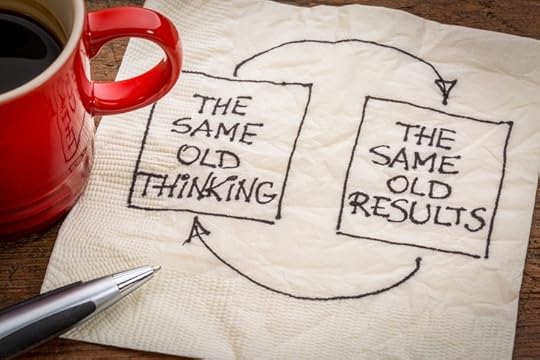
Making decisions can be quite challenging. When we are trying to decide what to eat for dinner, or if we should get married, it helps when our thoughts are clear. Yet, such clarity is often elusive. Either we settle for whatever first comes to mind or we hastily choose an option because we are running out of time. In the case of dinner, we may rely on our usual go-tos: pizza, tacos, rotisserie chicken or whatever meets our eyes at the local supermarket. And in the relationship scenario, depending on what we choose, we may either be knee deep in diapers, debt, and drool, or left feeling destitute, disillusioned and down in the dumps. Often, we try to cope with such decisions by rationalizing them and trying to see the good in our choices. But a life led on autopilot can quickly become a slippery slope of foggy regrets and unconscious self-sabotage.
How then, can we have clearer minds? And is this even possible? That’s the question that religious scholar Houston Smith asked the philosopher Jiddu Krishnamurti in 1968, but he received a somewhat perplexing answer. Krishnamurti, known for his utter clarity of mind himself, explained that it is in fact possible to achieve complete lucidity. Yet, he added, one could not do this by following anyone else’s methods. Such clarity of thought requires complete freedom from authority.
This paradox was frustrating to Smith, to say the least. After all, he wanted Krishnamurti to tell him how to achieve complete lucidity. But Krishnamurti was insistent that there were no generic methods when it came to the important questions in life. We’ve got to dig deep within ourselves to find what works for us.
Of course, in simple matters like using a computer or trying to find a store, following instructions can be very helpful indeed. Yet, when it comes to the big questions — how to achieve happiness — how to achieve a sense of purpose — how to succeed at the highest level with one’s work — the answers are far more complex, and following instructions would be akin to following instructions to an orgasm. It’s too mechanical and it just doesn’t work.
To be free from authority implies that one has integrated the opinions of others and come up with a solution that reflects a deep connection with one’s self. When you follow someone else’s methods, you never feel like you are leading your life. If it is happiness or a sense of purpose that you seek, you need to adjust your mindset to find the answers within. The four practices below will get you off to a good start.
Find inspiration: When you look within, you may at first be disillusioned to find nothing of material significance. But don’t lose heart. It takes time for ideas to dislodge themselves and make themselves available. You may need to find some inspiration to get a jumpstart. And as I explain in my book, Tinker, Dabble, Doodle, Try, inspiration has a three-part architecture that you can rely on.
First, find an image or song that you find beautiful. Keep a library called “My aesthetic library” so that you always have these files available if you need them. Then, after you look at it for a while, go for a walk and allow your mind to wander. Following the walk, sit down to see what actions your brain has decided on while you were daydreaming. Repeat this every day.
Accept your contradictions: You may also be spooked by the contradictions that are within you — how you love your children, but hate your life that is taken up by them; how you feel both content but restless at the same time; how you are happy on the outside, but also sad and lonely on the inside. You don’t have to choose between these opposites. Its best if you let your mind find a way to bring these ideas together. There is a new and more integrated you that is waiting to find its power.
Each week, write out two things that seems to be in conflict about yourself. Then ponder how you might be both of these things at the same time, or each at different times.
Use the mentality of a child learning to walk: A child who is learning to walk may fall down several times, but not walking is not an option. Children will keep trying until they master walking.
Similar to a determined toddler, hold onto what you need to, but find your deepest determination in the same way that a child will try his or her hardest to get to the upright position. Recognize that we don’t generally do this because we don’t have the energy or motivation. We must build this energy by building downtimes into our days. Manage your energy and not just your time.
Reset your brain by pausing frequently: Your brain is not built to run on empty. Like a car, it needs fuel too. And unfocus circuits in your brain need to be activated to help your focus circuits replenish their energy — these circuits both work together in your brain. Without this rest, you may be filled with answers, but without collecting your thoughts, they will be unavailable and ineffective.
To be sure, there are other things that you will need to clarify your thoughts as well. But these four mechanisms: inspiration, acceptance of your paradoxes, striving for you deepest determination and frequent brain resets will allow you to dig deep while conserving your brain’s resources at the same time. That’s what will clear your thoughts. And its how you will get doubt out of your way to reach your goals too.
To learn more about techniques that will help you manage your energy, get a copy of my new book “ Tinker, Dabble, Doodle, Try: Unlock the Power of the Unfocused Mind ” (Ballantine Books, 2017) — voted one of 50 best books for the beach this summer by Coastal Living.

4 Mindset Practices to Help You Make Better Decisions was originally published in MAQTOOB For Entrepreneurs on Medium, where people are continuing the conversation by highlighting and responding to this story.


June 28, 2017
How to Manage “The Bad Times” as an Entrepreneur
Three practical tips to protect your brain.

Every entrepreneur goes through bad times. Whether you are trying to get your business ideas off the ground, raise capital, or distribute your products successfully, being an entrepreneur requires navigating hazardous emotional terrain. Fear, doubt, anger, shame and disappointment are just some of the emotions that can squelch your motivation and effort.
Those entrepreneurs who are successful learn how to manage these emotions successfully. A recent meta-analysis of 17 studies comprising 3810 entrepreneurs demonstrated that positive emotional attitudes correlate significantly with entrepreneurial success. Negative emotions have less of an impact.
This implies that as fearful, doubtful, angry, ashamed and disappointed as you may be, it is more important that you figure out a way to activate positive emotional states as well. Yet, even the most courageous, ardent and passionate individuals often find themselves staring in the dark, with no light at the end of the tunnel.
When times are bad, most people think to simply blast right through them, hunker down, and keep working. They focus on their work more intently. Yet recent brain research demonstrates that focusing alone is like trying to walk with one leg. There are “unfocus” circuits in the brain that work in tandem with “focus” circuits. These are not simply about distraction. They are about learning to pause to smell the roses — making connections — getting a bird’s eye view — and being more self-connected. Learning how to activate the unfocus circuits in the brain is critical for building a positive brain, even when the times are bad.
(1) Unfocus to activate your brain’s self-control mechanisms: When your feelings are out of control and you are plunging into despair, talk to yourself out loud, or in your head. Self-talk helps you regulate your emotions. You feel more “in control”, especially when you address yourself by name and speak in the second person. If you were Serena Williams going back to the baseline and need to boost your confidence, you would say, “C’mon Serena. You can crush this.”
Speaking to yourself as if you were someone else separates your negative emotions from your positive capabilities. This distancing decreases your stress and improves your confidence too. It can literally change your brain, driving blood away from your anxiety centers when you label your emotions.
Recommended action: Write out three motivational self-talk sentence pairs, each with your name in it, and then, a motivational statement. Schedule this into your calendar with a reminder three times today. When it pops up, read it out loud, authentically. e.g. “Pep-up Jack, you’ve won before; you can win again.
2. Unfocus to pump up your dopamine and opioids: Dopamine is a brain chemical. It’s what underlies “feeling good”, and it is nowhere to be found when times are bad. But there are ways to “drill” for dopamine in your brain, and one such way is called “possibility thinking.”
Possibility thinking means that you approach life with a different set of questions and a different frame of mind. You care less about the likelihood of success, because you want to be the exception. You simply care about whether it is possible. Even when there is no solution in sight, you believe in one. And you start your journey toward your success, learning as you go along.
Believing in positive outcomes increases dopamine — it activates reward pathways in the brain. It also increases opioids, your brain’s natural “chill” chemicals. This lowers your stress and helps you escape the downward spiral. Stress activates habits. Opioids are your way out of prior habits too.
Recommended action: In a 15-minute period, briefly answer the following questions.
In what three ways would you like your life to be an exception right now? (Speed of fund raising? Sudden belief in your idea?)
If what you wanted was possible, how would you feel?
To start your path toward your goal, what first step will you take today, knowing that you don’t “know”?
3. Unfocus to activate the self-circuits in your brain: What you call “self” is a combination of different brain regions being activated in your brain. One key circuit in which these regions connect is the brain’s unfocus circuit, a circuit that comes on when you take time-off from your tasks. Even if this feels like wasted time, time-off is a way of harvesting your brain’s greatest riches.
Research shows that when you unfocus, your brain collects more subtle memories and your core self is activated. To do this, go for a walk in nature, even in wild settings. It will enhance your creativity. Allow yourself to nap for 10 minutes if you need more clarity, for 90 minutes if you need more creativity.
Also spend more time in a “start-from scratch” mentality. Forget all the education, marketing advice, and conventional parlance about how to be successful. Ask yourself, “How do I think this will work?” This will activate your ingenuity, which is the purpose of connecting with your self-circuits in the first place.
Recommended action: Take 30 minutes to pen a start-from-scratch strategy. Forgetting all the “should do” and “must have” advice. For what you need, what original strategy can you devise. If you don’t come up with anything after the first 30 minutes, do it in the next 30 minutes that you have. You will be surprised by how much of the real you has been covered up by opinion and blocked off from expression.
Conclusion: Unfocus from the daily grind to use self-talk, possibility thinking and a “start-from-scratch” mentality. They will all help you to help your brain to carve out time for positive thinking and feeling that is so necessary for entrepreneurial success.
If you are interested in more ideas for rewiring your brain for greater positivity to manage the bad times, get a copy of “Tinker, Dabble, Doodle, Try: Unlock the Power of the Unfocused Mind” (Ballantine Books, 2017) voted one of Coastal Living’s 50 Best Books for the Beach This Summer.
How to Manage “The Bad Times” as an Entrepreneur was originally published in MAQTOOB For Entrepreneurs on Medium, where people are continuing the conversation by highlighting and responding to this story.
June 11, 2017
How to Be Productive When You’re in a Food Coma
The Busy Person’s Siesta
 Food Coma Is Not The Only Option After a Heart Meal
Have you ever found it difficult to concentrate because you were too hungry, only to discover after your meal that you could barely keep your eyes open? If you answered “yes”, you’re not alone. Sleepiness after a meal is so common, that the term that describes it — “food coma” — was added to the Oxford Dictionary in 2014. In fact, after the age of 40, 77% of men complain of sleepiness after meals. There are no readily available statistics for women, but they are not immune either.
When you’re on vacation, food coma may be part and parcel of your day, but in the middle of a workday, it can disrupt your productivity. Trying to force your eyes open during this slump is usually futile. You simply end up dragging yourself through your work at a snail’s pace.
Contrary to what many people think, food coma is not due to blood leaving your brain for your stomach. And though there are dietary changes that you can make, the proper food balance is not always easy. Given these challenges, what might you do to be productive when you’re in a food coma?
In my book, “Tinker, Dabble, Doodle, Try: Unlock the Power of the Unfocused Mind”, I outline a plethora of things that you can do. Below, are a select few that you can try today.
Take a 10-minute nap: Rather than fight through the slump, you may actually want to cave to it in one of several ways, depending on what your next goal is. If it is clarity of mind that you are seeking, then consider taking a 10-minute nap. According to sleep researcher Nicole Lovato, this will likely reactivate “wake-active” brain cells to keep you on task. Other studies have also shown that if you nap for less than 30-minutes, you improve your ability to learn and amp up your performance as well.
Take a 90-minute nap: If you need to be more creative after lunch, it may be worth your time to invest a full 90 minutes in napping rather than trying to be creative with a sleepy brain. This allows you to get into deeper REM sleep, and you will wake up with your brain having had a chance to shuttle around and recombine memories and ideas in novel ways.
Engage in positive constructive daydreaming: Half the battle of trying to stay awake is the effort it takes to go from sleepy to being awake. But what if went from sleepy to daydreaming instead? It’s a smaller leap, and there’s a way that you can do it that can be restorative too.
When you plan time for daydreaming, turn your attention inward as you imagine something playful or wishful like floating on your back in a pool, or playing poker with your friends. When you do, especially if you are doing something low-key like walking, knitting or gardening, you will allow your brain to recycle the energy it needs to properly attend afterward.
Participate in rough-and-tumble play: If you’re working from home, it may be time to take a break to play with your kids. Aside from napping with them, you might think to engage in rough-and-tumble play. A little play-wrestling, for instance, will improve your attention, and revitalize your day so that you can get back to work more fully charged. Of course, you’d have to avoid throwing up if you’re too full, but you can assess if you can pull this off.
Move your body: You may think to go from sleepy to complete inaction, but what if you were to build more action into your day? You can literally give your ideas some legs by going for a walk outside. (It’s even better than walking on a treadmill.) It will likely make you more creative if you don’t stick to straight lines in your walking routines too. When you walk, your mind becomes more exploratory, and you make connections between ideas that you would not otherwise make.
Doodle on that conference call: You may be really relieved that nobody can see your head on your desk as you participate in a conference call, but what if you could do that and remember more? In 2009, psychologist Jackie Andrade and her colleagues found that doodling improves memory by 29%. When you take your brain off high-alert, especially if you’re already dragging, doodling will help you keep it more flexible, like a sponge. It will absorb more information.
All of these methods will keep you out of the nether region of food coma. For years, many cultures have valued the siesta, which itself can be quite restorative. These methods are the working man’s siesta — a form of not resisting or just relenting to the flow, but interacting with it, so that you can emerge from your food coma revitalized, more creative and ready for the rest of your day.
To learn more nifty ways to harness your brain’s special capacities when in “downtime” mode, get a copy of Tinker, Dabble, Doodle, Try: Unlock the Power of an Unfocused Mind (Balantine Books, 2017)

How to Be Productive When You’re in a Food Coma was originally published in MAQTOOB For Entrepreneurs on Medium, where people are continuing the conversation by highlighting and responding to this story.
May 31, 2017
Perspectives from High Achievers: Why Unfocus Is the Forgotten Ingredient of Success
5 Questions That Will Help You Raise Your Game
 Photo: Denijal Zemanic/iStockphoto
Whenever we encounter high achievers, they usually first attribute their success to focus. Yet, when you read between the lines, you will see that focus is only one half of the equation. The frequently forgotten partner of focus is unfocus — the ability to relax, let go, look in a different direction, and begin the journey within. Like the space between musical notes, unfocus is a key component of the melody of success.
The high achievers mentioned below embody the essence of unfocus. They show us that when you take the time for intelligent mental breaks, your brain will engage a very deep and important part of yourself too.
DABBLING — From the world of tennis: If you’ve ever seen Serena Williams in form, then you’ll know the laser-sharp focus that she commands in order to win. You may be tempted to believe that she eats, sleeps, and dreams tennis. Yet, when you look at her life more closely, you will see that she spends her time quite differently.
A consummate dabbler extraordinaire, she is anything but a dilettante. Rather, variety adds mental toughness to her life. She balances tennis with endorsement deals, clothing design, charity work, writing, and even painting. In fact, rather than her outside interests being a distraction, they give her the mental space to focus when she needs it.
Williams has been noted to say, “I’m Serena Williams on the court, but away I have so many different names. I call myself Butterfly.”
QUESTION for you: What parts of your “butterfly” self have you not liberated, acknowledged or incorporated in your life? Are there hobbies or activities you could include?
COURSE CORRECTION — From the world of leadership: How often have you heard people say that you need to stay the course, no matter what? On the surface, this kind of determination in the face of adversity sounds vital. Yet, when we think more deeply about it, there is a fine line between dumbness and determination. It is always important to be willing to change. Warren Bennis, leadership guru once said, “In life, change is inevitable. In business, change is vital.”
QUESTION for you: What one thing needs to change in your life right now?
HABIT DISSOLUTION — From the world of investments: In keeping with Bennis’s ideas on the importance of openness to change in leadership, business magnate Warren Buffett reminded us of an idea of Samuel Johnson when he once said, “Chains of habit are too light to be felt until they are too heavy to be broken.”
No matter what your “methods” for success are, you must continuously re-examine them so that your habits do not trap you. For each life task and phase, your habits should be examined and changed if necessary. Focus will keep you on the habit path. It is unfocus that will free you to examine and change your habits if necessary.
QUESTION for you: What one habit is holding you back? When will you change it?
DAYDREAMING — From the world of a novelist: Creative inspiration that is required for success comes from our moments of unfocus — when we are in the shower, on a hike, or working out. The 2006 recipient of the Nobel Prize in literature, Orhan Pamuk, once said: “what is a novel but a story that . . . answers and builds upon inspirations from unknown quarters, and seizes upon all the daydreams we’ve invented for our diversion, bringing them together into a meaningful whole?”
QUESTION for you: When will you build time into every day for daydreaming? Do you know the difference between helpful and unhelpful daydreaming?
CURIOSITY — From the world of an entrepreneur: Walt Disney was the entrepreneur who gave us “Snow White and the Seven Dwarfs”, “Dumbo” and “Cinderella.” In addition, he had the creativity and fortitude to conceive of Disneyland. In response to his career trajectory, he said, “We keep moving forward, opening new doors, and doing new things, because we’re curious and curiosity keeps leading us down new paths. Rather than focusing on one thing or one way of doing things, he asked questions and tried out new things. His amazing career was anything but solely focused.
QUESTION for you: What one curiosity will you explore today?
These five unfocus techniques will help you raise your success game. If you clarified the answers to even one question today, you will be on your way to a life of productive unfocus.
To learn more about other ways to unfocus to access your own greatness, check out my book, “Tinker, Dabble, Doodle, Try: Unlock the Power of the Unfocused Mind (Ballantine Books, 2017)”

Perspectives from High Achievers: Why Unfocus Is the Forgotten Ingredient of Success was originally published in MAQTOOB For Entrepreneurs on Medium, where people are continuing the conversation by highlighting and responding to this story.
May 17, 2017
Why Focusing on Your Goals Will Make You Poor

Many wealthy and successful people attribute their great successes to focus. For example, tennis sensation Serena Williams points to her laser-like focus to avoid distractions. And wealth creators Warren Buffet and Bill Gates used one word to describe the reason for their success — “focus.” On the surface, this sounds believable. Yet, on further examination, you will see that the secrets to their success are far more complex.
In contrast to consistent focus, in other interviews Williams has also added, “It’s important for us to set new goals and keep trying to innovate.” And she has emphasized that it is key for her to “stay focused and relax.” She may be focused, but she also needs some downtime and to frequently change things up.
When you look at the lifestyles of Buffet and Gates, they too need to build unfocus times into their days. Gates believes in “think weeks” — time away to ponder the future. And Buffet himself has said, “I insist on a lot of time being spent, almost every day, to just sit and think. That is very uncommon in American business.”
These statements may seem like overt contradictions, but they are part of the paradox of wealth creation. According to the most recent research, both focus and unfocus are essential for our brains to act optimally. On their own, each will likely impede even the most ambitious people on earth.
How focus blocks wealth creation (and questions to ask yourself):The “blinker” effect: When you focus, you effectively proceed through life with blinkers on. And the more you focus and stay fixed in your thinking, the less you will notice amazing opportunities.
Kodak, for example, was so fixed on optimizing traditional film capture, that they did not see the digital transformation that was happening all around them, leading to their demise. No matter what you are doing, add unfocus time to your day if you want to know what’s happening around you.
Question: What is happening around you? What are others doing that you are not? How is the competitive landscape to your work developing?
The “low beam” effect: When you’re in deep fog, it may make sense to look only at what is in front of you. But when you’re on an open road moving at top speed, your high beams are what will help you see ahead to avoid a deer crossing the road.
In wealth creation, this means that you would benefit from turning your “focus” beams off, and your “unfocus” beams on from time to time. This is what will help you see the impact of disruptive technology on your industry. And it’s what will help you know the competition that is ahead as well.
Question: Is there some unknown in your future that you are missing? Have you talked to people about upcoming trends? How will you adapt to these trends?
The “disconnected” effect: Some of the greatest wealth-creating opportunities have come from seeing connections. For example, Apple was able to see how a telephone, e-mail and music could live on the same device. You don’t get these kinds of insights from simply plodding ahead. Your brain needs time and the right conditions to make connections and develop these insights too.
Question: What connections are you missing in your own life? How would you connect 2–3 phases of your life? How would you connect two prior jobs to understand yourself more deeply? How might you connect two things that interest you?
The “reality” effect: Most people in the world are not wealthy. As a result, the probability of anyone being wealthy is low. Poor people live with this perspective of reality as a guideline. The wealthy dare to engage their imaginations to see beyond reality.
You have to turn to possibility-thinking, a way of navigating forward with questions, answers, and course correction, rather than one single way forward.
Question: What is one obstacle to your life? How have others in similar positions to you overcome it?
How unfocus can increase wealth creation (and questions to ask yourself):To be clear, I am not suggesting that distraction is the way forward. Rather, I am suggesting that you loosen up on the grip of focus. Ask new questions. And build unfocus time into your day to create new wealth.
Let’s say you are low to average wealthy. You may be tempted to procrastinate over your next career moves. Yet, the actual opportunity for wealth may be metaphorically on the other side of the horizon — you may not be able to see it from where you are in life. How do you then proceed with unfocus by your side?
Here’s a three step unfocus strategy that could help you get unstuck. Start working on this today.
1. Start with possibility thinking: Serena Williams beat Victoria Azarenka in the 2012 US Open, despite being 3–5 down in the final set with Azarenka serving. Most people would simply try to stay in the match. But that wasn’t what Williams said that she did in an interview after the match. Instead, she quickly calculated how many points she needed to win, and she went after them. The probability was that she would lose. But she simply focused on what was possible to win.
Possibility engages the brain’s unfocus network, and like our belief in placebo, it relaxes us because our natural opioids increase. It also increases the brain’s reward chemical — dopamine — and you feel more motivated to win.
Question: Do you believe that wealth creation is in the cards for you? Do you believe this deeply? Are you committed to this belief?
2. Navigate forward with your imagination: When you’re poor, your brain is also more cognitively compromised. Focusing on your life will just depress you more. That’s why you need to turn elsewhere. First, you need to have a growth mindset — the belief that your conditions can change. Studies show that this reverses the impact of poverty on achievement. Then, you need to imagine what you want.
This is not just some pie-in-the-sky idea. Imagination stimulates the movement areas of the brain. It serves as a kind of navigation and will help you refine your goals too. Imagining your next move or goal will get you out of the obstructive effects of poverty on your mindset, and you can refine this image as your learn new things too.
Question: Do you believe you can change something to increase your wealth? What one outcome do you imagine? A bigger house? More travel? Can you imagine this without any thinking about how you will get this during your imagination time?
3. Build in unfocus time like Gates, Williams and Buffet: Identify the slumps in your day to recharge your brain with unfocus. Mid-morning, after lunch and mid-afternoon are key targets. There are many ways to intelligently unfocus.
If you don’t have a lot of time, 10 minutes of napping will increase your clarity for wealth plans. Napping for 90 minutes will increase your creativity for wealth planning. Make walking a habit for a year, and it will engage your unfocus/creative circuits too. This stimulates creative thinking about solutions for wealth, and outdoor activities have a similar effect too. So even if you have a 9–5 office job, make outdoor activities part of your life today.
Question: What new unfocus time have you developed in your day?
Focus is an important part of the wealth-creation mindset. But without unfocus, it is sterile. It will turn off the very circuits in your brain that you need for possibility thinking, imagination, self-confidence and creativity. And as a result, it will likely drive you away from the wealth that you desire.
To learn more about building unfocus intelligently into your life, check out my new book, “Tinker, Dabble, Doodle, Try: Unlock the Power of the Unfocused Mind” (Ballantine Books, 2017)
May 15, 2017
3 Questions To Prevent “One Step at a Time” Thinking From Holding You Back
Learn how to unfocus to make greater strides in life

When you are overwhelmed by adversity, you may think of taking things “one step at a time”. Indeed, this approach can be quite comforting and gives you a greater sense of self-control and self-efficacy too. But there are instances when “one step at a time” thinking will let you down. Understanding when not to use this thinking may help you deal with difficulties or increase your speed of decision-making too. In order to prevent “one step at a time” thinking from hurting you, ask yourself the three questions below.
Am I low-balling my life? After a disappointment, you may feel deterred from having lofty goals. Sometimes it makes sense to stop and re-evaluate. But at other times, slowing down after a financial failure or when we you uncertain may simply be an excuse to avoid disappointment.
Called self-handicapping, people who are predisposed to avoiding failure over gaining success have more gray matter in the “conflict management” part of their brains. This allows them to suppress negative emotions. While this is helpful at times, when you are underestimating your potential, it makes you avoid negative emotions altogether. As a result, you may choose safe paths that limit your success. This amounts to self-sabotage.
How to avoid self-handicapping: In all cases, the antidote to self-handicapping is not to choose to be overwhelmed, but to make adjustments to the way you see failure. For example, see failure as “information” rather than “defamation”. When you do, failure will not deter you from seeking higher goals.
After you reframe the failure, ask yourself if you should consider upping your game. This may take the form of doing several things at once (not putting all of your eggs in one basket), or becoming even more agile than you were. Perhaps you will lead one project, but also play a smaller role in another — or you might listen to a book on tape while driving home instead of putting aside time to read it. In each case you do two things at once without overhwleming yourself.
Am I missing out on connections? There are countless examples of missed connections in business that have been costly. For example, in the late 1990’s, Gillette had a toothbrush unit (Braun) and a battery unit (Duracell), but they were late to market with a battery-powered toothbrush. Too much focus on putting one step in front of the other can make you miss out on connections.
How to avoid missing out on connections: There is a part of your brain that is wired for making connections. Called the frontopolar cortex, this region will map similarities and connections between ideas. But in order to do so, you have to take your eye off the next step, and look for connections instead. Maybe the next “step” is to stop and connect some of what you are doing, and not doing an entirely different thing altogether.
Should I be making a big leap? If you took one step across a deep and wide ravine, you might risk stepping into free fall. Sometimes, crossing a divide in life requires a leap of faith, and not just a single step. For example, leaving your current job to start your own business is risky, yet you will not necessarily be any happier staying at that job either.
How to take big leaps: Beliefs are “internal commands” to the brain, and the fuel that you often need to move forward. When you believe, it increases the reward-chemical dopamine in your brain. As a result, you feel more motivated. But to truly make those big leaps in life, you need what we call “approach motivation” — a gust of affirmation and self-connection to get you to your goal.
Although being focused is often the result of self-connection, being self-connected requires activating the brain’s “self” circuit first. This usually comes on when you are unfocused — not distracted‑but in a state of downtime or letting go. You can achieve this by incorporating walking in your daily routine for a year , or by simply closing your eyes and allowing your mind to wander. Start with a wishful and playful image like running through the woods with your dogs, or winning money at a slot machine. Then, let your mind wander off its leash for while. That’s when you will feel more self-connected. And there are many other ways to do this too.
There is a time and place for “one step at a time” thinking. It’s not every time. After you plan the size of your next step in life, ask yourself these three questions before you act on your plan. You’ll be likely to see how you are selling yourself short if you answer “yes” to any one them.
To read more on how you can take breaks intelligently and unfocus to ask the right questions, get a copy of Tinker, Dabble, Doodle, Try: Unlock the Power of The Unfocused Mind (May 2017, Ballantine Books.)

Srini Pillay's Blog

- Srini Pillay's profile
- 15 followers

