Lynn Farley-Rose's Blog, page 8
February 28, 2016
Hoarding Stories
In the past ten years or so, I’ve moved house five times and now it won’t be long until I move again. Several of those moves have involved significant downsizing and each time I’ve pruned my worldly goods a bit harder. But now as I edge into a new phase I’ve become even more ruthless. Unless an object is useful, beautiful or of genuine sentimental value, it goes. I’m trying to rid myself of delusions about what I will use, wear, read, watch or listen to in the future.

Fantasies about what we might be or do are a justification for holding onto things but so is the need to leave a trace. Without tangible reminders then there’s no proof that we ever existed. I’ve been thinking about this a lot recently since my friend, Helen, told me a story. She was helping one of her friends to clear some space and found a whole room full of memory boxes, each labelled with a different year. “Let’s look at this,” said Helen, lifting the lid on the one marked ‘2002’. At the top was a Motorola manual. “Have you still got the phone?” asked Helen. “No,” was the answer “but it might come in handy. I’ll keep that”. Then came several dental appointment cards. There were cinema tickets, too. The name of the film had faded past recognition but the fact that they’d been part of an Orange 2-for-1 deal was still legible. “I’ll hang onto those,” said the friend grabbing them, protectively. Next out of the box was a leaflet for the sexual health clinic. “You surely don’t want that, do you?” enquired Helen. The answer was inevitable.
I’ve found a different way to prove my existence to myself; I’ve written a book. Four and a half years ago I set out to have sixty treats before I was sixty. At that stage it was just a way of reconnecting with life. Many things had been on hold while I’d raised children and dealt with a few tricky blips. Each treat sat in the wings of my list like characters in a play and I didn’t know when they would step on-stage. But very soon after the first character, ‘Tate Liverpool’, spoke up, I realised that these were going to be rich experiences. Each was valuable because they were all things I’d longed to do, and I wanted to find a way to pin them down before they slipped back into the dark corners of the wings from which they’d come.
Three hundred years ago, young aristocrats on their Grand Tours of Europe would commission artists to record what they saw. Today we rely on photos. But that was never going to work for me as I’m a haphazard photographer. And even when I remember to point my camera in the right direction, they’re only a partial record. Photos can’t recount stories of the people I met, the information I discovered, the smells and tastes I experienced, and the unscheduled branch lines I darted down. Only words can do that. I mostly eschewed souvenirs too. That’s just a further route to ‘stuffocation’. So, what I did was to make some notes.
Then after six months something unexpected and devastating affected my world and I was thrown off balance. It was a great support to have family and friends but I knew that ultimately I had to create my own path through the chaos. So I turned to the characters who were waiting in the wings and like the best of friends, they revealed hidden depths in a crisis. ‘New York’ was a sassy friend who took me out and provided stimulating distraction. ‘Italian cookery’ cajoled me to eat when everything tasted like cardboard and ‘Riding’ provided a moment when the sheer physicality of being on a horse counterbalanced the unhappiness and I tipped into joy.

Throughout all of this I kept jotting down notes and gradually those notes became a few chapters. And somehow by a miraculous process, those chapters grew into a book. We all have certain things that grate on us and mine are the words ‘feisty’ and ‘suited and booted’. I’ve avoided those. Nor have I said anywhere that I’ve ‘been on a journey’ unless I have physically moved from one place to another. And I’ve been authentic to the best of my ability. Blagging only gets you into trouble as the novelist Ruth Rendell discovered. When she was a young journalist she filed a story about a local tennis club dinner and said that everyone there had thoroughly enjoyed it. The problem was that she’d failed to attend and therefore also failed to mention that the after-dinner speaker had collapsed and died half-way through the speech.
Now, at last after many stages the book is finished and next week I’ll receive the first printed copy complete with illustrations by the talented artist, Jo Dalton. I’d be delighted if some of you would read it when it’s published in May. And if you do then I hope that you’ll find something you can relate to from within the mixed hoard of stories.


February 14, 2016
Flirt Like a Rhinoceros

I’m always pleased when I learn a new word and this week it was ‘murmuration’. The BBC News website has a stunning video of an estimated 70,000 starlings soaring and swooping in unison over an Oxfordshire nature reserve. It’s described as aerial ballet and the term murmuration comes from the sound of the birds’ beating wings. No-one knows for sure what triggers this phenomenon but there are probably many reasons including grouping together for safety and warmth, and for exchanging information about feeding areas.
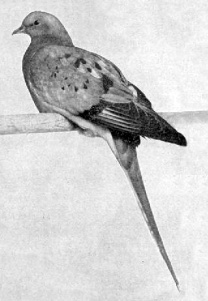
Seeing this video reminded me of the plight of the passenger pigeon. At one time these birds were amongst the most common in North America. The skies above the prairies would turn black and blot out the sun as billions passed overhead. An account from 1855 describes people in Ohio witnessing this event. Children screamed and ran for home, horses bolted and women hurried for the shelter of shops, gathering their long skirts as they ran. Some people knelt down and prayed in fear. Then the seemingly impossible happened: they became extinct—wiped out through shooting, netting and forest fires—with the last one dying in Cincinnati Zoo in 1914.
I learned about this extraordinary demise from watching David Attenborough’s Life of Birds. This is part of my Life on Earth treat. There are nine series covering all aspects of the natural world from the deepest oceans to the furthest reaches of the Poles and jungles. I wrote about Life in Cold Blood in a previous post—Serpent Tales.
Aside from the passenger pigeon there were a number of other moments that stood out in Life of Birds. As so often happens with treats, they filled in gaps in my knowledge of the world and gave me new things to relate to. Having kept poultry myself, I was particularly pleased to find out about chickens’ eggs. I’d often wondered why they only lay once a day, and now I have my answer. The yolk and the albumen sit in the chicken’s oviduct, and it takes a day for the glands to secrete enough lime to create the hard shell. Then I heard about the kiwi bird whose egg is a quarter of its own body weight; my eyes watered as I imagined giving birth to a baby weighing two and a half stone.

The grebes were remarkable too. They’re attentive parents and make their chicks eat feathers. These line their little tummies and protect them from being pierced by sharp fish bones.

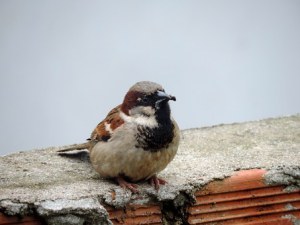
The series was filmed in 42 countries and whilst many of the birds seemed unfamiliar and exotic, I was glad that the humble sparrow got a mention. I discovered that they have markings on their feathers, like Army ranks, which denote where they come in the pecking order. There are the privates that have to give way to their superiors, and then there are the colonels with their black bib markings. All ranks defer to them. This finding changed me in one of the small ways that I welcome. Now, whenever I sit at an outdoor table in a café, I’ll enjoy the antics of the sparrows even more by knowing that they’re not as random as they seem.
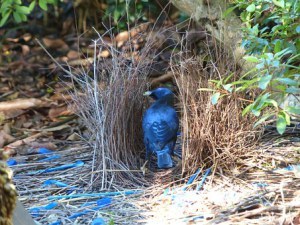
For me, though, the star was the bowerbird, also found in Australia. The male goes to great lengths to attract females. He builds a bower from sticks, positions it vertically, and then decorates the surrounding area with flowers, stones, berries, leaves, and coins or even bits of brightly coloured glass if they’re available. He then spends hours arranging and re-arranging them, whilst various females go from bower to bower, making their choice.
A clip from a different series gives some insight into the romantic preferences of another animal—the rhinoceros. We, the viewers see a male trying his damnedest to win a female whilst she heedlessly ignores him in favour of a bigger animal. She dances about and flirts in a way I don’t normally associate with rhinoceroses. The spurned male disappears for a while and we think it’s all over. Then suddenly there he is again. Back with a set of antelope antlers draped rakishly over his horn. Immediately Ms Rhino is bewitched and she trips off, following him enthusiastically. I’d like to say that they live happily ever after but unfortunately relationships don’t always work out that way as you’ll see by clicking here.
So, for some that magic ingredient is good taste and possibly wealth. For others it’s individuality. But if you’re a human looking for a mate then it’s worth bearing in mind an excellent snippet of advice I heard on Radio 4. Marry someone cheerful. I intend to do that this summer.
Happy Valentine’s Day.



January 31, 2016
Animalic Allure
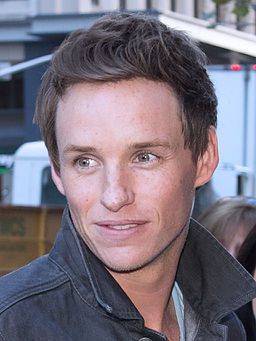
Eddie Redmayne. Photo by Gordon Correll
Last week I went to see the film, The Danish Girl. It’s based on the true story of the artist Einar Wegener who in 1920’s Denmark became Lili Elbe and had pioneering gender reassignment surgery. Eddie Redmayne gives a superb performance and has been nominated for an Oscar. I hope he wins.
There were many thought-provoking moments in this film and as with all good culture, it changed me. This particular human struggle is one about which I knew very little. Now I know a bit more. And in amongst all of the drama there was a touching scene that made an unexpected impression on me. Lili is working in the perfume department of a smart store in Copenhagen and gives some advice to a customer, clearly relishing that she can at last share in the feminine mysteries of cosmetics. She tells the customer that in Paris, women never apply perfume directly onto their skin. Instead they spray it into the air and walk through it. I’ve taken to doing this ever since and it feels luxurious. It may be a frippery but it’s also a reminder of Lili’s difficult life and of a raw, beautiful film.
I love perfume and don’t feel fully dressed without it. However, I’ve had a few ups and downs in my relationship with various brands. Many years ago when my eldest son, Will, was about six we were in a department store together. As we walked through the perfume section I stopped and casually picked up a tester bottle. It was plain black glass with the word Poison written clearly in gold across the middle. I was just about to have a quick spray when Will screamed and grabbed my arm. He was already a good reader and had devoured a number of dark fairy tales. ‘Mummy,’ he said bravely and urgently, ‘don’t touch that bottle – it’s got poison in it.’
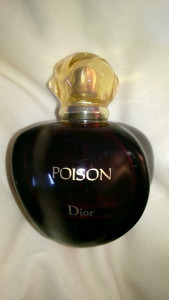
The next perfume blip came a few years afterwards when I was given a bottle of Chanel Allure for Christmas. On Boxing Day I put it on for the first time and my then husband, said in his best flirtatious, husky voice, ‘Darling you smell alluring.’ Unfortunately my hearing is not so good on that lower register so what I heard was the far less flattering, ‘Darling you smell of urine’ but delivered in a perplexingly sexy manner.
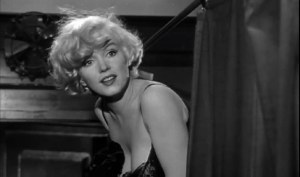
Later, when the ‘then husband’ had left and I was on my own I would often wear perfume in bed or spray it on my pillow. Something just for sheer self-indulgence and which made me think of Marilyn who famously said that all she wore in bed was her Chanel No 5.

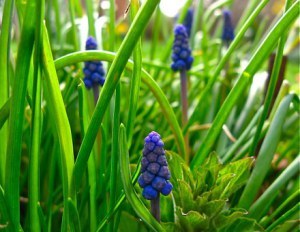
Perfume is powerful and transports us to other times and places, uncovering buried emotions and memories. For me, one of the sweetest examples is the smell of grape hyacinths which instantly takes me back to the Spring when I became a mother. I remember the flower arrangement that was sent to me in hospital and I tune in again to those primitive overwhelming feelings of confusion and wonder. A whiff of the clean, powdery sweetness of Johnson’s Baby Bath and once more I’m in a bathroom twenty years ago with black and white tiles, squealing slippery toddlers and damp-kneed jeans. Most people find that smell is better at conjuring up memories than the other senses and the reason for this seems to lie in the anatomy of the brain. Smells are picked up by the olfactory bulb which is inside the nose and extends along the lower part of the brain, connecting with the amygdala and hippocampus. These are involved in emotion and memory. The information from sight, sound and touch stimuli does not pass through these areas.
My fascination with smell led to me putting ‘Learn about perfume‘ on my treats list. In common with all the others I had no idea when or how this treat would come to life, but then I came across a rather fabulous young woman who calls herself Odette Toilette. She organises talks about the social history of perfume, and so I signed up for an afternoon of exploring 1930s scent in the basement of a smart perfume shop in Marylebone.
It turned out to be a lot of fun. When I arrived I was handed a glass of pink Prosecco and then in the company of twenty-three women and one man I spent several hours hearing about the aspirational perfumes of the 1930s. These accompanied the new age of cars and planes and were an antidote to the mass poverty of the 1920s. We had a chance to smell many of them too, as Odette buys up old bottles of perfume from house sales and auctions. Provided they’ve been kept in a cool, dark place they can survive well. Tiny tarts and miniature cakes were handed round at regular intervals. My favourite was a mouthful tartlet filled with passion fruit puree.

For several hours in this London basement the talk was of vanilla, jasmine, lavender, rose and orange blossom. These all sounded charming and innocent but in fact many of the perfumes of the era were marketed with decadence in mind. Some were said to give you strange surrealist dreams if you sprayed them on at bedtime. ‘Taboo’ and ‘Can Can’ were best-sellers and the fashion designer Elsa Schiaparelli produced ‘Shocking’. This was inspired by the Lady Gaga of the day; Mae West who drawled, ‘It’s not the men in your life that count. It’s the life in your men.’ And as we munched on our dainty tartlets and minicakes we were introduced to the animalic tones which are derived from ingredients like civet and musk. Odette said they are so naughty that cats and dogs will follow you down the street if you wear them.

Since then I’ve done a couple of Odette’s other Vintage Scent Sessions with friends. Debs Gone Bad was peppered with tales of the perfumes that various debutantes wore whilst shocking polite society and getting embroiled in scandal. The other was about 1960s perfumes including hippie patchouli and the scents favoured by influential men like JFK and Muhammed Ali. They’ve all been very enjoyable but I’ve been careful to avoid wearing Allure. It may or may not make me smell of urine but with all those cats and dogs waiting outside, I’m not taking any chances.


January 17, 2016
A Postmodern Mystery
This week David Bowie is nowhere and yet he is everywhere. Countless words have been written about his death, his legacy and his life. There have been reminders of his achievements: album sales of 140 million, the creation of his musical alter egos, and the ability to surprise right to the end with an apparent epitaph in the final album. Historic Dutch church bells rang out Space Oddity in a curiously sweet yet grave tribute whilst the video went viral. And there was an unexpectedly comical moment when a Heart FM Radio newsreader announced that David Cameron had died, before quickly correcting herself.

At significant moments there is usually something for those of us who like lists and this was no exception. In amongst ‘David Bowie’s 24 best songs’, his ‘top 100 books’ and ‘the five best David Bowie songs that you’ve never heard’, Glastonbury’s Michael Eavis said that Bowie was one of the three greatest popular artists along with Frank Sinatra and Elvis Presley. The immediate surprise is the omission of the Beatles, but it’s an interesting trio as they represent quite different facets of the twentieth century. You can learn a lot about people’s tastes by asking which they prefer. In my house I was out on a limb. I went for Sinatra, Bowie, Presley. But Bowie, Presley, Sinatra was the favoured ranking.

And then there was the comment that made me think more deeply. Will Gompertz, the BBC Arts Editor described David Bowie as ‘the ultimate ever-changing postmodernist’. But what does this mean? Many of the most intelligent people I know, are hazy about postmodernism and Hans Bertens begins his book ‘The Idea of the Postmodern’ with the words: ‘Postmodernism is an exasperating term’. I never had a professional need to get to grips with this particular philosophy so I remained ignorant for many years, getting irritated whenever I heard anyone use the word but never quite summoning the concentration to demystify it. Eventually, though, I worked out that one of the key ideas is that there are many realities within any situation. This contrasts with the previous prevailing belief that science and rationality can explain everything. But even with this simplified explanation, I couldn’t make sense of it. Then I saw an extraordinary theatre production that put at least some aspects into perspective.

In 2007 the innovative theatre company, Punchdrunk, staged ‘The Masque of the Red Death’. It was based on the short story by Edgar Allan Poe together with several of his other tales. The venue was the rambling Battersea Old Town Hall which was dimly lit and decked out in Gothic style, with sumptuous but faded fabrics, cobwebs and a real inscrutable black cat. Performances took place simultaneously in rooms, corridors and stairways spread over several floors and we, the audience wandered round at will. We dipped in and out of scenes that included a perfumery, opium den, a nineteenth-century music hall, bedrooms and a morgue. The actors moved amongst us and we wore white masks to distinguish ourselves from them. I went with my three eldest children and soon after we arrived, we split up and went in different directions through the building. The result was that we each had a unique experience of the evening. Afterwards we shared our thoughts and realised that our understanding of the production was entirely dependent on which bits we had happened to stumble upon.
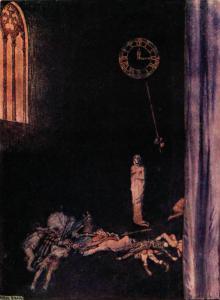
Illustration: Byam Shaw
Suddenly I got what postmodernism was about and its approach seemed applicable to life in so many ways. In any kind of disagreement it’s valuable to remember that each party can only have partial insight into the other’s position. On the one hand this is obvious, but on the other hand it’s all too easy to forget in the heat of the moment.
Postmodernism is also about taking influences from diverse sources and combining them in innovative ways. These influences might be multicultural, historic, fictional or science fictional. This is where the term postmodernist is particularly relevant to David Bowie as he was a mysterious chameleon with a number of incarnations. I may not be a creative genius who can come up with alter egos like Ziggy Stardust, Aladdin Sane or The Thin White Duke but I have gone through a number of selves. We all do. My relatively recent ones have included Animal-Mad Country Mum and Animal-Free Urban Divorcee. I feel significantly different today from the person I was ten years ago, or even three years ago. New experiences and ideas tweak at our identity in subtle ways as we progress through life and we never know ourselves completely because we change. Like David Bowie, we are all mysteries and our reactions are often surprising; not least of all to ourselves. We present different images in different situations and a person, place, book or film that we appreciate at one stage of life may disappoint at another.
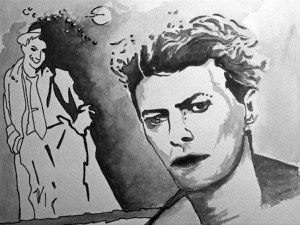
So, in this week when the news has been so full of David Bowie, I’m glad to have revisited my interest in postmodernism and to have got my understanding of it slightly straighter. However, there’s no room for complacency in my philosophical struggles. In reading about it I’ve been dismayed to come across articles like ‘ Postmodernism is Dead’ and worst of all to discover that there’s a new mystery to tackle: after postmodernism comes post-postmodernism. Give me a couple more years and I’ll let you know how I get on with that.



January 3, 2016
Not Guilty

It’s the beginning of another year and I’ve been wondering what to choose for my New Year resolution. People have been doing this for hundreds of years; the Romans saw it as an opportunity to improve their lives and there was a time when I used to sit down on New Year’s Eve and make eighteen resolutions. Yes—EIGHTEEN—three in each of six categories. Relationships, work, home and health were covered and it’s now so long ago that I can’t remember what the other two were. But I do know that the mere act of creating a list was satisfying; a list brimming with the comforting belief that each item would be addressed comprehensively and effectively. This enthusiasm continues today in the form of my treats list, but looking back now, my resolutions list seems ridiculously earnest and I feel guilty about it.
It was naive, too. A study by psychologist Richard Wiseman looked at the New Year resolutions of 3,000 people and found that 88% didn’t manage to achieve them. These findings echo my own experience as year after year the same general themes would crop up; be a nicer person, be better organised, be more successful, and be thinner and greener. And each year I would review the previous year’s goals and pretty much nothing would have changed.
One of the reasons why willpower is so difficult to muster is that we have too many other things to think about. The prefrontal cortex is the part of the brain that deals with purposeful behaviour and an experiment by Stanford University’s Professor Baba Shiv demonstrated how it responds to pressure. He divided 165 undergraduates into two groups and gave them things to remember. One group got two digits while the other group got a sequence of seven digits. They were told to walk down a corridor and go into a room where they were to say these digits out loud. But just before the entrance to the room they were offered a ‘reward’ for their efforts: either a piece of chocolate cake or a bowl of fruit salad. The students who had the longer sequence to remember were more than twice as likely to choose chocolate cake than those who had the simpler task. The fact that this group tended to choose the less healthy food suggests that willpower is significantly compromised by having other things to think about. And with most of us juggling busy lives this has implications for whether we manage to keep to our resolutions.
Perhaps in the past I simply had too many resolutions to work on at once. But I do like the sense of purpose they give and I’m not ready to give up on them yet. This year I’ve resolved to choose just one, so it had better be good and I’ve been racking my brain to think what it could be.
Something health-related is an obvious candidate; I could definitely benefit from a regular exercise programme. This will have to be swimming since I detest getting hot and sweaty and a good resolution would be ‘to swim three times a week’. But on second thoughts I know what will happen. Anyone sensible would make the days go along the lines of ‘swim, no swim, no swim, swim, no swim, swim, no swim’. In my case what will happen is ‘no swim, no swim, no swim, no swim’ and then ‘swim, swim, swim’ all packed into the end of the week. That sounds like a recipe for stress.
Or rather than immersing myself in water, I could decide to drink it instead. We’re constantly being told to stay hydrated but like many things that should be beneficial, I find this difficult. A while ago, I decided to drink two litres of water a day. I kept it up for a couple of weeks and there was no doubt that my skin had more of a glow to it. However, I failed to acquire the promised extra energy as I was exhausted from getting up four times a night to pee.

Another resolution could be ‘to have a cleaner, tidier house’. It would be fairly easy to introduce regular dusting into my life. Though, as Molly’s boyfriend pointed out in a recent fit of logic, it should really be called ‘dedusting’. But actually when I think about it, I’m not bothered about a bit of dust and no-one ever said on their deathbed that they wish they’d done more dedusting.
However, there is one thing that I’d like to work on this year. It was prompted by hearing Nigella Lawson on Woman’s Hour, some time ago. She said, ‘Guilt is about me, me, me,’ and I’ve wondered about it ever since. It made me realise that I say, ‘I feel guilty’ about all manner of things like not contacting friends, breaking promises, and being thoughtless. But it’s all too easy to say the words and it doesn’t help anyone, neither the person I say I feel guilty about, nor me. So from now on I’m aiming to avoid this particular sentiment. I’ll try to act on the negative feeling and to be more thoughtful but if I don’t manage it, then that’s just the way it is.
And I take back what I said in that first paragraph above—I no longer feel guilty that I used to make eighteen resolutions. I’ve just done something about it.